


Wholesale Sarees and Kurtis for Sri Lanka Retailers – Surat Supplier & Export Guide 2026
Wholesale Sarees and Kurtis for Sri Lanka Retailers – Surat Supplier & Export Guide 2026
Sri Lanka offers a promising market for Indian ethnic fashion, where traditional clothing continues to blend naturally with modern retail trends. Sarees remain important for weddings, celebrations, religious occasions and formal events, while kurtis and ready-to-wear sets provide practical choices for everyday customers. For Sri Lankan boutiques, resellers and wholesale buyers looking for wider variety and commercially suitable pricing, sourcing directly from Surat can open access to one of India’s most active textile and fashion supply networks.
Introduction
Finding reliable wholesale sarees and kurtis for Sri Lanka retailers requires more than searching for the lowest product price. Successful retailers need fashionable collections, dependable quality, practical wholesale quantities, frequent new arrivals and a sourcing partner who understands the requirements of international business.
India has a vast ethnic wear industry, and Surat is one of its most important textile sourcing centres. The Surat textile market connects fabric processing, garment manufacturing, wholesalers, traders and fashion distributors. Major commercial areas around Ring Road and Sahara Darwaza are particularly well known for their concentration of textile businesses.
This ecosystem gives Sri Lankan home-based sellers, boutique owners, shop owners, showroom operators, resellers and wholesale buyers access to numerous styles across multiple price segments. Instead of depending entirely on limited local inventory, retailers can create collections around their own customer demand.
Wholesaleexport.in supports this sourcing approach with Indian fashion collections and the industry knowledge associated with Vastralife’s wholesale and export experience since 2017. The focus is on providing access to commercially relevant fashion, premium product quality and wholesale opportunities suitable for businesses of different sizes.
Why Indian Sarees and Kurtis Have Strong Potential in Sri Lanka
Indian and Sri Lankan fashion traditions share several cultural connections, making ethnic clothing a familiar part of the Sri Lankan retail landscape. Sarees are already widely recognised for formal, professional, wedding and celebration wear, while kurtis provide a convenient alternative for customers seeking comfortable Indian-inspired clothing.
The combination of traditional and ready-to-wear fashion gives retailers an opportunity to serve several customer groups rather than relying on one seasonal category.
Strong Cultural Demand for Sarees
Sarees occupy an important place in Sri Lankan fashion. They are worn for weddings, celebrations, formal functions and professional occasions, creating demand across several age groups and budgets.
Retailers can create differentiated collections by offering lightweight everyday sarees alongside festive and premium designs. Banarasi-inspired styles, designer sarees, printed collections and contemporary fabrics can serve customers with different preferences.
Kurtis Create Everyday Selling Opportunities
Kurtis can provide a more frequent purchase category. Cotton kurtis, printed styles, long tunics, kurti-pant combinations and complete three-piece sets can appeal to customers seeking comfort and convenience.
For resellers, kurtis are also easy to present digitally. Clear catalogue images and product videos can be shared through social media and messaging platforms, making the category useful for businesses that operate without a large physical showroom.
Wedding and Celebration Fashion
Weddings create opportunities for richer fabrics, designer sarees and decorative ethnic outfits. Customers attending multiple wedding-related functions may also need different outfits, expanding the potential beyond a single purchase.
Retailers should consider maintaining different price levels. Premium sarees can serve high-value occasions, while attractive mid-range products can appeal to customers who want an elegant appearance at a more accessible budget.
Why Surat Is Important for Sri Lankan Fashion Buyers
Surat’s textile industry is built around an extensive network of fabric producers, processors, wholesalers and garment suppliers. This concentration creates a large selection of products and allows buyers to compare designs across different wholesale price ranges.
The commercial textile zones around Ring Road and Sahara Darwaza are closely connected with the city’s wholesale trade. New catalogues and fashion collections move through these markets frequently, making Surat valuable for retailers who need regular product updates.
Access to Multiple Product Categories
A Sri Lankan retailer does not need to restrict sourcing to sarees alone. The same broader textile ecosystem can provide access to kurtis, kurti sets, salwar suits, dress materials, co-ord sets, lehengas and other Indian ethnic wear.
This flexibility can help retailers expand gradually. A saree-focused boutique, for example, may introduce kurtis or ready-made suits without completely changing its existing customer positioning.
Wholesale Pricing Across Different Segments
Surat offers fashion at several price levels. Entry-level products can support home-based sellers and value-focused retailers, while premium designs can serve boutiques and showrooms targeting wedding and occasion customers.
The lowest price is not necessarily the best wholesale purchase. Retailers should compare design, fabric, finishing and customer appeal together with cost before deciding whether a product has strong resale potential.
Fresh Collections for 2026
Fashion discovery is increasingly digital in 2026. Customers see new colours, prints and styles through social media before visiting a physical store. Retailers therefore need enough variety to prevent their inventory from appearing repetitive.
Regular access to new Indian collections can help Sri Lankan businesses respond to changing demand while maintaining their own retail identity.
Best Wholesale Saree Categories for Sri Lanka Retailers
Sarees cover a broad fashion spectrum, so retailers should avoid treating them as one single category. Fabric, occasion, design and customer budget all influence purchasing decisions.
Banarasi Sarees Wholesale
Banarasi sarees wholesale collections can be particularly useful for wedding and festive customers. Traditional motifs, rich textures and elegant colour combinations create a premium appearance that suits important occasions.
Retailers can maintain a combination of traditional-looking designs and more contemporary Banarasi-inspired styles. This provides choices for customers who appreciate heritage fashion as well as younger shoppers seeking a modern interpretation.
Designer Sarees
Designer sarees can help boutiques differentiate themselves from sellers offering only basic products. Embroidery, decorative borders, contemporary prints and distinctive blouse combinations can create stronger visual appeal.
These products can also work effectively for online marketing because details are easy to highlight through photographs and short videos.
Lightweight and Everyday Sarees
Not every customer needs a heavy festive saree. Lightweight styles can serve professional, casual and smaller family occasions while providing greater comfort for longer wear.
For retailers, affordable everyday sarees can support faster inventory turnover and complement higher-value festive products.
Wedding Sarees
Wedding customers may be willing to invest more when fabric, colour and detailing create the required occasion look. Retailers can therefore maintain a carefully selected premium section without filling the entire store with high-cost inventory.
Strong wedding buying involves selection rather than quantity alone. A smaller number of visually distinctive products can sometimes perform better than a large collection of similar designs.
Best Wholesale Kurti Categories for Sri Lanka
Kurtis can provide year-round selling potential because they suit everyday, work, casual and semi-festive occasions. They can also appeal to customers who enjoy Indian styling but prefer a ready-to-wear format.
Cotton Kurtis Wholesale
Cotton kurtis wholesale can be particularly relevant for Sri Lanka’s warm climate. Breathable fabrics, comfortable cuts and attractive prints make cotton products suitable for regular use.
Retailers can offer simple everyday designs alongside more detailed printed and embroidered options. This creates variety without moving every product into a premium price segment.
Kurti Pant Sets
Coordinated kurti-pant sets simplify the customer’s buying decision because the outfit is already matched. These products can work for office wear, casual events, travel and family gatherings.
From a retailer’s perspective, complete sets can also support a higher transaction value than individual kurtis while remaining accessible to everyday customers.
Kurti Pant Dupatta Sets
Three-piece sets provide a more complete ethnic appearance and can move easily between everyday and semi-festive fashion depending on fabric and detailing.
Printed cotton combinations can serve regular customers, while embroidered or premium fabrics can be positioned for celebrations and gifting.
Designer Kurtis
Designer kurtis can help boutiques create a stronger fashion identity. Distinctive necklines, embroidery, prints, cuts and coordinated styling can differentiate a boutique collection from basic mass-market products.
Retailers should select designs according to their customer profile rather than purchasing every trending style. A collection that matches local preferences is more valuable than one built entirely around short-lived trends.
.jpeg)
How Sri Lanka Retailers Should Plan Wholesale Purchases
Good wholesale buying begins with understanding the final customer. Attractive catalogues can make almost every product appear sellable, but real profitability depends on how well inventory matches actual demand.
Understand Your Customer Segment
Retailers should identify their typical customer’s age, preferred fashion category, average spending level and common buying occasions. A boutique focused on wedding fashion will naturally require a different inventory mix from a home-based seller offering affordable daily wear.
Past sales information is particularly valuable. If certain fabrics, colours or price levels consistently sell faster, future orders can place greater emphasis on those categories.
Start with a Balanced Product Mix
New businesses can reduce inventory risk by spreading their purchasing budget across several products rather than buying too deeply into one catalogue.
For example, a retailer may combine lightweight sarees, selected Banarasi styles, cotton kurtis and kurti sets. Customer response can then guide the composition of subsequent orders.
Consider Climate and Wearability
Sri Lanka’s climate makes comfort an important consideration. Breathable fabrics and manageable silhouettes can have strong everyday potential, while richer fabrics can be reserved for wedding and celebration categories.
Retailers should therefore evaluate how and when customers are likely to wear each product rather than judging it only from its visual appearance.
Quality Matters in International Wholesale Sourcing
Product quality becomes especially important when merchandise is being sourced internationally. Returns or replacements across borders can be more complicated than local purchasing, making careful product selection essential.
Fabric and Finishing
Retailers should consider whether fabric and finishing are appropriate for the intended price segment. An affordable cotton kurti does not need the same detailing as a premium wedding saree, but customers still expect satisfactory stitching and presentation.
Premium product quality is therefore about consistency between what is promised, what is paid and what the customer ultimately receives.
Accurate Product Information
Digital sellers should communicate fabric, size and product details accurately. Overstating quality may help create an initial sale, but it can damage repeat business if the delivered garment does not match customer expectations.
Wholesaleexport.in focuses on helping buyers explore commercially relevant Indian fashion through an experienced wholesale ecosystem. Vastralife’s wholesale and export experience since 2017 contributes industry expertise developed through years of working within the textile business.
Wholesale Price and Landed Cost Planning for Sri Lanka
Retailers should never evaluate an international product using the Indian wholesale price alone. The more useful figure is the complete landed cost after the merchandise reaches the business.
This can include product cost, international freight, applicable customs duties or taxes, payment-related expenses, local transportation and other business costs. Requirements may vary according to shipment value, classification and current Sri Lankan regulations.
Calculate Retail Margin Before Ordering
Estimate the landed cost of major product categories before committing to a larger purchase. Then compare that amount with the realistic retail selling price in your local market.
A slightly higher-priced saree with distinctive styling may provide a stronger margin than a cheaper design available from many competing sellers. Wholesale buying should therefore focus on resale potential rather than purchase cost alone.
Maintain Multiple Price Levels
Offering several price segments allows a retailer to serve more customers. Affordable sarees and kurtis can support frequent purchases, mid-range products can form the core inventory and premium designs can serve weddings and important celebrations.
This approach also allows customers to upgrade or reduce their budget without leaving the store to find another seller.
Exporting Indian Sarees and Kurtis to Sri Lanka
International export requires planning around product confirmation, packaging, freight, documentation and destination requirements. These factors should be considered before the order is finalised rather than after the products are ready for dispatch.
Confirm Products Before Dispatch
Buyers should confirm designs, quantities, sizes where applicable and current availability. Clear confirmation becomes especially important when one shipment contains products from several catalogues or categories.
Plan Shipping According to Order Size
Freight costs can vary according to shipment weight, volume, service and destination. Buyers should therefore evaluate the shipping method together with the value and urgency of the order.
Sri Lankan importers should independently verify current customs, taxes, duties and commercial import requirements through relevant authorities or qualified professionals before making purchasing decisions.
Building a Long-Term Sourcing Strategy for Sri Lanka
A successful retail business usually needs a repeatable sourcing process rather than continuously starting from zero. As retailers learn which products work best, future purchases can become more focused and efficient.
For businesses seeking wholesale sarees and kurtis for Sri Lanka retailers, long-term sourcing can provide access to new collections while helping maintain consistency in the categories customers already trust.
Wholesaleexport.in combines access to Indian ethnic fashion with Surat textile industry knowledge and Vastralife’s wholesale and export experience since 2017. The wider sourcing approach can also support buyers serving markets such as Malaysia, Singapore and Australia.
Best Wholesale Buying Strategy for Different Sri Lankan Sellers
The ideal wholesale buying strategy depends on how a business sells, the amount of capital available and the type of customer it serves. A home-based reseller may need small, fast-moving collections, while an established showroom can maintain deeper inventory across sarees, kurtis and premium ethnic wear. Understanding this difference can help retailers reduce slow-moving stock and improve overall profitability.
Home-Based Sellers
Home-based sellers can begin with products that are easy to showcase through WhatsApp, Instagram, Facebook and other digital channels. Cotton kurtis, printed kurti sets and selected lightweight sarees can provide enough variety without requiring a very large initial investment.
Instead of purchasing too many pieces of one design, sellers can test several collections and monitor customer enquiries. When particular colours, fabrics, sizes or price ranges consistently generate orders, future purchases can be adjusted accordingly.
Boutique Owners
Boutiques usually benefit from a more curated collection. Their customers may expect distinctive fashion, premium presentation and designs that are not available everywhere. A mix of Banarasi sarees, designer sarees, embroidered kurtis and coordinated ethnic sets can create this positioning.
A reliable source of wholesale sarees and kurtis for Sri Lanka retailers can also help boutiques refresh their collections regularly rather than carrying the same inventory for long periods.
Shop Owners
Retail shop owners generally serve customers across several budgets and age groups. Everyday kurtis and lightweight sarees can create regular sales, while festive and wedding collections can provide higher-value transactions.
Shop owners should maintain records of products that sell quickly and products that repeatedly receive customer enquiries. These patterns can make future wholesale buying considerably more accurate.
Showroom Owners
Larger showrooms can create separate sections for everyday sarees, premium sarees, cotton kurtis, kurti sets and occasion wear. This makes the buying experience easier for customers while allowing the retailer to manage inventory according to different price segments.
Display pieces can create visual impact, but the majority of purchasing capital should generally remain focused on commercially proven products with realistic turnover potential.
Resellers and Online Fashion Businesses
Online sellers depend heavily on visual presentation and trust. Clear photographs, short videos, accurate fabric descriptions and correct size information can improve conversion and reduce customer misunderstandings.
Rather than competing entirely on the lowest price, resellers can differentiate themselves through collection selection, responsive communication and consistent product quality.
.jpeg)
Indian Saree and Kurti Trends to Watch in 2026
Fashion trends in 2026 continue to combine traditional Indian design with comfort and practical styling. Sri Lankan retailers can benefit from following trends, but wholesale inventory should not depend entirely on short-lived fashion movements. A stronger approach is to combine proven evergreen products with selected new styles.
Elegant Banarasi-Inspired Sarees
Banarasi-inspired designs continue to offer strong occasion-wear appeal. Traditional motifs, rich borders and sophisticated colour combinations can make these sarees suitable for weddings, family celebrations and festive events.
Retailers can combine classic shades with contemporary colours to appeal to both traditional customers and younger buyers.
Lightweight Sarees for Comfortable Styling
Customers increasingly appreciate sarees that combine elegance with easier draping and movement. Lightweight fabrics can be useful for professional wear, family occasions and long events where comfort matters.
This category can also provide more frequent selling opportunities than highly elaborate wedding sarees because customers can wear the products across a wider range of occasions.
Comfortable Cotton Kurtis
Cotton remains an important fabric for warm-weather fashion. Straight-cut kurtis, printed styles and comfortable everyday silhouettes can serve customers looking for practical clothing with an Indian aesthetic.
Retailers can combine basic designs with selected embroidered or decorative options to provide different price levels within the same category.
Complete Kurti Sets
Kurti-pant and kurti-pant-dupatta combinations continue to be commercially useful because customers receive a coordinated outfit without needing to match separate pieces.
Simple printed sets can work for everyday use, while embroidered and designer combinations can be positioned for semi-festive occasions.
Contemporary Ethnic Fashion
Modern cuts, coordinated sets and fusion styling can help traditional retailers connect with younger customers. These products can be particularly effective for social-media selling because complete looks are easy to demonstrate through reels and catalogue photographs.
Internal Linking and Wholesale Collection Discovery
Wholesale buying becomes more efficient when retailers research individual product categories rather than choosing random catalogues. Category-based sourcing allows businesses to compare styles, fabric options and expected retail potential before investing.
Retailers preparing premium traditional collections can explore Banarasi sarees wholesale to discover additional designs suitable for wedding, festive and boutique customers.
Businesses expanding their ready-to-wear range can also explore Jaipuri kurtis wholesale for colourful printed and commercially attractive kurti collections.
This structured approach helps retailers build inventory according to customer demand while maintaining variety across everyday, festive and premium categories.
How Sri Lankan Retailers Can Improve Profit Margins
Wholesale profitability is influenced by much more than the original product price. Retailers need to consider landed cost, stock turnover, customer demand, marketing expenses and the realistic selling price available in their market.
Track Actual Product Performance
Maintain records of which sarees and kurtis sell quickly, which price levels convert best and which products receive enquiries without generating purchases. Even simple sales records can significantly improve future sourcing decisions.
If cotton kurtis consistently rotate faster than premium sarees, a retailer can allocate more working capital to everyday fashion while keeping a carefully selected premium saree range.
Balance Margin with Inventory Turnover
A product offering a high theoretical margin is not necessarily more profitable if it remains unsold for several months. Faster-moving products can return capital to the business sooner and make regular reinvestment possible.
The ideal inventory usually combines dependable fast sellers with selected higher-margin occasion products.
Create Different Price Segments
Maintaining affordable, mid-range and premium products allows retailers to serve customers with different budgets. A customer who finds a premium saree expensive may still purchase a mid-range option rather than leaving without buying.
The same approach works for kurtis. Everyday cotton products can provide an entry price point, while embroidered and complete three-piece sets can support higher transaction values.
Avoid Excessive Discounting
Competing only on price can gradually weaken profit margins. Retailers can create additional value through good collection selection, personalised customer service, attractive presentation and dependable product information.
Customers who trust a retailer may value convenience and quality alongside price, which can support healthier long-term margins.
Why Choose Wholesaleexport.in for Sri Lanka Wholesale Sourcing?
Wholesaleexport.in provides access to Indian ethnic fashion for boutique owners, shop owners, showroom owners, resellers and wholesale buyers. Its sourcing approach benefits from Vastralife’s wholesale and export experience since 2017 and practical knowledge developed through years in the textile industry.
Surat offers access to a broad textile and garment manufacturing ecosystem. Commercial areas around Ring Road and Sahara Darwaza form an important part of the wider Surat textile market, where new products and collections move continuously through the wholesale trade.
For Sri Lankan retailers, this provides opportunities to explore sarees, kurtis and additional ethnic fashion across several wholesale price levels. Premium product quality remains particularly important for international buyers because consistent customer satisfaction supports repeat business.
Wholesaleexport.in helps buyers discover Indian fashion suitable for different business models, from smaller home-based sellers to established boutiques and wholesale buyers.
Marketing Sarees and Kurtis Successfully in Sri Lanka
Good sourcing provides the products, but effective marketing converts those products into sales. Retailers should communicate how a garment fits into a customer’s lifestyle or occasion rather than simply posting a catalogue number and price.
Create Occasion-Based Collections
Organising inventory around customer needs can simplify purchasing. Categories such as Wedding Sarees, Everyday Kurtis, Premium Banarasi Collection, Office Wear and New Arrivals immediately communicate how products can be used.
Use Product Videos
Videos can show saree texture, borders, embroidery, fabric movement and kurti fit more clearly than static images. Short-form video can therefore become a valuable sales tool for boutiques and online resellers.
Use WhatsApp for Repeat Sales
Existing customers can become an important source of repeat business. New arrivals, limited collections and festive launches can be shared through appropriate WhatsApp communication so interested buyers remain connected with the store.
Build Social Media Around Useful Fashion Content
Instead of publishing only sales posts, retailers can share styling ideas, saree draping inspiration, kurti combinations and occasion-based recommendations. Helpful content can make the business more memorable while naturally presenting products.
International Shipping and Export Planning for Sri Lanka
International purchasing should include freight planning from the beginning. Shipping expenses affect landed cost, and landed cost influences the retail price required to maintain a sustainable margin.
Build Orders Strategically
Where suitable, retailers can create mixed orders containing sarees, kurtis and complementary ethnic products. This can provide greater store variety while distributing inventory investment across several categories.
Plan Seasonal Stock Early
Products intended for weddings, festivals and promotional campaigns should arrive with enough time for photography, merchandising and customer marketing. Late inventory reduces the available selling period and can increase the risk of seasonal stock remaining unsold.
Check Current Sri Lankan Import Requirements
International buyers should confirm applicable customs duties, taxes, documentation and commercial import requirements with the relevant Sri Lankan authorities or qualified professionals. Rules and charges may change, so current information should be used when calculating the final landed cost.
Customer FAQs
1. Where can Sri Lankan retailers buy Indian sarees and kurtis wholesale?
Sri Lankan retailers can source sarees and kurtis through established Indian textile and garment wholesale networks. Surat is a major sourcing centre with access to sarees, kurtis, suits, dress materials and other Indian ethnic fashion categories.
2. Which sarees are suitable for Sri Lankan boutiques?
Retailers can consider Banarasi-inspired sarees, designer sarees, lightweight styles, festive sarees and wedding collections. The best mix depends on customer age, budget and buying occasions.
3. Are cotton kurtis suitable for Sri Lanka?
Yes. Cotton kurtis can be relevant for Sri Lanka’s warm climate because breathable fabrics and comfortable silhouettes are practical for everyday wear.
4. Can home-based resellers buy Indian ethnic wear wholesale?
Yes. Home-based sellers can source Indian fashion subject to current wholesale order requirements and shipping terms. Smaller sellers may benefit from testing several commercially suitable designs before increasing inventory.
5. How should I calculate my retail price in Sri Lanka?
Calculate the product cost together with freight, applicable customs or taxes, local transportation, packaging, marketing and operating expenses. The resulting landed cost provides a stronger basis for deciding the final retail price.
6. Why source sarees and kurtis from Surat?
Surat has an extensive textile processing, trading and garment manufacturing network with access to multiple product categories, changing fashion collections and different wholesale price segments.
7. What should I confirm before placing a wholesale order?
Confirm product designs, quantities, sizes where applicable, current stock availability, wholesale pricing, payment requirements, approximate freight and dispatch expectations before finalising an order.
8. Are premium sarees available for wedding customers?
Yes. Buyers can explore wedding and festive sarees across different fabrics, designs and price ranges according to current availability.
9. Can I source sarees and kurtis in the same wholesale order?
Depending on current supplier and order requirements, buyers may build mixed assortments across multiple categories. This can help retailers offer greater variety to their customers.
10. How often should a boutique introduce new collections?
There is no fixed frequency suitable for every business. Retailers should monitor stock movement and customer interest, introducing new collections frequently enough to maintain freshness without creating unnecessary unsold inventory.
Start Sourcing Sarees and Kurtis for Your Sri Lanka Business
Whether you operate a home-based fashion business, online store, boutique, retail shop or established showroom, sourcing Indian ethnic wear directly from a major textile hub can provide access to broader designs and wholesale price segments.
The strongest buying strategy combines customer knowledge, careful product selection, realistic landed-cost calculations and regular analysis of inventory performance. Retailers should invest in products because they fit their customers rather than simply because a catalogue is trending.
For businesses looking for wholesale sarees and kurtis for Sri Lanka retailers, Wholesaleexport.in combines Indian fashion sourcing with Vastralife’s industry expertise and wholesale and export experience since 2017.
Grow Your Sri Lanka Fashion Business with Wholesaleexport.in
Explore current Indian fashion collections and connect with the wholesale team for product availability, pricing and business purchasing requirements.
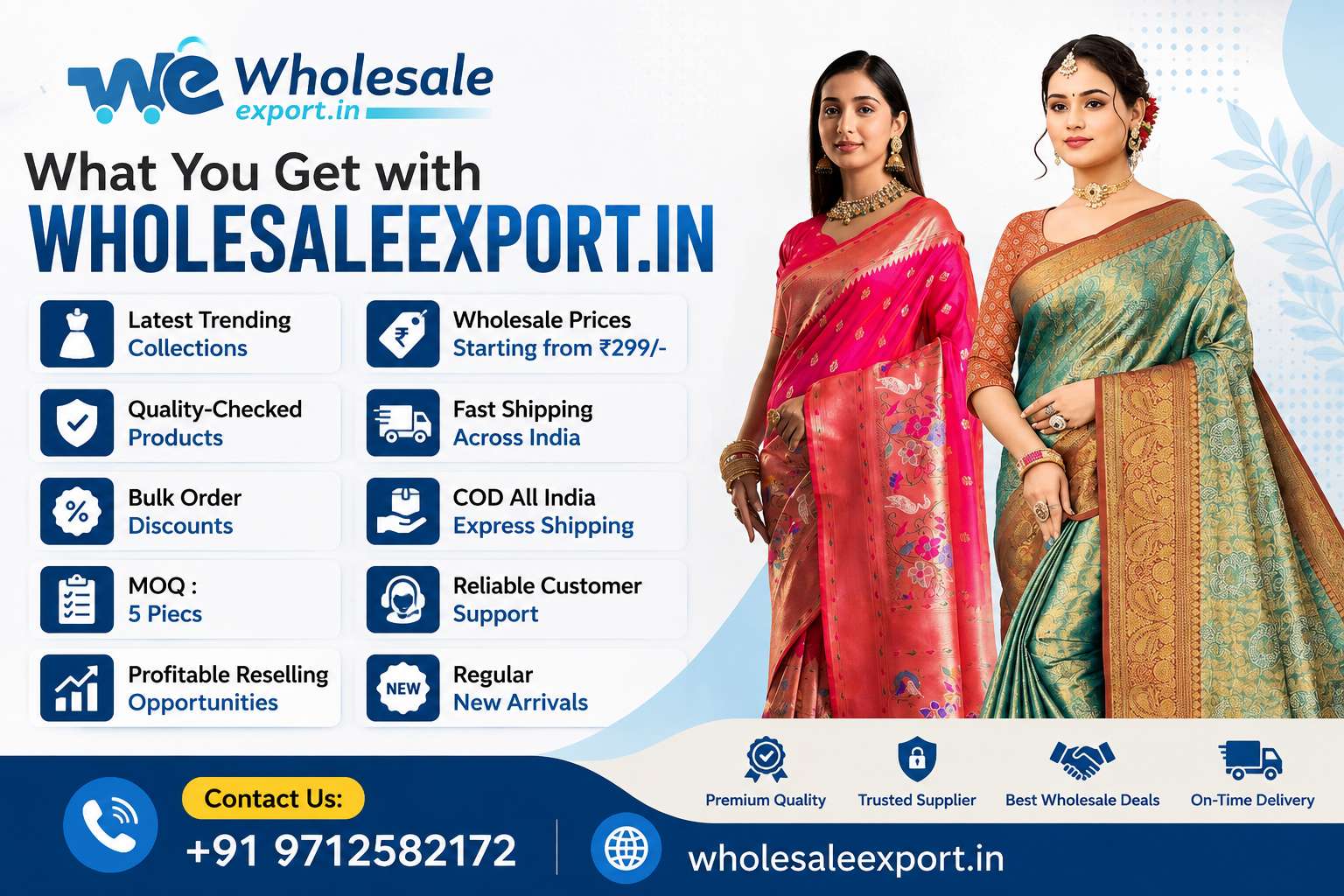
- Latest Collections – Explore fresh sarees, kurtis and regularly updated Indian fashion.
- Wholesale Pricing – Access competitive pricing designed for business buyers.
- Trendy Ethnic Wear – Discover sarees, kurtis, kurti sets, suits and additional Indian fashion categories.
- Fast Shipping – Shipping support based on destination and order requirements.
- COD Support – Available for eligible orders within India according to applicable terms.
- Bulk Order Deals – Contact the team for current bulk purchasing opportunities.
- Quality Products Starting From ₹299 – Explore value-focused collections subject to current product availability.
Contact Number: +91 9712582172
Website: wholesaleexport.in
Discover fresh Indian ethnic wear, compare wholesale collections and build a stronger saree and kurti inventory for your Sri Lankan customers with a sourcing partner focused on variety, quality, competitive pricing and long-term wholesale relationships.