


Wholesale Kurti Supplier for Ecommerce Sellers: Best Online Sourcing Guide 2026
Wholesale Kurti Supplier for Ecommerce Sellers: Best Online Sourcing Guide 2026
Running a successful online fashion store depends heavily on choosing products that are visually attractive, competitively priced and consistently available for repeat orders. For ecommerce sellers dealing in Indian ethnic wear, kurtis remain a practical category because they can serve everyday, office, festive and occasion-wear customers across multiple price segments. With access to Surat-based wholesale sourcing and online platforms such as Wholesaleexport.in, sellers can build fresh inventory for websites, marketplaces, social commerce and reseller networks without relying entirely on local distributors.
Introduction
A dependable wholesale kurti supplier for ecommerce sellers can directly influence product selection, customer satisfaction and online store profitability. Ecommerce businesses need more than low wholesale rates. They require current designs, accurate product information, practical size ranges, reliable quality, repeat availability and dispatch support that fits a fast-moving digital sales model.
In 2026, online fashion buyers frequently discover new ethnic wear through Instagram, Facebook, marketplaces, websites, WhatsApp catalogs and short-form videos. This means ecommerce sellers need products that photograph well, offer clear styling value and remain suitable for customers shopping at different price levels.
Surat provides an important sourcing advantage because its textile ecosystem includes wholesale trading, garment supply, fabric processing and manufacturing. The commercial network around the surat textile market, ring road and sahara darwaza gives professional buyers access to rapidly changing fashion collections.
Wholesaleexport.in helps Home-Based Sellers, Shop Owners, Boutique Owners, Showroom Owners, Resellers and Wholesale Buyers explore ethnic fashion sourcing for resale. Vastralife's wholesale and export experience since 2017 adds textile industry expertise and a continued focus on premium product quality for professional buyers.
Why Ecommerce Sellers Need a Reliable Wholesale Kurti Supplier
Ecommerce fashion businesses operate differently from traditional retail stores. A physical customer can touch and inspect a product before purchasing, while an online buyer depends on photographs, videos, descriptions, size information and seller credibility.
For this reason, an online kurti wholesaler should support products that can be represented clearly in digital selling environments. The seller must know what fabric is being offered, which pieces are included, what sizes are available and whether the product presentation matches the actual stock.
Consistency Builds Customer Trust
Online customers may return when previous purchases match their expectations. Consistent fabric quality, stitching and product representation can therefore support repeat orders and positive customer feedback.
Ecommerce sellers should avoid choosing stock solely because a catalog offers an unusually low wholesale rate. If the product creates quality complaints or high return rates, the apparent saving during purchasing can disappear quickly.
Repeat Availability Supports Bestselling Products
When an online kurti design starts generating regular sales, the ability to reorder can become commercially valuable. Sellers may already have created product pages, social media content, advertisements and customer demand around that design.
A reliable kurti wholesale supplier can help businesses maintain continuity where stock remains available, allowing successful products to contribute beyond a single small batch.
Best Kurti Categories for Ecommerce Sellers in 2026
Online sellers can build stronger catalogs by combining different ethnic wear segments instead of stocking only one kurti style. The right product mix depends on the target customer, but several categories can support regular and seasonal demand.
Kurti Pant Sets
Kurti pant sets wholesale can work particularly well online because customers receive a coordinated outfit rather than needing to match separate bottoms. These products can serve office wear, casual outings, everyday fashion and semi-festive occasions.
Sellers can offer printed, embroidered, solid and designer-style sets according to customer budgets. Clear photographs showing both the kurti and bottom help customers understand the complete product before purchasing.
Three-Piece Kurti Sets
A kurti, bottom and dupatta combination can create stronger visual value for ecommerce listings. These complete sets are suitable for customers looking for ready-to-wear ethnic outfits for functions, festivals, office occasions or gifting.
For online sellers, a three-piece product can also support a higher transaction value than a basic standalone kurti, provided the buying rate remains workable for the intended retail segment.
Printed Kurtis
Printed kurtis wholesale give ecommerce stores substantial visual variety. Floral prints, geometric designs, ethnic motifs and contemporary patterns can create frequent new-arrival opportunities without requiring heavy embellishment.
Printed designs can work especially well for social media because bright colors and patterns are easy to showcase through reels, stories and catalog posts.
Embroidered Kurtis
Embroidered kurtis wholesale can help sellers create a mid-range or premium section. Neck embroidery, sleeve details, decorative borders and carefully placed motifs can increase the perceived value of a product.
Close-up images and short videos can highlight workmanship, helping customers understand why an embroidered product carries a different selling price from a basic printed kurti.
How Ecommerce Sellers Should Select Wholesale Kurti Stock
Online sellers should select inventory according to actual customer behaviour rather than personal fashion preference. Search data, completed orders, customer enquiries, social media response and repeat sales can all help determine which categories deserve larger investment.
When working with a wholesale kurti supplier for ecommerce sellers, buyers can divide purchasing budgets between proven products and new trends. This allows the store to remain fresh without putting excessive working capital into completely untested designs.
Start New Designs in Controlled Quantities
A product may look highly attractive in a catalog but still perform differently once it reaches the retailer's specific audience. Testing new styles in manageable quantities helps ecommerce businesses evaluate demand before scaling.
If a design produces strong conversions, repeat enquiries and low return rates, the seller can consider increasing future quantities where available.
Track Actual Sales Instead of Likes
Social media popularity does not always translate into purchases. A kurti can receive hundreds of likes while generating very few paid orders.
Ecommerce businesses should therefore monitor completed transactions, conversion rates, size-wise sales and repeat purchases. These figures provide more useful guidance for wholesale buying than social engagement alone.
Wholesale Kurti Pricing for Online Resellers
The wholesale purchase rate has a direct impact on the final retail price and available margin. However, ecommerce sellers should calculate the complete landed cost rather than treating the supplier rate as the only expense.
Depending on the business model, costs can include product value, taxes where applicable, inward freight, packaging, marketplace fees, payment charges, advertising and customer shipping. All of these can influence the final profitability of a kurti.
Build Multiple Online Price Segments
A strong ecommerce store can offer affordable, mid-range and premium products. Entry-level kurtis can support higher-volume transactions, while premium sets can increase average order value.
This pricing structure also helps online sellers avoid competing entirely on the cheapest possible rate. Customers can shop according to their budget while the store maintains products for different occasions.
Wholesale Price Should Match Product Value
A very low buying rate is useful only if the product is still saleable. Fabric, stitching, styling, size consistency and visual appeal should be evaluated together with the wholesale price.
Ecommerce sellers depend heavily on customer reviews and repeat orders, making product value especially important for long-term growth.
.jpeg)
Kurti Wholesale Sourcing from Surat for Ecommerce Businesses
Surat is one of India's most active textile sourcing destinations, making it relevant for ecommerce sellers looking for regular ethnic wear inventory. Its large supply network includes textile traders, wholesalers, processors, catalog suppliers and garment businesses.
The markets around ring road, sahara darwaza and the broader surat textile market provide access to products across multiple fabrics, price levels and fashion segments. Online wholesale sourcing extends this ecosystem to sellers who cannot travel to Surat repeatedly.
Manufacturing Access Supports Faster Fashion Rotation
Surat's textile manufacturing environment contributes to the regular flow of new styles into wholesale channels. Ecommerce sellers benefit from this because online customers often expect frequent new arrivals.
Rather than keeping the same catalog for long periods, sellers can maintain reliable core products while introducing selected fresh collections at regular intervals.
Online Wholesale Buying Reduces Sourcing Travel
A seller operating from another city does not always need to make a physical market trip for routine restocking. Digital wholesale sourcing allows products to be reviewed remotely and orders to be planned according to inventory requirements.
Wholesaleexport.in gives ecommerce sellers a wholesale-focused channel for exploring kurti and ethnic fashion collections for resale.
How Home-Based Ecommerce Sellers Can Start with Wholesale Kurtis
Home-Based Sellers can enter online fashion retail without immediately investing in a showroom. A controlled stock model can be combined with Instagram, WhatsApp Business, Facebook and a simple ecommerce website.
The first objective should be understanding customer demand rather than building an oversized inventory. Sellers can begin with several designs and sizes, track which products convert into sales and use that information for the next order.
Choose Easy-to-Present Products
Products with clear silhouettes, attractive prints and coordinated styling can be easier to market online. Kurti pant sets and three-piece outfits also allow customers to understand the complete look quickly.
Good product videos can show fabric movement, embroidery details, dupattas and overall styling, helping customers make decisions without seeing the product physically.
Keep Customer Communication Clear
Online sellers should provide accurate information about sizes, fabric, included pieces and dispatch expectations. Clear communication can reduce misunderstandings and create a more professional buying experience.
As the business grows, frequently requested categories can receive greater stock allocation while weaker products are gradually reduced.
Wholesale Kurtis for Marketplace Sellers
Ecommerce sellers operating through marketplaces need to think about both sourcing and platform economics. Marketplace commissions, advertising expenses, return rates and shipping policies can affect profitability even when the wholesale buying rate appears attractive.
Before listing a product, sellers should calculate whether the expected retail price can cover all applicable expenses. Products with strong visual presentation, stable sizing and clear specifications can be easier to manage across large online catalogs.
Use Accurate Product Titles and Specifications
Marketplace listings should describe the product clearly rather than relying on vague fashion terms. Fabric, style, sleeve type, included pieces and available sizing can improve relevance for customer searches.
Accurate listings can also reduce situations where customers purchase with incorrect expectations.
Maintain Enough Stock for Successful Listings
A product that begins ranking or generating paid advertising conversions becomes more valuable when sufficient inventory remains available. Constantly creating completely new listings can increase operational workload.
Where possible, ecommerce sellers can identify dependable products and maintain repeat inventory while continuing to introduce new designs around them.
Wholesale Kurti Opportunities for Boutique Websites
Boutique Owners running their own ecommerce websites can create a more curated product strategy than mass marketplaces. The store can focus on a specific customer segment such as daily ethnic fashion, premium kurti sets, festive wear or extended sizes.
This specialization allows the retailer to build stronger brand positioning and select wholesale stock more deliberately.
Use Curated Collections Instead of Endless Products
An ecommerce boutique does not necessarily need thousands of listings. A focused collection can make navigation easier and strengthen the visual identity of the website.
Retailers can organize stock into categories such as office wear, festive kurtis, three-piece sets, cotton styles and premium designs, helping customers move directly toward relevant products.
Use New Collections to Build Repeat Website Traffic
Regular new arrivals give previous customers a reason to return to the ecommerce store. Sellers can announce fresh collections through email, WhatsApp or social media and direct shoppers back to relevant product pages.
This creates a stronger long-term strategy than depending entirely on one-time paid advertising campaigns.
.jpeg)
Plus Size Kurtis as a Growth Category for Ecommerce Sellers
Extended sizing can create an important opportunity for online fashion businesses because many customers actively search for ethnic wear that combines comfortable fitting with current styling. Instead of treating larger sizes as a small secondary category, ecommerce sellers can build a dedicated selection based on actual customer demand.
A professional wholesale kurti supplier for ecommerce sellers can help retailers access different designs and size ranges according to available collections. Straight kurtis, printed styles, kurti-pant sets, festive outfits and three-piece combinations can all contribute to an extended-size assortment where relevant sizes are available.
Accurate Measurements Matter in Online Selling
Customers purchasing ready-made clothing online cannot physically try the garment before ordering. Ecommerce sellers should therefore provide accurate available measurements and supplier-provided size information wherever possible.
Clear sizing can reduce confusion and help customers choose products more confidently. Sellers should also track which sizes generate the highest number of completed orders rather than purchasing every size in identical quantities.
Use Sales Data to Build the Right Size Mix
The most profitable size ratio can vary according to the retailer's customer base. A Home-Based Seller serving one local community may experience a different size distribution from a national ecommerce website.
Recording size-wise transactions over several buying cycles allows sellers to make more informed wholesale purchases and reduce capital blocked in slower-moving sizes.
Internal Linking for Ecommerce Ethnic Wear Sourcing
Ecommerce businesses looking to widen their ready-made clothing range can explore plus size kurtis wholesale when suitable collections and sizes are available. Adding extended-size products can help online stores serve a broader customer base while keeping the assortment relevant to current ethnic fashion demand.
Sellers who want to diversify beyond ready-made kurtis can also explore wholesale dress materials Surat for another ethnic wear category. Dress materials can complement an existing kurti business by serving customers who prefer customized stitching and fabric-based fashion.
Category expansion should remain demand-driven. Ecommerce sellers can test a new segment in controlled quantities, measure conversions and repeat orders, and then decide whether it deserves a larger share of future purchasing.
How Ecommerce Sellers Can Create Better Kurti Product Listings
Wholesale sourcing provides the inventory, but product presentation influences whether online visitors become customers. Ecommerce sellers should create listings that make the buying decision as straightforward as possible.
Write Search-Friendly Product Titles
A useful title can naturally describe the primary attributes customers may search for, such as printed kurti pant set, embroidered three-piece kurti set, cotton office wear kurti or festive kurti with dupatta.
Titles should remain readable rather than becoming collections of unrelated keywords. Search optimization works best when product information is also genuinely useful to the shopper.
Show Multiple Product Views
Where suitable product imagery is available, ecommerce listings can show front views, close-up details and complete outfit presentation. For coordinated sets, customers should be able to understand what pieces are included.
Videos can further demonstrate fabric movement, embroidery, print details, sleeves, dupattas and the overall silhouette. This can be especially useful for premium products where workmanship contributes significantly to perceived value.
Create Accurate Product Descriptions
Descriptions should communicate the available information clearly. Fabric, garment type, included pieces, available sizes, design features and care-related details supplied for the product can help customers make better decisions.
Avoid unsupported claims about fabric or product performance. Accurate information is particularly important for ecommerce sellers because customer expectations are created entirely through the online listing.
How to Market Wholesale Kurtis Through Instagram and Facebook
Social platforms can help ecommerce businesses turn wholesale inventory into customer-facing content. Instead of uploading every catalog image with identical wording, sellers can create different content formats around individual products.
Use Short-Form Videos for New Arrivals
Short videos can showcase the full outfit quickly and highlight details that static images may miss. A seller can feature the neckline, sleeves, print, embroidery, bottom and dupatta in one concise presentation.
New-arrival reels can also create urgency when a design is available in limited quantities, although sellers should only use scarcity messaging when it accurately reflects current stock.
Create Occasion-Based Content
A product becomes easier to understand when customers can imagine where they might wear it. Ecommerce sellers can organize content around office wear, casual fashion, festive outfits, wedding guest looks, family functions and everyday ethnic wear.
This approach can make the same wholesale catalog more relevant to different customer groups without using repetitive promotional messaging.
Connect Social Content to a Clear Buying Process
Customers who discover a kurti through social media should understand how to purchase it. Depending on the seller's business model, the buying journey can lead to an ecommerce website, marketplace listing, WhatsApp order process or another suitable sales channel.
Simple purchasing steps can reduce friction between product discovery and checkout.
WhatsApp Selling Strategy for Kurti Resellers
WhatsApp can be particularly useful for Resellers and Home-Based Sellers because it allows direct communication with existing customers. However, sending every available catalog to every customer can create unnecessary message volume.
Segment Customers According to Interest
A customer who regularly purchases office wear may respond better to new cotton or straight-cut kurtis than to heavy festive collections. Similarly, customers interested in wedding fashion can receive more relevant occasion-wear updates.
Basic customer segmentation can make wholesale inventory promotion more targeted and useful.
Use Catalogs Alongside Personal Recommendations
Rather than forwarding hundreds of products without context, sellers can shortlist styles based on a customer's known requirements. This creates a more service-oriented buying experience and can improve the value of direct communication.
How to Manage Kurti Inventory for Ecommerce Growth
Inventory management is one of the biggest differences between a sustainable ecommerce business and a store that continually locks capital into unsold products. Every wholesale order should ideally contribute either to immediate sales or to a clearly defined inventory strategy.
Separate Fast, Medium and Slow Movers
Ecommerce sellers can review products according to their sales velocity. Fast-moving designs may justify repeat orders, while slower products may require different presentation or controlled clearance.
This analysis should be completed periodically rather than waiting until a large quantity of outdated stock accumulates.
Keep Capital Available for New Arrivals
Fashion changes frequently. If the entire purchasing budget is locked into one large order, the seller may have limited ability to respond when a promising new collection appears.
Maintaining purchasing flexibility allows ecommerce businesses to introduce fresh stock while continuing to reorder proven products.
Do Not Confuse Variety with Excess Inventory
An ecommerce store can offer variety without purchasing excessive quantities of every design. Controlled depth across multiple relevant products can be particularly useful during the testing stage.
Once transaction data identifies winners, inventory depth can be increased selectively.
How to Evaluate a Wholesale Kurti Supplier Before Ordering
Finding a kurti wholesaler in Surat or an online supplier should involve more than comparing catalog rates. Ecommerce businesses depend on product quality and reliable order handling because problems at the sourcing stage can eventually become customer-service problems.
Check Product Quality and Finishing
Fabric appearance, stitching, embroidery, print quality and finishing influence how customers perceive the garment. Premium product quality becomes especially important for businesses trying to generate repeat orders.
Understand Wholesale Order Conditions
Before confirming an order, professional buyers should understand current minimum quantities, payment requirements, shipping conditions and other applicable terms. These can vary by product and order type.
Consider Collection Variety
A supplier offering access to multiple relevant categories can make future expansion easier. An ecommerce store beginning with kurtis may eventually add kurti sets, dress materials, sarees or other ethnic fashion according to customer demand.
Evaluate New-Arrival Frequency
Regular fresh collections can help ecommerce sellers keep websites and social channels active. This is particularly useful in fashion, where customers frequently expect something new when they revisit a store.
Wholesale Kurti Sourcing for International Ecommerce Sellers
Indian ethnic fashion can also create opportunities for ecommerce businesses serving overseas communities. Buyers in USA, Australia and Nepal can evaluate wholesale kurti sourcing according to local customer demand, destination regulations and shipping feasibility.
International Wholesale Buyers should calculate landed cost rather than considering only the Indian wholesale price. Freight, applicable customs or import expenses and destination delivery can affect the final retail position significantly.
Select Products for the Destination Customer
A successful collection in India may not generate identical demand in another country. International sellers should consider climate, cultural events, customer demographics and local spending preferences.
Initial export orders can include a controlled combination of daily wear, coordinated sets and festive products. Completed sales can then guide future purchases.
Plan Seasonal Export Inventory in Advance
International shipping requires additional lead time compared with domestic sourcing. Retailers preparing for festivals, weddings or community events should therefore plan stock early enough for shipping and local marketing.
Vastralife's wholesale and export experience since 2017 provides textile industry expertise developed through professional sourcing. Wholesaleexport.in connects this experience with online wholesale opportunities for retailers and Resellers seeking Indian ethnic fashion inventory.
Why Surat Is a Strong Sourcing Hub for Ecommerce Sellers
The surat textile market provides access to a broad textile ecosystem rather than one isolated product category. Wholesale activity around ring road and sahara darwaza, together with Surat's processing and manufacturing network, supports frequent product movement and new collection development.
Multiple Categories Support Business Expansion
An ecommerce seller can begin with kurtis and later expand into coordinated ethnic sets, dress materials or other suitable fashion categories. Access to a broad sourcing ecosystem makes such expansion easier to manage.
Digital Sourcing Makes Surat Accessible Nationwide
Retailers outside Gujarat do not necessarily need to travel for every routine purchase. Online wholesale sourcing allows businesses to review available products and order according to current requirements.
Wholesaleexport.in helps connect professional buyers with wholesale fashion opportunities while allowing them to plan purchasing around their own inventory cycle.
Common Wholesale Kurti Buying Mistakes Ecommerce Sellers Should Avoid
Buying Large Quantities of Untested Designs
A visually impressive catalog does not guarantee customer demand. Testing a new product before increasing quantities can reduce unnecessary inventory risk.
Choosing Products Only by Lowest Price
Low-cost stock is not profitable if customers do not want it or if quality issues create returns. Buying decisions should consider product value, customer demand and expected resale potential together.
Ignoring Size-Wise Inventory
Ready-made fashion requires size planning. Sellers should track which sizes sell and use that information for future wholesale purchases.
Ignoring Landed Cost
The supplier rate does not include every expense involved in an ecommerce transaction. Packaging, freight, marketplace expenses and other applicable costs should be considered before setting retail prices.
Keeping Slow Stock for Too Long
Fashion inventory can lose relevance as trends change. Sellers should periodically identify slow-moving products and decide whether better content, targeted promotion, bundling or a controlled clearance strategy is appropriate.
Copying Competitors Without Understanding Customers
A product that works for another ecommerce store may not suit your audience. Customer demographics, budget and location can create significant differences in product demand.
Customer FAQs
1. Where can ecommerce sellers buy kurtis wholesale online?
Ecommerce sellers can explore wholesale-focused platforms such as Wholesaleexport.in for ethnic fashion sourcing. Buyers should review current product availability, wholesale pricing, quantities and shipping conditions before ordering.
2. Which kurti products are suitable for online resale?
Popular options can include printed kurtis, straight-cut styles, kurti-pant sets, three-piece combinations, embroidered kurtis, festive outfits and extended-size designs. The strongest category depends on the seller's customer base.
3. Can Home-Based Sellers buy wholesale kurtis?
Yes. Home-Based Sellers can build a kurti resale business using controlled inventory and digital channels such as WhatsApp, Instagram, Facebook or their own ecommerce website. Current minimum-order conditions should be checked before purchasing.
4. How should ecommerce sellers choose wholesale kurti sizes?
Existing sellers should use size-wise transaction history whenever possible. New sellers can begin with an appropriate range and adjust future purchases according to actual completed orders.
5. Why source wholesale kurtis from Surat?
Surat has a large textile wholesale, processing and manufacturing ecosystem with access to regularly changing ethnic fashion collections. Online sourcing makes these products accessible to retailers located outside Surat as well.
6. Can ecommerce sellers source plus-size kurtis?
Extended sizes may be available depending on the current collection. Sellers targeting this category should verify available measurements and size ranges before confirming stock.
7. Can international ecommerce sellers order kurtis from India?
International buyers can enquire about export sourcing according to destination, product availability and shipping feasibility. Import requirements and landed costs should be evaluated for the destination country.
8. What should sellers check before placing a bulk kurti order?
Review product specifications, fabric information, available sizes, included pieces, wholesale price, quantity requirements, shipping costs and applicable terms before confirming the purchase.
9. How often should an online kurti store add new collections?
There is no fixed schedule for every business. Sellers can maintain proven products while introducing fresh collections according to sales velocity, customer demand and available purchasing capital.
10. How can ecommerce sellers reduce dead stock?
Begin new products in controlled quantities, monitor completed sales, maintain appropriate size ratios and reorder designs that demonstrate consistent demand. Regular inventory reviews can identify slow products before they consume excessive working capital.
Build a Scalable Ecommerce Kurti Business with Better Wholesale Sourcing
A successful wholesale kurti supplier for ecommerce sellers relationship should support more than purchasing products at a low rate. Ecommerce businesses benefit from access to relevant designs, workable pricing, quality-focused stock, useful size options and regularly changing collections.
Home-Based Sellers can begin with controlled quantities, Boutique Owners can create curated collections, Shop Owners and Showroom Owners can expand into online selling, while Resellers can use social commerce to reach customers beyond their immediate location.
The strongest strategy is to combine customer data with disciplined wholesale buying. Track what sells, understand which sizes move, calculate complete costs and keep enough capital available for fresh collections. This approach allows ecommerce businesses to grow according to genuine customer demand rather than assumptions.
Start Sourcing Wholesale Kurtis for Your Ecommerce Business
Explore Wholesaleexport.in for Latest Collections, competitive Wholesale Pricing and Trendy Ethnic Wear selected for Home-Based Sellers, Shop Owners, Boutique Owners, Showroom Owners, Resellers, ecommerce businesses and Wholesale Buyers.
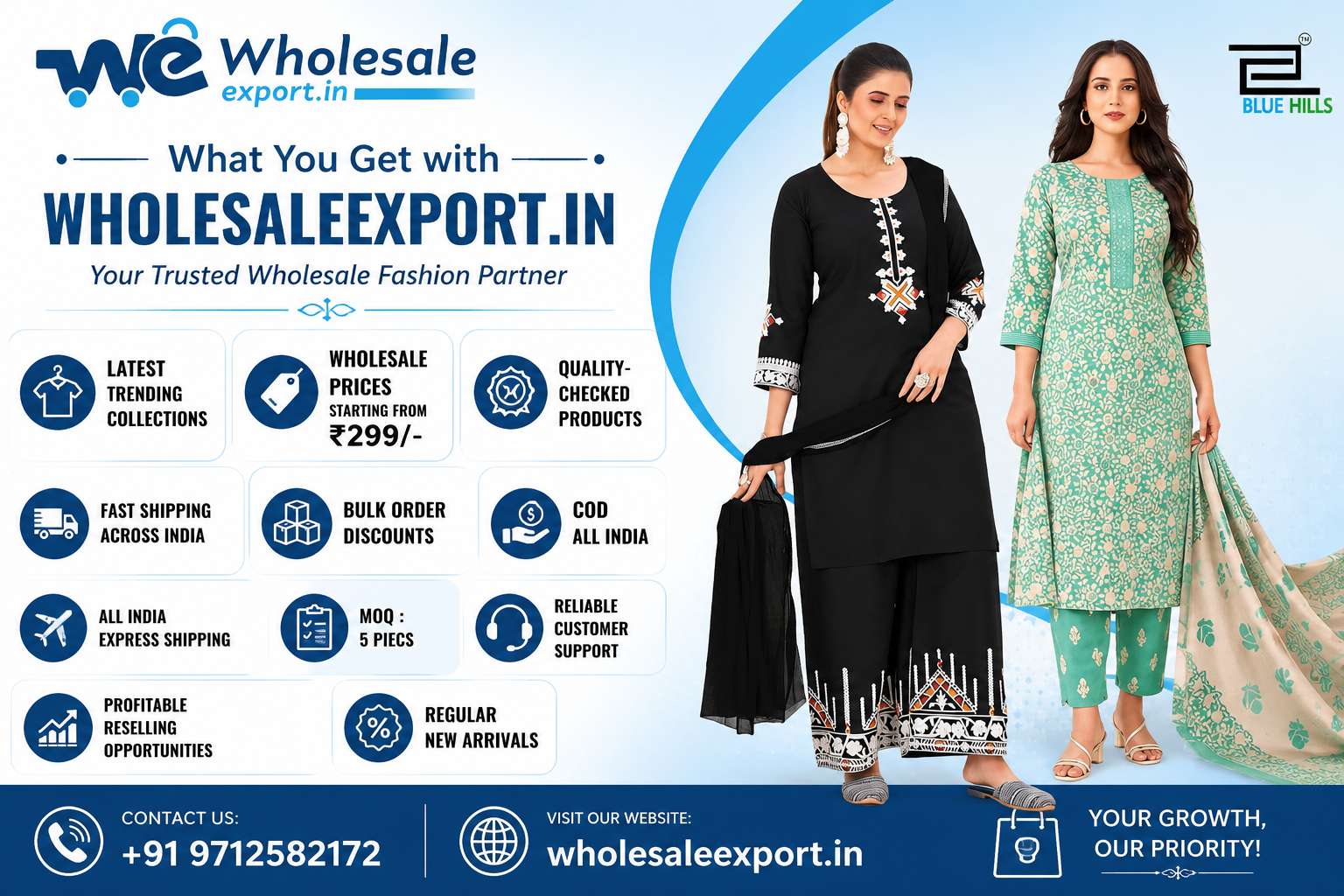
Build your inventory with Fast Shipping, COD Support where applicable, attractive Bulk Order Deals and Quality Products Starting From ₹299, subject to current collection availability and applicable order conditions.
Backed by Vastralife's wholesale and export experience since 2017, industry expertise and attention to premium product quality, Wholesaleexport.in provides professional fashion buyers with sourcing opportunities from India's textile ecosystem.
Contact Number: +91 9712582172
Website: wholesaleexport.in
Choose the right products, maintain a smart size and price mix, test new trends before scaling, and keep your ecommerce store updated with fresh ethnic fashion collections throughout 2026.