


Wholesale Dress Material for Online Sellers in India 2026 – Profitable Reselling & Surat Sourcing Guide
Wholesale Dress Material for Online Sellers in India 2026 – Profitable Reselling & Surat Sourcing Guide
Selling ethnic wear online has become a practical business opportunity for entrepreneurs who want to reach customers without depending entirely on a physical store. With attractive catalogues, regular new arrivals and smart wholesale sourcing, sellers can offer customers a wide choice of dress materials while managing inventory according to their budget. The key is choosing products that combine appealing designs, dependable quality, sensible pricing and genuine resale potential.
Introduction
Online fashion selling has changed significantly in recent years. Customers now discover ethnic wear through Instagram, Facebook, WhatsApp, websites, online marketplaces and short-form videos. For sellers, this means the shop is no longer limited by a physical location. A Home-Based Seller in a smaller city can showcase products to customers across India using the same digital channels available to established retailers.
This growth has increased demand for wholesale dress material for online sellers who need fresh collections at commercially workable rates. Unlike traditional retail buying, online resellers often need products that look attractive in catalogue images, are easy to describe and can appeal to customers without physical inspection before ordering.
Dress materials fit this business model particularly well because they serve different customer requirements. Cotton suits can target everyday buyers, printed collections can provide affordable variety, embroidered designs can serve semi-festive demand, and premium suit materials can appeal to customers shopping for special occasions.
For online sellers, profitability is not simply about finding the lowest price. Product presentation, fabric quality, customer demand, inventory rotation and reliable wholesale sourcing all contribute to the final result.
Why Dress Materials Are Popular for Online Reselling in 2026
Indian dress materials offer something that many ready-made categories cannot: flexibility. Customers can select a design they like and have it stitched according to their preferred measurements, neckline, sleeve style and fitting.
This flexibility creates demand across different age groups and body types. It also gives online sellers the opportunity to market the same collection to customers with different styling preferences.
Broad Customer Appeal
A well-selected dress material catalogue can serve working women, homemakers, college-going customers, festive shoppers and customers looking for traditional outfits. This broad audience makes the category attractive to Resellers and Home-Based Sellers who want to build a diverse customer base.
Instead of depending on one fashion segment, online sellers can maintain multiple product groups such as cotton dress materials wholesale, printed suits, embroidered collections, designer dress materials and festive three-piece sets.
Easy to Showcase Digitally
Catalogue presentation plays a major role in online fashion. Dress materials with clear product photography, coordinated colour combinations and attractive dupattas can communicate their overall style quickly.
A seller can use catalogue images for product discovery and add useful information about fabric, design, available colours and other relevant details. Short videos can further help customers understand embroidery, print placement and fabric appearance.
Suitable for Different Investment Levels
Not every online seller begins with a large inventory budget. Some entrepreneurs start from home with a small customer network, while established resellers may purchase larger quantities and operate multiple online channels.
Wholesale dress materials are available across different price ranges, allowing businesses to create an assortment suited to their available capital and target customers.
Who Can Sell Wholesale Dress Materials Online?
The online ethnic wear market is not limited to large e-commerce businesses. Different types of sellers can participate depending on their investment, customer network and selling strategy.
Home-Based Sellers
Home-Based Sellers can begin by sharing selected catalogues through WhatsApp, Instagram or their existing personal network. Rather than purchasing excessive inventory immediately, they can observe which fabrics, colours and price points generate genuine enquiries.
Over time, this customer feedback can help them create a more focused wholesale purchasing strategy.
Instagram and Social Media Resellers
Instagram and Facebook allow fashion sellers to present collections through reels, stories, posts and direct messages. Products with attractive visual presentation can perform particularly well in this environment.
However, sellers should combine good visuals with accurate product information. Customers who understand what they are buying are more likely to have realistic expectations when the order arrives.
Boutique Owners
Boutique Owners can use online selling to expand beyond local walk-in customers. Existing boutique credibility can be combined with digital catalogues to reach buyers outside the immediate neighbourhood.
Curated designer dress material wholesale collections can work particularly well for boutiques because customers often expect distinctive designs rather than a very large quantity of similar products.
Shop and Showroom Owners
Physical retailers can also benefit from digital selling. Shop Owners and Showroom Owners already carrying inventory can showcase new arrivals online, answer enquiries remotely and encourage customers to visit or place orders through their preferred sales channel.
This hybrid approach combines the trust of a physical business with the reach of online marketing.
Best Wholesale Dress Material Categories for Online Sellers
Product selection is one of the most important parts of building an online ethnic wear business. A collection may look attractive, but sellers should also consider who is likely to buy it, at what retail price and for which occasion.
1. Cotton Dress Materials
Cotton dress materials wholesale collections remain highly practical because cotton has strong recognition among Indian customers. Comfortable fabrics can work for daily wear, office wear and warmer weather.
Floral prints, traditional motifs, geometric patterns, coordinated bottoms and stylish dupattas can make cotton collections visually appealing enough for online promotion while retaining their everyday usefulness.
2. Printed Dress Materials
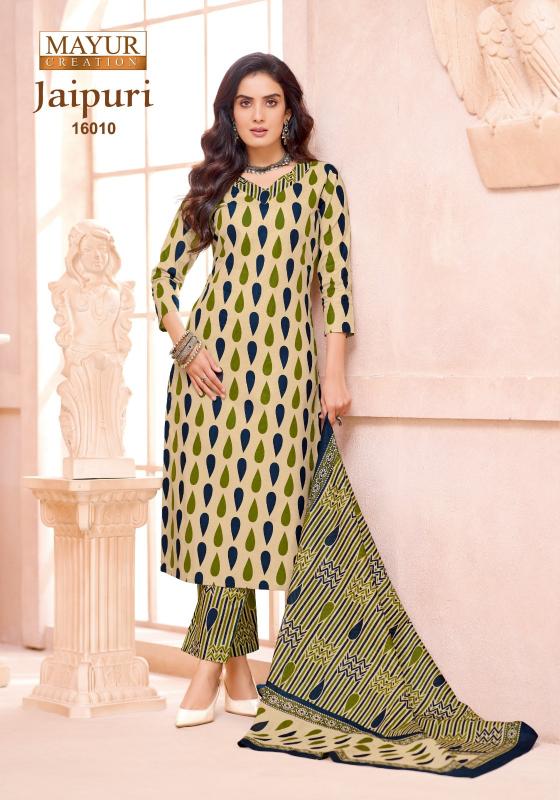
Printed suits provide tremendous variety. Jaipur-inspired prints, florals, abstract patterns, traditional motifs and contemporary designs can help online sellers maintain regular catalogue freshness.
Printed dress material wholesale can also suit sellers targeting affordable and mid-range customers. The visual nature of prints makes them easy to highlight through product photographs and reels.
3. Embroidered Dress Materials
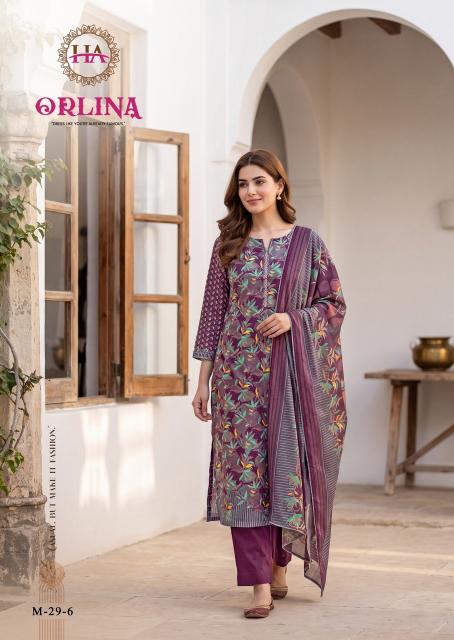
Customers looking for a more premium appearance may prefer embroidery. Neckline work, floral motifs, thread embroidery and border detailing can elevate a suit without necessarily making it excessively heavy.
Embroidered dress materials wholesale can be promoted for office functions, festive occasions, family gatherings and customers who want something more distinctive than regular printed suits.
4. Designer and Festive Suit Materials
Festive periods and wedding seasons create opportunities for richer designs. Premium-looking dupattas, decorative embroidery and distinctive fabrics can help online sellers increase the variety of their occasion-wear range.
Retailers should still buy according to their audience. A customer base focused primarily on everyday affordable fashion may require only a limited proportion of premium festive inventory.
Why Surat Is Important for Online Dress Material Sellers
Surat has long been associated with India's textile trade. Its ecosystem includes fabric suppliers, processors, designers, wholesalers, traders and manufacturing businesses working across numerous ethnic wear categories.
The surat textile market and commercial areas around ring road and sahara darwaza attract buyers searching for dress materials, sarees, kurtis and other textile products across different price segments.
For online sellers, sourcing from a large textile hub provides access to design variety. A reseller can explore everyday cotton suits, printed collections, embroidery-focused products and festive styles without being limited to one narrow category.
Digital Sourcing Reduces Dependence on Frequent Market Visits
Travelling to Surat can be useful for physical product exploration, but it is not practical for every seller to visit the market whenever fresh stock is required. Digital wholesale sourcing provides another route.
Wholesaleexport.in helps online sellers discover wholesale ethnic wear collections remotely, making it easier for businesses outside Surat to review products before planning purchases.
This can be especially useful for Home-Based Sellers and smaller retailers who need regular product updates but want to control travel and sourcing costs.
How to Choose Wholesale Dress Material for Online Sellers
Successful online sourcing requires looking at products from the customer's perspective. The ideal collection should not only be attractive to the reseller; it should also make sense for the final buyer.
Know Your Target Customer Before Buying
Ask simple questions before selecting stock. Does your customer usually purchase daily wear or festive clothing? What retail price range receives the most orders? Which colours sell repeatedly? Does your audience prefer cotton, prints or embroidery?
Answers to these questions can reduce random buying and make inventory decisions more commercially focused.
Compare Quality and Price Together
Low wholesale rates can appear attractive, particularly to new sellers, but the cheapest product does not automatically provide the best resale opportunity. Fabric feel, print clarity, embroidery finishing and overall presentation can influence customer satisfaction.
Products with better perceived value may sometimes allow sellers to build stronger customer trust and repeat business even when the initial wholesale price is slightly higher.
Look at Catalogue Quality
For online sellers, catalogue quality matters because customers often make their first decision from an image. Clear photographs that show the outfit properly can make promotion easier.
However, sellers should not rely on images alone. Product descriptions should communicate useful information so customers understand what they are considering.
Consider Repeat-Order Potential
When a product sells successfully, being able to source similar or fresh collections from the same category can help maintain momentum. Sellers should therefore evaluate a supplier's overall product variety rather than selecting a business relationship around one catalogue.
How to Start an Online Dress Material Reselling Business
Starting does not necessarily require hundreds of designs. A smaller but thoughtfully selected assortment can provide useful information about what customers actually want.
Choose Your Primary Selling Channel
New sellers can begin with one or two channels they can manage consistently. WhatsApp can work well for an existing customer network, while Instagram can help with visual product discovery. A website can become useful as the business expands and requires a more structured catalogue.
Create a Clear Product Position
Customers should understand what your business specializes in. You may focus on affordable cotton suits, premium dress materials, Jaipur-inspired prints, festive ethnic wear or a carefully balanced combination.
A recognizable product identity can make marketing more focused than attempting to sell every available fashion category at once.
Set a Sustainable Selling Price
Retail price should account for wholesale cost and other applicable business expenses while remaining suitable for the target customer. Sellers should avoid choosing prices only by copying competitors because operating costs and sourcing arrangements can differ.
Instead, calculate the actual cost structure and decide what margin is sustainable for the business.
How to Make Dress Material Catalogues Sell Better Online
Online customers cannot physically examine the product before purchasing, so presentation and communication become important parts of the sales process.
Use Clear Product Information
Mention the relevant fabric, collection details, design style and available options whenever information is confirmed. Clear communication can reduce repetitive customer questions and help buyers make faster decisions.
Use Reels and Short Videos
Video can show embroidery, dupatta styling and the overall look of a collection more dynamically than a static photograph. Short-form content can also help introduce new arrivals to a larger audience.
Avoid Posting Too Many Similar Products Together
Catalogue overload can reduce customer attention. Instead of sharing dozens of nearly identical designs at once, online sellers can curate products and release them in smaller themed groups.
This gives each collection more visibility and creates additional opportunities to communicate with customers over time.
Building Trust in an Online Ethnic Wear Business
Trust is especially important when customers purchase from a seller they have never met. Accurate communication, clear product information and consistent service can help an online reseller establish credibility.
Wholesale sourcing also affects this trust. When sellers work with products that offer premium product quality and reliable presentation, they are better positioned to create a positive customer experience.
Vastralife brings wholesale and export experience since 2017, along with practical textile industry expertise. Through Wholesaleexport.in, this experience supports business buyers looking for market-relevant ethnic wear collections for resale.
Opportunities for International Online Sellers
Digital selling also allows Indian ethnic fashion to reach customers beyond the domestic market. Wholesale Buyers and Resellers serving customers in Nepal, Australia and Canada can explore Indian dress materials according to their local market requirements.
International export buyers should consider customer preferences, shipping arrangements, product pricing and local demand before selecting inventory. A collection performing strongly in India may need different positioning or product selection in another country.
Choose Products for Your Market, Not Only Indian Trends
International ethnic wear customers may shop for festivals, weddings, cultural events or regular traditional wear. Understanding why customers buy can help online sellers select more relevant products.
For example, a reseller serving primarily occasion-wear customers may require a greater proportion of embroidered and premium suits than a business focused on everyday ethnic fashion.
Why Wholesale Experience Matters for Online Sellers
Online reselling can look simple from the outside, but sustainable growth requires consistent sourcing, appropriate product selection and an understanding of customer demand. Working with experienced wholesale channels can help sellers access collections designed for business purchasing rather than ordinary retail consumption.
Wholesaleexport.in focuses on wholesale ethnic wear discovery for Home-Based Sellers, Shop Owners, Boutique Owners, Showroom Owners, Resellers and Wholesale Buyers. This business-oriented approach can help sellers explore collections according to their own market and investment level.
Inventory Planning for Better Online Profitability
The objective of wholesale purchasing should not be to own the maximum possible stock. Inventory needs to move. Products that remain unsold tie up money that could otherwise be used for newer collections.
Use a Mix of Proven and New Products
Established bestsellers can provide stability, while new products create freshness. Online sellers can combine both instead of changing their complete assortment every time a new trend appears.
Track Actual Sales Instead of Only Likes
Social media engagement is useful, but likes and views are not the same as purchases. Sellers should track which collections generate enquiries, confirmed orders and repeat customers.
This information can become one of the most valuable tools when deciding what wholesale dress material for online sellers should be purchased next.
Keep Working Capital Flexible
New sellers should be careful about investing too much money in a single design or category before understanding customer response. Diversifying a reasonable budget across several relevant styles can provide better learning and reduce dependence on one product.
How Online Sellers Can Increase Repeat Orders
Getting a first order is important, but building repeat customers can make an online dress material business more sustainable. Customers who already know the seller's service, product quality and communication style may require less convincing when new collections arrive.
Online sellers can encourage repeat business by remembering which categories their customers prefer. Someone who regularly purchases cotton suits may be more interested in a fresh printed cotton collection than an unrelated premium festive catalogue. Similarly, customers who previously ordered embroidered designs can be informed when comparable new arrivals become available.
Share Relevant New Arrivals
Instead of sending every catalogue to every customer, sellers can segment buyers according to preferences such as daily wear, office wear, premium suits, festive collections and budget range. Relevant communication can make customers feel that the products being shared actually match their needs.
Maintain Consistency in Product Information
Online customers depend heavily on the information sellers provide. Clear communication about confirmed fabric details, product components, colours and order conditions helps customers make better decisions. Consistency in this area can strengthen confidence and improve the possibility of repeat purchases.
Pricing Strategy for Online Dress Material Resellers
One of the most common mistakes in online reselling is deciding the selling price only by checking what competitors charge. Two sellers may source differently, have different logistics costs and serve completely different customers.
A more practical strategy is to calculate the complete cost of acquiring and selling a product and then determine a sustainable margin. Wholesale product cost, applicable taxes, packaging, shipping and other business expenses should be considered where relevant.
Do Not Compete Only on the Lowest Price
Price-sensitive customers are important, but becoming the cheapest seller is not always a sustainable business strategy. Product selection, customer service, catalogue curation, communication and quality can all create value.
A seller who develops a reputation for selecting attractive products and providing useful information may be able to compete on overall value rather than discounting every collection.
Create Multiple Price Segments
Online sellers can serve more customers by maintaining products at several price points. Affordable everyday collections can attract regular buyers, mid-range embroidered suits can provide additional choice, and selected premium products can serve festive or occasion-wear customers.
This structure also helps sellers understand which segment generates the strongest combination of enquiries, conversions and repeat purchases.
Exactly Two Useful Internal Links for Wholesale Buyers
Businesses expanding their online inventory can explore wholesale dress materials in Surat to discover additional suit-material options suited to resale. Sellers looking to broaden their ethnic assortment beyond dress materials can also explore Banarasi saree wholesale collections for customers interested in traditional occasion wear.
Using complementary categories can help an online business serve different customer requirements, but expansion should remain controlled. It is usually better to add a category because customers are requesting it rather than simply because the product is available.
How to Use WhatsApp for Dress Material Reselling
WhatsApp can be particularly useful for Home-Based Sellers because it supports direct communication and catalogue sharing. Sellers with an established customer network can introduce new collections without requiring customers to visit a physical store.
Create Focused Customer Groups or Lists
Customers can be organized according to product interest where appropriate. Daily-wear buyers, premium customers and boutique buyers may respond to different catalogues. Sending more relevant products can improve engagement while reducing unnecessary messages.
Keep Catalogue Messages Easy to Understand
A product message should provide the important information customers need without becoming unnecessarily complicated. Product category, confirmed fabric details, price and ordering instructions can be communicated clearly.
Online sellers should also avoid creating artificial urgency. If stock is genuinely limited, that information can be useful, but transparent communication is more valuable for long-term customer relationships.
Instagram Marketing for Online Ethnic Wear Sellers
Instagram gives fashion businesses a highly visual environment for product discovery. Reels can show the movement of a dupatta or detailing on a suit, while carousel posts can present different colours from the same collection.
Consistent content can help an online seller develop a recognizable identity. Rather than posting only product photographs, sellers can also create useful content around fabric selection, styling, seasonal trends and new arrivals.
Use Search-Friendly Product Descriptions
Natural phrases such as wholesale dress material for online sellers, cotton suit collection, printed dress materials, Surat wholesale suits and ethnic wear for resellers can help communicate clearly what a post or product page is about.
Keywords should remain natural. Repeating the same phrase excessively can make content difficult to read and does not improve the customer experience.
Show Variety Without Losing Your Identity
A reseller can offer several product categories while maintaining a clear positioning. For example, a business may specialize in affordable ethnic wear while offering cotton, printed and embroidered designs within that price segment.
Another seller may focus on boutique-oriented premium collections. A clear identity can help customers understand why they should continue following a particular online store.
Wholesale Dress Material Opportunities for International Sellers
Online selling is not limited to the Indian domestic market. Indian ethnic wear continues to attract interest from retailers and resellers serving South Asian communities overseas. Markets such as Nepal, Australia and Canada can offer opportunities depending on local customer demand.
International wholesale buyers should select products according to their destination market. Climate, festivals, community preferences, local competition and expected retail price can all influence which products perform well.
Plan Export Orders Carefully
For export sourcing, buyers should confirm product availability, quantities, shipping arrangements and applicable requirements before placing orders. International logistics can add time and cost, making accurate inventory planning particularly important.
Retailers should also consider whether their customers prefer everyday Indian wear, festive clothing, wedding styles or premium boutique collections before selecting stock.
Quality Matters More When Selling Online
Physical-store customers can touch fabric before purchasing, but online customers often depend on catalogue images, descriptions and seller recommendations. This makes dependable product sourcing especially important.
Fabric quality, printing, embroidery finishing and overall presentation influence the customer's experience after delivery. A seller may generate a first sale through attractive marketing, but consistent premium product quality is more likely to support repeat business.
Vastralife's wholesale and export experience since 2017 brings practical textile industry knowledge to product sourcing. Through Wholesaleexport.in, business buyers can explore collections intended for retailers, boutiques, online resellers and other wholesale customers.
Common Mistakes Online Dress Material Sellers Should Avoid
Buying Too Much of an Untested Collection
A catalogue that looks impressive to the seller may not necessarily match customer preferences. New businesses can reduce risk by testing different styles before increasing their investment in a particular category.
Ignoring Customer Price Preferences
If most customers regularly purchase within a certain budget, filling the inventory with substantially more expensive products can reduce conversions. Sellers should monitor actual orders rather than relying only on personal fashion preferences.
Posting Without a Consistent Strategy
Uploading products randomly can make an online store difficult to understand. Sellers can organize content around new arrivals, daily wear, festive selections, premium products and other clear themes.
Depending Only on One Product Type
A single successful category can be a strong foundation, but customer demand changes. Maintaining a controlled amount of variety can protect the business from depending completely on one style or season.
Ignoring Inventory Rotation
Unsold inventory locks working capital. Sellers should regularly identify which designs are moving and which are receiving little response. Future wholesale purchasing can then be adjusted according to real sales data.
Customer FAQs
1. Where can online sellers buy wholesale dress materials?
Online sellers can source through established wholesale markets and digital wholesale platforms. Surat is a major textile hub, and the surat textile market, Ring Road and Sahara Darwaza areas are widely associated with textile trading and manufacturing. Digital sourcing through Wholesaleexport.in can also help buyers explore collections remotely.
2. Which dress materials are best for online reselling?
Cotton, printed, embroidered and three-piece dress materials can all be suitable. The best category depends on customer budget, local demand and the seller's positioning. New sellers can test several relevant categories before investing more heavily.
3. Can I start selling dress materials from home?
Yes. Home-Based Sellers can use channels such as WhatsApp and social media to present collections to customers. Starting with a controlled product assortment can help sellers learn which fabrics, designs and price points generate genuine orders.
4. Is Surat suitable for wholesale dress material sourcing?
Yes. Surat has an extensive textile ecosystem covering fabric, processing, design, manufacturing, wholesale trading and distribution. This provides buyers with access to multiple ethnic wear categories and price segments.
5. How much margin can an online dress material seller earn?
There is no universal margin because sourcing costs, taxes, shipping, packaging, selling price and business expenses vary. Sellers should calculate their complete cost and choose a sustainable retail margin rather than relying on a fixed percentage advertised by others.
6. Can I purchase dress materials for overseas reselling?
Yes, subject to supplier terms, stock availability and applicable export arrangements. International buyers should consider destination demand, logistics and expected retail pricing before selecting products.
7. How often should I introduce new collections?
The right frequency depends on customer engagement and inventory movement. Regular new arrivals can maintain interest, but sellers should avoid purchasing unnecessary stock simply to post something new. Customer enquiries and sales data are better guides.
8. Should online sellers choose low-price or premium dress materials?
A balanced approach usually provides more flexibility. Affordable collections can serve price-conscious customers, while premium products can address buyers seeking better fabrics, embroidery or occasion wear. The final mix should reflect the seller's target market.
Internal Linking and Expanding Your Online Ethnic Wear Range
As an online business grows, customer enquiries can reveal opportunities to expand into related categories. Dress materials may remain the core business while sarees, kurtis, festive suits or other ethnic wear are introduced according to demand.
Expansion should be gradual and data-driven. Sellers can observe customer requests, test a limited number of new products and increase purchases only when the category demonstrates genuine sales potential.
This approach helps preserve working capital while giving customers more variety. Wholesaleexport.in can support product discovery across changing wholesale collections for businesses looking to expand their ethnic wear assortment.
Why Online Sellers Can Consider Wholesaleexport.in
Wholesaleexport.in focuses on wholesale buyers rather than only individual retail purchases. This makes the platform relevant for Home-Based Sellers, Shop Owners, Boutique Owners, Showroom Owners, Resellers and Wholesale Buyers searching for inventory opportunities.
With Vastralife's wholesale and export experience since 2017, the focus combines textile industry expertise with business-oriented sourcing. Buyers can explore products according to category, current requirements and customer preferences while considering quality and commercial viability.
For sellers building a business around wholesale dress material for online sellers, access to changing collections can make it easier to refresh inventory without depending entirely on repeated physical visits to Surat.
Start Your Next Wholesale Order with Wholesaleexport.in
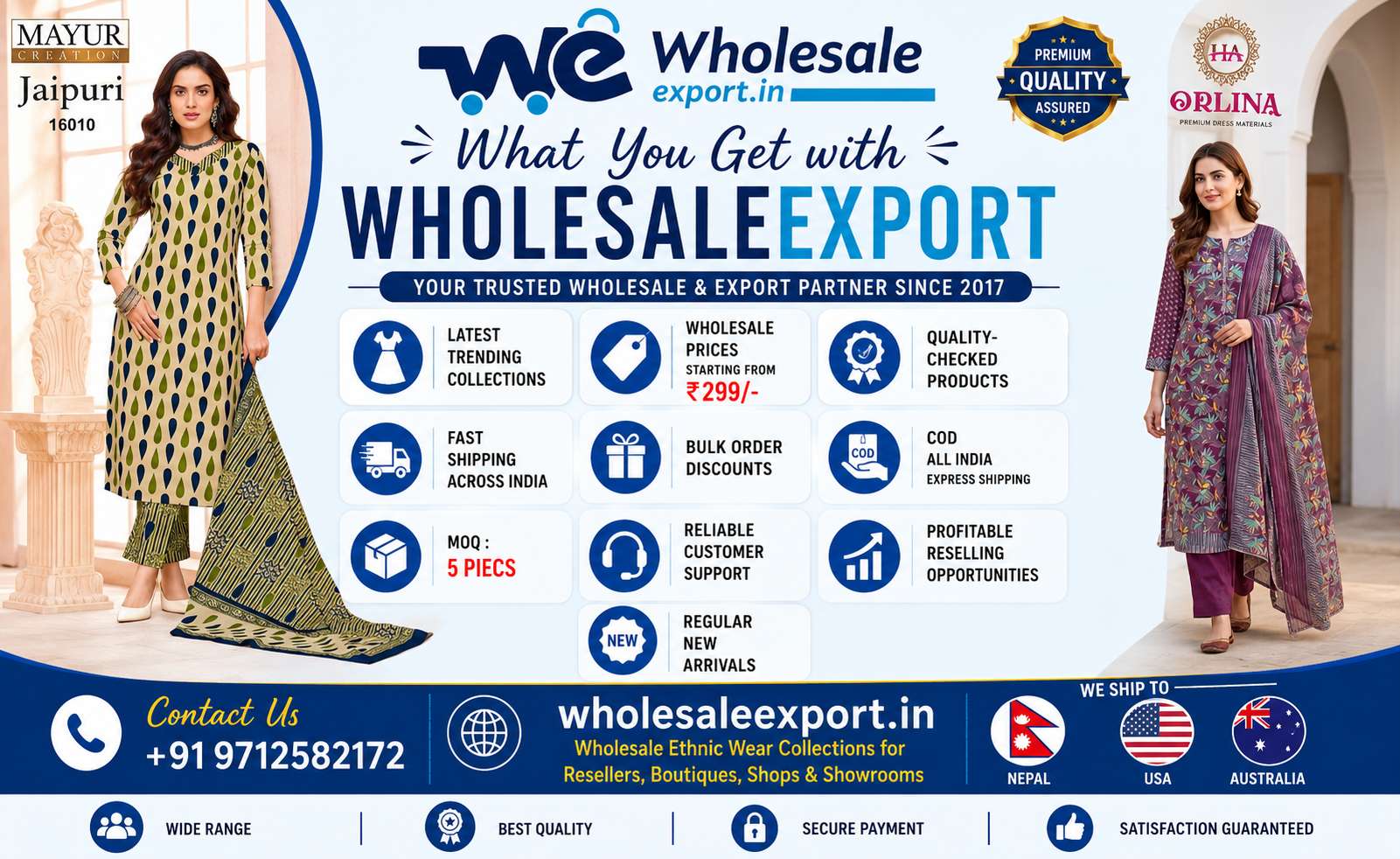
Build a stronger online ethnic wear business with access to Latest Collections selected for resellers, boutiques, shops and wholesale buyers. Explore Wholesale Pricing across different product categories and discover Trendy Ethnic Wear for everyday, boutique and festive customer requirements.
Wholesale buyers can enquire about Fast Shipping, applicable COD Support and Bulk Order Deals according to current order terms. Explore Quality Products Starting From ₹299 and select inventory according to your customer budget and selling strategy.
Contact Number: +91 9712582172
Website: wholesaleexport.in
Online ethnic wear selling in 2026 offers opportunities for businesses that combine smart sourcing with consistent customer service. The strongest strategy is not simply to upload more catalogues, but to understand what customers actually purchase, select products with genuine resale potential and keep working capital moving. With thoughtful buying, useful product presentation and reliable sourcing, wholesale dress material for online sellers can become the foundation of a scalable reselling, boutique or retail business.