


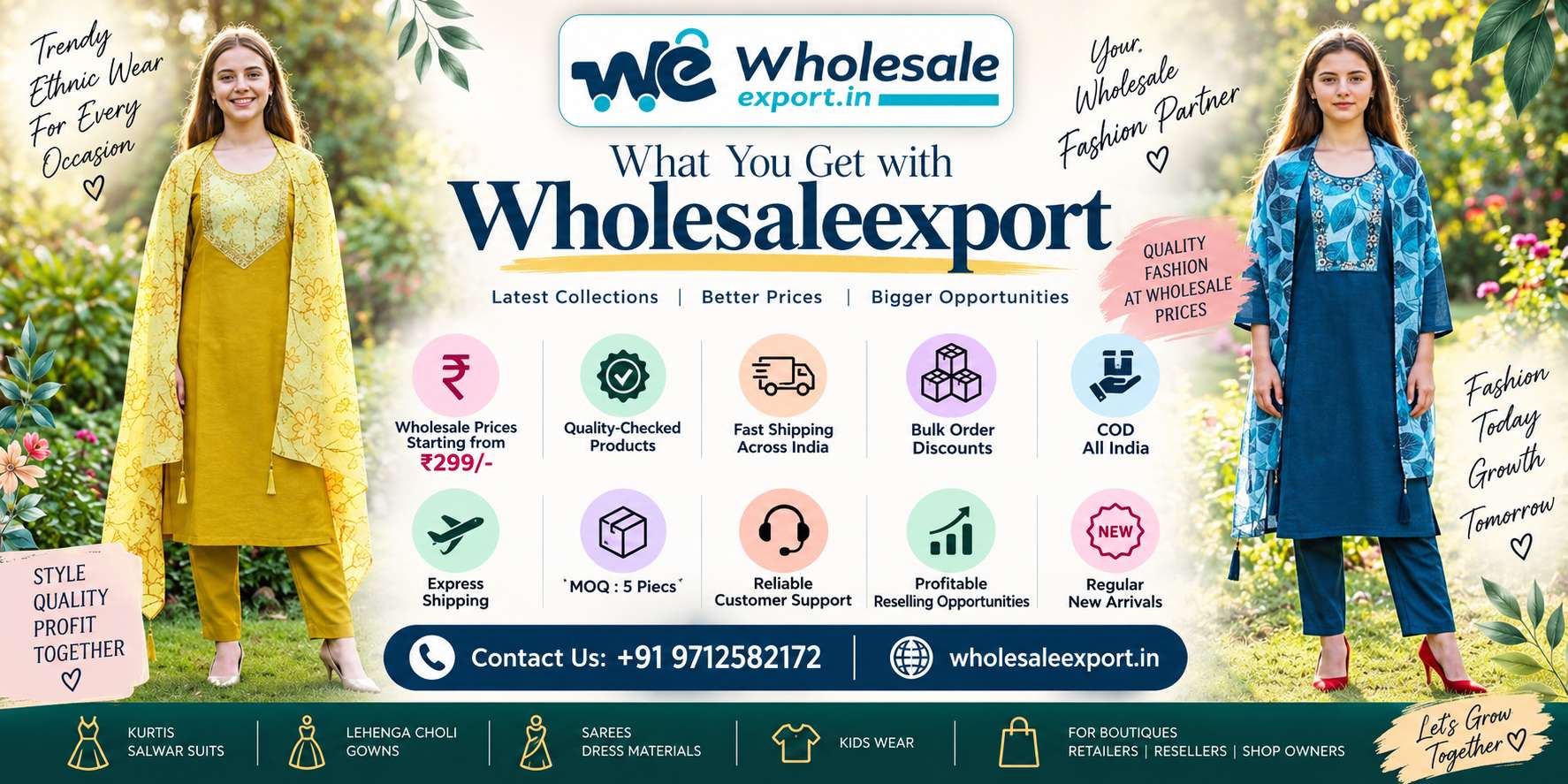
Wholesale Clothing for Multi-Brand Retail Stores in India: Sourcing Guide 2026
Wholesale Clothing for Multi-Brand Retail Stores in India: Sourcing Guide 2026
Running a successful multi-brand fashion store requires more than filling racks with different labels. Retailers need the right combination of fast-moving designs, reliable suppliers, practical buying quantities, profitable price points and fresh collections that encourage customers to visit again. For stores selling women’s ethnic wear, festive fashion, everyday clothing and kids wear, a well-planned wholesale sourcing system can directly influence inventory turnover and long-term profitability.
Introduction
The Indian fashion retail market gives multi-brand retailers an important advantage: customers rarely shop for only one type of garment. A shopper entering for a kurti may also notice a kurti set, saree, dress material, lehenga, kids outfit or another new arrival. This creates opportunities for retailers who build a balanced product mix rather than depending heavily on one category.
At the same time, variety can become a problem when buying decisions are not controlled. Purchasing too many designs, carrying excessive quantities or investing heavily in slow-moving products can lock working capital into inventory. This is why sourcing wholesale clothing for multi-brand retail stores in India should be approached as a planned retail strategy rather than simply a bulk purchasing exercise.
In 2026, retailers also have more sourcing choices. They can work with suppliers connected to the surat textile market, compare collections online, purchase through wholesale platforms and replenish successful products without travelling for every buying cycle. Wholesaleexport.in helps bring these requirements together for shop owners, boutiques, showrooms, resellers and other wholesale buyers looking for fashion collections from Surat.
Why Multi-Brand Retail Stores Need a Different Wholesale Buying Strategy
A single-category retailer can concentrate most of its capital on a narrow range of products. A multi-brand store works differently. It needs enough variety to give customers choice while maintaining sufficient stock depth in categories that generate regular sales.
The objective is not to display the maximum possible number of products. It is to create the right assortment for the store’s customer profile.
Variety Must Be Balanced with Inventory Turnover
Suppose a retailer has a fixed buying budget. Investing the entire amount in premium festive garments may create an attractive display, but everyday customers may have little reason to purchase regularly. On the other hand, carrying only basic products can restrict higher-value festive and occasion sales.
A practical assortment can include everyday kurtis, coordinated kurti sets, salwar suits, sarees, dress materials, selected festive pieces and kids wear according to local demand. This creates different selling opportunities without making every category equally large.
Retail Price Bands Matter as Much as Categories
Two stores can sell the same garment category but serve completely different customers. One may specialise in value-focused products while another attracts premium buyers. Wholesale purchasing should therefore begin with the expected retail price rather than only the appearance of a product.
Before placing an order, calculate the approximate landed cost and the retail price needed to maintain your target margin. This simple step prevents retailers from purchasing attractive products that do not fit their customer’s normal spending range.
Frequent New Arrivals Can Improve Customer Interest
Multi-brand fashion stores benefit from freshness. Customers who see the same merchandise repeatedly have less reason to revisit. Smaller but more frequent buying cycles can help retailers introduce new designs while controlling inventory exposure.
This is particularly useful for fashion categories where colours, prints, silhouettes and seasonal preferences change quickly.
Best Wholesale Clothing Categories for Multi-Brand Stores
A profitable product mix depends on location, customer profile, season and store positioning. However, several categories can work together naturally within an Indian women’s and family fashion store.
Kurtis for Everyday Retail Demand
Kurtis can provide an accessible entry category for many retailers because they work across everyday, office, casual and semi-festive requirements. Cotton styles, rayon kurtis, printed kurtis, embroidered designs and straight-cut silhouettes can serve different customer preferences.
Retailers purchasing women’s clothing wholesale should consider keeping multiple price points rather than buying every design at a similar cost. This makes the rack useful for a broader customer base.
Kurti Sets for Higher Basket Value
Coordinated kurti-pant and kurti-pant-dupatta sets offer customers a ready-to-wear combination. They can also provide retailers with a higher transaction value compared with a standalone kurti.
For stores that sell both casual and occasion fashion, maintaining basic daily-wear sets alongside more detailed festive designs can create a balanced selection.
Salwar Suits and Dress Materials
Salwar suits and dress materials continue to provide retailers with opportunities across traditional and contemporary customer groups. Printed cotton, rayon, embroidered designs and premium dress materials can be selected according to regional demand.
Unstitched dress materials can be especially relevant where customers prefer personalised tailoring. Ready-to-wear suits can serve shoppers looking for convenience.
Sarees for Everyday, Festive and Occasion Sales
Sarees can broaden the store’s customer base significantly because the category covers multiple price levels and occasions. Printed sarees, lightweight daily-wear options and festive designs can be stocked according to local purchasing patterns.
Retailers should avoid assuming that every saree customer wants premium occasion wear. A multi-price assortment often creates more opportunities than a collection concentrated entirely at one end of the market.
Lehenga Choli and Festive Fashion
Lehenga choli can become particularly relevant during weddings, Navratri and other festive buying periods. Since these products can involve higher inventory values, retailers should plan quantities according to seasonal demand and their historical sales.
For new stores, a curated selection may be more practical than purchasing excessive depth in every design.
Kids Wear as a Complementary Retail Category
Kids wear can help a women’s fashion retailer serve family shoppers and potentially increase basket value. Festive kids outfits, dresses and other coordinated styles can be introduced gradually based on customer response.
The important point is to treat kids wear wholesale as a planned category rather than adding random products merely to increase variety.
How to Choose a Wholesale Clothing Supplier for Your Retail Store
A supplier relationship affects much more than purchase price. Product consistency, availability, communication, dispatch support and the ability to access fresh collections can all influence retail performance.
Check Product Range Before Comparing Only Price
The lowest wholesale rate does not automatically create the strongest retail margin. A product that looks good online but receives little customer interest can become expensive dead stock regardless of its initial cost.
Compare products on design relevance, expected retail price, fabric, finishing, customer suitability and reorder potential. Wholesale clothing suppliers in India should ideally help retailers access enough variety to build an assortment without sourcing every category from an unrelated channel.
Understand MOQ Before Placing an Order
Minimum order quantity influences working capital. For multi-brand stores, practical MOQ can be important because capital needs to be distributed across several categories.
Buying enormous quantities simply to receive a lower per-piece price may not make commercial sense if the products take months to sell. Evaluate the saving against the additional inventory risk.
Confirm Current Stock and Product Details
Fashion inventory can change quickly. Always confirm availability when placing the final order, especially for trending collections and seasonal merchandise.
Product information such as size range, fabric, set components, colour assortment and other specifications should also be checked before committing to bulk quantities.
Surat as a Wholesale Sourcing Hub for Multi-Brand Retailers
Surat has developed a broad textile and garment ecosystem serving retailers, wholesalers and traders across India. The city provides access to sarees, kurtis, suits, dress materials, lehengas and several related women’s fashion categories.
Commercial textile areas around Ring Road, Sahara Darwaza and the wider Surat textile market are familiar sourcing references for buyers dealing in Indian fashion. The combination of trading, distribution and manufacturing activity allows retailers to explore products across different price segments.
Why Online Access to Surat Collections Matters
A retailer in Delhi, Bengaluru, Hyderabad or another city may not want to travel to Surat every time new stock is required. Online wholesale sourcing allows buyers to review collections remotely, shortlist suitable products and place orders according to their business requirements.
Wholesaleexport.in provides an online route for buyers looking to access collections associated with the Surat wholesale ecosystem. This can be useful for established showrooms as well as retailers who want to test categories before increasing purchase quantities.
Plan Replenishment Instead of Only Large Seasonal Purchases
Traditional retail buying often involved purchasing large quantities for an entire season. Faster fashion cycles make a more flexible approach useful for many stores.
Retailers can maintain core stock, monitor weekly sales and replenish strong categories while introducing selected new arrivals. This helps protect working capital while keeping the store visually fresh.
Build a Profitable Product Mix Instead of Buying Random Collections
A multi-brand retailer should know why each category occupies space in the store. Some products generate frequent transactions, some improve margins, some attract attention and others support seasonal demand. A strong buying plan considers all four roles.
Create a Core Stock Layer
Core products are styles or categories that can generate relatively regular demand. Depending on your customer base, this might include kurtis, kurti sets, basic suits, everyday sarees or dress materials.
These products can form the dependable base of your inventory. Monitor sizes, colours and price points that sell repeatedly and prioritise replenishment accordingly.
Add a Trend-Led Layer
Trend-led inventory gives customers something new to discover. Trending prints, silhouettes, coordinated sets, festive colours and seasonal fashion can be introduced in controlled quantities.
Trend stock should generally be monitored more closely because its selling window may be shorter than that of everyday merchandise.
Maintain a Premium Selection
Not every shopper enters a multi-brand store looking for the lowest price. Wedding shoppers, festive customers and buyers purchasing for special occasions may want better detailing, fabric or presentation.
A selective premium section can help capture these transactions without requiring the entire store to move into a high-price segment. Vastralife’s wholesale and export experience since 2017, industry expertise and focus on premium product quality are relevant for buyers seeking both value-driven and elevated ethnic wear selections.
Use Sales Data to Decide What to Reorder
Retail buying becomes significantly stronger when decisions are based on sales rather than assumptions. Even a small store can maintain a simple spreadsheet or inventory report showing purchase quantity, sales quantity, selling price and remaining stock.
Track Sell-Through by Category
If one category consistently moves faster, consider increasing its purchasing allocation. If another category remains on the rack for months, reduce future buying until you understand why.
This approach is especially important when sourcing wholesale clothing for multi-brand retail stores in India because multiple categories compete for the same working capital.
Track Price-Point Performance
Do not look only at product type. Track which retail price bands produce actual purchases. Your customers may admire premium garments but regularly buy in a mid-range price bracket. That difference matters when planning the next wholesale order.
Identify Repeatable Winners
A winning product is not necessarily a single design. It may be a combination such as printed rayon kurti sets in a particular price range, festive kids outfits, cotton dress materials or lightweight sarees.
Once a repeatable pattern becomes visible, future sourcing becomes more focused and less dependent on guesswork.
Wholesale Buying for Festival and Wedding Seasons
Festivals and weddings can change the category mix inside a fashion store. Retailers should prepare early enough to receive stock, merchandise the store and promote collections before customers begin peak shopping.
Navratri and Festive Demand
Lehenga choli, colourful ethnic sets and festive styles can receive increased attention around Navratri. Regional preferences should guide colour, work, silhouette and price decisions.
Diwali Stock Planning
Diwali can create demand across several categories rather than a single garment type. Retailers may consider festive sarees, suits, kurti sets, dress materials, gowns and family-oriented collections according to their customer profile.
Wedding Season Buying
Wedding demand can support premium suits, sarees, gowns and lehengas. However, expensive inventory should be purchased carefully because unsold premium stock can tie up considerably more capital than everyday merchandise.
The goal should be a visually strong occasion-wear selection without sacrificing the store’s ability to replenish regular fast-moving products.
Wholesale Clothing for Retailers Beyond India
Indian ethnic fashion also creates sourcing opportunities for overseas retailers serving South Asian communities and customers interested in Indian apparel. For this guide, three relevant markets are USA, Nepal and Australia.
International wholesale buyers should evaluate product cost together with shipping, order quantity, expected transit requirements and destination-related commercial considerations. A collection that provides an attractive wholesale rate in India must still support a viable landed cost in the destination market.
For export buying, it is also useful to plan orders earlier than domestic replenishment because international logistics can require additional time.
Choose Products According to the Destination Market
A retailer in Nepal may have different seasonal requirements from a store serving Indian-origin customers in Australia or the USA. Avoid assuming that the same assortment will perform equally in every country.
Consider climate, festival timing, customer age group, local retail pricing and demand for traditional versus contemporary Indian clothing before finalising export stock.
How Multi-Brand Stores Can Improve Inventory Turnover in 2026
The most profitable-looking product is not always the product with the highest margin percentage. Inventory turnover also matters. A slightly lower-margin item that sells repeatedly can sometimes contribute more effectively to overall cash flow than a high-margin item that remains unsold for months.
Buy Smaller Test Quantities for New Categories
When introducing a category, start with a controlled assortment where possible. Observe customer enquiries, trials and purchases before increasing stock depth.
Reorder Based on Demand
Allocate additional capital to products showing genuine sales momentum. This keeps buying decisions connected with actual customer behaviour.
Keep New Arrivals Visible
New merchandise should not disappear inside crowded racks. Use dedicated new-arrival displays, WhatsApp updates, social media content and direct communication with repeat customers to give fresh stock adequate visibility.
For online sourcing, Wholesaleexport.in can help retailers explore multiple collections without limiting discovery to a single local market. This can support faster assortment updates as demand changes during 2026.
How to Manage Inventory Across Multiple Clothing Categories
One of the biggest challenges for a multi-brand store is deciding how much capital to allocate to each category. Retailers selling kurtis, sarees, salwar suits, dress materials, lehengas and kids wear cannot treat every category equally. The allocation should reflect actual customer demand, seasonality, margins and stock movement.
Separate Fast-Moving and Seasonal Inventory
Everyday products and seasonal fashion should be managed differently. Regular kurtis, casual sets and selected sarees may require frequent replenishment, while festive lehengas or heavily worked suits may sell strongly during shorter periods.
Separating these groups makes it easier to understand how much working capital is required for regular operations and how much can safely be invested in seasonal opportunities.
Avoid Excessive Depth in Untested Designs
Buying more pieces of a design can sometimes provide a better wholesale price, but the saving is useful only if those pieces sell. For an unfamiliar design or new category, a controlled initial purchase can reduce inventory risk.
Once a style proves successful, retailers can consider deeper buying according to current availability and customer demand.
Review Aging Stock Regularly
Inventory should be reviewed according to how long it has remained unsold. Older merchandise can occupy valuable display space and prevent capital from moving into fresh collections.
Retailers can consider improved merchandising, targeted customer communication, combination offers or carefully planned clearance activity for products that have stopped generating interest. The objective is to release working capital without training customers to expect constant discounting.
Internal Linking for Multi-Brand Fashion Buyers
Retailers expanding their family-fashion assortment can explore kids wear wholesale options and evaluate styles according to their existing customer profile, target retail price and seasonal demand. Introducing kids fashion alongside women’s clothing can create additional purchase opportunities for stores already serving family shoppers.
Stores preparing for wedding, Navratri and occasion-based demand can also review the wholesale lehenga market in Surat collection. Festive inventory should be selected according to expected selling period, local demand and available working capital rather than simply buying the widest possible assortment.
How Shop Owners Should Compare Wholesale Prices
Comparing wholesale suppliers purely by their quoted product rate can produce misleading buying decisions. Retailers should calculate the complete commercial value of a purchase.
Calculate the Landed Cost
The effective cost of inventory can include the product price, applicable taxes, transportation, packaging or other order-related expenses. For export orders, freight and destination-related charges may also influence the final landed cost.
Calculate these expenses before determining the retail selling price. This provides a clearer picture of the margin available on each product.
Compare Quality at Similar Price Points
When two products are priced similarly, compare fabric, finishing, design relevance, overall presentation and the requirements of your customer base. A small difference in purchase price can be less important than a significant difference in customer acceptance.
Consider Reorder Convenience
A successful design can generate repeat business only while stock remains available. Fashion products can sell out quickly, so retailers should monitor fast-moving merchandise and place repeat orders without unnecessary delay.
Wholesaleexport.in can help wholesale buyers review new products and collections online, making it easier to maintain a more frequent sourcing cycle instead of depending entirely on occasional market visits.
Plan Stock According to Your Store Location and Customer Profile
There is no universal inventory formula for wholesale clothing for multi-brand retail stores in India. A showroom in a metropolitan shopping area can have a different customer profile from a neighbourhood store in a tier-two or tier-three city.
Understand Local Buying Power
Study the price ranges in which your customers actually complete purchases. A store can maintain aspirational premium displays while still ensuring that enough inventory falls within its strongest selling range.
Understand Local Style Preferences
Regional preferences can influence colours, fabrics, prints and silhouettes. A category performing strongly in one market does not automatically become a bestseller everywhere.
Shop owners should combine broader fashion trends with knowledge gained directly from customers in their own market.
Adjust the Mix by Season
Fabric preferences and garment types can change through summer, monsoon, winter, wedding and festival periods. Multi-brand stores have an advantage because they can shift purchasing allocation among categories as customer requirements change.
Why Product Quality Matters for Repeat Retail Sales
A retailer’s reputation is ultimately connected to the products sold under its store name, even when merchandise comes from multiple manufacturers or brands. Customers normally return to the retailer rather than thinking only about the original supply chain.
Inspect Fabric and Finishing
Product quality should be considered together with design and price. Fabric feel, stitching, finishing, print appearance, embroidery and overall presentation can influence customer satisfaction.
Provide Accurate Product Information
Retail staff should know basic product details so customers receive clear information about the garment. For online selling, accurate descriptions become even more important because customers cannot physically examine products before purchasing.
Build Trust Through Consistency
A customer who has a positive experience with one purchase is more likely to consider another. Consistent quality can therefore contribute to repeat business and word-of-mouth referrals.
Vastralife brings wholesale and export experience since 2017, industry expertise and a continued focus on premium product quality. This background supports retailers and wholesale buyers seeking dependable sourcing across multiple women’s fashion categories.
Use Online Wholesale Sourcing to Expand Beyond Local Markets
Local wholesale markets remain valuable, but online sourcing gives retailers access to a broader selection without requiring physical travel for every purchase. This is especially useful for stores located far from major textile hubs.
Review Collections Before Purchasing
Digital catalogues allow retailers to shortlist products according to design, category and target customer. This can reduce the time spent searching through products that do not match the store’s positioning.
Source Fresh Collections More Frequently
Online access can make smaller, more regular sourcing cycles practical. Instead of waiting months for the next buying trip, retailers can monitor new arrivals and consider suitable products as they become available.
Support Omnichannel Retailing
A physical multi-brand store can also sell through WhatsApp, Instagram, Facebook or its own website. Products purchased for the showroom can therefore generate sales beyond walk-in customers.
This combination of offline and online retail can help stores reach a wider audience without opening additional physical locations immediately.
Wholesale Clothing Opportunities for Home-Based Sellers and Resellers
Although large multi-brand stores may purchase higher volumes, the same sourcing principles are relevant for home-based sellers, boutique owners and resellers. Each business needs a focused assortment, workable margins and products suited to its customer base.
A home-based seller may begin with fewer categories and gradually expand after identifying repeat demand. A boutique may concentrate on curated designs, while a larger showroom can carry broader category and price coverage.
The scale differs, but disciplined purchasing remains important at every level.
Build a Multi-Brand Store Around Customer Buying Journeys
Product categories should not exist independently. Consider how one purchase can naturally lead to another.
Women’s Ethnic Wear and Kids Wear
A customer purchasing festive clothing for herself may also require clothing for children. Placing relevant kids collections nearby can create cross-category discovery without aggressive selling.
Everyday and Occasion Wear
A customer who regularly buys kurtis may later need a saree, suit or lehenga for a celebration. Maintaining both everyday and occasion categories allows the store to serve more of that customer’s fashion requirements.
Entry-Level and Premium Price Points
Providing different price options allows customers to choose according to occasion and budget. A shopper may buy an economical daily-wear garment while selecting a premium product for a wedding or festival.
This is one reason a thoughtful multi-brand format can create stronger customer lifetime value than an assortment built around unrelated products.
Prepare Your Store for Bulk and Institutional Opportunities
Retail stores occasionally receive enquiries beyond normal individual purchases. Group functions, wedding families, resellers or smaller boutiques may request multiple pieces.
If your sourcing system can support larger quantities, these enquiries can become an additional business opportunity. Confirm availability and current bulk pricing with the supplier before committing quantities or delivery expectations to the buyer.
Retailers should also maintain separate margin calculations for bulk transactions because the selling price and operating requirements can differ from normal retail sales.
Customer FAQs
1. Where can multi-brand retail stores buy wholesale clothing online in India?
Retailers can explore wholesale women’s ethnic wear and related categories through Wholesaleexport.in. Buyers should confirm current product availability, wholesale price, MOQ, sizes where applicable, payment terms and dispatch details before finalising an order.
2. Which clothing categories should a new multi-brand store stock?
The right mix depends on the store’s customer profile. Kurtis, kurti sets, salwar suits, sarees, dress materials, selected lehengas and kids wear can create a diversified assortment. New retailers should generally start with controlled quantities and expand according to sales.
3. How much stock should a retailer buy in the first order?
There is no single quantity suitable for every retailer. Consider available working capital, MOQ, store size, customer demand and the number of categories being introduced. Avoid locking most of the budget into one untested product line.
4. Is Surat suitable for wholesale clothing sourcing?
Surat has an extensive textile and garment ecosystem with sourcing activity around Ring Road, Sahara Darwaza and other textile-market areas. Retailers source multiple women’s fashion categories through the city’s manufacturing and wholesale network.
5. Can retailers source products without visiting the Surat textile market?
Yes. Online wholesale platforms make it possible to explore collections remotely and place orders according to applicable terms. This can be particularly useful for retailers located outside Gujarat.
6. How can a multi-brand retailer reduce dead stock?
Purchase controlled quantities of new designs, track sell-through, reorder successful products, review aging inventory and avoid buying excessively simply because a supplier offers a lower bulk price.
7. What should retailers check before buying wholesale clothing?
Check current availability, product specifications, fabric information, sizes where relevant, MOQ, wholesale price, payment conditions and dispatch arrangements. Seasonal products should also be purchased early enough to reach the store before peak demand.
8. Can Wholesaleexport.in support international wholesale buyers?
Wholesale and export requirements can be discussed according to the buyer’s destination, quantity and product selection. International buyers should calculate freight and other applicable costs when determining the final landed price.
9. Is kids wear useful for a women’s multi-brand store?
It can be useful when the store serves family shoppers or receives regular demand for children’s clothing. Introduce the category in controlled quantities and expand it according to actual sales.
10. How often should a fashion retailer add new collections?
The frequency depends on sales velocity and customer behaviour. Instead of following a fixed rule, monitor stock movement and introduce new arrivals often enough to keep the store fresh without creating unnecessary inventory.
Wholesale Clothing Sourcing Checklist for Retailers
Before placing your next wholesale order, review the product category, customer demand, expected retail price, purchase cost, MOQ, size requirements, season, stock availability and likely margin. Then compare the proposed purchase with existing inventory to avoid unnecessary duplication.
For seasonal collections, include timing in the decision. Receiving a festival product after customers have completed most of their shopping can dramatically reduce its selling window.
For export orders to markets such as the USA, Nepal or Australia, include additional logistics time and landed-cost considerations in the buying plan.
Grow Your Multi-Brand Retail Business with Wholesaleexport.in
Successful wholesale clothing for multi-brand retail stores in India begins with disciplined sourcing. The objective is not simply to purchase more merchandise. It is to buy products that fit your customers, maintain healthy inventory turnover and give the store enough freshness to generate repeat visits.
Wholesaleexport.in connects wholesale buyers with a broad range of Indian fashion collections suitable for home-based sellers, shop owners, boutique owners, showroom owners, resellers and established multi-brand retailers.
Explore Latest Collections, competitive Wholesale Pricing and Trendy Ethnic Wear for different customer segments. Buyers can enquire about Fast Shipping, available COD Support, Bulk Order Deals and Quality Products Starting From ₹299.
Whether you are building your first retail assortment or expanding an established multi-brand showroom in 2026, focus on products that match real customer demand, monitor sales continuously and replenish proven categories rather than allowing capital to remain trapped in slow-moving inventory.
Wholesale & Bulk Order Enquiries
Contact: +91 9712582172
Website: wholesaleexport.in
Visit Wholesaleexport.in to explore fresh wholesale clothing collections, compare suitable categories and plan your next retail purchase with a product mix designed around your market, customers and growth goals.