


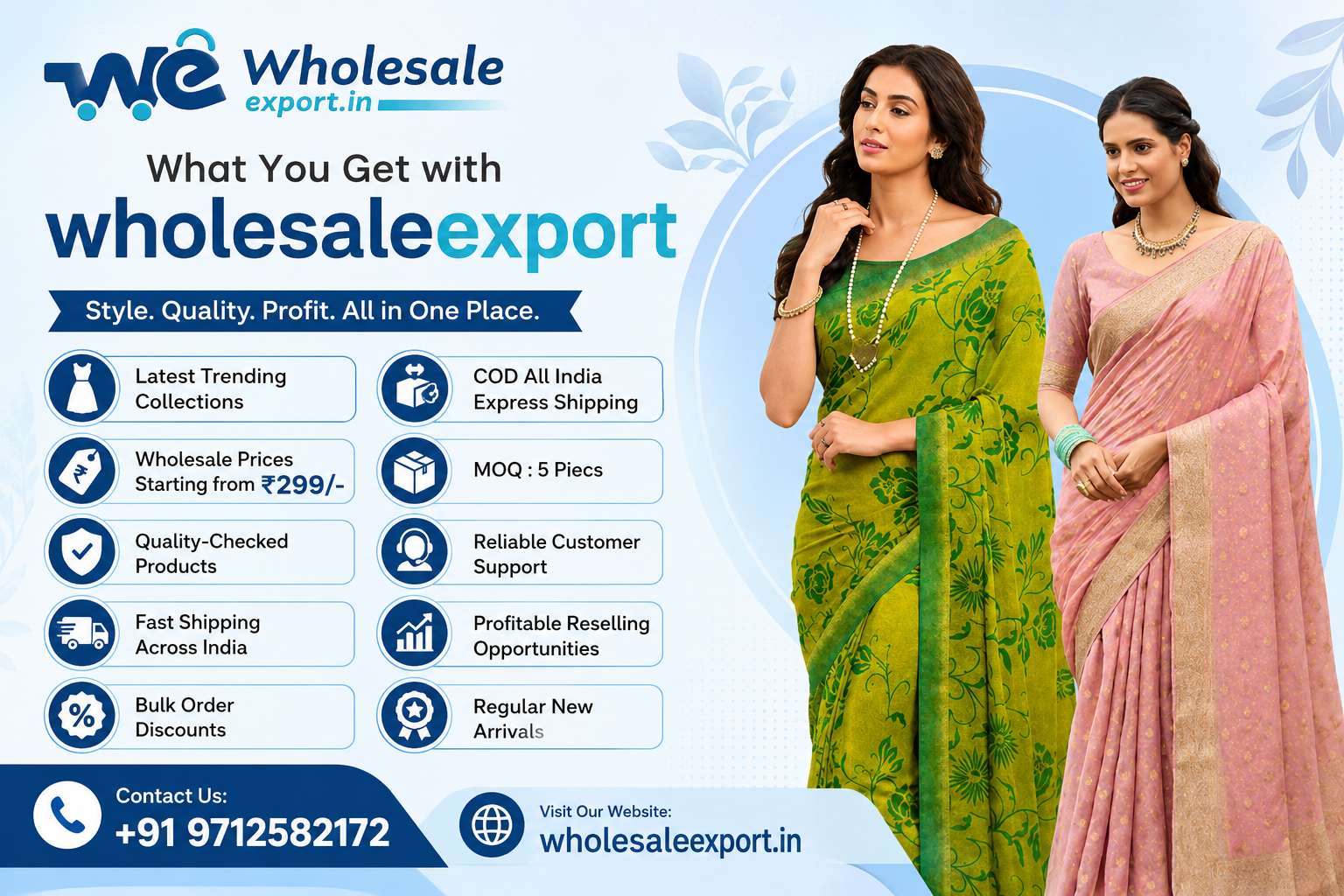
Tussar Silk Saree Wholesale Collection in India: Latest Designs, Price & Buying Guide 2026
Tussar Silk Saree Wholesale Collection in India: Latest Designs, Price & Buying Guide 2026
Tussar silk has a distinctive character that makes it different from many conventional silk sarees. Its naturally textured appearance, elegant drape and sophisticated traditional appeal make it suitable for customers who prefer understated luxury over excessively heavy styling. For retailers and resellers, the category creates opportunities across festive wear, boutique fashion, wedding shopping, gifting and premium ethnic collections, provided the inventory is selected according to customer demand and realistic resale potential.
Introduction
The Indian saree market in 2026 is being shaped by two important customer preferences: appreciation for traditional textiles and demand for contemporary styling. Buyers still value sarees with cultural character, but many now want colours, prints and designs that can be worn beyond major weddings. This combination makes Tussar-inspired collections commercially interesting for Shop Owners, Boutique Owners, Showroom Owners, Home-Based Sellers, Resellers and Wholesale Buyers.
A well-planned Tussar Silk Saree Wholesale Collection can serve customers searching for elegant sarees for festivals, office celebrations, family occasions, wedding functions, gifting and cultural events. The textured surface associated with Tussar gives these sarees a distinctive visual identity, allowing retailers to position them differently from glossy or heavily embellished silk products.
Wholesale purchasing, however, should never depend only on appearance. Buyers need to consider fabric specifications, finishing, border and pallu details, colour combinations, buying price, expected retail value and stock rotation. These factors determine whether an attractive catalogue becomes a profitable collection.
Wholesaleexport.in provides another sourcing channel for businesses looking to explore Indian ethnic-wear collections remotely. This is particularly useful for buyers who want regular product discovery without travelling to a textile market for every new catalogue.
What Makes Tussar Silk Sarees Special?
Tussar silk is widely recognised for its textured character and naturally elegant appearance. Unlike fabrics that depend heavily on surface shine, Tussar-style sarees can create visual richness through texture, colour and artistic design.
For retailers, this provides a useful merchandising advantage. A Tussar silk saree can be presented as sophisticated ethnic wear for customers who appreciate traditional fabrics but prefer an outfit that does not appear excessively ornate.
Distinctive Textured Appearance
The texture associated with Tussar gives the saree a recognisable look. Depending on the product, this character can work beautifully with printed motifs, traditional borders, embroidery-inspired elements and artistic patterns.
Customers who already own conventional silk sarees may find this texture refreshing. For boutiques, that difference can help create a more varied collection instead of displaying products that look too similar.
Traditional Appeal With Contemporary Possibilities
Tussar-style sarees can work with traditional jewellery and classic blouse designs, but they can also be styled with contemporary blouses, minimal accessories and modern draping techniques.
This versatility makes Tussar silk sarees wholesale relevant to different age groups. Mature customers may prefer traditional motifs and deeper colours, while younger buyers may be attracted to artistic prints, pastel tones and minimalist styling.
Suitable for Multiple Occasions
A well-selected Tussar saree does not have to remain limited to wedding wear. Customers can use elegant designs for festivals, office events, religious functions, family celebrations, cultural programmes and formal gatherings.
This wider occasion range can help retailers achieve better inventory movement because the category is not dependent on a single selling season.
Why Tussar Silk Sarees Are Important for Wholesale Buyers
Successful saree retail requires variety. Customers visiting a store or browsing an online catalogue may have different expectations even when their budgets are similar. Some prefer glossy festive sarees, while others specifically search for natural-looking textures and understated elegance.
Adding a Tussar Silk Saree Wholesale Collection allows retailers to address this second customer group while broadening their overall silk assortment.
Useful for Boutique Positioning
Boutique Owners generally benefit from products that have a recognisable character. Instead of competing only on the lowest rate, boutiques can create value through product selection, styling advice and presentation.
Tussar-inspired sarees can be paired with custom blouses, handcrafted jewellery and coordinated accessories to create a complete boutique look. This can increase the customer's perception of value.
Good Category for Online Resellers
Home-Based Sellers and online Resellers depend heavily on visual presentation. Sarees with distinctive textures, artistic prints and attractive borders can generate stronger attention in product photographs and short-form videos.
However, sellers should provide accurate product descriptions and available specifications rather than relying only on images. Transparent communication supports customer confidence and repeat purchases.
Opportunity for Premium Retail Segments
Customers seeking premium ethnic fashion often want products that feel different from mass-market collections. Carefully selected designer Tussar silk sarees can help Showroom Owners and Boutique Owners build a more sophisticated premium section.
Premium positioning does not necessarily mean selecting the most expensive catalogue. The objective is to find products where design, quality and customer perception justify the intended retail rate.
Surat Textile Market for Saree Wholesale Sourcing
Surat is one of India's most active textile trading and manufacturing centres. Its large ecosystem covers fabrics, sarees, dress materials, kurtis, processing, printing, embroidery, garmenting, packaging and wholesale distribution.
The surat textile market attracts buyers from different Indian states as well as businesses involved in international textile trade. The scale of the market gives retailers access to numerous product categories and frequent new arrivals.
Areas around ring road are closely associated with Surat's textile wholesale trade. Sahara darwaza and its surrounding commercial areas also connect buyers to multiple textile markets and wholesale businesses.
Why Retailers Source Sarees From Surat
Variety is one of Surat's biggest advantages. A retailer can explore commercial sarees, printed collections, festive designs, silk-inspired sarees, designer products and related ethnic wear within the same broad sourcing ecosystem.
The city's extensive textile supply chain also supports faster introduction of new products. As customer preferences change, suppliers can bring new colours, patterns and styling ideas to the market.
This makes Surat relevant for buyers searching for wholesale sarees in India, although purchasing decisions should still be based on product suitability rather than the sheer number of available catalogues.
Planning a Surat Wholesale Purchase
Buyers visiting Surat should establish a purchasing plan before entering the market. Decide which categories are required, how much capital can be invested and what retail price ranges perform best among existing customers.
This prevents impulsive buying. An attractive catalogue may look impressive at the wholesaler's counter, but it becomes useful inventory only when it matches actual customer demand.
Trending Tussar Silk Saree Designs for 2026
The saree market continues to balance heritage and modern fashion. In 2026, retailers can benefit from stocking designs that retain traditional identity while offering enough visual freshness for today's customers.
Printed Tussar Silk Sarees
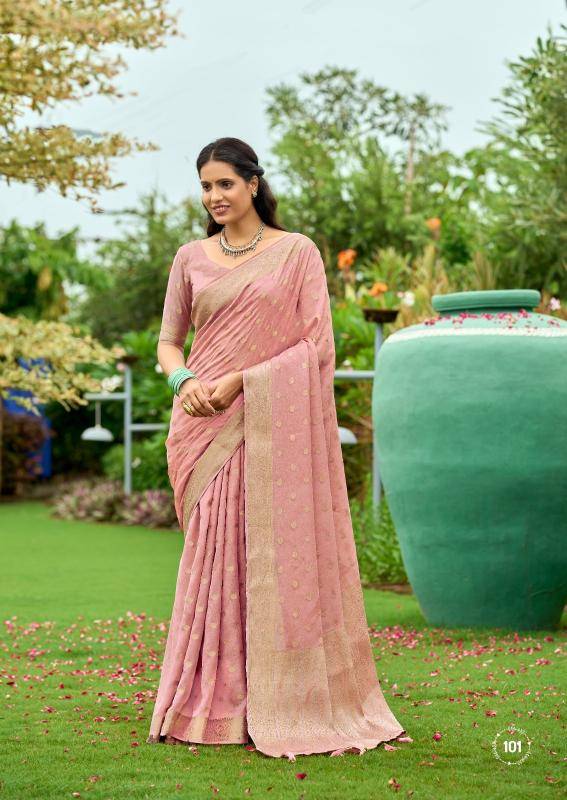
Printed Tussar silk sarees can appeal to customers who want the sophistication of a textured saree with the visual interest of modern patterns. Florals, abstract designs, traditional motifs and artistic layouts can create very different retail looks.
Printed collections can also be practical for social-media sellers because patterns make catalogue photographs visually engaging. Sellers should maintain a balance between bold statement designs and more wearable commercial prints.
Floral Tussar Sarees
Floral designs continue to perform across multiple ethnic-wear categories. Smaller florals can provide a refined everyday or office-ready look, while larger artistic flowers can create a more boutique-oriented appearance.
Retailers should consider the colour relationship between the saree body, motifs and border. Well-balanced combinations generally appear more premium and are easier to merchandise.
Traditional Border Tussar Sarees
Traditional borders can give a textured saree stronger ethnic character. Such designs may be particularly suitable for festivals, family occasions and customers who prefer classic styling.
Deep green, maroon, rust, mustard, beige, wine and earthy shades can complement traditional-inspired designs, while contrasting borders can provide additional visual impact.
Minimal and Contemporary Sarees
Not every customer wants an elaborate saree. Minimal designs with elegant borders and restrained motifs can appeal to working professionals and younger customers seeking sophisticated ethnic wear.
This segment can be commercially useful because the saree may be worn for several occasions rather than being reserved for one major function.
Tussar Silk Saree Wholesale Price and Margin Planning
There is no single standard Tussar silk saree wholesale price. Rates can vary depending on fabric specifications, construction, print or design technique, border, finishing, brand positioning, catalogue quantity and supplier terms.
Wholesale Buyers should therefore avoid comparing two sarees solely by price when their specifications and quality levels are different.
Understand the Complete Landed Cost
The supplier's quoted rate is only one part of inventory cost. Depending on the transaction, retailers may also need to consider taxes, shipping, packaging, advertising and other operating expenses.
Calculating the complete landed cost helps sellers establish a realistic retail rate and understand the actual margin available after expenses.
Balance Margin With Stock Rotation
A large margin on paper does not guarantee profitability if the product moves slowly. Retailers should consider both margin percentage and expected sales speed.
A commercially attractive saree that sells repeatedly can contribute more to annual profit than an expensive product that remains in inventory for months.
Avoid Buying Only Because of Bulk Discounts
Bulk purchasing can reduce the per-piece cost, but it can also increase inventory risk. Buyers should accept larger quantities when they have confidence in the product's selling potential.
For new designs, smaller test quantities can help businesses understand customer response before increasing their investment.
Best Tussar Saree Stock Strategy for Different Buyers
The right inventory depends on the business model. A large showroom, boutique and home-based reseller should not necessarily purchase the same quantity or product mix.
For Home-Based Sellers
Home-Based Sellers can begin with visually strong designs that fit the spending capacity of their customer network. Catalogue photographs should clearly communicate colour, print, border and pallu details.
Sharing selected products instead of overwhelming customers with hundreds of images can make online selling more focused and professional.
For Boutique Owners
Boutique Owners can create a curated Tussar saree collection featuring distinctive prints, elegant colours and styling potential. Products that allow creative blouse combinations can be especially useful.
A boutique can also merchandise sarees by occasion, such as festive elegance, wedding guest styles, office celebrations and premium gifting.
For Shop Owners
Shop Owners generally need a broader mix. Commercial designs can support regular turnover, while selected premium products can attract customers looking for something special.
Tracking sales by colour, design and price range can improve future wholesale buying decisions.
For Showroom Owners and Large Wholesale Buyers
Showroom Owners can divide inventory into clearly defined segments, including affordable sarees, mid-range festive collections and premium designs. This makes it easier for sales staff to guide customers according to budget.
Large Wholesale Buyers should also consider regional demand. A design that performs strongly in one city may not receive the same response in another market.
Digital Sourcing Through Wholesaleexport.in
Online sourcing has made wholesale fashion discovery more convenient for retailers located outside major textile hubs. Instead of travelling for every new catalogue, buyers can review products remotely and shortlist collections according to their business requirements.
Wholesaleexport.in provides access to changing Indian ethnic-wear collections for retailers, boutiques and Resellers. Digital discovery can be particularly useful for businesses that require frequent New Arrivals to maintain customer engagement.
Vastralife brings wholesale and export experience since 2017, backed by textile industry expertise and a focus on premium product quality. For buyers, this industry background can be valuable when building a consistent sourcing strategy rather than making isolated purchases.
Retailers exploring a broader saree assortment can discover georgette sarees alongside traditional and silk-inspired collections. Businesses that also sell unstitched ethnic fashion can explore wholesale dress materials to diversify their inventory according to customer demand.
This broader product mix can help boutiques and stores reduce dependence on a single category while providing customers with more reasons to return.
Tussar Silk Sarees for Domestic and Export Markets
The demand for Indian ethnic wear extends well beyond the domestic market. Sarees continue to attract customers through Indian boutiques, ethnic-fashion stores, online businesses and community retailers in international markets. A carefully selected Tussar Silk Saree Wholesale Collection can therefore create opportunities for businesses serving both Indian and overseas customers.
International sourcing should be approached differently from domestic retail purchasing. Buyers need to consider local customer preferences, seasonal demand, average selling price, shipping costs and product positioning before confirming quantities. The most successful saree export strategy is usually based on market-specific inventory rather than sending the same designs to every destination.
Tussar Sarees for USA Retailers
The USA has a substantial customer base for Indian ethnic fashion, particularly around weddings, Diwali celebrations, cultural events, religious functions and family occasions. Boutiques serving Indian communities can maintain a mix of traditional and contemporary sarees to appeal to customers across generations.
Elegant Tussar-style collections can be positioned for customers who want traditional Indian character without extremely heavy styling. Retailers can combine rich festive shades with softer contemporary colours to broaden their assortment.
Wholesale Opportunities in Australia
Australia provides opportunities for Indian fashion retailers serving South Asian communities as well as customers interested in distinctive ethnic wear. Lightweight-looking, sophisticated sarees can be useful for festivals, weddings and community celebrations.
Online retailers should pay particular attention to catalogue presentation. Clear photographs showing the saree body, border, pallu and blouse combination can make it easier for customers to understand the product remotely.
Tussar Saree Market in Nepal
Nepal is another relevant market for Indian ethnic-wear products. Retailers can explore different saree price segments according to local customer preferences, from commercially positioned products to premium festive collections.
Wholesale Buyers sourcing for international markets should confirm available product specifications, packing, quantity requirements, shipping arrangements and applicable export terms before placing large orders.
Quality Checks Before Buying Tussar Silk Sarees in Bulk
Quality is one of the most important considerations in wholesale purchasing. A catalogue image may create the first impression, but the physical product ultimately determines customer satisfaction. Retailers should therefore understand available specifications before committing significant capital.
Check Fabric Characteristics
Tussar-related wholesale collections can exist across different specifications and commercial price levels. Buyers should verify the available fabric details rather than assuming every similarly named product has identical composition or characteristics.
The feel, texture, fall and overall finish should correspond with the intended retail positioning. Premium boutiques may require a different product level from a volume-focused reseller serving budget-conscious customers.
Evaluate Print and Colour Quality
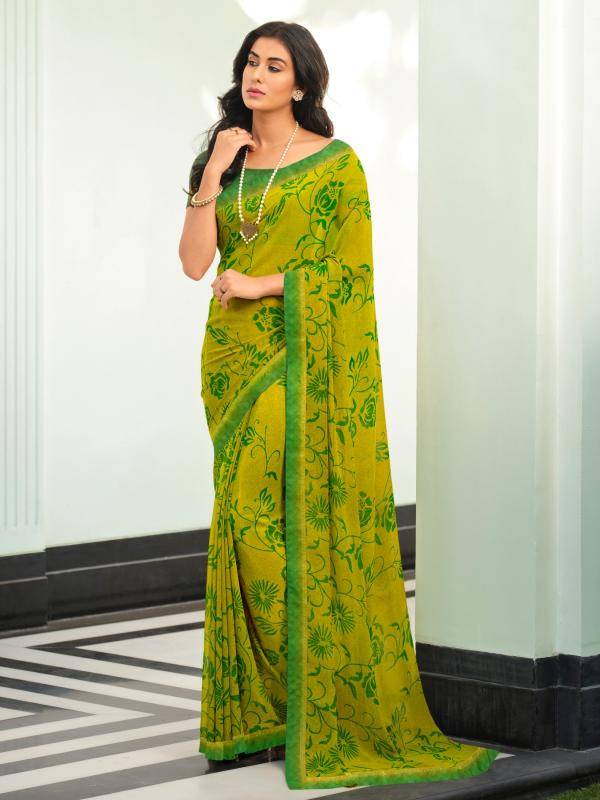
Printed Tussar-style sarees should have visually balanced motifs and appealing colour combinations. Retailers should consider whether the design looks attractive both when folded on a store shelf and when fully draped.
This becomes particularly important for online sellers. Customers viewing products through smartphones rely heavily on photographs, so strong visual presentation can influence enquiries and conversions.
Review Border and Pallu Design
Borders and pallus can significantly change the perceived value of a saree. A simple body with a thoughtfully designed border may look more premium than an overcrowded design.
Boutique Owners should consider how the saree can be styled with jewellery and blouse combinations. Products with strong styling potential can be easier to position as curated boutique fashion.
Check the Complete Product Before Setting Retail Price
The selling rate should reflect the complete product rather than only the fabric category. Design, finishing, border, blouse piece and overall presentation all contribute to perceived value.
Retailers who understand these elements can explain the product more confidently and justify their selling price to customers.
How to Build a Profitable Tussar Saree Inventory
A profitable saree business depends on inventory movement. Purchasing at a good wholesale rate is helpful, but stock needs to convert into sales within a reasonable period.
Create Three Practical Price Segments
Retailers can divide their inventory into affordable, mid-range and premium categories. This creates options for customers with different budgets and reduces the risk of losing an enquiry because every available saree falls within one price bracket.
The proportion allocated to each category should depend on actual sales. A boutique may keep more premium products, while a high-volume retail shop may allocate greater space to commercial ranges.
Keep Core Sellers and Trending Designs Together
Traditional colours and wearable designs provide stability, while trending products create excitement. A balanced Tussar silk sarees wholesale assortment should contain both.
Retailers can maintain dependable shades such as maroon, green, mustard, beige and wine while periodically introducing new pastels, artistic prints and contemporary combinations.
Track Inventory Rotation
Sales records can reveal which products deserve repeat purchasing. Retailers should monitor design, colour, price range and customer type instead of relying entirely on memory.
If a particular style repeatedly sells faster, the next wholesale purchase can allocate more capital to similar designs. Slow-moving products can be reduced or replaced with newer alternatives.
2026 Saree Selling Strategy for Online Resellers
Digital retail has changed how customers discover ethnic fashion. In 2026, many customers see a saree on Instagram, WhatsApp, Facebook or short-form video before they ever visit a physical store.
This gives Home-Based Sellers and Resellers an opportunity to compete through product selection, presentation and customer service without requiring a large showroom.
Share Selected Collections Instead of Everything
Sending hundreds of catalogue photographs can overwhelm customers. Sellers can instead select products according to the customer's preferred colour, occasion and budget.
Curated sharing makes the buying process easier and positions the reseller as someone who understands the customer's requirements rather than simply forwarding catalogues.
Use Product-Focused Videos
Short videos can show fabric movement, pallu design and border detailing more effectively than a single photograph. Such content can also be reused across Instagram Reels, Facebook and WhatsApp Status.
Build Repeat Customers
Existing customers are valuable because they already understand the seller's service and product positioning. Sellers can periodically share relevant New Arrivals instead of waiting for previous customers to return independently.
The objective should not be to send every update to everyone. Targeted communication generally feels more useful and can produce better responses.
Wholesale Strategy for Boutique Owners
Boutiques can create additional value by transforming wholesale products into curated fashion experiences. Instead of competing entirely on price, Boutique Owners can differentiate through selection and styling.
Use Custom Blouse Styling
A distinctive blouse can completely change the appearance of a saree. Tussar-style products can be paired with embroidered, printed, contrast or contemporary blouse designs depending on the customer.
Showing blouse ideas can help customers visualise the finished outfit and increase the perceived uniqueness of the product.
Create Occasion-Based Collections
Instead of arranging every saree only according to fabric, boutiques can create sections such as Festive Elegance, Wedding Guest Collection, Office Celebration Sarees, Premium Gifting and Contemporary Traditional Wear.
This makes product discovery easier because customers generally shop with an occasion in mind.
Combine Sarees With Accessories
Jewellery, handbags and complementary accessories can help boutiques create a complete styling concept. Even when the customer purchases only the saree, a complete presentation can make the product appear more desirable.
Wholesale Strategy for Shops and Showrooms
Physical stores have the advantage of allowing customers to touch, compare and drape sarees. Retailers should use this advantage through thoughtful merchandising.
Organise Sarees by Customer Budget
Sales staff can respond more efficiently when inventory is clearly segmented by retail range. Once the customer's budget is understood, suitable products can be presented without unnecessary confusion.
Refresh Front Displays Frequently
Regular customers should see something different when they return. Moving new designs to prominent display areas can make the store feel fresh even when part of the inventory remains unchanged.
Use Seasonal Inventory Planning
Festivals and wedding periods can create increased saree demand. Retailers should prepare stock and marketing material before these periods rather than purchasing only after demand begins.
Early preparation gives businesses more time to promote products and reorder fast-selling collections where available.
Why Regular New Arrivals Matter in Wholesale Fashion
Fashion customers are constantly exposed to new products online. This means even traditional textile categories benefit from frequent visual freshness.
Regular New Arrivals give retailers content for social media and provide customers with a reason to return. A fresh Tussar Silk Saree Wholesale Collection can be promoted through store displays, WhatsApp groups, Instagram posts, short videos and direct customer communication.
Wholesaleexport.in helps buyers discover changing ethnic-wear collections so they can refresh their inventory according to customer requirements rather than depending on one seasonal purchase.
Industry Experience Behind Wholesale Sourcing
Wholesale sourcing is not only about finding products. Retailers also need an understanding of changing fashion, customer demand, inventory planning and textile-market dynamics.
Vastralife has been involved in wholesale and export since 2017, bringing practical industry expertise to textile sourcing. The focus on premium product quality and evolving wholesale collections can support businesses looking for long-term sourcing opportunities.
This experience is relevant for Shop Owners, Boutique Owners, Showroom Owners, Resellers and Wholesale Buyers who need regular products rather than a one-time catalogue.
Wholesaleexport.in provides a digital route for discovering Indian wholesale fashion while Surat's manufacturing and trading ecosystem continues to support a broad variety of ethnic-wear products.
Internal Linking and Related Product Discovery
Saree retailers can strengthen their product mix by exploring related ethnic-wear categories. Customers rarely purchase only one type of fashion product throughout the year, so a broader assortment can create additional sales opportunities.
Tussar-inspired sarees can sit alongside printed sarees, festive designs, lightweight occasion wear, dress materials, kurtis and other women's ethnic fashion. The exact product mix should depend on customer demand rather than simply increasing the number of categories.
Retailers can also analyse which products customers frequently purchase together. This information can help create more effective store displays, online promotions and seasonal campaigns.
Customer FAQs About Tussar Silk Saree Wholesale
1. What makes Tussar silk sarees different from other silk sarees?
Tussar is known for its distinctive textured character and naturally elegant appearance. Product specifications can vary, so wholesale buyers should always review the available fabric information for the particular collection they intend to purchase.
2. Where can I buy Tussar silk sarees wholesale?
Wholesale buyers can source sarees through textile markets, manufacturers, distributors and online wholesale channels. Surat's Ring Road and Sahara Darwaza areas are well known for textile trading, while Wholesaleexport.in provides another way to explore available collections remotely.
3. Are Tussar sarees good for boutique businesses?
Yes. Their textured appearance and styling potential can make them useful for boutiques. Boutique Owners can further differentiate products through blouse customisation, jewellery coordination and curated presentation.
4. Can Home-Based Sellers resell Tussar sarees?
Yes. Home-Based Sellers can promote wholesale saree collections through WhatsApp, Instagram, Facebook and their customer networks. Accurate descriptions, attractive images and dependable communication are particularly important for remote selling.
5. What is the wholesale price of Tussar silk sarees?
Wholesale pricing varies according to fabric specifications, design, print, border, finishing, catalogue positioning, order quantity and supplier terms. Buyers should compare comparable products instead of selecting inventory only on the lowest quoted rate.
6. Which Tussar saree designs are popular in 2026?
Printed designs, florals, traditional borders, artistic motifs, earthy shades, contemporary pastels and minimal styling are useful categories for retailers to explore. Actual demand will vary by market and customer profile.
7. Can Tussar sarees be sourced for international markets?
Indian sarees have demand in multiple overseas markets. International Wholesale Buyers should confirm product specifications, quantities, packing, shipping and applicable export requirements before placing orders.
8. How much inventory should a new reseller purchase?
There is no single quantity suitable for every business. New sellers can consider manageable quantities while learning which designs, colours and price points generate the strongest customer response.
9. Is Surat suitable for wholesale saree sourcing?
Yes. Surat has an extensive textile manufacturing, processing and wholesale trading ecosystem. Buyers can explore sarees as well as related categories such as dress materials, kurtis and other ethnic wear.
10. How can retailers improve profit on wholesale sarees?
Retailers can improve profitability by controlling landed cost, maintaining appropriate margins, reducing slow-moving inventory, tracking customer demand and investing more heavily in designs that demonstrate consistent sales.
Order Tussar Silk Saree Wholesale Collections for Your Business
If you are a Home-Based Seller, Shop Owner, Boutique Owner, Showroom Owner, Reseller or Wholesale Buyer looking to expand your ethnic-wear inventory, selecting the right products can help improve both customer satisfaction and stock rotation.
Wholesaleexport.in gives buyers access to Latest Collections, competitive Wholesale Pricing and Trendy Ethnic Wear for different business requirements.
Buyers can also enquire about Fast Shipping, applicable COD Support and Bulk Order Deals. Businesses searching for affordable wholesale inventory can explore Quality Products Starting From ₹299 across available product categories.
Contact Us: +91 9712582172
Website: wholesaleexport.in
A successful saree business is built by combining attractive products with disciplined purchasing. Understand your customer's preferred price range, monitor which designs sell, maintain enough variety to keep the collection interesting and avoid locking excessive capital into uncertain inventory.
With Surat's strong textile manufacturing ecosystem, Vastralife's wholesale and export experience since 2017 and regular product discovery through Wholesaleexport.in, retailers can build a more structured wholesale sourcing strategy for 2026. Whether the goal is to grow a home-based reselling business, strengthen a boutique collection or purchase for a large showroom, the focus should remain on quality, customer demand and sustainable resale potential.