


Surat Saree Manufacturer Guide 2026: Wholesale Sarees, Prices & Export Buying
Surat Saree Manufacturer Guide 2026: Wholesale Sarees, Prices & Export Buying
Surat continues to be one of India’s most active sourcing destinations for sarees, giving retailers, boutique owners, resellers and wholesale buyers access to an enormous variety of designs at competitive rates. From everyday printed sarees to festive collections, Banarasi-inspired styles, designer sarees and premium occasion wear, buyers can source collections for different customer segments from one textile hub. For businesses planning their 2026 inventory, understanding where products come from, how wholesale pricing works and how to select reliable suppliers can make purchasing more profitable and considerably easier.
Introduction
A successful saree business depends on much more than finding an attractive design. Buyers need the right combination of wholesale saree price, fabric quality, dependable supply, fresh designs, practical minimum order quantities and consistent dispatch. This is why Surat remains an important sourcing destination for shop owners and online sellers throughout India.
The city has developed a broad textile ecosystem involving fabric suppliers, processors, designers, manufacturers, wholesalers, traders, packers and logistics companies. Buyers visiting the surat textile market can therefore compare several product categories and price segments within the same sourcing ecosystem.
For buyers who cannot travel to Surat regularly, online wholesale sourcing has become increasingly important. Platforms such as Wholesaleexport.in help businesses explore collections remotely and place wholesale orders without having to physically visit different markets for every purchase.
This Surat saree manufacturer guide is designed for home-based sellers, shop owners, boutique owners, showroom owners, resellers and wholesale buyers who want to understand how to source sarees more efficiently in 2026.
Why Surat Is a Major Saree Sourcing Hub in India
Surat’s strength comes from the scale and diversity of its textile industry. Instead of being dependent on a single saree category, the city handles products across everyday, mid-range, festive and premium segments. This allows a retailer to build a broader inventory without sourcing every category from a different city.
Strong Textile Manufacturing Ecosystem
The local manufacturing ecosystem supports multiple stages of garment and saree production. Depending on the product, this may include fabric sourcing, dyeing, printing, embroidery, weaving, finishing, design development, packaging and wholesale distribution.
For buyers, this concentration can improve access to new collections and make comparison easier. It is one reason searches for saree manufacturers in Surat, Surat saree wholesalers, designer saree suppliers and wholesale saree markets remain commercially important.
Wide Variety for Different Customer Segments
Not every customer walking into a saree store has the same budget or occasion in mind. A retailer may need lightweight daily-wear sarees in one range and heavily designed wedding or festive sarees in another. Surat suppliers commonly serve multiple segments, including cotton sarees, printed sarees, georgette sarees, chiffon sarees, silk-look sarees, embroidered sarees, party-wear sarees and designer collections.
This variety is particularly useful for resellers because they can test several designs and identify what performs best with their own audience rather than depending on one narrow category.
Popular Saree Categories to Source from Surat in 2026
Fashion changes quickly, but wholesale buyers generally perform better when they combine dependable repeat-selling products with fresh seasonal collections. Instead of buying only what appears fashionable in a catalogue, businesses should consider their customer profile, climate, occasion calendar and selling price.
Designer Sarees for Boutique and Showroom Buyers
Designer sarees wholesale collections can work well for boutiques, premium retailers and showrooms targeting festive functions, weddings, receptions and family celebrations. Embroidery, decorative borders, contemporary blouse concepts, sequins, zari-inspired details and coordinated colour combinations can help these products stand apart from basic daily-wear inventory.
When buying designer pieces in bulk, examine the complete product rather than judging only the catalogue photograph. Fabric fall, border finishing, blouse material, embroidery placement and colour consistency all influence the customer’s final perception of quality.
Banarasi and Traditional-Look Sarees
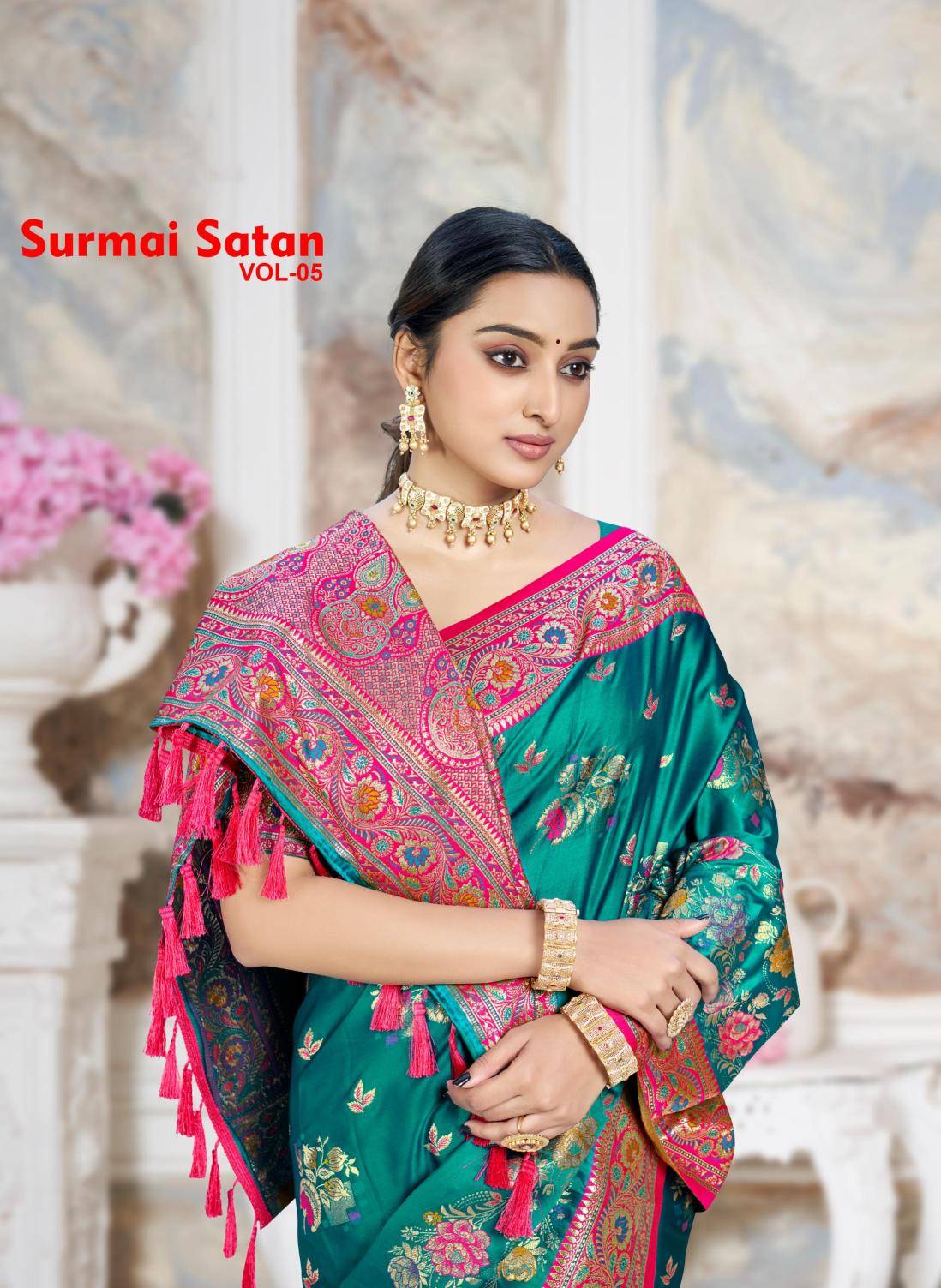
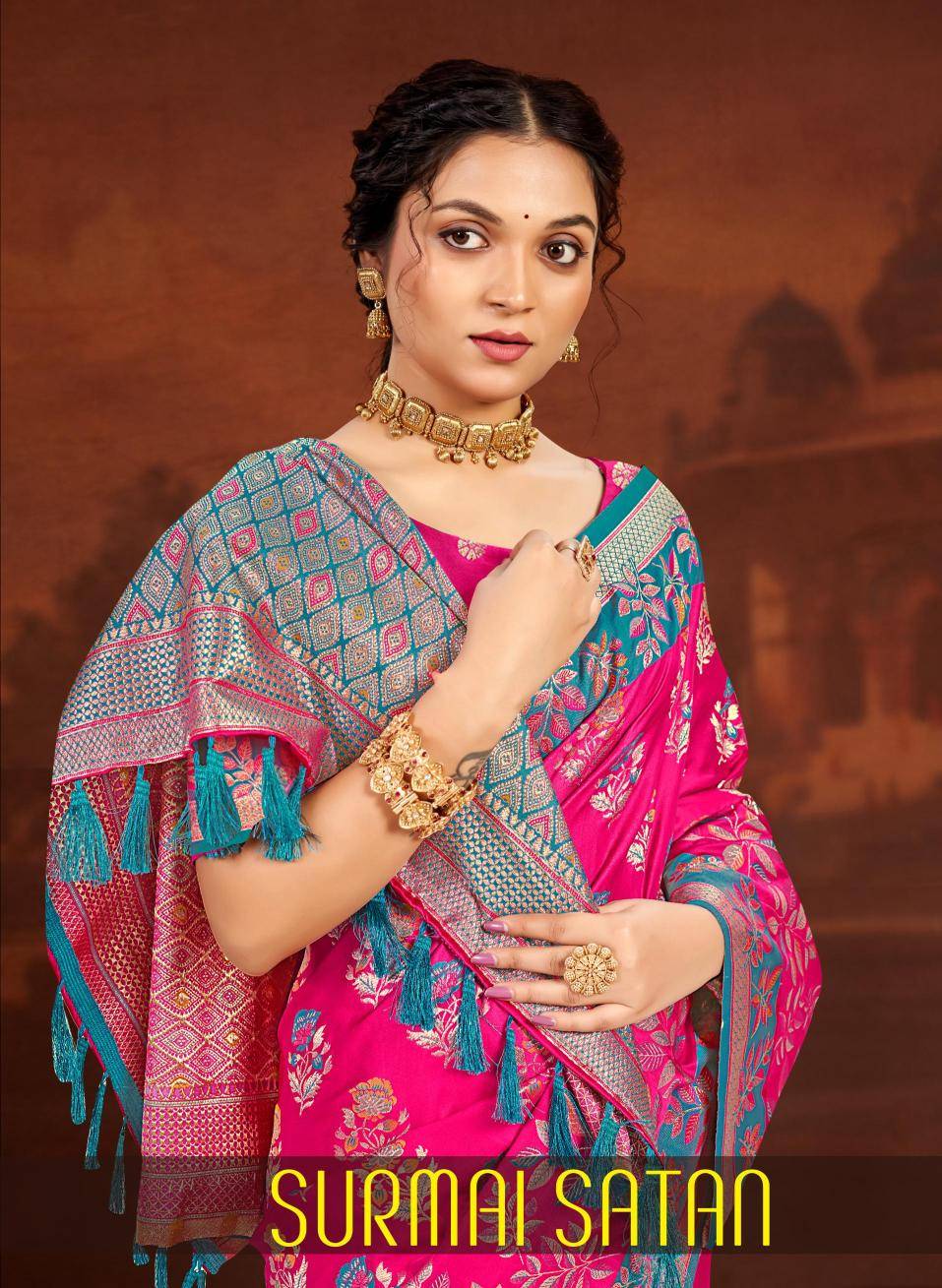
Traditional styling remains commercially valuable because it serves weddings, festivals, gifting and occasion wear. Banarasi saree wholesale collections and Banarasi-inspired designs can provide retailers with rich-looking options across several price bands.
Wholesale buyers should check the actual fabric specification and construction rather than assuming every traditional-looking design uses the same material or weaving method. Accurate product descriptions help retailers set the right customer expectations.
Printed and Everyday Sarees
Printed sarees can provide repeat business because they are often easier to sell for regular use. Floral prints, abstract patterns, geometric designs, traditional motifs and contemporary colour combinations allow sellers to build a varied range without relying exclusively on premium occasion wear.
Home-based sellers and social-commerce resellers can particularly benefit from visually attractive collections that can be presented easily through product photographs, videos and WhatsApp catalogues.
Festive and Wedding Sarees
Festive buying is strongly influenced by timing. Retailers should ideally source important collections before demand reaches its peak. Waiting until customers have already started asking for wedding or festival stock can result in reduced design availability and greater pressure on dispatch schedules.
A balanced festive inventory can include traditional colours alongside contemporary shades, giving customers more choice while reducing dependence on one fashion direction.
Understanding Surat Saree Wholesale Price in 2026
One of the most common questions from buyers is the Surat saree wholesale price. There is no single rate that represents the entire market because the final price depends on fabric, construction, design complexity, work, finishing, brand positioning and quantity.
A simple printed product intended for regular retail naturally has a different cost structure from an embroidered festive saree. Similarly, a premium catalogue collection can carry a different wholesale rate from an entry-level volume product.
What Determines Wholesale Saree Pricing?
Fabric is one of the first cost factors, but it is not the only one. Printing method, weaving, embroidery, zari-style detailing, sequins, border work, blouse material, finishing, packaging and overall design development can all affect the final price.
Quantity can also matter. Some suppliers work catalogue-wise, while others provide different conditions for larger bulk orders. Wholesale buyers should therefore compare the complete buying terms instead of selecting a supplier based only on the lowest quoted rate.
Calculate Your Landed Cost, Not Just Purchase Price
A retailer buying stock should calculate the actual landed cost. That can include the wholesale product price, applicable taxes, transport, payment charges where relevant and onward delivery expenses. Export buyers may also need to consider international freight and destination-related costs.
This approach gives a more realistic understanding of margins. A product that is slightly cheaper at purchase can ultimately cost more if logistics, packaging or quality issues increase the total expense.
Ring Road and Sahara Darwaza: Important Textile Sourcing Areas
For anyone researching the physical surat textile market, ring road and sahara darwaza frequently appear in wholesale sourcing discussions. These areas are associated with a dense concentration of textile businesses and markets serving buyers from different parts of India.
A first-time buyer should avoid trying to evaluate every supplier in a single visit. It is more practical to prepare the required categories, target price ranges and approximate quantities beforehand. This turns a market visit into a purchasing exercise rather than an unstructured search.
Prepare Before Visiting the Market
Create a purchasing list divided into categories such as daily wear, festive, premium, wedding, printed and traditional. Decide how much of your total budget should go into each segment. This prevents attractive but unsuitable collections from consuming too much working capital.
Shop owners should also know their approximate retail selling bands. If most customers buy within a particular budget, sourcing too heavily above that range can slow inventory movement even when the products themselves are attractive.
Ask the Right Questions Before Ordering
Before confirming wholesale stock, ask about fabric, available colours, catalogue quantity, minimum order requirement, dispatch time, stock availability and replacement or damage policies where applicable. For online purchases, request clear product information and understand the supplier’s terms before making payment.
Professional sourcing is ultimately about consistency. One profitable purchase is useful, but a dependable supplier relationship can support repeated business throughout the year.
How Retailers Should Select a Surat Saree Manufacturer or Wholesaler
Choosing among Surat saree manufacturers and wholesale suppliers should be based on your business model. A large showroom buying deep inventory has different requirements from a home-based reseller testing a few catalogues.
Check Product Relevance Before Variety
A supplier may offer hundreds of designs, but large variety is useful only when those products match your customer base. A boutique selling premium occasion wear should focus on design distinction and finishing, while a volume retailer may prioritize repeatable styles, competitive rates and fast replenishment.
Study your own sales data wherever possible. Identify which fabrics, colours, price ranges and designs sell repeatedly. Use those patterns to guide wholesale purchasing rather than buying purely on personal taste.
Compare Quality at the Same Price Level
Comparisons should be like-for-like. A basic saree and a premium designer saree cannot be judged solely by which one has a lower price. Compare similar fabrics, work levels and product positioning across suppliers.
Premium product quality can support better customer retention because customers remember fabric feel, finishing and whether the delivered product matches expectations. For online resellers, consistency is especially important because the customer often makes the buying decision from images or videos.
Look for Reliable Stock and Dispatch
Fast-moving products can sell out quickly. Before promoting a catalogue heavily, confirm whether stock is available and how quickly the supplier can dispatch it. This is particularly important during wedding and festival seasons when demand can change within days.
Wholesaleexport.in provides an online route for buyers who want to browse wholesale fashion collections without depending entirely on repeated physical visits to Surat.
Saree Wholesale Opportunities for Resellers and Boutique Owners
The saree market supports several business models. A traditional retail store can maintain ready inventory, while a home-based seller can promote selected designs through WhatsApp, Instagram or customer groups. Boutiques may curate fewer but more distinctive products, and wholesale buyers may purchase larger quantities for regional distribution.
Home-Based Sellers
Home-based sellers can begin with carefully selected designs rather than carrying excessive inventory. Focus on products that photograph well, have clearly understandable fabric specifications and fit the spending capacity of your customer network.
Regular new arrivals can help keep social selling channels active. However, posting more designs does not automatically create more sales. A smaller collection matched closely to customer demand can perform better than hundreds of unrelated products.
Boutique and Shop Owners
Boutique owners can combine classic sarees with limited premium pieces to create differentiation. Shop owners serving a broader customer base can divide inventory into practical price bands so shoppers have options at entry, middle and premium levels.
The goal is not simply to find the cheapest saree wholesaler in Surat. It is to build a stock mix where price, design and quality make commercial sense for the final customer.
Showroom and Wholesale Buyers
Larger buyers should pay particular attention to replenishment capability, catalogue continuity and bulk order terms. When purchasing greater quantities, even small differences in product selection, freight or sell-through rate can have a meaningful effect on overall profitability.
For 2026 purchasing, wholesalers can also use digital catalogues to shortlist collections before placing larger orders, reducing the time required for initial product discovery.
For international buyers, supplier selection becomes even more important because replenishment takes longer than local purchasing. Businesses serving markets such as Nepal, Australia and Canada should therefore plan quantities around expected demand, shipping timelines and the selling season. A commercially attractive catalogue is most useful when the supplier can provide clear product information and dependable order processing.
Wholesale Saree Export from Surat
Surat’s textile ecosystem serves not only domestic retailers but also businesses purchasing Indian ethnic wear for overseas markets. Sarees have a customer base among Indian communities abroad as well as shoppers interested in traditional and occasion-oriented fashion. This creates opportunities for boutiques, resellers, ethnic-fashion stores and importers looking for wholesale sarees from India.
For export orders, buyers should consider more than the individual product rate. Product weight, shipment size, packing, destination, freight method and order value can influence the landed cost. Before placing a large order, it is sensible to understand the complete commercial calculation.
Buying Sarees for Nepal
Nepal is a natural market for Indian ethnic fashion because sarees remain relevant for weddings, festivals, functions and traditional occasions. Wholesale buyers can select a combination of festive sarees, traditional designs, lightweight options and premium styles according to their local customer segment.
Seasonal planning matters here. Retailers should order sufficiently early so that transportation time does not reduce the effective selling period. The best-performing festive collection has limited value if it arrives after peak customer demand has already begun.
Sourcing for Australia and Canada
Ethnic-fashion retailers serving customers in Australia and Canada can build collections around weddings, festivals, community events and occasion wear. Because overseas customers may compare Indian fashion across both physical and online stores, good product presentation is important alongside fabric quality and design.
For overseas sourcing, retailers can benefit from ordering coordinated collections across multiple price levels. Entry-level sarees can serve value-conscious shoppers, while premium designer styles can target customers shopping for weddings and major celebrations.
What Buyers Should Check Before Placing a Bulk Saree Order
Bulk purchasing can improve buying economics, but it also increases inventory exposure. A disciplined checking process helps buyers reduce avoidable mistakes before committing working capital.
Confirm Fabric and Product Details
Never rely only on the product name. Confirm the fabric description, blouse details, work type, colour assortment and whether the catalogue includes different designs or repeated patterns. Product photographs are valuable for selection, but specifications help determine whether the collection matches the intended customer and retail price.
Understand MOQ and Catalogue Conditions
Wholesale sarees may be offered as full catalogues, selected pieces or bulk quantities depending on the supplier and collection. Ask about the minimum order quantity before planning your purchase.
For resellers testing a new category, manageable quantities can reduce inventory risk. Larger wholesalers, on the other hand, may prefer bulk order deals when a design has already demonstrated strong demand.
Check Current Stock Before Payment
Fashion inventory moves quickly. A catalogue available today may not necessarily remain fully available after several days, especially during a peak season. Confirm current stock at the time you are ready to order rather than assuming an older catalogue remains unchanged.
This is particularly important for popular colours and fast-moving festive designs. Buyers planning promotional campaigns should ideally secure stock before investing heavily in advertising a particular collection.
Understand Dispatch and Claim Conditions
Before purchasing, understand the supplier’s dispatch process and policies relating to manufacturing defects or transit-related issues. Businesses should also inspect received parcels promptly and maintain proper records of their orders.
A clear process protects both buyer and supplier and makes repeat transactions easier.
How to Build a Profitable Saree Collection
A profitable saree inventory usually contains a deliberate mix rather than one type of product. Retailers can divide their purchasing budget among proven everyday products, current trends, seasonal collections and a smaller premium segment.
This approach allows businesses to serve several customer requirements while controlling inventory risk. It also creates opportunities for upselling because a customer entering at one price level can compare options in a slightly higher segment.
Keep Core Repeat-Selling Products
Every collection does not need to be trend-driven. Regular customers often need practical sarees for daily use, office wear, gifting and smaller functions. These categories can generate repeat purchases throughout the year.
Maintain sufficient variety in colours and prints, but avoid buying excessive depth in an untested design. Once a product demonstrates repeat demand, restocking it becomes a more data-driven decision.
Add Seasonal and Festive Collections at the Right Time
Wedding and festival collections can create higher-value sales, but timing is critical. Plan purchases before major demand periods and allow enough time for photography, customer promotion, order taking and replenishment.
Retailers selling online should begin displaying upcoming collections before the peak purchase period rather than waiting until the festival is very close.
Use Price Bands to Manage Inventory
Instead of buying randomly, organize your inventory by intended retail segment. For example, you can maintain value-oriented products for regular customers, mid-range designs for gifting and functions, and premium sarees for weddings and special occasions.
This makes purchasing more systematic and gives sales staff or resellers a clear way to recommend products according to a customer’s budget.
Internal Linking: Explore More Wholesale Fashion Categories
Buyers who are building a broader ethnic-wear inventory can explore Banarasi saree wholesale collections for traditional, festive and wedding-focused demand. Adding related categories can help retailers offer customers more choice without moving away from their core ethnic-wear business.
Businesses that want to expand beyond sarees can also explore the kurti wholesale market segment for everyday, office, casual and festive merchandise. A combination of sarees and kurtis can be particularly useful for stores serving customers across different age groups and wearing occasions.
Why Digital Wholesale Sourcing Is Growing in 2026
Traditional market visits remain valuable, especially when a buyer wants to inspect a large number of products personally. However, digital wholesale sourcing has changed how frequently retailers need to travel for every new collection.
Through online platforms, a buyer can review new arrivals, shortlist suitable products and communicate order requirements remotely. This can be especially useful for retailers located far from Surat and for overseas buyers who cannot make frequent sourcing visits.
Faster Collection Discovery
Online catalogues make it easier to check several categories without walking through multiple markets. Buyers can quickly identify whether a collection fits their expected price level, customer profile and fashion direction before making an enquiry.
Wholesaleexport.in is designed to help wholesale buyers discover ethnic-fashion products and connect their purchasing process with Surat’s large sourcing ecosystem.
Useful for Resellers and Home-Based Businesses
Home-based sellers often operate without a traditional showroom. Digital product discovery therefore allows them to work with a wider selection while keeping their business relatively flexible.
They can promote relevant designs to their customer network, study responses and gradually identify which categories generate the strongest demand. This approach can help newer sellers avoid buying large quantities simply because a particular product looks attractive.
Vastralife Wholesale and Export Experience Since 2017
Experience in textile sourcing is valuable because fashion wholesale involves constantly changing designs, fabrics, demand cycles and customer preferences. Vastralife has wholesale and export experience since 2017, serving buyers looking for Indian ethnic-wear collections across domestic and international markets.
Industry expertise helps in understanding what different buyers require. A home-based reseller may prioritize manageable ordering and fresh catalogues, while a large wholesale buyer may focus on volume, consistent supply and commercially workable rates.
Product selection also requires attention to premium product quality. Buyers need products that look attractive in catalogues while also meeting customer expectations when physically received. Fabric, stitching where applicable, finishing, design execution and packaging all contribute to the overall buying experience.
Through Wholesaleexport.in, businesses can explore wholesale fashion opportunities while benefiting from experience connected with Surat’s textile trade.
Surat Saree Sourcing Strategy for 2026
The strongest sourcing strategy is based on customer demand rather than simply purchasing the newest catalogue available. Before ordering, review what sold during the previous season, which price ranges moved fastest and which designs remained unsold.
Use Sales Data for Repeat Buying
If floral prints repeatedly sell faster than abstract patterns in your store, that information should influence the next purchase. Similarly, if customers consistently ask for lightweight sarees within a particular retail range, maintaining that segment can be more profitable than continuously experimenting with unrelated premium stock.
Even small resellers can maintain simple records of enquiries and completed sales. Over time, this information becomes valuable purchasing intelligence.
Do Not Depend on a Single Fashion Trend
Trends can generate quick demand, but fashion can also change quickly. Build a core inventory around reliable categories and use part of your budget for trend-led products. This reduces the risk of being left with excessive stock after a short-lived trend slows down.
Plan Reorders Before Stock Is Completely Sold
When a collection begins selling strongly, check availability early. Waiting until every piece has sold can create a gap before replacement stock arrives. This is especially relevant when the product must be transported to another state or exported overseas.
Retailers purchasing through the Surat textile market ecosystem can improve inventory turnover by treating replenishment as part of the original buying strategy rather than an afterthought.
Customer FAQs
1. Where can I buy sarees wholesale in Surat?
Wholesale buyers can source sarees through suppliers connected with major textile areas around Ring Road and Sahara Darwaza or use online wholesale platforms such as Wholesaleexport.in. The right option depends on your required category, quantity, budget and whether you prefer physical or online sourcing.
2. What is the wholesale price of sarees in Surat?
There is no single wholesale rate because pricing changes according to fabric, printing, embroidery, weaving, design, finishing, brand and order quantity. Buyers should compare similar-quality products and calculate landed cost rather than selecting stock only on the lowest quoted price.
3. Can home-based sellers purchase wholesale sarees?
Yes. Home-based sellers and resellers can source wholesale collections, but minimum quantities and catalogue conditions can vary by product. Starting with carefully selected fast-moving categories can help control inventory investment.
4. Can Surat sarees be supplied for export orders?
Yes, many Surat-based textile businesses work with international buyers. Export feasibility, freight and delivery arrangements depend on destination, quantity, shipment weight and order requirements. Buyers should confirm complete shipping and commercial terms before placing an international order.
5. Which sarees should a new retailer stock first?
A new retailer can begin with a balanced mix of regular-use products, popular printed styles, a limited festive range and selected traditional designs. The exact mix should reflect the spending level, age profile and occasion requirements of the retailer’s target customers.
6. How can I choose a reliable Surat saree supplier?
Check product specifications, quality consistency, current stock, wholesale terms, dispatch process, communication and experience. For repeat business, reliability and product-market fit are usually more important than choosing purely on the lowest rate.
7. Is online saree wholesale buying suitable for boutique owners?
Yes. Online sourcing can help boutique owners discover new designs without making frequent market visits. Buyers should still review fabric details, product specifications, order conditions and supplier policies before confirming stock.
8. When should I buy festive saree stock?
Buy early enough to receive, photograph, promote and sell the merchandise before peak demand. Buyers outside Surat and international customers should allow additional transportation time when planning seasonal inventory.
Order Latest Wholesale Saree and Ethnic Wear Collections
If you are a home-based seller, reseller, boutique owner, shop owner, showroom owner or wholesale buyer looking for new ethnic-fashion inventory, explore the latest collections available through Wholesaleexport.in.
Build your next inventory with Latest Collections, competitive Wholesale Pricing, Trendy Ethnic Wear, Fast Shipping, COD Support, Bulk Order Deals and Quality Products Starting From ₹299.
Whether you are purchasing for India or developing an ethnic-wear business for markets such as Nepal, Australia or Canada, choosing the right products, price levels and quantities can help create a healthier inventory cycle.
Contact Number: +91 9712582172
Website: wholesaleexport.in
Explore fresh wholesale collections, compare products according to your customer segment and plan your 2026 inventory with a sourcing approach focused on quality, market demand and long-term business growth.