


Sequence Work Dress Material Wholesale Guide 2026 – Latest Designs, Fabrics & Buying Trends
Sequence Work Dress Material Wholesale Guide 2026 – Latest Designs, Fabrics & Buying Trends
Indian ethnic fashion continues to evolve with fresh surface detailing, elegant fabrics and designs that can move easily from festive occasions to party wear. Among these styles, Sequence Work Dress Material has become an attractive category for boutiques, resellers, shop owners and wholesale buyers looking for products that offer a premium appearance without restricting customers to one stitched pattern. The flexibility of unstitched dress material combined with decorative sequin detailing makes this category suitable for a wide variety of regional and international markets.
Introduction
The demand for decorative ethnic wear is no longer limited to weddings or major festivals. Customers increasingly look for outfits that can work for family functions, festive gatherings, celebrations, evening events and occasional wear. This has created strong opportunities for retailers who maintain a balanced collection of embroidered, printed and embellished dress materials.
A well-selected sequin work dress material can deliver the visual appeal of designer clothing while allowing the buyer to customize the final salwar suit according to preferred measurements, neckline, sleeves and bottom style. For wholesalers and retailers, this flexibility can help one design appeal to customers across different age groups and body types.
In 2026, buyers are also becoming more selective about the quality of embellishment. Heavy decoration alone does not automatically make a product attractive. Fabric quality, sequin placement, embroidery finishing, dupatta coordination, color combination and overall wearability are equally important. This is why experienced buyers generally evaluate the complete set rather than selecting merchandise only from photographs.
Wholesaleexport.in connects buyers with ethnic wear collections sourced around established textile markets and manufacturing networks. Supported by Vastralife's wholesale and export experience since 2017, the focus remains on practical wholesale sourcing, premium product quality and collections suited to the needs of boutiques, resellers, showrooms and professional wholesale buyers.
Why Sequence Work Dress Material Is Attractive for Wholesale Buyers
The commercial appeal of sequence and sequin detailing comes from its ability to make a fabric appear more festive without necessarily requiring extremely heavy embroidery. Small reflective elements catch light and provide a sophisticated finish that photographs well for online selling while also looking attractive on showroom displays.
Premium Appearance Across Different Price Segments
Sequence detailing can be used on several fabrics and at different levels of density. A lightly embellished cotton or viscose set can target everyday premium customers, while detailed work on georgette, organza, silk blends or velvet can be positioned for festive and occasion wear. This allows sellers to build multiple wholesale dress material price points within the same category.
For home-based sellers and social-commerce resellers, visual presentation is especially important. Products with tasteful sparkle often attract attention in WhatsApp catalogs, Instagram posts, short videos and digital product albums. Boutique owners can additionally use customized stitching to convert an unstitched set into a higher-value designer outfit.
Flexible Styling for Different Customers
Unlike ready-made garments, unstitched material gives customers freedom to choose the final silhouette. The same fabric set may be stitched into a straight salwar suit, A-line kurta, Pakistani-inspired silhouette, palazzo set, pant suit or traditional salwar combination depending on fabric dimensions and design placement.
This flexibility makes designer dress material wholesale useful for retailers serving customers with different fitting requirements. A boutique can further differentiate the product through neckline detailing, sleeves, lining, borders and personalized tailoring.
Popular Sequence Work Styles for 2026
Successful inventory selection usually involves variety rather than purchasing only one type of embellishment. The following styles can help create a more balanced assortment for customers searching for new ethnic wear.
Sequence with Embroidery
Combining thread embroidery with small sequins creates depth without making the outfit excessively shiny. Floral embroidery, traditional motifs, geometric patterns and neckline-focused designs are widely adaptable. Such combinations work particularly well when the embroidery and sequence colors complement the base fabric instead of overpowering it.
Neckline and Border Sequence Work
Customers who prefer understated ethnic fashion may choose designs where decorative work is concentrated around the neckline, sleeve border or lower hem. These styles can be easier for shop owners to sell because they work for both semi-festive and occasion-based dressing.
All-Over Sequin Patterns
Fine all-over detailing gives fabric a richer appearance and can be effective for evening and festive collections. Wholesale buyers should check whether the embellishments are evenly applied and whether the fabric remains comfortable enough for stitching and regular movement.
Statement Dupatta Designs
A relatively simple suit fabric paired with an embellished dupatta is another useful buying category. Customers can obtain a premium overall look without wearing heavy work across the entire outfit. Organza, net, chiffon and other lightweight dupattas can create attractive combinations depending on the suit fabric.
Choosing the Right Fabric for Sequence Work
The base fabric determines how the completed garment feels, falls and performs. Retailers should therefore consider the season and customer profile before comparing designs only by price.
Cotton and Cotton Blends
Cotton-based materials are useful when buyers want comfort along with modest decorative work. They can perform well in warmer regions of India and are suitable for customers who prefer breathable ethnic wear. Light sequence accents around embroidered motifs can add a premium touch without changing the comfortable character of the fabric.
Georgette and Flowing Fabrics
Georgette-based materials offer graceful fall and work particularly well for party and festive outfits. Depending on the design, they can be stitched into straight suits, flowing kurtas or modern silhouettes. Buyers should inspect fabric transparency, lining requirements and embellishment finishing when comparing wholesale options.
Silk and Silk-Blend Dress Materials
Silk-look fabrics can create a richer festive appearance. Sequence, zari and embroidery combinations on silk blends are particularly useful for wedding-season inventories. These products can occupy a higher retail segment when the fabric, color palette and workmanship justify the final selling price.
Velvet for Premium Seasonal Collections
Velvet can work well for winter and luxury occasion wear. Detailed embroidery and controlled sequence work on deeper shades such as wine, emerald, navy, maroon and black can create an elegant presentation. Retailers targeting colder markets or premium festive customers can include velvet selectively rather than carrying it as an all-season product.

How Wholesale Buyers Should Check Quality Before Ordering
When sourcing a Sequence Work Dress Material, design should be considered together with construction and finishing. Poorly attached embellishments can reduce customer satisfaction even when the initial product photograph looks attractive.
Check Sequence Attachment and Finishing
Look closely at whether the decorative elements are securely attached. Loose threads, irregular gaps or excessive unfinished backing can affect the finished garment. For heavier patterns, also consider whether the base fabric can comfortably support the work.
Evaluate Fabric Feel and Fall
Two products that appear almost identical in photographs can feel very different in person. Fabric weight, softness, transparency and fall influence both stitching and final presentation. Wholesale buyers should therefore understand fabric specifications before placing larger repeat orders.
Inspect Dupatta and Bottom Coordination
A dress-material set sells as a complete combination. The bottom and dupatta should complement the main fabric in color, quality and design. A beautiful top paired with a noticeably weaker bottom or mismatched dupatta can make the complete set harder to position at a profitable retail price.
Wholesaleexport.in is designed for buyers searching for varied ethnic categories from established sourcing networks. Retailers comparing dress material wholesale in Surat can use product variety to build inventories across different budgets rather than depending on a single design type.
Surat as a Major Sourcing Market for Dress Materials
Surat has developed a broad textile ecosystem covering fabric trading, processing, embroidery, garment production and distribution. Areas associated with the Surat textile market, Ring Road and Sahara Darwaza remain familiar sourcing references for buyers searching for ethnic-wear merchandise.
The strength of this ecosystem is the availability of multiple product categories and supply channels. Buyers can source basic merchandise as well as designer collections, seasonal fabrics and embellished products through the wider Surat manufacturing and wholesale network.
For resellers outside Surat, online wholesale sourcing reduces the need to physically visit different markets for every purchase. However, professional buyers should still evaluate product specifications, set quantity, available colors, dispatch terms and current stock before confirming an order.
Why Variety Matters for Retail Inventory
A store that carries only highly embellished pieces may miss customers looking for simpler outfits, while an inventory containing only basic styles can lose festive sales. A practical assortment can include cotton dress material, embroidered suits, sequence work sets, festive fabrics, printed designs, Pakistani-style suits and premium occasion collections.
This approach is particularly useful for boutique owners and resellers because it allows customers to shop across multiple occasions and budgets from the same seller.
Buyers who want to explore a broader range can browse wholesale dress materials and compare related ethnic categories such as wholesale Pakistani suits while planning their next inventory purchase.

Building a Profitable Sequence Work Collection for Your Store
Once quality standards are clear, the next step is choosing an assortment that matches the buying behavior of your customers. A successful ethnic-wear business rarely depends on one high-selling design alone. Retailers generally need a combination of fresh designs, practical price points, wearable colors and products suitable for different occasions.
For Sequence Work Dress Material, a balanced collection can include subtle everyday designs, moderately embellished festive sets and premium party-wear options. This gives customers choices while allowing sellers to test demand before committing more capital to a particular style.
Start with Multiple Price Points
Instead of keeping every product in the same price bracket, consider creating entry, mid-range and premium selections. Home-based sellers may find affordable designs easier to circulate through WhatsApp and social media, while established boutiques and showrooms can add higher-value pieces with detailed embroidery, premium dupattas and richer fabrics.
The final wholesale price can vary according to fabric, embellishment density, embroidery technique, brand, set quantity and manufacturing cost. Buyers should compare the complete product rather than selecting merchandise simply because one catalog is cheaper.
Choose Colors According to Occasion
Color selection can influence how quickly merchandise moves. Soft pastels, beige, powder blue, peach and muted green can suit elegant daytime collections, while maroon, wine, bottle green, navy, black and deeper festive tones can work well for evening occasions. Bright shades can also perform strongly during wedding and festival seasons.
A retailer does not necessarily need every available color. Selecting a smaller group of visually different shades can provide variety while keeping inventory manageable.
Opportunities for Home-Based Sellers and Resellers
Digital selling has made ethnic-wear wholesale accessible to entrepreneurs who do not operate large physical stores. A home-based seller can begin with selected catalogs, build a customer network and gradually increase stock according to confirmed demand.
Products with visible detailing such as sequins and embroidery can be particularly suitable for digital marketing because close-up videos can demonstrate texture and craftsmanship more effectively than a simple static photograph. Sellers can show the front panel, neckline, border, dupatta and fabric movement to help customers understand what they are purchasing.
Use Product Videos to Improve Presentation
When selling online, show the fabric under normal lighting as well as close-up lighting. Sequence work reflects light, so overly bright photographs can sometimes make the product appear different from its actual look. Natural presentation can reduce misunderstandings and improve buyer confidence.
Resellers can also mention fabric type, available colors, set contents, approximate measurements, work details and stitching suitability in each product listing. Clear information makes the purchasing process easier and creates a more professional selling experience.
Create Occasion-Based Collections
Rather than marketing everything simply as dress material, sellers can organize collections around customer intent. Examples include festive suits, wedding guest outfits, party-wear dress materials, premium office ethnic wear, gifting collections and seasonal arrivals.
This approach makes it easier for customers to find relevant merchandise and allows resellers to present the same inventory in more useful ways.
Wholesale Opportunities for Boutique and Showroom Owners
Boutiques have an additional advantage because they can transform unstitched fabric into customized garments. A quality designer dress material can become a straight-cut suit, Pakistani-inspired kurta, palazzo outfit, traditional salwar set or other silhouette according to the customer's requirements.
Showroom owners, meanwhile, can use sequence designs to create dedicated festive or premium sections. Displaying a few stitched samples alongside unstitched sets can help customers visualize the final garment and potentially improve conversion.
Mix Trend-Based and Repeatable Designs
Trends can generate attention, but reliable retail inventory also needs products with broader appeal. Buyers can combine fashion-forward colors and decorative techniques with classic floral motifs, traditional borders and evergreen shades.
For 2026, the practical objective should not simply be to stock whatever looks most elaborate. The stronger buying strategy is to identify designs that fit the store's customer base, target price range and expected season.
Plan Reorders Around Actual Sales
Fast-moving merchandise should guide repeat purchasing. Maintaining basic records of catalog name, design, color, purchase cost, selling price and sell-through can reveal which categories deserve additional investment.
This becomes especially important for wholesale buyers managing many designs. Decisions based on actual customer response are generally more useful than repeatedly buying merchandise only because it is newly launched.
Sequence Work Dress Material for Export Buyers
Indian ethnic wear also serves customers beyond the domestic market. Retailers and ethnic-fashion businesses serving Indian and South Asian communities abroad can source suitable collections through established wholesale and export channels.
Markets such as Nepal, USA and Australia can have demand for Indian ethnic outfits across festivals, weddings, family functions and cultural events. However, international buyers should select merchandise according to their own customer profile rather than assuming the same designs will perform equally in every country.
Nepal Wholesale Market
Nepal has an established customer base for Indian ethnic clothing. Dress materials, salwar suits, kurtis and festive collections can be relevant for retailers serving customers around wedding and festival periods. Buyers should account for transport, customs, local taxes and delivery lead times when calculating their final landed cost.
USA and Australia Ethnic-Wear Buyers
For businesses serving South Asian communities in the USA and Australia, premium presentation and occasion-based collections can be important. Retailers may select embroidered and sequence-work pieces for weddings, Diwali, Eid, family functions and community events while also maintaining lighter products for regular ethnic dressing.
Wholesaleexport.in supports wholesale sourcing across multiple ethnic-wear categories. Buyers planning international orders should confirm product availability, quantity, shipping options and relevant import requirements before finalizing larger purchases.
How to Calculate Selling Price and Profit Margin
A profitable wholesale purchase requires more than comparing the supplier's quoted price. Sellers should calculate the total cost of getting the merchandise ready for sale.
The effective cost may include the product purchase price, transportation, packaging, payment charges, applicable taxes, stitching or alteration costs where relevant, marketing expenses and other operating costs. Export buyers may additionally need to consider freight, customs and local duties.
Avoid Competing Only on the Lowest Price
Customers do compare prices, but many also evaluate fabric, finishing, design, service and trust. A seller who provides accurate product information, responsive customer support and reliable quality can build repeat business without necessarily being the cheapest seller in the market.
For boutiques, customization can create additional value. For resellers, quick communication and carefully selected designs can become competitive advantages. Showroom owners can focus on display, assortment depth and customer experience.
Wholesale Sourcing from Surat in 2026
The broader Surat textile market continues to be an important sourcing ecosystem for Indian ethnic fashion. The areas around Ring Road and Sahara Darwaza are widely associated with textile trading, while the surrounding supply network connects buyers with fabric processors, traders, wholesalers and garment businesses.
For buyers, the advantage is category depth. A sourcing plan can cover cotton dress material, embroidered collections, sequence designs, Pakistani-style suits, sarees, kurtis and other ethnic-wear products without depending on a single category.
Wholesaleexport.in makes this variety accessible online for buyers who may not be able to visit Surat frequently. Combined with Vastralife's wholesale and export experience since 2017, the focus is on industry expertise, practical sourcing and premium product quality for professional buyers.
What Wholesale Buyers Should Confirm Before Ordering
Before confirming a bulk purchase, check current stock, available colors, catalog quantity, fabric specifications, work details, dispatch expectations and applicable payment or delivery terms. For embellished merchandise, asking for detailed product photographs or videos can also help evaluate finishing.
These simple checks are particularly useful when purchasing Sequence Work Dress Material wholesale because variations in embroidery density and fabric quality can significantly influence the final retail positioning.
Internal Linking – Explore More Wholesale Ethnic Wear
Wholesale buyers benefit from building complementary categories instead of depending on one product line. A customer interested in embellished dress material may also purchase Pakistani suits, festive kurtis, sarees or other coordinated ethnic products. Maintaining complementary options can increase repeat purchases and provide more opportunities throughout the year.
Wholesaleexport.in offers regularly updated ethnic-wear selections for home-based sellers, boutiques, shop owners, showroom operators, resellers and wholesale buyers. The objective is to make it easier to compare fresh merchandise and select products according to individual market demand.
Customer FAQs
1. What is Sequence Work Dress Material?
It is an unstitched or semi-unstitched ethnic-wear fabric set decorated with sequins, often combined with thread embroidery, zari, prints or other surface work. Depending on the set, it may include top fabric, bottom fabric and a matching dupatta.
2. Is sequence work suitable for reselling?
Yes. It can be a useful category for home-based sellers, boutiques, retailers and showrooms because the decorative finish works well for festive, wedding and party-wear customers. Sellers should choose price points and designs according to their own customer base.
3. Which fabrics are commonly used with sequence work?
Sequence detailing can appear on cotton blends, georgette, organza, silk blends, viscose, velvet and several other fabrics. The appropriate choice depends on season, occasion, comfort and the intended retail segment.
4. Can international wholesale buyers order Indian dress materials?
Export orders may be possible depending on destination, quantity, logistics and applicable regulations. Buyers in markets such as Nepal, USA and Australia should confirm current shipping arrangements and calculate freight, customs and other destination charges before ordering.
5. Where can I buy wholesale dress material from Surat?
Buyers can explore Wholesaleexport.in for wholesale ethnic-wear selections connected with Surat's wider sourcing ecosystem. For current stock, bulk order details and product assistance, buyers can contact the sales team directly.
6. How should I choose designs for a boutique?
Choose a mix of subtle, mid-range and premium designs. Consider your customers' age groups, preferred colors, local festivals, wedding demand, climate and average spending range rather than buying only according to current visual trends.
7. Does heavier sequence work always mean better quality?
No. Quality depends on fabric, attachment, embroidery finishing, pattern balance and overall workmanship. Tasteful lightweight work on good fabric can sometimes have a more premium appearance than excessively heavy decoration.
Shop Latest Wholesale Collections with Wholesaleexport.in
If you are a home-based seller, reseller, boutique owner, retail shop, showroom or wholesale buyer looking to expand your ethnic-wear inventory, explore fresh collections through Wholesaleexport.in. Choose products according to your market, compare fabrics and designs carefully, and build an assortment that offers customers both style and practical value.
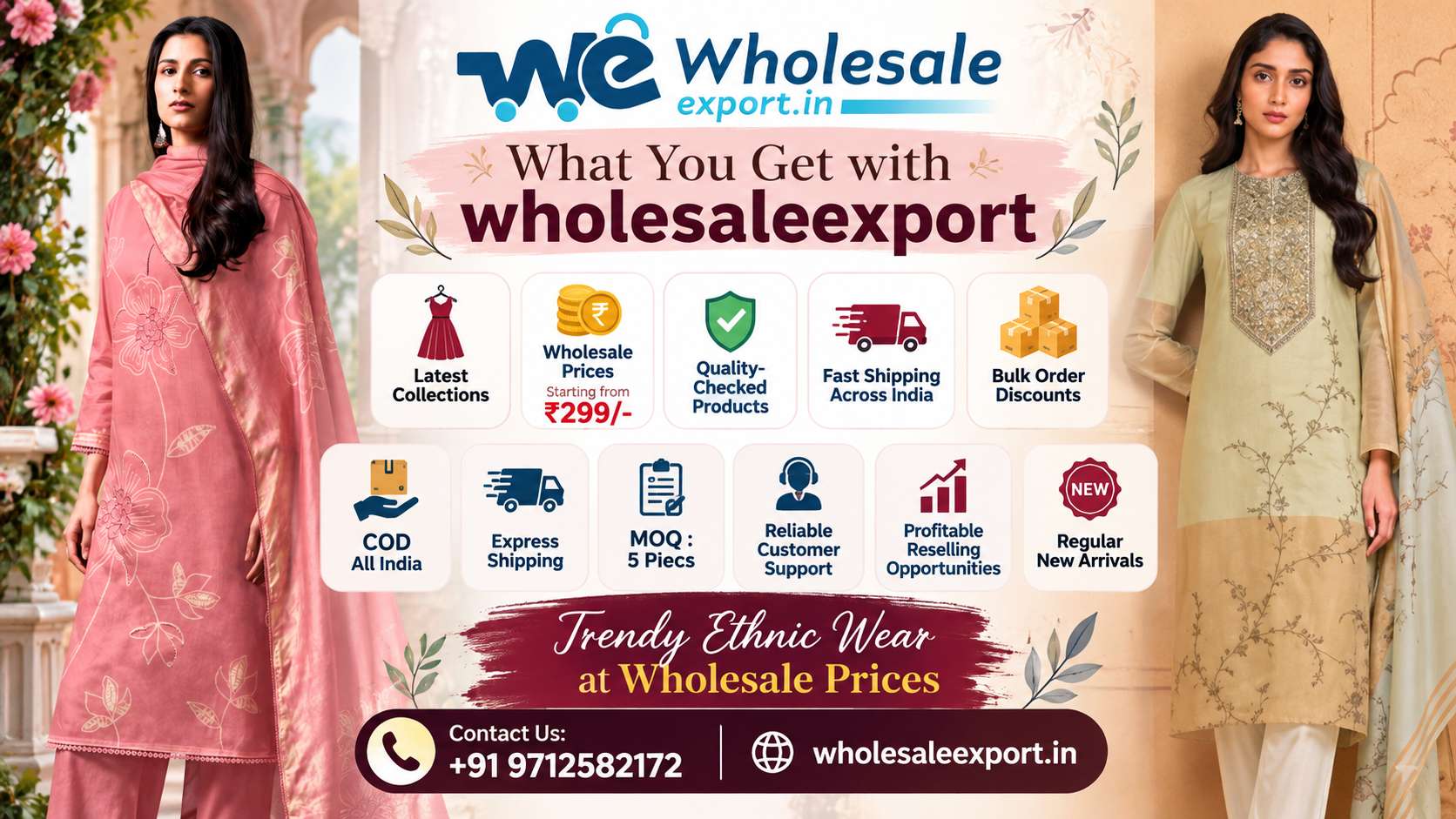
What You Get with Wholesaleexport.in:
- Latest Collections with regularly updated ethnic-wear designs
- Wholesale Pricing for business buyers and resellers
- Trendy Ethnic Wear across multiple categories
- Fast Shipping for convenient order fulfillment
- COD Support on eligible India orders as per applicable order terms
- Bulk Order Deals for wholesale purchasing
- Quality Products Starting From ₹299
- Regular New Arrivals for fresh inventory planning
- Support for home-based sellers, boutiques, retailers and wholesale buyers
With Vastralife's wholesale and export experience since 2017, buyers can access industry expertise and carefully selected ethnic-wear categories for growing their business. Whether you are adding your first Sequence Work Dress Material collection or expanding an established wholesale inventory, focus on quality, customer demand and the right product mix for sustainable sales.
Contact: +91 9712582172
Website: wholesaleexport.in