


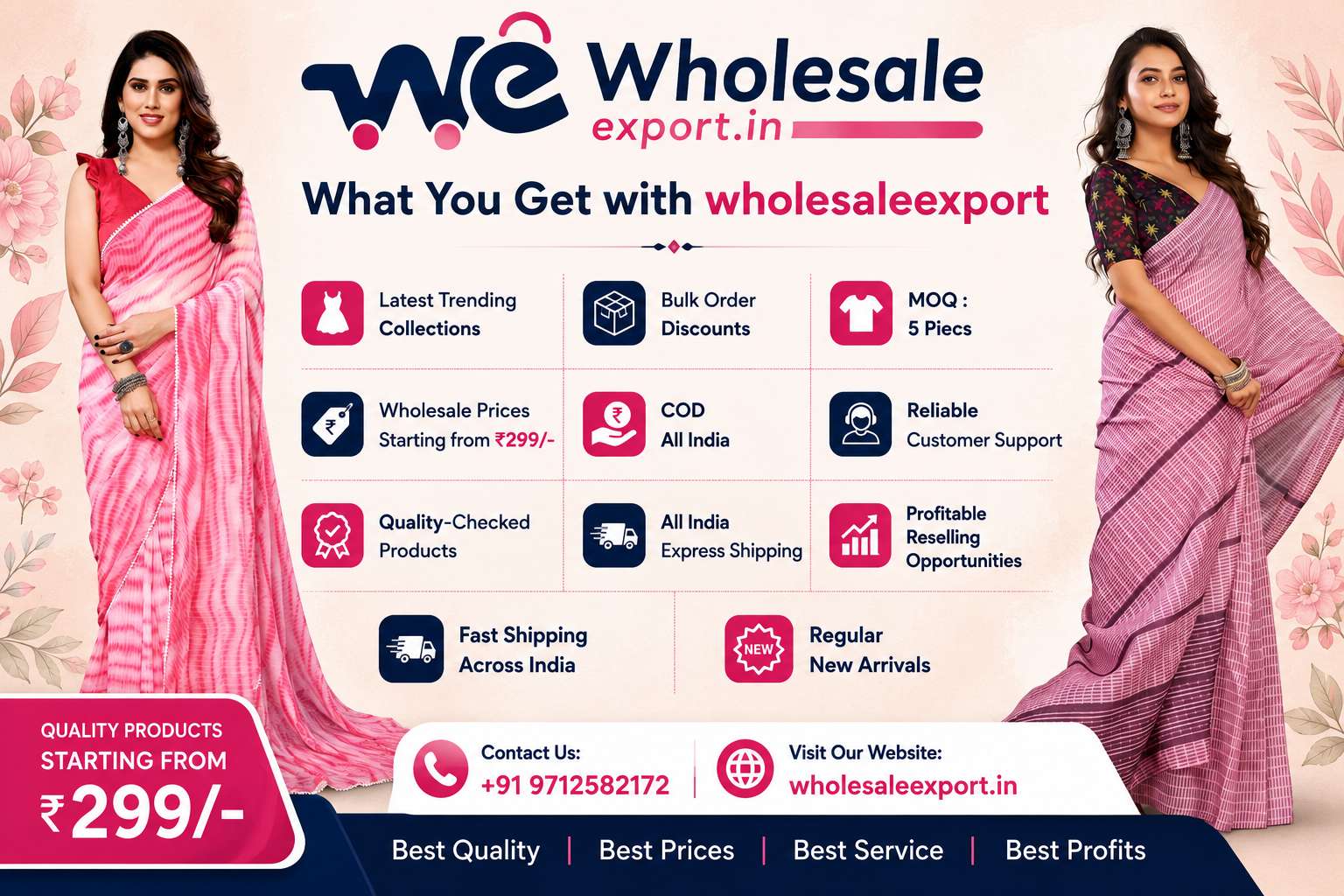
Saree Wholesale Supplier with Low MOQ for Resellers & Boutiques 2026
Saree Wholesale Supplier with Low MOQ for Resellers & Boutiques 2026
Building a saree business becomes easier when purchasing quantities match actual customer demand. Instead of blocking working capital in large catalogue orders, retailers can begin with selected designs, test their market and reorder successful products. This flexible approach is especially useful for new boutiques, online Resellers and Home-Based Sellers who want wholesale buying benefits while keeping inventory manageable.
Introduction
Finding a reliable saree wholesale supplier with low MOQ can make a significant difference for businesses that want variety without investing heavily in one collection. Minimum order quantity directly influences starting capital, inventory risk and how frequently a retailer can introduce new designs.
Traditional wholesale buying is often associated with large quantities, but today's fashion business operates differently. Instagram sellers, WhatsApp Resellers, Home-Based Sellers and smaller Boutique Owners may need more designs in fewer quantities rather than dozens of identical sarees.
This is where low MOQ saree wholesale sourcing becomes practical. Buyers can distribute their purchasing budget across multiple fabrics, colours, patterns and price ranges instead of depending on one catalogue.
In 2026, online wholesale sourcing has made this model more accessible. Wholesaleexport.in helps business buyers explore changing ethnic wear collections remotely, making it possible to source from the Surat textile ecosystem without travelling for every new purchase.
For Shop Owners, Boutique Owners, Showroom Owners, Resellers and Wholesale Buyers, the objective should not simply be purchasing the maximum possible quantity. The objective should be purchasing inventory that can move quickly and return capital to the business.
What Does Low MOQ Mean in Saree Wholesale?
MOQ means minimum order quantity. It refers to the minimum quantity a supplier requires a business buyer to purchase under the applicable wholesale terms.
MOQ Can Differ by Supplier and Catalogue
There is no universal minimum quantity for every saree supplier. Some collections may be available as catalogue sets, some may have design-based requirements and others may offer smaller quantities depending on current stock and supplier conditions.
Buyers should therefore confirm the applicable MOQ before placing an order rather than assuming that every product follows the same purchasing rule.
Low MOQ Does Not Mean Retail Buying
A low minimum quantity can still operate within a wholesale business model. The difference is that smaller retailers receive greater flexibility in how they distribute their inventory investment.
MOQ Should Match Your Selling Capacity
A large showroom may comfortably purchase dozens of sarees within one category, while a new Home-Based Seller may need only a limited selection initially. The right MOQ is one that supports the buyer's actual sales capacity.
Why Low MOQ Is Important for New Saree Businesses
New businesses have limited historical sales data. They may know which products look attractive but not yet know which designs their customers will actually purchase.
Lower Initial Inventory Investment
Smaller purchasing requirements allow sellers to enter the market with more controlled capital. Money that would otherwise be blocked in excess stock can remain available for marketing, packaging and reorders.
More Designs Within the Same Budget
Suppose a retailer has a fixed purchasing budget. Buying fewer pieces across several collections can create a broader customer-facing assortment than purchasing a large quantity of one design.
Lower Risk When Testing New Trends
Fashion trends can perform differently across cities and customer segments. Small quantity saree wholesale buying allows retailers to test new colours, prints and fabrics before increasing quantities.
Faster Inventory Rotation
When fewer pieces of each design are held, successful products can sell through faster. The retailer can then reinvest the recovered capital into new arrivals or reorder proven categories.
Who Should Choose a Saree Wholesale Supplier with Low MOQ?
A saree wholesale supplier with low MOQ can serve several business models, particularly when the buyer values assortment flexibility over very large quantities of identical merchandise.
Home-Based Sellers
Home-Based Sellers often operate without expensive retail space. Their inventory may be displayed through WhatsApp, Instagram, personal appointments and local customer networks.
Smaller wholesale purchases allow them to test the business while maintaining a manageable stock level at home.
Instagram and WhatsApp Resellers
Digital Resellers depend heavily on frequent new product content. Customers may respond better to changing collections than seeing the same designs repeatedly.
Low MOQ buying gives these sellers an opportunity to refresh products more frequently without dramatically increasing total inventory.
Boutique Owners
Boutiques often succeed through curation rather than quantity. Customers expect distinctive designs, selected colours and products that feel different from mass-market inventory.
Buying more designs in controlled quantities can therefore fit the boutique business model particularly well.
Shop Owners
Existing garment shops can introduce sarees as an additional category without immediately making a large investment. After observing customer response, successful categories can be expanded.
Showroom Owners
Larger showrooms can also benefit from low MOQ sourcing when testing new products. Their established categories may be purchased in bulk, while unfamiliar trends can initially be introduced in smaller quantities.
Best Saree Categories for Low MOQ Wholesale Buying
Product selection should depend on customer profile, season, regional preferences and intended retail price. A balanced assortment can combine regular-demand products with selected festive and premium designs.
Printed Sarees Wholesale
Printed sarees wholesale collections can be practical for Resellers because prints create extensive visual variety. Floral, geometric, traditional and contemporary patterns can target different customer preferences.
Ready-to-Wear Sarees
Ready-to-wear sarees wholesale can appeal to customers who appreciate saree styling but prefer a faster draping experience. These products can be useful for parties, celebrations and younger customers exploring convenient ethnic fashion.
Daily Wear Sarees
Lightweight products suitable for everyday use can provide repeat-selling opportunities throughout the year. Home-Based Sellers can maintain several colours and prints rather than concentrating the complete budget on occasion wear.
Festive Sarees
Festival collections can include richer colours, decorative borders and more prominent design elements. Buyers should purchase festive products early enough to market them while avoiding excessive seasonal inventory.
Designer Sarees
Selected designer sarees wholesale can strengthen a boutique's premium section. Controlled quantities allow the seller to offer distinctive designs without allocating too much working capital to higher-value inventory.
Wedding Sarees
Wedding-focused collections can provide higher-value selling opportunities. Retailers can maintain a curated range and increase purchasing as local wedding demand develops.
How Low MOQ Helps Boutique Owners Build Better Collections
Boutiques need enough variety to make the collection feel fresh, but excessive stock can reduce cash flow. Low MOQ sourcing helps balance these two requirements.
Buy Variety Instead of Repetition
A boutique customer may prefer finding a design that feels exclusive. Carrying controlled quantities across more designs can create this impression more effectively than displaying many pieces of identical merchandise.
Create Different Price Segments
Boutique Owners can use their purchasing budget across affordable, mid-range and premium sarees. This gives customers more choice and creates opportunities to upgrade purchases.
Refresh Inventory More Frequently
Instead of purchasing a huge collection once every few months, smaller buying cycles can introduce regular new arrivals. This creates fresh content for social media and gives repeat customers a reason to return.
Wholesale Saree Price and MOQ Should Be Evaluated Together
A low MOQ is useful only when the product economics remain suitable for resale. Buyers should therefore evaluate both the minimum quantity and the wholesale price.
Do Not Choose Only the Lowest Rate
A very low rate can become expensive if the required quantity is too large or the quality does not match customer expectations. Compare the complete purchasing commitment rather than one unit price.
Calculate the Landed Cost
Add transportation, packaging, applicable taxes and other direct expenses to the purchase amount. This provides a more realistic cost before deciding the final retail price.
Compare Potential Margin with Stock Rotation
A higher-margin product that remains unsold for months can block capital. A product with a balanced margin and faster rotation may produce better business results over multiple purchasing cycles.
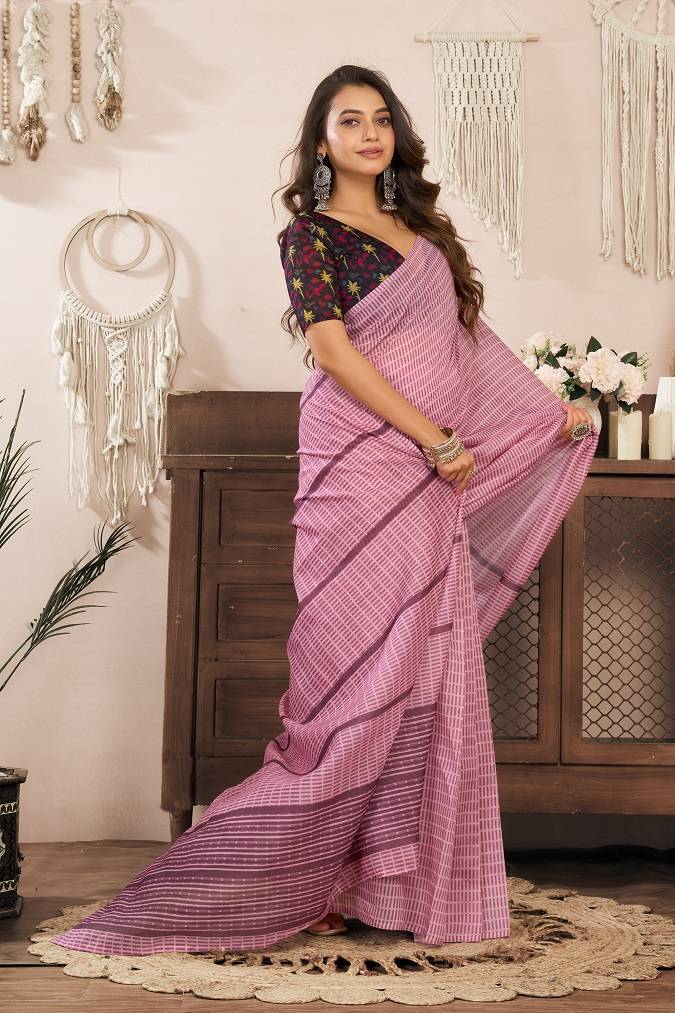
Surat Textile Market for Low MOQ Saree Sourcing
The surat textile market is an important sourcing destination for sarees and women's ethnic wear because the city combines manufacturing, processing, trading and wholesale distribution within a large textile ecosystem.
Why Surat Offers Strong Saree Variety
Surat's textile industry works across fabrics, printing, weaving, embroidery, finishing and garment-related manufacturing. This ecosystem supports numerous saree styles across different price ranges.
For buyers, the advantage is the ability to explore multiple product categories instead of depending on one narrow collection.
Ring Road Textile Markets
Ring Road is closely associated with Surat's textile trading activity. Retailers visiting the area can explore numerous textile markets and compare collections according to their target customer.
Sahara Darwaza Wholesale Sourcing
Sahara Darwaza is another recognised part of Surat's broader textile trading environment. Buyers sourcing in this area should compare quality, MOQ, stock availability and pricing before confirming purchases.
Online Surat Saree Wholesale in 2026
Travelling to Surat can be useful for major sourcing trips, but it is not practical for every inventory update. Wholesaleexport.in gives buyers an online route to explore changing wholesale collections and source according to their business requirements.
Low MOQ vs Bulk Saree Wholesale Buying
Low MOQ and bulk purchasing are not competing strategies. A growing saree business can use both depending on the product and its sales history.
Use Low MOQ for New Products
When introducing a new fabric, design or price segment, smaller quantities can reduce risk. Let actual customer orders determine whether the category deserves additional investment.
Use Bulk Buying for Proven Sellers
Once a particular category consistently performs, larger purchasing can become more practical. Shop Owners and Showroom Owners can negotiate purchasing quantities according to their established demand.
Create a Hybrid Inventory Strategy
Maintain greater quantities of proven products while using low MOQ purchases for new arrivals and trend-based merchandise. This creates stability without making the collection repetitive.
Ready Stock Makes Low MOQ Buying More Practical
Ready-stock availability can be particularly valuable for smaller retailers because products can be selected from merchandise that is already available for sale, subject to current stock and supplier terms.
Useful for Fast Inventory Replenishment
When a collection sells faster than expected, available wholesale inventory can help sellers refresh their selection without waiting for an entirely new production cycle.
Better for Trend Testing
Retailers can introduce selected current designs, monitor customer response and reorder similar products when the trend performs well.
Helpful for Social Media Sellers
Ready stock gives Instagram and WhatsApp sellers an opportunity to promote products that can potentially move toward order processing more quickly than merchandise awaiting fresh production.
Saree Wholesale Buying for India, Singapore and Australia
For this 2026 sourcing strategy, India, Singapore and Australia represent three markets where low MOQ purchasing can support different retail and Reselling models.
Low MOQ Sarees for India
Indian retailers can use smaller wholesale quantities to test demand according to regional festivals, wedding seasons and local fashion preferences. Home-Based Sellers can begin locally and expand inventory according to repeat sales.
Saree Wholesale for Singapore
Boutiques serving customers in Singapore can curate selected traditional, festive and lightweight sarees. Controlled quantities can be particularly useful when building a specialised ethnic wear assortment.
Saree Wholesale for Australia
Retailers serving customers in Australia can select sarees for weddings, festivals, cultural events and family functions. Because international shipping affects landed cost, smaller carefully planned assortments can help reduce inventory exposure.
For international export purchases, buyers should calculate product value, packaging, freight and applicable destination-related costs before deciding the final resale price.
Vastralife Wholesale and Export Experience Since 2017
Supplier experience becomes increasingly important when a retailer needs regular collections, different product categories and support for changing wholesale requirements.
Vastralife has wholesale and export experience since 2017, supported by textile industry expertise and a focus on premium product quality. This experience helps serve the requirements of Home-Based Sellers, Shop Owners, Boutique Owners, Showroom Owners, Resellers and Wholesale Buyers.
Wholesaleexport.in extends this sourcing approach through online access to regularly changing fashion and ethnic wear collections.
How to Select a Saree Wholesale Supplier with Low MOQ
Finding a saree wholesale supplier with low MOQ should involve more than checking the minimum number of pieces. The supplier should also fit the buyer's quality expectations, product category and business model.
Check Product Quality
Review fabric appearance, printing, weaving, borders, finishing and overall presentation according to the saree category. Consistent quality helps protect customer trust.
Confirm the Actual MOQ
Understand whether the minimum applies to the complete catalogue, individual design or total order. Supplier and product conditions can vary.
Check Ready Stock Availability
Fashion inventory can change quickly. Confirm current availability before committing products to customers, particularly when selling through digital catalogues.
Compare Wholesale Price with Retail Potential
Estimate the likely resale price before purchasing. A product should provide enough room for applicable costs and a sustainable business margin.
Look for Regular New Collections
A supplier providing changing designs can help retailers keep their assortment fresh. This is especially useful for boutiques and online Resellers whose customers expect frequent new arrivals.
Build a Low-Risk Saree Inventory
The strongest advantage of low MOQ sourcing is the ability to build inventory gradually. Start with products aligned with your customer base, measure completed sales and reinvest accordingly.
Track Designs That Actually Sell
Likes, views and customer enquiries can be encouraging, but completed orders provide stronger evidence. Keep records of fabrics, colours and price segments producing actual revenue.
Reorder Winning Categories
If printed sarees consistently sell, increase investment in similar products. If ready-to-wear sarees generate strong interest and orders, expand that category gradually.
Avoid Reordering Slow Products
Do not repeat a purchase simply because the supplier has introduced new colours. If the original category moved slowly, reconsider its role in your inventory before adding more.
Keep Capital Available
Reserve part of the purchasing budget for reorders and new arrivals. Flexibility allows the business to respond when customer demand changes.
Low MOQ purchasing can therefore become much more than a way to place a smaller order. Used strategically, it provides a practical method for testing products, protecting working capital and building a saree business around real customer demand.
How Low MOQ Supports Better Cash Flow for Saree Sellers
Working capital is one of the most important resources in a retail business. A seller may have attractive inventory but still struggle to introduce new products when too much money remains blocked in unsold stock. Low MOQ purchasing can help create a more flexible buying cycle.
Invest According to Actual Demand
Instead of purchasing large quantities based only on predictions, retailers can begin with selected pieces and monitor customer response. Products generating confirmed sales can receive a larger share of the next purchasing budget.
Keep Funds Available for Fast-Moving Collections
Fashion demand can change quickly. Maintaining available capital gives a retailer the ability to purchase new arrivals or replenish a successful saree category when an opportunity appears.
Reduce Money Blocked in Slow Stock
Smaller initial quantities limit the financial impact when a particular design, colour or fabric does not perform as expected. This can be particularly useful for new Resellers who are still learning their customers' preferences.
Internal Linking Section for Saree and Ethnic Wear Buyers
Retailers looking for convenient draping styles can explore ready-to-wear saree wholesale collections for boutiques, Resellers and customers seeking modern saree options.
Businesses expanding into wedding and festive fashion can also explore the wholesale lehenga market in Surat with price options and create a broader occasion-wear inventory.
Category expansion should remain connected with customer demand. A seller can begin with sarees and gradually introduce related ethnic wear once existing customers demonstrate interest in additional products.
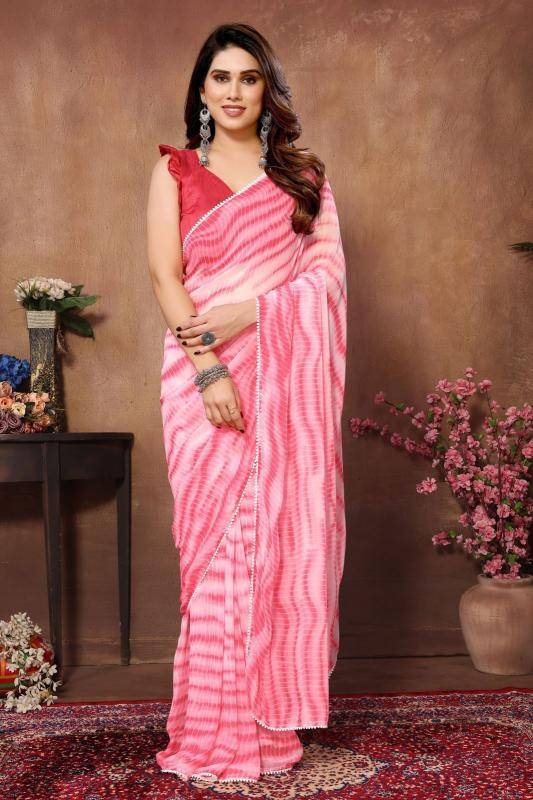
Ready-to-Wear Sarees for Low MOQ Reselling
Ready-to-wear sarees can create an additional selling opportunity for retailers serving customers who appreciate the appearance of a saree but want a simpler dressing experience. The category can work alongside traditional sarees instead of replacing them.
Suitable for Modern Saree Customers
Younger customers, working women and occasional saree wearers may appreciate products designed for easier draping. Boutique Owners can use this category to reach customers who might otherwise avoid purchasing sarees because of draping concerns.
Useful for Online Product Demonstrations
Ready-to-wear styles can be demonstrated through short videos showing how the product is worn and how the final drape appears. Clear demonstrations can help online customers understand the convenience of the product.
Test Designs Before Increasing Quantity
Because ready-to-wear sarees may serve a different customer segment from traditional sarees, low MOQ purchasing can be useful when introducing the category. Start with selected designs and increase quantities according to completed orders.
Low MOQ Saree Buying for Festival and Wedding Seasons
Festival and wedding demand can create excellent selling opportunities, but seasonal inventory requires careful planning. Buying too much can leave retailers with products that become harder to sell after the peak period.
Start Seasonal Buying with Selected Designs
Introduce a controlled assortment before the season and observe which colours, fabrics and price ranges generate the strongest response. Replenish successful categories where stock availability permits.
Maintain Different Price Levels
Not every customer shopping for a festival or wedding wants a premium saree. Maintain affordable options, mid-range festive sarees and selected premium pieces so customers can purchase according to their budgets.
Use Rich Colours for Occasion Collections
Red, maroon, rani pink, green, royal blue, mustard and other festive shades can create strong traditional appeal. Contemporary colours can be added according to regional and customer preferences.
Do Not Wait Until the Last Moment
Retailers need time to receive products, photograph them, prepare displays and promote them to customers. Seasonal buying should therefore begin early enough to create a proper selling window.
How Boutique Owners Can Use Low MOQ for Premium Sarees
Premium products can strengthen a boutique's identity, but they also require more working capital per piece. Smaller purchasing quantities can help retailers maintain a premium section without creating excessive financial exposure.
Curate Instead of Overloading
A boutique may need only a carefully chosen selection of premium sarees in distinctive colours and designs. Thoughtful curation can create a stronger impression than carrying many similar products.
Create Limited-Stock Appeal
Controlled quantities can support a limited-collection positioning. Customers who value distinctive fashion may appreciate knowing that the boutique does not carry excessive quantities of every design.
Use Premium Presentation
High-quality photography, elegant draping, coordinated blouse styling and close-up videos can improve how customers perceive premium sarees. Presentation should communicate the details that justify the retail price.
Low MOQ Strategy for Home-Based Saree Sellers
Home-Based Sellers can use low MOQ wholesale sourcing to develop a saree business without immediately investing in a commercial showroom or large storage area.
Begin with a Defined Customer Segment
Decide whether the initial customers are likely to purchase daily wear, festive, wedding, printed or contemporary sarees. This prevents the starting budget from being distributed randomly.
Sell Through WhatsApp
Create organised product updates showing clear photographs, product codes and relevant details. WhatsApp Status can be useful for introducing new arrivals without repeatedly sending large catalogues to every contact.
Use Instagram Reels for Product Discovery
Show fabric movement, borders, pallu details and complete draping through short videos. Product-focused content can help potential customers understand the saree more clearly than a single folded photograph.
Reinvest Rather Than Overbuy
As orders generate cash flow, reinvest a portion into proven categories and selected new products. This creates gradual growth while keeping inventory risk under control.
Low MOQ Strategy for Shop and Showroom Owners
Low MOQ is not useful only for small businesses. Established Shop Owners and Showroom Owners can use smaller purchasing quantities strategically when testing new categories or trends.
Keep Bulk Quantities for Proven Sellers
Products with consistent historical demand can continue to be purchased in larger quantities where commercially suitable. There is little reason to reduce quantity simply because a low MOQ option exists.
Use Smaller Orders for New Trends
When a new print, fabric or saree format enters the market, begin with controlled quantities. Customer response can then determine whether the category deserves greater shelf space and purchasing capital.
Refresh Displays More Frequently
Smaller new-arrival purchases can keep a showroom visually fresh between major inventory cycles. Regular updates also provide sales teams with new products to show repeat customers.
How Resellers Can Sell Low MOQ Saree Stock Faster
Buying smaller quantities reduces inventory exposure, but products still need effective selling. Resellers should create a consistent process for introducing, promoting and reviewing each collection.
Launch New Arrivals in Small Groups
Instead of posting dozens of unrelated products at once, organise sarees by category, occasion or price range. Focused collections make customer selection easier.
Show More Than One Product View
Where available, use images or videos showing the full saree, border, pallu, blouse and fabric details. Customers purchasing online need enough visual information to make a confident decision.
Follow Up with Interested Customers
If a customer previously asked about a particular fabric or price range, share relevant new arrivals directly. Personalised selling can be more effective than sending every catalogue to the entire contact list.
Track Completed Orders
Record which products actually convert into sales. Use this data when choosing the next wholesale purchase instead of relying only on social media engagement.
How to Compare Low MOQ Saree Suppliers
When evaluating a saree wholesale supplier with low MOQ, buyers should compare the complete sourcing experience rather than selecting a supplier only because the minimum quantity is smaller.
Compare Quality
Product quality influences customer satisfaction and repeat business. Evaluate whether the fabric, finishing and overall presentation match the intended retail segment.
Compare Wholesale Pricing
Calculate the complete cost rather than focusing only on the displayed rate. A slightly higher product price can sometimes provide stronger resale value when the quality and design are better suited to customers.
Compare Product Variety
A supplier with regularly changing categories can be useful for Resellers and Boutique Owners who depend on fresh merchandise. Variety also allows buyers to spread their purchasing budget across different customer segments.
Compare Stock Availability
A large catalogue is valuable only when relevant products are available when required. Confirm stock before accepting customer commitments.
Compare Ordering and Dispatch Conditions
Understand applicable MOQ, payment requirements, shipping arrangements and dispatch expectations. International buyers should additionally review relevant export arrangements.
Common Mistakes When Buying Sarees with Low MOQ
Smaller order requirements reduce certain inventory risks, but they do not eliminate the need for disciplined purchasing.
Buying Too Many Different Categories
Low MOQ can tempt a seller to purchase every attractive product. Variety should remain connected with a defined customer base rather than becoming random inventory.
Ignoring Product Quality
A small order does not justify compromising on quality. Poor products can damage customer confidence regardless of how little money was initially invested.
Choosing Products Only by Price
The cheapest saree is not automatically the easiest to sell. Design, colour, fabric, presentation and customer preference all influence resale potential.
Failing to Reorder Successful Products
Some sellers continuously chase new designs while ignoring categories that have already generated sales. Maintain a balance between fresh products and proven sellers.
Holding Slow Stock Too Long
Refresh the presentation of slow-moving sarees and consider controlled offers when appropriate. The objective is to release capital so it can return to productive inventory.
Low MOQ Saree Export Opportunities
Smaller wholesale quantities can also be useful for selected international boutiques and Resellers that want to test Indian saree demand before increasing purchasing volume.
India Buyers
Retailers in India can use low MOQ sourcing to adapt inventory to local festivals, wedding periods and regional customer preferences. Faster domestic replenishment opportunities can also support smaller buying cycles.
Singapore Buyers
Boutiques serving customers in Singapore can curate lightweight, festive and traditional sarees according to their target audience. Smaller quantities allow buyers to test several styles before expanding a particular category.
Australia Buyers
Retailers supplying customers in Australia can select sarees for weddings, festivals and cultural events. International freight should be considered when deciding which price ranges and products provide suitable resale potential.
For every international export purchase, the complete landed cost should be calculated before the final retail price is determined.
Customer FAQs
1. What is a saree wholesale supplier with low MOQ?
It refers to a wholesale supplier offering sarees with comparatively manageable minimum purchasing requirements, subject to the individual product, catalogue and supplier conditions.
2. Is low MOQ suitable for Home-Based Sellers?
Yes. Smaller quantities can help Home-Based Sellers control their starting investment, maintain more design variety and learn customer preferences before increasing inventory.
3. Can Boutique Owners buy sarees in low quantities?
Depending on the applicable wholesale conditions, low MOQ sourcing can help Boutique Owners purchase selected designs in controlled quantities and refresh collections more frequently.
4. Which sarees are suitable for low MOQ Reselling?
Printed sarees, lightweight sarees, ready-to-wear styles, festive collections and selected designer sarees can all be considered according to the seller's customer base and available wholesale stock.
5. Is Surat good for saree wholesale sourcing?
Surat has an extensive textile ecosystem covering manufacturing, processing and wholesale trading. Ring Road, Sahara Darwaza and the broader Surat textile market are closely associated with the city's textile business.
6. Is low MOQ always better than bulk buying?
No. Low MOQ is particularly useful for testing products and controlling inventory, while bulk buying can be more suitable for categories with established high-volume demand.
7. Can I start a saree Reselling business with a small inventory?
Yes. Sellers can begin with a focused collection, promote products through digital channels and gradually reinvest in categories that generate completed customer orders.
8. Can international buyers source low MOQ sarees?
This depends on the supplier's applicable MOQ, export and shipping conditions. International buyers should also consider freight and complete landed cost when evaluating smaller orders.
9. How should I calculate my saree selling price?
Start with the wholesale purchase cost and include relevant transportation, packaging and other direct expenses. The final selling price should provide sufficient room for operating costs and a sustainable margin.
10. How often should a saree Reseller add new collections?
New collections should be introduced according to stock rotation and customer demand. Smaller, regular updates can maintain freshness without creating unnecessary inventory.
Choose Smarter Saree Wholesale Buying in 2026
A reliable saree wholesale supplier with low MOQ can give retailers something more valuable than simply a smaller minimum order: flexibility. Businesses can test trends, spread purchasing capital across multiple designs and expand successful categories using actual sales data.
For new Resellers, this approach can reduce the pressure of carrying excessive stock. Boutique Owners can create more curated assortments, while established Shop Owners and Showroom Owners can use smaller orders to test new categories alongside their regular bulk purchasing.
Vastralife's wholesale and export experience since 2017, textile industry expertise and focus on premium product quality support buyers looking for practical sourcing opportunities in the changing ethnic wear market.
Order Low MOQ Wholesale Saree Collections
Explore Latest Collections, competitive Wholesale Pricing and regularly updated Trendy Ethnic Wear for your boutique, shop, showroom, Home-Based business or Reselling operation through Wholesaleexport.in.
Build your inventory with available Fast Shipping, eligible COD Support and attractive Bulk Order Deals according to applicable product, stock and order conditions.
Explore Quality Products Starting From ₹299 and choose collections according to your customer segment, purchasing budget and target resale price.
Contact Number: +91 9712582172
Website: wholesaleexport.in
Start with manageable quantities, measure what customers actually purchase and increase investment in proven collections. A disciplined low MOQ strategy can help turn smaller wholesale orders into a scalable saree business with fresher inventory and healthier working capital.