



Saree Business Profit Margin Explained: Wholesale to Retail Guide 2026
Saree Business Profit Margin Explained: Wholesale to Retail Guide 2026
A saree business can look simple from the outside: purchase at wholesale rates, add a markup and sell at retail. In reality, sustainable profitability depends on several moving parts, including sourcing cost, product category, customer segment, shipping, packaging, inventory rotation and discounting. Sellers who understand these numbers can price more confidently, protect their working capital and build a saree business that grows beyond occasional sales.
Introduction
Understanding saree business profit margin is essential for anyone planning to start or expand a saree retail, boutique or reselling business in 2026. The difference between purchase price and selling price may look like profit, but the actual business margin becomes clear only after all relevant expenses are considered.
This is particularly important for Home-Based Sellers, Shop Owners, Boutique Owners, Showroom Owners, Resellers and Wholesale Buyers. Each business model has different expenses. A Home-Based Seller may avoid showroom rent, while a large retail store may carry staff, electricity, display, advertising and inventory costs. An international export seller has additional logistics and destination expenses.
Sarees remain commercially attractive because the category covers many customer needs. Affordable daily-wear sarees, festive styles, silk-look collections, designer sarees, wedding products and ready-to-wear sarees can all serve different retail price points.
Wholesaleexport.in provides access to wholesale fashion collections for businesses looking to source according to their market and budget. Vastralife's wholesale and export experience since 2017 contributes practical textile industry expertise, sourcing knowledge and an emphasis on premium product quality.
What Is Profit Margin in a Saree Business?
Profit margin represents the portion of a sale that remains after relevant costs are deducted. Many new sellers make the mistake of comparing only the wholesale purchase rate with the final retail price.
For example, if a saree is purchased for ₹700 and sold for ₹1,200, the difference is ₹500. But that ₹500 should not automatically be treated as net profit. Shipping, packaging, applicable taxes, marketplace commissions, payment charges, advertising and other operating expenses may still need to be deducted.
Gross Profit and Net Profit Are Different
Gross profit generally reflects the difference between sales revenue and the direct cost of the merchandise. Net profit goes further by considering business expenses.
For a serious saree business, net profitability matters more because it tells you whether the business is actually generating useful income after costs.
Margin and Markup Should Not Be Confused
Retailers sometimes use the words margin and markup interchangeably, but they describe different calculations. Markup measures how much is added to cost, while margin measures profit in relation to the selling price.
Understanding both helps sellers avoid setting prices based on guesswork. Even a small calculation error repeated across hundreds of products can have a noticeable effect on annual profitability.
How to Calculate the Real Cost of a Saree
The first step in understanding saree business profit margin is calculating landed cost. This means determining what the saree actually costs your business by the time it is ready to sell.
Start with Wholesale Purchase Price
The supplier's quoted price is your starting point. Buyers should compare products according to fabric, work, design, finishing and customer appeal rather than choosing entirely on the lowest rate.
A cheaper product that generates complaints or remains unsold can become more expensive for the business than a slightly higher-priced saree that rotates quickly.
Add Shipping and Handling
Transportation is part of product cost. If a shipment contains multiple pieces, divide the appropriate shipping expense across the inventory to understand the approximate landed cost per saree.
This calculation becomes particularly important for smaller orders because transportation may represent a larger percentage of the final product cost.
Consider Packaging and Selling Expenses
Retail packaging, courier material, payment gateway charges, marketplace commissions and promotional expenses may also influence profitability. Physical stores should additionally consider their broader operating expenses when evaluating whether a category is commercially worthwhile.
Typical Saree Business Margin Depends on the Category
There is no single profit percentage that applies to every saree. Different categories support different retail strategies. Competition, quality, exclusivity, customer perception and inventory turnover all influence how much markup is commercially possible.
Daily-Wear Sarees
Affordable daily-wear sarees often compete strongly on value. Customers may compare several sellers, so retailers need sensible pricing. The advantage is that everyday products can potentially rotate faster and generate repeat purchases.
For this category, consistent sales volume may matter more than trying to maximise margin on each individual saree.
Festive Sarees
Festive collections generally offer more design value through borders, woven effects, embroidery, embellishments or richer fabrics. When customers recognise the visual difference, retailers may have more flexibility in positioning the final selling price.
However, festive inventory also has timing risk. Buying too late can cause missed sales, while buying too much can leave stock after the season.
Designer and Premium Sarees
Designer sarees can potentially support a stronger absolute profit per piece when the product looks distinctive and is marketed to the right customer. Boutique Owners often focus on presentation, exclusivity and service rather than competing exclusively on price.
The product still needs to justify its retail positioning. Increasing the selling price without creating visible value does not automatically create a successful premium category.
Why Inventory Rotation Can Matter More Than Maximum Margin
One of the most important lessons in saree retail is that profitability should be measured over time. A product with an impressive margin on paper contributes nothing until it actually sells.
Consider two sarees. One produces ₹300 profit but sells repeatedly, while another could produce ₹700 profit but remains in inventory for six months. Depending on turnover, the first product may generate more useful annual profit from the same working capital.
Fast-Moving Stock Releases Cash Faster
When inventory sells quickly, the capital can be reinvested into new collections. This allows the same money to work through several buying-and-selling cycles during the year.
This is why experienced Wholesale Buyers monitor both gross margin and stock rotation rather than focusing on one number.
Dead Stock Reduces Real Profit
Slow-moving sarees eventually consume storage space and often need discounting. The final realised margin may therefore be substantially lower than the margin originally planned.
Sellers should track how long each collection remains unsold and take action before inventory becomes outdated.
How Surat Wholesale Sourcing Can Influence Profit
Better sourcing can improve margins because the wholesale purchase price forms an important part of landed cost. Surat has developed into a major textile sourcing centre with a broad network of fabric suppliers, processors, traders, manufacturers and wholesalers.
The surat textile market gives buyers access to sarees across numerous fabrics, styles and price categories. Areas around ring road are closely associated with wholesale textile trading, while sahara darwaza and nearby markets form another important part of Surat's commercial textile ecosystem.
Manufacturing and Wholesale Networks Create Variety
Surat's manufacturing ecosystem supports everything from affordable fashion to decorative festive collections. For retailers, this variety makes it possible to create different retail price tiers within one saree business.
A seller can maintain budget-friendly products for regular customers, mid-range sarees for gifting and festivals, and selected premium pieces for wedding or boutique customers.
Online Sourcing Reduces Dependence on Frequent Market Visits
Not every retailer can travel to Surat for every new collection. Online wholesale platforms have made it possible to review products remotely, compare categories and purchase according to business requirements.
Wholesaleexport.in helps connect buyers with wholesale ethnic fashion options while supporting different business models, from Home-Based Sellers to larger Wholesale Buyers.

Ready-to-Wear Sarees as a Business Opportunity
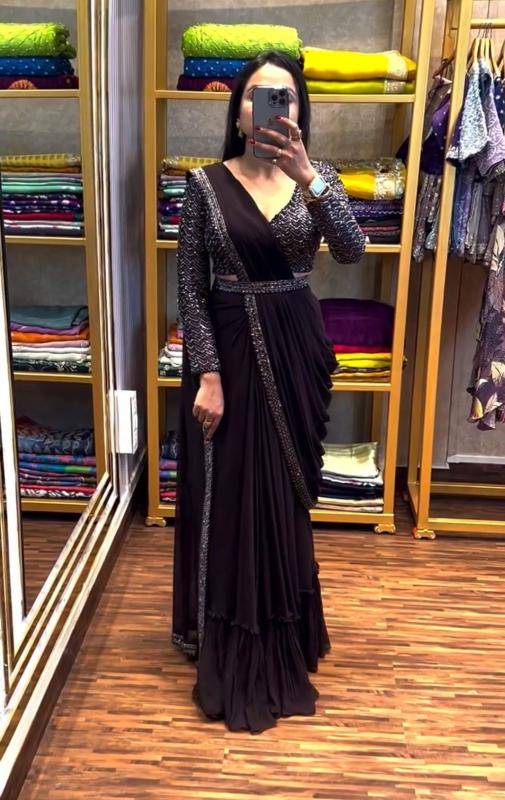
Ready-to-wear sarees can create a useful niche because they address a practical customer concern: convenience. Customers who appreciate the saree look but are less confident with traditional draping may find pre-stitched or ready-to-wear formats appealing.
For retailers, this category can provide differentiation from stores selling only conventional sarees. The product should still be selected according to local customer demand, fit, styling and retail budget.
Convenience Can Increase Perceived Value
A ready-to-wear product is not competing solely on fabric. Ease of dressing becomes part of the value proposition. Sellers can demonstrate this through videos, styling content and clear product explanations.
When customers understand the benefit, retailers may be able to position the product differently from a basic traditional saree.
Good for Online Demonstration
Ready-to-wear sarees can work well in short-form videos because sellers can demonstrate the wearing process and final look. This gives Home-Based Sellers and social media Resellers an additional marketing angle beyond static product photographs.
How Boutique Owners Can Improve Saree Margins
Boutique Owners generally have more freedom to compete through curation, presentation and customer experience. Instead of stocking every available catalogue, they can select products around a clear style identity.
Create a Curated Collection
A boutique can organise merchandise into Wedding Sarees, Festive Sarees, Ready-to-Wear Sarees, Designer Sarees and Everyday Elegance. Clear collection themes can increase perceived professionalism and make buying easier for customers.
Use Styling and Presentation
Customers do not always purchase based purely on product cost. Good displays, styling recommendations, accurate product information and attractive packaging can increase perceived value.
This is especially relevant when selling premium products where the retailer is expected to provide a more personalised experience.
Profit Strategy for Home-Based Saree Sellers
Home-Based Sellers generally operate with lower fixed costs than traditional stores, which can create flexibility in pricing. However, lower expenses should not encourage random discounting.
The business still needs enough margin to cover packaging, delivery coordination, marketing and future inventory investment.
Start with Controlled Stock
Purchase a manageable assortment and learn which colours, price levels and categories generate genuine orders. Avoid tying up the complete budget in a single catalogue before understanding your customers.
Use WhatsApp and Social Media Strategically
Instead of forwarding every product available from a supplier, curate the designs that match your audience. Customers are more likely to engage with a focused selection than hundreds of unrelated images.
Over time, repeat customers can become one of the most valuable sources of profit because the cost of acquiring another sale from an existing buyer may be lower than continually finding new customers.
International Saree Business Profit Considerations
Saree sellers targeting USA, Canada and Singapore need to calculate margins differently from domestic retailers. The Indian wholesale cost is only the beginning.
International buyers need to evaluate freight, applicable duties, taxes, payment expenses and destination delivery before setting the final retail price. Currency fluctuations can also influence profitability.
Export Buyers Need Stronger Landed-Cost Planning
An export buyer should calculate cost per piece after all relevant shipment expenses are included. Low-value products may become commercially difficult if freight represents too much of their final cost.
Products with stronger perceived retail value can sometimes be more suitable for international boutiques because they provide greater room to absorb logistics expenses.
Choose Products for the Destination Market
Customer preferences in Canada may differ from those in Singapore or the USA. Retailers should track local colours, fabrics, occasions and price sensitivity instead of assuming that every Indian bestseller will perform equally well abroad.
How Vastralife's Experience Supports Wholesale Buyers
Wholesale fashion requires an understanding of product categories, customer expectations and commercially relevant sourcing. Vastralife's wholesale and export experience since 2017 provides industry expertise developed through practical involvement in textiles and ethnic fashion.
This experience supports buyers looking for products across different price segments while maintaining attention to premium product quality and the realities of wholesale purchasing.
For Wholesaleexport.in buyers, the objective is not simply to purchase products at a low rate. The stronger opportunity comes from selecting merchandise with realistic resale potential and building a pricing strategy that protects both competitiveness and profit.
How to Set the Right Retail Price for Sarees
Setting the right selling price is one of the most important decisions in a saree business. A retailer needs to remain competitive without reducing the margin so much that the business becomes difficult to sustain. Instead of copying another seller's price, calculate your own landed cost and then consider the value of the product, customer profile and market demand.
For example, a saree sourced at ₹600 may carry transportation, packaging and promotional expenses before it reaches the customer. If the actual landed cost becomes ₹675, the retail calculation should begin from ₹675 rather than ₹600. This small discipline makes saree business profit margin calculations considerably more accurate.
Use Different Markups for Different Categories
A single markup percentage does not need to be applied across the entire store. Fast-moving daily-wear products can work with competitive margins, while distinctive festive or premium sarees may support a different pricing structure. The objective is to build a profitable product mix rather than demanding the same margin from every item.
Shop Owners can also create entry, mid-range and premium price bands. An affordable range attracts price-conscious buyers, while premium products can increase the average order value. This approach allows one store to serve multiple customer groups without confusing its overall positioning.
Do Not Depend on Permanent Discounts
Continuous discounting can train customers to wait for offers instead of purchasing at regular prices. Seasonal promotions are useful, but the original retail price should already provide reasonable value.
Instead of simply reducing prices, sellers can create combinations, festival offers, repeat-customer benefits or multi-piece purchase incentives. These methods can improve order value without unnecessarily damaging the margin on every product.
How to Increase Saree Business Profit Without Increasing Prices
Increasing retail prices is only one way to improve profitability. Better buying decisions, faster stock rotation and lower operating waste can often create equally meaningful improvements.
Buy According to Actual Customer Demand
Inventory should reflect what customers purchase, not only what looks attractive in a supplier catalogue. Record which colours, fabrics, patterns and price points receive the strongest response.
For example, if customers repeatedly purchase lightweight sarees in the ₹800–₹1,500 retail segment, increasing inventory in that segment may be more profitable than investing heavily in premium stock that sells only occasionally.
Reorder Winners Instead of Constantly Experimenting
New collections are important in fashion, but successful retailers also learn to recognise repeatable demand. If a category consistently sells well, allocate part of the purchasing budget to similar products while continuing to test fresh designs with a smaller portion of the capital.
This combination of proven sellers and new arrivals can create a healthier inventory balance in 2026.
Negotiate Through Better Order Planning
Wholesale Buyers purchasing larger quantities may sometimes achieve better commercial terms than buyers ordering very small quantities. However, bulk purchasing is useful only when the merchandise has realistic sales potential.
A lower purchase rate does not help if half the stock remains unsold. The best wholesale deal is therefore a combination of competitive cost, suitable quality, marketable design and manageable quantity.
Ready-to-Wear Sarees and Modern Retail Demand
The modern ethnic-wear customer increasingly values convenience along with traditional styling. This has created additional opportunities for ready-to-wear saree collections, particularly among customers who want a saree look without spending significant time on traditional draping.
Retailers can market these products through demonstration videos, reels and before-and-after styling content. Showing how quickly the saree can be worn communicates its practical benefit much more effectively than simply posting a product image.
Retailers expanding beyond sarees can also study related festive categories such as the wholesale lehenga market Surat with price to create a broader occasion-wear assortment. A carefully selected combination of sarees, lehengas and ethnic sets can increase cross-selling opportunities during wedding and festival seasons.
How Resellers Can Protect Their Profit Margin
Resellers often operate differently from traditional stores. Many sell through WhatsApp, Instagram, Facebook or personal networks without maintaining a large showroom. Lower fixed costs can be an advantage, but competition can also be intense.
Avoid Competing Only on the Lowest Price
When several resellers are offering similar merchandise, constantly reducing prices can quickly remove profitability. Instead, create additional value through accurate product descriptions, quick communication, styling suggestions, dependable service and transparent ordering information.
Customers frequently return to sellers they trust even when another page offers a marginally lower rate.
Calculate Advertising Cost Per Order
For sellers using paid advertising, marketing expenditure must be included in profitability calculations. Spending ₹5,000 on advertisements and generating ₹50,000 in sales sounds positive, but the real question is how much gross profit those sales produced after product and fulfilment costs.
Tracking cost per order helps sellers identify whether their advertising is actually contributing to profit rather than simply increasing revenue.
How Boutique Owners Can Create Premium Saree Positioning
Boutiques have an opportunity to earn through curation rather than volume alone. Customers visiting a boutique often expect something more distinctive than products commonly available across every marketplace.
Sell a Look, Not Just a Product
A saree can be presented with blouse ideas, jewellery combinations, occasion suggestions and styling recommendations. This makes the buying experience more complete and helps customers visualise the final appearance.
Good presentation can also reduce direct price comparison because the customer begins evaluating the overall experience rather than comparing only the fabric cost.
Develop Exclusive-Looking Collections
Boutique Owners can concentrate on selected colours, unusual borders, sophisticated prints, festive weaving and premium-looking combinations. Smaller curated drops can create urgency while helping the boutique maintain a recognisable identity.
For such retailers, saree business profit margin can depend as much on merchandising and customer experience as on the original wholesale rate.
Common Mistakes That Reduce Saree Business Profit
Many profitability problems come from purchasing and inventory decisions rather than a lack of customers. Understanding these mistakes can help both new and experienced sellers protect working capital.
Buying Too Much of One Design
A catalogue may look excellent when it is launched, but fashion preferences can change quickly. Unless previous sales data supports the decision, putting a large percentage of the budget into one collection increases risk.
Ignoring Hidden Costs
Shipping, packaging, payment fees, advertising, returns and discounts can gradually reduce the expected margin. Maintaining a simple cost sheet for each major product category makes pricing more accurate.
Holding Slow Stock for Too Long
Retailers sometimes refuse to discount a slow product because they want to preserve the original margin. In practice, freeing capital from old inventory can sometimes be more valuable than waiting indefinitely for the ideal selling price.
Choosing Suppliers Only by Price
The cheapest supplier is not automatically the most profitable supplier. Product consistency, finishing, communication, collection variety and dependable fulfilment also influence customer satisfaction and repeat business.
A sustainable saree business requires sourcing that balances cost with saleability and quality.
Saree Business Opportunities for Export Buyers
Indian ethnic fashion has customers well beyond the domestic market. Retailers serving Indian communities and ethnic-fashion buyers in the USA, Canada and Singapore can build collections around weddings, festivals, cultural events and family celebrations.
International sellers should select products carefully because shipping costs increase the landed value of inventory. Lightweight products, premium-looking designs and merchandise with sufficient retail value can be commercially attractive depending on the destination market.
Calculate Export Landed Cost Before Ordering
Do not determine overseas retail prices using only the Indian wholesale rate. Relevant freight, destination expenses, taxes and payment costs should be considered before evaluating the potential margin.
A clear landed-cost calculation helps an export buyer understand which product categories are commercially practical for a particular destination.
Build Collections Around Cultural Demand
Diwali, Navratri, weddings, engagements, community functions and other celebrations can generate strong seasonal interest. Overseas boutiques can plan inventory before these occasions rather than purchasing only after demand has already started.
Internal Linking: Explore Related Wholesale Categories
Customers rarely shop within only one ethnic-wear category throughout the year. Saree buyers may also purchase lehengas, kurtis, dress materials, co-ord sets and festive outfits depending on the season. For retailers, expanding into related categories can create additional revenue without completely changing the target audience.
Wholesaleexport.in can be used to explore changing wholesale fashion collections and identify products suitable for Home-Based Sellers, Shop Owners, Boutique Owners, Showroom Owners, Resellers and Wholesale Buyers. The goal should be to build an assortment where each category serves a clear customer need and contributes to healthy inventory turnover.
Practical Profit Planning Example for a Saree Seller
Suppose a retailer begins with ₹50,000 of working capital. Instead of spending the entire amount on one premium category, the budget can be divided among fast-moving everyday products, festive collections and selected premium sarees.
If the faster categories sell and the money is reinvested several times during the year, the same initial capital can support substantially more total sales. This illustrates why annual inventory turnover is often as important as the margin earned on an individual product.
Track Five Numbers Every Month
A practical saree retailer should monitor total purchases, total sales, gross profit, unsold inventory value and average stock age. These numbers provide a clearer picture of business performance than revenue alone.
If sales are increasing but unsold inventory is growing even faster, working capital may eventually become tight. If inventory is rotating quickly but profit remains low, the pricing strategy may need adjustment.
Customer FAQs
1. What is a good profit margin in a saree business?
There is no universal percentage because margins vary by product type, sourcing cost, retail channel, operating expenses and customer segment. Instead of targeting one fixed percentage, calculate landed cost and establish a margin that covers expenses while keeping the final selling price competitive.
2. Is a saree business profitable for Home-Based Sellers?
It can be commercially attractive because Home-Based Sellers may operate with relatively low fixed expenses. Profitability still depends on correct sourcing, controlled inventory, customer acquisition, pricing and repeat sales.
3. Which sarees can be good for reselling?
Daily-wear sarees, festive sarees, designer collections, soft silk styles and ready-to-wear sarees can all work depending on the customer base. New sellers should test several categories in manageable quantities and use actual sales data to decide what to reorder.
4. Why is Surat popular for wholesale saree sourcing?
Surat has a large textile ecosystem involving fabric, processing, trading and manufacturing. The surat textile market, ring road and areas around sahara darwaza are widely associated with textile commerce, giving buyers access to a broad variety of products and price segments.
5. How can I improve my saree business profit margin?
Focus on accurate landed-cost calculations, faster inventory turnover, controlled purchasing, reliable sourcing, customer retention and category-wise pricing. Avoid overstocking and unnecessary discounting, and track the actual profit generated by each collection.
6. Can sarees be sold internationally?
Yes. Indian ethnic wear has demand across international markets, especially among customers shopping for weddings, festivals and cultural occasions. International retailers should calculate freight and destination expenses carefully before finalising their retail price.
7. Should I purchase sarees in bulk or start with a small order?
New sellers generally benefit from testing demand before making very large inventory commitments. Once a particular category, fabric or price range demonstrates repeat sales, larger purchasing decisions can be made using actual business data.
Why Wholesale Sourcing Experience Matters
Wholesale fashion changes quickly, and the ability to distinguish between a visually attractive product and a commercially useful product comes with experience. Fabric quality, finishing, pricing, market demand and customer expectations all influence whether a collection performs well at retail.
Vastralife has been involved in wholesale and export activities since 2017, bringing practical textile industry expertise to sourcing and product selection. This experience supports a focus on commercially relevant collections and premium product quality for different types of buyers.
Wholesaleexport.in brings this wholesale-oriented approach online, helping businesses review collections according to their customer profile, budget and resale strategy.
Strong CTA: Start Building Your Saree Business with Wholesaleexport.in
If you are planning to start a saree business or want to improve an existing boutique, showroom, retail shop or reselling operation, better sourcing can make a meaningful difference to your profitability.
Explore Latest Collections, competitive Wholesale Pricing and Trendy Ethnic Wear suitable for different retail audiences. Wholesaleexport.in supports buyers looking for Fast Shipping, COD Support where applicable, Bulk Order Deals and Quality Products Starting From ₹299.
Whether you are a Home-Based Seller testing your first collection, a Boutique Owner searching for fresh designs, a Shop Owner expanding inventory, a Showroom Owner planning seasonal stock, a Reseller building an online customer base or an established Wholesale Buyer, the right sourcing strategy can help you protect margins and build stronger repeat business.
Contact Number: +91 9712582172
Website: wholesaleexport.in
The most successful saree businesses are not necessarily those earning the highest margin on every single piece. They are businesses that understand their costs, select products carefully, maintain healthy stock rotation, serve customers consistently and reinvest capital intelligently. By combining reliable wholesale sourcing with disciplined pricing and inventory planning, sellers can turn the continuing demand for Indian sarees into a more sustainable and scalable business opportunity in 2026 and beyond.