


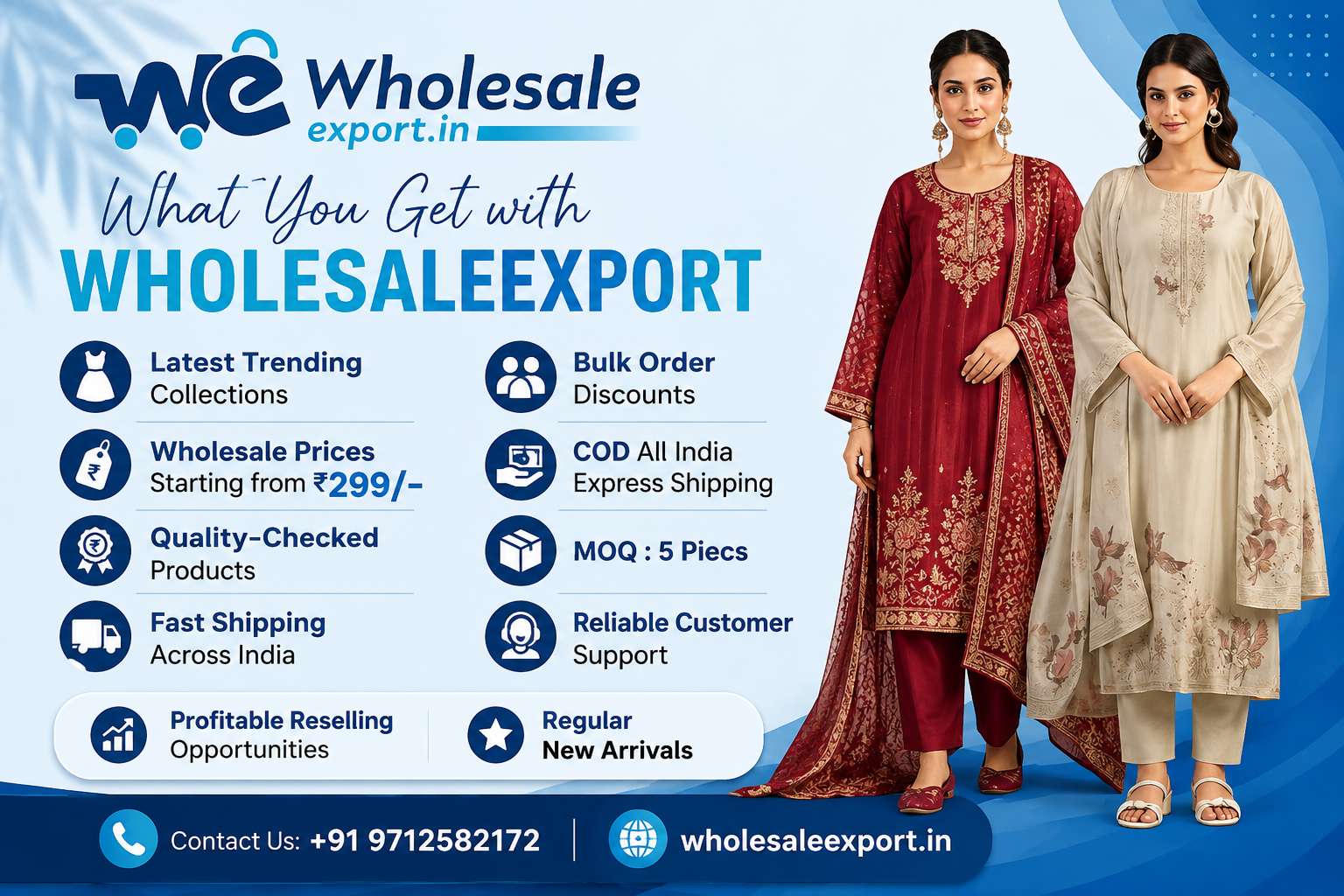
Roman Silk Dress Material Wholesale: Complete Buying Guide for Retailers in 2026
Roman Silk Dress Material Wholesale: Complete Buying Guide for Retailers in 2026
Choosing the right fabric collection can make a noticeable difference to the way a boutique or clothing business performs. Roman silk has become an attractive choice for sellers looking for fabric that offers an elegant appearance, smooth texture and versatile styling possibilities. For retailers building fresh ethnic-wear inventory, understanding fabric quality, designs, supplier reliability, customer demand and purchasing quantities is just as important as finding an attractive rate.
Introduction
The Indian ethnic-wear market continues to evolve in 2026, with customers expecting better designs, comfortable fabrics and attractive styling at practical prices. This shift creates opportunities for Home-Based Sellers, Shop Owners, Boutique Owners, Showroom Owners, Resellers and Wholesale Buyers who know how to select the right merchandise.
Roman Silk Dress Material Wholesale collections are particularly interesting because they can serve customers looking for dress materials that feel premium without restricting the product to only one type of occasion. Depending on the design and work, Roman silk dress materials can be positioned for festive shopping, family functions, casual celebrations, gifting, boutique stitching and semi-formal ethnic wear.
For a wholesale buyer, however, selecting a beautiful catalogue is only the beginning. Fabric quality, colour combinations, embroidery, printing, dupatta pairing, manufacturing consistency, size of the catalogue, wholesale price and expected retail margin should all be evaluated before placing an order.
Surat plays an important role in this sourcing ecosystem. Buyers visiting the surat textile market frequently explore areas around Ring Road and Sahara Darwaza, where a wide variety of textile products and wholesale suppliers can be found. Online sourcing has made the process more convenient for buyers who cannot visit Surat personally.
Why Roman Silk Dress Materials Are Worth Considering in 2026
A successful boutique does not necessarily need hundreds of designs. It needs the right mix of products that suit the preferences and spending capacity of its customers. Roman silk can contribute to that mix because its visual character allows manufacturers to create both understated and more decorative collections.
The fabric can work particularly well with embroidery, digital prints, traditional motifs, coordinated bottoms and attractive dupattas. This versatility gives retailers more ways to present the same general fabric category to different customer groups.
Premium Appearance with Commercial Potential
One of the biggest advantages of Roman silk dress material is presentation. Customers often judge an ethnic outfit first by its colour, fall, surface finish and overall richness. A well-designed Roman silk suit material can create a premium impression that helps boutiques position the finished outfit at a suitable retail price.
For sellers, the objective should not simply be to find the cheapest catalogue. A slightly better fabric, cleaner finishing or more attractive dupatta can sometimes create substantially better customer acceptance. The ideal wholesale purchase balances quality, design and cost.
Suitable for Different Selling Channels
Today, ethnic wear is sold through physical stores, home-based businesses, WhatsApp groups, social media pages, online stores and reseller networks. Wholesale dress materials are particularly suitable for multi-channel selling because product photographs and catalogue details can be shared digitally before customers visit a store or place an order.
A boutique can showcase premium designs in-store while simultaneously sharing new arrivals with existing customers online. Home-Based Sellers can work with comparatively smaller inventories and focus on carefully selected designs. Larger Showroom Owners may choose broader catalogues to offer more variety.
What Buyers Should Check Before Purchasing Roman Silk Wholesale
Wholesale buying should be treated as an inventory decision rather than simply a shopping decision. Every piece purchased occupies working capital until it is sold. A disciplined selection process can therefore protect both cash flow and profitability.
Check the Fabric Quality
Start with the fabric itself. Product photographs are important for online sales, but buyers should also understand the fabric description supplied with the catalogue. Ask about material composition, texture, width where relevant, colour appearance and the components included in the set.
When comparing dress material suppliers, avoid evaluating two products purely on price when their fabric specifications, embroidery, dupatta quality or finishing differ. A genuine comparison should be made between products of similar specifications.
Review the Complete Set
A dress material normally gains much of its value from coordination. The top fabric, bottom material and dupatta should look like one planned outfit rather than three unrelated components. Colour combinations are particularly important when customers intend to have the material stitched for festive or occasion wear.
Check what is actually included before confirming the wholesale order. The lowest quoted price may not always represent the strongest commercial value if another collection offers a noticeably better dupatta, additional work or stronger presentation.
Study Embroidery, Prints and Surface Work
Different markets respond differently to ornamentation. Some customers prefer subtle patterns for regular use, while others specifically look for embroidered dress materials for functions and festivals. Retailers should therefore maintain a practical combination rather than purchasing only heavily worked designs.
For Roman Silk Dress Material Wholesale, details such as embroidery placement, neckline work, borders, motifs and dupatta styling can influence the perceived value of the product. These elements should be evaluated from a retailer's perspective: will the customer understand why this piece deserves its intended selling price?
Understanding Wholesale Price and Retail Margin
The correct buying price is not necessarily the lowest available number. Retailers should calculate the complete cost of bringing a product into sellable inventory. This can include product cost, applicable taxes, transportation and other operational expenses relevant to the business.
Once the landed cost is understood, sellers can determine a realistic selling range. Margin should leave enough room for operating expenses, promotions and occasional customer discounts without making the product uncompetitive.
Avoid Buying Only on Low Price
Very low-cost stock can appear attractive when a business is trying to protect capital, but poor-moving merchandise can be more expensive than a higher-priced design that sells quickly. Inventory turnover matters.
A useful buying question is: “Can my target customer comfortably understand the value of this product at the price I need to sell it?” If the answer is yes, the catalogue may be commercially stronger than a cheaper alternative with weaker presentation.
Compare Similar Products Before Ordering
Compare fabric, work, dupatta, colour options, catalogue quantity, wholesale rate and expected retail positioning. For online purchasing, also review the product photographs carefully because those images may later become important sales material for your own customers.
Wholesaleexport.in is designed to help buyers explore ethnic-wear collections online without depending entirely on a physical sourcing visit. This can be particularly useful for businesses located away from major textile centres.
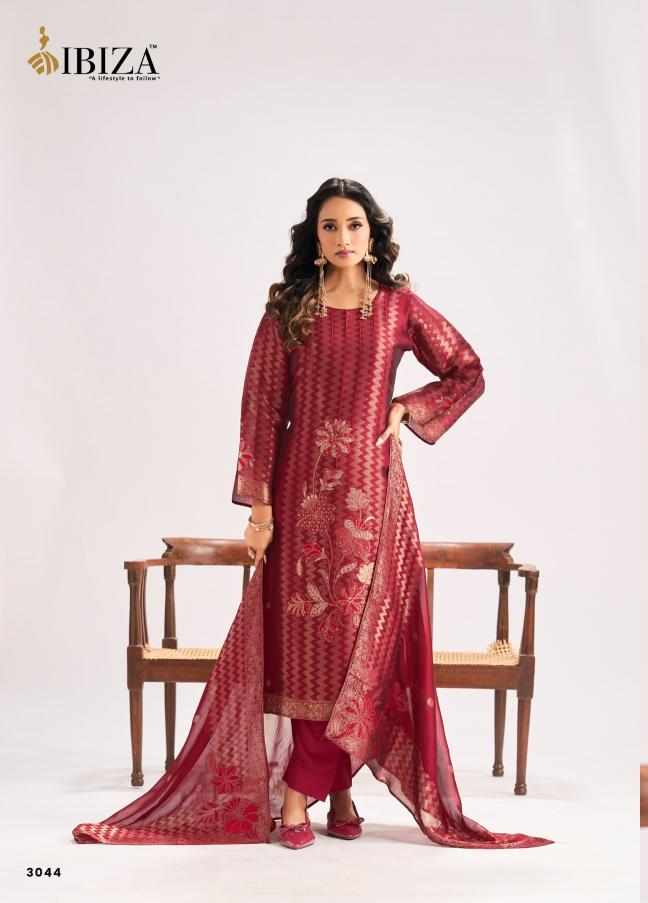
Surat as a Major Dress Material Sourcing Hub
Surat has developed a strong textile ecosystem supported by trading, processing, designing and manufacturing activities. For buyers researching ethnic-wear sourcing, the city remains closely associated with sarees, dress materials, kurtis, suits and numerous other women's fashion categories.
The commercial areas surrounding the surat textile market, Ring Road and Sahara Darwaza attract buyers from different parts of India. The concentration of suppliers and product categories makes comparison easier, but it can also make sourcing confusing for newcomers because apparently similar products may differ significantly in fabric, finishing and overall quality.
Why Online Wholesale Sourcing Is Growing
Travelling to a wholesale market involves time, transportation and accommodation expenses for buyers located far from Surat. Digital wholesale platforms can simplify repeat purchasing by allowing retailers to review catalogues and new arrivals remotely.
This is especially relevant for sellers operating in markets such as India, Nepal and Australia. Their customer profiles and retail price expectations may differ, but each business benefits from timely access to new designs and dependable product information.
For an export buyer, product selection also needs to consider local preferences. Designs that perform well in one country may not automatically become bestsellers in another. Sellers should test customer response and gradually expand the collections that generate repeat demand.
How Different Types of Buyers Can Build Their Inventory
Home-Based Sellers
Home-Based Sellers generally benefit from controlled inventory. Rather than investing heavily in a single catalogue, they can focus on versatile designs and price points that suit their existing customer network.
New sellers should observe which colours, fabrics and designs receive the most inquiries before increasing stock. This turns customer feedback into useful purchasing data.
Boutique Owners
Boutique Owners can use Roman silk suit material to offer customers more personalized styling. Because dress material allows tailoring, boutiques can combine fabric sales with stitching, neckline customization, sleeve modifications and coordinated accessories.
This creates an opportunity to compete on service and styling rather than only on price. A thoughtfully selected catalogue can therefore contribute to both merchandise sales and tailoring revenue.
Shop and Showroom Owners
Physical retailers often require broader inventory because customers expect immediate options. They can combine affordable daily-wear products with mid-range and premium dress materials so that the store serves multiple budgets.
Seasonal buying should also be planned early. Festive periods, wedding demand and regional celebrations can change the preferred colour palette and level of embroidery.
Resellers and Wholesale Buyers
Resellers should pay close attention to product photography, catalogue consistency and availability because their own customers may purchase primarily from images. Wholesale Buyers purchasing larger quantities should additionally consider repeat availability and how easily a successful category can be replenished.
Vastralife Wholesale and Export Experience Since 2017
Wholesale buying becomes easier when product knowledge is combined with practical industry experience. Vastralife has been involved in wholesale and export activities since 2017, developing experience across women's ethnic-wear categories and serving different types of buyers.
That experience is relevant because textile sourcing involves more than identifying a visually attractive catalogue. Understanding market demand, fabric positioning, quality expectations and commercial price ranges helps buyers make more informed purchasing decisions.
Wholesaleexport.in brings this wholesale-focused approach online, giving retailers and resellers a place to explore collections suitable for different budgets and customer profiles. The emphasis remains on useful product variety and premium product quality appropriate to the respective price segment.
Planning a Profitable Roman Silk Inventory
A healthy inventory normally contains a combination of safe sellers and experimental designs. If every piece is highly fashionable, the stock may age quickly when trends change. If everything is too basic, the store may struggle to create excitement.
For Roman Silk Dress Material Wholesale, retailers can divide purchases across classic colours, trending shades, lighter work and more decorative pieces. This gives customers enough choice without creating unnecessary duplication.
Start with Customer Demand
Look at previous sales records, customer inquiries and frequently requested price ranges. A boutique serving office-going customers may require different stock from a showroom focused on weddings and festivals.
Similarly, an online reseller should monitor which product images generate inquiries rather than relying only on likes or views. Actual customer questions about price, colour and availability are often stronger indicators of buying intent.
Maintain Price Variety
A single price bracket limits your audience. Consider maintaining entry, mid-range and premium choices where appropriate. Customers can then compare products within the store rather than leaving because the entire collection sits outside their budget.
This approach also allows sales staff to recommend an upgrade when the additional value is clearly visible in fabric, embroidery or dupatta quality.
Buy for Rotation, Not Just Quantity
Freshness matters in fashion retail. Instead of filling capital into excessive quantities of one design, many businesses benefit from rotating new collections more frequently. Regular New Arrivals can encourage repeat customers to check the store, WhatsApp catalogue or social pages more often.
The next stage of this guide will cover online sourcing strategy, linked wholesale categories, the second featured collection, export-oriented buying considerations, frequently asked customer questions and a practical purchasing CTA for Wholesaleexport.in.
For buyers who are ready to move from product research to actual purchasing, the next priority is building a sourcing process that is repeatable. A good collection should not only attract customers once; it should also support healthy margins, manageable inventory and regular replenishment. This is especially important when purchasing dress materials wholesale for a boutique, showroom, home-based business or reseller network.
How to Buy Roman Silk Dress Materials Online
Online wholesale purchasing can save considerable sourcing time when buyers know what information to check. Instead of choosing a catalogue only because its photographs look attractive, examine the complete product details, available designs, fabric information, set contents and wholesale price before placing an order.
Buyers exploring wholesale dress materials can compare different collections according to their customer segment. A boutique focused on premium ethnic fashion may select richer embroidery and distinctive dupattas, while a reseller serving price-conscious customers may prioritize wearable designs with wider commercial appeal.
It is also useful to maintain related categories in your business rather than depending entirely on one product type. Retailers serving families, for example, may gradually diversify into women's ethnic wear and selected mens wear according to customer demand. Product expansion should ideally happen after the core category has established predictable sales.
Check Product Details Before Confirming an Order
Before buying, verify what the catalogue includes. Check whether the product contains top fabric, bottom fabric and dupatta, and review any available details about embroidery, print, work and fabric specifications. When colour is commercially important, remember that screen settings and photography can sometimes make shades appear slightly different.
Wholesale buyers should also understand the quantity they are purchasing. A catalogue containing multiple designs may provide useful variety, but only when those designs match the store's target audience. More pieces do not automatically mean a better buying decision.
Calculate Landed Cost Instead of Looking Only at Product Price
A practical retailer thinks beyond the displayed product rate. Your effective inventory cost can include the product price, applicable taxes, shipping and other business expenses. This landed cost should be compared with the realistic retail price available in your market.
The difference between buying cost and selling price is not automatically profit. Businesses still have expenses such as rent, staffing, packaging, advertising, payment charges and discounts. Understanding these numbers helps prevent a common mistake: generating sales without generating sufficient profit.
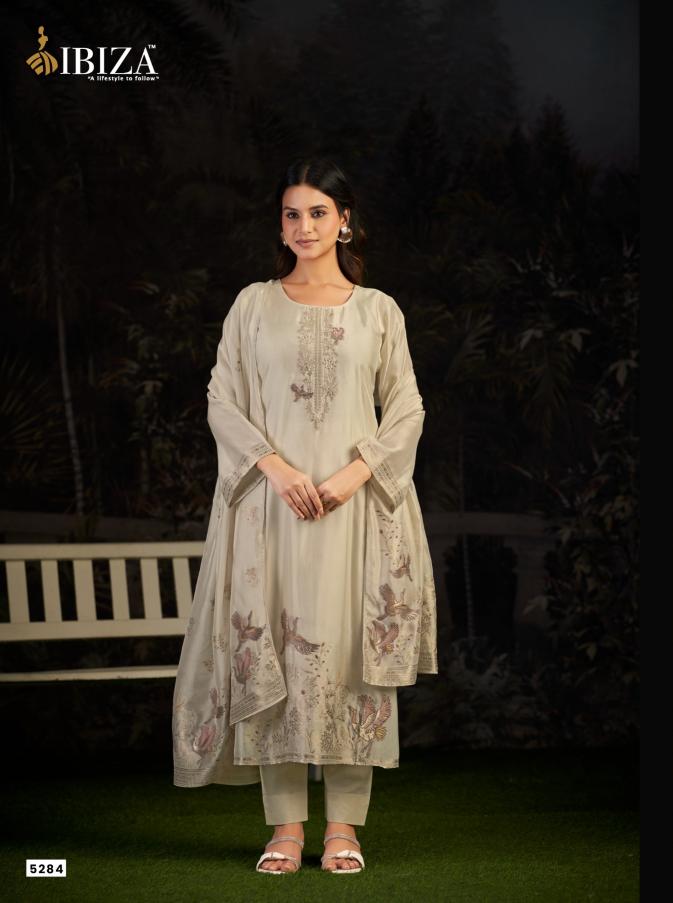
Roman Silk Dress Material Trends for 2026
Ethnic fashion in 2026 is increasingly influenced by customers who want outfits that photograph well while remaining wearable. This creates demand for dress materials with attractive colour stories, refined embroidery, coordinated dupattas and enough versatility to be stitched in different silhouettes.
Instead of following every short-lived trend, retailers can focus on commercially useful design characteristics. Elegant neck work, balanced motifs, tasteful embroidery, wearable shades and well-matched dupattas tend to make a collection easier to present to a broader audience.
Colour Selection Matters
Colour can strongly influence how quickly a dress material attracts attention. Maintaining only dark or only pastel shades can unnecessarily restrict customer choice. A better assortment can include classic shades, softer contemporary colours and selected brighter festive options.
Regional preferences should also influence buying. Customers in different parts of India may respond differently to colour and embroidery, while overseas ethnic-wear buyers in markets such as Nepal and Australia may have their own seasonal and occasion-based requirements.
Embroidery and Dupatta Can Increase Perceived Value
A customer does not always evaluate a suit by fabric alone. A coordinated dupatta and well-positioned embroidery can transform the overall impression of the outfit. For this reason, retailers comparing two similarly priced catalogues should consider the complete presentation rather than focusing on the top fabric alone.
For festive buyers, embroidery can become an important selling point. For everyday customers, excessive work may reduce practicality. Keeping both styles allows the retailer to serve different occasions without overloading inventory with one look.
Wholesale Buying from Surat for Retailers and Resellers
Surat remains closely connected with India's textile supply chain, and areas around the surat textile market, Ring Road and Sahara Darwaza are widely associated with textile trading. Buyers sourcing from Surat can encounter a very broad range of fabrics, finished garments and ethnic-wear catalogues.
The advantage of this ecosystem is choice. The challenge is selecting correctly from that choice. Retailers should therefore work with suppliers who provide clear product information and collections relevant to their target customers.
Wholesaleexport.in helps make this sourcing process more accessible to buyers who prefer browsing collections online. Instead of requiring every retailer to repeatedly travel to a physical textile market, digital catalogues allow businesses to shortlist products remotely and make buying decisions according to their inventory requirements.
Manufacturing Knowledge Helps Wholesale Selection
Understanding manufacturing and textile characteristics can improve wholesale decisions. Two dress materials that appear similar in photographs may differ in fabric feel, embroidery execution, finishing or dupatta quality.
This is where industry experience becomes useful. Buyers should learn which features actually matter to their customers and which decorative additions do not justify a higher buying cost. Over time, this creates a more disciplined purchasing system.
Plan Purchases Around Selling Seasons
Ethnic-wear demand changes through the year. Wedding seasons, festivals, family functions and regional celebrations can increase demand for decorative products, while regular months may favour more versatile designs.
Wholesale Buyers should plan early enough to receive, photograph, promote and sell inventory before peak demand arrives. Purchasing festive stock after customers have already started shopping reduces the useful selling window.
Roman Silk Dress Materials for Export Markets
Indian ethnic fashion also has demand beyond the domestic market. For businesses involved in export, dress materials offer an interesting advantage because customers can have garments stitched according to their preferred measurements and styling.
Markets such as Nepal and Australia can provide opportunities for Indian ethnic wear, while domestic buyers across India remain an important foundation for volume. Export-oriented businesses should evaluate the preferences of their own customers rather than assuming that one catalogue will perform equally well everywhere.
For overseas selling, clear photographs, accurate product descriptions and dependable communication become especially important because buyers may not be able to physically inspect merchandise before ordering.
Build Export Inventory Gradually
A sensible approach is to test a limited assortment, identify designs that receive repeat inquiries and then increase purchasing around proven categories. This reduces the risk of sending too much capital into unfamiliar styles.
Businesses can also maintain a mix of classic Indian designs and more contemporary patterns. Such variety can help retailers serve both traditional occasion buyers and younger customers looking for updated ethnic fashion.
Why Supplier Reliability Matters as Much as Wholesale Price
Long-term retail success depends on more than obtaining a low wholesale rate. A reliable supplier relationship can help a business access fresh designs, understand product details and maintain a more consistent sourcing cycle.
When evaluating a Roman Silk Dress Material Wholesale supplier, consider product quality, catalogue clarity, communication, order processing and whether the collections are suitable for your actual customer base.
Vastralife's wholesale and export experience since 2017 contributes practical industry knowledge to this process. Experience across textile and ethnic-wear categories helps in understanding the needs of Home-Based Sellers, Shop Owners, Boutique Owners, Showroom Owners, Resellers and larger Wholesale Buyers.
Wholesaleexport.in brings this sourcing approach into an online environment where businesses can discover new collections and evaluate products according to their own market positioning. The aim should always be sustainable purchasing rather than simply accumulating stock.
Inventory Strategy for Better Retail Profitability
Inventory is one of the biggest investments in a fashion business. The objective is therefore not to own the maximum possible stock but to maintain merchandise that continues moving.
Use a Good-Better-Premium Product Mix
One useful strategy is to divide inventory into multiple value levels. Affordable products can attract budget-conscious shoppers, mid-range collections can serve the largest portion of regular customers, and premium products can provide aspirational options for occasions.
This approach gives customers a comparison inside your own store. Instead of losing a buyer because one product is too expensive, the salesperson can present another option that better matches the customer's budget.
Track What Actually Sells
Do not rely entirely on memory when purchasing stock. Keep records of fast-moving colours, fabrics, designs and price points. Track which catalogues sell quickly and which remain unsold.
For online sellers, customer inquiries are useful data as well. If a particular style repeatedly generates questions about availability or price, it may deserve a larger share of the next purchase.
Reorder Winners and Reduce Slow-Moving Categories
Fashion retailers sometimes make the mistake of continuously searching for new products while ignoring designs that are already selling successfully. Newness is important, but proven demand is equally valuable.
When repeat availability exists, successful designs or closely related styles can be reordered. At the same time, slow-moving categories should receive less investment until customer demand improves.
Internal Linking and Product Discovery
A strong online buying journey should allow retailers to move naturally between related product categories. Someone searching for Roman silk may also be interested in embroidered suit materials, festive dress materials, cotton collections, Pakistani-style suits, kurtis, sarees or other women's ethnic wear.
Wholesaleexport.in can be used as a broader product discovery platform rather than treating each purchase as an isolated transaction. For boutique businesses, this is useful when planning a coordinated seasonal collection across multiple categories.
Before expanding into a new category, however, compare it with your existing customer profile. Product diversification works best when each new category has a clear reason for being added to the store.
Customer FAQs
1. What is Roman silk dress material?
Roman silk dress material refers to suit material made using Roman silk-type fabric and generally sold as coordinated components for stitching an ethnic outfit. Exact fabric composition, work and included components can vary by catalogue, so wholesale buyers should always check the individual product specifications before ordering.
2. Who should buy Roman Silk Dress Material Wholesale?
It can be suitable for Boutique Owners, Shop Owners, Showroom Owners, Home-Based Sellers, Resellers and Wholesale Buyers looking to add elegant ethnic dress materials to their inventory. The ideal catalogue depends on the retailer's customer budget, styling preference and local demand.
3. How should I select a Roman silk wholesale collection?
Compare fabric details, designs, colours, embroidery, dupatta quality, catalogue quantity, wholesale price and expected retail positioning. Choose products according to your customers rather than buying solely because a catalogue is inexpensive.
4. Can dress materials be purchased online from Surat?
Yes. Online wholesale sourcing allows retailers located outside Surat to explore catalogues without making a sourcing trip for every purchase. Wholesaleexport.in provides online access to wholesale fashion collections for buyers who prefer digital product discovery and ordering.
5. Is Roman silk suitable for boutique customers?
It can be a useful boutique category because unstitched dress materials give customers flexibility in tailoring and styling. Boutiques can add value through customized stitching, neckline designs, sleeves and fitting according to customer preferences.
6. How much inventory should a new reseller purchase?
There is no single quantity suitable for every business. New sellers should consider their available capital, customer base, average selling price and expected inventory rotation. Starting with controlled variety and expanding according to actual sales can reduce unnecessary stock risk.
7. What should wholesale buyers check before payment?
Confirm product details, catalogue quantity, applicable price, order terms and shipping information relevant to the purchase. Businesses should keep proper order and payment records as part of a disciplined wholesale buying process.
8. Is the cheapest wholesale dress material always more profitable?
No. Profitability depends on landed cost, selling price and how quickly the merchandise sells. A better-quality product purchased at a moderately higher rate may sometimes produce stronger sales and customer satisfaction than stock purchased only because it was inexpensive.
Start Sourcing Your Next Wholesale Collection
If you are building or expanding an ethnic-wear business in 2026, your purchasing decisions should combine fashion appeal with commercial practicality. Select products that suit your customer profile, compare quality before comparing price, maintain variety without overstocking and continue refreshing the collection according to actual demand.
For businesses exploring Roman Silk Dress Material Wholesale and other ethnic-wear categories, Wholesaleexport.in offers an online destination for discovering wholesale collections backed by Vastralife's wholesale and export experience since 2017.
What You Get with Wholesaleexport.in:
- Latest Collections for changing fashion demand
- Wholesale Pricing for retailers and resellers
- Trendy Ethnic Wear across multiple categories
- Fast Shipping for convenient order fulfilment
- COD Support on eligible orders
- Bulk Order Deals for larger purchasing requirements
- Quality Products Starting From ₹299 across eligible collections
Whether you are a Home-Based Seller starting with selected products, a Boutique Owner searching for distinctive designs, a Shop Owner refreshing regular inventory, a Showroom Owner planning a larger collection, or a Reseller looking for new products to promote, a disciplined wholesale strategy can help turn inventory into a more sustainable business.
Contact: +91 9712582172
Website: wholesaleexport.in
Explore fresh collections, compare products according to your customers and build your next wholesale purchase around quality, demand and realistic selling potential.