


Rayon Dress Material Wholesale 2026 – Latest Designs, Prices & Surat Suppliers
Rayon Dress Material Wholesale 2026 – Latest Designs, Prices & Surat Suppliers
Rayon dress materials continue to hold an important place in women’s ethnic wear because they combine versatile styling, attractive prints and practical fashion possibilities. For retailers planning fresh inventory in 2026, the category offers options ranging from everyday printed suits to coordinated designer collections suitable for boutiques, online resellers and established showrooms. The key to profitable sourcing is selecting designs, quality levels and quantities that match real customer demand.
Introduction
The women’s ethnic wear market has become increasingly competitive, and customers now expect more variety at every budget. A retailer may serve shoppers looking for affordable daily wear in the morning and customers searching for elegant family-function outfits later the same day. Maintaining the right product mix is therefore essential.
Rayon Dress Material Wholesale collections can help businesses cover multiple customer segments. Depending on the catalog, buyers may find printed rayon suit materials, embroidered designs, kurta-bottom combinations, dupatta sets, festive-inspired collections and contemporary patterns suitable for different age groups.
For Home-Based Sellers and Resellers, rayon dress materials can provide a flexible category for online selling. Shop Owners, Boutique Owners and Showroom Owners can use them to create dedicated sections across different price ranges. Professional Wholesale Buyers can purchase according to regional demand, size of operation and expected inventory turnover.
Wholesaleexport.in connects wholesale buyers with regularly updated women’s ethnic wear collections. Rather than purchasing only because a catalog looks attractive, businesses should evaluate fabric, design, wholesale rate, set composition, expected retail value and customer preferences before placing bulk orders.
Why Rayon Dress Materials Remain Popular in 2026
Rayon has established a strong position in Indian fashion because it can be used across a wide variety of designs. From simple everyday prints to decorative ethnic suits, manufacturers can adapt the fabric to different fashion requirements and selling segments.
For retailers, this versatility matters. A single category can serve office-going women, college customers, homemakers, casual ethnic wear shoppers and customers looking for stylish outfits for small social occasions. This wider usage potential can support more consistent inventory movement when designs are selected carefully.
Another advantage is the range of available styling. Rayon dress material wholesale suppliers may offer floral prints, traditional motifs, geometric patterns, embroidered designs and coordinated dupattas depending on current catalogs. Retailers can therefore create variety without changing the basic category.
Suitable for Everyday Ethnic Fashion
Many customers want ethnic outfits that can be incorporated into regular wardrobes rather than reserved exclusively for festivals. Rayon dress materials can be relevant to this requirement because they are available in practical designs as well as more decorative variations.
Retailers serving everyday customers can focus on wearable colours, manageable prints and designs that can be stitched into versatile suits. The actual fabric specifications should always be checked for each catalog because products sold under a broad fabric category may differ in composition and finish.
Wide Design Variety for Retailers
Product variety helps a retailer avoid making the entire store look repetitive. A strong rayon suit material wholesale assortment can include smaller prints, statement florals, traditional motifs, embroidery and selected premium-looking designs.
This allows businesses to serve different customer tastes without purchasing completely unrelated categories. The result can be a more organised ethnic wear assortment that is easier to merchandise both offline and online.
Types of Rayon Dress Materials Wholesale Buyers Can Consider
Successful inventory planning begins by understanding that not every customer wants the same type of dress material. Some buyers prioritise affordability and regular use, while others want attractive designs for gifting, outings or family functions.
Instead of purchasing large quantities of one style, retailers can create a balanced Rayon Dress Material Wholesale selection across multiple design directions. This approach provides customers with genuine choice and can reduce dependence on one fashion trend.
Printed Rayon Dress Materials
Printed collections are a practical foundation for many stores. Floral, abstract, geometric, ethnic and contemporary motifs can provide enough variation to create frequent new-arrival promotions.
Home-Based Sellers can introduce these products through WhatsApp catalogs and social media, while physical retailers can organise them according to print style or selling range. When purchasing printed fabric, buyers should evaluate print clarity, colour combination and the overall coordination of the set.
Embroidered Rayon Dress Materials
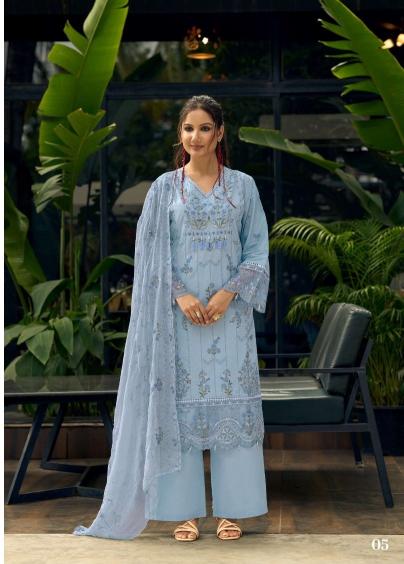
Embroidery can increase the perceived value of a rayon outfit. Neckline embroidery, floral work, border detailing and selective motifs can transform a simple suit into a more occasion-oriented product.
Boutique Owners should pay attention to finishing rather than judging embroidery only by quantity. Cleanly executed detailing can look more sophisticated than excessive work that does not complement the base fabric.
Rayon Dress Materials with Dupatta
A coordinated dupatta can significantly influence the appearance of an ethnic outfit. Customers often evaluate the complete colour combination rather than considering the kurta fabric separately.
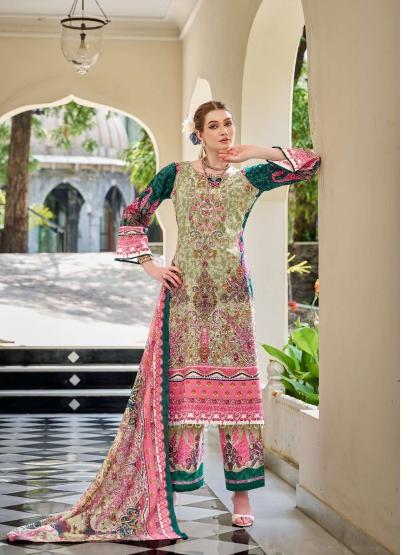
For this reason, retailers buying rayon dress material with dupatta wholesale should inspect the design relationship between all included pieces. A strong dupatta can make a relatively simple kurta fabric much more attractive at retail.
Designer Rayon Suit Materials
Designer-inspired collections can help boutiques create higher-value product sections. These may use distinctive prints, embroidery, coordinated bottoms, contrast dupattas or other design elements depending on the catalog.
Such products should be purchased according to customer demand rather than simply because they look premium in photographs. Retailers need enough potential margin to justify higher purchase costs.
Rayon Dress Material Wholesale Price in 2026
There is no universal rayon dress material wholesale price because multiple factors influence the cost of a catalog. Fabric specification, printing technique, embroidery, included pieces, dupatta quality, finishing, brand positioning and order quantity can all affect the final rate.
Buyers should therefore avoid comparing two products purely by price when their specifications differ. A basic printed dress material and a premium embroidered three-piece combination belong to different commercial segments even if both are described as rayon-based products.
What Determines Wholesale Pricing?
The cost of raw material and processing is only part of the calculation. Design development, printing, embroidery, stitching or finishing work, packing and distribution also influence wholesale pricing. Changes in manufacturing inputs can affect rates over time.
For retailers, the more useful question is whether the product provides sufficient value at its expected retail selling price. A slightly higher wholesale cost can still be commercially attractive when the design has stronger customer appeal and better perceived value.
Calculate the Complete Landed Cost
A wholesale quotation should not automatically be treated as the final inventory cost. Buyers may need to account for applicable GST, transport, packaging and other operating expenses before determining their actual margin.
International buyers need an even broader calculation because freight, applicable duties, documentation and destination charges may influence landed cost. Accurate costing before purchase helps prevent unrealistic retail pricing later.
How Retailers Can Set a Profitable Selling Price
Retail pricing should balance competitiveness with sustainable margins. Setting prices too high can reduce conversion, while excessive discounting can make it difficult to cover operating expenses and reinvest in new inventory.
Start by understanding the complete product cost. Then consider local competition, customer purchasing power, product uniqueness and expected stock rotation. A distinctive designer suit may justify a different margin structure from a commonly available everyday print.
Do Not Compete Only on Lowest Price
Price competition is common in fashion, particularly when customers can compare products online. However, constantly trying to be the cheapest seller can weaken profitability.
Retailers can instead communicate product value through clear fabric information, design details, attractive presentation, reliable customer service and transparent ordering. When customers understand what they are purchasing, price becomes one factor rather than the only factor.
Create Multiple Selling Ranges
A useful strategy is to maintain different price levels within the same category. Affordable printed dress materials can serve value-conscious customers, while embroidered and designer collections can serve shoppers seeking something more distinctive.
This structure allows sales staff and online sellers to offer alternatives when a customer likes a category but has a different budget.
Surat as a Major Rayon Dress Material Wholesale Hub
Surat has developed a large textile ecosystem that connects fabric production, processing, garment businesses, traders, wholesalers and logistics providers. For retailers searching for dress material wholesale in Surat, the city provides access to a broad range of women’s ethnic wear categories.
The surat textile market is particularly important for businesses sourcing sarees, dress materials, kurtis and suits. Commercial textile zones around ring road and sahara darwaza are widely associated with wholesale textile trading and regular catalog movement.
Surat’s advantage extends beyond the physical market. Its broader textile manufacturing ecosystem supports fabric processing, designing, printing, embroidery, garment production, packing and distribution. This helps suppliers introduce new collections frequently as fashion demand changes.
Why Buyers Source from Surat
Variety is one of the main reasons retailers explore Surat. Instead of depending on a limited number of locally available products, buyers can evaluate collections across multiple designs, price ranges and textile categories.
Competition within a large sourcing ecosystem can also encourage regular product development. For retailers, this means opportunities to refresh inventory throughout the year rather than depending exclusively on major festive seasons.
Physical Market and Online Wholesale Buying
Traditional buyers may prefer visiting Surat to compare products directly and build supplier relationships. Physical sourcing can be particularly useful when a business wants to evaluate large quantities or explore several categories in one trip.
However, repeated travel is not convenient for every business. Digital platforms allow buyers to review current catalogs, discuss product information and place orders remotely. Wholesaleexport.in supports this changing sourcing model by giving retailers another way to explore wholesale ethnic wear collections without depending entirely on physical market visits.
How to Choose a Reliable Rayon Dress Material Wholesaler
A wholesale supplier should be evaluated on more than the attractiveness of one catalog. Long-term sourcing requires consistency in product information, communication, quality expectations and order handling.
When selecting a Rayon Dress Material Wholesale source, buyers should confirm current stock, catalog quantity, MOQ, product specifications, dispatch expectations and applicable commercial terms. This is particularly important for businesses ordering remotely.
Check Fabric and Product Specifications
Do not assume that every rayon product has identical quality. Fabric composition, weight, finish and processing can differ between collections. Buyers should review the information supplied for each catalog and request clarification when important details are unclear.
For a complete dress material set, understand exactly what is included. Kurta fabric, bottom fabric and dupatta specifications can all influence the product’s retail value.
Evaluate Quality and Finishing
Premium product quality is particularly important for businesses building repeat customers. Print clarity, embroidery finishing, fabric appearance and colour coordination can influence whether customers perceive the product as worth its selling price.
New Wholesale Buyers can consider starting with manageable quantities where applicable and evaluating customer response before increasing their investment in a particular range.
Ask About Availability and Dispatch
Fashion catalogs can move quickly. A retailer should therefore confirm availability close to the time of ordering rather than assuming an older catalog remains fully stocked.
For bulk orders, clear dispatch expectations are useful for inventory planning. Retailers launching a promotional campaign around new arrivals should avoid promising customer delivery dates until realistic dispatch information is available.
Who Should Buy Rayon Dress Materials Wholesale?
The category can work across several business models, but each type of buyer should approach inventory differently. Purchase quantity should reflect customer reach, available working capital and the speed at which products can realistically be sold.
Home-Based Sellers
Home-Based Sellers can use rayon dress materials to build a flexible ethnic wear offering without maintaining a large physical showroom. Product catalogs can be introduced through WhatsApp, Instagram, Facebook and existing customer networks.
Rather than forwarding every available design, sellers can curate collections according to their customers. This creates a more professional shopping experience and prevents buyers from becoming overwhelmed by too many choices.
Shop Owners
Shop Owners can use rayon dress materials as part of their regular ethnic wear assortment. Maintaining both affordable and premium-looking options can help serve customers across multiple budgets.
Sales records should be used to identify which colours, designs and price points perform best. Future purchases can then be adjusted based on actual sales rather than assumptions.
Boutique Owners
Boutique Owners can focus on curated designs, distinctive prints and higher-value combinations. Instead of competing primarily through quantity, boutiques can build a recognisable product style.
Designer rayon suits, embroidered collections and coordinated dupattas can be useful where customers expect products that feel different from standard mass-market merchandise.
Showroom Owners and Wholesale Buyers
Showroom Owners may require greater depth across designs and selling ranges because of higher customer traffic. Wholesale Buyers supplying other retailers may place even greater importance on catalog continuity, bulk quantity and commercial consistency.
For both groups, inventory decisions should be supported by sales data and realistic demand forecasting.
Rayon Dress Material Export Opportunities
Indian ethnic wear has an established customer base outside India, creating opportunities for businesses involved in export. Rayon dress materials can appeal to overseas boutiques because unstitched and semi-stitched fashion gives customers flexibility in fit and styling, depending on the individual product.
For 2026, three markets that retailers can consider according to their own customer network are Australia, Nepal and Singapore. Each market requires a different approach to assortment planning.
Australia
Indian communities in Australia create demand for ethnic clothing across festivals, family functions and regular social occasions. Retailers can consider a combination of wearable printed products and selected premium designs while accounting for local seasons and customer preferences.
Nepal
Nepal is geographically close to India and has established demand for Indian fashion products. Retailers sourcing from Surat can evaluate rayon suits alongside kurtis, sarees and other women’s ethnic categories according to their own market.
Before ordering, buyers should confirm current shipping, import and commercial requirements rather than relying on previous transactions.
Singapore
Singapore retailers serving Indian and South Asian customers may consider elegant ethnic outfits for festivals, social occasions and everyday fashion. Product selection should reflect climate, local buying behaviour and available retail price points.
International buyers should always calculate freight, applicable duties or taxes and other destination expenses before deciding the final selling price.
Wholesale Experience and Industry Knowledge
Successful textile sourcing involves more than displaying products online. Understanding fabrics, customer demand, wholesale markets, supplier coordination and inventory movement contributes to better buying decisions.
The business ecosystem associated with Wholesaleexport.in includes Vastralife’s wholesale and export experience since 2017. This practical background contributes industry expertise in women’s ethnic fashion sourcing, wholesale customer requirements and product selection.
For retailers, experience can be useful when comparing different product categories and understanding how a collection may fit into an existing business. The final purchase decision should still be based on current specifications, customer demand and commercial terms.
Inventory Planning for Better Profitability
One of the most common mistakes in fashion retail is purchasing too much inventory simply because a collection looks attractive. The objective should be to keep working capital moving while maintaining enough variety to satisfy customers.
Start with a Balanced Collection
A balanced rayon assortment can combine regular printed designs, selected embroidered pieces and a smaller number of premium combinations. This provides variety while avoiding excessive investment in a single style.
Track What Actually Sells
Customer compliments, social-media likes and inquiries are useful indicators, but completed sales provide stronger information. Record which designs, colour families and selling ranges move consistently.
This data can guide future buying and help retailers identify which products deserve repeat quantities.
Keep Space for New Arrivals
Fashion changes quickly, and retailers need enough working capital to introduce fresh products. Avoiding unnecessary overstock leaves room for new catalogs and seasonal opportunities throughout 2026.
A disciplined test-and-repeat strategy can therefore be more sustainable than purchasing large quantities of every new collection.
How to Market Rayon Dress Materials Successfully
Good sourcing creates an opportunity, but effective presentation turns inventory into sales. Retailers should communicate why a particular dress material is suitable for the customer instead of relying only on catalog photographs. Fabric information, design details, included pieces, styling possibilities and the intended occasion can make a product listing more useful.
For online Resellers and Home-Based Sellers, clear product descriptions are especially important because customers cannot physically touch the fabric before ordering. Providing accurate information helps buyers make informed decisions and can strengthen confidence in the seller.
Create Collection-Based Promotions
Instead of uploading unrelated products throughout the day, sellers can organise products into meaningful collections. Examples include “Daily Wear Rayon Collection,” “Premium Rayon Suit Materials,” “New Printed Dress Materials” and “Festive Ethnic Collection.”
This makes digital catalogs easier to browse and gives customers a reason to explore several products together. Physical retailers can apply the same principle by organising store displays according to style, occasion or selling range.
Use WhatsApp and Social Media Strategically
WhatsApp, Instagram and other digital channels can help sellers introduce new products quickly. However, sending excessive catalogs without context may reduce customer engagement. A smaller selection accompanied by useful information can often create a more professional experience.
Product posts can mention fabric, available design options, set contents and retail price. For premium designs, close-up images of embroidery, prints and dupatta details can help customers understand the value of the product.
Build Repeat Business Through Service
Fashion sellers should focus on repeat customers rather than treating every transaction as a one-time sale. Transparent communication, realistic delivery expectations and accurate product descriptions can support long-term customer relationships.
Regular new arrivals also provide a natural reason to reconnect with previous buyers. Instead of depending entirely on discounts, retailers can create interest through genuinely fresh collections that match their customers’ preferences.
Latest Rayon Dress Material Trends for 2026
The ethnic wear market in 2026 continues to move toward versatility. Customers increasingly prefer outfits that can work across multiple occasions rather than garments that remain unused after one event. This creates opportunities for dress materials that offer both visual appeal and practical styling.
For Rayon Dress Material Wholesale buyers, the most useful trend is not necessarily one particular print or colour. The larger opportunity lies in creating an assortment that combines wearable designs with selected fashion-forward products.
Floral and Nature-Inspired Prints
Floral motifs continue to remain relevant because they can be adapted across age groups and occasions. Small florals can create a subtle everyday look, while larger botanical designs can provide a stronger fashion statement.
Retailers can maintain both styles instead of depending entirely on one print direction. Colour selection should also reflect local demand, because the same print may perform differently in pastel, earthy and bright colour combinations.
Traditional Prints with Contemporary Styling
Ethnic motifs remain important in Indian dress materials, but modern colour combinations can make traditional designs feel more current. This combination can work particularly well for customers who appreciate Indian aesthetics but prefer updated styling.
Boutique Owners can use such designs to create curated collections around festivals, office ethnic days and family functions without moving exclusively into heavy occasion wear.
Statement Dupattas
A contrasting or detailed dupatta can become the focal point of an otherwise understated suit. For wholesale buyers, this means the dupatta should be evaluated as an important component of the complete product rather than a secondary accessory.
Strong colour coordination between kurta fabric, bottom and dupatta can increase perceived value and make the set easier for sales staff to present.
Premium-Looking Everyday Wear
One of the useful commercial segments is clothing that appears refined while remaining suitable for frequent wear. Customers may want an outfit that looks better than basic home wear but does not feel excessively festive.
Printed rayon designs with subtle detailing can help retailers address this middle segment. Such products may be relevant for office wear, lunches, casual gatherings, travel and everyday social occasions.
Internal Linking and Related Wholesale Categories
Retailers can strengthen their ethnic wear assortment by combining rayon dress materials with complementary categories. Customers who purchase unstitched suits may also be interested in ready-made kurtis, kurti sets and other women’s fashion products.
Buyers looking specifically for broader suit and fabric options can explore wholesale dress materials Surat collections to compare different designs and product segments according to their business requirements.
Businesses interested in expanding their ready-made ethnic assortment can also explore the Ahmedabad kurti wholesale market category for additional sourcing possibilities. Diversification works best when new categories complement existing customer demand instead of consuming working capital without a clear sales strategy.
Wholesaleexport.in can be used to explore different women’s ethnic wear categories, allowing Shop Owners, Boutique Owners and Resellers to develop a broader product mix while keeping purchasing decisions aligned with their target customers.
Quality Checks Before Placing a Bulk Dress Material Order
Quality control becomes increasingly important when order quantities grow. A small inconsistency may seem insignificant in one product, but repeated issues across a bulk shipment can affect customer satisfaction and profitability.
Evaluate the Fabric
Confirm the fabric specification provided for the individual catalog. Rayon products can differ in composition, weight, texture and finish, so the broad fabric name alone should not be used to judge quality.
Buyers should select the specification according to the intended customer and selling range. An economical daily-wear product and a premium boutique collection can reasonably have different characteristics.
Check Print Clarity and Colour Coordination
Printed dress materials should have visually balanced designs. Buyers can examine whether motifs appear clear and whether the colours of the kurta, bottom and dupatta coordinate well.
For online buying, detailed catalog photographs and product videos can help with preliminary evaluation. Buyers should still confirm relevant specifications before placing a substantial order.
Inspect Embroidery and Decorative Details
If the collection includes embroidery, examine the available close-up details. Neat work generally creates a stronger premium impression than heavy decoration with poor finishing.
Retailers should consider how the product will appear when stitched because customers ultimately purchase the finished outfit experience rather than individual pieces of fabric.
Understand the Complete Set
Before comparing wholesale rates, determine exactly what the catalog includes. Kurta fabric, bottom material and dupatta specifications influence the value of the complete set.
This is particularly important when comparing multiple suppliers. Two catalogs may appear to have similar prices while offering substantially different components.
How Boutique Owners Can Sell Rayon Dress Materials at Better Value
Boutiques do not necessarily need to compete with high-volume retailers on the lowest price. Their advantage can come from selection, styling assistance, product knowledge and personalised service.
A carefully curated designer rayon dress material wholesale assortment can be presented according to occasion, colour palette or design theme. Customers may be more willing to pay for a product when they understand how it can be styled and where it can be worn.
Sell the Complete Styling Idea
Rather than displaying fabric only as folded merchandise, boutiques can show customers how a dress material might translate into a finished outfit. Reference styling, suitable neckline ideas and accessory suggestions can help customers visualise the final look.
This does not require changing the product itself. Better presentation can simply make the existing value easier for the customer to understand.
Curate Instead of Overstocking
A boutique can often create a stronger identity with carefully selected products than with hundreds of similar designs. Choose collections that fit the store’s established customer profile and introduce new styles gradually.
When a particular collection performs well, repeat buying can be considered subject to availability. This keeps purchasing tied to genuine demand.
Strategies for Showroom Owners and High-Volume Buyers
Showrooms and larger Wholesale Buyers face a different challenge: maintaining enough variety and depth without allowing inventory to become difficult to manage.
These businesses can divide their rayon section according to price, design type or intended usage. Such organisation helps sales teams guide customers quickly and makes stock analysis easier.
Use Category-Wise Inventory Planning
A showroom might divide rayon inventory into everyday printed suits, mid-range designer collections and premium embroidered sets. Each category can then receive a different purchasing budget based on historical sales.
This is more effective than allocating equal investment to every product simply because all of them belong to the same fabric category.
Monitor Inventory Rotation
Older merchandise should be identified before it becomes difficult to sell. Retailers can use selective promotions, customer outreach or merchandising changes to improve movement while protecting margins wherever possible.
Regular analysis also prevents the purchasing team from repeatedly buying styles that appear attractive but historically sell slowly.
Export Planning for Australia, Nepal and Singapore
International wholesale purchasing requires more detailed planning than domestic sourcing because shipping and destination expenses can materially affect profitability.
Buyers in Australia can develop assortments around Indian festivals, family occasions and regular ethnic fashion. Seasonal planning is important because Australian seasons differ from India, and buying decisions should reflect the actual retail calendar.
For Nepal, retailers can combine rayon dress materials with other Indian ethnic wear categories according to customer preferences. Geographic proximity can make Indian textile sourcing commercially relevant, but buyers should always verify current logistics and import requirements.
In Singapore, Indian and South Asian customers may purchase ethnic outfits for cultural events, celebrations and regular use. Lightweight-looking, versatile designs can be considered according to local climate and customer preferences.
Calculate Landed Cost Before Confirming an Export Order
The wholesale product price should not be confused with the final cost of international inventory. Freight, packing, documentation, applicable duties, taxes and local delivery expenses can influence the actual landed cost.
Businesses should verify current destination requirements before confirming an export shipment. This helps establish realistic margins and retail pricing from the beginning.
Why Experience Matters in Textile Wholesale
Textile wholesale combines product knowledge with practical market experience. Understanding fabric categories, designs, supplier networks, customer expectations and inventory movement can help buyers make better purchasing decisions.
The business background supporting Wholesaleexport.in includes Vastralife’s wholesale and export experience since 2017. This contributes practical industry expertise in women’s ethnic wear, wholesale sourcing and international customer requirements, together with an emphasis on premium product quality.
Experience can help provide a stronger sourcing framework, but buyers should still evaluate each catalog independently. Fashion demand changes, and the most successful retailers continue adapting their inventory according to actual customer response.
Common Mistakes Wholesale Buyers Should Avoid
Buying Only Because the Price Is Low
A low purchase rate can be attractive, but it does not automatically create profit. If customers do not like the design or perceive the quality as unsuitable, the product may remain unsold despite its low cost.
Evaluate price together with design, quality, expected retail value and likely inventory movement.
Ordering Too Much of an Untested Collection
New designs should be evaluated against existing customer demand. Purchasing excessive quantity before understanding customer response increases inventory risk.
Where supplier terms allow, a test-and-repeat approach can provide more flexibility.
Ignoring Customer Data
Retailers often remember attractive products more easily than actual sales patterns. Basic records can reveal which colours, designs and selling ranges generate repeat business.
Future wholesale purchasing should gradually become more data-driven as the business grows.
Depending on One Product Category
Rayon dress materials can be an important part of an ethnic wear business, but retailers can reduce dependency by maintaining complementary categories according to customer demand. Diversification should remain controlled rather than random.
Customer FAQs
1. What is Rayon Dress Material Wholesale?
It refers to rayon-based unstitched or dress-material collections supplied in wholesale quantities for retailers, boutiques, Resellers and other business buyers. Individual sets may include kurta fabric, bottom fabric and a dupatta depending on the catalog.
2. Where can I buy rayon dress materials wholesale from Surat?
Surat has a large network of textile manufacturers, wholesalers and traders. Buyers can source through physical textile markets or explore online collections through Wholesaleexport.in according to current availability and ordering terms.
3. What is the wholesale price of rayon dress material in 2026?
There is no single fixed rate. Pricing depends on fabric specification, printing, embroidery, set composition, dupatta quality, brand, quantity and current manufacturing costs. Buyers should request current catalog pricing before placing an order.
4. Is rayon dress material suitable for a boutique business?
Yes. Boutiques can select printed, embroidered and designer collections according to their customer profile. Curated products with distinctive designs can complement ready-made ethnic wear and other boutique categories.
5. Can Home-Based Sellers purchase dress materials wholesale?
Yes, subject to the supplier’s applicable MOQ and ordering terms. Home-Based Sellers can start with carefully selected collections and use digital channels to market products to their customer network.
6. Can rayon dress materials be exported outside India?
Yes, subject to shipping availability and applicable destination requirements. International buyers should confirm freight, documentation, customs rules, duties and taxes before placing an order.
7. Why is Surat popular for dress material wholesale sourcing?
Surat has an extensive textile ecosystem involving fabrics, processing, printing, embroidery, manufacturing, wholesale trading and logistics. This supports a broad selection of regularly changing ethnic wear products.
8. What should I check before placing a bulk order?
Confirm fabric details, catalog quantity, set contents, design options, current stock, MOQ, wholesale rate, dispatch terms and applicable policies. International buyers should additionally calculate the complete landed cost.
9. Are rayon dress materials suitable for online reselling?
They can be suitable for online selling because printed and coordinated collections can be presented through catalog images and videos. Accurate product descriptions and transparent customer communication remain important.
10. How can I choose profitable rayon designs?
Use previous sales data, customer inquiries, local fashion preferences and expected retail margins. Start with balanced quantities and increase purchasing for designs that demonstrate genuine sales demand.
Start Your Rayon Dress Material Wholesale Order
Building a profitable ethnic wear business requires the right combination of products, pricing, quality and inventory control. Whether you are a Home-Based Seller, Shop Owner, Boutique Owner, Showroom Owner, Reseller or professional Wholesale Buyer, purchase according to customer demand rather than quantity alone.
Explore Latest Collections, competitive Wholesale Pricing and Trendy Ethnic Wear for your retail, boutique or reselling business. Buyers can also enquire about Fast Shipping, available COD Support, Bulk Order Deals and selected Quality Products Starting From ₹299, subject to current collection availability and applicable ordering conditions.
For current catalogs, wholesale rates, MOQ information and bulk order assistance, contact the team.
Contact Number: +91 9712582172
Website: wholesaleexport.in
A well-planned rayon collection can provide options for everyday customers, boutique shoppers and value-conscious buyers while giving retailers opportunities across multiple selling ranges. Focus on reliable sourcing, thoughtful product selection and regular inventory rotation to build stronger repeat business throughout 2026 and beyond.