


Profitable Saree Business Ideas for Women in 2026: Start and Grow Your Saree Business
Profitable Saree Business Ideas for Women in 2026: Start and Grow Your Saree Business
The saree market offers women an accessible way to enter fashion retail, whether the goal is to begin from home, build an online store, become a reseller or eventually open a boutique. The key is not simply buying attractive sarees; a sustainable business comes from selecting the right customer segment, controlling inventory, sourcing at competitive rates and creating a selling system that encourages repeat purchases.
Introduction
Starting a fashion business can feel complicated when there are decisions about products, suppliers, investment, marketing and customer acquisition. Sarees simplify some of these challenges because they are already familiar to a broad customer base across India and remain relevant for everyday wear, office use, weddings, festivals, gifting and special occasions.
For women exploring profitable saree business ideas for women, the opportunity is especially flexible. A business can begin with a small collection promoted through WhatsApp and Instagram, operate as a home-based venture, develop into an online saree business or gradually become a physical boutique or showroom.
The important question is not whether sarees can be sold. The better question is: which sarees should you sell, to whom, at what price and through which sales channel?
In 2026, customers can compare designs and prices quickly through social media and online shopping. This means sellers need more than a catalogue. They need relevant collections, dependable product quality, attractive presentation, sensible pricing and regular new arrivals.
Why a Saree Business Can Be a Practical Choice for Women
A saree business can be structured around available time and capital. Unlike a large apparel showroom that may require substantial inventory across numerous sizes, sarees generally remove the complexity of maintaining a deep size-wise assortment.
Flexible Starting Investment
You do not necessarily need a large showroom to enter the saree market. Home-Based Sellers can begin with carefully selected products and increase stock as customer demand becomes clearer.
This reduces the pressure to invest heavily before understanding which designs, fabrics and price ranges work with the target audience.
Multiple Customer Segments
The saree category contains numerous commercial segments, including cotton sarees, georgette sarees, printed sarees, designer sarees, festive sarees, wedding sarees, party wear sarees, office wear sarees and daily wear collections.
A seller can therefore build a focused niche instead of trying to compete with every saree retailer.
Online and Offline Selling Opportunities
A woman can sell sarees through WhatsApp, Instagram, Facebook, personal networks, exhibitions, a physical boutique or an ecommerce website. Combining two or three channels can eventually create a more dependable sales pipeline.
This flexibility is one reason a home based saree business can grow gradually without immediately taking on the fixed expenses of a traditional retail shop.
1. Start a Home-Based Saree Reselling Business
One of the simplest models is purchasing sarees at wholesale rates and reselling them from home. This approach can suit women who already have a network of relatives, neighbours, friends, colleagues or community contacts.
Choose a Clear Starting Segment
Do not begin by purchasing random sarees simply because they look attractive. Decide who is most likely to purchase from you.
If your customers prefer affordable everyday products, focus initially on printed, lightweight and easy-to-wear sarees. If your network frequently attends weddings and social functions, a selected range of designer and occasion wear may provide better opportunities.
Begin with Variety Instead of Excessive Quantity
A common beginner mistake is purchasing too many pieces of similar designs. In the early stage, broader variety can provide more useful information about customer preferences.
Once a particular fabric, design or saree price range begins generating repeat sales, you can increase purchasing in that segment.
Use WhatsApp as a Personal Selling Channel
WhatsApp can be highly practical for home sellers because customers can ask questions directly, request additional product details and share designs with family members before purchasing.
Avoid overwhelming customers with hundreds of products every day. A curated presentation of new arrivals can make the buying experience easier and more personal.
2. Build an Instagram Saree Business
Instagram can turn a small saree venture into a visually driven fashion brand. Instead of using the account only as a catalogue, build content around styling, fabrics, new collections, festive selections and customer use cases.
Create Product-Focused Reels
Short videos can demonstrate details that static images may not communicate effectively. Show the saree fall, pallu, border, blouse piece, print, texture and complete colour combination.
Customers purchasing remotely want confidence about what they will receive. Clear product presentation can reduce uncertainty.
Use Location-Based Content
For GEO optimization and local discovery, sellers can naturally mention their service location and target areas in captions and business information. For example, a seller serving customers in Pune should create content that makes this geographic relevance clear rather than relying only on generic hashtags.
Build Trust Before Pushing Sales
An online saree page should not consist entirely of promotional posts. Explain fabrics, help customers select sarees for different occasions and answer frequently asked questions.
Educational content can turn the seller from another catalogue account into a useful fashion resource.
3. Open a Small Saree Boutique
A boutique model can work well for women who want to provide a more curated shopping experience. Instead of competing with large stores on quantity, boutiques can compete through selection, personal service and distinctive collections.
Select a Boutique Identity
Your boutique might focus on premium printed sarees, affordable designer sarees, festive wear, traditional collections or modern lightweight styles. A recognisable product identity makes marketing easier.
Control Inventory Carefully
Rent, interiors and staff can already create fixed expenses, so a boutique should avoid unnecessary inventory accumulation. Track which products actually sell rather than judging success by how full the shelves appear.
A successful saree business for women should treat inventory as working capital. Products need to move, generate revenue and create room for new designs.
4. Sell Sarees Through Live Shopping
Live selling has become a useful format for sellers who can communicate comfortably on camera. Products can be demonstrated one by one while customers ask questions in real time.
Prepare Before Going Live
Arrange products in sequence and keep basic information ready, including product code, fabric, price, colour and purchasing instructions. A structured live session feels more professional and reduces confusion.
Explain Rather Than Simply Display
Customers should understand why a particular saree may suit them. Mention whether it is appropriate for everyday wear, office use, gifting, festivals, weddings or parties.
Useful guidance can increase buyer confidence and make the session more engaging than simply announcing prices.
5. Create a Festival-Focused Saree Business
India's festival calendar creates recurring fashion demand. Diwali, Navratri, Durga Puja, Eid, Onam and regional celebrations can influence saree preferences.
A festival-focused model does not mean selling only during festivals. It means planning inventory around upcoming demand and using seasonal opportunities to generate stronger sales.
Buy Before Demand Peaks
Retailers who begin sourcing only when the festival is already close may lose valuable selling time. Stock should ideally arrive early enough for photography, promotion, customer selection and repeat orders.
Build Multiple Price Levels
Not every festival customer wants a premium saree. Maintain accessible, mid-range and selected premium products so customers can choose according to their budgets.
This approach can also help Resellers and Boutique Owners increase conversion without relying on a single price bracket.
6. Build a Printed Saree Business
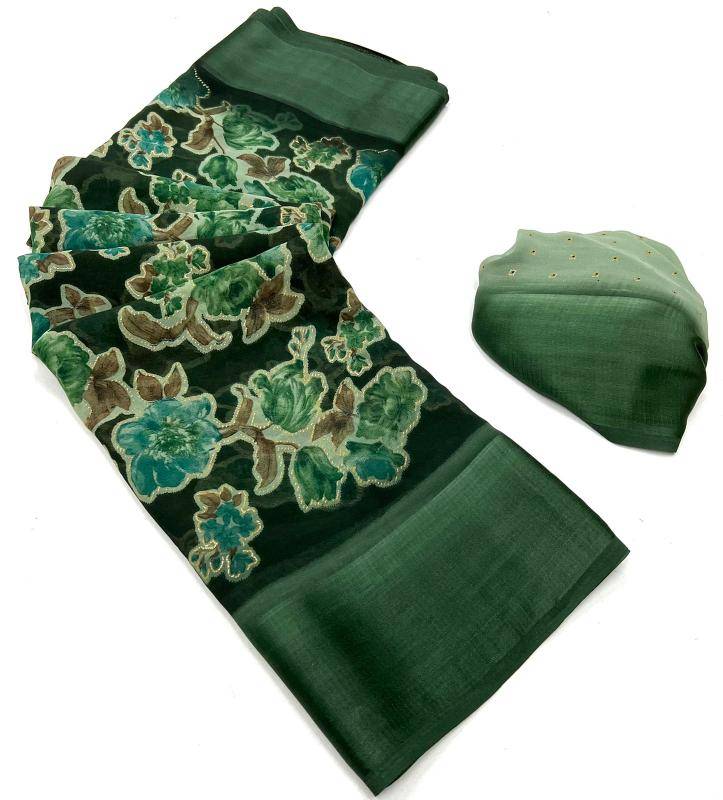
Printed sarees can provide an approachable category for sellers targeting regular and semi-casual buyers. Floral designs, abstract patterns, traditional motifs and contemporary prints allow a seller to maintain visual variety without depending entirely on heavy occasion wear.
Focus on Wearability
A product can look impressive in a catalogue but still be difficult to sell if customers cannot imagine when they would wear it. Lightweight, versatile products may encourage repeat purchasing because they fit more occasions.
Refresh Designs Regularly
Customers following your WhatsApp or social media updates need a reason to keep checking. Regular new arrivals can create interest even among customers who are not ready to purchase immediately.
7. Sell Sarees to Office-Going Women
Professional women represent another potential niche. The focus here is generally different from wedding or festival merchandise. Comfort, manageable drape, elegant colours and sophisticated prints can become more important than heavy decorative work.
Create an Office Collection
Instead of listing products individually, group suitable sarees as an office or workwear collection. This helps customers immediately understand the intended use.
Simple merchandising decisions like this can improve online navigation and make offline selling easier.
Encourage Repeat Buying
Office customers may purchase multiple sarees over time if they trust your quality and understand your collection style. This makes retention especially valuable.
8. Build a Wedding and Occasion Saree Business
Wedding sarees can provide higher selling values, but the purchasing decision is also more demanding. Customers may compare multiple products before making a final choice.
Offer a Curated Premium Range
A smaller, carefully selected premium collection can sometimes perform better than large quantities of similar products. Consider colour, border, blouse coordination, fabric appearance and perceived value.
Understand the Customer's Occasion
A saree for the bride's close family may have different requirements from a product intended for a wedding guest. Asking about the occasion allows you to recommend more accurately.
This consultative approach is especially valuable for Boutique Owners and Showroom Owners who want to differentiate themselves from price-only sellers.
9. Source Sarees from Surat for Better Business Variety
Surat remains an important textile sourcing centre for fashion retailers. Buyers exploring the surat textile market encounter extensive activity across sarees, dress materials, kurtis and other apparel categories.
Areas around ring road and sahara darwaza are widely associated with textile trading. The broader ecosystem includes traders, wholesalers, distributors and businesses connected with textile manufacturing.
Compare More Than the Lowest Wholesale Price
Low sourcing cost can improve margins only when customers actually want the product. Compare design, fabric, presentation, quality, supplier reliability and expected retail selling value alongside wholesale price.
A slightly better product that sells quickly can be commercially stronger than cheaper stock that remains unsold.
Use Online Wholesale Sourcing
Travelling to Surat for every stock update may not be practical for every seller. Platforms such as Wholesaleexport.in can help Home-Based Sellers, Shop Owners, Boutique Owners, Showroom Owners, Resellers and Wholesale Buyers explore changing collections remotely.
This can be particularly useful for businesses outside Gujarat that need access to fresh Indian ethnic wear without depending exclusively on physical market visits.
10. Start a Saree Reselling Business Without a Large Showroom
Among the most practical profitable saree business ideas for women is building a lean reselling operation. The objective is to keep fixed costs manageable while investing primarily in merchandise and customer acquisition.
Create a Small Customer Community
Your first 50 engaged customers may be more commercially valuable than thousands of inactive social media followers. Focus on customers who actually respond, ask about products and purchase.
Track Every Enquiry
When customers repeatedly ask for specific fabrics, colours or budgets, record those requests. Even enquiries that do not convert immediately provide useful purchasing information.
Over time, this creates your own market intelligence instead of depending entirely on general fashion trends.
11. Develop a Saree Export and Overseas Reselling Model
Indian ethnic wear also has customers outside India, particularly among communities that purchase sarees for cultural events, festivals, weddings and celebrations.
For sellers considering saree export business, markets such as the USA, Australia and Malaysia can offer potential when product selection is matched to the intended customer.
Understand Overseas Customer Preferences
Do not assume that every domestic bestseller will automatically perform internationally. Overseas customers may prioritise easy draping, contemporary colours, occasion wear or products suited to specific community events.
Consider Shipping in the Final Selling Price
International orders involve more than the product cost. Packaging, logistics and other applicable expenses should be considered before quoting the customer.
A sustainable export model requires accurate costing so that sales remain commercially viable after fulfilment expenses.
How to Calculate Saree Selling Price and Profit Margin
Revenue alone does not tell you whether your business is profitable. Sellers should understand the complete cost associated with each sale.
Calculate Your Landed Product Cost
Start with the wholesale purchase price and add relevant expenses associated with bringing the product into sellable inventory. Depending on your model, this can include transportation, packaging and marketing-related costs.
Do Not Copy Competitor Pricing Blindly
Two businesses can sell similar sarees while having very different operating costs. A home seller, marketplace seller and physical showroom may each require different margins.
Set prices based on your costs, target customer, market position and expected margin rather than copying another seller's number.
Protect Margin During Discounts
Discounts can help clear stock or encourage larger orders, but repeated uncontrolled discounting can train customers to wait for lower prices. Use promotions strategically instead of making them the foundation of the business.
How Wholesaleexport.in Can Support Saree Sellers
Reliable sourcing becomes increasingly important as sales grow. A seller needs access to variety, competitive wholesale pricing and products suitable for different customer segments.
Wholesaleexport.in focuses on wholesale fashion sourcing for business buyers, helping sellers explore collections according to their market and budget requirements.
Vastralife brings wholesale and export experience since 2017, along with practical textile industry expertise and a focus on premium product quality. This industry background can be valuable for buyers who want to build long-term sourcing relationships rather than purchasing random inventory from changing suppliers.
For women building their first saree venture, sourcing discipline can be just as important as marketing. The right supplier relationship can help a business refresh products regularly without losing focus on quality and commercial viability.
Marketing Strategy for a Profitable Saree Business
A strong product needs visibility. However, effective marketing is not simply posting more frequently. Your content should help customers discover, evaluate and trust the products you sell.
Use Product Demonstration Content
Show details customers care about: border, pallu, blouse piece, fabric appearance and overall drape. Product demonstration can be particularly useful for online buyers who cannot physically touch the saree.
Create Educational Content
Explain how to choose sarees for different body types, occasions, seasons and budgets. Discuss fabric differences and styling possibilities.
This informational content can support SEO and AIO visibility while also giving customers a practical reason to follow the business.
Collect Customer Reviews
Genuine customer feedback can strengthen trust. Encourage satisfied buyers to share their experience, particularly when selling through social channels where new customers may initially know very little about your business.
For a new online saree business, credibility can be one of the strongest conversion factors.
How to Scale from Home Seller to Established Saree Business
Scaling should follow proven demand. A seller does not need to move immediately from ten sarees to hundreds of pieces.
Stage One: Validate Demand
Begin with controlled inventory, identify your most responsive customer group and learn which products generate actual sales.
Stage Two: Increase Winning Categories
Once sales data becomes available, allocate more purchasing capital to proven fabrics, designs and price segments.
Stage Three: Build a Brand Identity
Improve photography, packaging, customer service and visual consistency. Customers should gradually recognise what your business stands for.
Stage Four: Expand Sales Channels
After establishing repeat demand, consider adding a website, exhibitions, marketplace selling or a physical retail presence where appropriate.
The next stage is to connect these growth ideas with the right wholesale categories, internal resources and a practical stock-management system so the business can expand without creating unnecessary dead inventory.
As the business grows, purchasing decisions should become more structured. Instead of buying simply because a catalogue is new, sellers should measure customer response, inventory movement, gross margin and repeat demand. This disciplined approach is what turns a small reselling activity into a sustainable fashion business.
Manage Saree Inventory Without Blocking Too Much Capital
Inventory is one of the biggest financial considerations in any apparel business. Attractive products can still become a problem when too much money is locked into slow-moving stock. Women starting from home should therefore treat every purchasing decision as a business investment.
Use the 70-20-10 Stock Approach
A practical inventory structure is to allocate the largest portion of purchasing capital to proven products, a smaller portion to seasonal or trend-led collections and a limited amount to experimental designs.
For example, around 70% of the budget may go toward categories that already sell consistently, 20% toward current seasonal demand and 10% toward new styles that need market testing. The exact percentages can change according to the business, but the principle helps control risk.
Measure Stock Rotation
Keep a simple record of when products arrive and when they sell. If one category moves quickly while another remains unsold for several months, future purchasing should reflect that information.
Fast-moving inventory allows capital to return to the business sooner. This money can then be used for new arrivals, advertising or additional stock.
Do Not Confuse Variety with Excess Inventory
Customers appreciate choice, but choice does not require keeping large quantities of every design. Particularly for Home-Based Sellers and new Resellers, controlled variety can be safer than purchasing excessive depth in untested products.
This is an important principle behind many profitable saree business ideas for women: begin intelligently, learn from customers and expand the products that prove their commercial potential.
Choose the Right Saree Categories for Your Customer Base
Successful saree retailers rarely depend on every available category. They identify the combinations that match their customers and build depth gradually.
Georgette Sarees
Lightweight and fashionable styles can appeal to customers seeking contemporary sarees for parties, celebrations and social occasions. Sellers interested in this segment can explore georgette sarees while comparing designs according to their target selling range.
Printed Sarees
Printed products can provide variety through florals, abstract designs, traditional motifs and contemporary patterns. They can be useful for sellers targeting customers who regularly refresh their wardrobe rather than buying only for major occasions.
Designer and Festive Sarees
Designer collections can provide stronger perceived value when customers are purchasing for weddings, festivals or celebrations. Retailers should still maintain discipline because expensive inventory may rotate more slowly than everyday products.
Cotton and Everyday Sarees
Comfort-oriented collections can attract customers looking for office, daily and regular social wear. This category can be particularly valuable when a seller wants to build repeat purchasing rather than depending entirely on seasonal demand.
Expand Beyond Sarees When Customers Request It
Once the core saree business becomes stable, customer enquiries may reveal opportunities in related categories. For sellers considering broader women's ethnic wear, studying markets such as the Ahmedabad kurti wholesale market category can help identify complementary products without changing the primary saree identity immediately.
How to Create a Saree Business Plan for 2026
A business plan does not need to be a complicated document. Even a one-page plan can give direction to a small business when it clearly defines customers, products, investment, sales channels and financial targets.
Step 1: Define Your Customer
Write down the type of customer you want to serve. Consider age group, location, typical budget, preferred occasions and fashion preferences.
A business selling ₹500-₹1,000 everyday products requires a different assortment and marketing approach from one targeting premium wedding customers.
Step 2: Decide Your Initial Investment
Separate money for merchandise from money required for packaging, promotion, shipping and other operational expenses. Avoid using the complete budget for inventory.
Step 3: Choose Two Primary Sales Channels
A beginner might choose WhatsApp and Instagram. A boutique could combine offline selling with social media. An established retailer may combine a physical store, website and online marketing.
Trying to master every platform at once can divide attention. Build one or two channels effectively before expanding.
Step 4: Set Monthly Sales Goals
Targets should be measurable. Instead of saying, “I want more customers,” define how many orders, repeat customers or monthly sales you want to achieve.
Step 5: Review Performance Monthly
Record best-selling products, slow-moving inventory, customer requests, average order value and marketing sources. This information makes the next purchasing cycle more accurate.
Pricing Strategy for Better Saree Business Profit
Pricing determines whether a busy business is actually a profitable business. Sellers should know the difference between sales turnover and profit.
Include All Relevant Costs
The actual product cost can include the wholesale rate along with applicable transportation, packaging, payment charges and selling expenses. A margin calculated only from the supplier's quoted price may therefore be misleading.
Use Different Margins for Different Products
Every saree does not necessarily require exactly the same percentage margin. Competitive everyday products may operate differently from exclusive premium pieces.
The objective is to create a healthy overall margin while keeping the final customer price commercially reasonable.
Create Bundles Carefully
Offers such as purchasing two or more sarees together can increase order value when the numbers remain profitable. Bundles can also be useful for gifting periods and festival campaigns.
Review Competitors Without Copying Them
Competitor research helps sellers understand market expectations, but copying another business's price without knowing its sourcing cost or business model can create problems.
Use competitor information as market intelligence, not as your complete pricing strategy.
Turn First-Time Buyers into Repeat Saree Customers
Acquiring a new customer usually requires more effort than selling again to someone who already trusts the business. Repeat customers can therefore become a major source of long-term profitability.
Remember Customer Preferences
If a customer repeatedly purchases lightweight floral sarees within a particular budget, send relevant new arrivals rather than every product available.
Personalised recommendations can make customers feel that the seller understands their needs.
Follow Up After Delivery
A simple message asking whether the customer liked the product can strengthen the relationship and provide useful feedback.
Give Existing Customers Early Access
When a promising new collection arrives, loyal customers can receive an early preview. This creates exclusivity without necessarily relying on discounts.
Maintain Consistent Product Quality
Repeat business depends heavily on whether customers feel that the product matched expectations. Clear descriptions and dependable quality are therefore essential for sustainable online selling.
Content Ideas That Can Help Women Sell More Sarees Online
Online sellers need a regular flow of content, but it should not become repetitive. A useful content calendar can mix promotional, educational and trust-building material.
New Arrival Videos
Show recently added designs in short, clear videos. Mention the fabric, important design features and suitable occasion.
One Saree, Multiple Styling Ideas
Show how blouse colours, jewellery and accessories can change the overall appearance of a saree. This helps customers visualise the purchase.
Fabric Education
Explain differences between georgette, cotton, chiffon, silk blends and other commonly sold fabrics. Educational posts can answer questions customers often ask before purchasing.
Budget-Based Collections
Create posts such as “Sarees Under ₹999,” “Festive Sarees in a Mid-Range Budget” or “Premium Wedding Picks.” Budget-focused content can attract customers with clearer purchase intent.
Customer Reviews and Styling Photos
With customer permission, real purchase experiences can provide social proof and help prospective buyers feel more confident.
Common Mistakes Women Should Avoid When Starting a Saree Business
Buying According to Personal Taste Only
You may personally love a particular design, but your customers may prefer something completely different. Purchasing should be guided by demand as much as personal judgement.
Investing Too Much Before Testing the Market
Large inventory does not automatically create large sales. Test customer response before committing significant capital to unfamiliar products.
Competing Only on Low Price
There will almost always be another seller offering something cheaper. Compete through product selection, service, trust, convenience and presentation instead of making price the only reason to purchase.
Ignoring Old Stock
Unsold products should be reviewed regularly. Consider strategic promotions, bundles or alternative customer segments rather than allowing old inventory to remain untouched indefinitely.
Mixing Business and Personal Money
Maintain clear records of purchases, sales and expenses. Even a small home-based operation benefits from knowing how much capital is invested and how much profit is actually being generated.
Posting Without a Sales Process
Social media visibility is useful, but customers also need clear ordering instructions, responsive communication and a dependable fulfilment process.
Opportunities for Saree Sellers Outside India
Indian sarees have cultural and occasion-based demand in numerous international markets. Sellers considering overseas customers should build their strategy around specific communities rather than treating the international market as one uniform audience.
USA
Indian communities in the USA may purchase sarees for weddings, festivals, cultural programmes and religious occasions. Online sellers should provide clear photographs and product information because customers cannot inspect the merchandise physically.
Australia
Australia can offer opportunities around Indian festivals, weddings and community events. Lightweight and contemporary ethnic styles may complement traditional occasion collections depending on the customer segment.
Malaysia
Malaysia's multicultural market can create opportunities for selected Indian ethnic wear. Sellers should understand local customer preferences, price expectations and event calendars before developing inventory for this market.
For international business, product selection should always be accompanied by accurate shipping calculations and clear communication regarding order fulfilment.
Why Surat Matters for Saree Wholesale Buyers
Surat's textile ecosystem makes it an important sourcing destination for saree businesses across India. The surat textile market, including commercial areas around ring road and sahara darwaza, connects retailers with a broad textile supply network.
The city's relationship with textile trading and manufacturing means buyers can encounter collections covering everyday, printed, festive and designer categories across multiple price segments.
However, physical access to Surat is no longer the only way to discover new merchandise. Online wholesale platforms allow retailers in other cities and countries to explore collections remotely.
Wholesaleexport.in provides this type of sourcing access for Home-Based Sellers, Resellers, Shop Owners, Boutique Owners, Showroom Owners and Wholesale Buyers seeking Indian fashion products for commercial resale.
Internal Linking and Wholesale Product Discovery
A strong online buying strategy should begin with a clear category requirement. Instead of browsing hundreds of unrelated catalogues, decide whether the next purchase should strengthen daily wear, festive products, premium occasion wear or trend-led fashion.
This approach makes online sourcing more efficient and reduces impulse buying. It also helps businesses compare new collections against existing inventory before placing another order.
Wholesaleexport.in can be used as a product-discovery resource when planning new stock. Retailers can evaluate collections according to their target audience, selling season and purchasing budget rather than adding products randomly.
Customer FAQs
1. Is a saree business profitable for women in 2026?
It can be profitable when purchasing, pricing and inventory are managed carefully. The advantage is that women can start through a home-based, online, reselling or boutique model and expand after validating customer demand.
2. How can I start a saree business from home?
Define your target customer, decide an investment budget, select a focused range of sarees and begin selling through personal networks, WhatsApp or social media. Track which products generate actual enquiries and repeat sales before increasing inventory.
3. How much investment is required to start a saree business?
There is no universal amount because the investment depends on the product category, quantity and selling model. A home seller can begin more conservatively than a physical showroom. The priority should be maintaining enough variety without blocking excessive capital in stock.
4. Which sarees are best for a new reseller?
New sellers can consider a balanced mix of affordable printed, lightweight, everyday and selected festive sarees according to their customer base. Test products in smaller quantities before building deeper stock.
5. Where can I buy sarees at wholesale rates?
Surat is a major textile sourcing centre, while online wholesale sourcing also allows retailers to explore collections remotely. Wholesaleexport.in provides access to wholesale fashion products for business buyers.
6. Can I sell sarees without opening a shop?
Yes. Sarees can be sold from home through WhatsApp, Instagram, Facebook, live selling, exhibitions and other direct-to-customer channels. A physical store can be considered later if the business develops sufficient demand.
7. How do I decide the retail price of a saree?
Calculate the complete landed cost, including relevant product, packaging and selling expenses. Then add a margin appropriate to your customer segment and business model. Avoid setting prices solely by copying competitors.
8. How can I attract customers to my online saree business?
Use clear product videos, styling ideas, fabric education, customer reviews, new arrival updates and budget-based collections. Consistent communication and dependable service are as important as follower count.
9. Which social media platform is best for selling sarees?
Instagram is useful for visual discovery, while WhatsApp is effective for direct conversations and repeat customers. Many small sellers benefit from using both together.
10. How can I reduce dead stock?
Buy controlled quantities, track product age, analyse customer requests and reorder proven categories instead of purchasing large quantities of every new catalogue.
11. Can I sell Indian sarees internationally?
International opportunities exist, but sellers should research the destination market, calculate shipping and other applicable costs, provide accurate product information and select collections appropriate for overseas customers.
12. Why should a saree seller work with an experienced wholesale supplier?
A dependable supplier can make it easier to access changing designs, different price segments and consistent product information. Industry experience can also be valuable when a seller is building a long-term sourcing strategy.
Final Checklist for Starting a Profitable Saree Business
- Choose a clearly defined target customer.
- Decide whether you will operate from home, online, through a boutique or through multiple channels.
- Set an initial purchasing budget and keep operating capital separate.
- Select products according to customer demand rather than personal taste alone.
- Maintain multiple price options where appropriate.
- Use attractive but accurate product photographs and videos.
- Track enquiries, orders and repeat purchases.
- Identify fast-moving and slow-moving inventory.
- Refresh your collection with relevant new arrivals.
- Build customer relationships instead of depending only on discounts.
- Calculate your complete cost before setting the selling price.
- Keep clear business records.
- Test new trends before investing heavily.
- Plan festival and wedding inventory in advance.
- Work with reliable wholesale sourcing partners.
Turn Your Saree Business Idea into a Growing Fashion Business
The best profitable saree business ideas for women are not necessarily the ones requiring the biggest investment. A focused home-based seller with the right merchandise and loyal customers can build a stronger business than a larger operation carrying excessive unsold inventory.
Begin with a customer segment you understand. Select products carefully, monitor your numbers and improve your assortment according to real sales. As demand grows, you can expand into additional saree categories, related ethnic wear, online selling, a boutique or even international customers.
Vastralife's wholesale and export experience since 2017 brings practical textile industry knowledge to the sourcing ecosystem, with attention to product selection and premium product quality. Through Wholesaleexport.in, business buyers can explore changing wholesale fashion collections for different retail requirements.
Whether you are a Home-Based Seller starting your first venture, a Reseller building an online customer base, a Boutique Owner refreshing seasonal stock or a Wholesale Buyer planning larger purchases, consistent sourcing and disciplined inventory management can create a stronger foundation for growth.
Start Sourcing with Wholesaleexport.in
Ready to turn your saree selling plan into a practical business? Explore Wholesaleexport.in for wholesale fashion collections suitable for reselling, boutiques, shops and other commercial buying requirements.
- Latest Collections – Explore fresh and trending fashion selections.
- Wholesale Pricing – Business-focused pricing for wholesale buyers and resellers.
- Trendy Ethnic Wear – Discover fashion suitable for changing customer preferences.
- Fast Shipping – Convenient fulfilment for eligible orders.
- COD Support – Available on eligible orders.
- Bulk Order Deals – Opportunities for qualifying larger purchases.
- Quality Products Starting From ₹299 – Explore affordable wholesale options for your business.
Contact Us: +91 9712582172
Website: wholesaleexport.in
Start small if necessary, learn what your customers genuinely want and grow with confidence. With the right products, pricing, presentation and customer service, a saree business can develop from a simple home-based idea into a recognisable fashion venture in 2026 and beyond.