


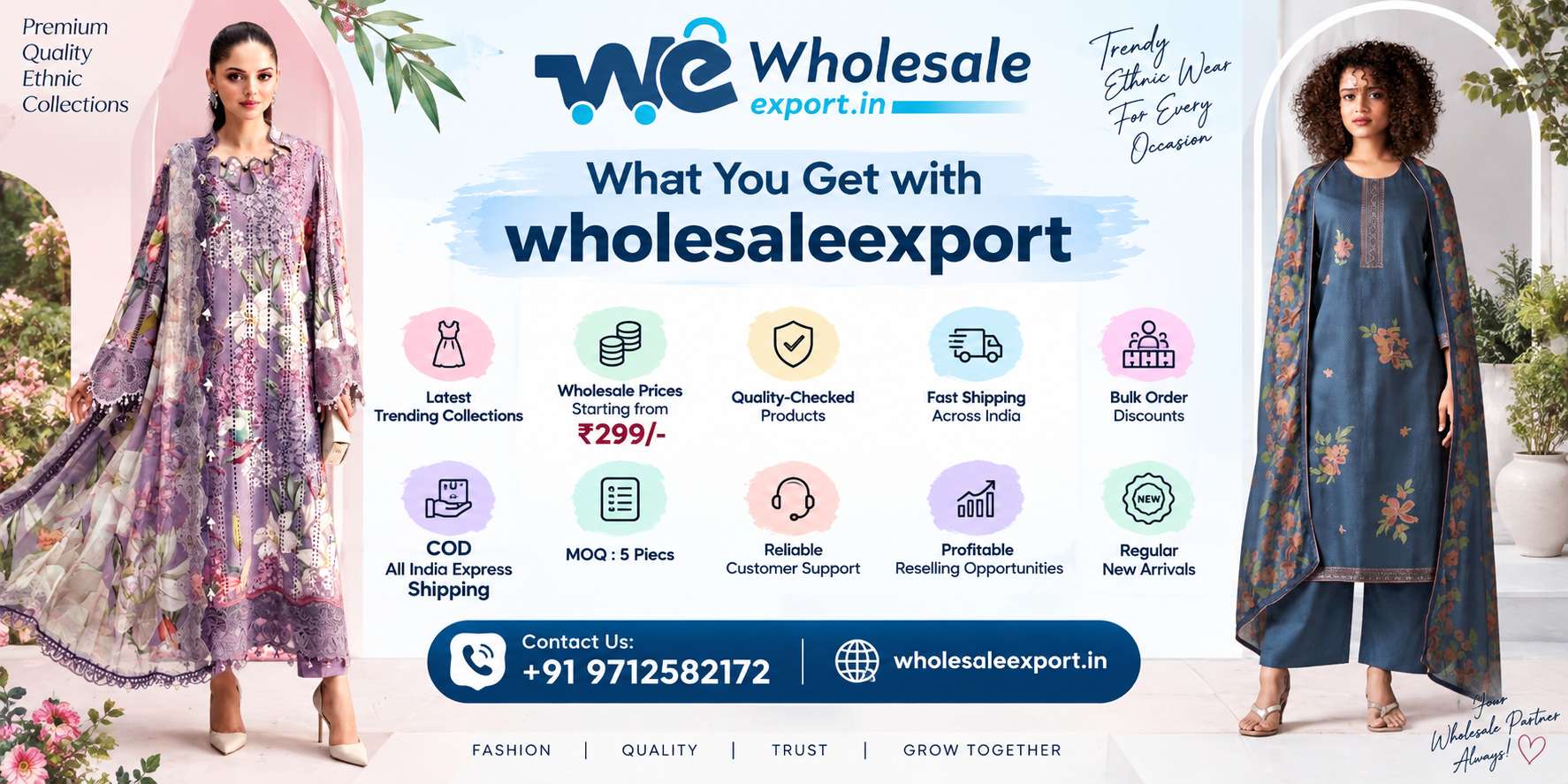
Navratri Dress Material Collection 2026: Wholesale Festive Styles for Retailers
Navratri Dress Material Collection 2026: Wholesale Festive Styles for Retailers
Navratri creates one of the most energetic ethnic-wear selling periods of the year, giving retailers an opportunity to refresh their inventory with colourful, comfortable and celebration-ready styles. For boutiques, resellers and clothing stores preparing for the 2026 festive season, the right mix of dress materials can serve customers looking for traditional appeal while also meeting the demand for wearable outfits suitable for puja, family gatherings, office celebrations and festive evenings.
Introduction
The Indian festive fashion calendar gives retailers several important selling opportunities, but Navratri stands apart because customers often want multiple outfits rather than purchasing for only one occasion. Nine days of celebrations, community events, Garba nights, Durga Puja gatherings and family functions can create demand across different colours, fabrics and price ranges.
This makes a carefully selected Navratri dress material collection valuable for Shop Owners, Boutique Owners, Showroom Owners, Home-Based Sellers and online Resellers. Instead of investing only in heavy festive garments, sellers can build a balanced inventory containing cotton dress materials, embroidered suits, printed sets, premium festive fabrics, dupatta combinations and contemporary ethnic designs.
Wholesaleexport.in helps wholesale buyers access Indian ethnic-wear collections suitable for resale. Buyers can compare fresh catalogues, evaluate designs and select products according to their own customer segment rather than depending on a single style or price category.
Why Navratri Dress Materials Can Be a Strong Retail Category in 2026
Festive customers are becoming more selective about how and where an outfit will be worn. A heavily embellished garment may work beautifully for a major Garba night, while a comfortable cotton or lightweight suit may be preferred for daytime puja, office celebrations and smaller family gatherings.
Dress materials allow retailers to address this wider requirement. Customers can choose a fabric and design according to their preference and then have the outfit stitched in the fit and style they want. This flexibility makes wholesale dress materials relevant to both traditional buyers and customers who prefer personalized ethnic wear.
Multiple Wearing Occasions Create Wider Demand
A retailer should not view Navratri stock only as Garba clothing. The selling opportunity includes festive office wear, puja outfits, family visits, community functions, Durga Puja celebrations, pre-festival gifting and outfits that customers can continue wearing after Navratri.
This is where versatile dress materials can perform well. A sophisticated cotton set, for example, can have festive appeal without becoming a one-event purchase. Customers may see greater value in such products because they can reuse the finished outfit for other occasions.
Colour Variety Encourages Repeat Purchases
Colour plays a particularly strong role during Navratri. Retailers can create visually attractive selections using red, royal blue, yellow, green, orange, pink, purple, white, maroon and other festive tones. Rather than stocking excessive quantities of a single colour, buyers can create variety across several colour families.
For WhatsApp and Instagram sellers, this variety is useful for catalogue marketing. A sequence of different colours creates more visual interest and gives customers more reasons to browse, save and share product posts.
Best Dress Material Styles to Stock for Navratri
The strongest inventory is usually not built around one fabric or one price point. Wholesale Buyers can combine everyday festive products with statement designs and premium options. This creates a collection that can serve customers with different budgets while reducing dependence on a single trend.
Cotton Dress Materials for Comfortable Festive Wear
Cotton dress material wholesale collections can be especially useful for customers who prioritize comfort. Navratri celebrations can involve long hours, warm weather and considerable movement, so breathable fabrics have practical value.
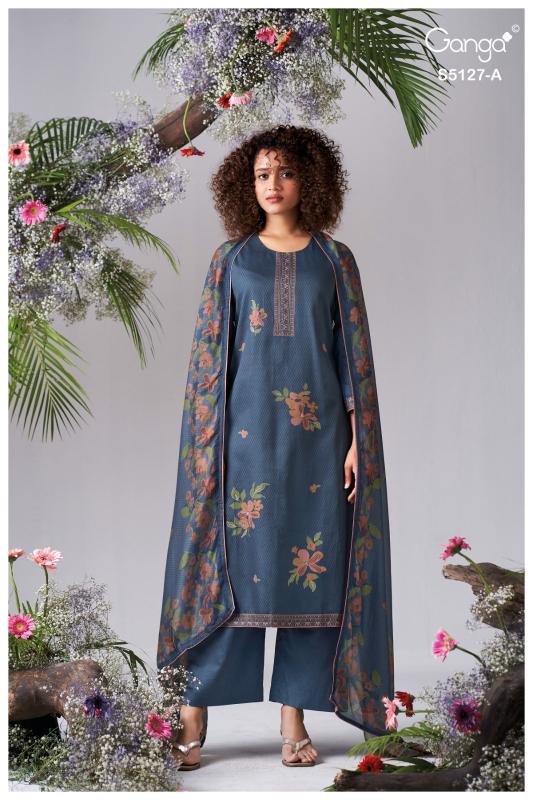
Printed cotton, South cotton, cotton blends, embroidered cotton and coordinated dupatta combinations can work for customers who want festive dressing without excessive weight. These products can also continue selling after the festival, which can reduce the risk of leftover seasonal inventory.
Embroidered Dress Materials for Premium Customers
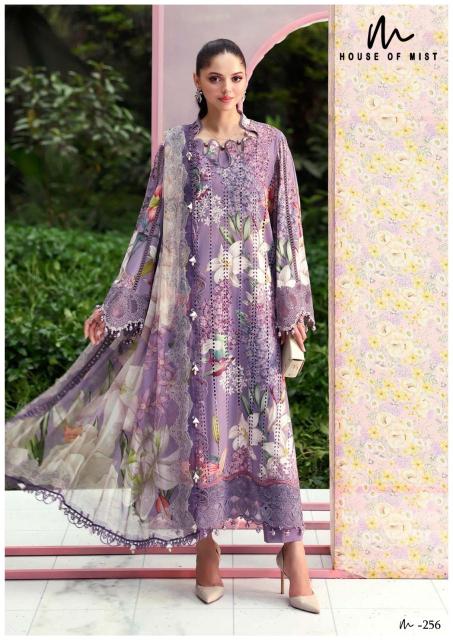
Embroidery can immediately increase the festive character of a suit. Neck embroidery, border detailing, thread work, zari-inspired elements, motifs and decorative dupattas can help retailers create a premium section within their Navratri dress material wholesale inventory.
Boutiques can merchandise these products separately from basic collections and target customers willing to spend more for richer presentation. Good catalogue photography and clear close-up images of the work are particularly useful when selling these products online.
Printed Ethnic Designs for Fast-Moving Retail Stock
Printed dress materials can provide an accessible combination of fashion, variety and price. Floral patterns, traditional motifs, geometric designs, Bandhani-inspired prints, ethnic layouts and contemporary prints can all be incorporated into a broader festive selection.
Home-Based Sellers and smaller retailers can use printed collections to maintain variety without concentrating too much investment in expensive designs. When customers respond positively to particular prints, additional stock can then be purchased according to actual demand.
Premium Dupatta Sets for Higher Perceived Value
The dupatta can become one of the strongest visual features of a festive suit. Contrasting colours, woven borders, printed designs, embroidered details and coordinated patterns can transform a relatively simple suit into a more complete festive look.
Retailers should therefore consider the entire set rather than judging only the top fabric. A visually appealing dupatta can significantly improve catalogue presentation and help customers imagine the final stitched outfit.
How Retailers Should Build Their Navratri Inventory
Successful festive buying requires more than selecting attractive photographs. Buyers should think about their actual customer profile, previous sales, average selling price and the amount of capital they can comfortably rotate during the season.
A boutique serving premium customers may allocate more inventory to detailed embroidery and sophisticated fabrics. A Home-Based Seller may need more affordable products that can be promoted quickly through WhatsApp. A large showroom may need several price bands to serve different customer groups simultaneously.
Create Entry, Mid-Range and Premium Price Segments
A practical inventory can be divided into three levels. Entry-level products attract customers who prioritize value, mid-range designs can form the core selling range, and premium products can serve shoppers looking for richer fabrics and more elaborate detailing.
The exact price distribution should depend on the retailer's local market. Sellers should avoid buying a collection simply because the wholesale rate looks attractive. The more important question is whether the product can be sold profitably to the customers they already serve.
Use Smaller Quantities Across More Designs
For resellers and boutiques, variety can sometimes be more valuable than excessive depth in one design. Customers shopping for festive clothing want options. A selection of colours, patterns and fabrics can create a stronger catalogue than a large quantity of nearly identical pieces.
Once sales data begins coming in, retailers can increase quantities in designs receiving faster enquiries. This approach helps preserve working capital for new arrivals during the season.
Surat Wholesale Sourcing for Navratri Collections
Surat remains an important sourcing destination for Indian ethnic fashion. The surat textile market ecosystem includes dress materials, sarees, kurtis, suits, lehengas, fabrics and many other categories required by retailers throughout India.
The textile trading areas around ring road and sahara darwaza connect retailers with a broad network of wholesalers, traders and businesses associated with textile manufacturing. This concentration of supply is one reason Surat continues to attract wholesale buyers searching for frequent catalogue updates and competitive product ranges.
Online sourcing has made access easier for retailers who cannot visit Surat for every buying cycle. Through Wholesaleexport.in, buyers can explore wholesale ethnic-wear collections remotely and build stock for their shop, boutique, showroom or reselling business.
Why Online Wholesale Buying Helps Seasonal Sellers
Festive trends can change quickly. Travelling physically for every new catalogue can increase sourcing time and expenses, especially for retailers outside Gujarat. Online wholesale ordering allows buyers to review new products more frequently and react to changing customer demand.
This can be particularly valuable in 2026 for sellers operating through Instagram, WhatsApp, Facebook or their own e-commerce stores. Product catalogues can be promoted to customers quickly, allowing retailers to test interest before expanding their inventory.
Vastralife Wholesale and Export Experience Since 2017
Wholesale purchasing becomes easier when buyers work with businesses that understand the practical requirements of textile reselling. Vastralife has wholesale and export experience since 2017, supported by industry expertise across Indian ethnic-wear sourcing and distribution.
The focus on premium product quality, catalogue variety and wholesale supply can support different business models, including Home-Based Sellers, Shop Owners, Boutique Owners, Showroom Owners, Resellers and established Wholesale Buyers.
Wholesaleexport.in extends this sourcing approach online, helping buyers discover products without limiting themselves to only a physical market visit.
Products for Different Retail Business Models
A home reseller does not purchase in exactly the same way as a large showroom. Similarly, an overseas boutique may have different preferences from a local Indian store. Product selection therefore needs to remain flexible.
Small resellers may prioritize attractive catalogue images, manageable quantities and fast-moving price points. Boutiques may focus more strongly on exclusivity, fabric quality and detailed work. Showrooms may require broader colour and price coverage, while exporters need products appropriate for their destination market.
Navratri Wholesale Opportunities Beyond India
Indian festive wear has customers well beyond the domestic market. Retailers serving Indian communities overseas can prepare Navratri collections for customers who want traditional clothing for community Garba nights, temple programs and family celebrations.
For this collection, three useful target markets are USA, Australia and New Zealand. Buyers in these countries should plan inventory early enough to account for international shipping, destination procedures and local marketing before the festival begins.
USA Wholesale Ethnic Wear Buyers
The USA has a large and geographically distributed Indian-origin customer base. Boutique Owners and online ethnic-wear sellers can create targeted Navratri promotions around local community events. Offering both comfortable dress materials and premium festive designs can help serve customers with different requirements.
Australia Navratri Retail Market
Australian Indian communities participate actively in cultural and festive events. Retailers can use pre-booking campaigns and social media catalogues to understand demand before committing to larger inventory quantities.
New Zealand Boutique and Reseller Demand
For smaller overseas markets such as New Zealand, careful inventory selection can be particularly important. Rather than purchasing too deeply in one design, retailers can prioritize curated variety and reorder according to response wherever stock availability permits.
International buyers should confirm shipping charges, delivery expectations, product availability and applicable import requirements before placing larger orders.
Preparing Your Navratri Collection for Better Retail Sales
The way stock is presented can influence its selling potential almost as much as the product itself. A strong Navratri dress material collection should be organized into clear customer-friendly groups rather than uploaded as one large, unstructured catalogue.
Group Products by Occasion
Create segments such as Daytime Navratri Wear, Garba Evening Collection, Premium Festive Suits, Cotton Celebration Wear and Boutique Special Designs. These names help customers understand where a product fits into their wardrobe.
Group Products by Budget
Price-based groups can also improve conversions. Customers often begin with a budget rather than a specific fabric. Showing curated ranges within selected price bands can reduce decision time and make WhatsApp selling more efficient.
Use Fresh Catalogue Updates
Instead of sending the same catalogue repeatedly, introduce regular new arrivals. A steady flow of products creates a reason for customers to keep checking your WhatsApp status, Instagram account or store.
Retailers sourcing through Wholesaleexport.in can use fresh wholesale collections to maintain this momentum throughout the festive buying cycle.
For buyers who want to expand beyond Navratri-focused styles, a wider wholesale dress material collection can help create additional everyday and occasion-wear inventory. Retailers targeting customers who also require heavier celebration outfits can consider selected wholesale lehenga collections as a complementary festive category.
How to Choose the Right Navratri Dress Materials for Your Customers
Once a retailer has decided how much inventory to purchase, the next step is selecting products that match actual customer demand. The strongest festive collection is not necessarily the one containing the largest number of designs. It is the one where colours, fabrics, patterns, price points and product quality match the people who are likely to buy from the business.
For a Navratri dress material collection, retailers should consider the age group of their customers, local fashion preferences, climate, expected retail budget and whether customers prefer subtle ethnic styling or heavily festive looks. A boutique catering to premium customers may need richer embroidery and statement dupattas, while a WhatsApp reseller may generate faster turnover with affordable cotton and printed combinations.
Choose Colours That Work Beyond a Single Festival Day
Navratri is strongly associated with festive colours, but retailers should also consider post-festival usability. Maroon, wine, mustard, bottle green, royal blue, pink, rust and elegant neutral combinations can work during Navratri and continue selling for family functions, festive gatherings and everyday ethnic dressing.
This strategy can reduce the risk of carrying highly seasonal inventory after the celebration ends. For Wholesale Buyers, products with a longer selling window generally offer better inventory flexibility.
Balance Traditional and Contemporary Designs
Traditional motifs and festive colour combinations remain important, but younger customers may also prefer clean silhouettes, lighter embroidery and contemporary prints. A balanced wholesale collection can therefore include classic Indian designs alongside modern ethnic styles.
This is particularly useful for boutiques and online sellers whose customers span several age groups. Instead of forcing one fashion direction, the retailer can offer alternatives within the same festive theme.
How Home-Based Sellers Can Sell Navratri Dress Materials
Home-Based Sellers can participate in festive demand without operating a physical showroom. WhatsApp, Instagram and personal customer networks can be used to present new arrivals and collect enquiries. The key is to maintain an organized catalogue and communicate product details clearly.
Each listing should ideally mention the fabric, included pieces, available colours, relevant work or print details and selling price. Clear information reduces repetitive questions and makes it easier for customers to compare products.
Use WhatsApp Status as a Daily Catalogue
Instead of uploading dozens of products simultaneously, sellers can publish selected designs throughout the day. Begin with an attractive hero product, follow it with different price points and finish with a clear ordering message.
Labels such as “Navratri New Arrival”, “Festive Cotton Collection”, “Premium Dress Material” or “Limited Stock” can make product positioning easier to understand. Limited-stock wording should, of course, be used only when availability is genuinely limited.
Create Instagram Reels from Product Catalogues
Short videos showing four to eight designs can make a collection easier to discover. Sellers can organize reels by colour, fabric, budget or occasion. For example, one reel might showcase comfortable daytime styles while another highlights premium evening designs.
Rather than concentrating only on views, sellers should make the ordering process simple. Include the product reference, business name and a clear enquiry method so interested viewers know what to do next.
How Boutiques and Showrooms Can Merchandise Navratri Stock
Physical retail presentation is equally important. Customers should be able to identify festive collections quickly when they enter the store. A dedicated Navratri section can create stronger visual impact than mixing festive products throughout everyday inventory.
Display Complete Colour Stories
Instead of arranging products only by brand, consider grouping complementary colours together. A festive display combining mustard, maroon and green or pink, purple and royal blue can immediately communicate the Navratri theme.
Retailers can also rotate the front display during the selling period. This makes existing inventory feel fresh to repeat visitors without requiring a completely new collection every few days.
Keep Premium Designs in a Separate Section
Premium customers often want to compare premium products with similar options rather than browsing through entry-level stock. A dedicated section containing richer fabrics, sophisticated embroidery and premium dupattas can improve the buying experience and help sales staff communicate value more effectively.
Premium product quality should also be visible in the presentation. Good lighting, neat folding and enough space around higher-value products can make them feel more distinctive.
How to Calculate Retail Price and Profit Margin
A profitable festive business requires more than buying at a low wholesale price. Retailers should calculate the complete cost of bringing each product to the customer. This can include wholesale purchase cost, shipping, packaging, payment charges, local delivery, advertising and other operating expenses.
If a product is purchased at an attractive rate but requires excessive marketing or remains unsold for months, the actual return may be lower than expected. Conversely, a slightly higher-priced design that sells quickly and generates repeat orders may produce a better business result.
Avoid Competing Only on the Lowest Price
Discounting can generate enquiries, but competing only on price can make it difficult to maintain healthy margins. Retailers can instead build value through product selection, customer service, fast responses, quality presentation and reliable delivery.
Boutiques can also justify stronger margins by curating products rather than simply forwarding hundreds of catalogue images. Customers often value convenience and selection, especially when the retailer already understands their preferences.
Plan Bulk Purchases Around Proven Demand
Bulk purchasing can improve buying economics when a design has proven demand. However, large quantities should not be purchased merely because a supplier offers a discount. Retailers should compare the potential saving against the risk of unsold inventory.
A sensible strategy is to begin with variety, monitor enquiries and then increase quantities in the strongest-performing styles wherever stock remains available.
Navratri 2026 Buying Strategy for Resellers
Timing can significantly affect festive retail performance. Waiting until the peak shopping period to purchase stock may leave retailers with fewer options and less time to market the products. Buying extremely early without understanding current trends can also create unnecessary inventory risk.
For Navratri dress material wholesale buying in 2026, retailers should create a phased purchasing plan. An initial collection can establish the core range, followed by additional purchases based on customer response and emerging demand.
Phase One: Build the Core Collection
Begin with reliable categories such as cotton dress materials, embroidered festive suits, printed ethnic sets and attractive dupatta combinations. Include multiple price points and colours rather than concentrating the complete budget in one style.
Phase Two: Follow Customer Response
Track which products generate actual orders rather than simply likes or enquiries. If customers consistently purchase particular colours, fabrics or price ranges, use that information for the next buying cycle.
Phase Three: Add Fresh Arrivals Nearer the Festival
Fresh collections can create renewed interest as Navratri approaches. Retailers can promote these as newly arrived festive stock and use them to reactivate customers who viewed earlier products but did not purchase.
This phased strategy can be useful for online resellers, boutiques and showrooms because it balances variety with inventory control.
Wholesale and Export Planning for International Buyers
Overseas buyers need additional planning because their inventory must travel from India to the destination market before local promotion and delivery can begin. Retailers in the USA, Australia and New Zealand should therefore build additional time into their purchasing schedule.
The complete landed cost should be considered before setting retail prices. This may include product cost, international freight, destination charges, customs-related expenses where applicable and local delivery. Buyers should confirm current requirements relevant to their own country before finalizing an import order.
For an export order, product selection also needs to reflect local customer preferences. An Indian design that performs strongly in one city may not necessarily generate the same demand in every international market. Local community events, customer age groups and average spending levels can guide the final assortment.
Why Ready Stock Matters During the Festive Season
Festive fashion has a limited selling window. For this reason, stock availability can become almost as important as design. A retailer may receive strong customer interest in a catalogue, but the opportunity can be lost if the selected design is no longer available when the order is confirmed.
Wholesale Buyers should therefore check current availability before promising delivery to customers. This is particularly important for online resellers who may be sharing supplier catalogues without holding every item physically.
Fresh Stock Supports Faster Selling
Regular new arrivals give retailers something new to show their customers. This is especially effective on WhatsApp and Instagram, where repeated content can quickly lose attention.
A supplier offering frequently updated catalogues can help resellers maintain a more active storefront throughout the festival period.
Quality Should Remain the Priority
Fast stock rotation should never come at the cost of customer satisfaction. Fabric quality, colour presentation, workmanship and finishing all influence whether a first-time festive customer becomes a repeat buyer.
Vastralife's wholesale and export experience since 2017, combined with textile industry expertise, supports the focus on supplying collections suited to retailers looking for dependable sourcing and premium product quality.
Customer FAQs
1. Where can I buy Navratri dress materials wholesale online?
Retailers, boutiques, resellers and other Wholesale Buyers can explore ethnic-wear collections through Wholesaleexport.in. Buyers can review new catalogues and select products according to their customer segment, budget and inventory requirements.
2. Which dress materials are suitable for Navratri 2026?
Cotton dress materials, embroidered suits, printed ethnic designs, festive dupatta sets, traditional motifs and contemporary ethnic combinations can all work well. The ideal selection depends on whether your customers require daytime wear, Garba-night styling, office festive wear or premium occasion outfits.
3. Are cotton dress materials good for Navratri retail sales?
Yes. Cotton and cotton-blend products can be particularly useful for customers looking for comfort during long celebrations. Their additional advantage is that many styles remain wearable after Navratri, potentially giving retailers a longer selling period.
4. Can Home-Based Sellers purchase Navratri wholesale collections?
Yes. Home-Based Sellers can create a curated range according to their investment capacity and customer base. Starting with more variety and controlled quantities can help new sellers understand demand before increasing inventory.
5. Can international retailers order Indian Navratri collections?
Wholesale and export requirements can be discussed according to destination, order size and current product availability. Overseas buyers should confirm international shipping and applicable destination requirements before placing an order.
6. How should I price Navratri dress materials for resale?
Calculate your complete product cost, including purchase price, shipping, packaging, payment expenses, marketing and other relevant costs. Then set the retail price according to your required margin and local customer expectations rather than copying another retailer's price.
7. Should I purchase all Navratri stock at once?
Not necessarily. A phased buying strategy can reduce inventory risk. Start with a balanced core collection, monitor actual customer orders and then purchase additional fast-moving designs and fresh arrivals according to demand.
8. Which colours should retailers stock for Navratri?
Bright festive shades such as red, yellow, green, orange, pink, royal blue and purple are useful, while maroon, wine, mustard, bottle green and elegant neutral combinations can provide additional variety. Retailers should ultimately select colours according to their own customer preferences.
9. Is Surat suitable for wholesale ethnic-wear sourcing?
Surat has a large textile trading and manufacturing ecosystem covering dress materials, sarees, suits, kurtis, lehengas and fabrics. The textile markets around Ring Road and Sahara Darwaza are particularly associated with the city's wholesale textile trade.
10. Who can purchase from Wholesaleexport.in?
The collections are relevant to Home-Based Sellers, Shop Owners, Boutique Owners, Showroom Owners, Resellers and Wholesale Buyers looking to source Indian ethnic fashion for resale requirements.
Order Your Navratri Dress Material Collection for 2026
Preparing early gives retailers more time to select products, organize their catalogue, promote new arrivals and respond to customer demand before the festive buying period reaches its peak. Whether you operate from home, manage a boutique, own a retail shop or purchase for a large showroom, a balanced Navratri dress material collection can create opportunities across multiple customer budgets.
Explore Latest Collections, competitive Wholesale Pricing and Trendy Ethnic Wear for your retail or reselling business through Wholesaleexport.in. Buyers can enquire about Fast Shipping, COD Support where applicable, Bulk Order Deals and Quality Products Starting From ₹299. Prices, stock availability, COD eligibility and shipping terms should be confirmed for the selected order.
With Vastralife's wholesale and export experience since 2017 and established textile industry expertise, the objective is to help retailers source premium-quality Indian fashion suitable for today's competitive ethnic-wear market.
Website: wholesaleexport.in
Contact Number: +91 9712582172
Build your Navratri 2026 inventory with the right balance of festive colours, comfortable fabrics, premium designs and profitable price points. A carefully selected wholesale range can help you serve existing customers, attract new festive buyers and continue generating sales beyond the Navratri season.