


Muga Cotton Saree Wholesale Buying Guide for Retailers in 2026
Muga Cotton Saree Wholesale Buying Guide for Retailers in 2026
Muga cotton sarees bring together a graceful traditional appearance and the everyday practicality modern saree buyers appreciate. For shop owners, boutique owners, home-based sellers and wholesale buyers, this category can add a distinctive option between regular cotton sarees and heavier occasion-focused silk collections. Choosing the right designs, fabric quality, price segment and supplier is therefore essential when building inventory that customers will actually want to purchase.
Introduction
The Indian saree market continues to evolve in 2026, but comfort, elegant styling and versatile fabrics remain important buying factors. Customers increasingly want sarees that look refined enough for social occasions while still feeling manageable for longer wear. This creates useful opportunities for retailers who understand how to select commercially attractive Muga cotton collections.
A successful wholesale purchase is not simply about finding the lowest price. Retailers need to consider fabric feel, weaving quality, colour combinations, border design, pallu presentation, blouse-piece coordination, finishing and the overall retail appeal of each catalogue. The best inventory usually combines visual attractiveness with a price range that matches the spending capacity of the target customer.
This Muga Cotton Saree Wholesale Buying Guide is designed for retailers who want a practical sourcing approach rather than simply following every new catalogue entering the market. Whether you operate a physical store, boutique, showroom, WhatsApp reselling business or home-based fashion business, careful purchasing can help protect working capital and improve inventory turnover.
Understanding Muga Cotton Sarees Before Buying Wholesale
Before purchasing any saree category in bulk, buyers should understand exactly what the supplier is offering. The word “Muga” may be used differently across commercial textile collections, so wholesalers and retailers should verify the stated fabric composition and specifications for each individual product rather than relying only on a catalogue name.
Traditional Muga silk has a distinctive heritage and characteristics of its own, while commercially marketed Muga cotton or Muga-inspired sarees may use different textile compositions, blends, weaving techniques and finishes. Accurate product information becomes particularly important when the retailer later describes the saree to customers.
Fabric Feel and Wearability
Comfort is one of the strongest reasons customers explore cotton-oriented sarees. The fabric should feel appropriate for its stated composition and intended use. Retailers should consider whether a particular saree works better for daily wear, office use, festive occasions, gifting or semi-formal events.
A fabric that drapes comfortably can appeal to customers who want traditional styling without the weight associated with some heavily embellished sarees. This makes Muga cotton sarees wholesale relevant for retailers serving different age groups and occasions.
Texture and Visual Appearance
Texture can influence how premium a saree appears on display. Subtle woven surfaces, elegant borders and coordinated pallus can make relatively understated sarees visually attractive. Retail buyers should examine close-up catalogue images whenever possible rather than making decisions only from full-model photographs.
Border and Pallu Design
The border and pallu often determine the personality of a saree. Traditional motifs can appeal to customers seeking ethnic elegance, while minimal borders and cleaner patterns may suit office wear and younger customers. Maintaining both styles can broaden the potential customer base.
Why Retailers Are Adding Muga Cotton Sarees to Their Collections
A well-planned saree department normally needs products across different fabrics, occasions and budgets. Muga cotton styles can fill a useful space for buyers seeking a sophisticated appearance without moving immediately into very heavy festive merchandise.
Suitable for Multiple Customer Segments
Shop owners can present these sarees to working women, homemakers, teachers, professionals and customers shopping for family occasions. Home-based sellers can also introduce them through WhatsApp and social media because sarees are easy to demonstrate through catalogue images and short videos.
Boutique owners can position selected designs as curated ethnic fashion by pairing them with stylish blouse concepts, jewellery and coordinated accessories. Showroom owners can maintain a wider selection across price ranges and colour families.
Potential for Year-Round Demand
Unlike categories that depend almost completely on wedding or festival seasons, versatile cotton-based sarees can have broader year-round relevance. The same inventory can potentially serve office events, religious functions, family gatherings, gifting and casual festive requirements.
Good Addition to a Mixed Saree Inventory
Retailers do not need to build an entire saree department around one fabric. A balanced assortment may include cotton sarees, soft silk sarees, printed sarees, designer sarees, festive sarees, traditional sarees and selected Muga cotton styles.
This variety gives customers more reasons to explore the collection while helping the retailer avoid excessive dependence on a single trend.
What to Check Before Buying Muga Cotton Sarees Wholesale
The most important part of wholesale buying happens before the order is confirmed. A catalogue can look attractive on a phone screen, but retailers should evaluate its commercial potential systematically.
1. Confirm the Fabric Specification
Ask for the stated fabric information and avoid making assumptions from the catalogue title. If the product is a blend, it should be marketed accordingly. Clear communication protects both retailers and customers and is particularly important when selling premium-looking merchandise.
2. Study the Design Mix
Do not evaluate a catalogue based only on its best design. Look at the complete set. Check whether the colours are commercially usable, whether patterns are sufficiently varied and whether each piece has reasonable retail potential.
For many shops, a catalogue containing wearable colours and balanced designs can perform better than one containing a single spectacular saree surrounded by difficult-to-sell pieces.
3. Evaluate the Blouse Piece
A coordinated blouse piece can influence the customer's purchase decision. Buyers should check whether it is included, how it coordinates with the saree and whether its appearance supports the overall retail value of the product.
4. Compare Wholesale Price with Retail Potential
The cheapest product is not automatically the most profitable. Retailers should ask a more useful question: “Can my customer comfortably purchase this product at a retail price that leaves a reasonable business margin?”
Wholesale cost, freight, applicable taxes, packaging, payment charges and other operational expenses should be included when calculating the actual landed cost.
5. Examine Colour Selection
A commercially balanced catalogue may include traditional shades, softer tones and a few contemporary colours. Retailers should choose combinations according to their local customers rather than assuming every nationally trending shade will perform equally well in their market.
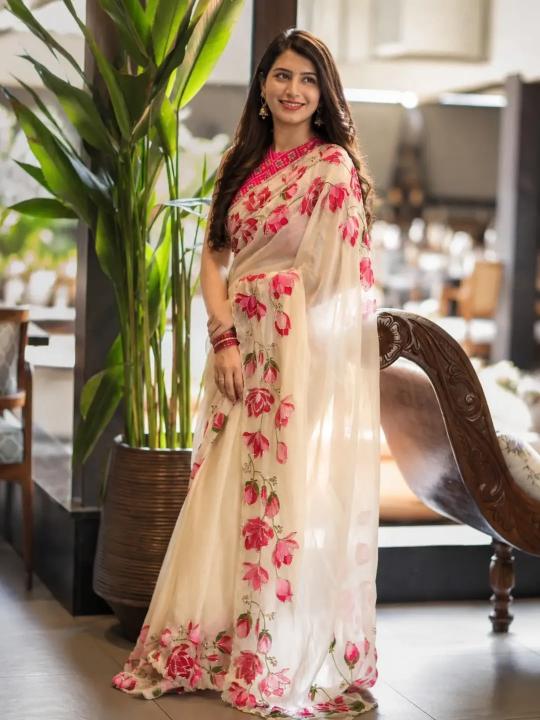
Popular Muga Cotton Saree Styles Retailers Can Consider
Wholesale inventory performs better when retailers understand why different customers purchase sarees. Instead of stocking only one visual style, buyers can create a combination of designs for regular wear, festive use and premium occasions.
Traditional Border Sarees
Traditional borders remain useful for customers who prefer timeless ethnic styling. Depending on the individual product, these may include woven motifs, contrasting borders, decorative pallus or heritage-inspired patterns. Such sarees can work well for festivals, family functions and gifting.
Minimal and Office-Wear Designs
Not every customer wants elaborate decoration. Clean borders, restrained motifs and sophisticated colour combinations can attract working professionals and women looking for elegant formal wear.
Retailers located in urban markets may find it useful to maintain a dedicated selection of understated sarees that can transition easily between office events and social gatherings.
Printed Muga Cotton Styles
Floral prints, traditional motifs, geometric patterns and contemporary digital designs can bring variety into the collection. Printed styles can also help retailers create visually fresh displays without relying entirely on heavy embellishment.
Festive and Occasion-Focused Sarees
Customers shopping for festivals may prefer richer borders, stronger colour combinations and more detailed pallus. Retailers can increase the proportion of these designs before important seasonal selling periods while maintaining simpler options for year-round business.
Surat as a Wholesale Saree Sourcing Hub
Surat has developed one of India's most important textile ecosystems, supported by fabric production, processing, trading, distribution and large-scale manufacturing. For retailers sourcing women's ethnic wear, the city provides access to an extensive variety of sarees, kurtis, suits, dress materials and related fashion categories.
The Surat textile market is widely associated with commercial areas around Ring Road and Sahara Darwaza, where numerous textile markets and trading businesses operate. Physical market visits remain useful for many buyers, but digital sourcing has made Surat-based collections accessible to retailers who cannot travel regularly.
Advantages of Digital Wholesale Buying
Online wholesale sourcing allows shop owners to review new catalogues from their own business location, compare designs and communicate requirements without repeatedly travelling to a textile market. This is particularly valuable for buyers operating outside Gujarat.
Wholesaleexport.in provides access to changing women's ethnic wear collections for retailers, boutiques, resellers and other wholesale buyers looking to source from the broader Surat textile ecosystem.
Why Supplier Reliability Matters
Product variety is important, but consistency is equally valuable. A reliable sourcing relationship should help buyers obtain accurate product information, understand ordering conditions and access relevant new collections as their business grows.
Vastralife's wholesale and export experience since 2017 brings practical industry knowledge to this sourcing ecosystem. Experience with multiple women's wear categories helps in understanding the requirements of different retailers rather than treating every buyer in exactly the same way.
How to Build a Profitable Muga Cotton Saree Inventory
Inventory planning is where many new retailers either protect or unnecessarily block their capital. Buying more stock does not automatically create more sales. The objective should be to maintain enough variety to attract customers while keeping inventory movement healthy.
Start with a Balanced Price Mix
Customers entering the same store may have very different budgets. Maintaining entry-level, mid-range and selected premium sarees allows sales staff to offer alternatives instead of losing a customer when the first product exceeds her expected budget.
Retailers should analyse which segment produces the strongest combination of sales volume and margin. The answer may differ between a neighbourhood shop, premium boutique, large showroom and online reseller.
Test New Designs Before Deep Buying
When purchasing from a new catalogue or trying a new style, manageable quantities can reduce risk. Monitor customer enquiries, actual sales and colour preferences before making a larger reorder.
This approach is especially useful for home-based sellers and smaller boutiques because their working capital may be more sensitive to slow-moving stock.
Maintain Colour Diversity
A rack containing many sarees but only similar shades can appear less varied than its actual quantity suggests. Retailers can combine earthy tones, traditional reds, greens, blues, neutrals, pastels and selected bright colours according to local preferences.
Plan Around Customer Occasions
Think about why customers are purchasing. A retailer may need separate options for office wear, gifting, festivals, puja, family functions and wedding-related events. Occasion-based planning often produces a more useful collection than simply buying whichever catalogue is newest.
Muga Cotton Saree Wholesale Price Factors in 2026
There is no single universal wholesale price for this category. The final rate depends on several product-specific factors, which is why retailers should compare equivalent quality levels rather than comparing only catalogue prices.
Fabric Composition
The stated material and construction can significantly influence cost. Buyers should verify whether the product is cotton-based, blended, silk-associated or another commercial fabric before comparing it with alternatives.
Weaving and Design Complexity
More elaborate weaving, borders, decorative pallus, embroidery or additional finishing can increase production cost. Simple printed designs may sit in a different wholesale segment from detailed occasion-focused sarees.
Brand and Catalogue Positioning
Established brands or premium catalogues may carry different pricing structures because of design development, presentation, finishing and market positioning. Retailers should determine whether their customers recognise or value those differences before investing heavily.
Order Quantity
Quantity can affect commercial terms in some wholesale transactions. However, buying additional pieces solely to obtain a lower per-piece price is not beneficial if those extra products remain unsold for months.
A slightly higher purchase rate with faster inventory turnover can sometimes be healthier for a retail business than a lower rate accompanied by excessive stock.
Wholesale Opportunities Beyond the Indian Market
Indian sarees have demand among South Asian communities and ethnic fashion buyers internationally. Retailers and importers in markets such as Australia, Nepal and Germany can explore selected saree categories according to local customer preferences.
For international wholesale purchasing, the product price is only one part of the calculation. Buyers should consider freight, packaging, applicable import-related costs and expected retail positioning in the destination market.
Quality presentation is especially important for export buyers because customers purchasing Indian ethnic wear abroad may depend heavily on digital product images and accurate descriptions when making buying decisions.
Selecting Sarees for International Customers
International retailers can benefit from maintaining a mixture of traditional and easy-to-wear styles. Customers purchasing sarees for festivals, weddings and cultural events may prefer stronger ethnic detailing, while others may look for lightweight products suitable for smaller gatherings or regular wear.
Wholesaleexport.in can help wholesale buyers explore multiple ethnic wear categories from India while allowing them to compare designs according to their individual market requirements.
How Retailers Can Improve Their Saree Buying Decisions
Successful buying becomes easier when decisions are based on sales information rather than instinct alone. Even a small retailer can maintain basic records of which colours, designs, fabrics and price points perform best.
Track Customer Enquiries
Not every enquiry immediately becomes a sale, but repeated requests reveal demand. If customers frequently ask for lightweight traditional sarees, specific colours or a particular budget range, those enquiries can influence the next wholesale purchase.
Measure Inventory Turnover
A product with a high theoretical margin is not necessarily your best item if it remains on the shelf for a long period. Faster-moving inventory can return capital to the business more quickly and create opportunities to introduce fresh stock.
Use Repeat Sales as a Buying Signal
If customers repeatedly purchase similar fabrics or designs, retailers should treat that information as valuable buying data. Reordering proven categories while testing a controlled percentage of new trends can create a healthier balance between stability and freshness.
For a retailer following this Muga Cotton Saree Wholesale Buying Guide, the central principle is simple: purchase according to customer demand, product quality and realistic selling potential rather than catalogue excitement alone.
Retailers who combine these buying habits with regular customer feedback can gradually create a more predictable purchasing system. Instead of treating every new catalogue as an independent buying decision, they can build inventory around proven customer preferences, seasonal opportunities and carefully selected new designs.
Another useful approach is to compare Muga cotton styles with complementary saree categories. Buyers exploring wholesale sarees in India can maintain different fabrics and price segments within the same retail collection. Businesses that also serve customers interested in unstitched ethnic fashion can explore wholesale dress materials as a complementary category without overloading the saree inventory itself.
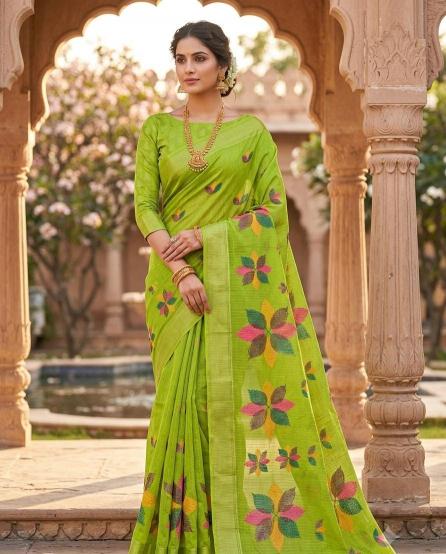
Quality Checklist Before Confirming a Wholesale Order
Product quality directly affects customer satisfaction, repeat business and the reputation of a retailer. Before increasing quantities, buyers should understand the quality level being offered and whether it matches the intended retail price segment.
Check Fabric Information Carefully
Confirm the stated fabric composition for the individual catalogue. Commercial textile names can sometimes describe a look, finish or collection style rather than a standardized fibre composition, so buyers should avoid making assumptions. Accurate information also helps sales staff describe the product confidently to customers.
Review Weaving, Printing and Surface Finish
For woven styles, examine the appearance of motifs, border and pallu. Printed sarees should have commercially presentable patterns and balanced colour combinations. If embroidery or decorative work is included, retailers should evaluate whether it complements the saree rather than making it unnecessarily heavy.
Look at the Complete Saree
Model photographs are useful for understanding the final appearance, but wholesale buyers should also try to review images or videos showing the saree more completely. Border width, pallu detailing and blouse coordination may not be obvious from a single front-facing catalogue photograph.
Understand Colour Variation
Colours displayed on mobile phones and computer screens can vary because of photography, lighting and display settings. Retailers selling online should communicate this possibility appropriately instead of promising an exact screen-to-product colour match.
Check Packaging and Dispatch Readiness
Proper packaging helps protect sarees during storage and transportation. This becomes especially important when merchandise is being shipped across India or prepared for international delivery. Wholesale buyers should also understand dispatch schedules before making promises to their own customers.
Common Wholesale Buying Mistakes Retailers Should Avoid
A profitable saree business depends as much on avoiding poor purchasing decisions as it does on finding attractive products. Several common mistakes can unnecessarily reduce inventory turnover and block working capital.
Buying Only Because the Price Is Low
A low purchase price does not guarantee a profitable sale. If the design, colour or quality does not appeal to the retailer's customers, even inexpensive inventory can remain unsold. Commercial potential should therefore be evaluated alongside cost.
Ordering Too Many Similar Designs
Customers usually appreciate visible variety. Purchasing multiple catalogues with nearly identical patterns can make a large inventory feel repetitive. A better approach is to create diversity through colours, border styles, prints, fabrics and price segments.
Ignoring Local Customer Preferences
A saree trending strongly in one region may perform differently elsewhere. Retailers should observe what their own customers request. Climate, cultural preferences, age group, occasion and spending capacity can all influence demand.
Overstocking Before Testing Demand
New designs can be exciting, particularly when catalogue photography is strong. However, controlled testing gives retailers actual sales information before a larger investment is made. This is especially useful for boutiques, home-based sellers and newer resellers.
Calculating Margin Without Landed Cost
Profit calculations should include the complete landed cost rather than only the supplier's product rate. Freight, taxes where applicable, packaging and other operational expenses can influence the actual margin.
Inventory Strategy for Different Types of Wholesale Buyers
There is no single inventory formula suitable for every business. A neighbourhood retailer, premium boutique and online reseller may all sell sarees successfully while requiring very different stock structures.
For Retail Shop Owners
Retail shops usually benefit from a broad mix of commercially wearable colours and price levels. Regular customers often compare several options before purchasing, so sufficient variety can be more useful than maintaining deep quantities of only a few designs.
Shop owners can keep proven everyday styles as a foundation and introduce fresh designs periodically to make repeat customers feel that the store is continuously updated.
For Boutique Owners
Boutiques can focus more strongly on curation. Rather than displaying every available catalogue, boutique owners can select sarees with distinctive borders, sophisticated colour combinations or styling potential and then present them with creative blouse ideas and accessories.
A carefully curated collection can support premium positioning when the product quality, presentation and customer experience justify it.
For Showroom Owners
Showrooms serving a wider customer base can divide inventory according to price, occasion and design. Dedicated sections for everyday elegance, office wear, festive sarees and premium ethnic fashion make navigation easier for customers and sales teams.
For Home-Based Sellers
Home-based businesses should protect working capital by starting with manageable quantities. Digital catalogues, WhatsApp communication and social media can be used to understand customer interest before expanding inventory.
Maintaining clear records of customer orders, payments and product preferences can make a small operation considerably more professional.
For Online Resellers
Online sellers should prioritize accurate product information and consistent communication. Good catalogue photographs may attract the first enquiry, but trust is built through clear specifications, realistic delivery information and dependable after-sales communication.
How to Sell Muga Cotton Sarees More Effectively
Good sourcing creates the foundation, but presentation determines how effectively inventory reaches customers. Retailers should communicate why a saree is suitable for a particular buyer rather than relying entirely on generic promotional descriptions.
Sell According to Occasion
Instead of describing every product simply as a “beautiful saree,” explain its potential use. A subtle saree might suit office functions or daytime events, while richer borders can be presented for festive occasions, family gatherings and gifting.
Show Important Product Details
Customers purchasing online often want to see the border, pallu and blouse piece. Short product videos can provide useful context about drape and overall appearance while close-up images can highlight important details.
Create Price-Based Options
When customers provide a budget, showing relevant options first can make the buying experience more efficient. Retailers can organise digital catalogues or store sections into accessible, mid-range and premium categories.
Use Social Media Consistently
Instagram, Facebook and WhatsApp can help retailers introduce new arrivals, demonstrate styling ideas and reconnect with existing customers. Consistency generally matters more than uploading a large amount of content for a few days and then becoming inactive.
Seasonal Planning for Saree Retailers in 2026
Seasonal purchasing should begin before customer demand reaches its peak. Retailers who plan ahead have more time to select collections, receive inventory, prepare displays and promote products.
Festival Collections
Festivals can increase demand for traditional colours, attractive borders and sarees that feel special without necessarily being extremely heavy. Retailers can introduce festive options while continuing to maintain comfortable designs for customers who prefer understated styling.
Wedding and Family Functions
Wedding-related customers often purchase for multiple occasions, not only the main ceremony. Elegant Muga cotton styles can potentially serve guests and family members looking for lighter alternatives to heavily embellished sarees.
Office and Formal Events
Minimal patterns, muted colours and refined borders can work for professional environments. This segment can provide business outside the main festive calendar and should not be overlooked by retailers serving working women.
Gifting Season
Sarees remain a popular gift for many family and cultural occasions. Retailers can create gift-friendly collections across several budgets and improve presentation through suitable packaging.
Wholesale Sourcing for India and Export Markets
The buying strategy for an Indian retailer can differ from that of an international boutique. Domestic buyers may reorder more frequently because transportation cycles are generally shorter, while overseas buyers often need to plan quantities and assortment more carefully.
For markets such as Australia, Nepal and Germany, buyers should consider local ethnic communities, climate, festival calendars and customer spending patterns. An assortment that performs strongly in India should not automatically be copied unchanged for another country.
International wholesale buyers also need to evaluate freight and other destination-related costs before deciding the final retail price. Lightweight products can sometimes offer practical advantages for shipping, although actual logistics depend on order size, packaging and destination.
Wholesaleexport.in serves buyers looking to explore Indian women's ethnic wear through a digital wholesale platform, making it easier to discover collections without depending entirely on physical sourcing visits.
Why Long-Term Supplier Relationships Matter
A reliable wholesale relationship becomes more valuable as a retail business grows. Instead of repeatedly beginning the sourcing process from zero, established buyers can communicate their preferred categories, price ranges and customer requirements more efficiently.
Vastralife's wholesale and export experience since 2017 brings years of exposure to women's ethnic wear sourcing and changing retail requirements. That industry experience is useful when serving shop owners, boutiques, resellers and wholesale buyers who may have very different purchasing objectives.
Premium product quality should also remain an important consideration in a long-term relationship. Retailers build their reputation one customer at a time, and consistent product presentation helps encourage repeat purchases and referrals.
Internal Linking Section
Retailers building a complete women's ethnic wear business should think in terms of customer requirements rather than isolated categories. Sarees can form the foundation of a traditional collection, while dress materials and other ethnic wear can help serve customers looking for different styling options.
A balanced category strategy can also increase repeat visits. A customer who purchases a saree today may return later for another type of ethnic outfit, provided the retailer continues introducing relevant products and maintains dependable service.
Customer FAQs
1. What should I check before buying Muga cotton sarees wholesale?
Check the stated fabric composition, border, pallu, blouse piece, colour assortment, design quality, wholesale price and available quantity. Buyers should also understand applicable ordering and dispatch conditions before confirming larger purchases.
2. Are Muga cotton sarees suitable for retail shops?
Yes. They can complement cotton, silk, printed and designer saree categories. Their commercial suitability depends on the individual design, quality, price and preferences of the retailer's customers.
3. What is the wholesale price of Muga cotton sarees in 2026?
Wholesale rates vary according to fabric composition, weaving, print, border, pallu, decorative work, brand and catalogue positioning. Buyers should check current product-specific pricing rather than relying on a single general market rate.
4. Can home-based sellers buy Muga cotton sarees wholesale?
Yes. Home-based sellers can begin with controlled quantities and use WhatsApp, Instagram or other digital channels to showcase products. Smaller initial purchases can help sellers understand demand before expanding stock.
5. Is Surat a good market for wholesale saree sourcing?
Yes. Surat has an extensive textile manufacturing, processing and trading ecosystem. The Ring Road and Sahara Darwaza areas are well-known references within the wider Surat textile market, while digital sourcing now enables buyers to explore Surat-based collections remotely.
6. How much stock should a new saree retailer purchase?
There is no universal quantity. New retailers should consider available working capital, expected customer demand, storage capacity and the variety required for their market. Testing new collections before deeper purchasing can reduce inventory risk.
7. Which Muga cotton saree colours are suitable for retail inventory?
A balanced selection can include traditional shades, neutrals, earthy colours, pastels and selected brighter tones. Actual buying decisions should be guided by the retailer's customer preferences rather than trend predictions alone.
8. Can these sarees be supplied for export?
Indian sarees are sold in international ethnic fashion markets, but buyers should confirm product availability and applicable shipping arrangements for their destination. International buyers should also calculate freight and destination-related expenses when planning retail pricing.
9. How can retailers increase profit from wholesale sarees?
Profitability can improve through sensible sourcing, accurate landed-cost calculations, faster inventory turnover and repeat customer sales. Retailers should track which designs and price ranges sell instead of continually adding stock without reviewing performance.
10. Where can wholesale buyers explore new saree collections?
Wholesale buyers can explore changing women's ethnic wear collections through Wholesaleexport.in and evaluate products according to their business category, customer demand and budget.
Final Muga Cotton Saree Wholesale Buying Checklist
Before confirming your next order, review the complete catalogue rather than only the most attractive model image. Verify the stated fabric details, examine colour diversity, check border and pallu presentation, understand the blouse-piece information and calculate the actual landed cost.
Next, compare the collection with your existing inventory. Ask whether it adds genuine variety or simply duplicates products already available in your shop. Consider the expected customer occasion, realistic retail price and how quickly the stock is likely to move.
Finally, purchase according to your business scale. A showroom may require deeper inventory, while a boutique or home-based seller may benefit from a more selective assortment. Wholesale buying becomes more effective when every order has a clear commercial purpose.
Start Your Wholesale Ethnic Wear Sourcing with Wholesaleexport.in
For retailers, boutiques, showrooms, resellers and home-based sellers, building a profitable ethnic wear business requires a combination of fresh designs, appropriate pricing, dependable sourcing and careful inventory management. Wholesaleexport.in provides access to women's fashion collections for businesses looking to source products from India's textile ecosystem.
- Latest Collections – Explore regularly updated ethnic wear styles for changing customer demand.
- Wholesale Pricing – Business-focused pricing for retailers, boutiques and resellers.
- Trendy Ethnic Wear – Build a broader collection with commercially relevant women's fashion.
- Fast Shipping – Convenient dispatch support for wholesale orders.
- COD Support – Available on eligible orders according to applicable terms.
- Bulk Order Deals – Explore opportunities for larger wholesale requirements.
- Quality Products Starting From ₹299 – Discover value-focused products across available categories.
Contact Number: +91 9712582172
Website: wholesaleexport.in
Use this Muga Cotton Saree Wholesale Buying Guide as a practical framework when planning your next purchase. Focus on fabric information, premium product quality, customer demand, price positioning and inventory turnover, and your 2026 saree collection can become more commercially focused while offering customers the variety they expect.