


Most Selling Kurti Designs in 2026: Wholesale Trends for Profitable Retail
Most Selling Kurti Designs in 2026: Wholesale Trends for Profitable Retail
The modern kurti market has expanded far beyond basic everyday styles. Women now look for outfits that balance comfort, fashion, versatility and value, creating opportunities for retailers across multiple price segments. From printed cotton kurtis and coordinated sets to embroidered festive outfits and contemporary silhouettes, understanding what customers are actually buying can help sellers build faster-moving inventory and reduce unnecessary stock.
Introduction
Kurtis remain one of the most commercially versatile categories in Indian women's fashion. They can be styled for work, college, casual outings, festivals, family functions, travel and even semi-formal occasions. This wide usability is one of the main reasons Most Selling Kurti Designs continue to attract Shop Owners, Boutique Owners, Showroom Owners, Home-Based Sellers and online Resellers.
In 2026, however, customers are becoming more selective. They are not simply asking for a kurti; they may want a complete kurti-pant-dupatta set, breathable summer fabric, an embroidered festive look, a relaxed co-ord outfit or a contemporary short kurti that can be paired with jeans.
For Wholesale Buyers, this changing demand makes assortment planning extremely important. Buying excessive quantities of one design simply because its wholesale price is attractive can lead to slow inventory. A better approach is to understand which silhouettes, fabrics, colours and price levels suit the customers you actually serve.
Wholesaleexport.in helps retailers explore changing women's ethnic wear collections from wholesale sourcing networks. A carefully planned product mix can help a business offer newness while maintaining enough dependable designs for regular sales.
What Makes a Kurti Design a Best Seller?
A best-selling design is not always the most expensive or heavily decorated garment. In many retail markets, the strongest sellers are products that solve a practical customer requirement while still looking fashionable.
Comfort and Wearability
Customers increasingly want clothing they can wear for several hours without discomfort. This makes breathable fabrics, comfortable cuts, practical sleeve lengths and easy-to-style bottoms important commercial features.
A beautiful catalogue can attract initial attention, but repeat customers generally remember how the garment actually felt after wearing it. Retailers therefore need to consider both appearance and usability when choosing wholesale kurtis.
Right Balance Between Fashion and Familiarity
Extremely experimental designs may attract social media engagement but can be harder to sell in volume. On the other hand, very basic styles may fail to create excitement.
The strongest commercial kurtis often combine a familiar silhouette with one noticeable fashion element, such as an attractive neckline, distinctive print, embroidered yoke, interesting sleeve, stylish pant or statement dupatta.
Commercial Price Point
A retailer needs sufficient margin, but the final selling price must also match customer expectations. The right kurti wholesale price depends on fabric, stitching, embellishment, number of pieces in the set, finishing and brand positioning.
Instead of searching only for the lowest possible cost, successful buyers evaluate the relationship between product quality, wholesale rate and expected retail value.
Most Selling Kurti Designs Retailers Should Watch in 2026
There is no single design that performs equally well in every market. Nevertheless, several categories have broad commercial potential because they address common customer requirements.
1. Straight Kurti with Pant Sets
Straight kurti-pant combinations remain practical because they provide customers with a complete coordinated outfit. The clean silhouette works for office wear, daily use, casual outings and small family occasions.
Retailers can maintain both printed and embroidered options. Subtle prints and simple necklines can serve everyday customers, while embroidery, foil-inspired work and decorative detailing can move the same silhouette into a higher price category.
2. Three-Piece Kurti Pant Dupatta Sets
Three-piece outfits continue to be commercially attractive because customers receive a complete ethnic look in one purchase. The dupatta can significantly change the perceived value of the outfit.
Printed cotton dupattas can complement casual products, while organza, chiffon, jacquard-inspired and embroidered dupattas can make a set more appropriate for festive and occasion wear.
For Boutique Owners and Showroom Owners, maintaining several three-piece options across different price levels can help serve both value-conscious and premium buyers.
3. Printed Cotton Kurtis
Cotton kurtis wholesale remains an important buying segment because comfort and everyday usability create repeat demand. Floral prints, geometric patterns, traditional motifs, block-inspired designs and subtle stripes can all work depending on the target market.
Printed cotton kurtis are especially useful for office wear, summer fashion, college wear and everyday dressing. Retailers operating in warmer regions can maintain this category throughout much of the year.
4. A-Line Kurti Designs
A-line kurtis offer a flattering and comfortable silhouette that can appeal across several age groups. They can be produced in simple printed fabrics for everyday wear or upgraded with embroidery and decorative details for semi-festive use.
This flexibility makes the A-line shape useful for retailers who need designs capable of serving more than one customer profile.
5. Anarkali Kurti Sets
Anarkali silhouettes remain important for customers looking for a more traditional and occasion-ready appearance. Their flared construction provides visual movement and can work particularly well with dupattas.
Festive colours such as maroon, bottle green, wine, navy, purple and rust can provide richness, while pastel pink, lavender, mint and peach can attract customers who prefer softer styling.
Fast-Moving Kurti Categories for Everyday Customers
Retailers should not build inventory entirely around festivals. Daily-wear customers can generate more regular purchasing cycles, particularly when products offer a good balance of comfort, design and price.
Office-Wear Kurtis
Working women often prefer designs that look polished without being excessively decorative. Straight silhouettes, modest necklines, manageable sleeves, smaller prints and comfortable bottoms can make a collection more suitable for professional environments.
Colours such as indigo, teal, navy, beige, grey, maroon, olive and muted pink can work well for this segment.
College-Wear and Short Kurtis
Younger customers may prefer short kurtis that can be combined with jeans, straight trousers, palazzos or skirts. Contemporary prints, mirror-inspired detailing, embroidery and modern necklines can give these products a youthful identity.
Because youth fashion changes quickly, Wholesale Buyers should avoid overstocking an untested trend. Smaller initial quantities provide an opportunity to measure real demand.
Daily-Wear Kurti Sets
Customers who want convenience may prefer a complete set even for everyday dressing. Lightweight kurti-pant sets with simple prints can therefore become a useful middle ground between standalone kurtis and more elaborate festive sets.
For Resellers, these outfits are also easy to market online because customers can immediately understand the complete look from a model photograph.
.jpeg)
Festive Kurti Designs with Strong Retail Potential
Festive and wedding-related purchasing creates opportunities for higher-value kurti collections. Customers in this segment often pay greater attention to embroidery, dupattas, fabric richness and complete styling.
Embroidered Kurti Sets
Embroidery can transform a simple silhouette into an occasion-ready outfit. Neckline embroidery, yoke work, sleeve details, border work and scattered motifs can provide enough visual richness without making the garment unnecessarily heavy.
Retailers should check the quality and finishing of embroidery before purchasing in bulk. Decorative work that looks attractive in photographs but is poorly finished can lead to customer dissatisfaction.
Silk and Silk-Blend Kurti Sets
Silk-look and silk-blend fabrics can create a premium appearance for weddings, festivals and family functions. These collections can include straight suits, Anarkali silhouettes and three-piece combinations.
Shop Owners should clearly communicate the actual fabric specification provided by the supplier instead of describing every lustrous material as pure silk.
Kurti Sets with Statement Dupattas
A strong dupatta can become the main attraction of an outfit. Printed, woven-look, organza, embroidered and contrasting dupattas can increase visual appeal while allowing the kurti itself to remain relatively understated.
This approach is particularly useful for customers who want festive clothing that remains wearable after the main occasion.
Trending Colours for Most Selling Kurti Designs
Colour selection can influence inventory movement almost as much as silhouette. Retailers should maintain a combination of evergreen shades and trend-oriented colours rather than purchasing an entire collection in similar tones.
Evergreen Commercial Colours
Black, navy, maroon, red, bottle green, royal blue and mustard remain useful because customers already understand how to style them. These shades can work particularly well in festive and semi-formal collections.
Pastel and Contemporary Colours
Lavender, powder blue, blush pink, peach, mint, sage and beige can provide a lighter modern aesthetic. They are useful for daytime occasions, summer collections and customers looking for subtle fashion.
Earthy Shades
Rust, olive, terracotta, brown and muted mustard can work beautifully with traditional prints and natural-looking fabrics. These colours can help stores add variety without depending entirely on bright festive shades.
Fabric Selection for Profitable Kurti Retail
The same silhouette can perform very differently depending on its fabric. A retailer should therefore evaluate material according to season, customer requirement and selling price.
Cotton and Cotton Blends
Cotton-based products are useful for daily wear and warmer weather. Printed cotton kurtis can form a dependable foundation for many retail shops.
Buyers should confirm whether the product is cotton, a cotton blend or another commercially described fabric before marketing it to customers.
Rayon and Flowing Fabrics
Rayon and similar materials can work well for A-line kurtis, flared garments and relaxed everyday styles. Their drape can make them visually attractive while maintaining comfortable wearability.
Georgette and Occasion Fabrics
Georgette-style fabrics can support layered silhouettes, Anarkali designs and festive outfits. When combined with embroidery or attractive dupattas, they can create products suitable for higher-value occasions.
Wholesale Kurti Sourcing from Surat
Surat has a large textile ecosystem connecting fabric processing, garment manufacturing, wholesale trading, cataloguing, packaging and logistics. This makes it an important sourcing centre for businesses dealing in women's ethnic wear.
The surat textile market, particularly commercial areas around ring road and sahara darwaza, attracts traders searching for kurtis, sarees, suits, dress materials, co-ord sets and other fashion categories.
Digital wholesale sourcing has made these collections more accessible to buyers who cannot visit Surat regularly. Product catalogues, images, videos and online ordering can allow Shop Owners and Resellers to evaluate fresh inventory remotely.
Why Regular New Arrivals Matter
Fashion customers often return because they expect something new. A retailer does not necessarily need hundreds of new pieces every week, but regular collection updates can prevent the store from appearing repetitive.
Wholesaleexport.in provides access to changing wholesale fashion collections for businesses seeking fresh inventory. Retailers can compare designs according to their customers, budget and seasonal demand rather than purchasing purely because a catalogue is newly launched.
How to Choose the Right Kurti Designs for Your Customer Base
The Most Selling Kurti Designs for one retailer may be completely different from those of another. Location, customer age, average budget and local fashion preferences should influence every buying decision.
For Home-Based Sellers
Home-Based Sellers can begin with controlled quantities and greater design variety. WhatsApp, Instagram and personal networks can be used to test which styles receive genuine customer enquiries before deeper inventory is purchased.
For Shop Owners
Physical shops generally benefit from a broad mix of daily wear, office wear, kurti sets and selected festive pieces. Multiple price levels allow sales staff to show suitable options according to each customer's budget.
For Boutique Owners
Boutiques can focus on curation rather than excessive quantity. Distinctive embroidery, unusual prints, premium-looking fabrics and carefully selected colours can create a stronger boutique identity.
For Showroom Owners
Larger showrooms can maintain deeper size and price ranges while separating products into clearly defined departments such as cotton kurtis, three-piece sets, festive suits, short kurtis and designer collections.
Sales records should determine replenishment. Designs that repeatedly convert into purchases deserve more inventory than products that receive attention but remain unsold.
How Retailers Should Plan Sizes
Size planning can directly influence revenue. Even the best-selling kurti design cannot generate a sale if the customer's required size is unavailable.
Retailers should track demand across M, L, XL, XXL and extended sizes where available. The ideal ratio will vary according to location and customer profile.
Online sellers should also share accurate measurements whenever supplied by the manufacturer. Clear size information can improve customer confidence and reduce avoidable exchanges.
Wholesale Price Planning and Retail Margin
A commercially successful product must generate sufficient margin while remaining acceptable to the end customer. Wholesale Buyers should therefore calculate the complete landed cost rather than considering only the catalogue rate.
Transportation, applicable taxes, packaging, payment expenses and local delivery can all affect profitability. International buyers must additionally consider export freight, customs requirements and destination-related charges.
After approximately half of the collection planning process, retailers can broaden their research through branded kurtis to compare different kurti styles and positioning. Businesses wanting to expand beyond ready-made outfits can also explore wholesale dress materials Surat as a complementary ethnic wear category.
.jpeg)
Co-Ord Sets as a Fast-Growing Alternative to Traditional Kurtis
One noticeable development in women's fashion is the growing popularity of coordinated outfits. Co-ord sets combine convenience with contemporary styling and can sit naturally beside a traditional kurti collection. For retailers targeting younger customers, working women and fashion-conscious shoppers, this category can provide useful variety.
Printed co-ords, relaxed pant sets, short-top combinations and kaftan-inspired outfits can complement traditional Most Selling Kurti Designs. Instead of replacing kurtis, these products help retailers serve customers who want something slightly more modern while retaining comfort.
Summer Co-Ord Sets
Lightweight printed co-ord sets can be particularly useful during warmer months. Comfortable silhouettes, breathable fabrics and fresh colours make them suitable for travel, casual outings, shopping and relaxed everyday dressing.
Retailers can test florals, geometric prints, stripes, ethnic-inspired patterns and pastel combinations. Smaller quantities are sensible when introducing a new fashion category because actual customer response should guide future purchasing.
Ethnic Fusion Co-Ord Sets
Ethnic motifs combined with modern top-and-pant silhouettes can attract shoppers who enjoy Indian design but prefer contemporary styling. These products can be displayed alongside short kurtis and Indo-western outfits to create a clearly defined fusion section.
Seasonal Planning for a Profitable Kurti Business
One of the easiest ways to improve stock rotation is to align purchases with seasonal customer needs. Fabric, colour and design preferences can change significantly between summer, festive periods and wedding seasons.
Summer Collection
Summer buyers generally appreciate lightweight fabrics, comfortable fits and easy colours. Cotton kurtis, Jaipuri prints, short kurtis, simple pant sets and relaxed co-ords can form the foundation of a warm-weather collection.
White-based prints, powder blue, mint, peach, lavender, beige, yellow and subtle green can add seasonal freshness alongside evergreen colours.
Festive Collection
Festivals allow retailers to introduce embroidery, richer fabrics, statement dupattas, Anarkali silhouettes and three-piece sets. The aim should not necessarily be maximum embellishment; many customers prefer festive outfits they can wear again after the occasion.
Retailers can plan inventory ahead of Navratri, Durga Puja, Diwali and other regional celebrations according to their local customer base.
Wedding Season
Wedding customers may look for premium embroidery, richer colours and complete outfits. Wine, maroon, emerald green, navy, purple, rust and elegant pastel combinations can all be considered depending on current trends.
Boutique Owners can create limited wedding edits instead of purchasing excessive quantities of every premium design. This keeps the collection fresh while protecting working capital.
Most Selling Kurti Designs for India, Nepal and Australia
Kurti demand is not limited to one geographic market. Indian ethnic and fusion wear reaches customers through local retail, online selling and international export. For 2026, businesses can evaluate opportunities in India, Nepal and Australia according to their customer networks and logistics capabilities.
India
India provides a highly diverse kurti market. Cotton kurtis can perform strongly in daily-wear segments, while three-piece sets, embroidered kurtis and Anarkali outfits can serve festive and wedding demand.
Regional preferences matter significantly. A design selling quickly in one city may move more slowly elsewhere, which is why local sales history should guide purchasing decisions.
Nepal
Indian women's ethnic wear has commercial potential in Nepal across casual, festive and occasion-wear categories. Kurti-pant sets, Anarkali suits, printed collections and embroidered three-piece outfits can provide retailers with several price and styling options.
Businesses purchasing for Nepal should calculate the complete landed cost and confirm applicable cross-border shipping, customs, taxes and import requirements before determining their retail price.
Australia
Indian communities in Australia create demand for ethnic clothing around weddings, Diwali, cultural events, religious functions and family celebrations. Retailers can maintain both comfortable everyday kurtis and selected premium occasion-wear sets.
For Australia-focused export orders, buyers should consider international freight, customs requirements and domestic delivery expenses. Curated inventory can often be more manageable than purchasing large quantities of untested designs.
How to Increase Profit from Kurti Inventory
Profit is determined by more than the difference between wholesale and retail price. Inventory turnover, marketing expenses, transportation, discounts and unsold products all affect the actual return on investment.
Buy Variety Before Large Quantities
When a catalogue is new, retailers can benefit from testing multiple designs rather than purchasing excessive quantities of one pattern. Variety gives customers more choices while providing the seller with valuable information about actual demand.
Once a particular colour, silhouette or fabric begins generating repeat orders, deeper quantities become easier to justify.
Track Sales by Design and Size
Do not rely entirely on memory when making repeat purchases. Maintain basic records showing which catalogue, colour, size and price band generated completed sales.
For example, if XL and XXL repeatedly sell faster than smaller sizes in a particular location, future inventory can be adjusted accordingly. This type of simple data can improve purchasing decisions considerably.
Separate Fast Movers from High-Margin Products
A daily-wear kurti may produce a smaller margin but sell frequently, while a premium three-piece set may generate more profit per sale but move more slowly. Both can have a place in a healthy inventory strategy.
The objective is to create a balance between regular cash-flow products and selected higher-margin merchandise.
How to Sell Kurtis Effectively on WhatsApp and Social Media
Digital selling has opened wholesale fashion opportunities to Home-Based Sellers and Resellers who do not operate traditional stores. However, simply forwarding catalogue photographs is rarely enough to create a strong retail identity.
Use Complete Product Information
Each product post should clearly communicate relevant details such as fabric, available sizes, set contents, colour options and key design features. Customers should understand whether they are purchasing only a kurti, a two-piece set or a complete three-piece outfit.
Use Short Videos
Short product videos can demonstrate the garment's fall, fabric movement, dupatta and complete silhouette. These videos can be particularly useful for Instagram Reels, Facebook and WhatsApp Status.
Keep the presentation clean. Too much text can distract from the garment itself.
Market the Occasion, Not Only the Product
Instead of repeatedly posting "New Kurti Available," create customer-focused messages such as "Comfortable Office Wear," "Summer Cotton Collection," "Festive Three-Piece Sets," "Wedding Guest Looks" or "College Style Short Kurtis."
This approach connects products with real customer needs and can make marketing content more useful for both search engines and AI-driven discovery.
Quality Checks Before Ordering Kurtis Wholesale
Wholesale Buyers should evaluate quality before committing significant capital to a catalogue. Product photographs provide a useful first impression, but several additional details matter.
Fabric
Confirm the fabric specification and make sure the product description accurately reflects the material. Fabric should be suitable for the intended price and usage segment.
Stitching
Check seams, sleeves, neckline, side openings, bottom finishing and overall construction. For coordinated sets, bottoms should receive the same attention as the kurti.
Embroidery and Decorative Work
When buying embroidered garments, inspect finishing around the decorative area. Loose threads or poorly finished work can reduce the perceived value of an otherwise attractive outfit.
Dupatta Quality
For three-piece sets, the dupatta can significantly influence customer perception. Check its fabric, border, print or embroidery and ensure it complements the main outfit.
Role of Surat in Kurti Manufacturing and Wholesale
Surat continues to play an important role in India's textile supply chain. Its ecosystem includes fabric production and processing, garment manufacturing, wholesale trading, catalogue creation, packaging and logistics.
The surat textile market attracts buyers looking for kurtis, sarees, suits, dress materials and numerous other women's fashion categories. Commercial textile zones around ring road and sahara darwaza are well known among traders sourcing merchandise for different markets.
This multi-category ecosystem is particularly useful for retailers because customer demand changes throughout the year. A business may require cotton kurtis in one season, festive sets in another and sarees or dress materials during a different sales period.
Internal Linking and Category Expansion Strategy
The two related categories linked earlier provide practical ways to expand a women's fashion business beyond one product segment. Retailers should introduce complementary categories according to existing customer demand rather than adding unrelated inventory simply for variety.
For example, a kurti-focused retailer may introduce dress materials for customers who prefer custom stitching. A saree retailer can add ready-made kurti sets for younger buyers who want easier styling.
Category expansion should remain controlled. Test a small selection, monitor actual sales and increase purchasing only when demand becomes visible.
Vastralife Wholesale and Export Experience Since 2017
Fashion wholesale requires continuous understanding of fabrics, customer preferences, seasonal demand, pricing and logistics. Experience can therefore become valuable when retailers need regular sourcing rather than a single purchase.
Vastralife brings wholesale and export experience since 2017, supported by practical textile industry expertise and a focus on premium product quality. The business works with changing women's ethnic fashion requirements for retailers, Resellers and Wholesale Buyers.
Wholesaleexport.in extends this wholesale approach online, making it easier for businesses to explore changing collections without depending entirely on repeated physical market visits.
For retailers searching for the Most Selling Kurti Designs, the advantage of a broad sourcing network is the ability to compare styles, fabrics and price segments according to actual customer requirements.
Customer FAQs
1. Which are the most selling kurti designs in 2026?
Straight kurti-pant sets, three-piece kurti sets, printed cotton kurtis, A-line designs, Anarkali sets, short kurtis and contemporary co-ord combinations are useful categories to consider. Actual best sellers vary according to location, customer age and budget.
2. What is the wholesale price of kurtis?
Wholesale price varies according to fabric, stitching, embroidery, brand, design, number of pieces in the set and order quantity. Buyers should compare quality and specifications along with the rate instead of choosing merchandise solely because it is inexpensive.
3. Which kurti fabric is best for daily wear?
Cotton, cotton blends and other comfortable fabrics are popular choices for daily wear. The best material depends on climate, customer preference and the exact product construction.
4. Which kurti styles are good for Boutique Owners?
Boutique Owners can consider distinctive three-piece sets, embroidered kurtis, limited designer styles, premium Anarkali outfits and unusual prints. Smaller curated collections can help maintain a more exclusive product identity.
5. Can Home-Based Sellers start a kurti business?
Yes. Home-Based Sellers can begin with controlled quantities and sell through WhatsApp, Instagram, Facebook and personal customer networks. They should confirm current MOQ, payment conditions and shipping charges before ordering.
6. How should retailers select kurti sizes?
Retailers should use their own sales records to identify frequently requested sizes. Online sellers should provide accurate size charts whenever available rather than relying only on labels such as M, L or XL.
7. Can kurti collections be supplied internationally?
International supply can be considered according to destination and available shipping arrangements. Buyers should confirm freight, customs requirements, taxes and other applicable import costs before placing an export order.
8. Why is Surat important for wholesale kurtis?
The surat textile market is connected to a broad textile manufacturing, trading and logistics network. This makes Surat useful for businesses sourcing multiple women's ethnic and fusion fashion categories.
Explore Latest Collections at Wholesaleexport.in
Wholesaleexport.in provides a wholesale-focused platform for Home-Based Sellers, Shop Owners, Boutique Owners, Showroom Owners, Resellers and Wholesale Buyers seeking changing women's fashion collections.
A strong kurti business does not depend on purchasing every new catalogue. Retailers should select products according to customer demand, suitable price levels, size requirements and expected stock rotation.
Combining dependable daily-wear designs with selected trend-led and festive products can create a healthier inventory structure while giving customers a reason to return for new styles.
Order Wholesale Kurtis for Your Business
Build your 2026 inventory with Latest Collections, competitive Wholesale Pricing and Trendy Ethnic Wear selected for different retail requirements.
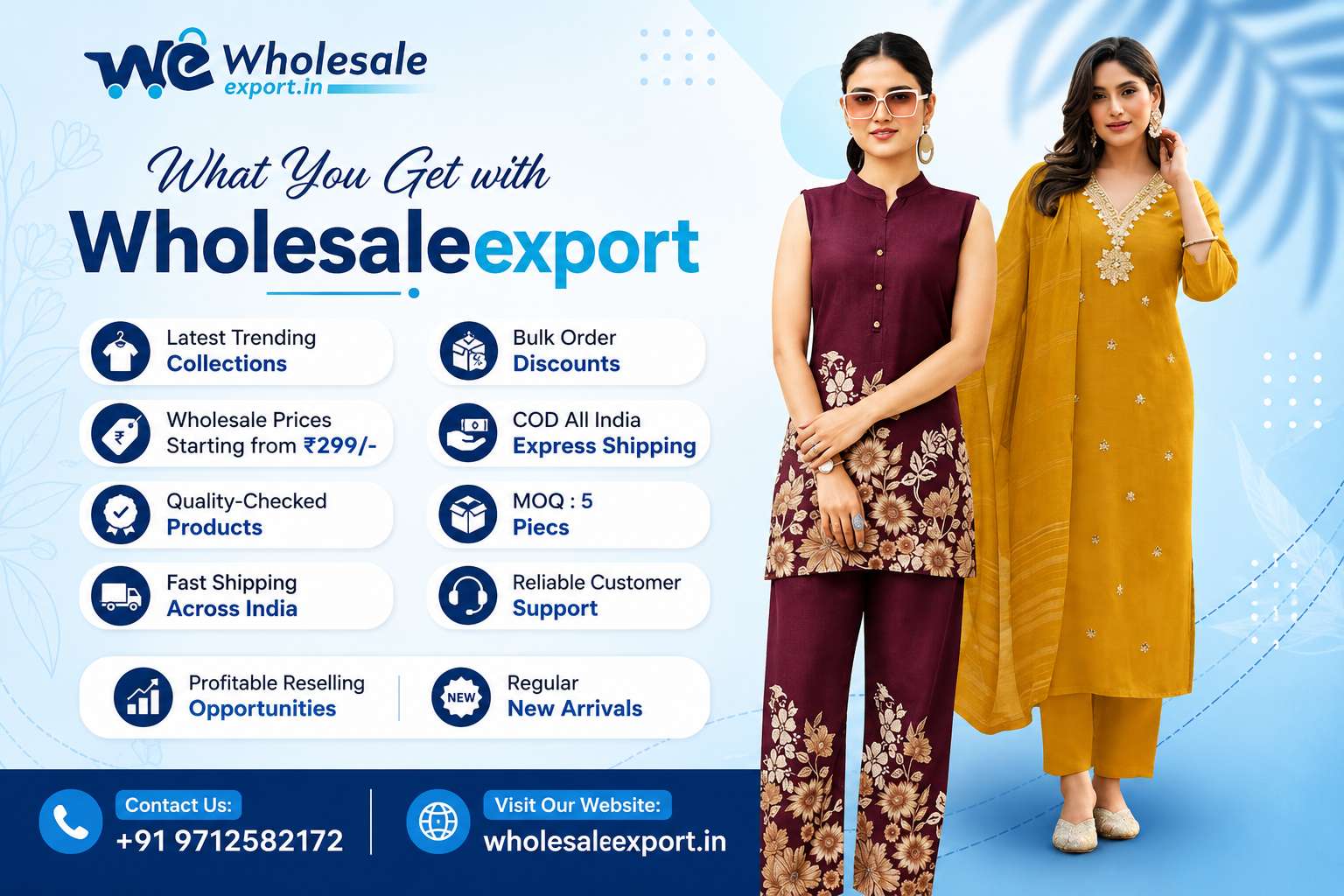
Wholesaleexport.in offers access to Fast Shipping, applicable COD Support, attractive Bulk Order Deals and Quality Products Starting From ₹299. Current catalogue availability, MOQ, product rates and applicable ordering conditions should be confirmed when placing an order.
Contact Number: +91 9712582172
Website: wholesaleexport.in
The most profitable Most Selling Kurti Designs are ultimately those that match the needs of your own customers. Focus on comfortable fabrics, practical sizes, attractive colours and commercially suitable price points while continuously tracking which products generate completed sales. With disciplined purchasing, regular new arrivals and dependable wholesale sourcing, kurtis can remain a strong year-round category for modern women's fashion retailers.