


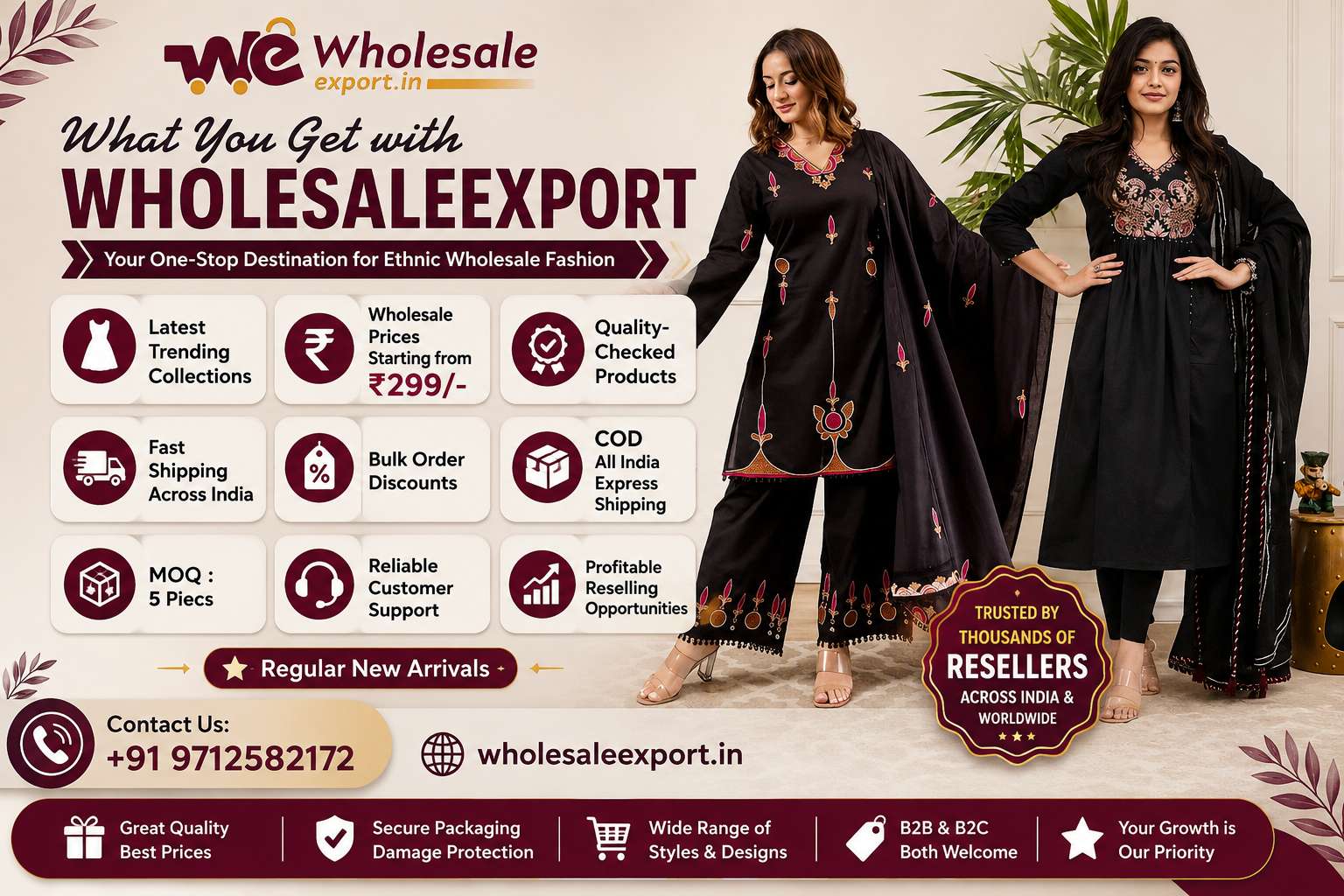
Kurti Wholesaler for Online Sellers: Wholesale Buying Guide 2026
Kurti Wholesaler for Online Sellers: Wholesale Buying Guide 2026
Selling ethnic wear through Instagram, WhatsApp, Facebook, marketplaces or an independent online store becomes easier when fresh products are available at workable buying rates. For online sellers, the right wholesale partner can influence everything from product variety and customer satisfaction to stock rotation and final margins. A well-planned mix of daily wear, designer and festive kurtis allows sellers to serve different customer budgets without unnecessarily blocking capital in slow-moving inventory.
Introduction
Finding a reliable kurti wholesaler for online sellers is an important sourcing decision for anyone building an ethnic wear business in 2026. Online customers see new fashion every day, which means Resellers need access to regular new arrivals, suitable sizes, attractive designs and competitive price ranges to keep their product offering relevant.
This applies to Home-Based Sellers starting through WhatsApp as much as it does to Boutique Owners, Shop Owners, Showroom Owners and established Wholesale Buyers. The scale may be different, but the basic requirement remains similar: purchase products that match the target customer's style and budget while leaving enough room for sustainable retail margins.
A wholesale supplier should therefore offer more than a large catalog. Product quality, regular availability, buying flexibility, dispatch support and collection variety are equally important. Wholesaleexport.in provides online sellers with access to multiple ethnic wear categories that can be evaluated according to customer demand and business scale.
Why Online Sellers Need a Reliable Kurti Wholesaler
An online seller does not have the advantage of allowing every customer to physically touch the product before ordering. Customers often make decisions using photographs, product details, size information and seller recommendations. The product received must therefore meet reasonable expectations created during the sale.
A dependable wholesale kurti supplier can help sellers maintain more consistent product quality and collection availability. This becomes especially important when a particular style generates strong inquiries and the seller wants to purchase related designs or repeat stock.
Regular New Arrivals Keep Online Stores Active
Online fashion stores need visible activity. If an Instagram page or WhatsApp catalog shows the same products for months, regular followers may stop checking updates. Fresh wholesale collections give sellers new material to share and create more reasons for previous customers to return.
New arrivals can include cotton kurtis, printed kurtis, rayon kurtis, Jaipuri kurtis, kurti pant sets, three-piece kurti sets, Anarkali kurtis, designer kurtis, festive ethnic wear and plus-size collections. The exact product mix should depend on customer response rather than simply purchasing every new catalog available.
Wholesale Price Affects Reseller Margin
The buying price directly influences the flexibility an online seller has while setting retail rates. However, selecting stock only because it is cheap can create problems if the product quality is weak or the design does not match customer demand.
Online sellers should calculate the complete landed cost, including wholesale product rate, applicable taxes, shipping, packaging and selling expenses. This gives a more accurate base for setting the final customer price.
Which Kurtis Should Online Sellers Buy in Wholesale?
The best wholesale inventory is not necessarily the biggest inventory. Online Resellers can often create stronger product variety by purchasing selected quantities across several fast-moving categories instead of investing the entire budget into one design.
Daily Wear Kurtis for Regular Orders
Daily wear kurtis can provide a stable product category for many online sellers. Cotton, rayon, printed and straight-cut styles can appeal to customers looking for comfortable ethnic wear for work, casual use and regular outings.
Wholesale kurtis for resellers in affordable ranges can also help Home-Based Sellers start with a controlled investment. Selected available collections may include Quality Products Starting From ₹299, depending on current design, category and stock availability.
Three-Piece Kurti Sets for Higher-Value Orders
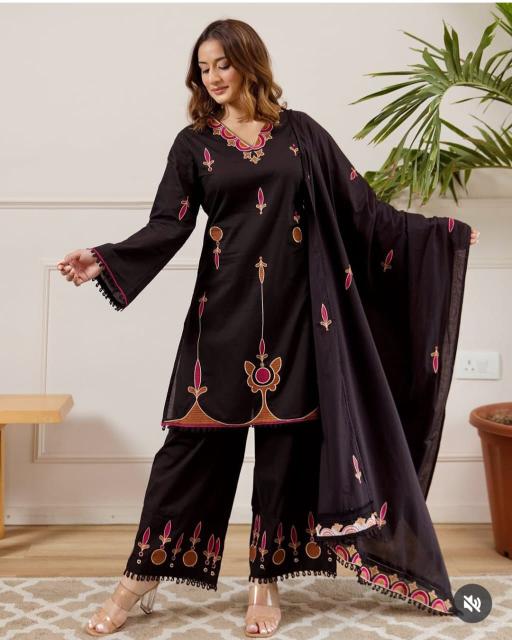
Kurti, bottom and dupatta combinations give online sellers a complete outfit to present. Three-piece kurti sets can serve customers looking for coordinated ethnic wear without separately matching garments.
For online presentation, complete sets are also visually effective because sellers can show the full look in product images, videos and Reels. Printed sets, Jaipuri patterns, embroidered sets and festive combinations can target different retail price segments.
Designer Kurtis for Boutique Customers
Online Boutique Owners can maintain selected premium collections for customers who value detailed designs and better finishing. Embroidery, handwork, premium prints, distinctive silhouettes and coordinated dupattas can help differentiate a curated boutique collection from basic mass-market inventory.
Premium products should be evaluated carefully before larger orders. Fabric, stitching, embroidery quality, size consistency and overall manufacturing finish influence the customer's perception of value.
Surat Wholesale Sourcing for Online Kurti Sellers
Surat is one of India's major textile sourcing centres, with a broad network of manufacturers, traders and wholesale suppliers. surat textile market and textile trading areas around ring road and sahara darwaza give buyers access to numerous women's ethnic wear categories and price ranges.
For an online seller, Surat sourcing can provide access to fresh collections without depending entirely on local retail wholesalers. The variety available through the city's textile ecosystem can support sellers targeting budget, mid-range and premium customers.
Direct Wholesale Sourcing Creates More Choice
A Reseller may require affordable daily wear kurtis, while a Boutique Owner may be searching for premium three-piece sets. Showroom Owners may need deeper catalog quantities, while Home-Based Sellers may prefer controlled purchases with greater design variety.
A broad wholesale sourcing network makes these different buying strategies possible. Instead of treating all online sellers the same, inventory can be selected according to actual business scale and customer profile.
Remote Buying Makes Surat Collections More Accessible
Not every seller can regularly travel to Surat. Online wholesale sourcing helps buyers explore products remotely and place orders according to current availability. Before confirming an order, buyers should check product details, size range, quantity, payment terms, shipping and applicable policies.
Wholesaleexport.in can be used to explore wholesale ethnic wear for online resale, allowing buyers to shortlist collections according to their preferred category and buying range.
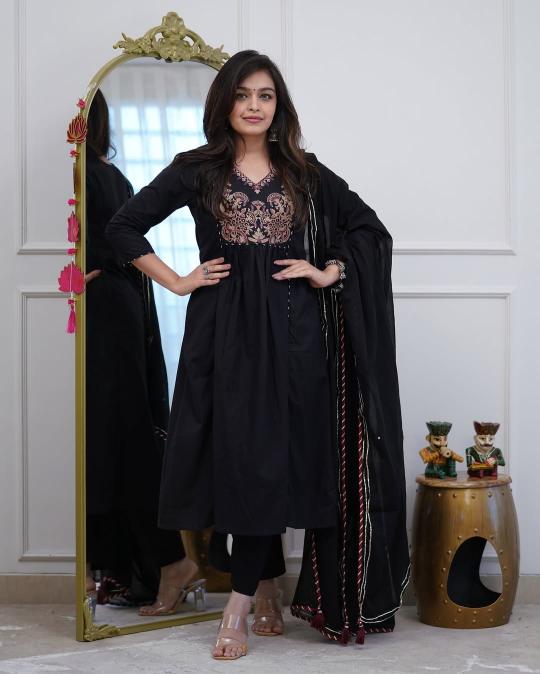
How to Select Wholesale Stock for Instagram and WhatsApp Selling
Instagram and WhatsApp sellers often depend heavily on product visuals. A customer may discover a design through a Reel, Status or shared catalog and make an inquiry immediately. Stock selection should therefore consider not only the physical product but also how effectively it can be presented online.
Choose Products with Strong Visual Appeal
Clear prints, attractive colour combinations, coordinated sets and visible detailing can perform well in image-led selling environments. However, visual appeal should never replace actual quality. The final delivered product must justify the presentation shown to customers.
Product descriptions should mention relevant fabric, size and set information rather than relying only on photographs. This reduces repetitive inquiries and helps customers make more confident buying decisions.
Maintain Multiple Price Points
An online audience usually contains customers with different budgets. Maintaining affordable, mid-range and premium inventory can help a seller respond to more inquiries.
Budget kurtis may bring frequent orders, while premium kurti sets can increase average order value. A balanced assortment gives sellers flexibility without forcing every customer into the same price segment.
Wholesale Kurti Buying for Home-Based Sellers
Home-Based Sellers can start online ethnic wear selling without maintaining showroom-level inventory. Their advantage is flexibility: products can be tested in smaller quantities and buying decisions can be adjusted quickly according to customer response.
A practical kurti wholesaler for online sellers should give such businesses enough variety to create a professional-looking collection without requiring them to fill their homes with excessive slow-moving stock.
Start with Variety, Then Increase Quantity
A new seller can initially select different designs across a few proven categories. Customer inquiries and completed sales then reveal which products deserve a larger share of the next wholesale purchase.
For example, if printed three-piece kurti sets receive more orders than basic kurtis, the next buying cycle can allocate more budget to coordinated sets. If plus-size inquiries are frequent, the seller can gradually expand that size range.
Use Customer Orders to Improve Buying Decisions
Keep simple records of products customers ask for, including size, colour, style and preferred retail range. Even inquiries that do not convert into immediate sales can provide useful information about market demand.
Over time, this data helps the seller purchase inventory based on actual customer interest rather than guesswork.
Wholesale Buying for Boutique Owners and Shop Owners
Boutique Owners and Shop Owners generally require greater inventory depth than small Home-Based Sellers. At the same time, they need enough freshness to ensure customers see something new on repeat visits.
One useful approach is to divide inventory into core products and fresh arrivals. Core inventory contains proven daily-selling categories, while fresh arrivals introduce new colours, prints, silhouettes and seasonal products.
Build a Curated Boutique Collection
Boutique buyers do not need every catalog in the market. A carefully curated assortment can create stronger store identity. If a boutique is known for Jaipuri styles, premium cotton sets or designer ethnic wear, wholesale buying should strengthen that positioning.
This also makes marketing easier because customers begin to understand what type of collection they can expect from the store.
Product Quality Is Essential for Online Customer Trust
Online selling depends heavily on trust. Customers cannot inspect the garment before delivery, so consistent product quality can influence reviews, repeat orders and referrals.
Vastralife has wholesale and export experience since 2017, supported by textile industry expertise and a focus on premium product quality. For online sellers, sourcing from an experienced textile network can be useful when building a business around repeat customers rather than one-time transactions.
Quality assessment should consider fabric, stitching, print clarity, embroidery, finishing and size consistency. Online sellers should also communicate product information accurately so customer expectations remain realistic.
How Online Sellers Can Plan Profitable Inventory in 2026
Inventory planning is one of the biggest differences between casual reselling and a scalable online business. A profitable seller understands which products generate inquiries, which ones convert into sales and how quickly each category rotates.
Track Fast-Moving and Slow-Moving Products
Create a simple record of purchase date, wholesale cost, selling price and quantity sold. After several buying cycles, patterns become easier to identify. Products that consistently move quickly can receive higher inventory allocation, while slow categories can be reduced.
This prevents too much capital from remaining locked in products that customers are not buying.
Plan Inventory Around Festivals and Weddings
Ethnic wear demand can increase around festivals and wedding seasons. Online sellers should plan suitable inventory before peak buying begins so they have enough time to receive products, create content and promote collections.
Festive inventory may include Anarkali sets, embroidered kurti sets, premium three-piece sets, sarees and occasion-based ethnic wear according to the seller's customer profile.
Expand from Kurtis into Related Wholesale Categories
Once a seller has a stable kurti customer base, related ethnic wear can create additional selling opportunities. A customer buying kurtis may later require sarees, festive sets or other traditional fashion for different occasions.
Online sellers looking to expand their printed ethnic inventory can explore Jaipuri kurtis wholesale collections according to customer demand and preferred buying range.
Businesses receiving regular saree inquiries can also evaluate wholesale sarees India as a complementary category instead of sending those customers to another seller.
Wholesale Kurti Export Opportunities for Online Sellers
Online ethnic wear selling is not limited to the domestic Indian market. Resellers, Boutique Owners and Wholesale Buyers in Malaysia, Canada and Sri Lanka can also source Indian ethnic wear according to supplier availability and applicable shipping arrangements.
For international export buying, product selection should consider destination-specific customer preferences, expected retail price, size demand and seasonality. A collection popular in India may not automatically have the same demand in another market.
International buyers should also calculate shipping and applicable destination costs before deciding their final retail pricing. Clear landed-cost calculations help maintain sustainable margins and avoid unexpected expenses.
Scale Your Online Kurti Business with Better Wholesale Sourcing
A dependable kurti wholesaler for online sellers can become an important part of business growth when the seller moves from occasional orders to regular purchasing. At that stage, stock consistency, product quality and new arrival frequency become increasingly important.
The next stage of this guide will cover supplier evaluation, repeat ordering, customer retention, stock rotation, international sourcing considerations, internal navigation, frequently asked questions and a direct wholesale purchase CTA for Resellers and Wholesale Buyers.
How to Choose a Reliable Kurti Wholesaler for Online Selling
Once online orders start becoming regular, supplier selection becomes more important than simply finding the lowest wholesale rate. A reliable kurti wholesaler for online sellers should support the business with fresh designs, consistent quality, practical order quantities and dependable dispatch. These factors help Resellers maintain customer trust while keeping their online catalog active.
Before increasing purchase volume, sellers should observe how consistently the supplier provides product information, available sizes, current stock and order-related communication. A supplier offering hundreds of catalogs is not automatically better if popular products frequently become unavailable or actual quality does not match expectations.
Compare Product Quality with Wholesale Price
Wholesale price matters because it determines potential retail margin, but quality should be evaluated alongside it. Fabric, stitching, printing, embroidery, finishing and size consistency directly affect customer satisfaction. An inexpensive garment that creates complaints or returns may ultimately cost more than a slightly higher-priced product with better customer acceptance.
Online sellers should therefore evaluate the complete value of a product. A good wholesale purchase is one that can be presented confidently, sold at a suitable retail price and delivered to customers with a reasonable expectation of satisfaction.
Check New Arrival Frequency
Fashion moves quickly online. Sellers publishing new products regularly need a sourcing partner capable of offering fresh collections throughout the season. New arrivals create content opportunities for Instagram Reels, WhatsApp Status, Facebook posts and direct customer sharing.
However, sellers should not purchase every new design. A better strategy is to shortlist products according to previous sales, customer inquiries, price range and season. This keeps the catalog fresh without unnecessarily increasing slow-moving inventory.
Repeat Ordering Strategy for Online Kurti Resellers
Repeat purchasing should be based on sales performance rather than personal preference. When a particular style sells quickly, note its fabric, silhouette, retail range, sizes and customer profile. Even if the exact design becomes unavailable, similar collections can then be selected in the next wholesale order.
Identify Your Best-Selling Categories
Online Resellers can divide inventory into categories such as cotton kurtis, Jaipuri kurtis, kurti pant sets, three-piece sets, designer kurtis, plus-size kurtis and festive ethnic wear. After several sales cycles, compare which categories generate the highest number of inquiries and actual orders.
If three-piece sets consistently outperform single kurtis, the next buying budget can give them a larger allocation. Similarly, if affordable daily wear generates repeat orders, maintaining that category can provide more stable sales while premium products are used for higher-value transactions.
Do Not Wait Until Every Product Is Sold
Waiting until the entire inventory is exhausted before sourcing again can create gaps in an online catalog. Instead, monitor fast-moving products and begin planning the next purchase while sellable inventory is still available.
This creates a smoother stock rotation cycle. Customers continue seeing active collections while the seller avoids suddenly having very limited options to share.
Stock Rotation Can Improve Online Reseller Cash Flow
Inventory that remains unsold for a long period blocks working capital. This is especially important for Home-Based Sellers and smaller Resellers because their next purchase may depend on money generated from existing stock.
A practical inventory strategy is to purchase greater design variety with controlled quantities, monitor customer response and then increase stock in proven categories. This approach reduces dependence on predicting trends correctly before any sales data is available.
Separate Fast, Medium and Slow-Moving Inventory
Products can be classified according to their actual movement. Fast-moving items may deserve repeat purchasing, medium-moving products can remain part of the assortment in controlled quantities and slow-moving inventory should be reviewed before similar products are ordered again.
Slow stock does not always mean the product itself is poor. Sometimes the selling price, photography, target audience or timing may be wrong. Before discounting it heavily, consider whether better presentation or a different customer segment could improve its performance.
Protect Your Buying Budget
New sellers can become excited by large catalogs and spend too much of their budget at once. Keeping part of the working capital available for upcoming new arrivals gives the business more flexibility.
During wedding and festive seasons, this flexibility becomes particularly valuable because customer preferences can change quickly and high-demand designs may appear after the initial purchase cycle.
Build Repeat Customers with Consistent Kurti Quality
The growth of an online clothing business depends not only on finding new customers but also on convincing previous customers to order again. Consistent quality is one of the strongest foundations for repeat purchases.
When the delivered garment matches the customer's reasonable expectations for fabric, colour, fitting and finishing, the seller earns trust. That trust makes it easier to sell future collections without rebuilding credibility from zero for every order.
Accurate Product Communication Matters
Do not describe a product as premium simply to increase conversions. Mention relevant fabric, size and set information clearly. If colour can vary slightly because of photography or screen settings, communicate appropriately rather than creating unrealistic expectations.
Transparent selling can reduce avoidable complaints and strengthen the seller's reputation. This is particularly important for online transactions where customers cannot physically inspect the garment before ordering.
Use Customer Feedback for Wholesale Buying
After delivery, feedback can reveal whether a product deserves repeat purchasing. If customers repeatedly appreciate the fabric or fitting of a particular collection, similar products can be prioritized. If the same quality issue appears more than once, reconsider that range before reordering.
This creates a feedback loop between retail selling and wholesale purchasing. Over time, the seller's product selection becomes increasingly aligned with actual customer preferences.
Surat Manufacturing and Wholesale Advantage
The surat textile market remains an important sourcing ecosystem for women's ethnic wear because buyers can access diverse products across multiple price segments. Textile areas around ring road and sahara darwaza connect manufacturers, wholesalers, traders and buyers from different regions.
For online sellers, access to Surat's manufacturing and wholesale ecosystem can support regular sourcing across daily wear, designer and festive categories. Instead of depending only on products available through nearby local wholesalers, sellers can explore broader collections according to their business requirements.
Wholesaleexport.in helps make this type of sourcing accessible to online sellers who may not be able to visit Surat for every purchase. Buyers can explore current categories and plan orders based on their preferred range, customer segment and approximate quantity.
Wholesale Kurti Sourcing for Different Types of Sellers
Home-Based Sellers
Home-Based Sellers should generally prioritize variety, manageable quantities and fast-moving price ranges. A smaller assortment of carefully selected products can be more useful than large quantities of an untested design.
WhatsApp, Instagram and personal customer networks can be used to test demand. As repeat orders grow, inventory can gradually expand without immediately creating showroom-level overhead.
Boutique Owners
Boutique Owners can focus more heavily on curated products, distinctive prints, premium sets and designs that help differentiate their store. Product selection should match the boutique's established customer profile instead of simply following every market trend.
Shop and Showroom Owners
Shop Owners and Showroom Owners generally need broader inventory because customers expect immediate choices across designs, sizes and price points. Core fast-moving stock can be combined with regular new arrivals to maintain both availability and freshness.
Wholesale Buyers
Wholesale Buyers purchasing for downstream retailers should evaluate broader market demand, repeat availability and bulk economics. Their buying decision may require deeper quantities, so product consistency and supplier reliability become particularly important.
International Kurti Wholesale and Export Buying
Indian ethnic wear also serves customers outside India. Boutique Owners, Resellers and Wholesale Buyers in Malaysia, Canada and Sri Lanka can explore Indian wholesale collections according to supplier availability and applicable shipping arrangements.
For an international export order, buyers should evaluate the complete landed cost rather than only the Indian wholesale price. Shipping, packing, documentation and applicable destination expenses can influence the final retail margin.
Select Products According to the Destination Market
International buyers should purchase according to their own customer base. The products selling quickly in India may not automatically perform equally well in another country. Climate, cultural occasions, customer sizes, colour preferences and retail budgets can influence demand.
Sharing the target market, approximate order value and preferred categories with the sourcing team can make product shortlisting more relevant.
Why Experience Matters in Wholesale Textile Sourcing
Vastralife has wholesale and export experience since 2017, supported by practical textile industry knowledge and sourcing experience across women's ethnic wear categories. For Resellers and Wholesale Buyers, working with experienced sourcing channels can help when evaluating product ranges, quality levels and market-oriented collections.
Premium product quality remains important because every wholesale purchase eventually reaches a retail customer. A product that looks attractive in a catalog must also provide acceptable fabric, stitching and finishing when delivered.
In 2026, sellers have more ways than ever to reach customers online, but this also increases competition. Reliable products, sensible pricing and fresh inventory can help an online seller build a more sustainable position instead of competing only through discounts.
Internal Linking Section
Online sellers can strengthen their ethnic wear assortment by exploring related categories according to customer demand. A seller receiving regular requests for printed kurtis can build greater depth in Jaipuri and cotton styles, while a seller serving festive customers can gradually add designer suits, sarees and occasion-based collections.
Wholesaleexport.in can be used to explore current wholesale ranges before planning the next purchase. Buyers should shortlist products according to their customer budget, required sizes, expected quantity and selling channel rather than purchasing a random mix simply because it is newly launched.
Customer FAQs
1. How can I find a kurti wholesaler for online sellers?
Look for a wholesaler offering regular collections, clear product details, competitive wholesale pricing, suitable quality and reliable order communication. Online sellers should also evaluate shipping, current stock and order terms before increasing purchase quantities.
2. What type of kurtis are suitable for online reselling?
Cotton kurtis, printed kurtis, Jaipuri styles, kurti pant sets, three-piece sets, designer kurtis, plus-size collections and festive ethnic wear can all be considered. The right mix depends on your customer profile and actual sales data.
3. What is the wholesale kurti starting price?
Wholesale rates vary according to fabric, design, work, brand, quantity and current stock. Selected available categories may include Quality Products Starting From ₹299. Exact current prices should be confirmed while placing the order.
4. Can Home-Based Sellers buy kurtis in wholesale?
Yes. Home-Based Sellers can build inventory according to their available budget and customer demand. Starting with multiple designs in controlled quantities can help test the market before increasing stock.
5. Is Surat suitable for online kurti wholesale sourcing?
Surat has a large textile ecosystem covering manufacturing, trading and wholesale sourcing. Buyers can access multiple ethnic wear categories and price ranges through Surat-based suppliers and online wholesale channels.
6. Can I source kurtis for international resale?
International buyers can explore wholesale and export sourcing subject to supplier availability and applicable shipping terms. Before ordering, confirm quantity, packing, shipping, documentation and destination-related requirements.
7. How should an online reseller calculate selling price?
Calculate the wholesale product cost together with applicable taxes, shipping, packaging, marketing and other selling expenses. Then set a retail price that provides a sustainable margin while remaining appropriate for your customer segment.
8. How can online sellers reduce slow-moving stock?
Start with controlled quantities, track product inquiries and sales, repeat proven categories and avoid overbuying untested designs. Regular stock analysis helps redirect future buying budgets toward products customers actually purchase.
Choose the Right Kurti Wholesaler for Sustainable Online Growth
A dependable kurti wholesaler for online sellers can help a Reseller move from occasional product sharing to a more structured ethnic wear business. The objective is not simply to purchase more stock; it is to purchase the right stock at a workable price and rotate it consistently.
Online sellers who track customer demand, maintain product quality, introduce regular new arrivals and manage their buying budget carefully can build a stronger foundation for repeat orders. The same principles apply whether the business operates through WhatsApp from home, an Instagram boutique, a physical shop or a larger showroom.
Surat's textile sourcing ecosystem, experienced wholesale support and access to multiple ethnic wear categories can help sellers build collections around actual customer requirements rather than depending on limited local options.
Order Wholesale Kurtis for Your Online Selling Business
Ready to source fresh ethnic wear for your online store, boutique, shop or reselling business? Explore wholesale collections according to your preferred category, price range and quantity.
- Latest Collections – Regular new arrivals for online and offline sellers
- Wholesale Pricing – Competitive sourcing options for Resellers and Wholesale Buyers
- Trendy Ethnic Wear – Kurtis, kurti sets and other popular women's ethnic categories
- Fast Shipping – Available shipping and dispatch options according to order requirements
- COD Support – Available for applicable orders and eligible locations
- Bulk Order Deals – Suitable options for larger wholesale requirements
- Quality Products Starting From ₹299 – Available in selected current collections
Contact for Wholesale Orders: +91 9712582172
Website: wholesaleexport.in
Share your required product category, preferred wholesale price range, approximate quantity and target customer segment to explore suitable collections. With Vastralife's wholesale and export experience since 2017, premium product quality focus and textile industry expertise, online sellers can source fresh inventory designed for practical resale opportunities in India and international markets.