


Indian Saree Exporter Wholesale: Surat Supplier Guide for Global Buyers 2026
Indian Saree Exporter Wholesale: Surat Supplier Guide for Global Buyers 2026
Indian sarees continue to hold a strong place in ethnic fashion, from everyday wardrobes and festive celebrations to weddings and international cultural events. For retailers, boutiques and resellers, the real business opportunity comes from sourcing the right combination of designs, fabrics, quality and wholesale rates. Surat plays an important role in this supply chain, giving buyers access to an enormous variety of sarees suitable for domestic sales as well as international markets.
Introduction
The global demand for Indian ethnic wear has created opportunities for businesses of almost every size. A Home-Based Seller may begin with a carefully selected collection promoted through WhatsApp or Instagram, while an established showroom may purchase larger quantities across multiple saree categories. International boutiques can also build specialised Indian fashion collections for customers who want traditional clothing without travelling to India.
Choosing a dependable Indian saree exporter wholesale source is therefore about much more than finding the lowest price. Buyers need consistency in fabric, colour, finishing, catalogue representation, packaging and dispatch. They also need access to fresh collections because ethnic-fashion customers increasingly expect variety.
Surat is especially relevant to this business because of its large textile ecosystem. The city connects fabric processing, weaving, designing, trading, garment production, saree distribution and manufacturing. This allows wholesale buyers to explore products across several price levels rather than depending on a single category.
For buyers who prefer digital sourcing, Wholesaleexport.in provides an online route for discovering wholesale fashion collections. This approach can be particularly useful for Shop Owners, Boutique Owners, Showroom Owners, Resellers and Wholesale Buyers who cannot visit Surat every time they need new inventory.
Why Surat Is Important for the Indian Saree Wholesale Industry
Surat has developed into one of India's most recognised textile trading centres. Areas around the surat textile market, ring road and sahara darwaza are widely associated with textile commerce, with buyers visiting the city to discover sarees, dress materials, kurtis and other fashion categories.
The advantage for a saree retailer is variety. Different customer segments require completely different products. One buyer may need affordable printed sarees for regular retail sales, while another may require designer pieces for wedding boutiques. A third buyer may focus on lightweight contemporary sarees for younger customers.
A well-connected wholesale source can make this diversity easier to manage by allowing retailers to purchase according to their actual audience instead of stocking whatever happens to be available locally.
Access to Multiple Saree Categories
Wholesale saree buyers can build collections across numerous fabrics, designs and wearing occasions. Common categories may include printed sarees, soft silk sarees, Banarasi-inspired designs, party wear sarees, ready-to-wear sarees, festive sarees, traditional woven styles, georgette sarees, chiffon sarees, organza sarees and designer collections.
This diversity is important because a successful saree wholesale business rarely depends on a single type of customer. Daily-wear customers may prioritise comfort and value, whereas wedding shoppers often look for richer detailing and presentation.
Competitive Wholesale Price Opportunities
Buying closer to a major textile sourcing ecosystem can help retailers access commercially viable wholesale rates. However, buyers should evaluate more than the headline price. Fabric quality, work, finishing, blouse details, packaging and design appeal can all influence the eventual retail value.
A lower purchase rate is beneficial only when the product can satisfy the end customer. For this reason, experienced buyers usually compare overall value rather than choosing inventory entirely according to the cheapest quotation.
Frequent New Designs
Fashion inventory has a limited selling window. Customers who regularly shop at the same boutique want to see new colours, patterns and styles. Access to latest saree collections can therefore help a retailer maintain customer interest and encourage repeat visits.
This becomes especially important during festival and wedding periods when consumers may actively compare several stores before making a purchase.
Best Saree Categories for Wholesale and Export Business
There is no single saree category that performs equally well in every market. The right inventory depends on customer age, location, occasion, climate, cultural preference and purchasing power. An experienced Indian saree exporter wholesale strategy should therefore use a balanced assortment.
Ready-to-Wear Sarees
Ready-to-wear and pre-stitched sarees address one of the practical challenges associated with traditional saree draping. Customers who appreciate the appearance of a saree but want quicker styling may find this format attractive.
This category can be particularly useful for online sellers because convenience provides a clear marketing message. Instead of promoting only fabric and design, retailers can explain the time-saving benefit to customers.
Party Wear Sarees
Party wear sarees wholesale collections can include fashionable fabrics, sequins, embroidery, decorative borders and contemporary styling. These products may appeal to customers shopping for receptions, celebrations, family functions and festive gatherings.
Boutiques should maintain different price bands within this category. A combination of accessible party wear and selected premium pieces can serve a wider customer base than stocking only high-value products.
Silk and Traditional Sarees
Traditional sarees continue to be important for weddings, festivals, religious occasions and gifting. Silk-look designs, woven sarees and heritage-inspired patterns can add depth to a retailer's ethnic collection.
International Indian communities may also purchase traditional styles for cultural celebrations. For saree export businesses, this makes traditional collections relevant beyond the domestic market.
Printed and Daily Wear Sarees
Daily-wear sarees can provide regular stock rotation because customers generally purchase them for practical use rather than only special occasions. Comfortable fabrics, manageable drapes and attractive prints can be important selling points.
For resellers operating in price-sensitive markets, this segment may help generate recurring sales when inventory is selected carefully.
Designer Sarees for Boutique Customers
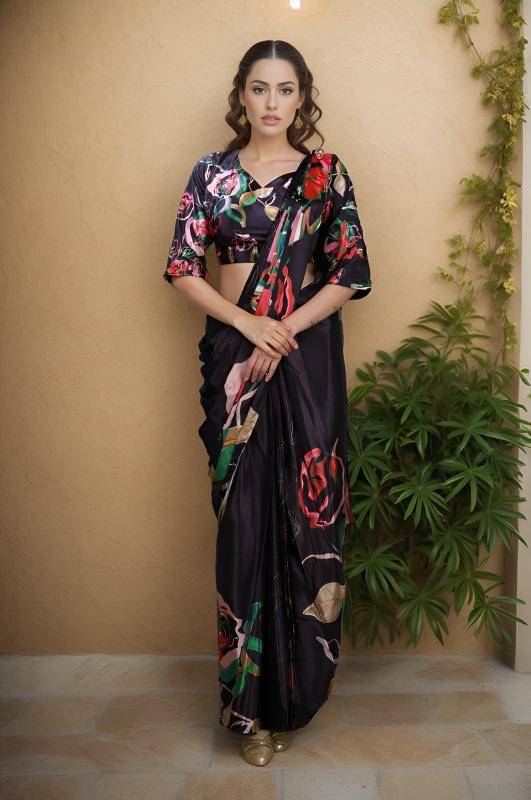
Designer sarees are useful for retailers who want stronger visual differentiation. Embellishments, distinctive borders, embroidery, unusual colour combinations and modern styling can make these products more suitable for boutique positioning.
Because designer inventory usually requires greater investment, buyers should test demand instead of purchasing excessive quantities of one design.
How to Choose a Reliable Indian Saree Wholesale Supplier
A good supplier relationship can influence inventory quality, customer satisfaction and long-term profitability. This is particularly important when the retailer is ordering remotely or purchasing for international export.
Check Product Quality and Finishing
Product photographs attract the initial enquiry, but repeat business depends on the garment customers actually receive. Buyers should consider fabric feel, stitching where applicable, borders, embellishment attachment, colour consistency and overall finishing.
Premium product quality does not necessarily mean every saree needs to be expensive. Quality means the delivered product should reasonably match the standards expected within its particular price segment.
Compare Variety Instead of Only Quantity
A retailer with ₹50,000 to invest does not automatically need a large quantity of similar sarees. In many boutique businesses, greater design variety can be more valuable because customers want choices.
For a new reseller, testing several categories in smaller quantities can also provide useful information about which products receive the strongest response.
Understand MOQ Before Ordering
Minimum order quantity can significantly affect small retailers. Home-Based Sellers and new boutiques should understand whether the supplier requires full catalogues, fixed sets or flexible quantities before committing capital.
Lower-entry purchasing options can help businesses test customer demand, while larger buyers may benefit from bulk ordering when they already know which categories sell consistently.
Look for Regular Collection Updates
A supplier should support the retailer's need for freshness. If customers repeatedly see the same designs, engagement can decline. Regular New Arrivals give businesses more opportunities to promote products through social media, WhatsApp catalogues and in-store displays.
Vastralife’s Wholesale and Export Experience Since 2017
Industry experience becomes valuable when buyers need to navigate a textile market with thousands of products and rapidly changing trends. Vastralife has worked in the wholesale and export space since 2017, developing experience in ethnic-fashion sourcing and serving different types of business buyers.
This industry expertise helps in understanding that a Home-Based Seller and a large Showroom Owner rarely need the same buying strategy. One may require controlled quantities and fast-moving designs, while another may need deeper inventory across multiple categories.
Through Wholesaleexport.in, buyers can explore collections with an emphasis on wholesale sourcing, variety and business-oriented purchasing. For retailers outside Surat, digital access can reduce the need to depend entirely on physical buying trips.
Indian Saree Export Opportunities in 2026
The international ethnic-wear market includes Indian communities, multicultural fashion customers, festival shoppers and buyers preparing for weddings and cultural events. For Indian saree exporters, this creates opportunities across both traditional and contemporary product categories.
In 2026, international retailers should pay particular attention to product selection and landed cost. A saree that offers excellent value in India may enter a very different retail price bracket after freight, duties, taxes and local operating expenses are added.
Saree Wholesale Opportunities in USA
The USA offers a diverse market for Indian ethnic fashion. Boutiques serving Indian communities may require sarees for Diwali, Navratri, weddings, religious events, receptions and other celebrations.
A wholesale buyer should consider carrying several styles rather than building the entire assortment around heavy occasion wear. Lightweight sarees, party designs and convenient ready-to-wear options can complement traditional collections.
Saree Wholesale Opportunities in Australia
Australia has active Indian communities across major cities, creating demand for ethnic clothing around festivals and social occasions. Boutique owners can develop focused assortments according to their local customer base instead of importing every available category.
International freight makes inventory planning particularly important. Buyers should evaluate product value relative to shipping weight, expected selling price and likely stock rotation.
Saree Wholesale Opportunities in Nepal
Nepal is geographically closer to India's textile sourcing markets and has established demand for Indian fashion products. Sarees can be relevant for festivals, weddings, retail stores and reselling businesses.
Buyers should nevertheless calculate current logistics, customs and applicable taxes when determining landed cost. Wholesale purchase price alone should never be treated as the final inventory cost for a cross-border transaction.
How Retailers Can Calculate Saree Business Profit
Wholesale sourcing becomes commercially meaningful only when products generate sustainable retail margins. Before ordering, retailers should estimate the complete landed cost and realistic selling price.
Suppose a saree has an attractive wholesale rate but requires substantial logistics, packaging and marketing expenses. Its actual cost to the business may be noticeably higher than the supplier invoice rate. The retailer should therefore calculate the entire expense before deciding how much inventory to purchase.
Consider More Than Purchase Cost
A practical inventory calculation can include wholesale cost, applicable taxes, shipping, packaging, payment expenses, marketing and expected operational overhead. International buyers may additionally need to consider freight and destination-specific import expenses.
Once these costs are understood, the retailer can decide whether the expected selling price provides enough room for both competitive pricing and profit.
Focus on Stock Rotation
Margin percentage alone does not determine success. A product with a moderate margin that sells repeatedly may contribute more to annual profit than a high-margin saree that remains unsold for months.
This is why successful wholesale purchasing combines profit margin with inventory turnover.
For retailers planning their next purchase, the next stage is to understand how digital sourcing, internal product discovery and structured inventory planning can reduce risk while improving access to fresh wholesale collections.
For retailers planning their next purchase, the next stage is to understand how digital sourcing, internal product discovery and structured inventory planning can reduce risk while improving access to fresh wholesale collections.
Digital Wholesale Saree Sourcing for Modern Retailers
Traditional textile sourcing often involved travelling to wholesale markets, visiting multiple suppliers, checking samples and spending several days finalising purchases. Physical market visits remain useful, but digital sourcing has changed how many retailers replenish stock. A Boutique Owner in another state or an international buyer can now review collections remotely before deciding what suits the business.
This is particularly useful for smaller businesses. Home-Based Sellers and Resellers may not have the budget or time for frequent trips to the surat textile market. Online wholesale sourcing allows them to compare designs, monitor new arrivals and make more focused purchasing decisions.
Wholesaleexport.in is designed to help business buyers explore ethnic-wear collections online. Instead of restricting purchasing decisions to locally available stock, buyers can discover Surat-linked collections suitable for different customer segments and price points.
Why Digital Catalogues Help Resellers
Digital catalogues allow retailers to study colours, patterns, styling and product categories before committing money to inventory. They can also help sellers understand which collections are likely to work on Instagram, WhatsApp, Facebook, websites or physical boutique displays.
For online resellers, attractive catalogue presentation can make product promotion more efficient. However, catalogue images should always be supported by reliable product information so that the end customer receives something reasonably consistent with expectations.
Build a Test-and-Restock Buying Model
Instead of purchasing a large quantity of an unfamiliar design, new businesses can begin by testing several styles. Sales data can then determine which products deserve restocking.
For example, a seller could test ready-to-wear sarees, printed daily-wear designs, festive sarees and designer styles. If one category generates significantly more enquiries and conversions, future inventory can be adjusted accordingly.
This approach is particularly useful in saree wholesale online businesses because customer responses can often be measured quickly through clicks, messages, saves and actual orders.
Buyers interested in convenience-led ethnic fashion can explore ready-to-wear saree collections as part of a diversified inventory strategy. Retailers serving wedding and occasion customers can also evaluate the wholesale lehenga market Surat with price category when expanding beyond sarees.
How to Build a Profitable Saree Inventory Mix
A profitable inventory is rarely created by buying every trending design. Retailers need an assortment that matches their actual customer profile. This is where thoughtful purchasing becomes more valuable than simply buying large quantities.
Keep Fast-Moving Affordable Sarees
Affordable products can provide regular transactions and help attract price-conscious shoppers. Printed sarees, lightweight designs and easy-to-maintain fabrics may work well for customers looking for regular wear or budget-friendly gifting.
These collections can also be useful for new Resellers because the lower investment per piece may allow them to offer more design variety without putting excessive capital into inventory.
Add Mid-Range Festive Collections
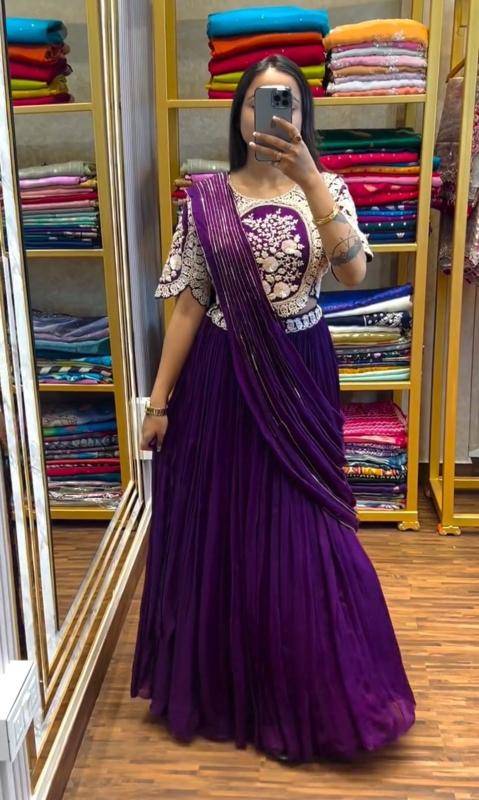
Mid-range sarees can become an important bridge between daily wear and premium occasion products. Attractive borders, fashionable fabrics, embroidery, woven effects and festive detailing can make them suitable for family functions, festivals and celebrations.
For many boutiques, this range can become a strong commercial segment because customers want something noticeably special without necessarily purchasing a premium wedding saree.
Maintain Selected Premium Sarees
Premium products give a boutique visual appeal and help serve customers who prioritise design and exclusivity. Rather than stocking excessive quantities, retailers can maintain carefully selected premium sarees supported by more affordable fast-moving inventory.
This balanced approach can help preserve cash flow while still giving the store a premium image.
Wholesale Saree Buying Strategy for Different Business Models
The ideal buying strategy depends heavily on how and where products are sold. A physical showroom, Instagram reseller and international boutique should not automatically follow the same inventory formula.
For Home-Based Sellers
Home-Based Sellers can begin with controlled inventory and focus on categories that photograph well and are easy to explain online. Ready-to-wear sarees, printed sarees, festive collections and selected designer pieces can create variety without requiring an enormous opening investment.
Customer feedback should guide repeat purchases. If a particular colour, fabric or price bracket consistently receives stronger responses, the next order can include more of that segment.
For Boutique Owners
Boutique Owners generally benefit from greater differentiation. Instead of competing only on the lowest price, they can focus on curated combinations of fashionable, traditional and occasion-wear sarees.
Presentation also matters. Styling suggestions, blouse pairing ideas, jewellery combinations and occasion-based recommendations can increase the perceived value of the same product.
For Shop and Showroom Owners
Physical stores often require deeper inventory because customers expect immediate choice. Shop Owners and Showroom Owners can divide purchases across entry-level, mid-range and premium categories.
They should also monitor stock ageing. Slow-moving products occupy shelf space and working capital, so fresh purchases should be based partly on actual sales data rather than intuition alone.
For International Wholesale Buyers
International buyers need to pay additional attention to logistics and landed costs. Before confirming a bulk Indian saree exporter wholesale order, businesses should understand product value, shipment size, applicable documentation and destination-side charges.
Buyers in the USA, Australia and Nepal may serve very different audiences. Local purchasing behaviour should therefore influence assortment selection even when all products are sourced from India.
What International Buyers Should Check Before Saree Export Orders
International sourcing can create attractive retail opportunities, but it also introduces additional operational considerations. A professional buyer should clarify important details before confirming a shipment.
Product Details and Quantity
Confirm design numbers, colours, quantities, sizes where relevant and catalogue details. Clear order documentation reduces the possibility of confusion during packing and dispatch.
Packaging
Export packaging should protect products during transportation. Buyers handling premium merchandise should discuss packaging requirements before dispatch, particularly when shipments may pass through several logistics stages.
Shipping and Delivery Expectations
Transit time depends on destination, shipping method, customs processes and other logistics factors. International buyers should avoid building customer promises around unrealistic delivery estimates.
Import Costs and Local Regulations
Import duties, taxes, documentation requirements and customs procedures vary by destination. Buyers should verify current rules applicable to their own country before calculating final retail margins.
This is particularly important because an attractive wholesale price does not automatically mean an attractive landed cost.
How 2026 Saree Trends Can Influence Wholesale Buying
Consumer expectations continue to evolve in 2026. Traditional sarees remain important, but convenience, styling versatility and social-media presentation increasingly influence purchasing decisions.
Convenience-Oriented Ethnic Fashion
Ready-to-wear and pre-stitched formats can appeal to customers who love sarees but prefer easier dressing. Retailers targeting younger consumers, working professionals or international shoppers can test these categories alongside conventional sarees.
Lightweight Occasion Wear
Not every celebration requires a heavily embellished saree. Lightweight party wear that looks premium while remaining comfortable can fill an important space between daily wear and bridal fashion.
Social-Media-Friendly Designs
Fashion discovery increasingly happens through short videos, reels and catalogue posts. Colours, borders and detailing that are visually noticeable on a mobile screen can help generate enquiries for online retailers.
Traditional Styles with Contemporary Presentation
Traditional textile aesthetics remain commercially relevant, especially when presented with modern blouses, accessories and styling. Retailers can therefore combine heritage-inspired sarees with contemporary merchandising instead of treating traditional fashion as a separate market.
Internal Linking and Product Discovery
A structured product-discovery process helps wholesale buyers compare related categories before committing their entire budget. For example, a saree-focused retailer may discover that some customers also request lehengas, kurtis, dress materials or Pakistani suits. Adding complementary categories can increase the number of selling opportunities without changing the core target audience.
When browsing Wholesaleexport.in, business buyers should compare fabric, design, expected customer segment and wholesale rate instead of selecting stock purely from photographs. The objective is to build an inventory that fits the store's positioning and generates sustainable rotation.
For businesses sourcing from areas around ring road and sahara darwaza, digital product discovery can also complement physical Surat sourcing. A retailer can use market knowledge together with online catalogue access to maintain a broader product pipeline.
Common Mistakes Wholesale Saree Buyers Should Avoid
Buying Too Much of One Design
A design may look attractive without necessarily becoming a bestseller. New buyers should avoid committing excessive capital to an untested style simply because the purchase rate appears attractive.
Ignoring Customer Price Segments
If most customers shop within a particular budget, stocking mainly products far above that range can slow inventory turnover. Retailers should understand their customers' comfortable spending levels.
Following Trends Without Understanding Local Demand
A trending saree online may not perform equally well in every city or country. Climate, age group, cultural preferences and local events can influence demand.
Ignoring Quality for a Lower Rate
Competing only on low prices can damage repeat business if customers are dissatisfied with fabric or finishing. Wholesale buyers should seek a commercially sensible balance between cost and premium product quality.
Failing to Calculate Complete Costs
Purchase rate is only one component of inventory cost. Freight, packaging, taxes, advertising, payment charges and operating expenses should be considered before setting a retail selling price.
Customer FAQs
1. Where can I buy sarees wholesale from Surat?
Wholesale buyers can source through textile markets, manufacturers, distributors and online wholesale platforms. Wholesaleexport.in provides a digital option for business buyers who want to explore ethnic-wear collections without depending entirely on repeated physical market visits.
2. Can a small reseller start a saree business with limited stock?
Yes. A small seller can begin with selected designs across a few price levels and use customer responses to determine future purchases. Controlled inventory can reduce the risk of locking too much money into slow-moving stock.
3. Which sarees are suitable for online reselling?
Printed sarees, ready-to-wear sarees, lightweight party wear, festive designs and visually distinctive designer sarees can all be considered. The best category depends on the seller's customer profile and target price range.
4. Can Indian sarees be sourced for international boutiques?
Yes. International boutiques and wholesale buyers can source Indian ethnic wear for overseas markets. Buyers should confirm product details and separately understand freight, customs, duties, taxes and destination-specific import requirements before placing commercial orders.
5. Why is Surat popular for saree wholesale sourcing?
Surat has a large textile ecosystem involving trading, processing, design, distribution and manufacturing. Its broad product variety and established wholesale infrastructure make it an important sourcing destination for retailers from India and overseas.
6. How should a boutique choose a wholesale saree supplier?
Evaluate product variety, quality consistency, wholesale pricing, catalogue accuracy, communication, new-arrival frequency, order conditions and dispatch support. Long-term reliability is generally more valuable than choosing a supplier solely because one catalogue has the lowest rate.
Start Sourcing Wholesale Ethnic Wear for Your Business
Whether you are a Home-Based Seller testing your first collection, a Boutique Owner looking for differentiated designs, a Shop Owner expanding inventory, a Showroom Owner purchasing larger quantities, or an international Wholesale Buyer searching for Indian ethnic fashion, a structured sourcing strategy can help protect margins and improve stock rotation.
Wholesaleexport.in brings wholesale product discovery closer to buyers who want access to Surat's fashion ecosystem. Supported by Vastralife's wholesale and export experience since 2017 and practical industry expertise, the focus is on helping business buyers discover commercially relevant collections while maintaining attention to quality and variety.
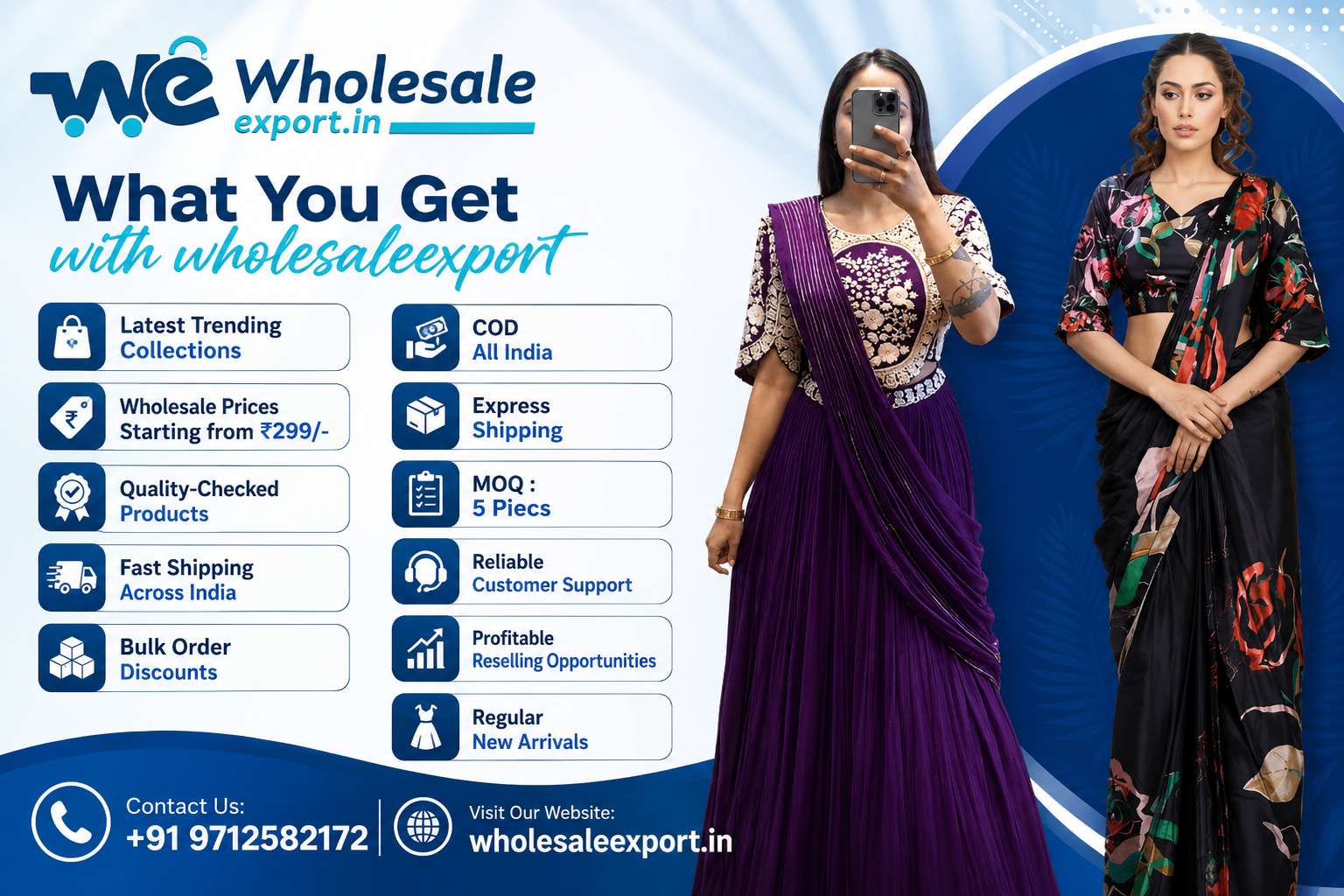
What You Get with Wholesaleexport:
- Latest Collections with Regular New Arrivals
- Wholesale Pricing for business buyers
- Trendy Ethnic Wear for boutiques, stores and resellers
- Quality Products Starting From ₹299
- Quality-Checked Products
- Fast Shipping Across India
- Bulk Order Deals and quantity-based buying opportunities
- COD Support on eligible India orders
- MOQ options starting from 5 pieces on eligible collections
- Reliable Customer Support
- Profitable Reselling Opportunities
- Collections suitable for domestic and international wholesale requirements
If you are searching for an Indian saree exporter wholesale source for your next inventory purchase, explore the latest collections and choose products according to your customers, budget and business model.
Contact: +91 9712582172
Website: wholesaleexport.in
Smart wholesale sourcing is not simply about purchasing more stock at a lower rate. It is about selecting products that customers genuinely want, maintaining healthy inventory movement and building dependable sourcing relationships. With the right balance of wholesale pricing, product quality, fresh designs and disciplined inventory planning, sarees can remain a strong category for retailers, resellers and global ethnic-fashion businesses.