


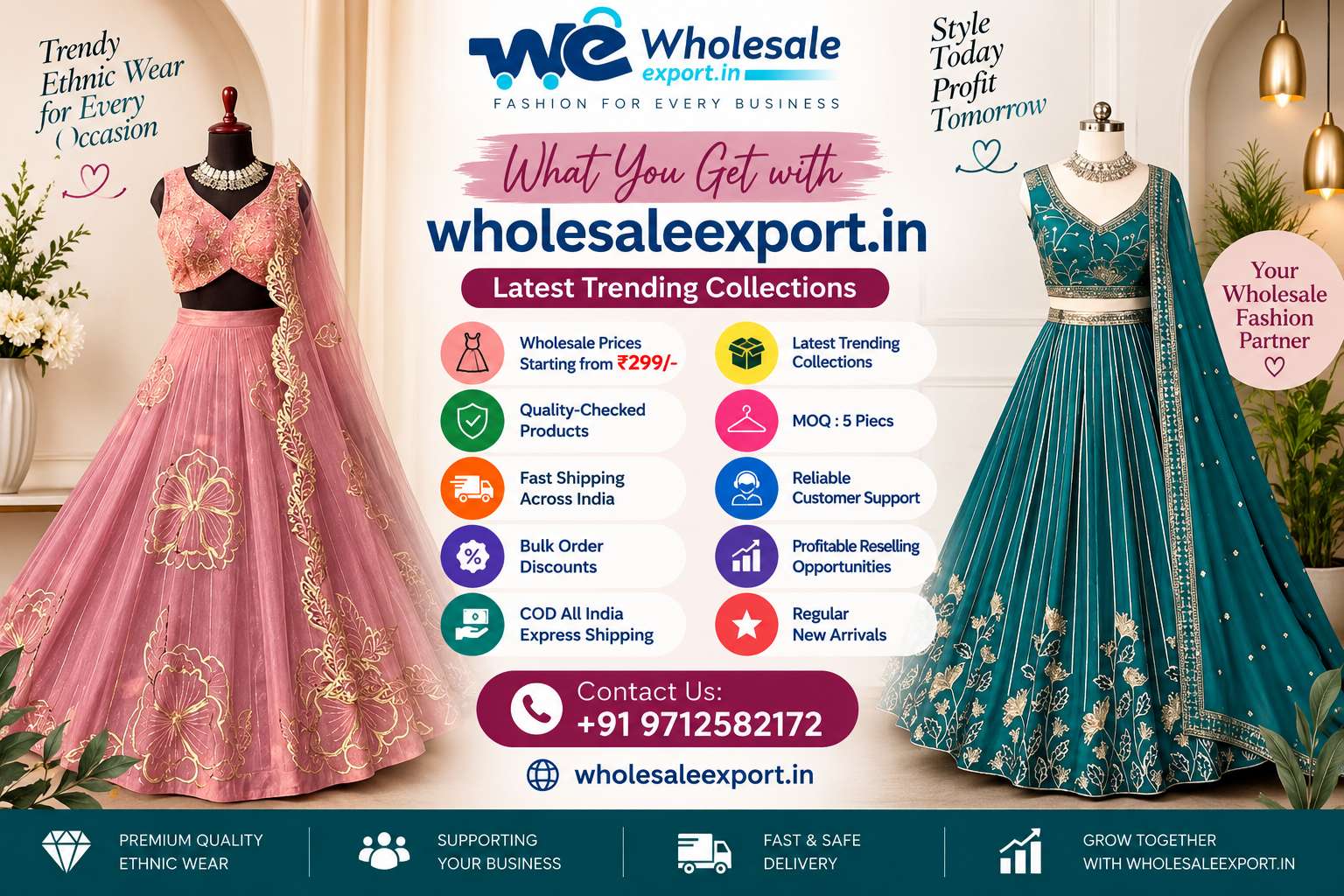
India to Nepal Wholesale Clothing Delivery Guide 2026 – Surat to Nepal Buying & Shipping
India to Nepal Wholesale Clothing Delivery Guide 2026 – Surat to Nepal Buying & Shipping
Buying Indian ethnic wear for a Nepal-based retail business becomes easier when sourcing, product selection, transportation costs and delivery planning are handled as one complete process. Surat gives Nepal retailers access to sarees, kurtis, kurti sets, dress materials, lehenga cholis and other ethnic collections across different price ranges. Whether you operate a boutique in Kathmandu, a retail shop in another Nepal city or a home-based reselling business, understanding the complete supply journey can help you purchase more confidently and protect your margins.
Introduction
A practical India to Nepal wholesale clothing delivery strategy starts before the parcel leaves Surat. Buyers need to choose the right merchandise, understand the wholesale price, confirm quantities, calculate transportation and applicable cross-border expenses, and leave enough time for the goods to reach Nepal before the intended selling period.
Surat plays an important role because of its extensive textile manufacturing and wholesale ecosystem. The surat textile market, particularly the trading network around ring road and sahara darwaza, gives wholesale buyers access to thousands of ethnic fashion options across multiple product segments.
In 2026, online sourcing has also made the buying process more convenient for retailers who cannot travel between Nepal and India for every purchase. Wholesaleexport.in provides a route for buyers to explore wholesale collections and plan orders according to their business requirements.
How India to Nepal Wholesale Clothing Supply Works
The wholesale supply process generally begins with product selection. Nepal buyers choose collections according to their customer profile, expected retail price and available purchasing budget. After confirming product availability and applicable ordering conditions, the merchandise can be prepared for dispatch through an appropriate supply arrangement.
For larger orders, buyers should treat sourcing and logistics as connected decisions. A product may have an attractive Surat wholesale rate, but its true business value becomes clear only after the final landed cost and expected resale margin are calculated.
Step 1: Select Products According to Nepal Demand
A retailer should begin with the customer rather than the catalogue. If your customers regularly purchase kurtis and kurti sets, there is little benefit in using most of the purchasing budget on expensive wedding lehengas simply because the designs look attractive.
Likewise, boutiques serving festive and wedding customers can maintain premium sarees, suits and lehenga cholis alongside selected regular-wear products. Product selection should reflect your individual customer base rather than assumptions about the entire Nepal market.
Step 2: Confirm Wholesale Price and Quantity
Once suitable products have been shortlisted, confirm the current wholesale price, available quantity, fabric details, colours, sizes where applicable and other relevant product specifications.
Wholesale inventory can change, especially for popular catalogues. Buyers planning larger quantities should confirm availability before making commitments to their own customers.
Step 3: Understand Dispatch and Delivery Conditions
Before payment or order confirmation, buyers should understand the applicable dispatch process and expected delivery arrangement. Transportation method, destination and order size can influence the overall logistics plan.
For cross-border purchases, buyers should also understand any applicable documentation, customs, tax or import requirements relevant to their transaction. These requirements can change, so current terms should be verified for the specific shipment rather than relying on an old order or general assumption.
Why Surat Is Important for Nepal Wholesale Clothing Buyers
Surat offers one of India’s largest textile sourcing ecosystems. The advantage for Nepal buyers is not limited to price. The city connects fabric production, processing, printing, embroidery, designing, garment production, wholesale distribution and export activity.
This concentration can provide Nepal businesses with access to new collections across multiple categories. Retailers can source affordable everyday merchandise as well as higher-value festive and designer products depending on their customer base.
Surat Textile Market Product Variety
The surat textile market offers extensive product diversity. Buyers can explore wholesale sarees, kurtis, kurti sets, lehenga cholis, salwar suits, dress materials and other women’s ethnic wear.
For a multi-category Nepal showroom, this makes Surat particularly useful because several types of merchandise can be sourced through the same broader textile ecosystem. Smaller resellers can focus on only one or two categories and expand later.
Ring Road Wholesale Clothing Sourcing
Ring road is closely associated with Surat’s textile trading network. Buyers visiting Surat can find numerous textile markets and wholesale businesses across this commercial belt.
A planned market visit is more productive than browsing without a clear requirement. Nepal buyers can prepare a target category, approximate purchasing budget and required price range before visiting suppliers.
Sahara Darwaza Textile Wholesale Network
Sahara darwaza is another familiar location within Surat’s wider textile trading ecosystem. The surrounding wholesale network makes it relevant for buyers exploring different categories and supplier options.
However, supplier location alone should never determine a purchase. Product quality, communication, pricing, consistency and delivery support remain equally important for a long-term wholesale relationship.
Best Wholesale Clothing Categories for Nepal in 2026
Choosing the correct category mix can have a greater impact on retail profitability than simply negotiating the lowest purchase rate. Nepal retailers should combine regular-selling products with carefully selected festive and premium merchandise.
Wholesale Kurtis and Kurti Sets
Wholesale kurtis for Nepal can support everyday, office, casual and semi-festive demand. Printed kurtis, embroidered styles and coordinated kurti-pant or kurti-pant-dupatta sets can give retailers multiple selling price levels.
Size planning is important for stitched garments. Buyers should review their previous sales to identify which sizes sell most consistently rather than purchasing equal quantities without considering actual customer demand.
Wholesale Sarees for Nepal Retailers
Wholesale sarees for Nepal can include printed daily wear, fashionable sarees, traditional-inspired products, silk styles and premium festive collections. The appropriate combination depends on the retailer’s location and customer profile.
Saree buyers should compare fabric, border, pallu, work, colour and expected retail value. A broad design assortment can help new retailers identify which styles deserve larger repeat orders.
Wholesale Lehenga Choli for Wedding and Festive Demand
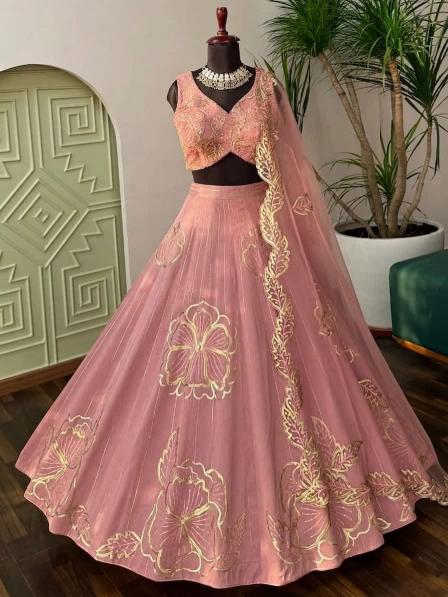
Wholesale lehenga choli collections can be valuable for retailers serving wedding, festive and celebration-focused customers. Products can range from relatively simple party styles to heavier designer collections.
Because lehengas can involve a higher inventory investment, boutiques and resellers should select quantities carefully. Fabric, embroidery, blouse styling, dupatta work and overall finishing should be considered together with the wholesale price.
Wholesale Dress Materials and Suits
Wholesale dress materials give customers flexibility in stitching and fitting. Cotton, printed, embroidered and festive collections can complement a retailer’s ready-made clothing assortment.
For stores serving several age groups, dress materials can provide another selling category without competing directly with existing kurti inventory.

India to Nepal Wholesale Clothing Delivery Cost Planning
One of the most important parts of India to Nepal wholesale clothing delivery is calculating the complete landed cost. The wholesale product price is only the starting point. Depending on the order and applicable route, other costs may affect the final amount invested in the merchandise.
A professional retailer should calculate these costs before deciding the Nepal selling price. This prevents a situation where a product appears profitable during purchasing but provides very little margin after the complete order cost is considered.
Calculate Product Cost Before Shipping
Start by calculating the total wholesale value of the selected merchandise. If different products have different prices, maintain a clear product-wise record rather than relying only on the overall invoice amount.
This makes it easier to calculate retail margins later and identify which categories generate stronger returns.
Add Applicable Transportation and Cross-Border Costs
Buyers should then consider applicable transportation, handling and cross-border expenses. The exact amount can depend on factors such as shipment size, destination, transportation arrangement and current requirements.
Because these costs can change, buyers should obtain current information for the specific order instead of assuming that the cost of a previous shipment will remain identical in 2026.
Calculate the Landed Price Per Product
Once relevant costs are known, buyers can calculate an approximate landed cost for each product or category. This gives a more accurate basis for deciding the Nepal retail price.
The final selling rate should provide sufficient margin for the retailer’s own operating expenses and profit while remaining appropriate for the target customer.
Wholesale Clothing Delivery for Different Nepal Businesses
The ideal purchasing and delivery model differs according to the size of the business. A home-based seller may prioritise controlled quantities, while a large showroom may require deeper stock and more frequent bulk shipments.
Home-Based Sellers and Resellers
Home-based sellers can begin with a smaller selection and use WhatsApp, Facebook or Instagram to promote merchandise. Lower overhead can make this an accessible entry model, but careful stock management remains essential.
Rather than investing heavily in one catalogue, sellers can test several designs and increase purchasing after identifying products that receive genuine customer orders.
Boutique Owners
Nepal boutique owners can focus on curated merchandise that matches their store identity. Designer lehengas, premium sarees, fashionable kurti sets and distinctive ethnic products can help boutiques differentiate themselves.
Smaller quantities of higher-value products may be more appropriate than excessive stock. Once customer response is established, repeat purchasing can become more targeted.
Shop and Showroom Owners
Retail shops and showrooms generally require broader product variety. Everyday products can provide regular turnover while festive and wedding merchandise can increase average transaction value.
For these businesses, a dependable India to Nepal clothing supplier can support repeat inventory replenishment and reduce the need to rebuild sourcing arrangements for every purchase.
How to Reduce Risk in India to Nepal Wholesale Orders
Wholesale buying always involves inventory decisions, and cross-border sourcing adds additional planning requirements. Buyers can reduce avoidable risk by confirming product details and maintaining clear order records.
Verify Product Specifications
Before confirming an order, review fabric, colour, work, included pieces, sizes and other important specifications. Product photographs are useful for selection, but they should be considered together with available product information.
This becomes particularly important for premium clothing where customers may have higher expectations regarding fabric and finishing.
Keep Records of Successful Products
Track the products that sell quickly after arriving in Nepal. Record design type, buying price, selling price, colour, size and approximate time required to sell.
After several orders, these records create a practical buying history. Future purchasing can then focus more heavily on proven merchandise rather than depending on guesswork.
Avoid Overbuying Slow Categories
Bulk rates can look attractive, but the lowest per-piece price does not guarantee the highest profit. Excess stock can block working capital for months.
Bulk Order Deals are most useful when applied to products or categories with demonstrated customer demand. New collections can first be tested in controlled quantities where applicable.
Plan Nepal Festival and Wedding Inventory Early
Festivals and wedding periods can create strong demand for Indian ethnic clothing, but seasonal merchandise needs to arrive before customers begin their main shopping. Retailers should therefore work backwards from the expected selling period when planning their wholesale orders.
Early purchasing also provides time to promote collections and place repeat orders if particular products sell faster than expected.
Build a Balanced Festive Collection
A festive assortment can combine premium sarees, embroidered suits, fashionable kurti sets and lehenga cholis across several price points. This gives customers options without requiring the retailer to depend entirely on expensive merchandise.
Retailers should use previous seasonal sales as a guide. If customers consistently prefer mid-range festive clothing, purchasing should reflect that demand rather than concentrating most of the budget in premium products.
Keep Everyday Products Alongside Festive Stock
Regular clothing should not disappear simply because a festival is approaching. Everyday kurtis, comfortable sets and practical sarees can continue generating routine transactions while premium merchandise serves occasion buyers.
This balanced inventory can help maintain cash flow throughout the selling season.
Vastralife Wholesale and Export Experience Since 2017
Cross-border sourcing benefits from experience with wholesale purchasing and international supply requirements. Vastralife has worked with wholesale and export requirements since 2017, bringing textile industry expertise to sourcing across different ethnic wear categories.
The focus on premium product quality, practical sourcing and fresh collections supports different buyer profiles, including home-based sellers, shop owners, boutique owners, showroom owners, resellers and professional wholesale buyers.
Wholesale Experience for Nepal Buyers
Nepal retailers may need products across different fabrics, categories and price segments. Industry experience helps in understanding how product selection, quality, cost and resale potential work together.
Wholesaleexport.in provides an online route for exploring wholesale merchandise from India while allowing buyers to shortlist products according to their specific market requirements.
Supply Beyond Nepal
Indian ethnic wear wholesale and export demand extends beyond Nepal. Businesses sourcing from India may also serve customers in markets such as Australia and USA, while Nepal remains an important neighbouring market for Indian fashion products.
Each destination requires its own cost and logistics planning. Buyers should never assume that the same delivery structure, documentation or landed cost applies to every country.
Online Wholesale Ordering for Nepal Buyers
Digital sourcing can help retailers discover Latest Collections without travelling to Surat for every inventory update. Buyers can review suitable products and plan purchases according to budget, customer demand and current availability.
Wholesaleexport.in can be used by buyers looking for wholesale ethnic wear categories from Surat. Product specifications, current availability and applicable ordering conditions should always be confirmed when preparing a significant purchase.
Use New Arrivals for Regular Customer Engagement
New merchandise gives retailers fresh content for WhatsApp Status, social media posts and customer groups. Instead of repeatedly showing the same inventory, selected new arrivals can generate renewed customer interest.
Retailers should still remain selective. Buying every new catalogue can create excessive stock, so new products should be chosen according to the existing customer base.
Combine Trendy and Proven Products
Trendy Ethnic Wear can attract attention, particularly among younger customers, but proven products often provide more predictable turnover. A healthy inventory can include both.
This approach allows retailers to participate in new trends while keeping enough familiar merchandise for customers who prefer established styles.
Buyers looking specifically for wedding and festive stock can explore the wholesale lehenga market in Surat for relevant sourcing options. Retailers building a traditional saree assortment can also explore Banarasi saree wholesale collections according to their customer requirements.
Choose the Right Delivery Plan for Your Nepal Wholesale Order
A successful India to Nepal wholesale clothing delivery plan should match the size, urgency and value of the order. A small reseller testing a new collection has different requirements from a showroom purchasing several categories for an upcoming festive season. Buyers should therefore discuss the applicable dispatch and transportation arrangement before finalising a significant purchase.
Delivery planning should also begin before the merchandise is required in the store. Leaving sufficient time for order preparation, transportation and applicable cross-border processes can reduce the pressure associated with urgent inventory replenishment.
Small Wholesale Orders for New Resellers
New resellers can begin with controlled quantities to understand customer response. Instead of investing the complete purchasing budget in one design, they can select several products across different price ranges.
This strategy is particularly useful when entering a new category. Actual sales can reveal whether customers prefer kurtis, sarees, kurti sets, lehengas or another product segment before the reseller commits to larger quantities.
Bulk Orders for Established Retailers
Established shops and showrooms may require larger quantities because they already understand their customer base. For these businesses, bulk purchasing can improve inventory depth and reduce the frequency of repeat ordering.
However, Bulk Order Deals should be evaluated according to expected sales. A lower per-piece rate is commercially valuable only when the additional inventory can be sold within a reasonable period.
Inventory Planning After the Shipment Reaches Nepal
Wholesale purchasing does not end when the goods arrive. Retailers should organise received inventory quickly, verify products according to their order records and prepare merchandise for sale while customer demand is still relevant.
Fast stock processing is especially useful during wedding and festival seasons. Products that remain packed for several days after arrival lose valuable selling time.
Organise Products by Category and Price
Separate sarees, kurtis, sets, lehengas and dress materials according to category. Within each category, retailers can further organise merchandise by price range, colour or customer segment.
This makes both physical and digital selling easier. When a customer asks for a specific budget, the retailer can immediately identify appropriate products rather than searching through mixed inventory.
Update Digital Catalogues Quickly
Once new stock is ready, create photographs, videos or catalogue selections for WhatsApp and social media. Highlight genuinely new products rather than reposting the entire existing inventory.
Latest Collections can give previous customers another reason to contact the business. Regular but selective updates can be more effective than sending large numbers of unrelated products at once.
Improve Profit Margins on India to Nepal Clothing Supply
Profit should be measured after considering the complete landed cost, not simply the difference between the Surat wholesale rate and the Nepal selling price. Retailers should include relevant purchasing and logistics expenses when evaluating product performance.
Set Retail Prices from Landed Cost
Once the merchandise reaches Nepal, calculate the effective landed cost for each product category. Add an appropriate margin according to product positioning, local competition, operating expenses and customer expectations.
Do not automatically apply the same percentage margin to every category. Premium lehengas, everyday kurtis and sarees can have different selling dynamics and inventory turnover.
Focus on Stock Rotation
A product generating a moderate margin but selling quickly can sometimes contribute more to the business than a high-margin product that remains unsold for months. Retailers should therefore consider both margin and inventory rotation.
Sales records can reveal which products deserve more purchasing capital. Over several order cycles, this information can substantially improve wholesale buying decisions.
Use Wholesale Pricing Strategically
Wholesale Pricing creates an opportunity for retailers to build resale margin, but buyers should compare value rather than focusing exclusively on the lowest rate. Fabric, design, finishing and customer appeal influence how easily the merchandise can be sold.
For larger quantities, buyers can ask about applicable volume rates while continuing to prioritise products with demonstrated demand.
India to Nepal Clothing Delivery for Resellers and Online Sellers
Online selling has created additional opportunities for entrepreneurs who do not operate traditional shops. A reseller can source merchandise from India, build a customer base in Nepal and promote collections through social channels.
For this model, India to Nepal wholesale clothing delivery should be coordinated with the reseller’s inventory strategy. Holding selected ready stock can support faster customer fulfilment, while catalogue-based selling can increase variety where supplier availability and ordering terms allow.
Sell Through WhatsApp
WhatsApp can be used for customer communication, new-arrival updates and catalogue sharing. Sellers should organise products into smaller collections according to price, category or occasion instead of sending customers hundreds of unrelated images.
Clear product information can also improve conversion. Mention relevant fabric, size, colour, work and selling price details so customers can make decisions with fewer follow-up questions.
Use Instagram and Facebook for Product Discovery
Social media can introduce products to potential customers who have not previously interacted with the seller. Reels and short videos are particularly useful for demonstrating drape, embroidery, fabric movement and overall styling.
Online presentation should remain accurate. Heavy editing that substantially changes product colour or appearance can create customer expectations that the delivered merchandise cannot meet.
Wholesale Clothing Opportunities for Nepal Boutiques and Showrooms
Boutiques and showrooms can use Surat sourcing to create deeper and more specialised inventories. Instead of competing only on price, these businesses can differentiate through product selection, presentation and customer service.
Curated Buying for Boutique Owners
Boutiques can select limited quantities of distinctive products rather than stocking every catalogue. Premium sarees, designer lehengas, embroidered kurti sets and festive suits can create a more focused merchandise identity.
Customer feedback should influence future purchases. If certain fabrics, colours or price bands consistently perform well, the boutique can increase its buying within those segments.
Volume Planning for Showroom Owners
Showrooms generally require broader assortment because customers expect more choices. Buyers can combine fast-moving everyday products with mid-range and premium collections.
Volume purchases should be concentrated in categories with proven sales history. Premium and experimental products can remain in controlled quantities until their demand becomes clearer.
Premium Product Quality and Customer Retention
Price can attract the first order, but product quality influences whether a customer returns. Nepal retailers should therefore consider how each wholesale purchase affects their long-term reputation.
Premium product quality does not mean every garment must belong to an expensive segment. It means the product should provide appropriate fabric, workmanship and finishing for the price at which it is positioned.
Match Quality with Customer Expectations
A daily-wear kurti and a designer lehenga naturally have different quality expectations. Retailers should explain products according to their actual category and avoid creating unrealistic claims simply to increase the retail price.
Accurate positioning builds customer confidence and can reduce dissatisfaction after purchase.
Inspect Important Product Details
For stitched clothing, check relevant stitching, finishing and size information. For sarees, consider fabric, print, border, pallu and work. For lehenga cholis, buyers should review fabric, embroidery, blouse details and dupatta specifications.
These details are particularly important when purchasing higher-value merchandise or preparing a bulk order.
Internal Linking and Related Wholesale Sourcing
The related wholesale categories referenced earlier can help Nepal retailers expand their merchandise according to customer demand. A business focused on regular ethnic wear may gradually add festive lehengas, while a wedding-oriented store may expand its traditional saree assortment.
Internal product discovery should support a genuine business requirement. Adding a category simply because it is available can increase inventory without increasing sales. Retailers should use customer inquiries and previous sales to decide which categories deserve investment.
Wholesaleexport.in can support this sourcing approach by giving wholesale buyers access to different Indian ethnic wear collections while allowing purchasing decisions to remain connected to budget, customer profile and expected resale potential.
Customer FAQs
1. How can I order wholesale clothing from India for Nepal?
Buyers can select suitable wholesale products, confirm current price and availability, understand applicable ordering and payment conditions, and arrange the appropriate supply and transportation process. Cross-border requirements should be confirmed for the specific shipment.
2. Which city in India is suitable for wholesale ethnic wear sourcing?
Surat is a major textile sourcing centre with extensive manufacturing and wholesale activity. The Surat textile market around Ring Road and Sahara Darwaza provides access to sarees, kurtis, dress materials, lehenga cholis and other ethnic fashion categories.
3. Can Nepal home-based resellers buy wholesale clothing from Surat?
Yes. Home-based sellers can purchase according to applicable wholesale ordering conditions. Controlled quantities can be useful for new resellers who want to test designs before investing in larger stock.
4. How is India to Nepal wholesale clothing delivery cost calculated?
The final cost can include the wholesale merchandise value plus applicable transportation, handling and cross-border expenses. Exact costs depend on the individual order and current arrangements, so buyers should obtain current details before purchasing.
5. Can I order sarees, kurtis and lehengas together?
Multi-category sourcing may be possible depending on current product availability and applicable ordering conditions. Combining categories can be useful for boutiques and showrooms that serve several customer segments.
6. Is COD available for Nepal wholesale orders?
COD Support depends on current destination, order and payment conditions. Nepal buyers should confirm the applicable payment method before finalising an order rather than assuming COD is available for every cross-border shipment.
7. Are bulk order discounts available?
Buyers can enquire about applicable Bulk Order Deals. Rates may depend on the selected product, quantity and current stock. The commercial benefit should be evaluated together with expected sales and inventory turnover.
8. Are wholesale products available from ₹299?
Selected Quality Products Starting From ₹299 may be available depending on the current collection, product specifications, quantity and stock. Buyers should confirm the latest wholesale price before placing an order.
9. How early should I order festival stock for Nepal?
Seasonal inventory should be ordered with enough time for order preparation, transportation and applicable cross-border processes before the main selling period. Retailers should avoid relying on last-minute purchasing for important festival collections.
10. Can wholesale clothing be exported to countries other than Nepal?
Indian ethnic wear can also be sourced for international markets such as Australia and USA, subject to applicable export, shipping and destination requirements. Each country should be evaluated separately for logistics and landed costs.
Plan Your India to Nepal Wholesale Clothing Orders with Confidence
A reliable India to Nepal wholesale clothing delivery strategy combines product sourcing, pricing, inventory planning and logistics rather than treating delivery as a separate final step. Retailers who understand their customers and calculate landed costs before purchasing can make stronger decisions about quantity, category and retail pricing.
With Vastralife’s wholesale and export experience since 2017, buyers can benefit from textile industry expertise, sourcing experience and a focus on premium product quality. Whether you operate as a home-based seller, reseller, boutique owner, shop owner, showroom owner or wholesale buyer, purchasing can be planned according to the actual scale and requirements of your business.
Explore Latest Collections, request Wholesale Pricing, discover Trendy Ethnic Wear and enquire about Fast Shipping. Buyers can also check applicable COD Support, Bulk Order Deals and Quality Products Starting From ₹299 according to current products, stock and order conditions.
Contact Number: +91 9712582172
Website: wholesaleexport.in
Connect today to check current wholesale clothing collections, Surat sourcing options, Nepal order requirements, available pricing and applicable delivery arrangements for your next wholesale purchase in 2026.