


Ikkat Print Kurti Wholesale: Latest Designs, Prices & Buying Guide 2026
Ikkat Print Kurti Wholesale: Latest Designs, Prices & Buying Guide 2026
Ikkat-inspired patterns bring together traditional Indian textile character and the comfort modern customers expect from everyday ethnic wear. For retailers, boutiques and online sellers, these kurtis can create a practical category that works across regular office wear, casual outings, college wear and daily-use collections. With attractive prints, comfortable fabrics and accessible wholesale price points, the category offers plenty of scope for repeat sales throughout the year.
Introduction
The Indian ethnic wear market keeps changing, but printed kurtis remain one of the most dependable categories for retailers. Customers may experiment with new silhouettes and seasonal trends, yet they continue to look for outfits that are comfortable, easy to maintain and versatile enough for regular use. This is one reason Ikkat Print Kurti Wholesale collections continue to attract shop owners, boutique owners, resellers and home-based sellers.
Ikkat-style prints have a distinctive visual identity. Their geometric, blurred-edge and traditional motifs can make even a simple straight kurti look more interesting without making it excessively festive. Retailers can therefore position these products between basic daily wear and heavier ethnic fashion.
For wholesale buyers sourcing in 2026, variety is especially important. A customer entering a store may want a straight kurti for work, another may prefer a kurti-pant set, while someone shopping online may be attracted by an eye-catching printed feeding kurti or comfortable rayon design. Maintaining the right mix gives sellers more opportunities to convert different types of buyers.
Wholesaleexport.in helps buyers explore wholesale clothing online while connecting them with the wider sourcing ecosystem of Surat. Backed by Vastralife's wholesale and export experience since 2017, the focus is on industry knowledge, regularly updated selections and premium product quality suitable for different wholesale business models.
Why Ikkat Print Kurtis Work Well in the Wholesale Market
A strong wholesale product is not simply one that looks attractive in a photograph. It should have a realistic retail audience, workable price positioning, repeat-order potential and enough variety to keep the category fresh. Ikkat-style kurtis perform well on these points because the visual language is traditional while the garment itself can remain simple and wearable.
Traditional Look with Everyday Wearability
One of the biggest strengths of an ikkat print kurti is that the print itself creates visual interest. The garment does not necessarily require heavy embroidery, sequins or elaborate embellishment. That helps retailers serve customers who appreciate ethnic styling but want something comfortable for regular use.
These designs can work for office wear, home wear, casual meetings, travel, college and small social gatherings. A retailer can consequently market the same category to several customer groups instead of depending on one festival or occasion.
Useful Category for Different Retail Formats
A home-based reseller may prefer affordable pieces that are easy to promote through WhatsApp and social media. Boutique owners may look for unusual combinations, better finishing or coordinated sets. Larger shops and showroom owners generally need broader colour and size selections.
Ikkat Print Kurti Wholesale sourcing can support each of these models when the buyer chooses inventory according to their actual audience rather than simply ordering the largest available catalogue.
Strong Visual Appeal for Online Selling
Printed kurtis are particularly useful for digital sellers because patterns are immediately visible in catalogue photographs. Attractive combinations of indigo, maroon, mustard, rust, green, black, red and earthy shades can help products stand out in WhatsApp catalogues, Instagram posts, websites and reseller groups.
For online businesses, clear product photographs should be supported with accurate information about fabric, size, kurti length, sleeve style, available colours and whether the product is sold as a single kurti or a coordinated set. Better information reduces unnecessary customer questions and makes wholesale ordering easier.
Popular Ikkat Kurti Styles Retailers Can Stock in 2026
The safest inventory strategy is rarely to purchase only one design type. A balanced selection allows the seller to serve customers across different age groups, budgets and usage occasions. The following formats can be considered when building a wholesale kurti collection.
Straight Ikkat Print Kurtis
Straight-cut kurtis are easy to understand, easy to merchandise and suitable for a wide customer base. They can be paired with leggings, trousers, palazzos or denim depending on the styling. For shops looking for everyday ethnic wear, straight kurtis can form a useful core inventory.
Rayon Printed Kurtis
Rayon remains popular in value-oriented women's ethnic wear because of its soft feel and comfortable drape. A rayon ikkat print kurti can be positioned for everyday wear while still offering a more distinctive appearance than a plain basic kurti.
Wholesale buyers should compare more than the quoted price. Fabric feel, print clarity, stitching, shrinkage expectations, colour performance and finishing all affect the customer's final experience. A slightly cheaper product is not always the more profitable product if quality complaints reduce repeat purchases.
Ikkat Kurti Pant Sets
Coordinated kurti-pant sets are useful for customers who want a complete ready-to-wear look. Retailers can often position a matching set at a higher selling value than a standalone kurti because the customer does not need to find a separate bottom.
Sets can include straight pants, palazzos or other coordinated bottoms. Some collections may also include dupattas, creating a complete three-piece ethnic outfit. These options allow retailers to maintain multiple price levels inside one broad print category.
Feeding and Maternity-Friendly Kurtis
Functional ethnic wear has developed into an important online niche. Printed feeding kurtis combine practical nursing access with designs that do not necessarily look like specialised maternity clothing. This makes the category relevant for sellers targeting mothers who want convenience along with presentable everyday fashion.
For such products, retailers should verify zipper placement, comfort, fabric quality, sizing and finishing rather than purchasing only on the basis of photographs.

How to Select the Right Wholesale Ikkat Kurti Collection
Wholesale buying becomes more profitable when purchasing decisions are based on the end customer. Before placing an order, consider who normally buys from your business, what price range moves fastest and which sizes generate repeat demand.
Start with Your Customer's Preferred Price Range
A boutique serving premium customers should not necessarily buy the same assortment as a home-based reseller competing on affordability. Decide the likely retail selling range first and work backward to determine a sustainable wholesale kurti price.
Remember to calculate freight, packaging, payment costs, advertising expenditure and your expected margin. International buyers should additionally consider shipping, customs and applicable import-related expenses.
Choose Colours as a Collection, Not Individually
One attractive colour can bring attention to a catalogue, but a retail collection normally needs variety. Combine brighter shades with commercially dependable colours and neutrals. The objective is to give customers enough choice without purchasing too deeply into every colour before demand is proven.
Small sellers can test several designs in controlled quantities and then reorder the patterns that receive stronger enquiries. This approach helps protect working capital while keeping the catalogue fresh.
Pay Attention to Size Distribution
Size availability can influence sales as much as the design itself. Before ordering, check the available size range and compare it with your previous sales data. If your customer base regularly asks for larger sizes, a collection limited to smaller sizes may create missed sales even if the design performs well online.
Retailers working with plus size kurtis wholesale should specifically verify measurements instead of relying only on labels such as XL, XXL or 3XL, because sizing standards can differ between manufacturers.
Surat as a Wholesale Kurti Sourcing Hub
Surat has developed a major ecosystem around women's ethnic fashion, fabrics, processing, trading, manufacturing and distribution. Buyers searching for wholesale kurtis often encounter suppliers connected with areas around the surat textile market, ring road and sahara darwaza.
The advantage is not simply the number of products available. Surat's broader textile network enables retailers to explore different categories from one sourcing ecosystem, including kurtis, kurti sets, salwar suits, Pakistani suits, sarees, dress materials and festive ethnic wear.
Digital wholesale sourcing has also reduced the need for every buyer to physically travel to the market for each purchase. Platforms such as Wholesaleexport.in allow buyers to check collections online, compare designs and communicate before placing orders.
Why Frequent New Arrivals Matter
Fashion retailers cannot depend on the same catalogue indefinitely. Customers who purchase regularly want to see new colours, patterns and silhouettes. Frequent arrivals help shops and resellers maintain interest without completely changing their core product categories.
For an Ikkat Print Kurti Wholesale business, this can mean keeping proven styles in stock while periodically introducing fresh prints and colour combinations. The strategy combines stability with novelty rather than chasing every short-lived trend.

Wholesale Opportunities for India and Export Buyers
The appeal of Indian ethnic clothing extends beyond domestic markets. Retailers serving Indian and South Asian communities overseas regularly explore kurtis because they are easier to incorporate into everyday wardrobes than highly ceremonial garments.
For 2026, buyers in India, Nepal and Australia can build different assortments according to local climate, customer profile, seasonal occasions and retail price expectations. An Indian reseller may prioritise quick-moving daily wear, while an overseas boutique may prefer curated designs that provide a recognisable Indian ethnic identity.
For export orders, product selection should be completed with adequate time for processing, packing, documentation and transportation. International wholesale buyers should also confirm shipping terms and applicable destination-country requirements before finalising larger purchases.
Vastralife's wholesale and export experience since 2017 contributes practical industry understanding of how the requirements of a local reseller can differ from those of an overseas wholesale buyer. Product quality, communication, reliable sourcing and clear order information become particularly important when buyers cannot inspect every piece physically.
Inventory Planning for Better Profitability
Good inventory management is one of the most important skills in clothing retail. Purchasing too little can result in missed orders, while overbuying slow-moving designs can block cash that could otherwise be used for new arrivals.
Instead of judging products only by appearance, track enquiries, confirmed sales, repeat orders, size demand and colour preferences. Over time, this creates valuable information about what your own customers actually purchase.
Use a Test-and-Restock Approach
New resellers can begin with a varied assortment rather than placing a very deep order in one untested design. Once customer response becomes clear, stronger designs can be reordered where stock remains available.
This approach is especially useful for home-based sellers and online resellers because their inventory capacity may be smaller than that of established showrooms.
Balance Everyday and Occasion-Based Products
Daily-wear printed kurtis can provide regular turnover, while festive suits and occasion wear can raise average order values during seasonal periods. Sellers do not necessarily have to choose one or the other. A carefully planned assortment can include affordable daily wear alongside selected premium products.
For buyers expanding beyond printed kurtis, feeding kurtis for women can add a practical niche to the store. Retailers wanting a more occasion-oriented category can also explore wholesale Pakistani suits to broaden their ethnic wear assortment.
How Retailers Can Sell Ikkat Print Kurtis More Effectively
Buying the right stock is only half the job. Retailers also need to present products in a way that makes the design, fabric, fit and value easy for customers to understand. This is particularly important for online sellers, where customers cannot physically touch the fabric before purchasing.
For Ikkat Print Kurti Wholesale collections, clear front and back photographs, close-up images of the print, accurate size information and simple styling suggestions can improve product presentation. If a kurti is made from rayon, cotton blend or another fabric, mention it clearly instead of relying on customers to guess from photographs.
Create Complete Product Information
Every catalogue shared with customers should ideally mention fabric, available sizes, length, sleeve pattern, colour options, set contents and selling price. If the product includes pants or a dupatta, make that information clearly visible.
This is particularly useful for WhatsApp resellers and home-based sellers who may receive the same questions repeatedly. Complete product information saves time and helps customers make purchasing decisions faster.
Use Lifestyle-Based Selling
Instead of describing every item simply as a "printed kurti," explain where the customer can wear it. Terms such as office wear kurti, casual ethnic wear, everyday kurti, travel-friendly ethnic wear, maternity-friendly kurti and comfortable daily wear make the product easier to relate to.
For boutiques and showrooms, merchandising an ikkat-style kurti with matching pants, handbags or simple jewellery can also demonstrate a complete look and potentially increase the overall billing value.
What Wholesale Buyers Should Check Before Ordering
Wholesale purchasing requires more evaluation than retail purchasing because even a small problem gets multiplied across several pieces. Buyers should therefore verify essential product and order details before confirming a bulk purchase.
Fabric and Print Quality
Look at fabric composition, print definition, stitching and finishing. The pattern should appear visually balanced, and the garment should have a finish appropriate to its price segment. For repeat retail business, consistency is usually more valuable than buying the cheapest possible product.
Actual Size Measurements
Do not rely exclusively on labels. Ask for or check the available size chart wherever possible. Chest measurements, garment length and sleeve measurements can help online retailers answer customer questions accurately.
Set Contents and Colour Availability
Some catalogues contain assorted colours, while others may allow specific colour selection. Similarly, a product photograph may show accessories or styling elements that are not included in the actual set. Confirm exactly what comes with the product before advertising it to your customers.
Minimum Order and Stock Availability
Wholesale inventory changes quickly. A design available today may sell out after receiving strong market response. Buyers should check current stock, minimum order requirements and dispatch conditions when confirming their purchase.
For fast-moving designs, waiting too long after receiving customer demand can result in lost restocking opportunities. Retailers should maintain a simple record of bestselling catalogues so they know which products deserve quicker repeat orders.
Building an Ikkat Kurti Business for Different Types of Sellers
The same wholesale collection can be used differently depending on the seller's business model. Understanding these differences can make stock selection more efficient.
Home-Based Sellers
Home-based sellers generally benefit from manageable inventory and frequent new designs. Instead of holding large quantities of every catalogue, they can test several styles and focus additional investment on products that receive genuine customer enquiries.
WhatsApp status, customer groups, Instagram reels and catalogue sharing can be used to introduce new arrivals regularly. Affordable printed kurtis can be especially suitable because customers can purchase them without waiting for a major occasion.
Boutique Owners
Boutique customers often expect a more curated selection. Boutique owners can combine traditional prints with better cuts, coordinated bottoms and selected accessories to differentiate their presentation from mass-market retail.
A boutique may also maintain several price bands, allowing regular customers to purchase simple daily wear as well as premium ethnic sets from the same store.
Shop and Showroom Owners
Physical stores need enough assortment to create a strong display. Colour variety, multiple sizes and a combination of straight kurtis, kurti sets and seasonal styles can help make the category look complete.
Showroom owners should review actual sales every few days during high-demand periods. A design that sells rapidly should be considered for restocking while it is still available instead of waiting until every piece has sold.
Online Resellers
For resellers, speed matters. New catalogue images should be shared quickly, but product information must remain accurate. Building customer trust is more valuable than posting hundreds of products without understanding their details.
Resellers should also maintain separate customer groups or lists based on interests such as daily wear kurtis, plus-size clothing, feeding kurtis, Pakistani suits and festive collections. More relevant sharing can improve response compared with sending every product to every customer.
Seasonal Demand and Year-Round Selling Opportunities
Unlike heavily embellished bridal clothing, printed kurtis are not limited to a narrow festive season. They can generate demand throughout the year. However, colours and styling can still be adjusted according to seasonal buying behaviour.
During warmer months, buyers may prefer lighter-looking colours and comfortable fabrics. Around festive periods, deeper shades such as maroon, green, rust, navy and red can become useful additions. Retailers can also combine everyday kurtis with dressier ethnic collections during Diwali, Navratri, wedding seasons and other regional celebrations.
For 2026, the practical strategy is to maintain a dependable base of daily wear kurtis wholesale while using new arrivals to refresh the store frequently. This reduces dependence on a single seasonal sales window.
Wholesale Price Versus Retail Margin
A low buying price alone does not guarantee a strong margin. Retailers should calculate the complete landed cost of a product. For domestic orders, this can include product cost, applicable taxes, transport and packaging. Export buyers may also need to account for international freight, customs-related costs and destination charges.
Suppose two products differ slightly in wholesale price. If the better-finished product photographs well, receives fewer complaints and commands a higher retail value, it may ultimately generate a healthier margin. This is why successful wholesale sourcing balances competitive wholesale pricing with product quality.
Buyers should also avoid putting all available working capital into one catalogue. Clothing trends change quickly, and cash availability allows retailers to purchase new designs when promising collections arrive.
Why Product Quality Matters for Repeat Customers
In fashion retail, the first order may come from an attractive photograph, but repeat business depends much more on the customer's experience after receiving the garment. Fabric comfort, stitching, fit and finishing influence whether a buyer returns to the same seller.
Wholesaleexport.in focuses on making a broad range of ethnic wear accessible to wholesale buyers while giving importance to commercially useful products and quality clothing wholesale options. Vastralife's experience in wholesale and export since 2017 also provides industry understanding built through serving different types of buyers.
For retailers, maintaining product quality does more than reduce complaints. It helps build trust. A customer who knows that your store consistently provides dependable garments is more likely to purchase new arrivals without needing extensive reassurance each time.
Internal Linking Section
Retailers building a wider ethnic wear business should organise products into clear categories rather than presenting an unstructured collection. Printed kurtis can serve everyday customers, feeding styles can address functional requirements, coordinated sets can raise average selling value, and festive suits can cover occasion-based demand.
A structured assortment also makes digital selling easier because customers can browse products according to their requirements. When planning purchases from the Surat textile ecosystem, buyers can compare fabric, design, size availability, MOQ, dispatch time and price before allocating their stock budget.
Areas around the surat textile market, ring road and sahara darwaza remain closely associated with Surat's textile trading and manufacturing ecosystem. Online wholesale platforms now make it possible for many buyers to source from this ecosystem without needing to travel for every new catalogue.
Customer FAQs
1. What is Ikkat Print Kurti Wholesale?
Ikkat Print Kurti Wholesale refers to purchasing kurtis featuring ikkat-inspired patterns in wholesale quantities or catalogue-based sets for resale. These products are commonly purchased by boutiques, retailers, resellers, showroom owners and online clothing businesses.
2. Are Ikkat print kurtis suitable for everyday wear?
Yes. Many ikkat-style printed kurtis are designed as comfortable daily wear. Depending on fabric and styling, they can work for offices, colleges, casual outings, home wear and regular social occasions.
3. Can I sell Ikkat kurtis through WhatsApp or Instagram?
Yes. Printed kurtis are well suited to digital selling because their colours and patterns are clearly visible in catalogue photographs. Sellers should provide accurate fabric, size, price and set-content information along with the images.
4. Can international buyers order wholesale ethnic wear from Surat?
Yes, international wholesale and export orders can be handled depending on product availability, order requirements, shipping destination and applicable terms. Buyers from markets such as Nepal and Australia should confirm freight, delivery expectations and destination-related costs before ordering.
5. What should I check before buying wholesale printed kurtis?
Check fabric, print quality, stitching, available sizes, colour assortment, minimum order quantity, set contents, current stock and dispatch details. You should also calculate your complete landed cost rather than comparing only the basic product price.
6. Are rayon printed kurtis good for resale?
Rayon printed kurtis can be commercially useful because many customers prefer soft, comfortable fabrics for everyday clothing. Actual demand will depend on your local customer profile, design, fit, quality and retail price range.
7. Should a new reseller buy large quantities immediately?
A new reseller can generally reduce inventory risk by starting with a broader but controlled selection, observing customer response and then restocking successful products where available. This also leaves working capital available for fresh catalogues.
8. Where can retailers find new wholesale kurti collections?
Wholesale buyers can explore Wholesaleexport.in for new clothing collections across multiple ethnic wear categories. Regularly checking new arrivals can help retailers identify fresh products before planning their next stock purchase.
Grow Your Ethnic Wear Business with Wholesaleexport.in
If you are a home-based seller, boutique owner, shop owner, showroom owner, reseller or wholesale buyer looking to expand your ethnic wear business, Wholesaleexport.in offers an easy way to explore products from the Surat wholesale clothing ecosystem.
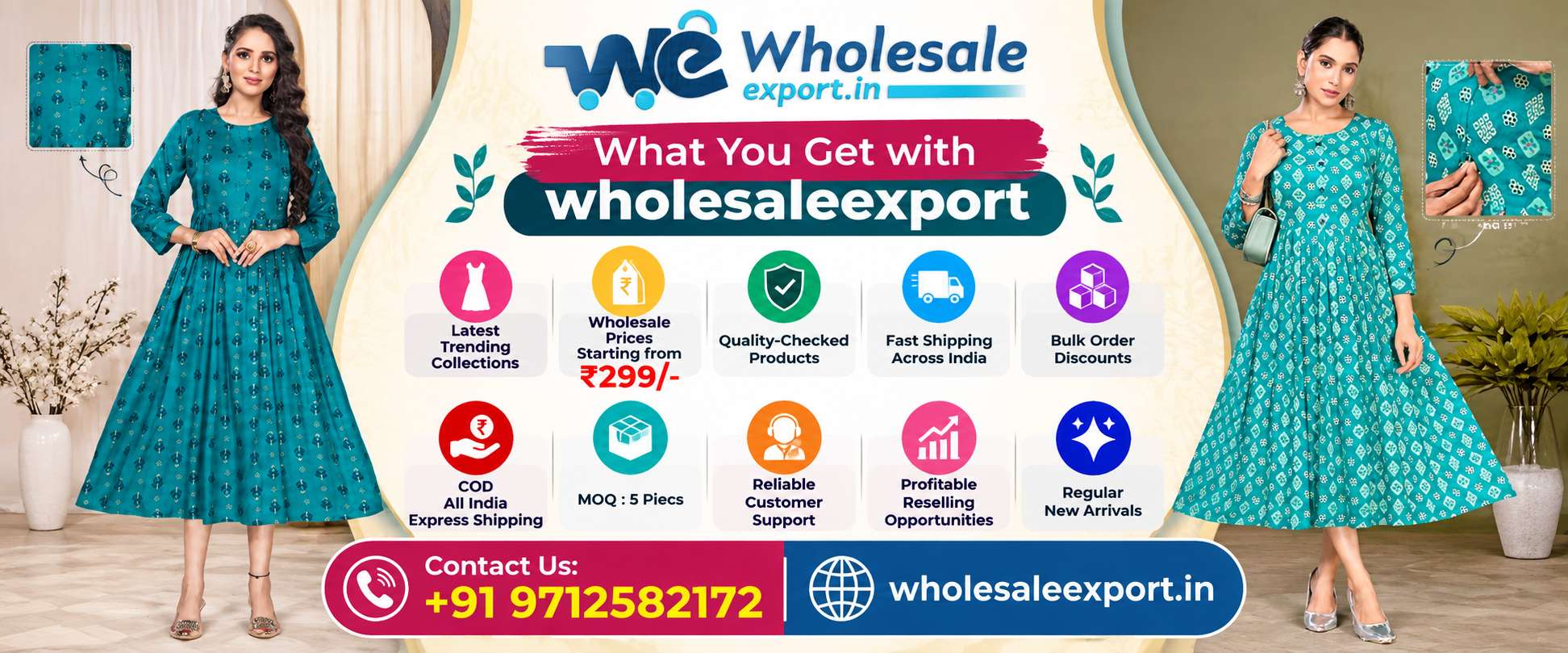
Discover Latest Collections, competitive Wholesale Pricing, Trendy Ethnic Wear, Fast Shipping, COD Support, Bulk Order Deals and Quality Products Starting From ₹299. Whether you are building a new online clothing business or restocking an established retail store, choosing the right mix of design, quality and price can help create stronger long-term customer relationships.
With Vastralife's wholesale and export experience since 2017, buyers can explore industry-focused selections designed for practical resale opportunities. From everyday printed kurtis and kurti sets to festive and premium ethnic wear, the objective is to help wholesale buyers source products suitable for their own market and customer base.
Contact: +91 9712582172
Website: wholesaleexport.in
Explore new arrivals, compare wholesale options and plan your next Ikkat Print Kurti Wholesale purchase with a focus on quality, customer demand and sustainable retail margins.