


How to Select Fast-Moving Products for a Clothing Store
How to Select Fast-Moving Products for a Clothing Store
Successful clothing retail is not simply about filling racks with attractive garments. The real opportunity comes from stocking products customers actually want to buy, at price points they are comfortable paying, and replenishing winning designs before demand slows down. Whether you run a boutique, retail shop, showroom, home-based clothing business, or online reselling operation, a disciplined product-selection strategy can help improve stock rotation and reduce money blocked in slow-moving inventory.
Introduction
Fashion retail changes quickly. A design that attracts customers today may lose momentum after a few weeks, while a simple cotton kurti, printed suit, ethnic set, tunic, saree, or festive outfit may continue generating repeat orders for months. This is why understanding fast-moving products for a clothing store is one of the most important skills for retailers and wholesale buyers.
In 2026, customers are exposed to new styles almost every day through social media, marketplaces, fashion creators, WhatsApp catalogues, short videos, and online stores. This constant flow of new fashion has made shoppers more aware of trends and has shortened the selling cycle for certain designs. Retailers therefore need to combine trend awareness with actual customer buying behaviour rather than purchasing stock only because a catalogue looks attractive.
The objective should not be to predict every fashion trend correctly. A better approach is to create a balanced inventory in which proven everyday products generate regular sales while selected new arrivals provide freshness. This approach is useful for boutique owners, shop owners, showroom owners, resellers, home-based sellers, and established wholesale buyers.
Wholesaleexport.in works with buyers looking for different categories of women's clothing and ethnic fashion. Vastralife's wholesale and export experience since 2017 also provides practical exposure to how product demand can differ according to market, season, price segment, customer profile, and geographical location.
What Makes a Clothing Product Fast-Moving?
A fast-moving fashion product is not necessarily the cheapest garment or the newest design. It is a product that achieves consistent customer acceptance and sells within a comparatively short inventory cycle. Several factors normally work together: wearable design, suitable fabric, acceptable wholesale price, good colour options, reliable sizing, season relevance, and enough perceived value for the final customer.
Customer Demand Comes Before Personal Preference
One of the most common purchasing mistakes is selecting stock according to the shop owner's personal taste. A retailer may personally prefer heavy embroidery, pastel shades, or premium fabrics, while most customers entering the shop may be looking for affordable daily wear.
Study actual transactions instead. Identify which category receives repeat orders, which sizes disappear first, which colours customers ask for repeatedly, and which price ranges generate the least resistance. Your billing history can often provide better buying guidance than general fashion assumptions.
If cotton kurtis between a particular retail price range repeatedly sell within a week while expensive party-wear pieces remain for two months, the numbers are giving you a clear purchasing signal. Increase exposure to the faster category without completely eliminating premium products.
Price-to-Value Ratio Matters
Customers rarely evaluate clothing price in isolation. They compare the price with fabric, design, finishing, fit, brand presentation, embroidery, comfort, and occasion value. A slightly higher-priced garment can therefore move faster than a cheaper alternative when its overall presentation feels substantially better.
For wholesale buyers, this means calculating the likely retail selling price before confirming an order. Consider purchase cost, freight, packaging, payment charges where applicable, taxes, promotional expenses, and your desired margin. A product should leave enough room for a commercially workable selling price without making the final customer feel it is overpriced.
Build Your Store Around Core and Trend Categories
A practical assortment normally contains two broad groups: dependable core products and trend-driven products. Core products provide stability, whereas trend products create excitement and help attract repeat visitors looking for something new.
Core Products for Regular Sales
Depending on your customer base, core inventory may include cotton kurtis wholesale, kurti-pant sets, printed suits, casual ethnic wear, everyday sarees, tunics, dress materials, plus-size kurtis, basic co-ord sets, and affordable ready-to-wear styles.
These products are especially useful because they are not dependent entirely on a wedding or festival. Customers can purchase them for work, college, daily wear, family visits, small functions, travel, or gifting.
Trend Products for Freshness
Trend inventory can include new silhouettes, fashionable prints, viral colour combinations, contemporary co-ord sets, new kurti patterns, festive sets, premium Pakistani-inspired suits, ready-to-wear sarees, and seasonal designs.
Purchase trend-led stock more carefully than proven basics. Instead of placing a very large first order in an untested design, retailers can begin with a manageable quantity, monitor enquiries and actual sales, and reorder quickly when performance is strong.
This test-and-repeat approach is particularly useful for small clothing businesses because it reduces the possibility of large quantities becoming dead stock.

Use Your Own Sales Data Before Placing the Next Wholesale Order
A retailer does not need complicated software to begin identifying winning products. Even a simple weekly sales report can reveal valuable information. Divide inventory by category and record opening stock, units received, units sold, balance quantity, average selling price, and how many days each design has remained in the store.
Products that consistently sell shortly after arrival deserve attention. Products that repeatedly require discounts to move should be reviewed before the next purchase.
Track Sell-Through Instead of Only Total Sales
Suppose you purchase 100 pieces of one category and sell 40, while you purchase 20 pieces of another category and sell 16. The first category generated more unit sales, but the second achieved a much stronger sell-through percentage.
This distinction matters when deciding where to invest your next wholesale budget. High sell-through products generally indicate stronger demand relative to the amount of stock purchased.
Watch Reorder Speed
A strong product frequently generates a second signal: customers request similar designs after the original stock sells. If buyers keep asking for a particular print, fabric, silhouette, or size after it is unavailable, record those requests.
Repeated customer enquiries are valuable purchasing data. They can help you determine whether a product deserves deeper stock on the next buying cycle.
Select the Right Price Bands for Your Customers
A store can carry beautiful merchandise and still experience poor stock movement if its price architecture does not match its customers. Before purchasing wholesale clothing, identify your store's entry, middle, and premium price segments.
For example, an affordable fashion retailer may require a large percentage of products in its accessible price band, some products in the mid-range segment, and only selected premium pieces. A boutique serving occasion-wear customers may require a completely different structure.
Wholesaleexport.in allows buyers to explore multiple clothing categories and compare products before planning stock. Having access to varied designs can help retailers build an assortment instead of committing the entire budget to one fashion category.
Do Not Confuse Low Cost with High Profitability
The cheapest wholesale product is not automatically the most profitable. Profit depends on how quickly the merchandise sells, the actual margin after expenses, repeat demand, discounting, and how much working capital remains locked in unsold inventory.
A ₹500 item sold repeatedly without discounting may contribute more effectively to a business than a ₹300 item that remains unsold for months. For this reason, inventory turnover should be considered alongside gross margin.
Understand Seasonal Demand Before Buying
Clothing demand is strongly influenced by seasons, festivals, weddings, school and college cycles, regional events, and climate. Buying at the correct time is often as important as selecting the correct design.
Summer Clothing Stock
For warmer months, many markets see stronger interest in breathable fabrics, lightweight cotton products, rayon garments, comfortable kurtis, casual sets, tunics, and easy-to-maintain everyday clothing. Retailers should begin preparing before peak temperatures arrive rather than waiting until customers have already started searching.
Festive and Wedding Stock
Festive demand can create opportunities for embroidered suits, anarkali styles, designer sarees, lehenga cholis, festive kurti sets, dress materials, silk-look fabrics, and premium ethnic wear. However, festive products are often more time-sensitive. Buying too late can reduce the effective selling window.
For buyers sourcing from the surat textile market, areas around Ring Road and major textile trading zones provide access to extensive product variety. Sahara Darwaza is also commonly associated with Surat's textile trading ecosystem. Buyers comparing suppliers should focus on product consistency, dispatch reliability, stock availability, manufacturing quality, and commercial terms rather than choosing only on the lowest quoted price.
Evaluate Fabric, Finishing and Fit Before Buying Quantity
A design may perform well in photographs but generate complaints if the actual product does not meet customer expectations. Product quality has a direct relationship with repeat business, especially for boutiques and resellers whose reputation depends on every order.
Check Fabric Suitability
Consider whether the fabric matches the intended use. Daily wear requires comfort and practical maintenance. Occasion wear can support richer fabrics and embellishment, but customers still expect reasonable comfort and finishing.
Fabric weight, transparency, colour appearance, shrinkage considerations, lining, fall, stitching, and overall hand feel should all be considered when evaluating new stock.
Check Size and Fit Consistency
Size problems can turn a potentially fast-moving design into difficult inventory. Review available sizes and compare them with your previous sales. If your customers regularly ask for XL, XXL, 3XL, or larger sizes, stocking only smaller sizes limits your potential customer base.
Plus-size ethnic wear can also represent a meaningful category for stores whose local customers struggle to find fashionable options in extended sizes.
Know Your Local Market Before Following National Trends
Fashion trends can spread nationally, but actual buying behaviour remains highly local. A product selling quickly in Surat may perform differently in Delhi, Kathmandu, Toronto, or another market because climate, purchasing power, cultural preferences, colour choices, and occasion requirements differ.
Retailers in India can study local festival calendars, neighbourhood demographics, and regional clothing preferences. Buyers serving Nepal should also account for local festive demand and international transport lead time. Businesses supplying customers in Canada may need to consider the preferences of Indian and South Asian communities as well as seasonal differences when planning ethnic-wear inventory.
This is particularly important for export buyers. A product being successful domestically does not automatically guarantee identical demand internationally. Export purchasing should account for shipping cost, delivery time, size requirements, climate, and the target customer's expected retail price.
Source from Suppliers Who Can Support Repeat Buying
Finding one successful design is useful, but a long-term retail business needs a supply system capable of continuously providing fresh merchandise. Evaluate wholesale suppliers on product variety, stock updates, communication, dispatch practices, quality consistency, and their ability to support repeat purchasing.
Vastralife has worked in wholesale and export since 2017, building industry experience across ethnic wear and other women's fashion categories. For retailers, supplier experience can be useful when comparing product ranges, understanding market movement, and sourcing premium-quality merchandise for different customer segments.
Wholesaleexport.in is designed for wholesale buyers, resellers, boutiques, shop owners, and other fashion businesses looking to explore current product options. In 2026, digital wholesale sourcing also makes it possible for buyers to review catalogues and shortlist stock without depending entirely on physical market visits.
Use a Test, Measure and Reorder Buying System
The most practical method for selecting fast-moving products for a clothing store is to treat purchasing as an ongoing cycle rather than a one-time decision.
Step 1: Test New Designs
Introduce selected new products in controlled quantities. Give each product sufficient visibility through your shop display, WhatsApp status, social media, customer groups, or online catalogue.
Step 2: Measure Real Customer Response
Track actual sales rather than likes or compliments. Note how many customers enquire, how many purchase, which sizes sell, which colours move, and whether customers ask for a restock.
Step 3: Reorder Winners Quickly
When a design demonstrates genuine demand, restocking while customer interest remains active can be more effective than continuously replacing every sold-out product with something completely different.
This creates a healthier purchasing rhythm: test small, identify winners, reorder quickly, and reduce weak products. It can also protect working capital because purchasing decisions are increasingly supported by real sales evidence.
For store owners, this approach becomes even more valuable as the business grows. Instead of asking, “Which catalogue looks best?” the buying question becomes, “Which product has the strongest probability of selling to my customers at my target margin?”
Use Product Categories That Encourage Repeat Purchases
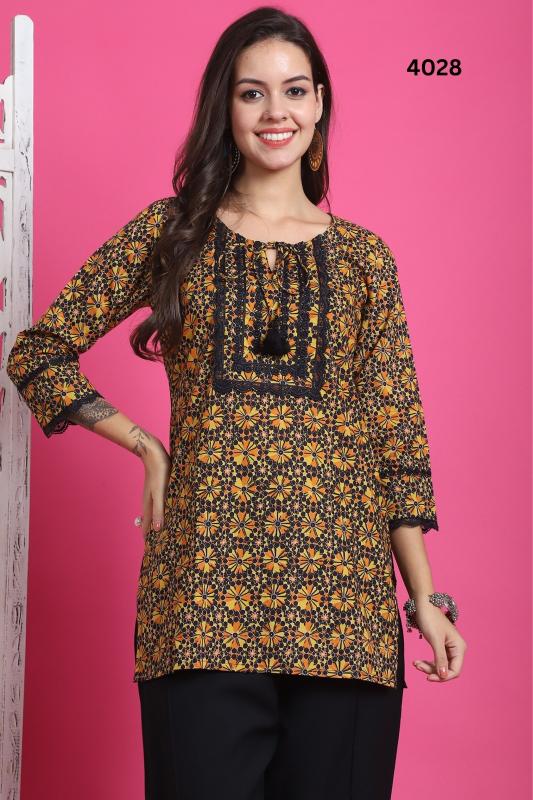
Some fashion categories naturally create more repeat-buying opportunities than others. Daily wear, office wear, casual ethnic wear, cotton garments, printed kurtis, tunics, kurti-pant sets, and practical dress materials can bring customers back because these products are used frequently rather than purchased only for one occasion.
A retailer planning fast-moving clothing inventory should therefore consider purchase frequency as well as immediate trend appeal. If a customer buys one comfortable kurti and likes the fabric, fitting, and price, she may return for another colour or design. This creates a much healthier retail cycle than depending entirely on one-time occasion purchases.
For stores serving mixed customer groups, combining wholesale tunics with ethnic categories can broaden the everyday-wear assortment. Retailers whose customers prefer traditional styling can also evaluate printed salwar kameez as part of their regular purchasing plan.
Choose Colours and Designs with Commercial Potential
Colour selection has a surprisingly large influence on stock movement. Retailers sometimes purchase too many pieces in unusual shades because they appear distinctive in catalogues. Distinctive products can attract attention, but commercial inventory also needs colours that customers feel comfortable wearing.
Keep Proven Colours in the Assortment
Black, navy, maroon, wine, green, blue, beige, off-white, pink, mustard, and other familiar fashion shades often provide useful assortment foundations, although actual demand varies by season and region. Festive periods can support richer colour palettes, while summer ranges may perform better with fresh and lighter combinations.
Do not make the mistake of buying every design in exactly the same colour structure. Monitor your sales history and identify the shades that consistently sell in your market.
Balance Simple and Statement Designs
Not every customer wants a highly decorative garment. A store generally benefits from maintaining a combination of simple everyday pieces, moderately styled products, and a smaller selection of statement fashion.
This gives sales staff options when customers communicate different budgets and requirements. It also makes the store more useful for multiple occasions instead of limiting it to one fashion segment.
Plan Inventory According to Customer Sizes
Fast-moving designs can still become slow inventory when size selection is incorrect. Before placing your next wholesale clothing order, review sales by size instead of purchasing an identical quantity of every available size.
If L, XL, and XXL account for most sales in your shop, inventory depth should reflect that demand. Another store may have stronger demand for M and L, while a specialised plus-size business may require XXL through extended sizes.
Do Not Ignore Plus-Size Demand
Fashion customers increasingly expect the same styling options across broader size ranges. Stores that understand their plus-size customers can create an additional repeat-buying segment instead of treating extended sizes as occasional inventory.
Look for fashionable silhouettes, comfortable cuts, practical sleeve designs, appropriate garment length, and fabrics that drape well. A product should feel designed for the size rather than simply enlarged from a smaller pattern.
Compare Margin with Inventory Rotation
Retailers naturally want healthy profit margins, but margin percentage alone does not determine the quality of a product. A lower-margin item that sells four times during a period may generate more gross profit and cash flow than a high-margin product that sells once.
Consider a simplified example. Product A provides ₹300 gross margin per piece and sells 20 pieces during a cycle, producing ₹6,000 in gross margin before other business expenses. Product B provides ₹600 per piece but sells only five units, producing ₹3,000. Product B has the higher per-piece margin, while Product A contributes more gross margin over that particular cycle.
This is why professional buyers evaluate stock turnover, gross margin, sales velocity, reorder potential, and inventory age together.
Watch Your Cash Conversion Cycle
Money invested in inventory cannot be used elsewhere until the merchandise sells. Faster rotation can release capital for new arrivals, advertising, rent, salaries, shipping, and the next purchasing cycle.
For home-based sellers and smaller boutiques with limited working capital, this consideration becomes especially important. It may be commercially safer to purchase smaller quantities across several proven categories rather than put most available capital into one speculative catalogue.
Avoid Common Wholesale Buying Mistakes
Learning what not to purchase can be just as valuable as finding winning products. Several buying mistakes repeatedly create unnecessary stock pressure for fashion retailers.
Buying Too Deep Before Testing
A catalogue may look excellent in photographs, but customer response cannot always be predicted from presentation alone. Unless you already have reliable sales history for a design or category, consider testing manageable quantities before committing substantial capital.
Buying Only Because the Price Is Low
A heavily discounted wholesale price can be attractive, but inventory has value only when customers want it. Examine fabric, design, size mix, season, finishing, and likely retail demand before purchasing purely because the offer appears inexpensive.
Ignoring Delivery Lead Time
If merchandise is required for a festival, wedding season, or another time-sensitive event, calculate dispatch and transport time before placing the order. Products arriving after peak demand may require discounting even when the designs themselves are strong.
This becomes particularly relevant for export clothing buyers. A buyer in Nepal, Canada, or another international market should plan stock earlier than a retailer sourcing for local delivery within India because logistics and customs-related processes can affect arrival time.
Copying Competitors Without Understanding Their Customers
A neighbouring store may sell expensive designer suits successfully because it serves a different customer profile. Copying its inventory without understanding your own audience can lead to poor results.
Competitor observation is useful for discovering trends, but final purchasing decisions should be based on your customer data, budget, location, retail positioning, and sales history.
How Online Wholesale Sourcing Helps Retailers in 2026
Wholesale purchasing is increasingly supported by digital catalogues, product videos, websites, messaging platforms, and online ordering. Buyers no longer need to depend entirely on repeated physical visits to textile markets for every restock.
Wholesaleexport.in helps wholesale buyers explore fashion collections online, making it easier to compare categories and identify products relevant to their target customers. For retailers outside Surat or international buyers, digital sourcing can reduce the time involved in discovering new merchandise.
Use Product Images for Pre-Sale Testing
Where supplier terms permit it, retailers can use approved product images to gauge customer interest before committing heavily to a design. Show selected arrivals to existing customers through WhatsApp, social channels, or direct enquiries and record genuine purchase interest.
Pre-sale feedback should not replace inventory analysis, but it can provide another useful demand signal, especially for home-based resellers and online boutiques.
Keep New Arrivals Consistent
Customers have more reasons to revisit a shop when merchandise changes regularly. Instead of making very large purchases at long intervals, some businesses benefit from maintaining a more frequent new-arrival cycle.
The right frequency depends on sales volume and customer behaviour. The objective is not to purchase unnecessarily every week, but to keep enough freshness in the store without creating excessive inventory.
Internal Linking and Product Discovery
Retail buyers researching different product segments should compare categories according to their customer profile, season, price bracket, fabric preference, and expected retail margin. Related collections such as tunics, printed suits, kurtis, ethnic sets, sarees, gowns, dress materials, and festive clothing can help create a balanced store assortment.
When evaluating products online, avoid looking only at the first image. Review product details, available colours, sizes, fabric information, catalogue quantity, price, and ordering conditions. If something important is unclear, confirm it before placing a wholesale order.
Wholesaleexport.in can be used as a product-discovery source for buyers seeking new wholesale fashion options, while the final assortment should always be selected according to the individual retailer's market and customer demand.
A Practical Fast-Moving Product Checklist
Before adding a new product to your store, ask a few commercially important questions. Is this category already selling to my customers? Does the design match my store's target age group? Is the fabric appropriate for the current or upcoming season? Is the wholesale price compatible with my target retail price? Are the required sizes available? Can I reorder quickly if the product performs well? Is the quality suitable for repeat customers? Will I still have enough margin after transport and other costs?
If several answers are uncertain, consider reducing the initial quantity. If the product matches proven customer demand, falls within a successful price band, has reliable quality, and can be replenished, it has a stronger basis for becoming part of your fast-moving clothing stock.
Use a Weekly Inventory Review
Set aside time every week to classify products into simple groups such as fast-moving, normal-moving, and slow-moving. Compare these groups with inventory age and gross margin.
Fast sellers may need replenishment. Normal sellers may simply require continued visibility. Slow products should be investigated: perhaps the display is weak, the price is unsuitable, the season is wrong, or customer demand is genuinely limited.
This weekly discipline can gradually improve purchasing accuracy and prevent old inventory from accumulating unnoticed.
Customer FAQs
1. What are fast-moving products in a clothing store?
Fast-moving products are garments that sell consistently within a relatively short inventory period compared with other products in the same store. Examples can include cotton kurtis, ethnic sets, printed suits, tunics, sarees, co-ord sets, and seasonal fashion, depending on the store's customer base.
2. How can I identify which clothes will sell quickly?
Start with your own sales history. Track category, size, colour, price range, fabric, season, and how quickly each product sells. Combine this data with current customer enquiries and controlled testing of new designs. Actual transactions are usually more useful than choosing stock purely from trend assumptions.
3. How much quantity should a small boutique buy initially?
There is no single quantity suitable for every boutique. The appropriate order depends on working capital, supplier MOQ, expected sales, category, season, and reorder availability. For an untested style, a controlled initial quantity can reduce inventory risk, followed by a larger reorder if demand is confirmed.
4. Is Surat suitable for wholesale clothing sourcing?
Surat is a major textile trading and manufacturing centre with extensive wholesale activity across areas associated with the Surat textile market, Ring Road, and Sahara Darwaza. Buyers can find multiple categories and price segments, but supplier quality, commercial terms, availability, and dispatch practices should still be checked individually.
5. Should I choose high-margin or fast-selling products?
A healthy store normally considers both. High per-piece margin is useful, but inventory turnover also matters. Evaluate gross margin together with sales velocity, inventory age, discount requirements, and the amount of working capital tied up in each category.
6. Which clothing categories should resellers consider in 2026?
The right categories depend on the reseller's audience. Options can include everyday kurtis, kurti sets, cotton wear, tunics, Pakistani-inspired suits, sarees, dress materials, co-ord sets, plus-size clothing, festive wear, and other ethnic fashion. Testing customer response before increasing quantity remains important.
7. Can international buyers source wholesale clothing from India?
Yes. Wholesale and export sourcing from India serves buyers across multiple international markets. Businesses purchasing for Nepal, Canada, and other countries should account for shipping, customs requirements, delivery timelines, landed cost, local sizing preferences, and their target retail price before confirming orders.
8. How often should I add new stock to my clothing store?
There is no universal schedule. High-volume stores may refresh products frequently, while smaller boutiques may work with longer cycles. New purchasing should be linked to sell-through, cash flow, seasonal demand, and existing inventory rather than following a fixed schedule without considering sales.
Build a More Profitable Clothing Assortment
Knowing how to select fast-moving products for a clothing store is ultimately about making better purchasing decisions repeatedly. The strongest inventory strategy combines customer data, price positioning, fabric quality, sizing, seasonal planning, controlled trend testing, and disciplined reordering.
Do not try to make every product a bestseller. Instead, build a portfolio where dependable everyday products create regular turnover, trend-driven pieces maintain freshness, and carefully selected premium products increase your average selling opportunity.
Vastralife's wholesale and export experience since 2017 reflects the importance of industry knowledge, consistent sourcing, product quality, and understanding different buyer requirements. Wholesaleexport.in supports retailers and wholesale buyers looking to explore fashion collections for different business models and markets.
Shop Wholesale Collections with Wholesaleexport.in
Looking for stock for your boutique, retail shop, showroom, reselling business, or home-based fashion business? Explore Latest Collections with competitive Wholesale Pricing, Trendy Ethnic Wear, Fast Shipping, COD Support where applicable, and Bulk Order Deals.
Discover Quality Products Starting From ₹299 and explore fresh options for building a more attractive and commercially balanced clothing assortment.
Contact: +91 9712582172
Website: wholesaleexport.in
Choose products according to your customers, measure what actually sells, reorder proven winners, and keep improving your assortment with every buying cycle.