


How to Find Genuine Wholesale Clothing Suppliers in 2026
How to Find Genuine Wholesale Clothing Suppliers in 2026
Finding the right clothing source can decide how smoothly a retail or reselling business grows. Attractive catalogues and low rates are easy to find online, but dependable sourcing requires much more than choosing the cheapest seller. Retailers need consistent quality, transparent communication, commercially useful designs and reliable order support. A careful verification process helps buyers protect their investment while building an inventory their customers will confidently purchase.
Introduction
The wholesale clothing industry has become increasingly digital in 2026. Home-Based Sellers, Shop Owners, Boutique Owners, Showroom Owners, Resellers and Wholesale Buyers can now discover thousands of products without physically visiting a textile market. WhatsApp catalogues, websites, social media pages and online wholesale platforms have made sourcing considerably faster.
However, convenience has created a new challenge: identifying which businesses are dependable. Anyone searching for how to find genuine wholesale clothing suppliers should understand that a professional supplier cannot be judged from product photographs alone.
A genuine supplier should provide clear product information, reasonable wholesale pricing, proper communication and practical support before and after an order. Buyers should also examine how long the business has operated, the categories it deals in and whether its overall business presence appears consistent.
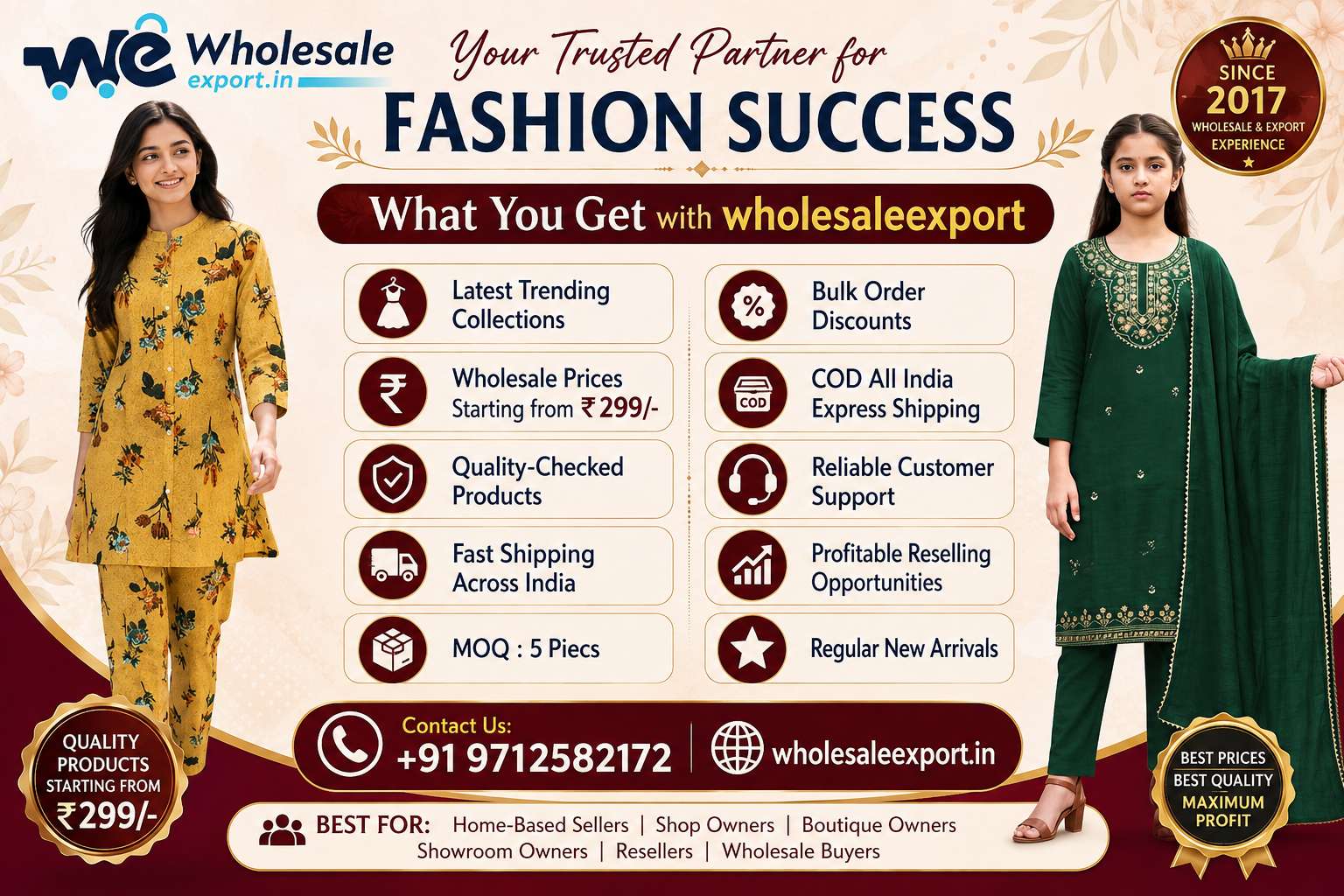
For retailers sourcing Indian women's fashion, Wholesaleexport.in provides access to multiple wholesale categories supported by textile industry knowledge. Vastralife's wholesale and export experience since 2017 adds years of practical understanding of sourcing, buyer requirements, market trends and product quality.
Why Finding a Genuine Wholesale Supplier Matters
A wholesale supplier is not simply someone from whom you purchase products. For a retailer, the supplier becomes an important part of the business supply chain. Product availability, quality, price, dispatch reliability and communication can directly affect customer satisfaction.
Suppose a boutique receives products that look significantly different from the catalogue photographs. The boutique must then deal with unsatisfied customers, slow-moving inventory and reduced profit. Similarly, repeated dispatch delays can affect seasonal selling opportunities.
Working with genuine wholesale clothing suppliers helps reduce these risks. Reliable sourcing enables businesses to focus more confidently on marketing and selling instead of repeatedly solving supplier-related problems.
Supplier Reliability Affects Your Reputation
Your customer generally does not know which wholesaler supplied your inventory. If something goes wrong, the customer associates the experience with your store or business. This means a supplier's quality indirectly becomes part of your own brand reputation.
For online Resellers and Home-Based Sellers, this is even more important. Many customers purchase after viewing photographs or videos. If the delivered product does not reasonably match expectations, building repeat business becomes difficult.
Reliable Suppliers Make Business Scaling Easier
Once a seller identifies products that perform well, replenishment becomes important. Working with dependable clothing wholesalers in India can make it easier to source new inventory regularly and expand into additional categories.
Instead of searching for a new vendor every week, buyers can develop relationships with suppliers who understand their requirements. This saves time and helps make purchasing more systematic.
Start by Checking the Supplier's Business Identity
One of the first steps in learning how to find genuine wholesale clothing suppliers is checking whether the business has a consistent identity. Buyers should not depend entirely on a WhatsApp number or social media advertisement.
Look for information such as the company or trading name, website, contact details, business location and the types of products it sells. When applicable, buyers can also request relevant business or billing details before making a significant purchase.
Check Whether the Business Information Is Consistent
A professional business generally maintains reasonably consistent information across its website, invoices, communication channels and other business profiles. Minor differences can occur, but major contradictions deserve further verification.
If one page presents the seller as a manufacturer, another claims it is an importer and a third shows completely unrelated products, ask questions before ordering.
Do Not Judge a Supplier Only by Social Media Followers
Follower count is a marketing metric, not proof of wholesale reliability. A supplier with a large social media audience may still not suit your business, while an experienced B2B supplier may have a smaller public following because most of its business comes through existing buyers.
Use social media as one verification point, not as the complete verification process.
Evaluate the Supplier's Product Knowledge
Experienced wholesale suppliers should understand the products they are selling. If you ask about fabric, size, set contents, work type, availability or packaging, the seller should be able to provide useful information or obtain it for you.
This becomes particularly important in ethnic fashion, where products can vary significantly in fabric, embroidery, stitching, lining, dupatta type and finishing.
Ask Specific Questions Before Buying
Instead of asking only, “Is the quality good?”, ask more useful questions. What is the fabric? Is the product stitched or unstitched? Which sizes are available? What comes with the set? Is the catalogue sold as a complete set or are selected pieces available? What is the minimum order quantity?
Specific questions generate more useful answers and help buyers understand whether the supplier genuinely knows the product.
Compare Product Description with Price
Wholesale price should make commercial sense in relation to the product. A heavily embroidered festive outfit and a simple daily-wear kurti naturally belong to different price categories.
If a deal appears dramatically cheaper than comparable products everywhere else, do not assume you have discovered an extraordinary bargain. Verify the fabric, work, quantity conditions and actual product specifications first.
Understand the Difference Between Manufacturer, Wholesaler and Trader
Buyers often assume that purchasing directly from a manufacturer is always the best choice. In reality, manufacturers, wholesalers and traders can each provide value depending on the buyer's needs.
Clothing Manufacturers
A clothing manufacturer in India may specialise in particular categories and can sometimes offer attractive rates for larger quantities. Manufacturers are particularly useful when buyers require consistent production, repeated designs or larger volume.
However, direct manufacturing may involve higher minimum quantities, and one manufacturer may not produce every category a retailer requires.
Wholesale Suppliers
A wholesale supplier can bring products from multiple brands or production sources together. This gives retailers greater variety without requiring them to build separate relationships with many manufacturers.
For Boutique Owners and Shop Owners who need sarees, kurtis, suits, co-ord sets, kids wear and festive collections, a multi-category wholesaler can simplify sourcing considerably.
Traders and Distributors
Professional traders and distributors can also be valuable because they understand market availability and may offer access to numerous collections. The key question is not simply what business label the supplier uses; it is whether the supplier provides genuine products, transparent terms and dependable service.
Why Surat Is Important for Wholesale Clothing Sourcing
Surat has developed into one of India's most significant textile and apparel sourcing centres. Buyers from across the country regularly associate the city with fabrics, sarees, dress materials, kurtis, suits, lehengas and other women's fashion categories.
The large surat textile market ecosystem connects manufacturing, processing, embroidery, printing, trading, packaging and logistics. This concentration creates enormous variety for professional clothing buyers.
Ring Road Textile Markets
The ring road area is widely recognised among textile buyers visiting Surat. Numerous textile markets and trading businesses operate in and around this commercial zone.
For physical buyers, the concentration of sellers makes comparison easier. However, travelling to Surat every time new stock is required may not be practical for retailers located elsewhere. Online sourcing helps connect buyers with Surat-based products without requiring frequent travel.
Sahara Darwaza and the Wider Textile Network
sahara darwaza and nearby textile areas are also familiar to buyers researching Surat's wholesale trade. These locations have become common search references for businesses looking for wholesale garment and textile suppliers.
Geographical location alone does not guarantee supplier reliability, but sourcing from businesses with genuine knowledge of established textile markets can provide buyers with better access to current collections and market information.
Check Product Variety and New Arrival Frequency
A useful way to evaluate wholesale clothing suppliers is to observe their product activity over time. Fashion is constantly changing, so an active supplier should generally introduce fresh collections rather than showing the same limited inventory indefinitely.
Wholesaleexport.in offers multiple categories for different retail requirements, helping buyers explore products according to customer demand and purchasing budgets.
Look for Categories Relevant to Your Customers
A huge catalogue has little value if the products do not suit your target audience. Boutique Owners may prefer designer kurtis, coordinated sets and festive products, while mass-market retailers may require affordable daily-wear collections.
Showroom Owners often need broader inventory covering several price points. Home-Based Sellers may prefer products that are easy to demonstrate through WhatsApp, Instagram or personal selling.
Useful categories to evaluate can include wholesale kurtis, women's co-ord sets, sarees, salwar suits, Pakistani suits, dress materials, lehenga cholis, gowns, kids wear, casual wear and festive ethnic wear.
Verify Wholesale Pricing Without Chasing the Cheapest Supplier
Price comparison is essential, but the cheapest wholesaler is not automatically the most profitable supplier. Experienced retailers compare product value instead of looking only at the lowest number.
A ₹500 product that sells quickly with satisfied customers can be commercially better than a ₹400 product that generates complaints or remains unsold. Retail profit depends on inventory rotation, customer satisfaction and repeat sales as much as the original purchase rate.
Understand What Is Included in the Quoted Price
Before confirming an order, understand whether taxes, shipping or other applicable costs are included or charged separately. International export buyers should also calculate logistics and destination-specific expenses.
The final landed cost is the figure that matters when calculating your retail margin.
Compare Similar Products Fairly
When comparing two suppliers, ensure that you are actually comparing similar products. Fabric quality, stitching, embroidery density, size range, set contents and finishing can all affect cost.
A slightly higher wholesale rate can be justified when the product offers noticeably better commercial value.
Look for Clear Minimum Order and Payment Terms
Professional B2B clothing suppliers should communicate ordering requirements clearly. Buyers need to understand MOQ, payment expectations, dispatch procedures and any important conditions before paying.
MOQ is particularly important for new Resellers. Large quantities can reduce flexibility and tie up working capital, while manageable minimum quantities allow sellers to test several products.
Choose MOQ According to Your Business Stage
A large showroom and a new Home-Based Seller should not necessarily follow the same purchasing strategy. New businesses can begin with controlled inventory, observe customer response and increase order quantities once successful categories become clear.
Established Wholesale Buyers may benefit from larger orders when they already understand their market and can rotate stock efficiently.
Evaluate Communication Before Placing a Large Order
Communication quality can reveal a great deal about a supplier. Genuine businesses should be able to answer reasonable questions regarding products, order quantities, payment, shipping and availability.
This does not mean every response must be immediate. Wholesale markets can be extremely busy. What matters is whether the information eventually provided is clear and useful.
Watch for Unnecessary Pressure
Fashion stock can genuinely sell quickly, so suppliers may sometimes inform buyers about limited availability. However, buyers should remain cautious when a seller repeatedly creates extreme urgency, refuses to provide basic information and pressures them to transfer money immediately.
Professional purchasing decisions should be based on product suitability and verified business information rather than fear of missing out.
Keep Important Order Communication Recorded
For business purchases, keep relevant invoices, order confirmations and important communication organised. This makes it easier to track what was ordered and helps prevent misunderstandings.
How International Buyers Can Verify Indian Clothing Suppliers
International sourcing requires additional care because buyers cannot easily visit the supplier whenever questions arise. Businesses in Canada, Nepal and Malaysia sourcing Indian fashion should evaluate suppliers carefully before scaling their purchases.
Start by checking the business identity and product categories. Understand payment procedures, shipping arrangements and the information available about the order. Ask relevant questions before transferring substantial amounts.
Start Sensibly Before Scaling
If you are working with a new supplier, it can be sensible to understand the purchasing process before dramatically increasing order value. Once product quality, communication and fulfilment meet your expectations, larger purchases become easier to plan.
This is particularly useful for overseas boutiques because shipping and import-related costs make purchasing mistakes more expensive.
Calculate Your Overseas Retail Margin
International Wholesale Buyers should calculate product cost together with freight, applicable duties, local expenses and selling costs. A product that offers an attractive wholesale rate in India may have a very different landed cost after reaching another country.
Smart export clothing sourcing therefore combines product selection with careful cost planning.
Why Experience Since 2017 Matters for Wholesale Buyers
Textile wholesale changes constantly. Fabrics change, fashion cycles move, online purchasing behaviour evolves and customer expectations increase. Businesses with long-term market experience develop practical knowledge that cannot be gained from product photographs alone.
Vastralife has wholesale and export experience since 2017, with industry expertise developed through years of working within India's textile and fashion ecosystem. This experience supports an understanding of different buyer requirements, from small resellers to established retail businesses and overseas buyers.
For Wholesaleexport.in, the emphasis is on providing access to fashion collections while maintaining attention to premium product quality, competitive sourcing and practical wholesale requirements.
Create a Supplier Verification Checklist
Before deciding that you have found one of the genuine wholesale clothing suppliers suitable for your business, review the complete picture. Check business identity, product knowledge, wholesale rates, MOQ, communication, product variety and purchasing terms.
Also consider whether the supplier appears suitable for a long-term relationship. Finding a dependable source is more valuable than repeatedly changing suppliers simply to save a small amount on one product.
The goal is to develop a supply network that supports profitable selling, regular inventory updates and better customer satisfaction.
Check Product Photos, Videos and Catalogue Consistency
Once the basic supplier verification is complete, buyers should pay attention to how products are presented. Catalogue images are useful for understanding colours, silhouettes and styling, but professional wholesale purchasing should not depend only on highly edited photographs.
Whenever necessary, ask for available product details, additional photographs or videos. This is particularly useful when purchasing premium kurtis, embroidered suits, sarees, co-ord sets, kids wear or wedding collections where fabric and workmanship can significantly affect the final retail value.
Understand That Screen Colours Can Vary
Colours displayed on a phone or computer can differ slightly because of lighting, photography and screen settings. Minor variation is therefore possible even when the actual product is genuine.
What buyers should examine is overall consistency. Fabric description, embroidery style, design details and product contents should reasonably correspond with the information provided by the supplier.
Be Careful with Unrealistic Product Claims
A trustworthy supplier should avoid making impossible promises. If an expensive-looking heavily embroidered product is being offered at an unusually low price, understand the specifications before assuming it provides the same quality as a premium version.
Wholesale fashion covers many quality levels. There is nothing wrong with selling budget merchandise when the product is represented accurately. Problems begin when buyers are given expectations that the actual merchandise cannot meet.
Study Shipping, Dispatch and After-Sales Procedures
Supplier verification should continue beyond product selection. A wholesale order becomes successful only when the merchandise is correctly processed and reaches the buyer through the agreed dispatch arrangement.
Ask how orders are generally dispatched, whether tracking or transport information is provided where applicable, and what process should be followed if there is a genuine product issue.
Understand the Supplier's Claim Process
Professional buyers should understand product-checking requirements before placing orders. When parcels arrive, inspect them according to the supplier's stated policy.
For online wholesale purchasing, recording an unboxing video can be useful evidence if a parcel has an eligible shortage, damage or product issue. Buyers should follow the supplier's current claim terms and report problems within the applicable period.
Seasonal Orders Require Better Planning
During festivals and wedding seasons, textile markets can experience high order volumes. Buyers should therefore avoid waiting until the final moment to purchase critical inventory.
Plan festive stock early enough to allow time for order processing, transportation, merchandising and customer promotion. A reliable supplier can support the process, but retailers also need sensible inventory planning.
Build a Diversified Clothing Inventory
Finding genuine wholesale clothing suppliers is valuable because dependable sourcing allows retailers to experiment with a broader product mix. Instead of relying entirely on one category, businesses can create inventory around several customer requirements.
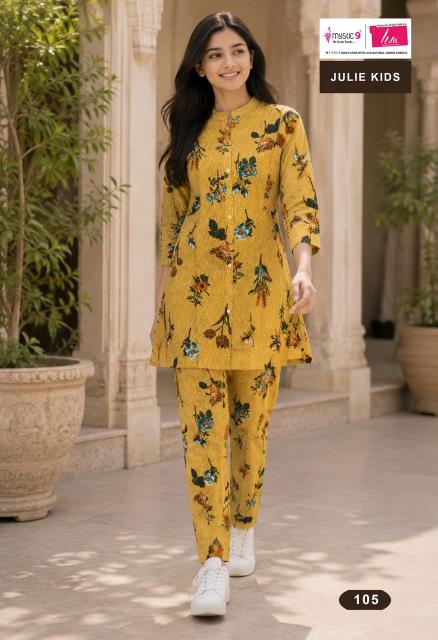
For example, Shop Owners may combine kurtis and daily-wear products with seasonal sarees and festive suits. Boutique Owners can add selected designer pieces, while Showroom Owners may require wider assortments across different price levels.
Consider Kids Wear Alongside Women's Fashion
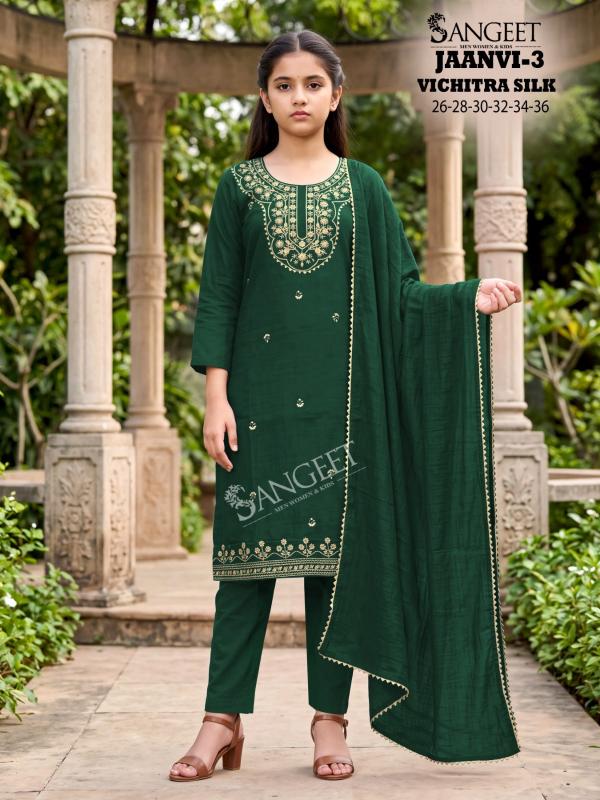
Retailers serving family shoppers can consider kids wear wholesale collections as an additional category. Co-ord sets, festive outfits and fashionable children's clothing can complement an existing women's fashion business when local demand supports the category.
Before expanding, study your customers rather than purchasing simply because a product looks attractive. Additional categories are most useful when they create genuine cross-selling opportunities.
Add Occasion Wear Strategically
Wedding and festive fashion can generate higher-value sales, but it should be purchased according to customer demand and local budgets. Retailers exploring wholesale lehenga market Surat collections can compare different styles before deciding how much capital to allocate to occasion wear.
Designer lehengas, festive sarees, embroidered suits and premium ethnic sets can enhance a boutique's presentation, but inventory quantity should remain aligned with expected sales.
How to Test a New Wholesale Supplier
One of the safest commercial approaches is to evaluate a new supplier systematically rather than making decisions entirely from advertising. Start by examining the supplier's product range, communication, terms and business information.
If these appear suitable, place an order appropriate to your business requirements and assess the complete experience. Examine whether product details were communicated properly, whether the merchandise meets the expected category and whether the overall process is suitable for repeat purchasing.
Evaluate More Than the First Order
A single successful transaction is encouraging, but a long-term supplier relationship depends on consistency. Observe how the business handles different collections, changing stock and repeated communication over time.
The objective is to identify reliable wholesale suppliers who can become part of your regular purchasing network.
Increase Buying According to Sales Performance
Once you know which products sell well, larger purchases can become more efficient. Rather than increasing every category equally, use actual sales performance to determine where additional inventory should be allocated.
This reduces unnecessary stock and improves working-capital management.
Internal Linking for Better Wholesale Product Discovery
Wholesale sourcing becomes easier when buyers explore related categories instead of limiting themselves to a single product page. A retailer searching for kurtis may discover complementary co-ord sets, while a boutique researching festive suits may also find suitable lehengas or sarees.
Category-based browsing allows Wholesale Buyers to compare product types, price levels and styling before finalising inventory. It is particularly useful for businesses trying to build collections around a specific customer group.
Wholesaleexport.in can be explored according to product requirements so that buyers can move from everyday clothing to festive and occasion-based categories while planning a balanced inventory.
Common Mistakes Buyers Should Avoid
Understanding how to find genuine wholesale clothing suppliers also means recognising common purchasing mistakes. Many sourcing problems occur not because wholesale buying is inherently risky, but because important verification steps are skipped.
Mistake 1: Choosing Only by Lowest Price
Low prices can be commercially attractive, but buying purely on cost ignores fabric, finishing, customer expectations and resale potential. Always consider the complete value of the merchandise.
Mistake 2: Ordering Without Understanding MOQ
Know whether products are available as individual pieces, sets, catalogues or bulk quantities. MOQ conditions affect investment and inventory planning.
Mistake 3: Ignoring Your Customer Profile
A beautiful product is not necessarily the right product for your store. A boutique serving premium wedding customers requires a different assortment from a Home-Based Seller targeting affordable daily fashion.
Mistake 4: Investing Too Much in Untested Designs
New sellers sometimes become excited by a trend and purchase too deeply before testing demand. A more controlled assortment gives the business flexibility to respond to actual sales.
Mistake 5: Not Calculating the Complete Cost
Profit should be calculated after considering all relevant purchasing and selling expenses. This is especially important for export buyers because freight and destination costs can materially affect margins.
Wholesale Sourcing Strategy for Home-Based Sellers
Home-Based Sellers often have smaller initial budgets than established stores, but they also have lower operating overheads. This can create an attractive business opportunity when inventory is selected carefully.
Start with products that suit people within your existing customer network. If customers prefer affordable kurti sets, there is little reason to invest most of your capital in expensive bridal merchandise.
Use WhatsApp, Instagram, Facebook and personal customer relationships to understand demand. Track which colours, sizes and price ranges generate the most enquiries, then use that information for your next wholesale purchase.
Wholesale Sourcing Strategy for Boutique Owners
Boutiques generally compete through product selection and presentation rather than only price. Boutique Owners should look for products that give customers a reason to visit or contact them instead of purchasing generic merchandise elsewhere.
Designer kurtis, coordinated ethnic sets, embroidered suits, elegant sarees and selected festive collections can help create a stronger identity. However, even premium boutiques benefit from having a few accessible price points.
Working with wholesale clothing suppliers in India that offer regularly changing collections allows boutiques to refresh their displays without completely changing their sourcing process.
Wholesale Sourcing Strategy for Shops and Showrooms
Physical shops and showrooms usually require greater inventory depth. Customers expect to see alternatives in colours, designs and budgets before purchasing.
A balanced showroom can include affordable fast-moving pieces, mid-range fashion and premium occasion wear. Buyers should analyse sales category by category rather than judging performance only by total turnover.
When a particular collection begins selling quickly, reorder or introduce related styles while customer demand remains active.
How Overseas Resellers Can Build an Indian Fashion Business
Indian ethnic wear has strong visibility outside India, particularly among South Asian communities and customers shopping for cultural events. Retailers in Canada, Nepal and Malaysia can source collections according to their local customer base.
Overseas businesses should focus on products with sufficient retail value to support international logistics. Premium kurti sets, sarees, festive suits and selected occasion wear may provide different commercial opportunities depending on the destination market.
Plan Around Festivals and Weddings
Diwali, Navratri, Eid, weddings and community events can create concentrated demand. International sellers should plan sourcing well ahead of important selling periods rather than waiting until local customers begin asking for products.
Know Local Size and Style Preferences
Customer expectations can vary by country. Keep records of popular sizes, colours and silhouettes so future wholesale purchases become increasingly accurate.
This data-driven approach can gradually improve both inventory rotation and profitability.
Why Wholesaleexport.in Can Be Considered for Clothing Sourcing
Buyers searching for how to find genuine wholesale clothing suppliers should ultimately look for a combination of industry experience, product variety, commercial pricing and practical buyer support.
Wholesaleexport.in serves Home-Based Sellers, Shop Owners, Boutique Owners, Showroom Owners, Resellers and Wholesale Buyers looking for Indian fashion products across different categories.
Its sourcing environment is connected with Surat, where the surat textile market, ring road and sahara darwaza areas form part of a large textile trading ecosystem. Access to this market environment supports product discovery across fabrics, ready-made garments, ethnic fashion and changing seasonal trends.
Experience Backed by Vastralife Since 2017
Vastralife's wholesale and export experience since 2017 brings industry expertise developed through years of dealing with textile products and different types of wholesale buyers.
Experience matters because wholesale fashion is not only about presenting attractive products. Understanding manufacturing, product positioning, quality expectations, changing demand and buyer requirements contributes to more practical sourcing.
The focus on premium product quality alongside commercially relevant product options can help retailers build inventory according to their own target markets.
Customer FAQs
1. How do I find genuine wholesale clothing suppliers online?
Check the supplier's business identity, website, product knowledge, communication, wholesale terms, MOQ and product range. Do not depend solely on social media advertisements or unusually low prices. Evaluate the complete business presence before placing substantial orders.
2. How can I verify a wholesale clothing supplier in India?
Review available business information and ask clear questions about products, ordering terms, payment and dispatch. For larger purchases, obtain appropriate billing or business details and keep relevant transaction records.
3. Is Surat good for wholesale clothing?
Yes. Surat has a large textile ecosystem covering fabric, processing, embroidery, trading, garment production and manufacturing. Its textile markets are widely used by retailers and wholesale buyers from different regions.
4. Should I buy directly from a manufacturer or wholesaler?
It depends on your requirements. Manufacturers can be useful for larger quantities or specialised products, while wholesalers can provide broader variety from multiple sources. Small and medium retailers often value the flexibility of multi-category wholesale sourcing.
5. What is a good MOQ for a new clothing reseller?
There is no universal ideal quantity. New sellers should generally choose an order size they can comfortably manage while testing customer demand. MOQ should fit available working capital and expected inventory rotation.
6. Is the cheapest wholesale supplier always better?
No. Compare fabric, workmanship, finishing, design, product contents and expected resale potential together with the wholesale price. A slightly higher-cost product can produce better results when quality and customer demand are stronger.
7. Can international buyers purchase wholesale clothing from India?
Yes. Overseas boutiques, retailers and resellers regularly source Indian fashion. Buyers should understand current payment, shipping, customs and destination requirements before placing an international order.
8. What products should a new reseller start with?
Start with products suited to your existing customer audience and budget. Kurtis, kurti sets, co-ord sets, sarees, suits and other fast-moving categories can be considered depending on local demand.
9. How can I reduce risk when trying a new supplier?
Verify the business first, understand all important terms and begin with an order appropriate to your business size. Evaluate product quality and the complete purchasing experience before substantially increasing order volume.
10. Why is supplier experience important?
Experienced suppliers are generally more familiar with textile products, market trends, seasonal demand and wholesale buyer requirements. Experience alone should not replace verification, but it is a useful factor when evaluating a potential long-term sourcing relationship.
Final Steps Before Choosing Your Wholesale Supplier
Finding dependable suppliers becomes much easier when you follow a repeatable process. Verify the business, understand the product, compare realistic prices, confirm purchasing conditions and evaluate communication before making a substantial commitment.
Do not rush simply because a catalogue looks impressive. The best supplier for your business is the one whose products, price range, quality and service match your customers and purchasing model.
As your business grows, maintain records of successful products and suppliers. Over time, these records become valuable purchasing data and help you make faster decisions whenever new inventory is required.
Start Sourcing Wholesale Fashion for Your Business
If you are looking for new inventory for your shop, boutique, showroom or reselling business, explore Wholesaleexport.in for wholesale fashion options designed around different customer segments and budgets.
Latest Collections – Explore regularly updated fashion and ethnic wear collections for your customers.
Wholesale Pricing – Discover commercially focused pricing suitable for resellers, retailers and bulk purchasers.
Trendy Ethnic Wear – Source kurtis, sarees, suits, lehengas, co-ord sets and other popular fashion categories.
Fast Shipping – Convenient dispatch and shipping support is available for eligible orders and destinations.
COD Support – COD support is available on eligible India orders according to applicable order terms.
Bulk Order Deals – Wholesale Buyers planning larger purchases can contact the team for suitable bulk-order options.
Quality Products Starting From ₹299 – Explore affordable product selections according to current collection availability.
Contact Number: +91 9712582172
Website: wholesaleexport.in
Whether you are beginning as a Home-Based Seller or purchasing inventory for an established showroom, successful wholesale sourcing starts with verification and continues with consistent product selection. Choose suppliers carefully, understand your customers and purchase according to real sales potential. A dependable supply network can become one of the strongest foundations for building a profitable clothing business in 2026 and beyond.