


How to Check Garment Quality Before Placing a Bulk Order
How to Check Garment Quality Before Placing a Bulk Order
Buying garments in quantity can improve margins and help retailers maintain consistent stock, but the real value of a wholesale purchase depends on what arrives inside every box. A beautiful catalogue photograph or attractive wholesale price is only the beginning. Boutique owners, resellers, shop owners and importers need to examine fabric, construction, sizing, finishing and overall consistency before committing substantial working capital to a collection.
Introduction
For a wholesale clothing buyer, quality control is directly connected with profit. A garment that looks attractive online but develops stitching problems, color variation, poor fitting or finishing issues after delivery can create customer complaints and slow-moving inventory. On the other hand, a well-selected collection with reliable quality can generate repeat sales and strengthen customer confidence.
This becomes even more important when buying from a distant wholesale market or ordering for export. Buyers in India as well as markets such as Nepal, Australia and Malaysia may not be able to physically inspect every piece before dispatch. They therefore need a practical system for evaluating merchandise and the supplier behind it.
In 2026, wholesale buyers have access to product photographs, videos, online catalogues and digital ordering channels, making sourcing faster than before. However, faster buying should not mean careless buying. A simple garment inspection checklist can help a buyer compare products more accurately and decide whether the quality justifies the price.
Wholesaleexport.in works with buyers looking for ethnic wear and other wholesale fashion collections. Backed by Vastralife's wholesale and export experience since 2017, the focus is on practical sourcing, industry knowledge and premium product quality for businesses purchasing garments for resale.
1. Start by Checking the Fabric Quality
Fabric is the foundation of almost every garment. Even excellent embroidery and fashionable styling cannot compensate for unsuitable material. Before placing a bulk clothing order, confirm exactly what fabric is being supplied rather than judging it only by its appearance in photographs.
Confirm the Fabric Composition
Ask whether the garment uses cotton, rayon, viscose, georgette, muslin, silk blend, organza, chiffon, polyester, linen blend or another material. When blended fabrics are involved, the composition can influence comfort, drape, durability, washing behaviour and the final selling price.
This information is particularly useful for boutique owners serving a specific customer segment. A buyer selling summer everyday wear may prioritize breathable materials, while a wedding and occasion-wear showroom may place greater importance on rich texture, fall, embroidery and visual finish.
Examine Fabric Density and Feel
Whenever a physical sample is available, hold the fabric against light and inspect its density. Excessive transparency, irregular weaving, visible defects or unexpectedly thin material can indicate a mismatch between the expected and actual quality.
Touch also matters. The fabric should feel appropriate for its intended use. A premium ethnic suit should not feel unnecessarily rough, and a daily-wear kurti should provide a comfortable balance between softness and durability.
Online buyers can request close-up product videos where necessary. A useful video should show the fabric in natural movement rather than only displaying the garment from a distance.
Consider Shrinkage and Color Behaviour
For cotton-rich and other shrinkage-prone fabrics, buyers should understand whether the material has been processed appropriately. Similarly, heavily dyed products should be evaluated for potential color bleeding or rubbing.
These details are particularly important when ordering hundreds of pieces because even a small recurring issue can affect a large number of customers.
2. Inspect Stitching Before Evaluating Decorative Work
A customer may first notice the design, but stitching determines how well the garment performs after purchase. Reliable garment quality checking therefore requires attention to construction before embroidery, sequins or decorative details.
Look at the Main Seams
Check shoulder seams, side seams, sleeves, armholes, waistlines and bottom joins. Stitches should generally look clean and consistent without unnecessary gaps, loose sections or obvious puckering.
Turn the garment inside out whenever possible. The inside often reveals more about production standards than the outside. Poorly cut seam allowances, uncontrolled threads and unfinished edges may indicate rushed production.
Check Stress Points
Areas such as armholes, side openings, waist joins and pocket attachments experience greater stress during regular use. A wholesale garment supplier should provide construction appropriate for the product category and expected use.
For retailers, this matters because a stitching problem may not become visible until a customer wears the garment. Preventing that problem during procurement is considerably easier than handling a return after retail sale.
Review Zippers, Buttons and Fasteners
Open and close zippers several times. Examine buttons, hooks, press buttons, tassels and other attachments. They should be positioned properly and secured firmly.
These details may appear small, but they strongly influence how customers perceive premium garment quality. A well-designed outfit can immediately feel lower in value if its zipper catches or decorative buttons are poorly attached.
3. Verify Size Measurements Instead of Depending Only on Labels
One of the most common problems in wholesale fashion is assuming that an M, L, XL or XXL from every manufacturer represents identical measurements. It does not.
Before placing a sizeable order, request the product's measurement chart. Important measurements may include bust, waist, hip, shoulder, sleeve length, kurti length, bottom measurements and other dimensions depending on the garment type.
If your customers regularly purchase plus sizes, this step becomes even more important. Proper grading between sizes helps a retailer build customer confidence and reduces unnecessary size exchanges.
Check Measurement Consistency Across Pieces
A single sample can look correct while production pieces vary slightly. Ask the supplier about size consistency and manufacturing tolerance, particularly for repeat orders or larger quantities.
Showroom owners can maintain their own measurement records for fast-selling suppliers and designs. Over time, this creates a useful internal database for purchasing decisions.
Match the Fit to Your Customer Market
Consider who will actually wear the merchandise. The same silhouette may perform differently across customer groups. A home-based seller targeting everyday ethnic wear may need comfortable, forgiving fits, whereas a premium boutique may focus more heavily on structured silhouettes and occasion styling.
International buyers should also communicate their market requirements clearly. Buyers sourcing for Nepal, Australia or Malaysia may require different size combinations according to their established customer base.
4. Examine Embroidery, Printing and Decorative Work Closely
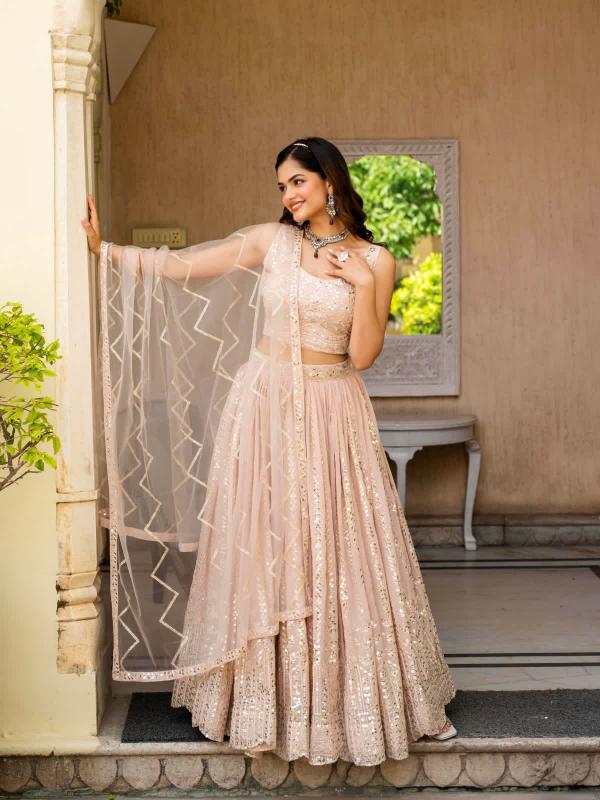
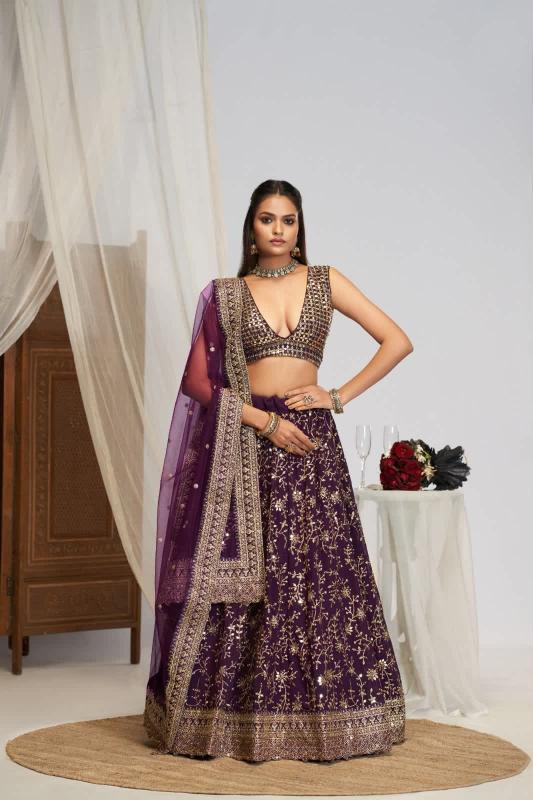
Ethnic wear frequently derives much of its retail appeal from embroidery, zari, sequins, beads, lace, prints, mirror work and other surface treatments. These elements deserve close inspection because decorative defects can be immediately visible to a retail customer.
Embroidery Quality
Look for clean embroidery placement, controlled thread work and consistent motifs. Inspect the reverse side where possible. Excessive loose threads or badly secured embroidery can reduce both durability and perceived value.
For embroidered lehengas, Pakistani suits, designer kurtis and festive sets, check whether the embroidery remains consistent across the front, sleeves, border and accompanying pieces where applicable.
Sequin, Stone and Bead Attachment
Run your hand gently over embellished sections. Decorative elements should not begin falling away during basic handling. A few delicate elements may naturally require careful use, but widespread loose work is a warning sign for a bulk purchase.
Print Alignment and Color
Printed garments should be checked for unexpected marks, inconsistent printing, major color variation and poor motif placement. In coordinated sets, verify whether the kurti, bottom and dupatta visually work together as represented in the catalogue.
This is especially relevant for online resellers. Their customers often make purchase decisions from the same catalogue imagery, so significant differences between catalogue presentation and delivered merchandise can lead to dissatisfaction.
5. Compare Quality With Price, Not Price Alone
A low buying price does not automatically create a profitable product. The better calculation is the relationship between garment quality, wholesale price and expected retail value.
Suppose one product costs slightly more but has better fabric, stronger stitching, more accurate sizing and more attractive finishing. If customers are willing to pay a higher retail price and repeat purchases are stronger, that garment may provide a better business return than the cheapest available option.
Wholesale buyers should therefore compare products within equivalent quality categories. Comparing a basic daily-wear kurti with a premium embroidered garment purely on price provides little useful information.
Calculate the Real Landed Cost
For buyers outside the supplier's city, product cost is only one part of the calculation. Consider transportation, packaging, applicable taxes and other legitimate logistics expenses. Export buyers should also understand the relevant shipping and import-related costs for their destination.
Surat remains an important sourcing centre for Indian ethnic wear, with commercial textile activity around the surat textile market, Ring Road and areas connected with Sahara Darwaza. Buyers sourcing from Surat can compare a broad variety of products, manufacturing sources and wholesale ranges.
Test New Designs Before Scaling
When dealing with a new design or unfamiliar supplier, a smaller initial quantity can provide useful sales information before substantially increasing inventory. Monitor customer enquiries, conversion, size demand and repeat requests.
This approach can be particularly useful for home-based sellers and WhatsApp resellers who want to keep working capital moving rather than holding excessive stock in an untested design.
At roughly the halfway stage of your sourcing process, category-level comparison becomes useful. Buyers exploring festive merchandise can compare the wholesale lehenga market according to design, work and target price. Retailers building a broader ethnic assortment can also evaluate Jaipuri kurtis wholesale options for complementary everyday and boutique inventory.
6. Check the Complete Set, Not Just the Main Garment
A three-piece or coordinated set should be evaluated as a complete retail product. Buyers sometimes concentrate on the kurti or top and overlook the bottom, dupatta, lining or accessory components.
For salwar suits, kurti sets, lehenga choli and similar categories, confirm exactly what is included in the quoted price. Product descriptions should clearly identify the number of pieces and relevant fabrics.
Check whether the bottom fabric has suitable weight, whether the dupatta complements the outfit and whether lining is provided where required. For lehengas, inspect the blouse fabric, dupatta, waistband, flare and finishing according to the particular design.
This prevents confusion after dispatch and makes retail communication more accurate.
7. Review Finishing Like a Retail Customer
After technical inspection, look at the garment the way your customer will. Place it on a hanger, mannequin or model and assess its complete presentation.
Check neck finishing, sleeve edges, hems, side slits, embroidery borders, lining and visible threads. Ask whether the garment appears ready for your retail floor or whether additional finishing would be required.
For boutique owners and showroom owners, presentation has a direct relationship with perceived value. A garment that looks polished on the hanger is easier to merchandise confidently.
Inspect From Multiple Angles
Do not judge only the front. Check the back, sides and inside. Look at how patterns align and how the garment falls naturally.
If ordering remotely through Wholesaleexport.in, catalogue photos and product details can help narrow the selection, while buyers can clarify essential product specifications before confirming larger quantities.
Look for Consistency Across Colors
A design offered in four colors should ideally maintain comparable workmanship across the range. Dark and light colors may display embroidery, lining or transparency differently, so assess each color as a separate retail option rather than assuming every variation will look identical.
8. Evaluate Packaging and Dispatch Preparation
Good products can still reach customers in poor condition if packaging is inadequate. Wholesale buyers should consider how merchandise is folded, individually packed and protected for transport.
For long-distance domestic shipping and international export orders, appropriate outer packaging becomes particularly important. The objective is to protect garments against dust, moisture exposure and avoidable handling damage during transportation.
Retailers should also confirm dispatch timelines before planning promotional campaigns. If a boutique advertises a new launch before its stock is ready, delays can affect both sales and customer confidence.
9. Verify the Wholesale Supplier Before a Large Purchase
Product inspection and supplier verification should work together. A good sample alone does not answer every question about a large order.
Look for clear business communication, product information, pricing terms, payment conditions and dispatch procedures. A professional supplier should be able to explain what is included in the order and respond to reasonable product questions.
Wholesaleexport.in serves buyers seeking wholesale clothing collections from the Surat ecosystem. The broader Vastralife business brings wholesale and export experience since 2017, helping home-based sellers, boutiques, retailers, resellers and wholesale buyers source merchandise according to their business requirements.
Confirm Stock Before Making Commitments to Customers
Fashion stock moves quickly. A catalogue being available does not necessarily mean every design, color or size remains available indefinitely. Confirm current stock before taking large commitments from your own customers.
For repeat sellers, maintaining regular communication with suppliers can also make replenishment decisions faster.
Keep Order Records
Maintain invoices, payment records, product codes and order communication. For export orders, keep the relevant commercial and logistics documentation according to the shipment requirements.
Organized records make repeat ordering easier and help a business compare which suppliers, collections and price points produced the strongest results.
10. Use a Final Bulk Order Quality Checklist
Before confirming a substantial order, make one final review of the complete purchase. Check fabric specification, stitching, sizing, embroidery or print, finishing, color options, set contents, quantity, wholesale price, packaging and expected dispatch arrangements.
For a first transaction, buyers may also want to begin with a manageable quantity where commercially practical and scale according to product performance. Established buyers can use previous sales data to decide which designs deserve deeper stock.
A disciplined approach to garment quality before bulk order protects more than the immediate purchase. It protects the retailer's reputation, customer relationships and future cash flow.
Internal Linking and Smarter Category Selection
Internal category research should be part of wholesale purchasing rather than an afterthought. Instead of filling an entire store with one design type, buyers can build inventory around different customer occasions, price levels and selling seasons.
A boutique might combine premium occasion pieces with faster-moving daily ethnic wear. A reseller may prefer lightweight collections that are easier to promote digitally. A showroom may carry deeper size and color inventory. Wholesale buyers can then expand successful categories based on actual sales rather than assumptions.
This category-based approach is especially valuable in 2026 because trends can move rapidly through social media and online marketplaces. Freshness matters, but it should be balanced with proven designs that provide dependable turnover.
Customer FAQs
1. What should I check first before placing a bulk garment order?
Start with the fabric specification, construction quality and size measurements. After that, examine stitching, embroidery or printing, finishing, set contents, color consistency, price and supplier terms. These checks give a more complete picture than judging a garment only from catalogue photographs.
2. How can an online buyer check garment quality without visiting Surat?
Study clear catalogue images and product specifications and request clarification for important details before ordering. For higher-value or larger purchases, close-up videos or a manageable initial order can provide additional confidence where available. Keep product codes and written order details for reference.
3. Is the cheapest wholesale garment the most profitable?
Not necessarily. Profit depends on the buying price, landed cost, quality, retail selling potential, customer demand and the likelihood of complaints or unsold inventory. A slightly higher-quality garment may sometimes produce stronger repeat sales and better margins.
4. Which buyers can source through Wholesaleexport.in?
The platform is relevant to home-based sellers, shop owners, boutique owners, showroom owners, resellers and wholesale buyers looking for Indian fashion and ethnic-wear sourcing options. International buyers should confirm product and shipping requirements for their destination before ordering.
5. Why is Surat important for wholesale ethnic wear sourcing?
Surat has a large textile and garment business ecosystem involving trading, sourcing and manufacturing. Commercial textile areas around Ring Road, the surat textile market and Sahara Darwaza connect buyers with a broad variety of clothing categories and price segments.
6. What information should I confirm before paying for a bulk order?
Confirm product code, quantity, available colors and sizes, fabric, set contents, final price, applicable charges, payment terms and dispatch expectations. International buyers should additionally clarify export and logistics requirements relevant to their destination.
Source Better Wholesale Fashion with Wholesaleexport.in
Successful wholesale buying is not simply about finding more products. It is about choosing stock that matches your customers, price segment and selling model while maintaining dependable quality.
Explore Wholesaleexport.in for Latest Collections, Wholesale Pricing, Trendy Ethnic Wear, Fast Shipping, COD Support, Bulk Order Deals and Quality Products Starting From ₹299. Product availability, applicable COD terms and current prices should be confirmed when ordering.
Whether you operate a home-based reselling business, boutique, retail shop or larger showroom, careful quality checking can turn wholesale sourcing into a more controlled and scalable process. Combine product inspection with sensible inventory planning, accurate customer targeting and reliable supplier communication before increasing quantities.
Contact: +91 9712582172
Website: wholesaleexport.in
With Vastralife's wholesale and export experience since 2017 and practical knowledge of the textile industry, buyers can explore premium-quality fashion collections designed for resale. Check the latest availability, compare the right products for your market and place bulk orders based on quality, demand and sustainable business margins.
A strong wholesale business begins before the parcel is dispatched. It begins with selecting the right garment, checking the details that matter and purchasing inventory your customers will be confident to buy again.
How to Check Garment Quality Before Placing a Bulk Order
Buying garments in quantity can improve margins and help retailers maintain consistent stock, but the real value of a wholesale purchase depends on what arrives inside every box. A beautiful catalogue photograph or attractive wholesale price is only the beginning. Boutique owners, resellers, shop owners and importers need to examine fabric, construction, sizing, finishing and overall consistency before committing substantial working capital to a collection.
Introduction
For a wholesale clothing buyer, quality control is directly connected with profit. A garment that looks attractive online but develops stitching problems, color variation, poor fitting or finishing issues after delivery can create customer complaints and slow-moving inventory. On the other hand, a well-selected collection with reliable quality can generate repeat sales and strengthen customer confidence.
This becomes even more important when buying from a distant wholesale market or ordering for export. Buyers in India as well as markets such as Nepal, Australia and Malaysia may not be able to physically inspect every piece before dispatch. They therefore need a practical system for evaluating merchandise and the supplier behind it.
In 2026, wholesale buyers have access to product photographs, videos, online catalogues and digital ordering channels, making sourcing faster than before. However, faster buying should not mean careless buying. A simple garment inspection checklist can help a buyer compare products more accurately and decide whether the quality justifies the price.
Wholesaleexport.in works with buyers looking for ethnic wear and other wholesale fashion collections. Backed by Vastralife's wholesale and export experience since 2017, the focus is on practical sourcing, industry knowledge and premium product quality for businesses purchasing garments for resale.
1. Start by Checking the Fabric Quality
Fabric is the foundation of almost every garment. Even excellent embroidery and fashionable styling cannot compensate for unsuitable material. Before placing a bulk clothing order, confirm exactly what fabric is being supplied rather than judging it only by its appearance in photographs.
Confirm the Fabric Composition
Ask whether the garment uses cotton, rayon, viscose, georgette, muslin, silk blend, organza, chiffon, polyester, linen blend or another material. When blended fabrics are involved, the composition can influence comfort, drape, durability, washing behaviour and the final selling price.
This information is particularly useful for boutique owners serving a specific customer segment. A buyer selling summer everyday wear may prioritize breathable materials, while a wedding and occasion-wear showroom may place greater importance on rich texture, fall, embroidery and visual finish.
Examine Fabric Density and Feel
Whenever a physical sample is available, hold the fabric against light and inspect its density. Excessive transparency, irregular weaving, visible defects or unexpectedly thin material can indicate a mismatch between the expected and actual quality.
Touch also matters. The fabric should feel appropriate for its intended use. A premium ethnic suit should not feel unnecessarily rough, and a daily-wear kurti should provide a comfortable balance between softness and durability.
Online buyers can request close-up product videos where necessary. A useful video should show the fabric in natural movement rather than only displaying the garment from a distance.
Consider Shrinkage and Color Behaviour
For cotton-rich and other shrinkage-prone fabrics, buyers should understand whether the material has been processed appropriately. Similarly, heavily dyed products should be evaluated for potential color bleeding or rubbing.
These details are particularly important when ordering hundreds of pieces because even a small recurring issue can affect a large number of customers.
2. Inspect Stitching Before Evaluating Decorative Work
A customer may first notice the design, but stitching determines how well the garment performs after purchase. Reliable garment quality checking therefore requires attention to construction before embroidery, sequins or decorative details.
Look at the Main Seams
Check shoulder seams, side seams, sleeves, armholes, waistlines and bottom joins. Stitches should generally look clean and consistent without unnecessary gaps, loose sections or obvious puckering.
Turn the garment inside out whenever possible. The inside often reveals more about production standards than the outside. Poorly cut seam allowances, uncontrolled threads and unfinished edges may indicate rushed production.
Check Stress Points
Areas such as armholes, side openings, waist joins and pocket attachments experience greater stress during regular use. A wholesale garment supplier should provide construction appropriate for the product category and expected use.
For retailers, this matters because a stitching problem may not become visible until a customer wears the garment. Preventing that problem during procurement is considerably easier than handling a return after retail sale.
Review Zippers, Buttons and Fasteners
Open and close zippers several times. Examine buttons, hooks, press buttons, tassels and other attachments. They should be positioned properly and secured firmly.
These details may appear small, but they strongly influence how customers perceive premium garment quality. A well-designed outfit can immediately feel lower in value if its zipper catches or decorative buttons are poorly attached.
3. Verify Size Measurements Instead of Depending Only on Labels
One of the most common problems in wholesale fashion is assuming that an M, L, XL or XXL from every manufacturer represents identical measurements. It does not.
Before placing a sizeable order, request the product's measurement chart. Important measurements may include bust, waist, hip, shoulder, sleeve length, kurti length, bottom measurements and other dimensions depending on the garment type.
If your customers regularly purchase plus sizes, this step becomes even more important. Proper grading between sizes helps a retailer build customer confidence and reduces unnecessary size exchanges.
Check Measurement Consistency Across Pieces
A single sample can look correct while production pieces vary slightly. Ask the supplier about size consistency and manufacturing tolerance, particularly for repeat orders or larger quantities.
Showroom owners can maintain their own measurement records for fast-selling suppliers and designs. Over time, this creates a useful internal database for purchasing decisions.
Match the Fit to Your Customer Market
Consider who will actually wear the merchandise. The same silhouette may perform differently across customer groups. A home-based seller targeting everyday ethnic wear may need comfortable, forgiving fits, whereas a premium boutique may focus more heavily on structured silhouettes and occasion styling.
International buyers should also communicate their market requirements clearly. Buyers sourcing for Nepal, Australia or Malaysia may require different size combinations according to their established customer base.
4. Examine Embroidery, Printing and Decorative Work Closely
Ethnic wear frequently derives much of its retail appeal from embroidery, zari, sequins, beads, lace, prints, mirror work and other surface treatments. These elements deserve close inspection because decorative defects can be immediately visible to a retail customer.
Embroidery Quality
Look for clean embroidery placement, controlled thread work and consistent motifs. Inspect the reverse side where possible. Excessive loose threads or badly secured embroidery can reduce both durability and perceived value.
For embroidered lehengas, Pakistani suits, designer kurtis and festive sets, check whether the embroidery remains consistent across the front, sleeves, border and accompanying pieces where applicable.
Sequin, Stone and Bead Attachment
Run your hand gently over embellished sections. Decorative elements should not begin falling away during basic handling. A few delicate elements may naturally require careful use, but widespread loose work is a warning sign for a bulk purchase.
Print Alignment and Color
Printed garments should be checked for unexpected marks, inconsistent printing, major color variation and poor motif placement. In coordinated sets, verify whether the kurti, bottom and dupatta visually work together as represented in the catalogue.
This is especially relevant for online resellers. Their customers often make purchase decisions from the same catalogue imagery, so significant differences between catalogue presentation and delivered merchandise can lead to dissatisfaction.
5. Compare Quality With Price, Not Price Alone
A low buying price does not automatically create a profitable product. The better calculation is the relationship between garment quality, wholesale price and expected retail value.
Suppose one product costs slightly more but has better fabric, stronger stitching, more accurate sizing and more attractive finishing. If customers are willing to pay a higher retail price and repeat purchases are stronger, that garment may provide a better business return than the cheapest available option.
Wholesale buyers should therefore compare products within equivalent quality categories. Comparing a basic daily-wear kurti with a premium embroidered garment purely on price provides little useful information.
Calculate the Real Landed Cost
For buyers outside the supplier's city, product cost is only one part of the calculation. Consider transportation, packaging, applicable taxes and other legitimate logistics expenses. Export buyers should also understand the relevant shipping and import-related costs for their destination.
Surat remains an important sourcing centre for Indian ethnic wear, with commercial textile activity around the surat textile market, Ring Road and areas connected with Sahara Darwaza. Buyers sourcing from Surat can compare a broad variety of products, manufacturing sources and wholesale ranges.
Test New Designs Before Scaling
When dealing with a new design or unfamiliar supplier, a smaller initial quantity can provide useful sales information before substantially increasing inventory. Monitor customer enquiries, conversion, size demand and repeat requests.
This approach can be particularly useful for home-based sellers and WhatsApp resellers who want to keep working capital moving rather than holding excessive stock in an untested design.
At roughly the halfway stage of your sourcing process, category-level comparison becomes useful. Buyers exploring festive merchandise can compare the wholesale lehenga market according to design, work and target price. Retailers building a broader ethnic assortment can also evaluate Jaipuri kurtis wholesale options for complementary everyday and boutique inventory.
6. Check the Complete Set, Not Just the Main Garment
A three-piece or coordinated set should be evaluated as a complete retail product. Buyers sometimes concentrate on the kurti or top and overlook the bottom, dupatta, lining or accessory components.
For salwar suits, kurti sets, lehenga choli and similar categories, confirm exactly what is included in the quoted price. Product descriptions should clearly identify the number of pieces and relevant fabrics.
Check whether the bottom fabric has suitable weight, whether the dupatta complements the outfit and whether lining is provided where required. For lehengas, inspect the blouse fabric, dupatta, waistband, flare and finishing according to the particular design.
This prevents confusion after dispatch and makes retail communication more accurate.
7. Review Finishing Like a Retail Customer
After technical inspection, look at the garment the way your customer will. Place it on a hanger, mannequin or model and assess its complete presentation.
Check neck finishing, sleeve edges, hems, side slits, embroidery borders, lining and visible threads. Ask whether the garment appears ready for your retail floor or whether additional finishing would be required.
For boutique owners and showroom owners, presentation has a direct relationship with perceived value. A garment that looks polished on the hanger is easier to merchandise confidently.
Inspect From Multiple Angles
Do not judge only the front. Check the back, sides and inside. Look at how patterns align and how the garment falls naturally.
If ordering remotely through Wholesaleexport.in, catalogue photos and product details can help narrow the selection, while buyers can clarify essential product specifications before confirming larger quantities.
Look for Consistency Across Colors
A design offered in four colors should ideally maintain comparable workmanship across the range. Dark and light colors may display embroidery, lining or transparency differently, so assess each color as a separate retail option rather than assuming every variation will look identical.
8. Evaluate Packaging and Dispatch Preparation
Good products can still reach customers in poor condition if packaging is inadequate. Wholesale buyers should consider how merchandise is folded, individually packed and protected for transport.
For long-distance domestic shipping and international export orders, appropriate outer packaging becomes particularly important. The objective is to protect garments against dust, moisture exposure and avoidable handling damage during transportation.
Retailers should also confirm dispatch timelines before planning promotional campaigns. If a boutique advertises a new launch before its stock is ready, delays can affect both sales and customer confidence.
9. Verify the Wholesale Supplier Before a Large Purchase
Product inspection and supplier verification should work together. A good sample alone does not answer every question about a large order.
Look for clear business communication, product information, pricing terms, payment conditions and dispatch procedures. A professional supplier should be able to explain what is included in the order and respond to reasonable product questions.
Wholesaleexport.in serves buyers seeking wholesale clothing collections from the Surat ecosystem. The broader Vastralife business brings wholesale and export experience since 2017, helping home-based sellers, boutiques, retailers, resellers and wholesale buyers source merchandise according to their business requirements.
Confirm Stock Before Making Commitments to Customers
Fashion stock moves quickly. A catalogue being available does not necessarily mean every design, color or size remains available indefinitely. Confirm current stock before taking large commitments from your own customers.
For repeat sellers, maintaining regular communication with suppliers can also make replenishment decisions faster.
Keep Order Records
Maintain invoices, payment records, product codes and order communication. For export orders, keep the relevant commercial and logistics documentation according to the shipment requirements.
Organized records make repeat ordering easier and help a business compare which suppliers, collections and price points produced the strongest results.
10. Use a Final Bulk Order Quality Checklist
Before confirming a substantial order, make one final review of the complete purchase. Check fabric specification, stitching, sizing, embroidery or print, finishing, color options, set contents, quantity, wholesale price, packaging and expected dispatch arrangements.
For a first transaction, buyers may also want to begin with a manageable quantity where commercially practical and scale according to product performance. Established buyers can use previous sales data to decide which designs deserve deeper stock.
A disciplined approach to garment quality before bulk order protects more than the immediate purchase. It protects the retailer's reputation, customer relationships and future cash flow.
Internal Linking and Smarter Category Selection
Internal category research should be part of wholesale purchasing rather than an afterthought. Instead of filling an entire store with one design type, buyers can build inventory around different customer occasions, price levels and selling seasons.
A boutique might combine premium occasion pieces with faster-moving daily ethnic wear. A reseller may prefer lightweight collections that are easier to promote digitally. A showroom may carry deeper size and color inventory. Wholesale buyers can then expand successful categories based on actual sales rather than assumptions.
This category-based approach is especially valuable in 2026 because trends can move rapidly through social media and online marketplaces. Freshness matters, but it should be balanced with proven designs that provide dependable turnover.
Customer FAQs
1. What should I check first before placing a bulk garment order?
Start with the fabric specification, construction quality and size measurements. After that, examine stitching, embroidery or printing, finishing, set contents, color consistency, price and supplier terms. These checks give a more complete picture than judging a garment only from catalogue photographs.
2. How can an online buyer check garment quality without visiting Surat?
Study clear catalogue images and product specifications and request clarification for important details before ordering. For higher-value or larger purchases, close-up videos or a manageable initial order can provide additional confidence where available. Keep product codes and written order details for reference.
3. Is the cheapest wholesale garment the most profitable?
Not necessarily. Profit depends on the buying price, landed cost, quality, retail selling potential, customer demand and the likelihood of complaints or unsold inventory. A slightly higher-quality garment may sometimes produce stronger repeat sales and better margins.
4. Which buyers can source through Wholesaleexport.in?
The platform is relevant to home-based sellers, shop owners, boutique owners, showroom owners, resellers and wholesale buyers looking for Indian fashion and ethnic-wear sourcing options. International buyers should confirm product and shipping requirements for their destination before ordering.
5. Why is Surat important for wholesale ethnic wear sourcing?
Surat has a large textile and garment business ecosystem involving trading, sourcing and manufacturing. Commercial textile areas around Ring Road, the surat textile market and Sahara Darwaza connect buyers with a broad variety of clothing categories and price segments.
6. What information should I confirm before paying for a bulk order?
Confirm product code, quantity, available colors and sizes, fabric, set contents, final price, applicable charges, payment terms and dispatch expectations. International buyers should additionally clarify export and logistics requirements relevant to their destination.
Source Better Wholesale Fashion with Wholesaleexport.in
Successful wholesale buying is not simply about finding more products. It is about choosing stock that matches your customers, price segment and selling model while maintaining dependable quality.
Explore Wholesaleexport.in for Latest Collections, Wholesale Pricing, Trendy Ethnic Wear, Fast Shipping, COD Support, Bulk Order Deals and Quality Products Starting From ₹299. Product availability, applicable COD terms and current prices should be confirmed when ordering.
Whether you operate a home-based reselling business, boutique, retail shop or larger showroom, careful quality checking can turn wholesale sourcing into a more controlled and scalable process. Combine product inspection with sensible inventory planning, accurate customer targeting and reliable supplier communication before increasing quantities.
Contact: +91 9712582172
Website: wholesaleexport.in
With Vastralife's wholesale and export experience since 2017 and practical knowledge of the textile industry, buyers can explore premium-quality fashion collections designed for resale. Check the latest availability, compare the right products for your market and place bulk orders based on quality, demand and sustainable business margins.
A strong wholesale business begins before the parcel is dispatched. It begins with selecting the right garment, checking the details that matter and purchasing inventory your customers will be confident to buy again.
part 2Compare Sample Quality with Bulk Production Consistency
A sample can help you understand fabric, stitching and overall presentation, but a successful wholesale purchase also depends on consistency across the complete quantity. Before increasing an order, ask whether the same fabric quality, color tone, embroidery pattern and measurements will be maintained across production. This becomes particularly important when purchasing coordinated ethnic wear, designer suits, kurtis, lehenga choli and other products where customers expect the delivered piece to closely match the catalogue presentation.
For larger orders, consistency can matter as much as the quality of an individual piece. A boutique may be able to sell one excellent garment easily, but if the remaining pieces have noticeable shade or measurement differences, customer complaints can reduce the overall profitability of the order.
Check Color and Design Consistency
Minor shade differences can sometimes occur between production lots, particularly depending on fabric and dyeing processes. Wholesale buyers should nevertheless look for unreasonable variations. If several pieces of the same design are being purchased, confirm that the overall color family, decorative work and design presentation remain commercially consistent.
For online resellers, this is especially important because customers frequently order after viewing catalogue images on WhatsApp, Instagram or an online store. The closer the supplied merchandise is to the represented design, the easier it becomes to maintain customer confidence.
Check Size Consistency Across the Order
Measurement consistency should also be considered before scaling. If an XL garment from one production batch fits very differently from another XL of the same design, retailers may experience avoidable exchanges and customer dissatisfaction.
Maintain a measurement chart for important products and compare it with your target customer profile. This simple process can be particularly valuable for boutiques carrying extended sizes and resellers who cannot physically measure every garment before selling it.
Understand the Difference Between Low Price and Good Buying Value
Wholesale buyers naturally compare price, but the lowest quotation is not always the strongest business opportunity. A better purchasing decision considers the complete combination of fabric, stitching, finishing, design, sizing, supplier reliability and resale potential.
For example, a better-finished garment costing slightly more may support a higher retail price and generate fewer complaints. In contrast, extremely cheap merchandise can become expensive if it produces returns, unsold stock or damaged customer relationships.
This is why experienced buyers often compare cost versus sellable quality rather than price alone. Wholesaleexport.in provides buyers with access to multiple fashion categories so that products can be evaluated according to the intended customer segment rather than treating every garment as an identical commodity.
Calculate Your Expected Retail Margin
Before placing a bulk order, calculate the expected landed cost per piece. Depending on the transaction, this can include product price, applicable taxes, transportation, packaging and other legitimate logistics expenses. International buyers should additionally account for the costs associated with shipping and import requirements in their destination market.
Next, compare the landed cost with a realistic retail selling price. Avoid calculating margins from an unrealistic maximum selling price. Use the price that your actual customers are likely to pay.
A retailer in India may follow a different pricing strategy from an ethnic-wear reseller serving customers in Nepal, Australia or another overseas market. Local competition, customer expectations, logistics and product positioning can all affect the final retail value.
Check Packaging Before the Goods Leave the Supplier
Garment quality control should continue until dispatch. Even a properly manufactured garment can reach the buyer in poor condition if it is packed carelessly.
Confirm that garments are folded properly and protected appropriately for the mode and distance of transport. Premium embroidered products may require more careful handling than basic everyday clothing. Long-distance and export shipments also need suitable outer packaging to reduce avoidable transit-related exposure.
Verify Quantity and Product Codes
Before dispatch, the order should correspond with the confirmed quantity, product codes, colors and sizes. Maintaining a written purchase record makes reconciliation easier when the parcel arrives.
For buyers ordering multiple catalogues simultaneously, create a simple purchase sheet containing product name, design number, size, color, quantity and agreed price. This can substantially simplify stock entry after delivery.
Record the Parcel Opening
Where a supplier's claim policy requires an opening video, record the parcel continuously from its sealed condition through opening and initial checking. This can provide useful evidence if there is a shortage, transit damage or another issue covered by the supplier's stated policy.
Buyers should understand the supplier's claim procedure before ordering rather than discovering it only after a problem occurs.
Quality Checks for Different Types of Wholesale Buyers
Not every buyer should evaluate merchandise in exactly the same way. The right quality priorities depend partly on how and where the garments will be sold.
For Home-Based Sellers and Resellers
Home-based sellers usually benefit from products that are easy to explain and sell through digital catalogues. Clear photographs, reliable sizing, attractive pricing and manageable order quantities can be particularly useful.
Instead of buying too deeply into every design, sellers can identify fast-moving styles and increase quantities after observing genuine customer demand.
For Boutique Owners
Boutique customers may pay greater attention to fabric feel, detailing, fit and exclusivity. Boutique buyers should therefore inspect embroidery placement, lining, finishing, silhouettes and overall presentation particularly carefully.
Collections should also work together visually. Buying random attractive pieces is not always as effective as developing a coordinated inventory around customer occasions, price segments and seasonal requirements.
For Showroom and Retail Shop Owners
Physical stores often require greater depth in colors and sizes because customers expect immediate choice. These buyers should pay close attention to repeatability, stock availability and size consistency.
A strong showroom assortment can combine regular sellers with selected trend-led products, helping the business maintain turnover without making the entire inventory dependent on short-lived fashion.
For Export and International Wholesale Buyers
International buyers have additional considerations because replacing merchandise across borders can be more complicated and expensive. Product specifications, quantity, packing and documentation should therefore be confirmed carefully before dispatch.
Buyers serving Nepal, Australia and Malaysia should select merchandise according to their own market demand rather than assuming that every successful Indian style will perform identically overseas. Climate, festivals, customer demographics, sizing and local retail price points can influence buying decisions.
How Surat Helps Wholesale Buyers Source More Efficiently
Surat has developed a broad textile and garment ecosystem involving trading, manufacturing, processing and wholesale distribution. Areas connected with the surat textile market, Ring Road and Sahara Darwaza provide access to a wide range of ethnic and fashion merchandise.
For a wholesale buyer, the advantage is variety. Buyers can compare everyday kurtis, designer suits, sarees, lehengas, dress materials and other categories across different price segments.
However, access to a large market does not remove the need for quality checking. In fact, greater choice makes systematic comparison even more important. Fabric, construction, finishing and supplier terms should remain part of the purchasing decision regardless of where the merchandise is sourced.
Create a Repeatable Garment Quality Control System
Professional buying becomes easier when the same basic inspection method is applied to every new supplier and product category. Instead of relying on memory, create a short internal checklist.
Your checklist can cover fabric, measurements, stitching, finishing, embroidery or print, accessories, color consistency, product contents, packing, price, supplier terms and dispatch information. For higher-value products, additional category-specific checks can be added.
Over time, record which collections produced strong sell-through and which created complaints. This turns quality control into a source of business data rather than merely an inspection activity.
Track Supplier Performance
Maintain basic records of delivery experience, product consistency and customer response. A supplier that repeatedly provides commercially dependable merchandise can become more valuable than one offering occasional low prices but inconsistent results.
Vastralife's wholesale and export experience since 2017 has been built around understanding the practical needs of retailers, resellers and wholesale buyers. That experience supports the sourcing approach associated with Wholesaleexport.in, where buyers can explore products across different ethnic-wear categories and price points.
Use Customer Feedback to Improve Your Next Order
Your customers are an important source of quality information. Track comments about fit, fabric, comfort, color, finishing and value for money. If several customers praise or criticize the same characteristic, incorporate that information into your next purchasing decision.
This creates a continuous cycle: source, inspect, sell, collect feedback and reorder intelligently. Over time, the process can improve inventory quality while reducing dependence on guesswork.
Customer FAQs
1. What are the most important garment quality checks before a bulk order?
Check fabric composition and feel, stitching, measurements, size consistency, embroidery or printing, color, finishing, accessories and complete set contents. You should also confirm quantity, price, packaging and supplier terms before making a substantial purchase.
2. How can I check wholesale garment quality when ordering online?
Review clear catalogue photographs and product specifications and request clarification where important details are not clear. For a new product or supplier, a smaller initial order may help you evaluate actual merchandise before increasing quantities where commercially practical.
3. Should I always choose the supplier offering the lowest price?
No. Compare price with fabric quality, workmanship, sizing, finishing, reliability and realistic resale potential. The objective is to buy merchandise that can be sold profitably with acceptable customer satisfaction, rather than simply purchasing the cheapest available piece.
4. Why is sizing important for wholesale clothing orders?
Size labels are not universally identical between manufacturers. Checking actual measurements helps retailers choose suitable size combinations and reduces the possibility of customer exchanges caused by unexpected fitting differences.
5. How should I inspect embroidered garments?
Look at embroidery placement, thread security, decorative attachment and finishing from both the front and reverse side where possible. For sequins, beads and stones, check whether the work appears appropriately secured for the garment category.
6. What should export buyers check before dispatch?
International buyers should confirm product specifications, quantity, sizes, colors, packing, commercial documentation and shipping arrangements relevant to their destination. They should also calculate landed cost rather than considering only the garment's purchase price.
7. Can small resellers also buy wholesale clothing?
Wholesale options can be suitable for home-based sellers and resellers as well as boutiques and established shops, depending on the applicable minimum order requirements for the selected products. Buyers should confirm current MOQ and stock before ordering.
Final Bulk Order Checklist
Before making payment for a large clothing purchase, verify the product one final time. Confirm the design number, fabric, available colors, measurements, sizes, quantity, workmanship, complete set contents, final price, applicable charges, packaging and dispatch terms.
Do not allow an attractive catalogue image alone to determine the order. The strongest wholesale buying decisions combine visual appeal with product quality, customer demand, realistic margins and dependable sourcing.
In 2026, online wholesale sourcing makes it possible to discover collections faster than ever. The businesses that benefit most are those that combine this speed with disciplined purchasing and quality control.
Source Quality Wholesale Collections with Wholesaleexport.in
Wholesaleexport.in helps wholesale buyers, boutique owners, showroom owners, shop owners, resellers and home-based sellers explore ethnic fashion collections for their business requirements.
Explore Latest Collections, Wholesale Pricing, Trendy Ethnic Wear, Fast Shipping, COD Support, Bulk Order Deals and Quality Products Starting From ₹299. Current product prices, availability, minimum quantities and applicable COD terms should be confirmed when placing an order.
With Vastralife's wholesale and export experience since 2017, industry expertise and a focus on premium product quality, the objective is to help buyers source merchandise with greater clarity and confidence.
Contact Number: +91 9712582172
Website: wholesaleexport.in
Whether you are purchasing for a boutique, physical retail store, online business, WhatsApp reselling operation or international market, quality checking should remain part of every major buying decision. Inspect carefully, calculate the real cost, understand your customer and scale the products that prove themselves through actual sales.