


High Profit Dress Material Business: Wholesale Buying & Reselling Guide 2026
High Profit Dress Material Business: Wholesale Buying & Reselling Guide 2026
Dress materials offer a flexible opportunity for entrepreneurs who want to enter or expand in the Indian ethnic wear market without depending on a single fashion season. Customers can select fabrics, colours, prints, and designs according to their personal style and get the outfit stitched to their preferred fit. For sellers, this flexibility creates opportunities across everyday wear, office fashion, festive collections, wedding shopping, boutique designs, and premium ethnic wear. The key to building sustainable profits is selecting commercially relevant stock, controlling inventory, understanding customer budgets, and sourcing from dependable wholesale channels.
Introduction
A high profit dress material business is not created simply by purchasing products at the lowest possible wholesale price and adding a large markup. Sustainable profitability comes from understanding which products customers actually want, how quickly inventory moves, what price range performs best, and how much money remains after shipping, packaging, advertising, returns, and other operating expenses.
This makes dress materials particularly interesting for Home-Based Sellers, Shop Owners, Boutique Owners, Showroom Owners, Resellers, and Wholesale Buyers. A small reseller can begin with selected collections and sell through WhatsApp or social media, while an established showroom can maintain hundreds of designs across multiple fabrics and price levels.
The Indian market also provides enormous variety. Cotton dress materials, rayon suits, printed suits, embroidered dress materials, designer suits, Pakistani-style suits, festive collections, silk blends, jacquard designs, office-wear patterns, and premium unstitched suits can all address different customer requirements.
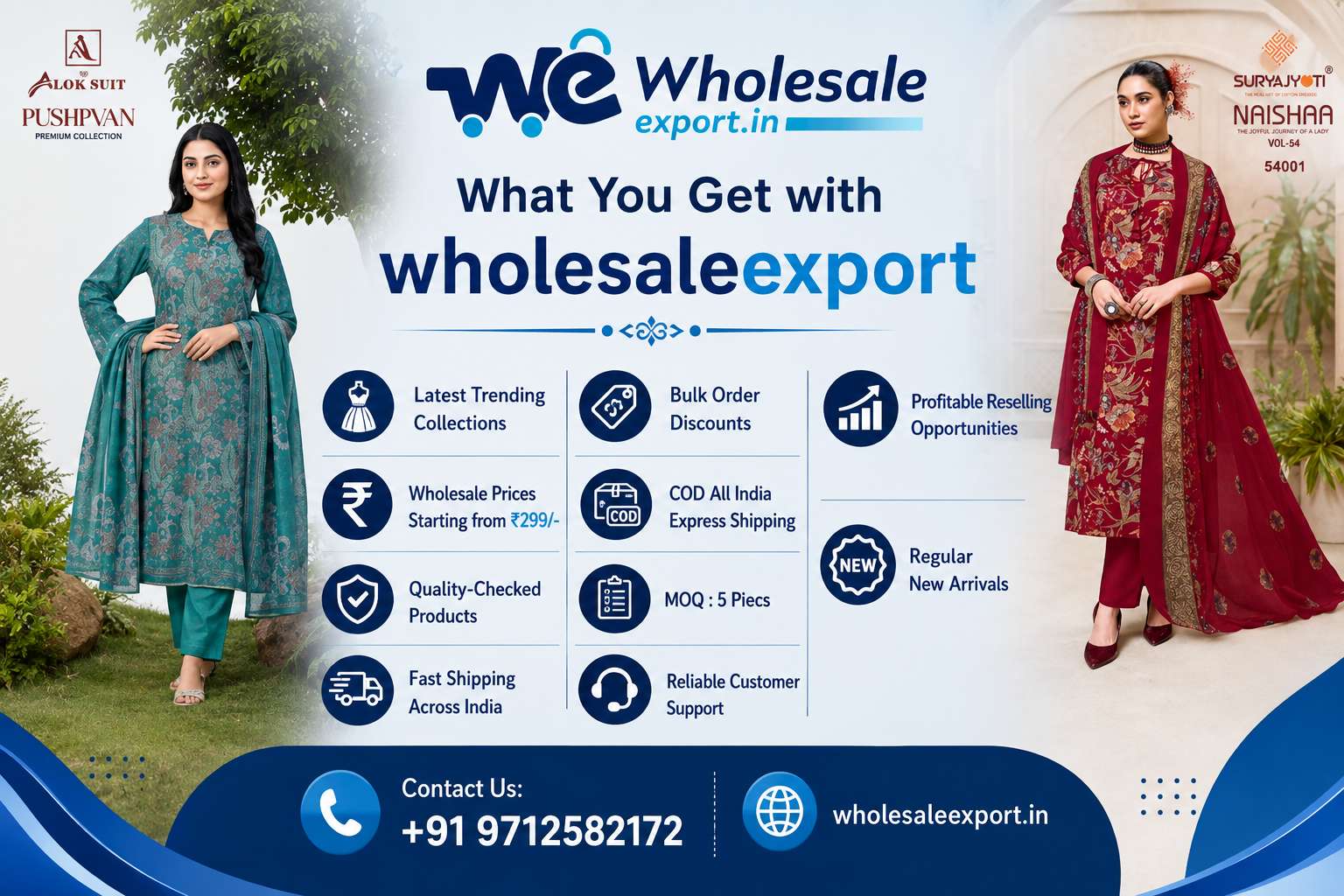
Wholesaleexport.in helps professional buyers explore ethnic wear collections suitable for different business models. Supported by Vastralife’s wholesale and export experience since 2017, the sourcing approach combines textile industry expertise, market understanding, and attention to premium product quality.
Why Dress Materials Can Be a Profitable Business in 2026
One major advantage of the dress material category is customer flexibility. Unlike a ready-made garment, an unstitched suit does not depend entirely on a predetermined garment size. Customers can purchase the material and customize the fitting, neckline, sleeve pattern, kurta length, salwar or pant style, and other details through their tailor or boutique.
This characteristic allows one design to serve a broader customer base. It also reduces some of the size-related complexity that ready-made clothing retailers must manage.
Another advantage is the wide dress material price spectrum. Retailers can build affordable collections for daily use, mid-range collections for regular fashion customers, and premium designs for festivals, weddings, gifting, and special occasions. A well-planned assortment can therefore serve customers with different purchasing capacities without forcing the seller into only one market segment.
In 2026, digital selling has further strengthened the opportunity. Home-Based Sellers and Resellers can showcase products through Instagram, Facebook, WhatsApp, short videos, websites, and online marketplaces. This means an entrepreneur can potentially test a dress material business with lower physical infrastructure than a traditional retail showroom.
Profit Comes from Stock Rotation, Not Only Markup
Suppose one product provides a very high percentage margin but takes several months to sell, while another provides a moderate margin and sells repeatedly every few weeks. Depending on expenses and working capital, the faster-moving product may ultimately contribute more profit.
For this reason, retailers should measure inventory turnover along with gross margin. The objective is to keep capital moving through products customers actually purchase.
Understand Your Target Customer Before Buying Wholesale Stock
The first step in developing a profitable dress material business is defining who will buy from you. A store trying to sell everything to everyone often ends up with an unfocused inventory.
Home-Based Sellers
Home-Based Sellers often benefit from smaller inventories, easy-to-explain products, attractive catalogue photography, and accessible price points. Cotton, printed, rayon, office wear, and selected festive dress materials can provide a useful starting mix.
Because many home sellers market through personal networks and WhatsApp, repeat purchases and customer trust are extremely important. Regular new arrivals can be more useful than maintaining excessive quantities of the same design.
Boutique Owners
Boutique Owners can focus more heavily on differentiation. Premium embroidery, interesting fabrics, unusual prints, coordinated dupattas, designer concepts, and limited-looking collections can help boutiques avoid competing purely on price.
Boutiques can also generate additional revenue through stitching, customization, neckline design, sleeve detailing, lining, embellishment, and styling services.
Shop and Showroom Owners
Physical Shop Owners and Showroom Owners usually need broader price coverage because different types of customers may enter the store. Maintaining entry, middle, and premium ranges helps sales staff present alternatives without losing customers whose original choice is outside their budget.
Online Resellers
Online Resellers should pay special attention to visual presentation. A design needs to communicate effectively through a phone screen. Good catalogue images, fabric close-ups, clear colour representation, product videos, and accurate descriptions can influence conversion significantly.
Best-Selling Dress Material Categories for Business
There is no single fabric that guarantees profit. The right collection depends on season, region, customer age, occasion, local fashion preferences, and selling price. However, several categories provide useful opportunities for wholesale buyers.
1. Cotton Dress Materials
Cotton dress material wholesale remains commercially important because comfort is a major buying factor across India. Cotton collections can be marketed for everyday wear, office wear, summer fashion, casual occasions, and customers who prefer breathable fabrics.
Printed cotton, traditional motifs, floral designs, geometric patterns, Ikkat-inspired designs, block-print looks, and coordinated dupattas can help sellers create variety within the category.
2. Ikkat-Inspired Dress Materials
Ikkat-inspired patterns offer a distinctive ethnic appearance while remaining versatile enough for everyday and semi-formal fashion. Strong geometric patterns and traditional colour combinations can appeal to customers looking for something different from ordinary floral prints.
Retailers can position these products for office wear, casual ethnic styling, gifting, and everyday premium fashion. For Boutique Owners, attractive tailoring can further increase the perceived value of an Ikkat-style suit.
3. Printed Dress Materials
Printed dress materials wholesale can support frequent inventory rotation because new prints can be introduced continuously. Floral, abstract, geometric, traditional, digital, Bandhani-inspired, and regional motifs create numerous merchandising opportunities.
Printed collections can also span multiple budgets, making them useful for retailers who need both affordable and better-quality options.
4. Embroidered Dress Materials
Embroidery adds visual richness and can increase perceived product value. Depending on the workmanship, embroidered suits can be positioned for casual premium wear, festivals, parties, family functions, gifting, and weddings.
Wholesale Buyers should inspect embroidery finishing carefully. Loose threads, inconsistent work, poor placement, or low-quality embellishment can reduce customer satisfaction even when the catalogue photograph looks attractive.
5. Designer Dress Materials
Designer dress material wholesale is particularly relevant to boutiques and fashion-focused sellers. This segment may include distinctive fabrics, embroidery, lace, woven details, printed dupattas, jacquard combinations, fashionable colour palettes, and premium presentation.
Designer merchandise can offer stronger margin potential when the product has enough differentiation to justify its retail positioning. Sellers should avoid assuming that a higher wholesale cost automatically means a product will command a higher retail price.
6. Pakistani-Style Dress Materials
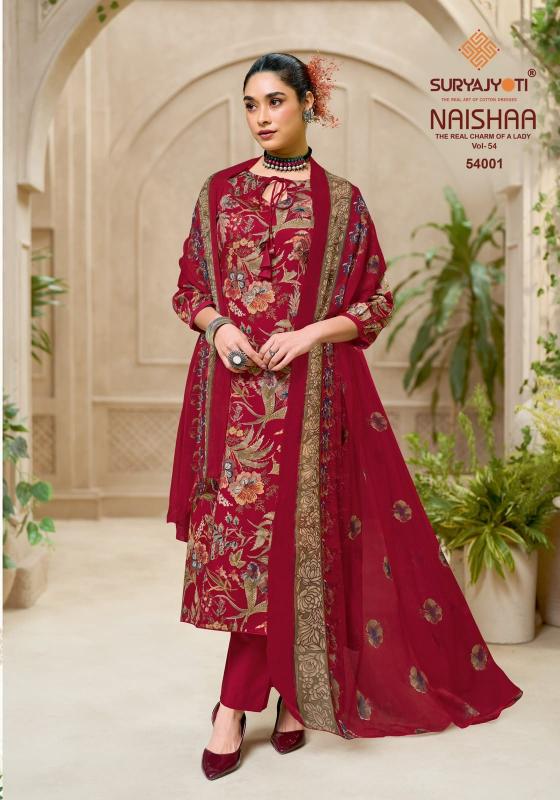
Pakistani-inspired suits have developed a strong fashion audience because of their elegant silhouettes, detailed embroidery, long-kurta styling, sophisticated colour combinations, and attractive dupatta concepts. They can be positioned for festive events, parties, wedding-related occasions, and premium ethnic fashion.
Retailers sourcing Pakistani suit wholesale collections should evaluate whether their customers prefer heavily embellished designs or more wearable semi-formal styles. A balanced assortment can include both statement pieces and lighter products suitable for repeated use.
7. Festive and Wedding Dress Materials
Festivals and wedding seasons can increase demand for products with richer visual detailing. Silk blends, jacquard, zari-inspired work, embroidery, sequins, designer dupattas, and premium colour combinations can all contribute to festive collections.
Instead of purchasing festive merchandise randomly, sellers should create price bands. An affordable festive range can serve customers buying multiple outfits, while premium designs can target buyers looking for a distinctive outfit for an important function.
Advance planning matters. Purchasing wedding and festival inventory only after demand has peaked can reduce the effective selling window and leave more stock after the season.
Surat as a Major Dress Material Wholesale Sourcing Hub
Surat has built a strong position within India’s textile industry through an extensive ecosystem of fabric trading, processing, design, wholesale distribution, and manufacturing. For ethnic wear businesses, this ecosystem provides access to diverse products and frequent collection development.
The surat textile market attracts buyers searching for sarees, dress materials, kurtis, suits, fabrics, and other fashion categories. Textile commercial areas around ring road and sahara darwaza are closely associated with the city’s wholesale trade.
However, successful sourcing is not simply about reaching a large textile market. Wholesale buyers should understand fabric specifications, supplier terms, minimum order requirements, colour availability, dispatch timelines, quality procedures, and replacement policies before committing working capital.
Wholesaleexport.in gives professional buyers another way to explore wholesale ethnic fashion collections while benefiting from industry experience connected with Surat’s textile ecosystem.
How to Calculate Real Profit in a Dress Material Business
One of the biggest mistakes new sellers make is calculating profit only as the difference between buying price and selling price. That figure does not show the complete business result.
A seller should consider the wholesale purchase cost along with transportation, packaging, applicable taxes, payment charges, advertising expenditure, marketplace commission where applicable, customer acquisition cost, return or replacement expenses, and other overheads.
Focus on Gross Margin and Net Profit
Gross margin helps measure the difference between product cost and selling revenue, while net profit considers additional business expenses. Understanding both gives sellers a more realistic view of whether a product category is actually contributing to the business.
For example, an expensive designer product may offer a larger rupee margin per sale but require more advertising and take longer to sell. An affordable cotton product may offer a smaller margin per piece but generate repeat orders and faster inventory movement.
Avoid Blind Discounting
Constant discounting can damage profitability and train customers to wait for lower prices. Instead, retailers can use controlled promotions such as multi-piece offers, seasonal deals, clearance on older inventory, or incentives for larger orders.
The goal of a high profit dress material business should be to provide strong customer value while protecting sustainable margins.
Wholesale Inventory Planning for Higher Returns
Inventory management can determine whether a fashion business remains cash-positive or becomes overloaded with unsold stock. Buying too little may lead to missed sales, but buying too much of an untested design can block working capital.
Start with Variety and Study the Response
New sellers can begin with multiple fabrics and price points in controlled quantities. Track which designs receive enquiries, which convert into orders, and which customers purchase again.
Once the data shows that a particular fabric, brand, pattern, or price segment consistently performs well, inventory can be increased more confidently.
Create Core, Trend and Seasonal Inventory
Core inventory includes products that can sell through much of the year, such as cotton and printed dress materials. Trend inventory follows changing fashion preferences, while seasonal inventory targets festivals, weddings, or weather-specific demand.
Dividing purchasing this way can reduce dependence on one category and make the overall business more resilient.
How Wholesale Pricing Influences Retail Profit
Competitive sourcing is important, but the cheapest product is not always the most profitable. Customers evaluate colour, design, fabric, finishing, brand perception, dupatta quality, and overall presentation. Better merchandise may justify a stronger selling price and create more repeat customers.
Wholesale Buyers should compare products on value rather than rate alone. Consider how the product will appear after stitching and whether its final look can justify the intended retail positioning.
When calculating a target selling price, sellers should also leave enough room for occasional promotions without reducing the order below an acceptable margin.
Using Online Selling to Scale a Dress Material Business
Digital channels allow sellers to reach customers beyond their immediate neighbourhood. Instagram, Facebook, WhatsApp, websites, marketplaces, and short-form video platforms can all support product discovery.
For an online dress material business, product presentation should answer the questions a customer would normally ask in a physical store. Mention the fabric, components, design details, available colours, approximate appearance, care information where known, and relevant ordering conditions.
Short videos can be especially useful for demonstrating fabric movement, embroidery, dupatta details, and the overall combination. This can make customers more confident when purchasing remotely.
Sellers should also maintain consistent branding rather than uploading products without context. Clear business identity, contact information, customer service, and regular posting can help build credibility over time.
Building Trust Instead of Competing Only on Price
A profitable wholesale or retail business needs repeat customers. If customers purchase only because one seller is temporarily cheaper, they can easily move to another seller offering a lower rate tomorrow.
Trust can be developed through accurate product information, transparent communication, dependable dispatch, quality control, responsive customer support, and realistic promises. These factors are especially important for online transactions where customers cannot physically inspect the product before ordering.
Vastralife’s wholesale and export experience since 2017 brings practical industry expertise to this environment, with emphasis on professional sourcing and premium quality merchandise for buyers serving different customer segments.
For businesses planning export sales to markets such as Nepal, Singapore, and Canada, product selection should also consider local customer preferences, shipping costs, parcel weight, delivery timelines, customs requirements, and final landed cost.
Understanding these variables before purchasing stock helps sellers make better decisions and protects the profitability of international orders.
How to Build Repeat Customers in Ethnic Wear
Repeat customers can significantly improve business economics because the seller does not need to rebuild trust from zero for every transaction. Good product quality, dependable service, relevant recommendations, and fresh collections can encourage buyers to return.
Instead of sending every new product to every customer, sellers can segment buyers according to their preferences. Customers interested in cotton can receive comfortable everyday collections, while premium buyers can be shown embroidered and festive products.
This personalized approach makes marketing more useful and reduces the feeling of excessive promotional messaging.
Retailers should also record customer feedback. If several customers repeatedly ask for a particular fabric, price range, colour, or style, that information can directly influence the next wholesale purchase.
Scaling from Home-Based Selling to a Larger Business
Many entrepreneurs begin with a small customer network and gradually expand. The transition should be driven by consistent demand rather than the desire to hold a large inventory.
A Home-Based Seller can first establish product-market fit, identify reliable suppliers, learn pricing, develop customer service processes, and create a regular sales routine. Once monthly sales become more predictable, the seller can consider increasing inventory, investing in marketing, creating a website, adding staff, or moving into a physical retail location.
Wholesaleexport.in can support this progression by providing access to wholesale-oriented collections for buyers at different stages of their business journey.
Choosing the Right Wholesale Supplier for Long-Term Growth
A supplier relationship can directly affect product availability, quality consistency, customer satisfaction, and ultimately profitability. Sellers should therefore evaluate a wholesale source on more than just the quoted price. Product variety, communication, quality standards, dispatch processes, catalogue accuracy, and availability of new collections all matter when building a long-term ethnic wear business.
For new Resellers, it can be tempting to continuously switch suppliers to save a small amount per piece. However, an inconsistent supply chain can create problems if the actual product differs from catalogue images, dispatch is unreliable, or customers receive inconsistent quality. A dependable wholesale relationship can be more valuable than saving a small amount on an individual order.
Shop Owners and Showroom Owners should also understand the difference between products intended for fast-moving commercial sales and collections designed for premium customers. The right supplier should provide enough variety to help the retailer serve multiple price segments.
Quality Should Match Your Retail Positioning
If you are positioning your store as a premium boutique, the merchandise should support that promise. Fabric quality, embroidery finishing, print clarity, dupatta presentation, colour combinations, and packaging contribute to the customer's overall perception.
Likewise, affordable collections still need dependable quality. Customers purchasing budget products may accept simpler fabrics or designs, but they still expect the merchandise to provide reasonable value for its selling price.
Smart Buying Strategy for a High Profit Dress Material Business
One of the most effective ways to protect working capital is to purchase according to sales evidence. A high profit dress material business should gradually become data-driven. Sellers can track which fabrics move fastest, which colours receive repeat demand, which price ranges convert most consistently, and which collections generate enquiries without resulting in purchases.
This information can guide the next buying cycle. For example, if customers regularly purchase cotton suits between specific retail price points but premium embroidered products move slowly, future investment can be adjusted accordingly.
Maintain Multiple Price Levels
A healthy assortment can include affordable entry-level products, dependable mid-range merchandise, and selected premium collections. This prevents the business from becoming dependent on only one customer segment.
When a customer likes a design but finds it expensive, the seller can immediately offer an alternative within a lower budget. Similarly, customers seeking something more exclusive can be shown premium options rather than being allowed to leave because the store has only economical stock.
Use Limited Stock to Test New Trends
Fashion trends can change quickly. Instead of investing heavily in an unfamiliar trend, sellers can introduce a controlled quantity and measure actual customer response. If the products sell quickly, the category can be expanded. If demand is weak, the financial impact remains manageable.
This strategy is particularly relevant to designer suits, Pakistani-inspired styles, new print concepts, unusual colour combinations, and seasonal fashion.
How to Increase Average Order Value
Increasing the value of each transaction can improve revenue without requiring the seller to find a completely new customer for every additional sale. Dress material businesses can achieve this through relevant product combinations rather than aggressive upselling.
A customer purchasing an everyday cotton suit may be interested in another colour from the same collection. A festive buyer may want an additional outfit for another ceremony. Boutique customers can also be offered stitching, lining, accessories, or customization services where available.
Wholesale sellers can create quantity-based incentives for professional buyers. Bulk Order Deals can encourage retailers to purchase a broader selection while allowing the wholesaler to increase order value.
Create Occasion-Based Collections
Instead of displaying products only according to fabric, retailers can organize them around customer needs. Categories such as office wear, festive suits, wedding guest outfits, summer cotton collections, premium embroidered suits, and everyday fashion can make buying decisions easier.
This strategy is particularly useful online because customers frequently search according to occasion rather than technical fabric terminology.
Digital Marketing Ideas for Dress Material Sellers
Digital marketing does not have to depend entirely on paid advertisements. Consistent organic content can help retailers demonstrate product variety, expertise, and trustworthiness.
Instagram reels can show fabric movement, embroidery details, dupatta designs, and styling ideas. WhatsApp can help existing customers discover new arrivals. Facebook can support community-based selling, while a properly organized website can help customers browse categories and product details more conveniently.
Retailers can also create informational content answering common questions such as how to choose cotton dress materials, how much fabric is required for stitching, what designs work for office wear, or how to select festive suits. Helpful content can attract potential customers who are still researching before purchasing.
Use Product Videos Along with Catalogue Photos
Catalogue photography is important, but a short product video can provide additional confidence. It can show fabric texture, actual drape, embroidery details, dupatta width, colour combinations, and the complete set more naturally.
For online sellers, accurate representation is essential. Avoid editing product colours so heavily that the delivered merchandise looks noticeably different from the content customers viewed.
How Wholesale Buyers Can Expand Beyond Dress Materials
Once a dress material business develops a stable customer base, complementary ethnic wear categories can create additional revenue opportunities. Retailers can gradually introduce sarees, kurtis, kurti sets, co-ord sets, readymade suits, festive wear, or other products according to customer demand.
Wholesale Buyers researching wholesale dress materials in Surat can use the category as a foundation for building a broader ethnic wear assortment. Sellers whose customers also purchase sarees can explore wholesale sarees in India as a complementary segment.
The objective should not be to add every possible fashion category at once. Expansion works better when it is supported by existing customer demand and sufficient working capital.
Internal Linking and Product Discovery Strategy
For an online ethnic wear business, product discovery should feel simple. Customers should be able to move naturally from everyday collections to festive products, from affordable options to premium merchandise, and from one related category to another.
Organizing products by fabric, occasion, price range, design, and new arrivals can improve navigation. A customer who initially visits for printed cotton dress materials may eventually discover embroidered suits or premium festive collections if the website makes those products easy to find.
Internal product discovery is also useful for wholesale buyers because a retailer placing one order may need several categories. Showing complementary merchandise can reduce the time required to source products from multiple places.
Opportunities for Dress Material Export Business
Indian ethnic fashion has a customer base beyond the domestic market, creating opportunities for retailers and distributors interested in dress material export. South Asian communities, cultural events, weddings, festivals, and growing interest in Indian fashion can create demand in overseas markets.
For markets such as Nepal, Singapore, and Canada, sellers should study local preferences before selecting inventory. Climate, customer age, cultural events, average retail price, fashion preferences, and the size of the local Indian or South Asian community can influence which collections perform best.
International buyers should calculate the complete landed cost rather than considering only the Indian wholesale rate. Freight, packaging, customs duties where applicable, local taxes, currency conversion, and delivery expenses can influence the final margin.
Choose Export-Friendly Products
Product weight and value should be considered together. If two collections have similar selling potential but one is substantially heavier, international shipping can alter their profitability.
Clear product descriptions, organized invoices, secure packaging, and accurate order communication are also important for professional export transactions.
Common Mistakes That Reduce Dress Material Business Profit
Buying Too Much Stock Because the Wholesale Price Is Low
A low buying rate can appear attractive, but unsold merchandise still blocks capital. Sellers should evaluate whether the design matches their customer profile before increasing quantity.
Ignoring Product Quality
Short-term savings on poor-quality merchandise can lead to complaints, reduced repeat business, and damage to the seller's reputation. Quality should remain consistent with the expectations created during marketing.
Following Every Trend
Not every viral design becomes a reliable retail seller. Fashion content can create attention without creating sustained purchasing demand. Test trends in controlled quantities before making large investments.
Mixing Personal and Business Money
Small sellers sometimes treat all sales receipts as profit. Business owners should separate purchase capital, operating expenses, and actual earnings. This makes it easier to understand whether the business is genuinely growing.
Not Tracking Old Inventory
Older stock should be identified early. Sellers can use controlled clearance offers, combination deals, or targeted promotions instead of allowing ageing products to remain unnoticed for months.
How to Plan Seasonal Buying in 2026
A good buying calendar can improve inventory rotation throughout 2026. Summer can create stronger opportunities for cotton and breathable fabrics, while festivals and wedding periods can increase demand for embroidered, silk-blend, designer, and premium dress materials.
Retailers should prepare collections several weeks before important selling periods so customers have enough time to purchase and stitch their outfits. This is particularly relevant for unstitched dress materials because tailoring adds another step before the garment can be worn.
Regional festivals should also be considered. Demand patterns can differ significantly across India, so sellers should plan according to the actual calendar and preferences of their customer base rather than relying only on national trends.
Why Premium Product Quality Supports Long-Term Profit
Profit should not be measured only transaction by transaction. A customer who receives a good product and reliable service may purchase repeatedly and recommend the seller to others. That long-term value can be significantly greater than the margin from one order.
Premium quality does not necessarily mean that every product must be expensive. It means the product should deliver appropriate quality for its category and price point. Affordable products should provide good value, while premium merchandise should justify its positioning through better fabrics, workmanship, design, or presentation.
Vastralife has wholesale and export experience since 2017, providing industry knowledge developed through years of working within the textile and ethnic wear market. This experience supports Wholesaleexport.in in serving professional buyers looking for commercially relevant collections and dependable product quality.
Customer FAQs
1. Is a dress material business profitable in 2026?
Yes, a dress material business can be profitable when sellers choose products according to customer demand, control inventory, maintain suitable margins, source dependable quality, and manage operating expenses. Profitability varies according to the business model, location, product mix, and sales volume.
2. How can I start a dress material business from home?
A Home-Based Seller can begin with a controlled selection of products, identify a reliable wholesale source, create clear product photographs or catalogues, and start selling through personal networks, WhatsApp, Instagram, Facebook, or other appropriate channels. Start with manageable inventory and reinvest according to actual demand.
3. Which dress materials are best for reselling?
Cotton, printed, Ikkat-inspired, rayon, embroidered, festive, designer, and Pakistani-style collections can all be suitable for reselling. The best category depends on customer budget, region, season, and preferred fashion style.
4. Where can I buy wholesale dress materials in Surat?
Surat has a large textile trading ecosystem, particularly around the Ring Road and Sahara Darwaza textile market areas. Online wholesale platforms can also help buyers explore collections remotely before placing orders.
5. How much margin should I keep on dress materials?
There is no single correct margin for every product. Sellers should consider wholesale cost, taxes where applicable, shipping, packaging, advertising, payment expenses, overheads, local competition, and customer willingness to pay before setting a retail rate.
6. Can I sell wholesale dress materials internationally?
International sales are possible, subject to applicable trade, shipping, customs, payment, and destination-country requirements. Sellers should calculate the complete landed cost and understand documentation requirements before confirming an overseas transaction.
7. Is a dress material business suitable for boutique owners?
Yes. Boutique Owners can add value through stitching, customization, styling, unique fabric selection, embroidery, and premium presentation. This can differentiate their business from sellers competing only on product price.
8. How do I avoid dead stock in my dress material business?
Start with controlled quantities, track sales by category, reorder proven products, test trends before buying heavily, and identify slow-moving inventory early. Regular stock reviews can help prevent excessive capital from remaining locked in outdated merchandise.
Start Your High Profit Dress Material Business with Wholesaleexport.in
Building a successful ethnic wear business requires more than finding inexpensive merchandise. Sellers need the right combination of product demand, reliable sourcing, sensible pricing, inventory control, customer service, marketing, and repeat sales. When these elements work together, dress materials can become a scalable category for both new entrepreneurs and established textile retailers.
Wholesaleexport.in provides sourcing opportunities for Home-Based Sellers, Shop Owners, Boutique Owners, Showroom Owners, Resellers, and Wholesale Buyers looking to expand their ethnic wear business with commercially relevant products.
Explore Latest Collections, competitive Wholesale Pricing, Trendy Ethnic Wear, Fast Shipping, COD Support, and attractive Bulk Order Deals. Buyers can also explore Quality Products Starting From ₹299, subject to individual product availability, category, specifications, and applicable ordering conditions.
Whether you are starting from home, adding a new category to an existing boutique, expanding a showroom, or developing a wholesale network, focus on products your customers genuinely want and build the business around quality, service, and consistent stock rotation.
Contact Us: +91 9712582172
Website: wholesaleexport.in