


Handloom Cotton Saree Wholesale in Surat – Best Wholesale Price & Collections 2026
Handloom Cotton Saree Wholesale in Surat – Best Wholesale Price & Collections 2026
Handloom-inspired cotton sarees continue to hold a dependable place in the ethnic wear market because they combine comfort, graceful styling and everyday usability. For retailers, boutique owners and resellers, this category can create a practical balance between regular sales and premium-looking inventory. Buyers sourcing from Surat can explore a broad selection of cotton sarees suited to daily wear, office wear, casual occasions, gifting and traditional functions.
Introduction
The saree market in 2026 is increasingly influenced by customers who want clothing that feels comfortable without looking ordinary. This buying preference has strengthened demand for handloom cotton saree wholesale collections among shop owners, online resellers, boutiques and home-based sellers. Cotton remains familiar to customers across different age groups, while woven textures, traditional borders, subtle prints and contemporary colour combinations help retailers create collections with wider appeal.
For wholesale buyers, the opportunity is not simply to purchase inexpensive sarees. Successful inventory planning depends on selecting the right fabric quality, designs, colour combinations, price points and quantities according to the target customer. A retailer selling everyday sarees may require different stock from a boutique focusing on sophisticated cotton styles or a reseller promoting products through WhatsApp and social media.
Wholesaleexport.in helps buyers explore ethnic wear collections from Surat while making product discovery more convenient for businesses that cannot visit the market regularly. Buyers can compare designs, understand available collections and plan bulk purchases according to their retail requirements.
Why Handloom Cotton Sarees Remain Popular in 2026
Fashion trends change quickly, but cotton sarees have retained their relevance because their value comes from both appearance and practicality. A customer can wear a comfortable cotton saree for work, a family gathering, a casual outing or a traditional occasion depending on its design and styling.
Comfortable Fabric for Regular Wear
Comfort is one of the strongest reasons customers choose cotton. Breathable fabric makes cotton sarees wholesale an important category for retailers serving regions with warm or humid weather. Lightweight constructions are particularly attractive to customers who wear sarees for long working hours.
For retailers, this means cotton is not limited to one short festive season. Well-selected collections can generate enquiries throughout the year and become part of a shop's core inventory.
Traditional Appearance with Modern Styling
Modern buyers do not necessarily want heavily embellished sarees every time they dress traditionally. Handloom-style textures, woven borders, stripes, checks, geometric patterns, floral elements and understated colour combinations offer a more refined alternative.
This creates opportunities for handloom saree wholesale buyers to stock designs that appeal to working women, mature customers, teachers, professionals, homemakers and customers looking for meaningful ethnic gifts.
Wide Retail Price Possibilities
Another advantage is the variety of price segments available in cotton sarees. Retailers can build an affordable everyday section as well as a higher-value collection featuring more detailed weaving, distinctive borders or premium finishing.
Rather than choosing inventory only according to the lowest wholesale saree price, buyers should compare fabric feel, finishing, colour appeal and perceived retail value. A product that gives the customer a visibly better experience can often support healthier retail margins.
Handloom Cotton Saree Wholesale Opportunities for Different Sellers
The same saree collection can perform differently depending on where and how it is sold. Understanding the target customer before purchasing wholesale inventory can reduce slow-moving stock and make reordering easier.
Home-Based Sellers
Home-Based Sellers can begin with controlled quantities and a broader design mix instead of investing heavily in a single pattern. Cotton sarees are particularly useful for WhatsApp, Instagram and community-based selling because customers can understand their everyday utility quickly.
A seller can create separate selections around office wear cotton sarees, casual sarees, traditional woven-look sarees, festive cotton designs and budget-friendly options. This makes digital catalogues easier for customers to browse.
Boutique Owners
Boutiques can focus more strongly on design identity. Instead of stocking too many similar products, boutique owners may select distinctive borders, earthy shades, elegant pastels, traditional motifs and sophisticated combinations.
A carefully curated cotton saree collection can also be merchandised with matching blouse suggestions, jewellery or styling ideas to increase perceived value.
Shop and Showroom Owners
Physical stores generally need greater depth because customers expect choices within their preferred budget. Shop Owners and Showroom Owners can divide cotton saree inventory into everyday, office, traditional, premium and occasion-oriented ranges.
When analysing the purchase price, retailers should also consider how frequently a design can be reordered. Fast-moving products with reliable availability can be more valuable than one-time collections that cannot be replenished after customers begin asking for them.
Resellers and Wholesale Buyers
Resellers usually benefit from collections that photograph well and communicate value clearly through mobile screens. Wholesale Buyers supplying multiple retailers may require broader colour assortments, stronger quantities and commercially proven patterns.
For both groups, understanding the intended retail market before confirming a bulk order is more effective than purchasing purely on visual appeal.
Popular Handloom Cotton Saree Styles for Wholesale Buying
A commercially balanced assortment normally contains more than one design direction. This allows sellers to reach customers with different budgets, ages and styling preferences.
Traditional Border Cotton Sarees
Traditional borders remain a reliable choice because they give cotton sarees a recognisable ethnic character. Contrasting borders, woven patterns and temple-inspired elements can create an attractive look without requiring heavy embellishment.
These styles can work particularly well for cultural occasions, office celebrations, gifting and customers who prefer classic Indian clothing.
Printed Cotton Sarees
Printed cotton sarees wholesale ranges can include florals, abstract prints, geometric motifs, ethnic patterns and subtle contemporary designs. Prints allow wholesalers and retailers to offer more variety across an accessible price range.
For faster retail rotation, buyers can combine neutral shades with brighter colours rather than purchasing an entire assortment in one colour family.
Woven and Textured Cotton Sarees
Texture can significantly improve the perceived value of a saree. Woven details, slub effects and handcrafted-looking surfaces help products stand apart from basic mass-market cotton sarees.
Customers interested in an authentic or artisanal appearance often appreciate these details, making textured styles useful for boutiques and premium retail counters.
Office Wear Cotton Sarees
Professional customers often prefer manageable drapes, sophisticated colours and patterns that are noticeable without appearing overly festive. Navy, maroon, beige, grey, green, rust, blue and muted pastels can form a practical office-oriented selection.
Retailers targeting working women can therefore keep daily wear cotton sarees alongside slightly more refined office collections to cover multiple purchasing needs.
How to Evaluate Cotton Saree Quality Before Bulk Purchase
Quality evaluation becomes especially important when buying in volume. A low purchase price cannot compensate for inconsistent products if customers experience fabric, colour or finishing issues.
Check Fabric Feel and Comfort
The fabric should feel suitable for its intended customer and usage. Everyday sarees generally need comfortable handling and practical drape, while premium collections can carry more texture or structure depending on the style.
Examine Weaving and Finishing
Look at borders, edges, surface consistency and overall finishing. Small characteristics may naturally vary depending on the type of textile, but the saree should still present a commercially acceptable finish.
Retailers selling premium product quality should pay particular attention to these details because repeat customers often remember fabric experience as much as the design itself.
Choose Commercial Colour Assortments
Wholesale buyers frequently make the mistake of choosing colours only according to personal taste. Retail inventory needs variety. A stronger assortment can combine traditional colours, everyday neutrals, seasonal shades and a few fashionable colours.
Reviewing previous sales data can help determine which shades deserve deeper quantities and which should be purchased in smaller numbers.

Why Surat Is Important for Cotton Saree Wholesale Buying
Surat has developed a large textile ecosystem covering sarees, dress materials, kurtis and many other women's ethnic wear categories. Its established supplier network makes the city useful for retailers who want access to changing designs and multiple price segments.
Surat Textile Market and Wholesale Network
The surat textile market includes manufacturers, traders, wholesalers and suppliers working across numerous textile categories. This ecosystem allows business buyers to explore different product qualities and designs without depending on a single narrow collection.
For retailers planning regular purchases, the availability of new collections is especially important. Fresh designs can help maintain customer interest and give resellers new content to promote.
Ring Road and Sahara Darwaza Textile Areas
Ring road is widely associated with Surat's textile trade, while sahara darwaza is another familiar reference point for buyers exploring the city's textile ecosystem. Understanding these sourcing areas is useful for businesses visiting Surat to compare suppliers and products.
At the same time, online wholesale purchasing has made it possible for buyers outside Surat to access collections without travelling for every restock.
Manufacturing and Wholesale Supply Advantage
Surat's connection with textile manufacturing, processing, trading and distribution creates a supply environment capable of serving different types of buyers. From small resellers to established showrooms, purchase requirements can vary significantly in quantity and price.
Wholesaleexport.in gives buyers another way to discover wholesale ethnic wear collections while planning purchases from their own location.
Planning Wholesale Saree Inventory for Better Retail Sales
Profitable saree buying depends as much on inventory planning as it does on finding attractive designs. Retailers should think in terms of customer segments, expected rotation and working capital rather than purchasing every new catalogue in large quantities.
Build a Balanced Price Mix
A practical inventory can contain entry-level products for price-conscious customers, mid-range designs for regular retail sales and selected premium pieces for customers willing to pay more for distinctive styling.
This approach gives the retailer opportunities across different customer budgets while reducing dependence on a single price segment.
Start with Variety and Reorder Winners
For new sellers, buying more designs in controlled quantities can provide useful information about actual customer preferences. Once particular patterns, colours or price points begin selling consistently, those categories can receive larger repeat orders.
This test-and-reorder method is especially useful for Home-Based Sellers and online Resellers who want to protect their initial working capital.
Plan Seasonal and Evergreen Stock Separately
Evergreen cotton sarees can provide regular sales, while seasonal designs can create additional demand around festivals, gifting periods and special occasions. Separating these two inventory purposes makes purchasing decisions clearer.
A retailer can therefore maintain a stable core of cotton sarees in bulk while periodically adding fresh fashion-led designs.
Handloom Cotton Saree Demand in India, Nepal and Australia
Ethnic fashion demand is not limited to one market. The way sarees are selected, however, can differ according to climate, customer lifestyle, community preferences and selling channels.
India
India offers a broad market for cotton sarees because they can be positioned for everyday use, offices, traditional occasions, gifting and festive dressing. Retailers can serve multiple customer groups by maintaining a mix of simple and premium-looking products.
Nepal
For buyers serving Nepal, Indian ethnic wear provides opportunities across traditional and occasion-led retail segments. Wholesale buyers should select designs according to their own customer profile, local demand and selling season rather than assuming every Indian bestseller will perform identically.
Australia
Retailers and ethnic boutiques serving customers in Australia may use cotton sarees for cultural events, community gatherings, festive occasions and customers seeking breathable Indian ethnic wear. For an export order, product selection should also consider shipping efficiency, quantities and the retailer's intended selling price.
Vastralife brings wholesale and export experience since 2017 together with textile industry expertise and a focus on premium product quality. This practical market understanding supports buyers who need collections suitable for both domestic selling and international ethnic wear businesses.
Internal Linking Section – Explore More Wholesale Ethnic Wear Categories
Retailers building a complete ethnic wear inventory should avoid depending on a single saree style. Cotton sarees can form the everyday and comfort-focused part of the assortment, while additional categories help attract customers shopping for festive, wedding and occasion wear. Buyers looking for more options can explore georgette sarees for lightweight and dressier selections that complement a cotton-focused inventory.
Businesses that also serve bridal and festive customers can expand beyond sarees with products from the wholesale lehenga market Surat category. Keeping complementary ethnic wear categories allows boutiques, shops and resellers to increase their product range while serving customers across different occasions and price points.

How to Buy Handloom Cotton Sarees Wholesale for Better Profit
A profitable wholesale purchase starts with understanding the customer rather than simply choosing the lowest available price. When purchasing Handloom Cotton Saree Wholesale collections, buyers should consider expected retail price, customer age group, local demand, fabric preference, colour trends and how quickly the stock is likely to rotate.
Compare Product Value, Not Only Wholesale Price
Two cotton sarees offered at similar wholesale rates may produce very different results at retail. Fabric feel, border detailing, colour combination, finishing and overall presentation can significantly influence what a customer is willing to pay. For this reason, a slightly higher buying price may sometimes offer better profit potential if the saree provides stronger perceived value.
Retailers should calculate their expected selling price before placing a bulk order. Consider product cost, shipping, packaging, marketing expenses and the margin required for the business. This gives a more realistic understanding of profitability than looking at purchase price alone.
Use Small Assortments to Test New Designs
When a collection is new, controlled buying can be more practical than immediately taking deep quantities. Select multiple patterns and colours, introduce them to customers and identify which designs receive the strongest response.
Once demand becomes clear, reorder successful products where availability permits. This strategy can be especially useful for Home-Based Sellers, new Resellers and Boutique Owners working with limited capital.
Maintain Freshness Through Regular Purchasing
Customers who follow a retailer online or visit a store regularly expect something new. Instead of spending the entire purchasing budget in one large order, retailers can reserve part of their working capital for regular new arrivals.
This approach keeps catalogues fresh and gives sellers new content for WhatsApp, Instagram and customer groups. It also reduces the risk of holding too much inventory from a single collection.
How Different Buyers Can Build Their Cotton Saree Range
For Home-Based Sellers and Online Resellers
Home sellers should prioritize designs that are easy to explain visually. Clear photographs, attractive colours and understandable product specifications make digital selling easier. A collection can be divided into everyday cotton sarees, office styles, traditional borders and premium woven-look designs.
Instead of offering hundreds of similar products, sellers can create smaller themed selections. This makes the buying decision simpler for customers and allows the seller to understand which category performs best.
For Boutique Owners
Boutiques can concentrate on exclusivity and presentation. Subtle textures, distinctive borders, elegant colour combinations and sophisticated patterns can help differentiate the collection from standard mass-market products.
Boutique Owners can also create styling combinations using blouses, jewellery and accessories. A carefully presented handloom cotton saree collection may achieve better perceived value than a large assortment displayed without clear positioning.
For Shop and Showroom Owners
Physical retailers generally need broader price coverage. A customer entering a showroom may ask for an affordable daily saree, a professional office style or something more distinctive for a social occasion.
Maintaining different price bands helps sales staff offer alternatives without losing the customer. Showroom Owners can also track which colours, borders and fabrics sell fastest and use that information when placing repeat wholesale orders.
For Wholesale Buyers
Wholesale Buyers supplying other retailers need to think beyond individual designs. They should evaluate whether a collection has enough variety, commercially acceptable pricing and reorder potential. Buyers serving multiple cities can also compare regional demand before committing large quantities to particular colour combinations.
Stock Planning for Cotton Sarees in 2026
Inventory planning becomes increasingly important as customers gain access to more products through social commerce and online shopping. In 2026, retailers cannot depend only on having large quantities; they need the right combination of fresh designs, sensible prices and dependable products.
Keep Evergreen Colours in the Core Range
Colours such as blue, green, maroon, beige, black, rust and selected pastel shades can provide a stable foundation. Seasonal shades can then be added according to fashion trends and customer demand.
Create Separate Everyday and Premium Sections
A customer purchasing a regular-use saree usually evaluates the product differently from someone buying for gifting or an occasion. Keeping these categories clearly separated helps customers understand the value difference and makes pricing easier to communicate.
Affordable cotton sarees wholesale can support volume sales, while premium textures and detailed borders can improve average billing. Both categories can therefore contribute differently to overall business profitability.
Track Sell-Through Before Reordering
Retailers should maintain a simple record of products purchased, quantities sold, selling price and time taken to sell. Even basic sales tracking can reveal which collections deserve repeat investment.
For example, if a particular cotton style repeatedly sells within a short period, increasing its quantity may be justified. If another style moves slowly despite receiving customer enquiries, the issue may be its price, colour assortment or product positioning.
Wholesale and Export Buying with Vastralife Experience
Wholesale textile purchasing becomes easier when buyers work with businesses that understand product selection as well as the realities of retail selling. Vastralife has been working in wholesale and export since 2017, supported by textile industry expertise and experience with different ethnic wear categories.
This background helps in understanding what Shop Owners, Boutique Owners, Showroom Owners, Resellers and Wholesale Buyers need from a supplier. Product quality, commercially relevant designs, pricing, fresh arrivals and dependable communication all matter when purchasing for resale.
Through Wholesaleexport.in, buyers can explore collections without depending entirely on physical visits to the surat textile market. This is particularly useful for customers placing repeat orders from other cities or overseas markets.
Handloom Cotton Saree Wholesale Buying Checklist
Before confirming a wholesale order, buyers can use a simple checklist to reduce purchasing mistakes and build a stronger inventory.
Check the Intended Customer
Decide whether the collection is primarily for daily wear, offices, boutiques, traditional occasions, gifting or mixed retail. This decision should guide fabric, colour and price selection.
Check Product Variety
A commercially useful assortment should contain enough visual variation. Avoid purchasing too many nearly identical colours or patterns unless previous sales prove that they perform consistently.
Check Your Expected Retail Margin
Calculate a realistic selling price before buying. Include logistics and operational costs rather than assuming the difference between wholesale and retail price represents final profit.
Check Quantity and Reorder Possibility
Buy quantities according to proven demand. For new designs, start more carefully. For established fast sellers, deeper purchasing may reduce the risk of running out during active demand.
Check Product Information
Clear fabric, design and product details make resale easier, particularly when selling online. Customers are more confident when retailers can explain what they are purchasing rather than relying only on photographs.
Customer FAQs
1. Where can retailers buy handloom cotton sarees wholesale from Surat?
Retailers can source through suppliers associated with Surat's textile ecosystem around Ring Road, Sahara Darwaza and other textile market areas. Buyers who prefer remote purchasing can also explore collections through Wholesaleexport.in and enquire about available wholesale options.
2. Are handloom-style cotton sarees suitable for daily retail sales?
Yes. Cotton sarees can be positioned for daily wear, office use, casual occasions, gifting and traditional dressing. The exact sales potential depends on fabric, design, price and the retailer's customer profile.
3. Can new resellers start with cotton sarees in smaller quantities?
A controlled assortment is often practical for new sellers because it allows them to test colours, designs and customer price preferences before investing in deeper quantities. Buyers should confirm the applicable MOQ for the specific collection while ordering.
4. Are wholesale sarees available for buyers outside India?
Wholesale and export requirements can be discussed for international markets such as Nepal and Australia. Product quantity, shipping and other order details should be confirmed according to the destination and specific purchase.
5. What should boutiques check before buying cotton sarees in bulk?
Boutiques should compare fabric quality, colour combinations, border detailing, finishing, wholesale price, expected retail value and suitability for their existing customer base. Buying a carefully curated range is often more useful than simply purchasing the largest possible assortment.
6. Which cotton saree designs are useful for a mixed retail collection?
A mixed assortment can include printed cotton sarees, traditional border sarees, woven-look designs, office wear styles, lightweight everyday sarees and selected premium patterns. This helps the retailer serve customers with different budgets and occasions.
7. How can retailers improve profit when buying sarees wholesale?
Focus on stock rotation rather than margin percentage alone. A reasonably profitable saree that sells and can be reordered regularly may contribute more to the business than a high-margin product that remains unsold for months.
Order Handloom Cotton Sarees and Trending Ethnic Wear
If you are building or expanding an ethnic wear business, selecting the right supplier and inventory mix can make purchasing more efficient. Wholesaleexport.in provides access to wholesale collections for Home-Based Sellers, Shop Owners, Boutique Owners, Showroom Owners, Resellers and Wholesale Buyers looking for business-ready products.
Explore Latest Collections and compare Wholesale Pricing according to your selling requirements. Add Trendy Ethnic Wear to your inventory and plan purchases around your customers rather than carrying unnecessary stock.
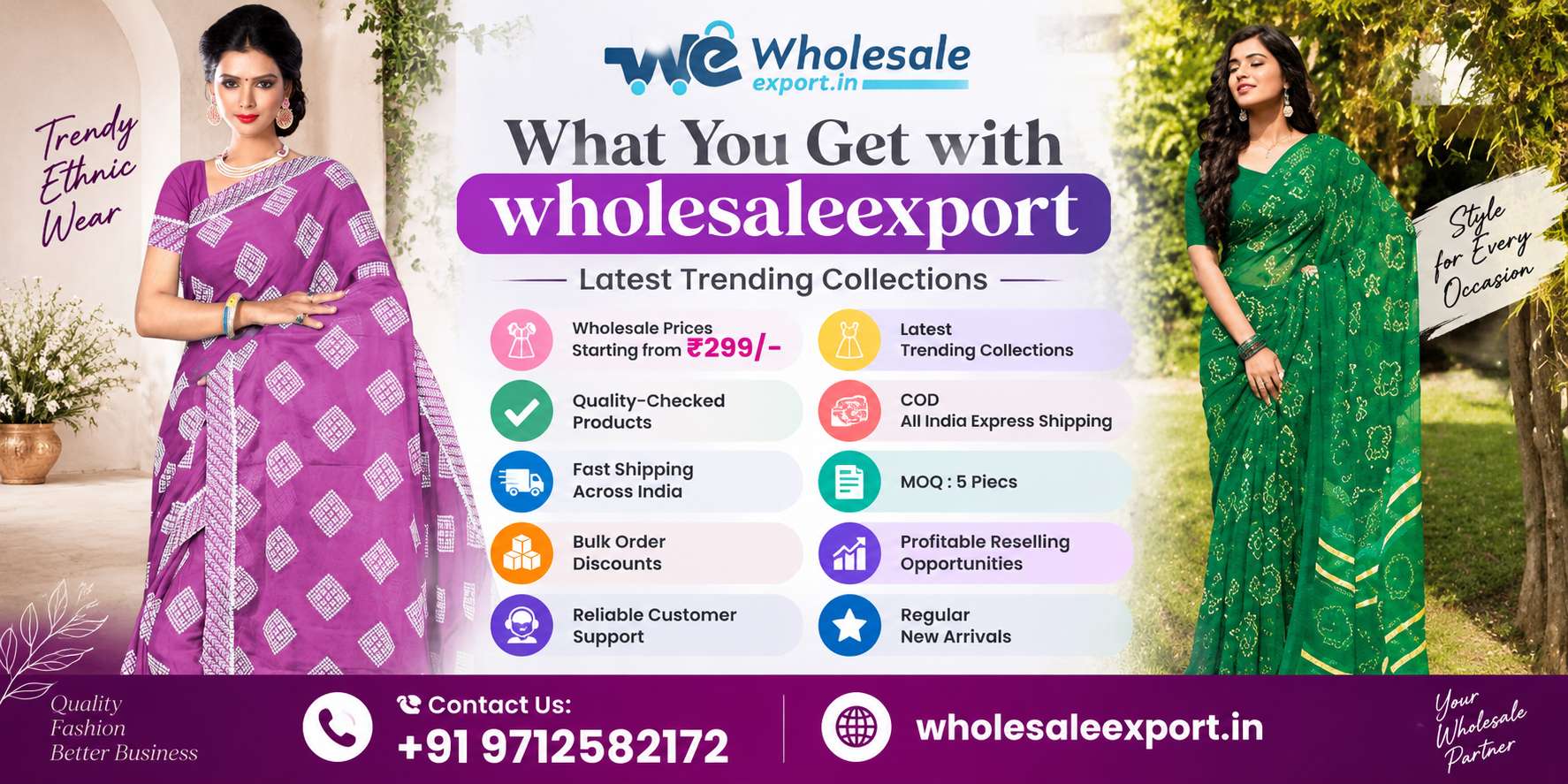
Buyers can enquire about Fast Shipping, COD Support where applicable, and Bulk Order Deals according to the order and destination. Product ranges across the platform include Quality Products Starting From ₹299, with actual availability and pricing depending on the selected collection.
Whether you are purchasing for India, planning retail stock for Nepal or exploring an export order for Australia, build your assortment around quality, commercial designs and realistic customer demand.
Contact Number: +91 9712582172
Website: wholesaleexport.in
Explore the latest wholesale collections, compare suitable products and plan your next purchase with a focus on quality, fresh designs and sustainable retail margins.