


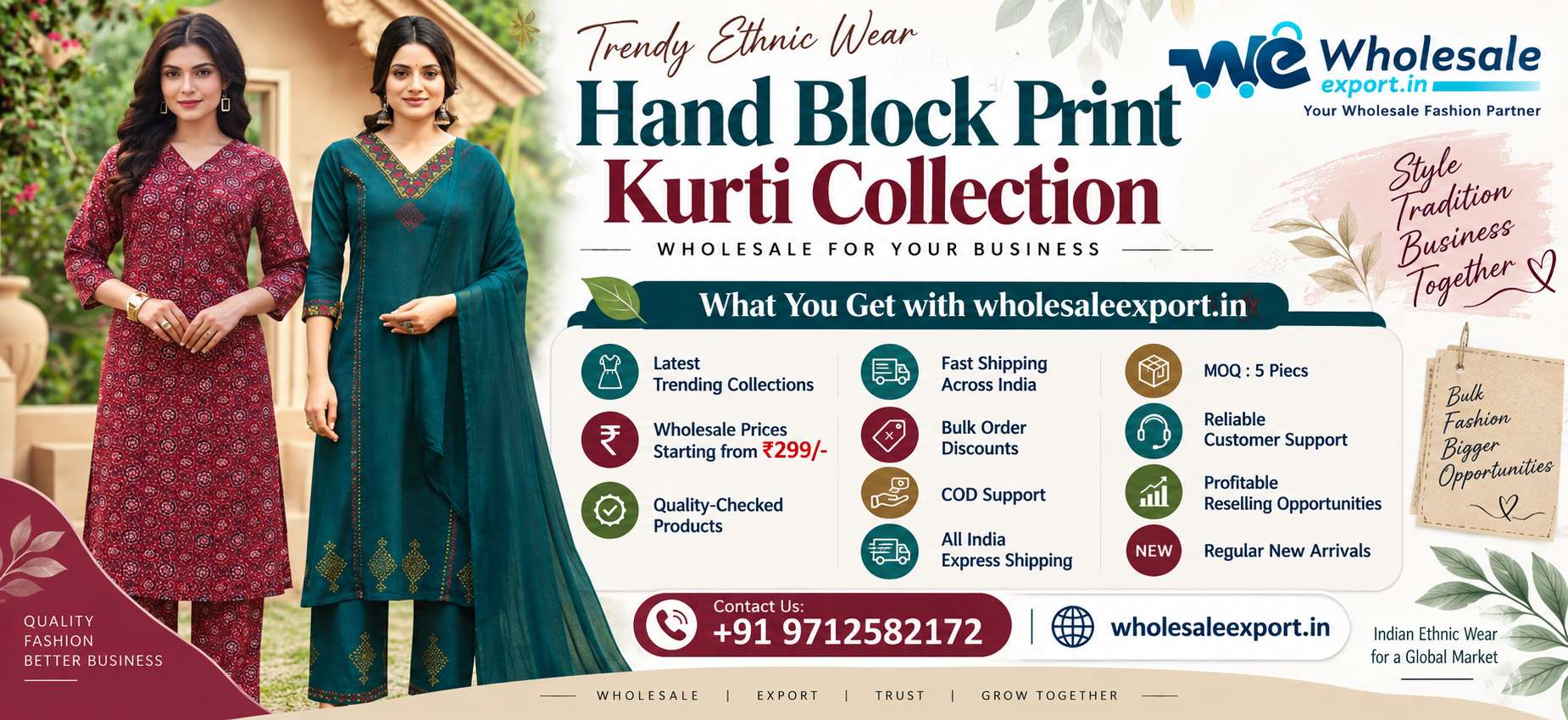
Hand Block Print Kurti Collection Wholesale Online in India 2026 | Wholesaleexport.in
Hand Block Print Kurti Collection Wholesale Online in India 2026 | Wholesaleexport.in
Traditional Indian printing has found a fresh place in modern ethnic fashion, and hand block-inspired kurtis continue to attract buyers who want wearable designs with an artisanal character. For retailers, boutiques, resellers and showroom owners, this category offers a useful combination of everyday appeal, distinctive prints and multiple styling possibilities. Buyers sourcing from Surat can explore different fabrics, silhouettes, print themes and price ranges to build collections suited to their own customer base.
Introduction
The Indian ethnic wear market keeps evolving, but printed kurtis remain a dependable category because they work across seasons, age groups and selling channels. In 2026, buyers are increasingly looking beyond generic prints and paying attention to products that have a more distinctive visual identity. This is where a Hand Block Print Kurti Collection can add variety to a wholesale inventory.
Hand block-style designs are recognised for motifs inspired by traditional Indian printing, including floral patterns, geometric forms, leafy elements, butis, borders and heritage-inspired layouts. Depending on the product and production method, collections may include genuinely hand-block-printed pieces as well as block-print-inspired designs produced through other printing techniques. Wholesale buyers should always confirm the exact printing process, fabric specifications and product details before presenting a particular item as handmade.
For home-based sellers, shop owners, boutique owners, showroom owners, resellers and wholesale buyers, the category provides plenty of merchandising flexibility. Simple designs can be positioned as everyday ethnic wear, while coordinated sets and richer patterns can be offered for office wear, casual occasions, gifting and festive requirements.
Wholesaleexport.in connects wholesale sourcing with Surat's extensive textile ecosystem, making it easier for buyers to explore fresh ethnic wear collections without depending on only one style or product segment. Buyers can compare designs, quantities and available wholesale options according to their market requirements.
Why Hand Block Print Kurtis Continue to Attract Wholesale Buyers
One important reason for the popularity of hand block print kurtis wholesale is their balance between traditional aesthetics and contemporary usability. A kurti does not have to be heavily embroidered to look distinctive. Carefully selected motifs, attractive colour combinations and a well-planned print layout can create a strong visual identity while keeping the garment practical for regular wear.
This characteristic is especially useful for retailers who serve customers looking for comfortable ethnic fashion rather than occasion-only garments. Printed kurtis can be displayed individually, combined with trousers or palazzos, or sold as coordinated kurti sets depending on the collection.
Traditional Look with Modern Styling Possibilities
A traditional print does not limit the garment to a traditional wardrobe. Straight-cut kurtis can be styled with pants, jeans or leggings, while longer silhouettes can work with palazzos and straight trousers. A-line and flared styles give boutiques another way to present the same print category to customers seeking a more expressive look.
For retailers, this flexibility means one printed kurti wholesale category can serve several customer requirements. The final demand will naturally vary by location, season, fabric, design and retail price point, so buyers should build their assortment around actual customer behaviour rather than assuming every pattern will perform equally.
Strong Visual Appeal for Online Selling
Online sellers often need garments that can communicate their design value quickly through photographs, reels and catalogue images. Floral block patterns, contrasting borders and repeating motifs can create visually recognisable products, making the category useful for WhatsApp selling, social commerce, websites and marketplace listings.
Home-based sellers can also start with manageable quantities and test different patterns before increasing their purchasing volume. Established stores, meanwhile, may prefer deeper assortments with multiple designs, sizes and colour options.
Popular Fabrics for Block Print Kurti Collections
Fabric selection influences comfort, drape, print appearance and final price. A successful wholesale assortment therefore needs more than attractive photographs. Buyers should understand what fabric they are purchasing and whether it suits their target market.
Cotton and Cotton-Based Kurtis
Cotton kurtis wholesale remain important for buyers serving customers who prioritise breathable and practical ethnic wear. Cotton-based printed garments are particularly relevant for warm climates and everyday use. Their appearance can range from understated traditional motifs to brighter contemporary combinations.
When evaluating cotton printed kurtis wholesale, buyers should check fabric feel, transparency, shrinkage guidance, colour behaviour and stitching quality in addition to the print itself. These details become particularly important when products are intended for repeat retail customers.
Rayon and Soft-Drape Fabrics
Rayon kurtis wholesale are widely explored by retailers because rayon can provide a soft fall and comfortable silhouette. Depending on the design, rayon-based block prints can work for daily wear, office collections and casual ethnic ranges.
For wholesale buyers, fabric choice should be aligned with selling price. A budget-focused reseller may prioritise competitive entry-level products, whereas a premium boutique may prefer fabric quality, detailing and finishing that support a higher retail positioning.
Kurti Sets and Coordinated Styles
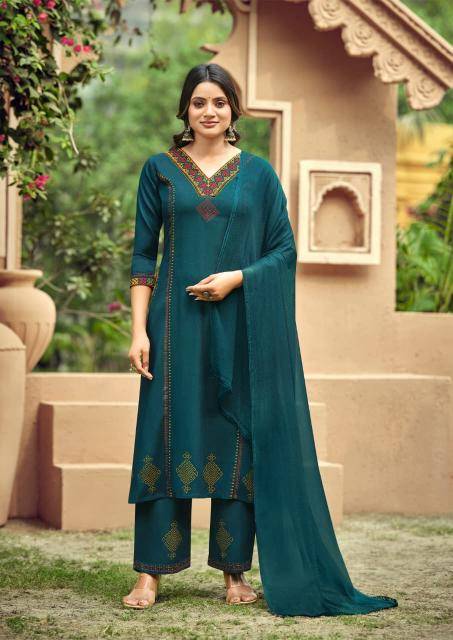
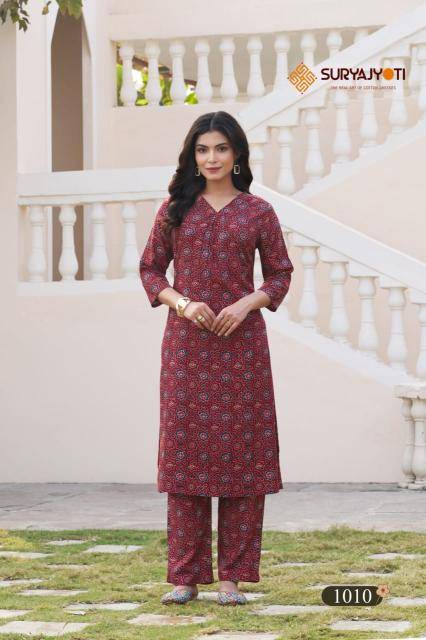
The market is not limited to single kurtis. Kurti pant sets wholesale, printed kurti sets and coordinated ethnic combinations can help retailers increase the perceived completeness of an outfit. Matching or complementary bottoms make it easier for consumers who want ready-to-wear styling rather than assembling separate pieces.
Retailers can therefore consider a mixed inventory consisting of individual kurtis for value-focused customers and coordinated sets for customers looking for a complete outfit.
Understanding the Surat Wholesale Kurti Ecosystem
Surat has developed a large textile trading and production ecosystem that serves buyers from different parts of India and overseas markets. The broader surat textile market includes manufacturers, traders, wholesalers, fabric suppliers, designers, processors and logistics networks covering numerous apparel categories.
Areas around Ring Road are particularly familiar to textile buyers. Nearby commercial zones, including Sahara Darwaza, are also associated with Surat's textile trade. For an outstation buyer, however, sourcing effectively is not simply a matter of visiting a large market. Product verification, supplier communication, stock availability and dispatch management remain important.
A reliable kurti wholesaler in Surat should be able to communicate clearly about available designs, sizes, fabric, quantity requirements, dispatch conditions and applicable commercial terms. Wholesale buyers should also ask whether a displayed design is ready stock or subject to production availability.
Manufacturing and Wholesale Supply Are Not Always the Same
The words manufacturer, wholesaler and supplier are sometimes used interchangeably online, although their actual business functions may differ. A company involved in manufacturing may produce its own garments, while a wholesaler can aggregate products from several brands or production units. Some businesses operate through a combination of both models.
For the buyer, the practical question is whether the supplier can consistently provide suitable products, transparent specifications and dependable fulfilment. This becomes especially important when sourcing kurtis in bulk for multiple stores or regular resale.
How to Choose the Right Hand Block Print Kurti Collection for Your Customers
A good Hand Block Print Kurti Collection should not be selected only because a design looks attractive in a catalogue. Wholesale purchasing works better when the buyer evaluates the product according to the customers who will eventually wear it.
For Boutique Owners
Boutique owners can focus on patterns that give their store a differentiated identity. Instead of stocking a very large number of similar designs, they may select coordinated themes with floral, traditional, minimal or statement prints. Fabric quality, stitching and finishing become especially important when the boutique operates in a premium segment.
Distinctive designer kurtis wholesale can also help boutiques build collections around colour stories or seasonal merchandising. The objective is not necessarily to stock the most designs, but to create an assortment that makes sense for the store's customer profile.
For Shop and Showroom Owners
Physical stores generally serve a wider range of customers, so assortment depth matters. A showroom can combine affordable daily-wear kurtis, mid-range coordinated sets and selected premium styles. Maintaining variation in sizes, colours and silhouettes can help the retailer address more customer preferences.
Shop owners should also consider replenishment potential. A fast-moving product is more useful when fresh stock or similar designs can be sourced without excessive delays.
For Resellers and Home-Based Sellers
Resellers often work through digital catalogues, WhatsApp groups and social media. For them, good product imagery and straightforward specifications are particularly important. Products should be easy to explain in terms of fabric, available size, design, wholesale rate and dispatch conditions.
New sellers can test different ethnic wear wholesale segments instead of investing heavily in one pattern immediately. Once actual enquiries and conversions reveal what their audience prefers, purchasing can become more targeted.
Wholesale Price Factors Buyers Should Understand in 2026
There is no single universal wholesale price for printed kurtis. Rates vary according to fabric, garment construction, printing method, embellishment, size range, quantity, brand, finishing and whether the product is a single kurti or a complete set.
Buyers searching for kurti wholesale price should therefore compare like-for-like products rather than selecting a supplier solely on the lowest quoted figure. A cheaper garment that produces complaints about fabric, stitching or sizing can ultimately be more expensive for a retailer than a slightly higher-priced product with better consistency.
What Can Influence Bulk Pricing?
Order volume is one factor, but it is not the only one. Ready-stock availability, design complexity, fabric cost, production quantity and packaging can all affect the final rate. Some collections may be sold catalogue-wise, while others can have different minimum quantity conditions.
Buyers should confirm the latest rate and stock before making commitments to their own customers because textile inventory can change quickly. This is particularly relevant during festive demand or when a specific design begins receiving strong market attention.
On Wholesaleexport.in, buyers can explore wholesale fashion categories with products available across different price bands, including quality products starting from ₹299 in eligible collections. Actual prices, minimum quantities and availability should always be checked for the specific product selected.
Wholesale Sourcing for India and Export Markets
Wholesale ethnic wear sourcing is no longer limited to buyers physically visiting Surat. Digital catalogues, online product discovery and organised shipping have made it easier for businesses to evaluate collections remotely. This is relevant for buyers across India as well as businesses sourcing Indian ethnic fashion for international markets.
For example, wholesale buyers in Nepal, Malaysia and Australia may have different customer preferences, climates, sizing expectations and retail price points. An export order should therefore be planned around the destination market rather than simply duplicating an Indian domestic assortment.
Businesses considering kurti export from India should discuss quantities, packing, shipping arrangements, documentation and destination-specific requirements before confirming an order. Transit costs and import requirements can affect the landed cost, so international buyers should calculate the complete commercial picture rather than only the ex-Surat product rate.
Experience Matters in Wholesale and Export
Vastralife brings wholesale and export experience since 2017, along with practical industry exposure to ethnic wear sourcing and wholesale customer requirements. This experience helps in understanding the different expectations of resellers, boutiques, retailers and bulk buyers.
Premium product quality is also important when a retailer is building repeat business. While style attracts the first enquiry, fabric, finishing, fit and overall product satisfaction can influence whether the customer purchases again. For that reason, professional wholesale sourcing should balance fashion trends with dependable product standards.
Digital Buying Is Changing the Kurti Wholesale Business
The traditional wholesale model often required buyers to travel, inspect samples and spend significant time moving between suppliers. Physical market visits remain valuable, but online sourcing now gives retailers another practical option. Buyers can shortlist products before travelling or, where suitable, complete their purchase remotely.
For retailers researching a wider assortment, exploring wholesale rayon kurtis can help compare printed styles and fabric options alongside block-print-inspired ranges. Buyers planning a broader store inventory can also review mens wear wholesale when expanding beyond women's ethnic products.
These digital sourcing options are particularly helpful for buyers located far from Surat. However, online convenience should still be combined with proper product checking. Ask for current details, understand the order conditions and confirm dispatch information before placing significant bulk orders.
Building a Profitable Printed Kurti Assortment
Profitability in wholesale fashion depends on more than buying at a low rate. Retailers need products that match their audience, sell within a reasonable period and leave enough margin after shipping, marketing and operational costs. A well-planned Hand Block Print Kurti Collection can contribute to that mix when selected according to real demand.
Use a Good-Better-Premium Product Mix
One practical strategy is to maintain multiple price levels. Entry-level products can attract price-sensitive customers, mid-range products can form the core of the assortment, and selected premium designs can provide higher-value options. This approach can work for boutiques, showrooms and online sellers because customers rarely have identical budgets.
Instead of competing only on discounting, sellers can communicate fabric, styling, print character and use cases. This helps customers understand why two apparently similar kurtis may have different prices.
Choose Designs with Different Use Cases
A wholesale order can include simple everyday prints, office-friendly patterns, brighter weekend styles and selected festive options. This reduces dependence on a single buying occasion and gives retailers more opportunities to present the collection throughout the season.
As the assortment grows, sellers can monitor which sizes, colours and silhouettes receive repeat demand. Those observations should guide the next wholesale purchase rather than relying entirely on general fashion trends.
Trending Hand Block Print Kurti Styles for 2026
Fashion trends change quickly, but the strongest wholesale collections usually combine current styling with designs that can remain wearable beyond a single season. In 2026, buyers can consider a balanced selection of straight kurtis, A-line silhouettes, coordinated sets, comfortable everyday pieces and contemporary interpretations of traditional prints.
A retailer does not necessarily need every trending style. The better approach is to identify which silhouettes suit the store's customers and then introduce new patterns within those proven shapes. This helps reduce unnecessary inventory while keeping the collection visually fresh.
Floral and Botanical Block Prints
Floral patterns are among the most adaptable options in printed ethnic wear wholesale. Small floral motifs can work well for everyday and office wear, while larger botanical patterns can create a stronger statement for boutiques and fashion-focused stores.
Colour selection also changes the character of a floral kurti. Earthy shades can create a traditional feel, pastels can produce a softer contemporary appearance, and brighter combinations can be useful for seasonal or festive merchandising. Wholesale buyers can mix these variations instead of purchasing several nearly identical designs.
Geometric and Traditional Motifs
Geometric prints, butis, border patterns and heritage-inspired motifs offer alternatives to floral designs. They can be particularly useful for retailers whose customers prefer understated ethnic fashion. Straight silhouettes with organised repeating patterns can also work well as office and everyday wear.
When selecting a Hand Block Print Kurti Collection, buyers should look at the complete garment rather than evaluating an individual motif in isolation. Neck design, sleeve treatment, borders, placement of prints and overall colour balance collectively determine how attractive the finished kurti appears.
Printed Kurti Pant and Dupatta Sets
Complete ethnic sets can offer a higher-value selling opportunity compared with single kurtis. A coordinated kurti, pant and dupatta gives the customer a ready-made outfit and reduces the need to match separate garments.
For boutique owners and showroom operators, kurti sets wholesale can be combined with single kurtis to create different retail price points. Sellers can also use complete sets for festive displays, catalogue promotions and social-media reels where a full outfit generally provides more styling possibilities.
Quality Checks Before Buying Kurtis in Bulk
Wholesale purchasing involves larger quantities, so even a small quality issue can become significant when repeated across multiple pieces. Buyers should therefore establish a basic checking process before increasing their order volume.
Check Fabric and Print Quality
The fabric should correspond with the specifications provided for the product. Buyers can evaluate texture, thickness, drape and general finish. For printed garments, examine whether the design presentation is consistent with the stated production method and product description.
Traditional hand-print processes can naturally show minor variations, which may be part of their artisanal character. At the same time, buyers should distinguish acceptable variation from genuine defects. If the collection is described specifically as handmade or hand block printed, confirm that detail with the supplier before using the same claim in retail marketing.
Inspect Stitching and Garment Construction
Attractive fabric cannot compensate for poor garment construction. Wholesale buyers should pay attention to stitching, seams, neckline finishing, sleeves, side openings, buttons where applicable and overall garment shape.
For a premium kurti collection, finishing becomes even more important because customers purchasing at a higher retail price are likely to have stronger expectations regarding construction and presentation.
Understand the Size Range
Sizing is an important consideration for both online and offline retailers. Confirm which sizes are available and obtain accurate garment measurements where possible. Do not assume that an XL or XXL from every manufacturer will have identical measurements.
Retailers serving a wider customer base can also explore plus size kurtis wholesale where suitable sizes are available. Inclusive sizing can expand the potential audience, but only when fit and measurements are communicated accurately.
How Online Resellers Can Market Block Print Kurtis
A good product still needs clear presentation. For resellers and home-based sellers, digital marketing can make a substantial difference because customers cannot physically inspect the garment before making an enquiry.
Create Product-Focused Reels and Short Videos
Instead of showing only a static catalogue image, sellers can create short videos covering the complete garment, close-up print details, fabric movement, neckline and available colours. A simple video can answer many of the questions a customer would normally ask in a physical shop.
Captions should remain useful rather than overloaded with keywords. Mention the garment type, fabric when confirmed, available sizes, selling proposition and ordering method. Location-based phrases can be included naturally when they are relevant to the target customer.
Use WhatsApp for Repeat Customer Sales
WhatsApp remains useful for retailers and resellers who have built a customer list. New arrivals can be organised into separate catalogue messages instead of sending too many unrelated products together. Sellers can also segment customers according to interests such as daily wear, premium kurtis, kurti sets or plus-size products.
Regular customers generally benefit more from relevant updates than from excessive messaging. A smaller, carefully selected catalogue can often be easier to evaluate than dozens of products sent without context.
Create Search-Friendly Product Pages
For businesses operating their own website, individual category and product pages should contain useful information rather than only images. Fabric, style, sizes, colour details, care information, wholesale conditions and relevant buying information can help customers understand the product while also giving search engines clearer context.
Natural phrases such as kurti wholesale online, block print ethnic wear, Surat wholesale kurtis, cotton printed kurti supplier and wholesale ethnic wear can be incorporated where they genuinely describe the page. Keyword repetition should never make the text difficult to read.
Opportunities for Wholesale Buyers Outside India
Indian ethnic fashion reaches customers across many international markets, but overseas demand is not identical everywhere. Retailers sourcing for export should consider local climate, community preferences, popular sizes, cultural occasions and expected retail prices in the destination country.
A buyer supplying Nepal, Malaysia or Australia, for example, may require a different assortment for each market. Lightweight everyday styles may suit one audience, while another buyer may require premium sets, festive products or larger sizes. Market-specific selection is generally more useful than sending the same assortment everywhere.
Calculate Landed Cost Before Confirming Export Orders
The factory or wholesale price is only one component of an international purchase. Packing, freight, applicable taxes, customs requirements and local delivery can affect the final landed cost. Importers should check the requirements applicable to their destination and shipment before confirming a bulk purchase.
For repeat export business, consistent documentation and communication are also important. Buyers need to know what is being dispatched, how it is packed and what commercial documents apply to the shipment.
Plan International Orders Earlier
International buyers purchasing for festivals or seasonal demand should allow enough time for product selection, order processing, transit and local distribution. Waiting until the retail season has already started can reduce the useful selling window.
This planning is especially important for fashion products because demand can move quickly. Retailers should work backward from their expected selling dates and keep reasonable transit and processing buffers.
Internal Linking and Related Wholesale Categories
A block print kurti range works best as part of a broader ethnic wear assortment. Buyers can combine everyday kurtis with kurti sets, dress materials, festive styles and selected premium products according to the needs of their store.
The purpose of internal category exploration is not simply to purchase more products. It allows buyers to compare fabrics, price points and styling options before deciding how much inventory should be allocated to each segment. This can be particularly helpful for a new reseller who is still learning what customers respond to.
Wholesaleexport.in can be used to explore multiple wholesale categories and current product options from one sourcing platform. Availability can change as collections move, so buyers should confirm current stock and commercial details when they are ready to order.
Who Can Benefit from This Wholesale Category?
Home-Based Sellers
Home-based sellers can use printed kurtis to build a manageable ethnic wear business through WhatsApp, Instagram, Facebook and personal customer networks. Starting with selected designs can help test demand before committing to larger quantities.
Boutique Owners
Boutiques can curate designs around a specific aesthetic rather than competing only on volume. Traditional prints, premium fabrics and carefully chosen silhouettes can support a more distinctive product presentation.
Retail Shop Owners
Retailers can use block print kurtis as part of their daily-wear and semi-casual sections. Maintaining different price points and sizes can make the assortment relevant to a wider customer group.
Showroom Owners
Showrooms typically need greater variety. Single kurtis, coordinated sets, premium pieces and seasonal products can be merchandised together to provide customers with multiple options.
Resellers and Wholesale Buyers
Resellers can focus on catalogue-friendly products with clear specifications, while larger wholesale buyers can plan quantities according to store networks and regional demand. In both cases, repeat purchasing should be driven by actual sales performance rather than assumptions.
Why Industry Experience Matters When Choosing a Wholesale Supplier
Fashion wholesale involves more than simply sending a product catalogue. Buyers often need information about fabric, stock, quantity, dispatch, market suitability and new arrivals. Experience in the textile trade helps a supplier understand these practical requirements.
Vastralife has been working with wholesale and export requirements since 2017, building industry expertise around women's ethnic wear and the needs of different types of wholesale customers. For buyers sourcing through Surat's textile ecosystem, this experience supports a more informed approach to product selection and wholesale supply.
Surat's manufacturing and trading network around the surat textile market, Ring Road and Sahara Darwaza provides access to a wide variety of textile products. The advantage for buyers comes from combining that variety with sensible selection, transparent product information and quality awareness.
Premium product quality remains important regardless of whether the customer is a small reseller or a large showroom. The objective should be to source products that create value for the buyer and ultimately provide a satisfactory experience to the retail customer.
Customer FAQs
1. What is a Hand Block Print Kurti Collection?
A Hand Block Print Kurti Collection generally refers to kurtis featuring motifs and layouts associated with traditional block-print aesthetics. Some garments may be genuinely hand block printed, while others can use block-print-inspired patterns created through different production techniques. Buyers should verify the exact printing method with the supplier when authenticity of the process is important.
2. What is the wholesale price of block print kurtis?
The wholesale price depends on fabric, printing method, design, stitching, size range, brand, quantity and whether the product is a single kurti or coordinated set. Wholesaleexport.in offers eligible quality product collections starting from ₹299, while individual product rates and availability should be confirmed before ordering.
3. Can boutique owners and home-based resellers purchase wholesale kurtis?
Yes. Boutique owners, home-based sellers, retail shops, showroom owners, resellers and other wholesale buyers can source products according to applicable minimum-order and catalogue conditions. New sellers should confirm the MOQ for the specific collection they want to purchase.
4. Can wholesale kurtis be supplied outside India?
International supply can be arranged subject to order details, destination, shipping availability and applicable export requirements. Overseas buyers should confirm freight, documentation, payment conditions and import requirements for their country before placing an order.
5. Which fabrics are popular for printed kurtis?
Cotton, cotton-based fabrics, rayon and various blended fabrics are commonly used depending on the collection. Each material has different characteristics in terms of feel, drape, seasonality and price, so buyers should check the exact fabric specification before purchasing.
6. Are block print kurtis suitable for everyday wear?
Many printed kurtis are designed for everyday, casual and office use, although suitability depends on fabric and garment styling. Lightweight designs can work well for regular wear, while premium sets and detailed styles may be positioned for outings and festive occasions.
7. How should a reseller select designs for the first wholesale order?
A new reseller can begin with a balanced selection of colours, patterns, silhouettes and price points rather than purchasing a large quantity of one design. Actual customer enquiries and sales can then guide future restocking decisions.
8. Can I source kurtis directly from Surat?
Yes. Surat is one of India's major textile sourcing centres, with extensive wholesale, trading and manufacturing activity. Buyers can source through physical market visits as well as online wholesale platforms, depending on the supplier and collection.
Explore the Latest Wholesale Collections
If you are building or expanding an ethnic wear business in 2026, explore collections according to your customers rather than simply following every market trend. The right combination of attractive prints, suitable fabrics, practical sizes, competitive pricing and consistent quality can help create a stronger wholesale assortment.
At Wholesaleexport.in, wholesale buyers, shop owners, boutique owners, showroom owners, home-based sellers and resellers can explore Latest Collections, Wholesale Pricing, Trendy Ethnic Wear and bulk sourcing opportunities from the Surat textile market ecosystem.
Buyers can enquire about Fast Shipping, available COD Support, Bulk Order Deals and Quality Products Starting From ₹299. Product availability, MOQ, COD eligibility, shipping charges and current prices may vary by collection and destination, so confirm the applicable terms when ordering.
For Wholesale & Bulk Order Enquiries:
Website: wholesaleexport.in
Contact: +91 9712582172
Whether you are sourcing for a boutique, retail store, showroom, resale business or international wholesale requirement, a carefully selected printed kurti range can give your customers more variety while keeping traditional Indian design relevant to modern wardrobes. Explore the latest products, compare suitable options and build your next collection around the designs, quality and price points that make sense for your market.