


Floral Print Kurti Wholesale: Latest Designs, Prices & Buying Guide 2026
Floral Print Kurti Wholesale: Latest Designs, Prices & Buying Guide 2026
Floral kurtis continue to hold a strong place in women’s everyday fashion because they combine easy styling, comfortable fabrics and designs that work across different age groups. For retailers and resellers, this makes floral collections a practical category to stock throughout the year. From lightweight summer kurtis and rayon styles to coordinated sets and premium printed designs, buyers can build a varied collection according to their customer profile, budget and selling location.
Introduction
The Indian ethnic wear market keeps changing, but floral prints have remained remarkably adaptable. Every season brings new colour combinations, print scales, silhouettes and fabric choices. In 2026, buyers are looking beyond basic floral patterns and choosing collections that combine contemporary styling with comfortable, commercially practical fabrics.
For boutique owners, shop owners, showroom owners, home-based sellers and online resellers, choosing the right floral print kurti wholesale collection is therefore not simply about selecting attractive photographs. The real buying decision involves fabric quality, stitching, size availability, wholesale price, design variety, repeat demand, stock rotation and the reliability of the supplier.
Surat has developed a large ecosystem around textile trading, garment sourcing, processing and manufacturing. Areas around the Surat textile market, Ring Road and Sahara Darwaza connect buyers with a wide range of women’s ethnic wear categories. Digital wholesale platforms have made this sourcing ecosystem accessible even to buyers who cannot regularly travel to Surat.
Wholesaleexport.in is designed around this changing buying behaviour, helping wholesale customers explore multiple fashion categories online and source collections for their individual business requirements. The objective is to make product discovery simpler for businesses in India as well as international markets.
Why Floral Print Kurtis Remain a Strong Wholesale Category
One of the biggest advantages of floral fashion is its versatility. Unlike highly occasion-specific garments, floral kurtis can fit everyday wear, office wear, casual outings, college fashion, summer wardrobes and semi-festive requirements depending on the fabric and styling.
A retailer can therefore create several selling segments from a single broad category. Affordable cotton and rayon prints may appeal to everyday customers, while detailed floral patterns, coordinated bottoms, dupattas, embroidery and premium fabrics can address customers looking for a more elevated appearance.
Broad Customer Appeal
Floral designs are available in subtle as well as bold interpretations. Small repetitive flowers can create a neat everyday appearance, while larger botanical patterns can give a kurti a stronger fashion identity. Pastel flowers, tropical motifs, traditional Indian florals, block-inspired prints and contemporary digital patterns give buyers enough variety to serve different customer groups.
This broad appeal is particularly useful for kurti wholesalers and retailers because inventory does not have to depend entirely on one narrow fashion trend. A well-balanced assortment can include simple daily-wear products alongside statement designs.
Suitable for Multiple Selling Channels
Today, a wholesale kurti may ultimately be sold through a physical store, boutique, WhatsApp catalogue, Instagram page, marketplace, reseller network or home-based business. Floral garments photograph well and allow sellers to build visually varied digital catalogues without every design looking identical.
For online sellers, good product photographs combined with clear information about fabric, size, length, colour and price can make product presentation much easier. This is one reason online sourcing has become increasingly relevant for small and established fashion businesses alike.
Popular Floral Kurti Styles to Consider in 2026
The best assortment depends on the retailer’s target customer rather than one universal trend. However, several styles can be considered while planning a wholesale kurti collection for 2026.
Straight Floral Kurtis
Straight-cut kurtis are commercially useful because of their familiar silhouette and easy styling. They can be paired with trousers, leggings, palazzos or jeans, allowing the customer to use the same kurti in different ways.
Retailers targeting working women and everyday ethnic wear buyers can consider straight floral designs in breathable fabrics and wearable colour combinations. Neck detailing, buttons, piping and carefully placed prints can help distinguish a design without making it overly decorative.
A-Line and Flared Floral Kurtis
A-line and flared silhouettes give floral prints more movement and visual impact. They can work particularly well for customers who prefer relaxed fits or slightly dressier everyday outfits. Depending on the construction, these products may also be marketed for casual gatherings and daytime occasions.
Floral Kurti Sets
Kurti sets have become an important category for retailers because the customer receives a coordinated look rather than having to select a bottom separately. A printed kurti with matching or contrasting pants can offer convenience while giving the retailer a higher-value product to display.
Three-piece combinations with a dupatta can move the product closer to the suit-set category. For wholesale buyers, keeping a mix of single kurtis and complete sets can help address different budgets.
Plus-Size Floral Kurtis
Size inclusivity is becoming increasingly important in women’s fashion. Wholesale buyers should evaluate not only the number of designs available but also the size range offered by each collection. Attractive floral designs in extended sizes can help retailers serve customers who are often offered fewer fashionable options.
When buying plus size kurtis wholesale, check whether the garment has been proportioned correctly rather than simply enlarged from a smaller size. Bust measurement, sleeve width, armhole, hip room and garment length all influence customer comfort.
Best Fabrics for Floral Print Kurti Wholesale Buying
The same floral design can perform very differently depending on the base fabric. Fabric selection influences comfort, drape, print appearance, selling price and the type of customer likely to purchase the garment.
Cotton Floral Kurtis
Cotton remains attractive for warm-weather and daily-wear collections. Buyers looking for cotton kurtis wholesale often prioritise comfort, breathable construction and easy styling. Floral patterns complement cotton particularly well because they naturally suit casual and summer wardrobes.
Before placing a bulk order, buyers should verify fabric feel, colour quality and garment finishing. A lower purchase price is not automatically better if the product creates complaints after washing or does not match customer expectations.
Rayon Floral Kurtis
Rayon is widely used in women’s ethnic wear because of its soft feel and fluid fall. It works particularly well with printed designs and can be used for straight kurtis, flared silhouettes and kurti sets. For businesses that want fashionable products within an accessible range, rayon can provide a useful balance between appearance and commercial pricing.
Viscose, Muslin and Premium Fabric Options
Retailers serving boutiques or premium customers can explore floral designs in muslin, viscose blends and other refined fabrics. These fabrics can support softer prints, sophisticated colour palettes and more elevated styling. The wholesale price may be higher, but the potential retail positioning is also different.
Wholesale buyers should compare products within the same quality segment rather than evaluating every kurti only by its lowest available price. Fabric, stitching, print execution, accessories, finishing and presentation collectively determine the product’s actual value.

Why Surat Matters for Kurti Wholesale Sourcing
Surat is closely associated with India’s textile and women’s ethnic wear supply chain. Its interconnected network of fabric suppliers, processors, traders, manufacturers and wholesalers makes it possible to source products across multiple price and fashion segments.
The commercial zones around Ring Road and Sahara Darwaza are familiar to textile buyers visiting the city. The wider Surat textile market ecosystem gives businesses access to sarees, kurtis, dress materials, salwar suits, lehengas and other fashion categories.
For a buyer searching for a kurti manufacturer in Surat or a multi-brand wholesale supplier, this concentration can make collection building easier. Instead of depending on a very limited product range, retailers can compare fabrics, designs and price levels according to their target market.
Manufacturing and Wholesale Ecosystem
Surat’s advantage extends beyond the availability of finished garments. The city has links across textile processing and garment manufacturing, helping new trends move through the supply chain relatively quickly. This matters in fashion wholesale because retailers often need fresh products rather than relying on the same collection for a long period.
Wholesale buyers should still evaluate individual suppliers carefully. Product consistency, dispatch communication, genuine photographs, stock availability and support after an order are as important as the city from which the products are sourced.
How to Choose the Right Floral Kurti Supplier
A supplier relationship can directly affect inventory turnover and customer satisfaction. Before increasing purchase quantities, businesses should evaluate the supplier on practical factors instead of selecting products only from catalogue images.
Check Product Variety
A useful supplier should offer enough variety to help you serve different customers. Look for options across fabrics, patterns, sizes, silhouettes and price ranges. This becomes especially important for resellers and boutiques that need frequent new arrivals to keep their customers engaged.
Compare Quality With Price
Wholesale buyers naturally compare prices, but the cheapest product may not always generate the strongest margin after customer complaints, slow sales or quality issues are considered. Examine the overall value: fabric, stitching, finishing, print quality, design appeal and expected retail positioning.
For home-based sellers with limited starting capital, smaller carefully selected assortments can sometimes be more practical than buying large quantities purely to achieve a lower unit price.
Look for Regular New Arrivals
Fashion businesses depend on freshness. Customers who repeatedly visit the same store or reseller page expect to see something new. Suppliers with regular collections can make it easier for sellers to maintain active catalogues and respond to changing demand.
Wholesaleexport.in provides access to different women’s fashion categories for buyers who want to source products online without limiting themselves to one style. Vastralife’s wholesale and export experience since 2017 also contributes industry knowledge developed through working with wholesale customers and different market requirements.
For international wholesale buyers, product selection can be planned according to the customer base in markets such as Nepal, Australia and Canada. Climate, community preferences, festival demand, sizing and retail price expectations may vary by country, so export buying should be planned according to the destination market rather than simply copying an Indian retail assortment.
Another factor is how easily the supplier allows buyers to expand beyond one category. A retailer who initially purchases floral kurtis may later want kurti sets, Pakistani suits, dress materials, sarees or other ethnic wear. Working with a broader wholesale source can simplify purchasing, particularly when several product categories need to be arranged for the same sales season.
Wholesale Buying Strategy for Different Types of Sellers
The right floral print kurti wholesale strategy depends on where and how the garments will ultimately be sold. A boutique, a large showroom and a home-based reseller may purchase from the same wholesale market, but their ideal product mix can be very different.
Home-Based Sellers and Online Resellers
Home-based businesses usually benefit from controlled inventory. Instead of putting most of the available budget into one design, sellers can build a broader catalogue with different colours, prints and price points. This allows them to understand what their customer base prefers before increasing quantities.
Digital product images are especially important for this segment. Clear front views, fabric information, size details and realistic colour presentation can make WhatsApp, Instagram and social-commerce selling easier. Regular new arrivals also give resellers fresh content to share with customers.
Boutique Owners
Boutiques can focus more strongly on differentiation. Premium fabrics, distinctive floral patterns, coordinated sets, unusual neck designs and refined finishing can help create an assortment that feels less generic.
A boutique does not necessarily need hundreds of similar pieces. Carefully chosen products across several styles can provide variety while preserving a more curated identity. Buyers can also combine everyday printed kurtis with premium ethnic wear to cover different customer occasions.
Retail Shop and Showroom Owners
Physical stores generally need depth as well as variety. If a displayed design starts selling quickly, availability in multiple sizes and colours becomes important. Store owners should therefore ask about size sets, catalogue quantities and stock continuity before committing to larger orders.
Retailers operating in different parts of India can also plan their collection around local climate and purchasing behaviour. Lightweight products may have longer selling seasons in warmer regions, while festive and layered combinations may perform differently according to season and local demand.
Wholesale Buyers and Distributors
Higher-volume buyers need to consider consistency, dispatch capacity and repeat sourcing. When quantities increase, even a small difference in quality or supply reliability can affect a significant number of end customers. Bulk buyers should therefore evaluate the supplier’s communication and fulfilment process along with the product price.
How to Plan Wholesale Price and Retail Margin
Buying at wholesale price is only the first stage of building a profitable fashion business. The final retail calculation should consider purchase cost, shipping, packaging, payment charges, marketing expenses and any operational costs associated with selling the product.
For example, two floral kurtis may look similar in a catalogue while differing substantially in fabric weight, print quality, stitching and finishing. A slightly higher-cost product may sometimes support stronger retail positioning and better customer satisfaction.
Businesses should create multiple price bands instead of depending entirely on one segment. Entry-level products can attract price-sensitive buyers, mid-range designs can form the core collection, and premium pieces can serve customers who prioritise design and quality.
Do Not Calculate Margin Only on Purchase Price
A practical margin calculation includes the complete landed cost. If a garment requires additional packaging or has higher shipping weight, that cost should be considered before deciding its selling price. International buyers should similarly account for applicable freight, import-related expenses and local costs in their destination country.
For a growing reseller, healthy inventory rotation can sometimes be more valuable than trying to achieve the maximum possible percentage margin on every garment. A product that sells repeatedly can contribute more to the business than a high-margin design that remains unsold.
Internal Links for Expanding Your Wholesale Collection
Retailers building a broader women’s ethnic wear catalogue can explore plus size kurtis wholesale options to add more inclusive sizing and expand their potential customer base.
Businesses that want to complement kurtis with occasion-oriented ethnic wear can also explore wholesale Pakistani suits for additional designs, fabrics and coordinated outfit options.
A diversified collection can be particularly useful around festive and wedding seasons, when customers may purchase different types of garments for separate occasions. The objective should be to expand categories strategically rather than adding unrelated stock simply to increase catalogue size.
Wholesale Kurti Buying for Export Markets
Indian ethnic wear has a customer base beyond India, making export an important opportunity for wholesalers, retailers and ethnic-fashion businesses serving overseas communities. However, international buying requires more planning than simply selecting attractive designs.
For buyers serving Nepal, product selection can include everyday kurtis, coordinated sets and festive ethnic styles according to seasonal demand. Businesses selling in Australia may consider the requirements of Indian-origin customers as well as seasonal differences compared with India. Buyers supplying Canada can similarly build collections around community events, festivals, weddings and everyday ethnic fashion.
Plan International Orders Early
International buyers should avoid leaving seasonal inventory purchases until the final moment. Product availability can change quickly, especially for popular catalogues. Dispatch time, transportation and destination-side processing should all be considered while planning stock.
Before placing a large export order, buyers should confirm product details, quantities, size requirements and shipping arrangements. Clear communication at the ordering stage reduces avoidable confusion later.
Choose Products According to the Destination Market
Not every bestselling product in India will automatically become the bestselling product overseas. Local customer demographics, climate, cultural events, purchasing power and preferred garment styles can all affect demand.
Export buyers can therefore build a mixed assortment instead of depending on a single design. Floral kurtis, kurti sets, dress materials and occasion wear can be selected according to the specific retail audience.
What to Check Before Placing a Bulk Kurti Order
A few basic checks can substantially improve wholesale purchasing decisions. Before confirming an order, understand exactly what you are purchasing and how it fits into your retail strategy.
Fabric and Product Specifications
Check the stated fabric, garment type, work or print details and whether the product includes only the kurti or additional pieces. A catalogue photograph can communicate the appearance, but specifications help determine how the product should be presented to customers.
Available Sizes
Size availability should match your existing customer profile. If your store receives frequent requests for larger sizes, stocking only smaller sizes can result in missed sales even when the designs are attractive.
Minimum Order Quantity
Understand whether the product is supplied as a catalogue set, individual pieces or another wholesale combination. MOQ can vary by collection and product, so buyers should confirm the applicable requirement before ordering rather than assuming every catalogue follows the same rule.
Current Stock Availability
Fashion stock can move quickly. A catalogue available today may not remain fully available after several days, particularly when a design receives strong market demand. Buyers who have identified products suitable for their customers should therefore verify current availability when they are ready to purchase.
Shipping and Delivery
Delivery planning matters for both domestic and export businesses. Ask about dispatch procedures and estimated transportation requirements, particularly when stock is being purchased for a festival, promotional campaign or scheduled retail launch.
Floral Kurti Trends Retailers Can Watch in 2026
The floral print kurti wholesale category is becoming more varied rather than being defined by one dominant style. Buyers can expect floral elements to appear across everyday kurtis, coordinated sets, relaxed silhouettes and premium ethnic combinations.
Soft colours and subtle floral patterns can work well for customers seeking understated fashion, while brighter colours and larger prints can create stronger visual appeal for social-media selling. Placement prints, border combinations, contrasting bottoms and mixed floral-geometric designs can further differentiate collections.
Comfort-Focused Fashion
Comfort continues to influence buying decisions. Attractive garments that are difficult to wear repeatedly can have a narrower market than products that combine styling with practical comfort. Fabric feel, fit and ease of movement therefore remain important even when the design is trend-driven.
Coordinated Looks
Customers increasingly appreciate outfits that reduce the effort of matching separate garments. Kurti-pant combinations and complete ethnic sets can address this requirement while helping retailers increase the average value of an individual sale.
Extended Size Options
Offering broader sizing can open a retailer to more customers. Rather than treating larger sizes as an entirely separate fashion category, businesses can look for contemporary prints and silhouettes offered across an expanded size range.
Why Online Wholesale Sourcing Is Useful for Growing Businesses
Traditional visits to wholesale markets remain valuable, but online sourcing has changed how retailers discover products. A buyer located outside Surat can now review new catalogues without travelling every time fresh inventory is required.
Wholesaleexport.in helps buyers browse wholesale fashion products online, making it easier to evaluate new arrivals and plan purchases remotely. This can be particularly helpful for home-based sellers and retailers operating far from major textile hubs.
Online wholesale also allows businesses to review products at their own pace. Instead of making every decision during a short physical market visit, buyers can compare designs with their existing inventory, discuss potential products with their sales team and identify gaps in their current assortment.
The benefit becomes stronger when online convenience is supported by genuine industry experience. Vastralife has been involved in wholesale and export since 2017, with experience serving buyers looking for different women’s ethnic wear categories. Product quality, market understanding and practical wholesale support remain important whether the transaction begins online or offline.
Customer FAQs
1. Where can I buy floral print kurtis wholesale online?
Wholesale buyers can explore floral kurtis and other women’s ethnic wear through Wholesaleexport.in. Before ordering, check the latest catalogue details, available sizes, wholesale price, MOQ and current stock availability for the selected products.
2. Are floral kurtis suitable for reselling throughout the year?
Yes, floral kurtis can work across multiple seasons because floral designs are available in different fabrics and styles. Lightweight cotton and rayon options can suit everyday and warmer-season demand, while richer fabrics and coordinated sets can address festive or occasion-oriented customers.
3. Can boutique owners buy floral kurtis from Surat suppliers?
Yes. Boutique owners can source from the Surat textile ecosystem and online wholesale platforms connected with the market. Buyers should select designs according to their boutique positioning, customer budget, fabric preference and required size range.
4. What should I check before buying kurtis in bulk?
Check fabric details, stitching, print quality, size availability, catalogue quantity, MOQ, price, current stock and dispatch information. For larger orders, confirming these details before payment can make inventory planning more efficient.
5. Can wholesale kurtis be supplied for international markets?
Export requirements can be discussed according to the destination, quantity and available products. Buyers serving markets such as Nepal, Australia and Canada should plan their orders early and select products according to their local customer demand.
6. What type of floral kurti is suitable for a home-based reseller?
Home-based sellers can begin with a balanced mix of wearable designs, popular sizes and different price levels. Instead of concentrating the entire budget on one catalogue, a varied selection can help identify which designs generate the strongest response from customers.
7. Are plus-size floral kurtis available for wholesale buyers?
Plus-size options are available across many ethnic wear collections, although exact sizes depend on the individual catalogue. Buyers should verify measurements and size availability before confirming the order.
8. How can a retailer choose the right wholesale price range?
Start with the spending pattern of your customers and calculate the complete landed cost of the garment. Maintaining entry-level, mid-range and premium options can help a store serve a wider audience without depending on a single price segment.
Build Your 2026 Wholesale Collection with Wholesaleexport.in
If you are preparing fresh inventory for your boutique, retail shop, showroom, online store or reselling business, Wholesaleexport.in can help you explore fashion products sourced for wholesale requirements.
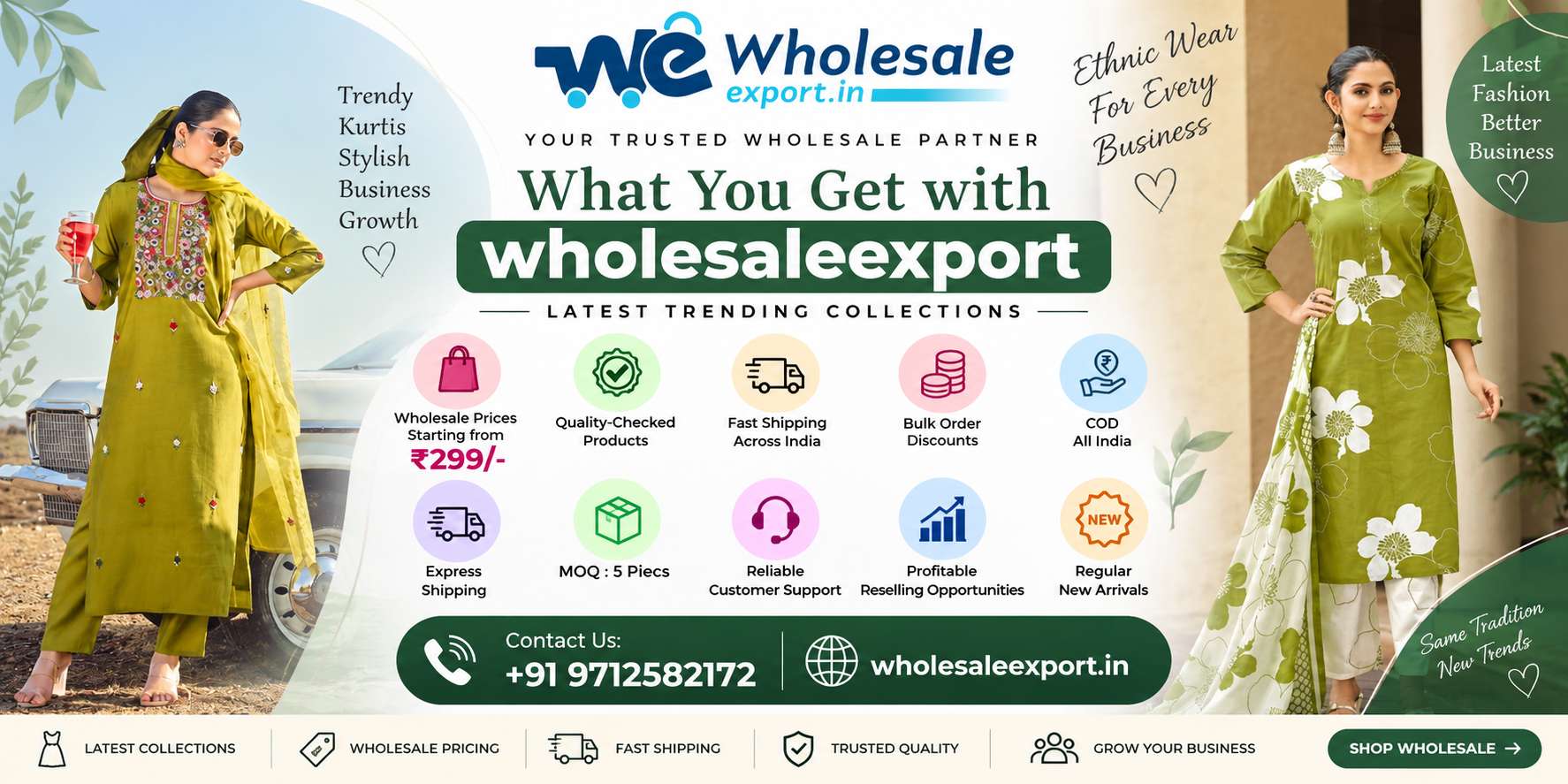
Discover Latest Collections, competitive Wholesale Pricing, Trendy Ethnic Wear and regularly updated designs for different customer segments. Buyers can explore options for Fast Shipping, available COD Support, Bulk Order Deals and Quality Products Starting From ₹299, subject to the applicable product and order terms.
Whether you are building an everyday kurti range, expanding into coordinated ethnic sets or sourcing stock for a larger retail operation, the focus should remain on products that combine quality, wearable design and sensible wholesale pricing.
Contact Us: +91 9712582172
Website: wholesaleexport.in
Explore Wholesaleexport.in for fresh wholesale fashion collections and build your next inventory selection with products suited to today’s ethnic wear market.