


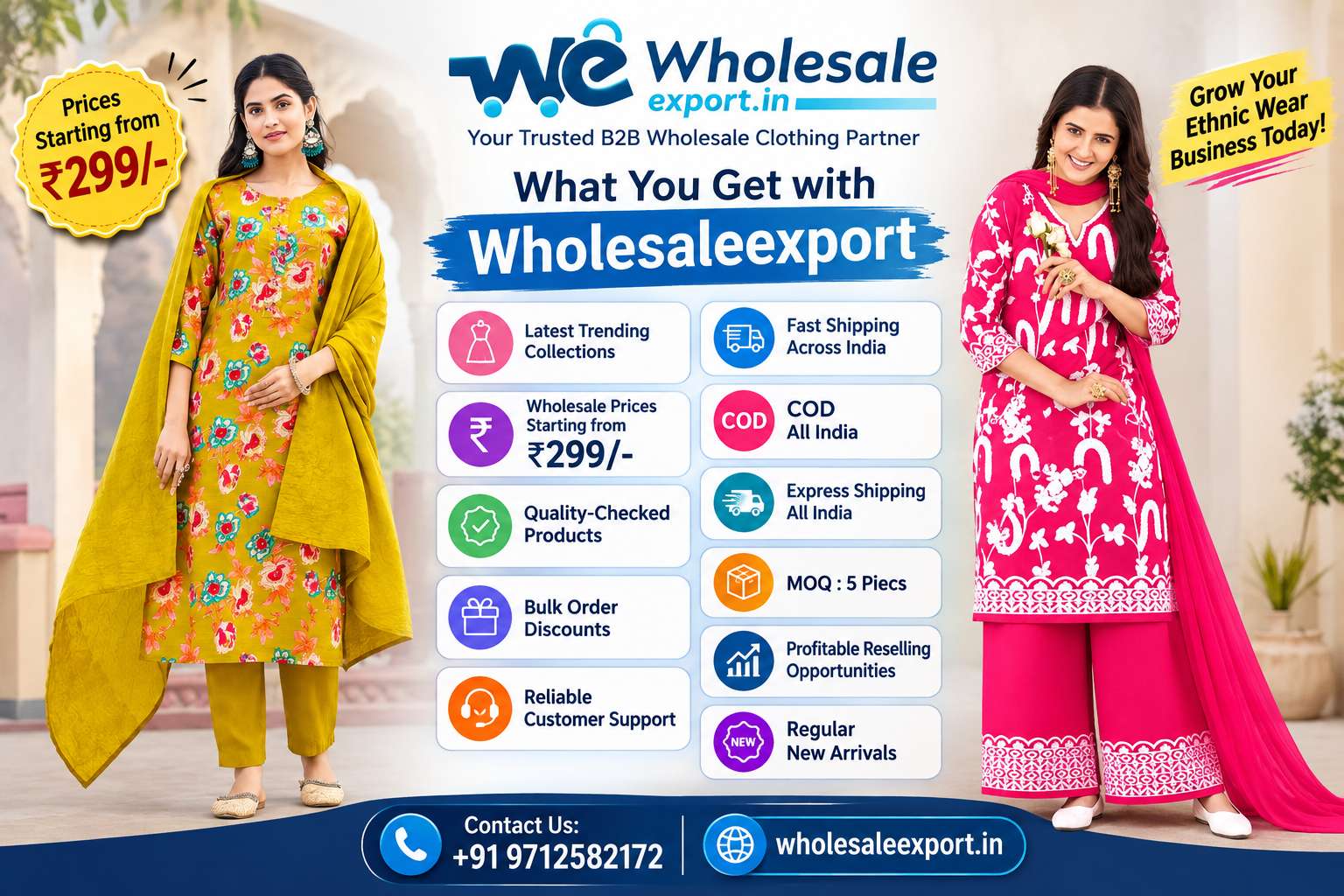
Festival Kurti Wholesale Buying Guide for Shop Owners in 2026
Festival Kurti Wholesale Buying Guide for Shop Owners in 2026
Festival shopping creates one of the strongest opportunities of the year for ethnic wear retailers. Customers look for fresh colors, elegant embroidery, comfortable fabrics and outfits that feel special without becoming difficult to wear. For retailers, the challenge is selecting festive stock early enough, balancing different price points and avoiding excessive inventory once the celebration period ends.
Introduction
India's festive calendar gives fashion retailers multiple selling opportunities throughout the year. Navratri, Durga Puja, Diwali, Raksha Bandhan, Ganesh Chaturthi, Karwa Chauth, Eid and the wedding season can all influence demand for women's ethnic wear. The exact buying pattern differs by region, but kurtis and complete kurti sets remain commercially important because they combine traditional appeal with practical styling.
A well-planned festival kurti wholesale buying guide should therefore focus on more than attractive catalogs. Shop Owners need to understand customer budgets, fabrics, silhouettes, colors, size demand, quantities and the timing of each purchase.
This becomes especially important in 2026 because customers are discovering fashion faster through Instagram, WhatsApp, online marketplaces and short-form videos. A design can attract attention quickly, but trends can also move quickly. Retailers who purchase purely on visual appeal without understanding their own customers may end up holding stock after the season.
Whether you are a Home-Based Seller, Shop Owner, Boutique Owner, Showroom Owner, Reseller or professional Wholesale Buyer, a structured buying strategy can help turn festive demand into healthier inventory turnover.
Why Festival Kurtis Are Important for Ethnic Wear Retailers
Kurtis occupy a useful position between everyday clothing and heavily traditional occasion wear. Depending on fabric and detailing, the same category can serve customers looking for an affordable festive outfit as well as those searching for something more premium.
This flexibility gives retailers an opportunity to create several selling price levels within one category. A shop can stock simpler printed and lightly embroidered designs for value-conscious customers while keeping selected premium kurti sets for customers who want a more elaborate festive look.
Easy to Style for Different Occasions
Festival kurtis can be paired with trousers, palazzos, skirts, shararas, leggings or dupattas depending on the silhouette. Ready-to-wear sets simplify this further because the complete combination has already been coordinated.
For customers who want an outfit they can purchase and wear without additional matching, wholesale kurti sets can be particularly attractive.
Useful Across Different Age Groups
Kurti fashion is not restricted to one age segment. Younger shoppers may prefer contemporary cuts, brighter combinations and fusion styling, while mature customers may prioritize comfortable fits, elegant embroidery and traditional patterns.
Shop Owners can use this variety to build a festive section that appeals to more than one customer profile instead of relying on a single fashion trend.
Start Festival Buying with Your Customer, Not the Catalog
Wholesale catalogs are designed to attract buyers, but the most attractive catalog is not necessarily the most profitable one for your store. Before purchasing, review what your own customers bought during previous festive seasons.
Check the strongest-selling sizes, average retail price, preferred fabrics and colors. Also review which products received inquiries but failed to convert. These records provide more useful buying information than general assumptions about what is trending.
Understand Your Average Customer Budget
A retailer whose customers generally purchase affordable ethnic wear should not suddenly allocate most of the festival budget to premium products. Similarly, a boutique known for designer fashion may weaken its positioning by stocking only entry-level products.
Divide your buying budget across realistic festival kurti price ranges. This allows customers to find products within their expected spending level while giving the retailer opportunities for upselling.
Study Previous Festival Sales
Look at actual data from the previous season. Which colors sold first? Which sizes remained? Did customers prefer kurti-only pieces or complete sets? Which price range generated the highest number of conversions?
Even a simple spreadsheet or handwritten record can improve the next purchasing cycle considerably.
Best Festival Kurti Styles to Consider in 2026
There is no single design that works for every market. The strongest assortment generally combines proven silhouettes with selected newer trends.
Embroidered Kurtis
Embroidered kurtis wholesale collections are a natural choice for festive retail because embroidery creates an occasion-ready appearance without necessarily requiring the weight or price of heavily embellished garments.
Retailers can explore neckline embroidery, border detailing, thread work and strategically placed motifs according to the desired price segment.
Kurti Pant Dupatta Sets
Three-piece sets remain useful for customers who want a coordinated traditional outfit. A kurti, matching or contrasting bottom and dupatta create a complete presentation that can work for puja, family gatherings and festive visits.
For retailers, complete sets also make visual merchandising easier because the customer immediately sees the finished look.
Anarkali-Style Kurtis
Anarkali silhouettes provide a dressier appearance and can bridge the gap between ordinary kurti sets and heavier occasion wear. Depending on fabric, flare and embellishment, they can serve mid-range as well as premium festive customers.
Printed Festive Kurtis
Not every festival shopper wants heavy embroidery. Attractive prints combined with festive colors, subtle detailing and a good silhouette can work well for customers seeking comfortable clothing for longer celebrations.
This segment can be especially important for retailers whose customers prioritize repeat wear after the festival.
Choosing the Right Fabrics for Festive Kurti Collections
Fabric affects appearance, comfort, selling price and customer satisfaction. Shop Owners should avoid selecting garments purely according to photographs because two visually similar designs can feel completely different when worn.
Cotton and Cotton Blends
Comfort-oriented festive shoppers often prefer breathable fabrics, particularly in warmer regions. Printed cotton, cotton blends and similar lightweight constructions can work for daytime functions and casual festive gatherings.
Rayon and Flowing Fabrics
Rayon-based garments can offer attractive drape and comfort across various kurti silhouettes. Retailers should still evaluate fabric quality and finishing rather than assuming all products within the same fabric category will perform identically.
Silk-Look and Occasion Fabrics
For more traditional festive positioning, silk-look fabrics and richer textures can create a premium visual effect. These can be combined with embroidery, zari-inspired detailing or decorative dupattas for customers wanting a stronger celebration look.
How to Select Festive Colors That Sell
Color selection is one of the most visible elements of festive buying. Bright and rich tones traditionally receive attention during celebrations, but modern customers also purchase softer and more contemporary palettes.
Retailers can consider maroon, rani pink, red, mustard, royal blue, bottle green, teal, purple and festive orange while also testing selected pastel shades, depending on regional demand.
Do Not Buy Every Design in the Same Color Family
A wholesale catalog can sometimes contain several attractive designs in similar shades. Buying too many of them can make the store display appear repetitive.
Instead, build visual variety across warm colors, jewel tones, neutrals and selected pastels. This gives customers more reasons to explore the collection.
Regional Festival Preferences Matter
A color combination performing strongly for Navratri customers in Gujarat may not have exactly the same demand pattern during Durga Puja in another market. Shop Owners should combine broader trends with local buying knowledge.
Plan the Correct Size Mix Before Buying Wholesale
Size planning can have a greater effect on profitability than many retailers realize. A popular design cannot generate a sale when the required customer size is unavailable.
Review historical sales to determine how much inventory should be allocated across regular and extended sizes. Avoid automatically purchasing equal quantities of every size unless your actual customer data supports that distribution.
In 2026, broader size availability can also create a valuable retail opportunity because customers increasingly expect fashionable options across different body types.
Keep Plus-Size Festival Demand in Your Buying Plan
Extended sizing should not be treated as an afterthought. Retailers with demand for XL, XXL and larger sizes can deliberately include festive styles designed for those customers.
The design, proportion and fit should remain important. Simply enlarging a garment without considering its silhouette does not necessarily create a good plus-size product.
.jpeg)
Why Surat Is Important for Festival Kurti Wholesale Buying
Surat is one of India's major textile and women's fashion sourcing destinations. Its extensive network connects fabric processing, garment manufacturing, catalog brands, wholesalers and traders supplying businesses across India and overseas.
The surat textile market ecosystem gives buyers access to kurtis, kurti sets, sarees, salwar suits, dress materials, gowns, lehengas and numerous other ethnic wear categories.
Commercial textile markets around ring road and the broader sahara darwaza area are familiar sourcing references for retailers visiting Surat. However, digital wholesale sourcing means businesses no longer need to make a physical trip for every new collection.
Surat Offers Multiple Price Segments
One of Surat's strengths is variety. Buyers can explore affordable fast-moving products as well as more detailed festive and premium collections.
This allows Shop Owners to create an inventory ladder instead of depending on one price point. Entry-level products can attract budget-conscious customers, mid-range collections can form the core festive assortment, and selected premium styles can increase average order value.
How Wholesaleexport.in Helps Festival Fashion Buyers
Wholesaleexport.in provides a digital sourcing route for retailers looking to explore women's fashion collections without depending entirely on repeated physical wholesale market visits.
For businesses preparing festive inventory, this can make product discovery more efficient. Shop Owners can review collections, compare categories and select products according to their own customer segment.
The platform is relevant to Home-Based Sellers, Boutique Owners, Showroom Owners, Resellers and Wholesale Buyers as well as conventional retail shops. Each business can approach wholesale buying differently according to its available capital, target customer and inventory capacity.
Regular New Arrivals Matter During Festival Season
Festive fashion moves quickly. Customers may begin browsing weeks before the main celebration and continue searching for new designs until close to the event.
Access to Latest Collections gives retailers an opportunity to keep their store and digital marketing fresh instead of repeatedly promoting the same catalog throughout the season.
Wholesale Pricing Should Support Retail Margins
The buying price should be evaluated together with shipping, applicable taxes, packaging, advertising and store expenses. A product that appears inexpensive at wholesale level may not necessarily provide the best final margin after all selling costs are included.
Wholesaleexport.in can be used as part of this product-discovery and wholesale purchasing process, helping buyers compare fashion categories and build a more structured festive assortment.
Vastralife's Wholesale and Export Experience Since 2017
Textile experience becomes particularly valuable during seasonal buying because retailers need commercially relevant products rather than random fashion catalogs. Vastralife's wholesale and export experience since 2017 brings practical industry expertise to women's fashion sourcing.
Understanding the requirements of different buyers is important. A Home-Based Seller may prioritize manageable inventory. A Boutique Owner may search for unique designs. A Shop Owner may need dependable mid-range products, while a Showroom Owner may require deeper quantities across multiple price levels.
Professional Wholesale Buyers and export customers may additionally focus on quantities, repeat availability, product information and logistics.
Across all these buyer types, premium product quality remains important because the retailer's own reputation depends on what the final customer receives.
How Much Festival Stock Should a Shop Owner Buy?
There is no universal quantity that every retailer should purchase. The right stock level depends on previous sales, store size, customer traffic, available working capital and the length of the festive selling window.
A practical approach is to divide the festival budget into proven products, new trends and premium experimental designs. Proven categories can receive a larger allocation because there is historical demand, while newer products can initially be tested more cautiously.
Do Not Spend the Entire Festival Budget at Once
Keeping part of the purchasing budget available can give retailers flexibility to respond to actual customer demand. If one style or color begins selling faster than expected, additional capital remains available for repeat buying where stock is available.
This approach can be safer than committing the complete seasonal budget before customers have responded to the collection.
Use Inventory Turnover as Your Guide
The objective is not simply to have a full-looking shop. The objective is to move inventory profitably. A smaller assortment that sells and gets replenished can be healthier than a very large collection that remains unsold after the festival.
Planning Festival Kurtis for India and International Markets
Indian ethnic wear has customers far beyond the domestic market. For this guide, Nepal, Australia and Malaysia are three useful international markets where retailers serving South Asian communities can consider Indian festive collections.
Nepal
Nepal has strong cultural familiarity with Indian ethnic fashion. Kurti sets, sarees, Anarkali suits and festive wear can fit different celebration and wedding requirements. Retailers should adapt the assortment according to local festivals, climate and customer budgets.
Australia
Boutiques serving South Asian communities in Australia can plan festive collections around major Indian celebrations, weddings and cultural events. Because international freight affects landed cost, buyers should calculate shipping economics carefully before setting retail prices.
Malaysia
Malaysia's multicultural environment creates opportunities for Indian ethnic clothing across festive and family occasions. Comfortable fabrics and occasion-appropriate styling can both be important when selecting products for the local climate.
International Wholesale Buyers should always calculate product cost, freight, applicable customs charges and destination expenses before deciding their final selling price.
Build a Festival Collection That Can Sell Beyond One Occasion
One of the smartest ways to reduce seasonal inventory risk is to select at least part of the assortment for repeat use. Customers increasingly appreciate festive garments they can wear again for weddings, family events, temple visits and social functions.
Versatile kurti sets with elegant embroidery, comfortable fabrics and balanced styling can remain commercially relevant after a specific festival has ended.
This gives Shop Owners a longer selling window and reduces dependence on aggressive discounting immediately after the festive period.
Balance Trend with Wearability
A highly trend-driven garment may generate immediate attention, but a wearable design can appeal to customers for a longer period. The strongest festive assortment often includes both.
Retailers who combine trend-led pieces with versatile ethnic styles can serve fashion-conscious customers without making the entire inventory dependent on short-lived trends.
Businesses looking for broader size options can explore plus size kurtis wholesale collections while planning an inclusive festive assortment. Retailers who want to complement ready-made kurtis with unstitched ethnic fashion can also consider wholesale dress materials Surat options for customers who prefer customized stitching.
How to Time Festival Kurti Purchasing for Maximum Sales
Timing is one of the most important parts of festive inventory planning. Buying too early can keep working capital locked for longer than necessary, while buying too late can leave insufficient time for product promotion, customer discovery and repeat purchasing.
Shop Owners should work backward from the main festival date. Allow enough time for product selection, order confirmation, dispatch, transportation, merchandising and marketing. International buyers need an even larger buffer because freight and destination procedures can add additional time.
Start with Core Festival Stock
The first purchase should concentrate on products that have a strong probability of selling. These may include proven kurti silhouettes, commercially successful colors and familiar price ranges. This creates a dependable base collection before experimental trends are introduced.
Add Fresh Designs During the Selling Window
Do not assume the entire festive assortment has to arrive on the same day. Introducing new collections in phases can keep the store looking fresh and give customers a reason to return.
This approach also allows retailers to observe early sales and adjust later purchases according to actual market response.
Create the Right Wholesale Price Mix for Your Store
A successful festive collection should usually offer more than one price level. Customers visiting the same shop can have very different budgets even when they are shopping for the same festival.
An entry-level range can attract customers looking for affordable festive fashion. A strong middle segment can serve the majority of regular buyers, while selected premium products can target customers willing to spend more for fabric, embroidery, styling or a complete outfit.
Entry-Level Festival Range
Affordable kurtis can help generate volume and attract budget-conscious customers. Printed designs, subtle embellishments and practical fabrics can work well in this segment.
Mid-Range Festival Collection
For many retailers, the middle price segment can become the core of festive inventory. Customers in this range often expect a visible festive element such as embroidery, a stylish dupatta, coordinated bottoms or a more distinctive silhouette.
Premium Festival Collection
Premium kurti sets can target weddings, major celebrations and customers looking for a more exclusive appearance. Retailers should be more selective with quantities because the investment per piece is generally higher.
The objective is not to make every product expensive or inexpensive. The objective is to create enough variety for customers to comfortably move between different spending levels.
.jpeg)
How Shop Owners Can Improve Festival Visual Merchandising
The right inventory still needs the right presentation. Festival customers are often shopping emotionally as well as practically, so the store environment should make it easy for them to imagine how an outfit will look during a celebration.
Instead of displaying similar colors together everywhere, create coordinated stories. A section featuring jewel tones can create a rich festive impression, while another section featuring softer colors can appeal to customers seeking understated elegance.
Display Complete Looks
If a kurti is part of a three-piece set, display the kurti, bottom and dupatta together whenever possible. Customers should be able to understand the complete outfit immediately.
Shop Owners can also use accessories for styling inspiration without distracting from the garment itself. The purpose is to help customers visualize a complete festive look.
Create Price-Based Sections
Retailers serving customers across different budgets can organize selected products according to price segments. This makes shopping easier and helps sales staff quickly recommend relevant options.
Digital sellers can use the same approach through WhatsApp catalogs or social media posts such as affordable festive kurtis, premium festive sets and special occasion collections.
Using WhatsApp and Instagram to Sell Festival Kurtis
Digital marketing should begin before the main festival rush. Customers often start researching clothing several weeks before making a final purchase, particularly when they need outfits for multiple events.
Shop Owners can use WhatsApp Status, Instagram Reels, Stories and Facebook to introduce collections gradually. Short videos showing fabric movement, embroidery and the complete outfit can provide more context than a single catalog image.
Do Not Post Everything on One Day
Uploading the entire festive inventory at once can overwhelm customers and leave the business with little fresh content afterward. Divide the collection into themes and release it over several days.
For example, one campaign can feature embroidered kurti sets, another can focus on affordable festival wear, while a third can highlight premium designs.
Use Customer-Friendly Product Information
Include verified size information, fabric, pieces included in the set and price where appropriate. Customers are more likely to inquire seriously when they already understand the basic product details.
Clear information also reduces repetitive questions and allows the retailer to concentrate on genuine buying inquiries.
How Home-Based Sellers Can Approach Festival Wholesale Buying
Home-Based Sellers usually operate with different cost structures from conventional retail stores. They may have lower overheads but also less storage space and a smaller inventory budget.
A controlled festive buying strategy can work particularly well for this business model. Instead of trying to match the inventory of a large showroom, Home-Based Sellers can create a carefully selected collection for their specific customer network.
Focus on a Clear Customer Segment
A seller may specialize in affordable kurtis, plus-size ethnic wear, premium kurti sets or products for working women. A focused assortment is often easier to market than hundreds of unrelated products.
Use Pre-Festival Customer Feedback
Before committing to larger quantities, show selected styles to regular customers and observe their response. This does not guarantee sales, but it can provide useful early information about preferred colors, designs and price points.
Festival Buying Strategy for Boutique Owners
Boutique Owners generally need to offer something more curated than a conventional mass-market store. Their customers may expect distinctive prints, unusual colors, premium detailing or a more carefully selected fashion story.
For boutiques, the festival kurti wholesale buying guide should emphasize selection rather than sheer quantity. A smaller assortment of visually different products can sometimes create more value than several nearly identical catalogs.
Look for Product Differentiation
Distinctive necklines, embroidery placement, dupatta styling, fabric combinations and silhouettes can help a boutique differentiate itself from nearby competitors.
However, uniqueness should remain commercially wearable. A highly experimental design may attract social media attention but still fail to convert into actual sales.
Protect Boutique Exclusivity Through Curation
Even when the same wholesale catalog is available to several retailers, boutiques can differentiate themselves through the way products are selected, styled, photographed and presented.
Strong curation can therefore be as important as the supplier itself.
Festival Inventory Planning for Showroom Owners
Showroom Owners generally require a wider assortment and greater inventory depth. Their festive buying strategy should cover several customer profiles while maintaining enough quantity in proven categories.
A showroom can divide the floor into everyday festive, family-function, premium celebration and wedding-related segments. This makes it easier for customers to navigate a large collection.
Keep Deeper Stock in Proven Sellers
Products with reliable historical demand can justify greater quantities. New fashion trends should initially receive more controlled investment until sales confirm their potential.
Coordinate Staff with Inventory Information
Sales staff should know available sizes, price ranges and major product features. During peak festive traffic, quick recommendations can improve the customer experience and reduce lost sales.
How Resellers Can Build Profitable Festival Campaigns
Resellers can benefit substantially from festival demand because customers are actively searching for fresh clothing. However, competition also increases during this period.
Instead of forwarding random catalogs, Resellers should create themed selections around specific needs. Examples include Navratri kurti sets, Diwali ethnic wear, festive outfits for office celebrations or affordable family-function looks.
Curate Before You Promote
A customer who receives 200 unrelated product images may postpone the decision altogether. A curated group of 10 to 20 relevant designs can make selection easier.
Know Your Margin Before Advertising
Calculate the product price, shipping, packaging, payment charges and advertising costs before deciding the selling price. Discounts should come from a planned margin rather than being offered without understanding profitability.
Managing Unsold Festival Inventory
Even well-planned retailers may have some inventory remaining after a major festival. The goal is to select products that can continue selling rather than immediately treating everything as clearance stock.
Versatile kurti sets can be repositioned for weddings, family functions, office celebrations, temple visits and other occasions. Product photography and marketing language can also be updated to remove festival-specific positioning.
Do Not Discount Too Quickly
Immediate heavy discounting can unnecessarily reduce margins on products that remain commercially wearable. First identify whether the garment has demand beyond the original festival.
Discounting can be used strategically for genuinely seasonal designs or slow-moving inventory, but it should not be an automatic reaction.
Quality Checks Before Selling Festival Kurtis
Festive products often contain embroidery, decorative work, trims, dupattas and other details that require careful checking. Retailers should inspect products before presenting them to customers wherever their business process allows.
Check Stitching and Finishing
Look at seams, necklines, sleeve finishing and hems. A visually impressive garment can still disappoint customers if basic construction is poor.
Check Embroidery and Decorative Work
Review visible embroidery, embellishments and borders for commercially acceptable finishing. Handmade and textile products may naturally have minor variations, but significant manufacturing issues should be identified before sale.
Check the Complete Set
For kurti-pant-dupatta combinations, confirm that all pieces are present and correspond to the ordered design.
Consistent quality control helps protect both customer satisfaction and the retailer's reputation.
Why Wholesale Experience Matters During Festival Season
Festival buying can move quickly, which makes industry knowledge valuable. Retailers need to distinguish between products that simply photograph well and those with stronger commercial potential.
Vastralife's wholesale and export experience since 2017 contributes practical textile industry expertise to this sourcing process. Experience across different categories and buyer requirements helps support more informed wholesale purchasing.
Premium product quality, useful product variety and commercially relevant collections are particularly important when retailers are investing additional working capital for seasonal demand.
Wholesaleexport.in provides an online channel for businesses looking to explore such collections while sourcing from India's textile and fashion ecosystem.
Internal Linking
Retailers planning festive inventory can improve their buying strategy by exploring related categories alongside ready-made kurtis. Different customer groups may prefer complete sets, extended sizes, unstitched dress materials or other ethnic wear depending on budget and fitting requirements.
Wholesaleexport.in allows Shop Owners, Boutique Owners, Home-Based Sellers, Showroom Owners, Resellers and Wholesale Buyers to explore related product categories and build a broader festive assortment rather than depending on a single style.
Customer FAQs
1. When should shop owners start buying festival kurtis?
Retailers should begin early enough to allow time for sourcing, shipping, merchandising and promotion before customer demand peaks. The exact timing depends on the festival, location and supplier lead time.
2. Which kurti styles are good for festive retail?
Embroidered kurtis, kurti-pant-dupatta sets, Anarkali styles, printed festive kurtis and selected premium ethnic sets can all work depending on the target customer and price range.
3. Which colors are popular for festival kurtis?
Rich colors such as maroon, red, royal blue, bottle green, teal, mustard, purple and rani pink are commonly associated with festive fashion. Selected pastel and contemporary shades can also work depending on current customer preferences.
4. Where can I buy festival kurtis wholesale in Surat?
Surat has an extensive textile wholesale ecosystem around Ring Road, Sahara Darwaza and surrounding textile market areas. Buyers can also use online wholesale sourcing platforms to discover Surat-connected collections remotely.
5. Should retailers purchase complete kurti catalogs?
This depends on the supplier's MOQ and the commercial strength of the catalog. Evaluate designs, sizes, price points and customer demand before committing to a full catalog.
6. Are plus-size festive kurtis suitable for wholesale stocking?
Yes, particularly when your customer data shows demand for extended sizing. Retailers should stock sizes according to actual sales patterns rather than treating plus sizes as an occasional add-on.
7. Can Home-Based Sellers buy festive kurtis wholesale?
Yes. Home-Based Sellers can build a focused festive assortment according to their available budget, storage capacity and customer network. Applicable MOQ and supplier terms should always be confirmed before purchasing.
8. Can Indian festive kurtis be exported internationally?
International wholesale orders are possible when the supplier supports the destination. Buyers should confirm shipping, documentation, customs requirements and landed costs before completing an export purchase.
9. How can I reduce leftover festival stock?
Purchase according to historical demand, introduce new designs in phases, maintain part of the buying budget for replenishment and select versatile products that can continue selling after the festival.
10. How should I calculate the retail price of festival kurtis?
Include the wholesale product cost, shipping, applicable taxes, packaging, marketing and operating expenses. Then add a sustainable margin that remains appropriate for your customer segment and local competition.
Get Festival Kurti Wholesale Collections from Wholesaleexport.in
Whether you are preparing for Navratri, Durga Puja, Diwali, wedding season or another major celebration, a planned inventory strategy can help you use your purchasing budget more effectively.
Wholesaleexport.in gives fashion businesses access to Latest Collections, competitive Wholesale Pricing and Trendy Ethnic Wear suitable for different retail customer segments.
Buyers can inquire about Fast Shipping, applicable COD Support for eligible domestic orders, Bulk Order Deals and Quality Products Starting From ₹299, subject to product availability and applicable order terms.
From Home-Based Sellers and Resellers to Shop Owners, Boutique Owners, Showroom Owners and established Wholesale Buyers, the goal is to make festival sourcing more commercially practical while maintaining access to fresh fashion collections.
Contact Number: +91 9712582172
Website: wholesaleexport.in
Conclusion
Successful festive retail is built before customers enter the shop. Product selection, size planning, colors, price segmentation, inventory quantities and purchase timing all influence the final result.
A strong festival kurti wholesale buying guide is therefore not about recommending one trending design. It is about creating an inventory system that combines proven sellers with fresh fashion while protecting working capital.
Surat's extensive textile and manufacturing ecosystem continues to give retailers access to diverse ethnic wear collections in 2026, while online sourcing makes these products easier to discover from other parts of India and international markets such as Nepal, Australia and Malaysia.
Track what your customers actually buy, maintain an appropriate size mix, introduce stock in phases and calculate the complete cost before setting retail prices. Most importantly, select festive garments that customers can enjoy beyond a single celebration. That combination can help create stronger inventory turnover, repeat customers and a healthier long-term ethnic wear business.