


Digital Print Dress Material Wholesale in 2026: Latest Designs from Surat
Digital Print Dress Material Wholesale in 2026: Latest Designs from Surat
Indian ethnic fashion continues to evolve as customers look for clothing that combines traditional styling with fresh colours, modern patterns and comfortable fabrics. For retailers and resellers, this creates a strong opportunity to stock printed unstitched suits that can appeal to different age groups and regional markets. From subtle everyday patterns to colourful statement designs, digitally printed fabrics allow sellers to build a varied collection without depending on one particular fashion trend.
Introduction
The wholesale ethnic wear market has become increasingly diverse, and digital print dress material has developed into a practical category for boutiques, shop owners, home-based sellers and online resellers. Digital printing allows designers to work with detailed motifs, multiple colour combinations and contemporary layouts that may be difficult to achieve through conventional printing techniques.
For a wholesale buyer, however, attractive printing is only one part of the decision. Fabric quality, colour combination, catalogue variety, wholesale price, customer preference and supplier reliability all matter. A product may look excellent in a photograph, but retailers ultimately need merchandise that suits the spending capacity and fashion expectations of their own customers.
Surat plays an important role in this supply ecosystem. The surat textile market connects manufacturing, designing, trading, processing and wholesale distribution across numerous garment and fabric categories. Commercial areas around Ring Road and Sahara Darwaza have long been associated with textile trade, making Surat an important sourcing destination for buyers from different parts of India.
Online sourcing has made this ecosystem accessible beyond buyers who can physically visit Surat. Through Wholesaleexport.in, retailers can explore wholesale fashion collections remotely, compare products and identify merchandise relevant to their business model.
What Is Digital Print Dress Material?
A digital print dress material is generally an unstitched or semi-stitched ethnic wear set in which digital textile printing is used to create the design on the fabric. Depending on the individual product, the set may include kurta fabric, bottom fabric and a dupatta. Buyers should always verify the actual components shown in each catalogue before placing an order.
Unlike a finished ready-made suit, unstitched material gives the end customer flexibility over fitting, neckline, sleeve style, kurta length and overall tailoring. This flexibility remains particularly useful in markets where customers prefer personalised stitching.
Why Digital Printing Is Popular in Ethnic Fashion
Digital printing gives designers significant freedom with motifs and colour placement. Floral patterns, geometric layouts, traditional-inspired motifs, abstract designs, paisley patterns, artistic borders and contemporary compositions can all be developed for different customer segments.
This variety makes printed dress material wholesale useful for retailers who want to refresh their assortment regularly. Instead of filling a store with visually similar products, a buyer can select understated patterns for everyday customers and more expressive designs for shoppers seeking something distinctive.
Digital Print Versus Traditional Print
Traditional printing methods and digital printing both have their place in Indian fashion. They should not necessarily be viewed as direct replacements for each other. Traditional styles can provide a handcrafted or heritage-inspired appearance, while digital techniques allow intricate artwork and flexible colour combinations.
The better option depends on the customer's preference. A boutique may successfully carry both categories, using traditional-looking products for customers who appreciate classic aesthetics and modern digital designs for customers seeking contemporary ethnic wear.
Why Wholesale Buyers Are Adding Digital Printed Suits
Fashion retailers need products that can serve multiple selling situations. Digital print dress material wholesale collections can cover everyday use, office wear, casual occasions, gifting, festive shopping and boutique merchandising depending on the fabric and design.
This flexibility is particularly helpful for retailers who have limited inventory budgets. Instead of committing all available capital to heavy occasion wear, a business can maintain a mix of accessible daily-wear products and selected premium designs.
Useful for Home-Based Sellers
Home-based fashion businesses often sell through WhatsApp, Instagram, Facebook or personal customer networks. Visually attractive printed collections are convenient for this model because customers can browse catalogue photographs before deciding which designs interest them.
A home-based seller should still communicate product specifications clearly. Fabric, available colours, set contents, wholesale or retail price and delivery information should accompany product images whenever possible. Accurate information helps reduce unnecessary questions and improves buyer confidence.
Practical Category for Boutiques
Boutique owners can use printed materials differently from high-volume retailers. They can select distinctive designs and help customers imagine how each material might look after stitching.
For example, the same fabric may be styled as a straight-cut kurta, A-line suit or another silhouette depending on the material and print placement. Styling guidance can increase the perceived value of an unstitched product without relying entirely on discounting.
Suitable for Retail Shops and Showrooms
Physical stores benefit from keeping variety across multiple price levels. A customer entering a showroom may not have a fixed design in mind, so displaying different floral prints, ethnic motifs, subtle colour combinations and premium-looking designs creates more opportunities for conversion.
For larger wholesale buyers, catalogue depth is also useful because products can be distributed across multiple customer segments or locations rather than depending on a single design language.
Important Fabrics Used for Printed Dress Materials
The print attracts attention first, but fabric strongly influences the customer's actual experience. Buyers should therefore evaluate both design and material rather than purchasing solely from catalogue photography.
Cotton Dress Material
Cotton dress material wholesale remains relevant for customers who prioritise comfort and practical everyday wear. Printed cotton suits can be suitable for regular use, office wardrobes and warmer climates, depending on the fabric construction and product specifications.
For retailers, cotton-based collections can provide an important everyday category alongside festive and premium merchandise. Prints ranging from small florals to traditional-inspired motifs allow the category to serve different age groups.
Jam Cotton and Blended Fabrics
Different catalogues may use jam cotton or blended materials to achieve particular texture, appearance or drape. These products can provide retailers with alternatives between basic cotton and richer occasion-focused fabrics.
Because fabric terminology may vary between manufacturers, wholesale buyers should rely on the exact specification of the individual product rather than assuming that every catalogue with a similar name has identical construction.
Premium Fabrics for Higher-Value Collections
Premium dress materials may combine distinctive prints with richer fabrics, decorative detailing or coordinated dupattas. These can be positioned for boutique customers, festive buyers and shoppers who are comfortable paying more for presentation and design.
A balanced store can carry both value-focused and premium collections. This allows the retailer to serve a broader customer base instead of competing only in the lowest price segment.
Surat as a Wholesale Dress Material Sourcing Hub
Surat's textile ecosystem is one of the reasons buyers across India associate the city with wholesale ethnic fashion. Manufacturing units, processors, designers, wholesalers, traders and logistics services operate within the broader textile network.
Ring Road remains strongly connected with textile commerce, while Sahara Darwaza is another familiar reference point for buyers navigating the city's textile trading areas. For an outstation buyer, understanding these names is useful because many suppliers and markets identify themselves through nearby commercial locations.
Physical market visits remain valuable for some buyers, particularly those placing substantial orders or comparing many suppliers. At the same time, online wholesale sourcing has reduced the need to travel to the Surat textile market for every stock replenishment.
How to Choose Digital Print Dress Material for Your Customers
Successful inventory selection begins with understanding who will eventually wear the product. A catalogue that performs strongly for one retailer may not necessarily produce the same result for another because customer age, location, budget and styling preferences can differ significantly.
Study Your Existing Sales
Before ordering a large quantity, examine previous sales. Which colours move fastest? Do your customers prefer light or dark shades? Are floral prints stronger than geometric patterns? Do customers regularly request cotton suits, premium suits or affordable daily wear?
These observations provide better purchasing guidance than following every new trend. Fashion trends can bring customers to a product, but historical sales data helps retailers understand which trends are actually relevant to their audience.
Balance Light and Dark Colours
A varied collection should not depend entirely on one colour family. Soft shades can appeal to customers seeking elegant daytime clothing, while richer shades can work for buyers wanting a stronger ethnic appearance.
Season also influences colour preference, but retailers should avoid treating seasonal rules as absolute. Regional taste and customer demographics can matter just as much as the calendar.
Look at the Complete Set
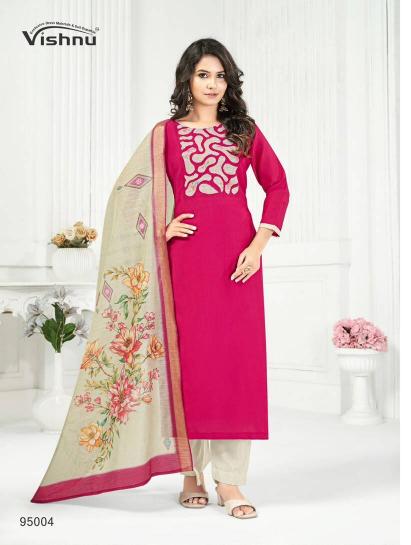
The kurta print may initially attract attention, but buyers should evaluate the entire combination. Bottom colour, dupatta design, borders and overall coordination influence how premium the finished outfit appears.
For ladies dress material wholesale, a well-coordinated set can be easier for a retailer to present because the customer can immediately imagine the complete outfit rather than having to source matching pieces separately.
Wholesale Price and Margin Planning in 2026
Price remains important, but successful wholesale buying is not simply a search for the cheapest available catalogue. Retailers should consider purchase cost together with quality, expected selling price, transportation, taxes where applicable and the speed at which the product is likely to sell.
A lower-cost product that remains unsold can tie up more working capital than a slightly higher-priced design that rotates quickly. This is why inventory turnover should be considered alongside gross margin.
Calculate the Real Landed Cost
The purchase rate is only one component of inventory cost. Depending on the order and destination, a retailer may also need to account for shipping and other applicable business expenses.
For example, if a product appears attractive at wholesale price but becomes difficult to sell after all costs are included, the retailer may need to adjust the quantity or choose a different price segment. Calculating the landed cost before ordering makes pricing decisions more realistic.
Do Not Compete Only Through Discounts
Retailers can protect margins by adding value through selection, customer service, styling suggestions and dependable product information. Boutique owners in particular can differentiate their business by curating designs rather than trying to be the cheapest seller in the market.
For online resellers, good photography, quick communication and trustworthy service can also influence repeat business. Customers frequently evaluate the entire buying experience, not only the final price.
Wholesaleexport.in for Online Textile Sourcing
Wholesaleexport.in is designed to help buyers explore wholesale fashion collections online rather than depending entirely on repeated physical sourcing trips. For home-based sellers, boutiques, retailers, showroom owners and wholesale buyers, this creates a convenient way to review new products and plan inventory from their own location.
The broader industry experience behind the business also includes Vastralife's wholesale and export experience since 2017. Experience in the textile trade helps develop an understanding of catalogue movement, retailer requirements, product selection and the practical expectations of wholesale customers.
Quality remains an important part of long-term wholesale relationships. Buyers need merchandise that represents the catalogue appropriately and fits their intended customer segment. Maintaining attention to premium product quality is particularly important when retailers depend on repeat customers rather than one-time transactions.
Useful for Buyers Outside Surat
A retailer located hundreds or thousands of kilometres from Surat cannot reasonably travel to the market for every new collection. Online wholesale access helps such businesses review new arrivals more frequently and purchase according to their inventory cycle.
This can be particularly valuable for smaller businesses that prefer regular stock rotation instead of making a few very large buying trips each year.
Digital Print Dress Material for Export Buyers
Indian ethnic wear has customers well beyond the domestic market. Retailers serving Indian and South Asian communities overseas may stock dress materials for everyday use, festivals, family functions and cultural occasions.
For buyers in USA, ethnic fashion demand may increase around major Indian festivals and wedding periods. Retailers should account for international transit time when planning seasonal inventory rather than placing orders only when local demand has already peaked.
Australia is another market where Indian clothing businesses can serve diaspora customers, although seasonal planning should account for the country's different climate cycle. Fabric weight, colour and occasion can therefore influence purchasing decisions.
In Nepal, Indian ethnic fashion is familiar to many customers, making suits and dress materials relevant across retail and reselling channels. Export buyers should nevertheless select merchandise according to their own local demand rather than assuming that every Indian bestseller will perform identically in another market.
For all international orders, buyers should confirm current export, shipping, payment and destination requirements before finalising an order.
Growing Demand for Online Wholesale Fashion
The combination of digital catalogues, social commerce and online ordering has changed the way many fashion businesses source products. A reseller can now discover a collection in Surat, present it to customers in another city and replenish stock without spending days travelling through physical markets.
This does not eliminate the value of traditional wholesale markets. Instead, online sourcing adds another channel. Established retailers may combine occasional market visits with frequent online purchases, while new resellers may begin online before expanding their operations.
For digital print dress material, this model is particularly practical because design variety can be displayed visually. Buyers can shortlist products based on print, colour, fabric and budget before making a purchasing decision.
Wholesaleexport.in allows this process to become part of regular inventory planning, helping businesses discover changing fashion collections while remaining connected with Surat's wholesale ecosystem.
Internal Linking: Explore Related Wholesale Categories
Retailers who already sell printed ethnic wear can strengthen their assortment by keeping complementary categories alongside digital prints. Buyers looking for a wider selection of unstitched suits can explore wholesale dress materials in Surat to compare fabrics, prints, colour combinations and designs suitable for different customer segments.
Another useful category for stores that want to expand beyond suits is wholesale sarees in India. Combining sarees and dress materials can help boutiques, shop owners and resellers serve customers shopping for everyday wear, gifting, festive occasions and family functions from the same business.
Building a Profitable Dress Material Collection
A profitable collection is rarely created by purchasing every attractive design available. Better buying decisions come from balancing fashion appeal, customer demand, price range and inventory depth. This is especially important for digital print dress material wholesale, where new patterns and colour combinations can enter the market frequently.
For 2026, retailers can benefit from treating inventory as a continuously evolving selection rather than a fixed seasonal purchase. Fast-moving designs can be replenished when available, while new patterns can be introduced in controlled quantities. This approach can reduce the risk of locking too much working capital into slow-moving merchandise.
Start with Variety Instead of Excess Quantity
For a smaller boutique, reseller or home-based business, having more design options in sensible quantities may be more useful than holding excessive stock of one catalogue. Customers browsing through WhatsApp or social media often respond to visual variety, so multiple colours and print styles can make a collection appear broader.
Once actual sales reveal which patterns perform well, the seller can make future purchases with greater confidence. This is a practical way to use real customer behaviour rather than assumptions when planning stock.
Create Different Price Segments
Not every customer has the same budget. A retailer can therefore divide merchandise into entry-level, regular and premium ranges. Affordable printed materials can serve daily-wear customers, while better fabrics and more detailed designs can be presented to customers looking for premium ethnic fashion.
This segmentation also helps sales staff. Instead of showing every product to every customer, they can first understand the customer's budget and then present suitable options. The buying experience becomes faster and more relevant.
How Resellers Can Sell Digital Printed Dress Materials Online
Digital selling is particularly suitable for printed fashion because customers can discover products visually. WhatsApp Business, Instagram, Facebook and other online channels can be used to showcase catalogue images, new arrivals and available collections.
However, simply uploading hundreds of photographs does not necessarily create sales. Product presentation should answer the basic questions a buyer normally asks: What is the fabric? What does the set include? What is the price? Is the product available? How will it be delivered?
Use Clear Product Descriptions
Every listing should provide enough information for customers to understand what they are considering. Include the fabric description supplied with the catalogue, available design or colour information, set details and relevant ordering information.
Descriptions should remain natural. Repeating phrases such as digital printed suits wholesale, cotton suit material, latest dress material designs and Surat wholesale clothing excessively can make content difficult to read. Search-friendly content works better when useful information comes first and keywords appear naturally within that information.
Use Catalogue Images to Start Conversations
For resellers, catalogue images can function as sales tools rather than simple product photographs. Share selected new arrivals with existing customers, create small themed collections and highlight products relevant to the upcoming season.
A reseller might create separate selections such as everyday cotton prints, office-wear designs, festive dress materials and premium collections. Customers can then browse a relevant group rather than receiving an overwhelming number of unrelated products.
Build Repeat Customers
Repeat business is valuable in wholesale as well as retail. Accurate product information, responsive communication, consistent service and suitable merchandise can encourage customers to return when they need new stock.
This is where industry experience becomes useful. Vastralife's wholesale and export experience since 2017 provides practical exposure to the changing requirements of retailers, resellers and international buyers. Wholesaleexport.in builds on this experience by giving buyers another way to access wholesale collections online.
Choosing Prints According to Customer Type
Print selection should reflect the audience a retailer actually serves. There is no single print that works equally well for every market. Age group, local fashion, occasion, climate and purchasing power can all influence demand.
Floral and Nature-Inspired Prints
Floral patterns remain versatile because they can be interpreted in many ways. Small flowers can create a subtle everyday appearance, while oversized florals can give a garment a more contemporary fashion-led identity.
For retailers, this means floral dress material can be stocked across different price and customer segments rather than being treated as one narrow category.
Traditional and Ethnic Motifs
Indian-inspired motifs can appeal to customers who want a traditional appearance while still enjoying the precision and colour flexibility of digital printing. Paisley-inspired designs, ornamental patterns and heritage-style layouts can work particularly well when coordinated with an attractive dupatta.
Geometric and Abstract Designs
Geometric and abstract prints can provide a modern alternative to conventional ethnic patterns. These designs may appeal to younger customers, working professionals and shoppers who want ethnic clothing without a heavily traditional appearance.
A retailer who understands these differences can build a latest dress material collection that gives customers genuine choice rather than stocking many catalogues that look almost identical.
Seasonal Inventory Planning for Wholesale Buyers
Wholesale purchasing should ideally happen before demand reaches its peak. Waiting until customers begin requesting a seasonal product can leave too little time for selection, ordering, transportation and retail marketing.
Retailers can prepare an inventory calendar around festivals, wedding periods, seasonal changes and local events. The exact timing varies by market, so businesses should use their previous sales records whenever available.
Everyday Collections
Everyday products provide continuity between major festive periods. Comfortable fabrics, wearable colours and practical prints can generate regular demand and give customers a reason to visit the store throughout the year.
These products can be particularly useful for businesses serving office-going women, regular ethnic-wear customers and value-conscious shoppers.
Festive and Occasion Collections
Festive inventory can include richer colour palettes, distinctive dupattas and more elaborate-looking combinations. Retailers should order sufficiently early to allow time for receiving merchandise, photographing or displaying it and promoting the collection before customers begin their main shopping period.
For export buyers, the planning window should generally be even earlier because international transportation and destination-specific processes can add time between purchasing and retail availability.
Manufacturing and Sourcing Advantages of Surat
One of Surat's strengths is the concentration of textile-related activity. The city is connected with fabric trading, processing, printing, garment manufacturing and wholesale distribution. This ecosystem supports frequent product development and gives wholesale buyers access to multiple fashion categories.
Areas associated with Ring Road and Sahara Darwaza are widely recognised within Surat's textile trade. Buyers visiting the city can encounter numerous textile businesses within the broader commercial belt, while online sourcing allows businesses outside Surat to access collections without travelling for every purchase.
For a wholesale buyer, proximity to a strong manufacturing and trading ecosystem can also mean access to frequently changing catalogues. This is important in women's fashion because customers increasingly encounter new designs through social media and expect retailers to refresh their merchandise.
What Wholesale Buyers Should Check Before Ordering
Product selection should involve more than looking at the model photograph. Before confirming an order, buyers should understand the product specifications and commercial terms relevant to that particular collection.
Fabric and Set Details
Check the fabric information and exactly what is included. Depending on the catalogue, a dress material set may have different combinations of top, bottom and dupatta fabrics. Never assume specifications based solely on a similar-looking product.
Available Designs and Stock
Fashion inventory can move quickly. A design visible today may not remain available indefinitely. Wholesale buyers planning promotions should therefore confirm current stock rather than assuming an older catalogue remains fully available.
Wholesale Price
Compare price with fabric, design, product presentation and the retail segment you intend to target. The cheapest option is not automatically the most profitable. A better-looking product with stronger customer demand may provide healthier inventory rotation even when its purchase price is higher.
Minimum Order Requirements
MOQ is particularly important for new resellers. Smaller businesses should understand how many pieces or sets are required before calculating the investment needed to test a category. Larger buyers can focus more heavily on assortment planning and stock depth.
Shipping and Delivery
Confirm shipping information according to the destination and current order. Buyers purchasing for time-sensitive events should keep an adequate buffer instead of planning around the shortest possible delivery scenario.
Opportunities for Home-Based Sellers and New Resellers
A physical showroom is no longer the only way to enter fashion retail. Home-based sellers can begin by building a customer network, understanding local preferences and presenting selected wholesale collections through digital channels.
Dress material wholesale online can suit this model because unstitched products serve customers across a broader range of body measurements. Unlike fixed-size ready-made garments, tailoring gives the final buyer more flexibility over fitting.
New sellers should still begin systematically. Select a defined customer group, understand its preferred price range and avoid purchasing random products simply because they appear attractive. Over time, sales history can show which fabrics, prints and colour combinations deserve more inventory.
Wholesale Fashion for International Retailers
International retailers sourcing Indian ethnic wear should combine product selection with local market knowledge. A design that performs strongly in India may appeal differently in USA, Australia or Nepal depending on customer demographics and occasion patterns.
Retailers serving diaspora communities can plan around festivals, weddings, cultural gatherings and gifting periods. They can also maintain everyday collections for customers who regularly wear Indian clothing rather than purchasing it only for special occasions.
When sourcing for export, buyers should consider shipping timelines and applicable destination requirements as part of inventory planning. Wholesaleexport.in can be used to discover products, while order-specific export and logistics details should be confirmed before purchase.
Why Product Quality Matters for Long-Term Wholesale Business
Fashion may attract customers through appearance, but long-term business depends heavily on the experience after purchase. Fabric expectations, print appearance, product finishing and accurate catalogue representation can influence whether customers return.
This is especially important for online resellers because customers often make their initial decision from images. Maintaining attention to quality-checked products and clearly communicating available product information helps create a more dependable selling process.
For boutiques and showroom owners, premium product quality also supports positioning. A retailer trying to develop a strong local reputation needs products that fit the quality expectations associated with its store.
Customer FAQs
1. What is digital print dress material?
Digital print dress material is fabric for an ethnic outfit where the design is created using digital textile printing. Depending on the product, a set may include material for the kurta, bottom and dupatta. Always check the individual catalogue specifications for exact contents.
2. Where can I buy digital print dress material wholesale from Surat?
Wholesale buyers can source through Surat's physical textile markets or explore online wholesale collections through Wholesaleexport.in. Online sourcing is particularly convenient for shop owners, boutique owners, home-based sellers and resellers who cannot visit Surat frequently.
3. Is digital print dress material suitable for reselling online?
Yes. The category is visually suited to catalogue-based selling through channels such as WhatsApp and social media. Sellers should provide clear information about fabric, set contents, availability, price and ordering terms along with the product photographs.
4. What should I check before purchasing dress material in bulk?
Check the fabric specification, complete set contents, design availability, wholesale price, MOQ, shipping details and suitability for your customer segment. For larger purchases, it is also useful to analyse previous sales before deciding the quantity.
5. Can international buyers source dress materials from Surat?
Yes, Indian ethnic fashion is sourced by businesses serving overseas markets as well. International buyers should confirm current export, payment, shipping and destination requirements for their specific order and country before finalising the purchase.
Order Latest Wholesale Collections from Wholesaleexport.in
If you are a home-based seller, shop owner, boutique owner, showroom owner, reseller or wholesale buyer, keeping your inventory fresh can help you respond to changing customer demand. Explore new ethnic fashion collections and select products according to your market, customer budget and selling strategy.
With experience connected to Vastralife's wholesale and export operations since 2017, the focus remains on industry knowledge, practical wholesale sourcing and access to fashion collections for businesses in India and international markets.
What You Get with Wholesaleexport.in:
- Latest Collections for changing fashion demand
- Wholesale Pricing for retailers and resellers
- Trendy Ethnic Wear across popular women's fashion categories
- Fast Shipping options according to order and destination
- COD Support where applicable and subject to current order terms
- Bulk Order Deals for wholesale requirements
- Quality Products Starting From ₹299
Whether you are expanding an established showroom or beginning a home-based fashion business, the right mix of design, quality, pricing and inventory planning can make wholesale purchasing more effective. Explore the latest digital print dress material collections and other trendy ethnic wear categories for your next stock purchase.
Contact: +91 9712582172
Website: wholesaleexport.in