


Designer Embroidered Kurti Collection Wholesale: Latest Styles & Surat Trends 2026
Designer Embroidered Kurti Collection Wholesale: Latest Styles & Surat Trends 2026
Embroidery gives Indian ethnic wear a character that simple prints alone cannot always create. From refined thread motifs and elegant neckline detailing to statement sleeves, coordinated bottoms and festive embellishments, today’s embroidered kurtis are designed for customers who want traditional craftsmanship presented in a modern, wearable form. For retailers and resellers, this category offers enough variety to serve everyday fashion, boutique styling, festive shopping and special occasions within one commercially attractive segment.
Introduction
The Designer Embroidered Kurti Collection has developed into an important category for women’s ethnic fashion in 2026. Instead of restricting embroidery to wedding or festival clothing, designers are now using decorative work across casual kurtis, office-ready styles, kurti-pant sets, coordinated ethnic outfits and premium occasion wear.
This versatility is valuable for Home-Based Sellers, Shop Owners, Boutique Owners, Showroom Owners, Resellers and Wholesale Buyers. A retailer can stock subtle embroidered pieces for customers who prefer understated fashion while also maintaining richer designs for shoppers searching for festive and celebration wear.
The market is also becoming more style-conscious. Customers increasingly notice neckline construction, sleeve detailing, fabric quality, embroidery placement, colour combinations and the way a kurti fits when worn. As a result, successful wholesale sourcing is no longer simply about finding the lowest price. Retailers need designs that look attractive, feel comfortable and offer enough visible value to justify their final selling price.
Surat plays an important role in this supply chain. The broader Surat textile market, including commercial textile areas around Ring Road and Sahara Darwaza, connects fabric sourcing, processing, designing, embroidery, manufacturing, wholesale distribution and export. This ecosystem supports frequent new arrivals across women’s ethnic wear categories.
Why Designer Embroidered Kurtis Are Trending in 2026
Women increasingly want ethnic outfits that can move between different occasions. A well-designed embroidered kurti can be worn for a family gathering, office celebration, dinner, festival or casual social event depending on the fabric and level of decorative work. This flexibility gives the category strong retail potential.
Another reason for its popularity is visual impact. Embroidery adds texture and detail that customers can immediately notice in store displays, catalogues, Instagram reels and WhatsApp product updates. For online businesses, products with visible craftsmanship can be easier to demonstrate through close-up photography and short videos.
Traditional Craftsmanship with Modern Styling
Modern embroidery collections do not need to look excessively traditional. Designers are combining classic threadwork and decorative motifs with contemporary silhouettes, straight cuts, relaxed fits, A-line shapes and coordinated bottoms.
This combination allows younger customers to enjoy Indian craftsmanship without feeling that the outfit is limited to ceremonial use. Minimal jewellery and modern footwear can transform the same embroidered kurti into a more contemporary look.
More Options Across Different Price Segments
Embroidery can be used at several levels. A commercially priced kurti may feature focused work around the neckline or sleeves, while a premium design may include denser embroidery across the front, borders and accompanying pieces.
This gives wholesale retailers opportunities to create entry-level, mid-range and premium collections. Instead of depending on a single price segment, businesses can serve customers with different budgets and buying intentions.
Strong Visual Appeal for Online Selling
Digital fashion selling depends heavily on presentation. Embroidery works particularly well for online promotion because sellers can show detailed craftsmanship through zoomed photographs, reels and short product videos.
A full outfit image communicates the silhouette, while a close-up of the neckline, sleeves or border helps customers understand the detailing. This can make a designer kurti wholesale collection more persuasive when sold through social media or messaging platforms.
Latest Designer Embroidered Kurti Styles for 2026
The strongest collections usually offer more than one embroidery style. Retailers can combine subtle products for regular sales with richer designs for festivals and special occasions. This makes the assortment more useful throughout the year.
Embroidered Straight Kurtis
Straight kurtis remain commercially important because they are familiar, easy to style and suitable for several age groups. Embroidery around the neckline, front panel, sleeves or hem can upgrade a straightforward silhouette without making it difficult to wear.
These kurtis can be paired with straight pants, palazzos, leggings or other suitable bottoms. Neutral shades can work well for sophisticated styling, while brighter colours can attract festive and seasonal shoppers.
Designer Kurti Pant Sets
Coordinated sets are increasingly useful for customers who prefer complete ready-to-style outfits. A kurti and matching pant remove the need to search separately for a suitable bottom, while embroidery can give the set a stronger premium identity.
Retailers can stock minimal embroidered sets for everyday and office use alongside more detailed embroidered kurti pant sets for festive shopping. A dupatta can further elevate selected designs into a more complete occasion-wear look.
A-Line Embroidered Kurtis
A-line silhouettes provide movement while maintaining a structured appearance. Embroidery can be positioned around the neckline, yoke or lower panels to complement the shape rather than overwhelm it.
This style can work across casual, semi-festive and premium segments depending on fabric selection. For retailers, the silhouette provides useful variety beyond standard straight-cut kurtis.
Floral Embroidery Kurtis
Floral embroidery continues to have broad appeal because it can look traditional, romantic or contemporary depending on the colour palette and motif size. Delicate floral work can suit understated designs, while larger patterns can create statement pieces.
Pastel combinations can provide a softer appearance, while maroon, navy, black, wine, bottle green and other deeper shades can support richer festive styling.
Neck Embroidery Kurti Designs
Focused neckline work is commercially effective because customers immediately notice the upper part of an outfit. Embroidery around round, V-shaped, keyhole and other necklines can make a relatively simple kurti appear more finished and premium.
This style can also provide good value for customers who want visible detailing without purchasing an extensively embellished outfit.
Embroidered Plus-Size Kurtis
Inclusive sizing is increasingly important for fashion retailers. Plus-size customers also want fashionable embroidery, attractive colours and contemporary silhouettes rather than being limited to basic designs.
For larger sizes, embroidery placement and garment construction should work together so the final design remains balanced. Well-planned motifs, vertical detailing and comfortable cuts can create an appealing overall appearance.
Popular Embroidery Techniques in Designer Kurtis
A Designer Embroidered Kurti Collection can include several types of surface work. Retailers do not necessarily need technical knowledge of every embroidery method, but understanding the visual differences can help them build a more varied assortment.
Thread Work Embroidery
Thread embroidery is one of the most versatile options for kurtis. Tone-on-tone threadwork can create understated sophistication, while contrasting threads can make motifs more prominent.
Floral, geometric and traditional-inspired patterns can all be created through threadwork. The final effect depends on the density of embroidery, colour combination and base fabric.
Chikankari-Inspired Embroidery
Chikankari-inspired styling is valued for its delicate, elegant appearance. Light-toned embroidery can work particularly well with soft fabrics and subtle colour palettes, making such kurtis suitable for daytime events and refined everyday dressing.
Wholesale buyers should focus on finishing and overall design quality rather than relying only on the embroidery label when comparing products.
Mirror and Decorative Work
Mirror-inspired elements can bring a brighter festive character to ethnic clothing. When combined carefully with thread embroidery, they can create visually attractive kurtis suitable for celebrations and seasonal fashion.
Retailers should consider how much decorative work their customers actually prefer. Controlled detailing may have broader wearability, while heavier designs can be reserved for customers specifically shopping for statement pieces.
Sequin Embroidery
Sequins introduce shine and can make embroidery more noticeable under evening lighting. Selective sequin work around the neckline, motifs or borders can provide festive appeal without making the entire outfit excessively ornate.
For boutiques, refined sequin embroidery can help create a premium look when combined with suitable fabrics and sophisticated colour palettes.
Zari-Inspired Embroidery
Zari-inspired detailing works naturally with traditional Indian styling. It can complement festive shades and richer fabrics, making it useful for Diwali collections, wedding-related shopping and family celebrations.
The key is balance. Embroidery should complement the silhouette and fabric rather than making the garment unnecessarily heavy.
Best Fabrics for Designer Embroidered Kurtis
The appearance of embroidery changes significantly depending on the base material. Fabric also influences comfort, drape, durability and final retail price, so wholesale buyers should evaluate the complete product rather than focusing only on decorative work.
Rayon Embroidered Kurtis
Rayon is widely used for women’s ethnic fashion because of its drape and versatility. Depending on quality and design, rayon can support embroidery for regular wear, semi-festive kurtis and coordinated sets.
Rayon kurti wholesale collections can be particularly useful for retailers seeking commercially accessible products with fashionable detailing.
Cotton Embroidered Kurtis
Cotton and cotton-blend fabrics combine comfort with traditional styling. Light or medium embroidery can transform a comfortable cotton kurti into a polished outfit suitable for work, casual functions and daytime occasions.
For warm-weather markets, breathable fabrics can remain important because customers often prioritise comfort alongside appearance.
Muslin Designer Kurtis
Muslin offers a soft and contemporary look that works well with floral embroidery, digital printing and delicate decorative details. It can be particularly attractive for boutique-style collections where customers want an elegant rather than extremely heavy appearance.
Muslin kurti sets with coordinated pants and dupattas can also create strong visual content for online sellers.
Silk and Festive Fabric Blends
Silk-inspired materials and premium blends can provide a richer base for festive embroidery. They pair naturally with zari-inspired accents, sequins, beads and decorative borders.
These products may sit in a higher price segment, so buyers should evaluate fabric feel, stitching and embroidery finishing together before deciding their retail positioning.


Designer Embroidered Kurti Wholesale Price and Buying Factors
The wholesale price of embroidered kurtis depends on several variables, including fabric, embroidery technique, density of work, embellishments, stitching quality, garment type and order quantity. Buyers should therefore compare products on overall value rather than expecting one standard rate across the category.
A standalone kurti with focused neckline embroidery will naturally have a different cost structure from a three-piece embroidered kurti set with coordinated bottom and dupatta. Similarly, premium fabric and intricate work can move a product into a different retail segment.
Fabric Quality Influences Cost
The base material affects both production cost and customer perception. Better fabric can improve drape, comfort and the overall appearance of embroidery. This is especially important for premium products where customers expect every element of the outfit to feel considered.
Embroidery Density and Technique Matter
Simple motifs require a different level of production from dense all-over embroidery. Additional sequins, decorative elements and detailed borders can also affect manufacturing cost.
Retailers should consider whether the visible work provides enough additional value for their target customer before investing heavily in elaborate designs.
Order Quantity and Business Margin
Bulk purchasing can support better sourcing economics, but wholesale buyers should avoid tying too much working capital into slow-moving stock. A planned assortment across several designs and price points can often provide greater flexibility.
Home-Based Sellers may prefer controlled quantities, while larger Shop Owners and Showroom Owners can build broader selections across multiple colours, sizes and product categories.
Surat Textile Market for Designer Embroidered Kurtis
Surat has developed a large ecosystem around textile production and wholesale fashion. Fabric sourcing, processing, embroidery, stitching, finishing, cataloguing and distribution can all be connected within the broader Surat textile market.
Commercial areas around Ring Road and Sahara Darwaza are familiar sourcing points for businesses dealing in kurtis, kurti sets, dress materials, sarees, salwar suits and other women’s ethnic wear. This concentration supports regular collection updates and allows fashion businesses to respond quickly to changing demand.
Manufacturing and New Collection Advantage
Access to a strong manufacturing ecosystem is valuable in a fashion market where customers continuously look for something new. Changing colours, silhouettes, embroidery concepts and fabric combinations allow retailers to refresh their stock instead of depending on the same styles for long periods.
For resellers, frequent new arrivals also provide fresh material for social media posts, WhatsApp updates and customer broadcasts.
Online Wholesale Sourcing Through Wholesaleexport.in
Not every retailer can travel to Surat whenever fresh stock is required. Wholesaleexport.in provides buyers with an online route to explore changing women’s ethnic wear collections and enquire about current availability, wholesale pricing and order requirements.
Retailers looking to expand their coordinated ethnic wear selection can explore kurti pant set wholesale options as a complementary category. Businesses wanting additional unstitched and semi-stitched ethnic wear choices can also explore wholesale dress materials Surat collections for broader inventory planning.
How Retailers Can Build a Profitable Designer Embroidered Kurti Collection
A successful embroidered kurti business depends on more than selecting beautiful catalogue images. Retailers need a collection that matches customer budgets, local fashion preferences, seasonal demand and realistic stock rotation. The best approach is usually to combine fast-moving commercial designs with a smaller selection of premium statement pieces.
For example, simple thread-embroidered kurtis can serve regular customers, while richer kurti sets with detailed necklines, decorative sleeves and coordinated dupattas can target festive buyers. This balance helps maintain regular sales while still giving the store a premium fashion identity.
Create Different Price Segments
Not every customer enters a shop or online catalogue with the same budget. Maintaining different wholesale kurti price segments allows retailers to serve a broader customer base. Affordable styles can attract price-conscious shoppers, while detailed designer pieces can appeal to customers willing to pay more for distinctive workmanship.
Retailers should also consider the perceived value of each garment. Fabric quality, embroidery, stitching, colour combination and overall presentation should work together so the final selling price feels reasonable to the customer.
Keep Commercial Colours Alongside Fashion Colours
Colour selection can strongly influence stock movement. Black, navy, maroon, wine, bottle green and other established ethnic shades can provide dependable options, while seasonal pastels, earthy tones and brighter colours can make the collection feel fresh.
Instead of purchasing every design in similar shades, buyers can create variety by mixing proven colours with a controlled number of fashion-led tones. Customer response can then guide future reorders.
Mix Individual Kurtis and Complete Sets
Standalone kurtis remain useful for customers who already have suitable bottoms, while complete sets offer convenience. A retailer can therefore maintain both categories rather than depending entirely on one format.
Kurti-pant sets, kurti-dupatta combinations and three-piece ethnic sets can also increase the average retail value of an order. Premium embroidered sets are especially useful for customers shopping for festivals and family functions.
Designer Embroidered Kurtis for Different Customer Segments
The versatility of a Designer Embroidered Kurti Collection allows the same broad category to serve several types of buyers. Understanding these customer groups can help wholesalers and retailers select more commercially relevant stock.
For Home-Based Sellers
Home-Based Sellers can begin with selected designs rather than maintaining large inventory. WhatsApp, Instagram, Facebook and personal customer networks provide practical channels for sharing new collections.
Clear product photographs are especially important for embroidery. Along with a full-length image, sellers can share close-up pictures of neck work, sleeve details, borders and fabric texture. Customers purchasing remotely should be able to understand what makes the design special.
For Boutique Owners
Boutique Owners often benefit from a more curated approach. Instead of stocking a very large number of similar designs, they can focus on distinctive embroidery, premium fabrics, attractive cuts and sophisticated colour combinations.
Designer kurtis can also be styled with jewellery, handbags, footwear and coordinated bottoms to create complete looks. This type of presentation can help boutiques differentiate themselves from purely price-driven sellers.
For Shop and Showroom Owners
Shop Owners and Showroom Owners generally need greater variety because walk-in customers arrive with different budgets and requirements. Their collection can include cotton kurtis, rayon styles, embroidered kurtis, kurti sets, festive wear and plus-size options.
Display planning also matters. New arrivals and visually striking embroidered pieces can be positioned prominently to attract attention, while commercial basics can remain easily accessible for customers looking for regular wear.
For Online Resellers
Resellers can use embroidery as a strong visual selling point. Short reels showing the complete outfit followed by close-ups of embroidery can communicate product value more effectively than simply posting catalogue photographs.
Descriptions should remain accurate and easy to understand. Mention the relevant fabric, available sizes, product components and work details without using exaggerated claims that may create unrealistic customer expectations.
International Demand for Indian Designer Embroidered Kurtis
Indian ethnic fashion has a customer base across international markets, particularly among South Asian communities. Festivals, weddings, cultural functions and family events create recurring demand for kurtis and coordinated ethnic outfits.
For export buyers, however, the product purchase price is only one part of the commercial calculation. Shipping, packing, customs duties, applicable taxes and local distribution expenses should be considered when estimating the landed cost.
Designer Kurtis for Malaysia
Malaysia offers opportunities for Indian ethnic clothing across regular and festive segments. Lightweight embroidered kurtis can suit customers seeking wearable fashion, while richer sets can be positioned for celebrations and special occasions.
Wholesale buyers can create a balanced assortment rather than focusing exclusively on very heavy designs. A combination of commercially wearable kurtis, coordinated sets and premium festive products can serve a wider customer base.
Indian Ethnic Wear for Canada
Canada has a substantial market for South Asian fashion around weddings, festivals, community events and family celebrations. Designer embroidered kurtis can provide an attractive option for customers who want traditional styling in an outfit that is easier to wear than heavier ceremonial clothing.
Retailers can plan inventory around major shopping periods while maintaining selected year-round styles for regular demand. Size diversity can also be important when building an international assortment.
Wholesale Kurti Opportunities in Nepal
Nepal remains a relevant nearby market for Indian women’s ethnic fashion. Everyday kurtis, kurti sets, festive designs and embroidered collections can all serve different customer segments depending on season and local demand.
International buyers working with Wholesaleexport.in can enquire about current stock, wholesale terms and available shipping arrangements. Final landed costs should always be calculated according to the destination and applicable import requirements.
Quality Factors to Check Before Buying Embroidered Kurtis Wholesale
A beautiful photograph may attract attention, but repeat retail sales depend on the actual product. Wholesale Buyers should evaluate the complete garment whenever possible rather than judging quality only by the amount of embroidery.
Embroidery Finishing
Threadwork should look clean and balanced. Decorative elements should complement the garment rather than appear randomly placed. Loose threads, poorly finished borders or uneven embroidery can reduce the perceived value of an otherwise attractive design.
Fabric Quality and Comfort
The fabric should suit the intended use of the kurti. Everyday products generally need comfortable materials, while festive pieces may use richer fabrics where appearance receives greater emphasis.
Premium product quality comes from the relationship between fabric and design. Expensive-looking embroidery cannot fully compensate for unsuitable fabric or weak construction.
Stitching and Garment Construction
Retailers should consider neckline finishing, sleeve construction, side seams and the overall shape of the garment. Good construction helps the kurti maintain its intended silhouette and improves the customer’s wearing experience.
Colour and Design Coordination
Embroidery colours should complement the base fabric. Contrasting combinations can create visual impact, while tonal embroidery can produce a more refined appearance. Both approaches can work when the colour story feels deliberate.
Vastralife’s Wholesale and Export Experience Since 2017
Fashion sourcing requires practical industry understanding because different businesses have very different requirements. Vastralife brings wholesale and export experience since 2017, with industry expertise across women’s ethnic wear and a focus on supplying commercially relevant collections.
A Home-Based Seller may need smaller, carefully selected assortments, while a Showroom Owner may require wider variety across fabrics, colours and price points. International buyers have additional requirements related to packing, logistics and destination costs. Understanding these differences is an important part of professional wholesale service.
The emphasis on premium product quality, changing fashion trends and regular new arrivals helps retailers build collections according to their customer profile rather than depending on a single style throughout the year.
Why Surat Is Important for Kurti Manufacturing and Wholesale
The Surat textile market has a broad network supporting fabric sourcing, textile processing, embroidery, stitching, manufacturing, trading and distribution. This makes the city relevant for businesses looking for changing women’s ethnic wear collections.
Textile activity around Ring Road, Sahara Darwaza and surrounding commercial areas helps connect different parts of the supply chain. Buyers can find multiple categories including kurtis, kurti sets, sarees, dress materials, salwar suits and festive clothing.
For retailers located outside Surat, online wholesale sourcing reduces the need to travel for every collection update. Wholesaleexport.in provides access to new arrivals and product enquiries for businesses planning stock from different cities and countries.
How to Sell Designer Embroidered Kurtis Faster
Good sourcing is only half of the retail process. The way products are presented can significantly influence customer response, especially when embroidery is the main design feature.
Show Embroidery in Close-Up
A full-length photograph explains the overall silhouette, but detailed images communicate workmanship. Retailers should show the neckline, sleeves, front motifs, borders and other important areas whenever those details contribute to the product value.
Create Short Fashion Reels
Short-form video is useful for demonstrating how the fabric falls and how embroidery appears in movement. Sellers can begin with the complete outfit, move into close-up details and finish with basic ordering information.
Natural presentation generally works better than overcrowding the video with too much text. The garment should remain the main visual focus.
Promote According to Occasion
The same product can appeal differently depending on how it is positioned. A subtle embroidered kurti may be marketed for office celebrations and casual outings, while richer pieces can be promoted for Diwali, weddings, festive functions and gifting.
This occasion-based approach gives retailers more content opportunities and helps customers imagine where they could actually wear the product.
Inventory Planning for 2026
Fashion inventory should remain flexible because demand can change quickly. Retailers should monitor actual sales rather than repeatedly ordering products based only on personal preference.
Track Fast-Selling Designs
Keep records of colours, fabrics, sizes and embroidery styles that sell quickly. Customer enquiries can also reveal demand even when a particular item is temporarily unavailable.
These insights make future wholesale purchasing more data-driven and can reduce unnecessary inventory accumulation.
Maintain Regular New Arrivals
Customers who buy ethnic fashion frequently appreciate seeing something new. Regular collection updates give existing customers a reason to return to the shop, website or WhatsApp catalogue.
New arrivals also provide fresh marketing material. Every collection can generate product posts, reels, customer broadcasts and social media stories.
Prepare Early for Festival Demand
Festive stock should ideally be sourced before peak customer demand begins. Early planning gives retailers time to photograph products, create marketing content, contact previous customers and build awareness before competitors become highly active.
Internal Linking and Related Wholesale Collections
Designer embroidered kurtis perform well as part of a broader ethnic fashion range. Retailers can combine them with kurti-pant sets, cotton kurtis, rayon kurtis, plus-size styles, dress materials, festive suits and other coordinated women’s wear.
The related categories linked earlier in this guide can help wholesale buyers diversify their inventory while keeping the assortment connected to the same customer base. Instead of relying on a single category, businesses can create complementary choices for everyday, office, festive and occasion-based shopping.
Customer FAQs
1. What is a designer embroidered kurti?
A designer embroidered kurti combines a styled garment silhouette with decorative threadwork or other embellishment techniques. Embroidery may appear around the neckline, sleeves, yoke, borders or across larger areas depending on the design.
2. Where can I buy designer embroidered kurtis wholesale?
Wholesale buyers can source embroidered kurtis through Surat’s textile network or explore collections online through Wholesaleexport.in. Buyers should confirm current stock, available sizes, price and order requirements before purchasing.
3. What is the wholesale price of designer kurtis in 2026?
The price depends on fabric, embroidery density, garment construction, embellishments, product components and quantity. Simple embroidered kurtis and premium three-piece sets naturally belong to different price segments.
4. Which embroidered kurti styles are popular for boutiques?
Floral embroidery, elegant neckline work, A-line kurtis, straight-cut designer styles, muslin sets and coordinated kurti-pant combinations can all work for boutiques. The best selection depends on the boutique’s customer profile and selling price range.
5. Can Home-Based Sellers purchase wholesale kurtis?
Yes. Home-Based Sellers can build a business around selected wholesale collections and promote them through WhatsApp, Instagram, Facebook and personal customer networks. Controlled buying can help new sellers understand demand before increasing inventory.
6. Are embroidered kurtis suitable for international export?
Yes, subject to applicable product availability, payment, shipping and destination requirements. International buyers should calculate freight, duties, taxes and other destination costs when estimating their final landed price.
7. Which fabrics are commonly used for embroidered kurtis?
Rayon, cotton blends, muslin, silk-inspired fabrics and other suitable materials can be used depending on the style. Fabric selection should complement the embroidery and intended occasion.
8. How can resellers market embroidered kurtis online?
Use clear full-length photographs, embroidery close-ups, short videos and accurate product descriptions. Showing the details that customers cannot physically inspect online can make purchasing decisions easier.
9. Is COD available for wholesale orders?
COD Support is available on eligible India orders subject to applicable order value, advance confirmation and current company terms. International wholesale orders are handled through advance-payment arrangements rather than COD.
10. How can I check current collections and availability?
Visit wholesaleexport.in or contact +91 9712582172 for current collection enquiries, wholesale pricing, product availability and bulk-order information.
Why Choose Wholesaleexport.in for Designer Embroidered Kurtis?
Wholesaleexport.in is designed for retailers, boutiques, resellers, showroom owners and other Wholesale Buyers looking for women’s ethnic fashion from Surat and India’s wider textile supply network.
Backed by Vastralife’s wholesale and export experience since 2017, the sourcing approach combines industry expertise, regular new arrivals and attention to premium product quality. Buyers can explore collections according to their customer segment instead of following a one-size-fits-all purchasing strategy.
Whether the target market is India, Malaysia, Canada or Nepal, successful wholesale buying begins with suitable products, realistic pricing, good quality and disciplined inventory planning.
Shop the Latest Designer Embroidered Kurti Collection
Refresh your women’s ethnic wear inventory with Latest Collections, competitive Wholesale Pricing and Trendy Ethnic Wear selected for Home-Based Sellers, Shop Owners, Boutique Owners, Showroom Owners, Resellers and Wholesale Buyers.
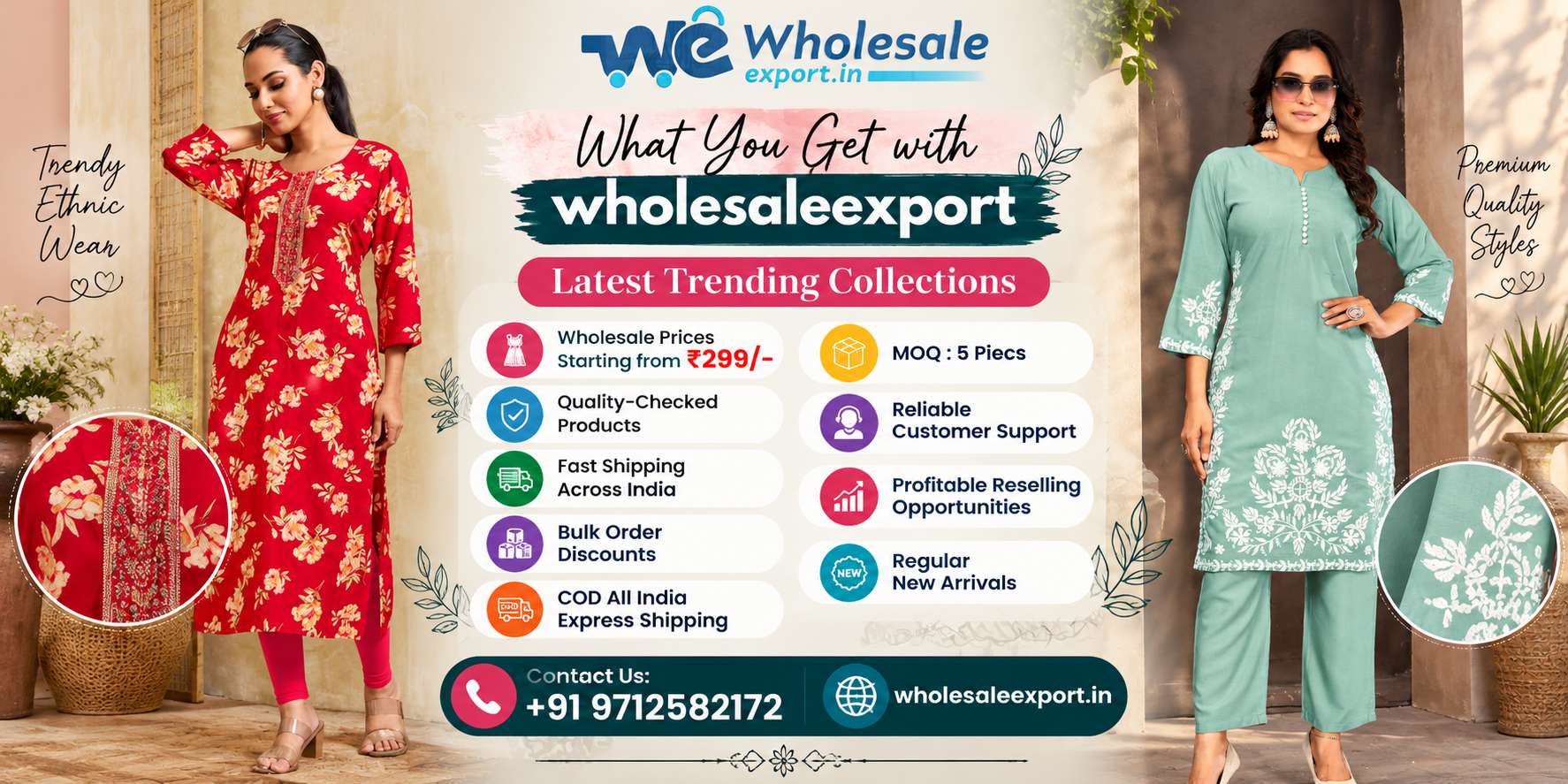
Wholesale buyers can enquire about Fast Shipping, eligible COD Support, Bulk Order Deals and Quality Products Starting From ₹299. Product availability, current prices, sizes, MOQ and applicable order conditions should be confirmed at the time of purchase.
Contact Us: +91 9712582172
Website: wholesaleexport.in
Explore regular new arrivals, compare commercially relevant designs and build a stronger ethnic wear assortment with designer embroidery, contemporary silhouettes and wholesale collections created for today’s fashion retail and reselling market.