


Chinon Dress Material Wholesale: 2026 Buying Guide for Boutiques & Resellers
Chinon Dress Material Wholesale: 2026 Buying Guide for Boutiques & Resellers
The ethnic wear market continues to create strong opportunities for retailers who understand what customers want: attractive designs, comfortable fabrics, wearable colours and a price that leaves enough room for resale profit. Among the fabrics gaining attention in festive and occasion-focused collections, Chinon has become a practical choice for boutiques, online sellers and traditional clothing stores. Its elegant fall and dressy appearance allow sellers to build collections suitable for celebrations, family functions, festive shopping and gifting without depending only on very expensive fabrics.
Introduction
Buying dress materials for a retail business is very different from shopping for personal use. A retailer has to think about customer demand, purchasing price, design variety, fabric quality, colour selection, repeat availability and final selling potential. This is particularly important with Chinon Dress Material Wholesale, where visual appeal can bring customers to a product but fabric quality and finishing ultimately influence satisfaction and repeat business.
For 2026, buyers are becoming more selective. Customers can compare designs across social media, marketplaces and local stores within minutes. Boutique Owners and Shop Owners therefore need collections that look fresh without making inventory unnecessarily expensive. Home-Based Sellers and Resellers face an additional challenge: they often want enough variety to attract customers while keeping the initial stock commitment manageable.
This is where a well-planned wholesale sourcing strategy becomes valuable. Instead of purchasing simply because a catalogue looks attractive, buyers should understand fabric characteristics, embroidery, dupatta combinations, colour demand, size of the catalogue, wholesale rate and the type of customer each design is likely to attract.
Wholesaleexport.in is designed around this wholesale buying requirement, helping business buyers explore ethnic wear collections for different customer segments and budgets. For sellers who want to build a broader dress material category, Chinon can work alongside cotton suits, rayon dress materials, Pakistani-style suits, embroidered suits and other seasonal ethnic collections.
What Is Chinon Fabric and Why Is It Popular in Ethnic Wear?
Chinon is valued in Indian ethnic fashion for its flowing appearance and elegant presentation. Depending on the particular construction, finish and design, it can be used for dress materials, suits, dupattas, festive outfits and coordinated ethnic sets. For wholesale buyers, the important point is not merely the fabric name but how the complete product feels, falls and presents after stitching.
A good-looking Chinon dress material can offer a premium visual impression while remaining suitable for commercially viable retail ranges. This balance makes it interesting for boutiques that need products above everyday basics but below extremely expensive occasion wear.
Soft Fall and Attractive Draping
One reason Chinon works well in women's ethnic wear is its graceful fall. Customers shopping for festive suits generally expect the garment to look elegant when worn rather than stiff or excessively bulky. The fabric can complement straight suits, flowing silhouettes and other fashionable tailoring patterns depending on the material supplied in the set.
Suitable for Embroidery and Decorative Work
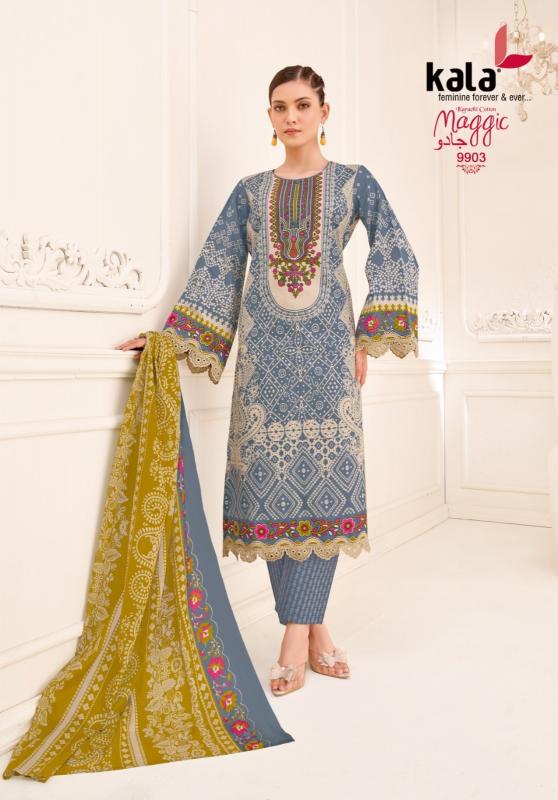
Another advantage is its compatibility with decorative styling. Embroidery, printed details, borders and coordinated dupattas can transform an ordinary-looking suit into a stronger display product. For retailers, this matters because attractive detailing photographs well for WhatsApp, Instagram, online catalogues and reseller marketing.
Useful Across Multiple Selling Occasions
Chinon-based collections can be positioned for festive wear, wedding-related functions, family occasions, parties, gifting and semi-formal ethnic dressing. This gives a retailer more selling opportunities than a product restricted to a single season or event.
Why Chinon Dress Material Wholesale Makes Sense for Retailers
Retail profitability starts with sourcing. Even a highly fashionable product becomes difficult to sell profitably if its buying cost, logistics expense and expected retail price do not align. Wholesale Buyers therefore need to judge every catalogue from a business perspective.
With Chinon Dress Material Wholesale, the objective should be to create a collection containing different visual levels rather than buying several almost identical pieces. A balanced selection can include simpler patterns for value-conscious shoppers, stronger embroidery for festive customers and statement designs for customers who want a more premium look.
Better Variety for Boutique Displays
Boutique customers usually expect choice. If every piece has the same colour family, embroidery placement or styling, the collection may feel repetitive. Buyers should therefore consider different tones, motifs, dupatta patterns and design intensities while purchasing wholesale dress materials.
A smart selection might combine darker festive shades with softer pastels and versatile mid-tones. The exact mix should depend on the retailer's existing customer base rather than a generic trend list.
Potential for Healthy Resale Margins
Wholesale sourcing gives sellers the opportunity to create a margin between procurement cost and final retail value. However, sellers should calculate the complete landed cost rather than focusing only on the supplier's quoted wholesale price. Shipping, applicable taxes, packaging, payment charges and local operating expenses can all affect actual profitability.
For a Home-Based Seller, the margin calculation may be relatively simple. A Showroom Owner may also need to account for rent, staff, display expenses and slower-moving inventory. Therefore, the same product can have a different ideal selling price for two different businesses.
Understanding the Surat Wholesale Dress Material Ecosystem
Surat has developed a strong identity within India's textile trade because of its extensive fabric, processing, trading and manufacturing ecosystem. Buyers searching for ethnic wear regularly associate the city with dress materials, sarees, kurtis, suits and other women's fashion categories.
Commercial textile areas around the surat textile market, ring road and sahara darwaza have long been familiar reference points for traders. At the same time, digital wholesale sourcing has changed how buyers interact with Surat suppliers. A retailer no longer has to depend exclusively on repeated physical market visits to discover new collections.
Online catalogue access can be particularly useful for businesses located outside Gujarat. Sellers can review designs, compare categories and plan orders before committing capital. This is relevant not only for buyers across India but also for businesses serving ethnic fashion customers in Nepal and the USA.
Why Digital Sourcing Is Becoming Important in 2026
Speed matters in fashion retail. A trend that performs strongly today may become widely available within weeks. Online wholesale platforms can help buyers discover collections without waiting for their next sourcing trip. This can reduce product discovery time and make regular stock refreshing more practical.
Digital buying is particularly useful for Resellers who depend on frequent catalogue sharing. Instead of investing heavily in one large collection, they can monitor new designs and plan purchases around actual customer interest where the supplier's ordering structure permits it.
How to Select Chinon Dress Materials for Your Customer Base
A successful wholesale purchase begins with one simple question: who will buy this product from your business? Buying according to personal taste can create dead stock. Buying according to customer behaviour creates a much stronger foundation for inventory planning.
For Home-Based Sellers
Home-Based Sellers generally benefit from visually attractive products that can be marketed easily through WhatsApp, Instagram, Facebook and personal networks. Clear catalogue photography, understandable product details and practical pricing are especially important because customers may make decisions without physically touching the fabric first.
Start with controlled variety instead of purchasing too many similar designs. Track which colours and patterns receive actual orders rather than only likes or enquiries. That information can guide the next wholesale purchase.
For Boutique Owners
Boutiques can focus more heavily on distinctive styling. Customers visiting a boutique may be willing to pay extra for an outfit that feels less common. Embroidery placement, elegant dupattas, coordinated colour combinations and premium presentation can therefore matter as much as the base material.
When purchasing designer dress materials wholesale, Boutique Owners should also consider alteration and tailoring possibilities. A fabric combination that can be converted into several fashionable silhouettes gives the boutique more creative flexibility.
For Shop and Showroom Owners
Physical retailers generally need wider price segmentation. A showroom may serve customers looking for an affordable suit and customers willing to spend substantially more for a special occasion. Stock planning should reflect these different buying levels.
Instead of filling the entire section with one rate bracket, consider entry, mid-range and premium selections. This gives sales staff more opportunities to respond when a customer communicates a specific budget.
Important Quality Checks Before Buying Wholesale
Product images are useful for shortlisting, but wholesale buying should not depend on appearance alone. Quality evaluation is important because a retailer's reputation ultimately depends on what the customer receives.
Check Fabric Description Carefully
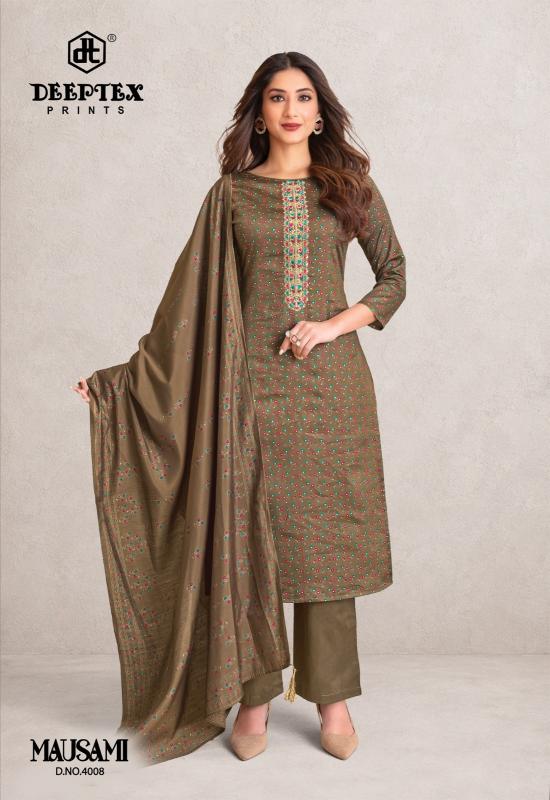
Read the available fabric details for the top, bottom and dupatta. A three-piece dress material may use different fabrics for each component, and those combinations affect the final stitched appearance. Avoid assuming that every component is Chinon simply because the collection is marketed around a Chinon design.
Evaluate Embroidery and Finishing
For embroidered dress materials, observe the density and placement of work. Heavy-looking digital photography does not automatically mean heavy physical embroidery. Retailers should understand what is printed, embroidered, embellished or woven whenever those details are available.
Look at Colour Commerciality
Fashionable colours attract attention, but commercially useful colours generate repeat sales. Maintain a combination of trend-driven shades and dependable ethnic colours. Your local market data should decide the ratio.
Understand Catalogue Quantity
Wholesale catalogues may be offered in different quantities or purchasing formats. Buyers should confirm the current MOQ and ordering conditions for the particular collection before planning inventory. This is especially relevant for new Resellers who are working with limited capital.
Building a Profitable 2026 Dress Material Inventory
Inventory should be treated as working capital. Products sitting unsold for months reduce the money available for new arrivals. A good buying strategy therefore balances variety with turnover.
Start by separating your stock into everyday, festive and premium categories. Then analyse actual sales rather than assuming every category deserves equal investment. If festive embroidered suits generate higher margins but sell less frequently, you may need fewer pieces than an everyday range with faster rotation.
Similarly, Wholesale Buyers should compare the buying price with realistic retail potential. A low-cost product is not automatically a good deal if customers do not want it. A somewhat higher-priced product may be commercially better when its design, quality and presentation support faster conversion.
Use New Arrivals Strategically
Regular new arrivals help create a reason for existing customers to check your store or social media repeatedly. Instead of posting an entire month's inventory at once, sellers can introduce fresh collections in stages. This keeps communication active and provides more opportunities for customer engagement.
Wholesaleexport.in can be used by business buyers exploring different ethnic wear categories and comparing new wholesale collections for their target market. The aim should always be purposeful purchasing rather than simply accumulating catalogues.
Think Beyond One Product Category
Customers buying dress materials may also be interested in sarees, kurtis, festive suits and other ethnic products. A focused cross-category strategy can increase the average order value without requiring a retailer to stock every possible fashion category.
For example, a boutique specialising in suits could introduce a limited saree collection during festive periods, while an online reseller could test complementary categories based on customer enquiries.
Vastralife brings wholesale and export experience since 2017, with industry knowledge developed through working across textile and ethnic wear categories. This experience supports a practical understanding of what wholesale customers require: product variety, commercially workable collections and attention to premium product quality.
Another important factor is product presentation. Customers increasingly discover ethnic wear through mobile screens before they ever visit a shop. Clear product photographs, accurate fabric information, transparent pricing and responsive customer communication can therefore influence sales almost as much as the collection itself. Retailers who combine attractive stock with reliable service are better positioned to convert first-time buyers into repeat customers.
For boutiques and resellers purchasing in 2026, the most practical approach is to review collections regularly rather than waiting until existing inventory is completely exhausted. This allows businesses to identify changing colour preferences, festive trends and emerging designs while maintaining enough variety for customers who expect something new.
Buyers exploring wholesale dress materials can compare different styles according to their target price segment, while businesses expanding their ethnic range may also evaluate wholesale sarees as a complementary category. The goal is not to stock everything, but to build a collection that makes sense for the customers you actually serve.
How to Compare Chinon Dress Material Wholesale Price
Comparing wholesale rates requires more than checking which supplier offers the lowest number. Two dress materials can appear similar in photographs while differing considerably in fabric feel, embroidery quality, dupatta construction, finishing and overall presentation. A buyer should therefore compare value rather than price alone.
Calculate the Complete Landed Cost
Start with the basic product rate and add all costs that apply to the order. Depending on the transaction, these may include tax, shipping, packaging and other applicable charges. The resulting amount is closer to your true inventory cost and should be used when deciding the retail selling price.
For example, if a retailer purchases an attractive catalogue at a competitive rate but pays disproportionately high logistics charges because of a very small shipment, the effective cost per piece may increase. Combining suitable products into a commercially sensible order can sometimes improve overall purchasing economics.
Compare Quality Within the Same Price Segment
A ₹500-level product should not automatically be compared with a substantially more premium design. Instead, compare products within similar customer segments. Ask which one provides better fabric presentation, colour selection, embroidery, dupatta quality and perceived retail value for that particular budget.
This approach is particularly useful for Chinon Dress Material Wholesale because the category can include both simpler commercial designs and more elaborate festive options. Retailers can then build multiple price points without confusing their buying decisions.
Keep Enough Retail Margin
A sustainable margin should account for more than immediate profit. Retail businesses experience occasional discounts, unsold inventory and operating expenses. Home-Based Sellers may have relatively low overhead, whereas Boutique Owners and Showroom Owners may need higher gross margins because they carry rent, staff and other costs.
Instead of copying another seller's retail rate, determine a selling price appropriate for your own business model and local customer expectations.
Chinon Dress Materials for Festive and Occasion-Based Selling
One of the strongest commercial uses of Chinon is occasion-focused ethnic fashion. Customers often want something more decorative than everyday cotton but may not want the cost or heaviness associated with highly elaborate occasion wear. Well-selected Chinon suits can fill this middle space effectively.
Festive Season Collections
Festivals can increase demand for colourful suits, embroidered dress materials and attractive dupattas. Retailers should prepare before peak demand rather than purchasing only after customers begin asking. Early planning gives more time for catalogue selection, stock arrival, photography, marketing and repeat ordering.
Colours such as maroon, wine, bottle green, navy, purple and traditional red families can work for festive merchandising, while softer tones and contemporary combinations may appeal to younger customers. Actual demand varies by market, so historical sales data should remain the primary guide.
Wedding and Family Function Demand
Not every wedding customer is shopping for a lehenga or highly expensive outfit. Many require suits for pre-wedding gatherings, family functions, gifting and smaller ceremonies. This creates room for embroidered dress material wholesale collections that provide an elevated look without entering extremely high price brackets.
Boutiques can add further value through stitching recommendations, neckline customisation, sleeve options and styling suggestions. This service-led approach can differentiate a boutique from sellers competing primarily on price.
Gifting and Group Purchasing
Dress materials are also purchased for family gifting and group occasions. Sellers serving this segment should keep coordinated collections available across multiple colours or patterns when possible. Customers making multiple purchases often value consistent quality and practical pricing more than highly experimental designs.
Online Selling Strategy for Dress Material Resellers
Online Resellers do not necessarily need a large showroom to build an ethnic wear business. They do, however, need consistency. Product selection, catalogue presentation, customer communication and order handling all contribute to credibility.
Share Product Information, Not Just Photographs
When posting a catalogue, provide relevant details such as fabric, available colours or designs, product format and applicable selling information. Customers who understand the product clearly are more likely to make confident purchasing decisions.
Over-promising fabric characteristics should be avoided. Accurate descriptions protect the seller's reputation and reduce misunderstandings after delivery.
Create Customer Segments
Instead of sending every catalogue to every customer, segment buyers according to interest. Some may prefer affordable daily wear, while others consistently purchase premium festive products. A third group may be interested mainly in Pakistani-inspired suits or designer dress materials.
Segmented communication makes catalogue marketing less repetitive and helps customers receive products that are more relevant to them.
Use Repeat Customers as a Buying Signal
Repeat orders provide valuable information. If several customers repeatedly request similar fabrics, colours or price ranges, those patterns should influence future wholesale purchasing. This is one of the simplest ways for small sellers to make inventory decisions based on evidence rather than guesswork.
Wholesale Opportunities Beyond the Indian Market
Indian ethnic fashion also serves customers outside India. Retailers and ethnic boutiques catering to communities in Nepal and the USA, along with domestic buyers across India, may require different product combinations depending on climate, festival calendars, customer preferences and retail price expectations.
For an export buyer, product cost should be considered together with freight, import requirements and the final landed cost in the destination market. A product that sells successfully in Surat may need a different retail positioning overseas because logistics and operating costs are different.
Wholesaleexport.in provides a digital route for business buyers exploring wholesale ethnic wear collections. For international buyers, confirming current shipping options, product availability, payment terms and order requirements before finalising a purchase remains important.
How Surat Sourcing Supports Ethnic Wear Businesses
Surat's textile ecosystem combines fabric trading, processing, design, distribution and manufacturing. Areas associated with the surat textile market, ring road and sahara darwaza continue to be widely recognised among wholesale textile buyers.
The difference in 2026 is that sourcing does not need to remain completely offline. Digital product discovery allows Shop Owners and Wholesale Buyers to review collections from their own city before deciding what deserves investment. This is especially useful for buyers who previously had to spend considerable time travelling simply to discover new catalogues.
Digital wholesale should still be approached professionally. Buyers should confirm product details, current availability, rates and relevant terms before placing an order, particularly when purchasing a collection for the first time.
Common Wholesale Buying Mistakes to Avoid
Buying Too Many Similar Designs
A catalogue may look attractive enough to encourage a large purchase, but too many similar products can reduce perceived variety. Customers want choice, particularly when several designs are displayed together. Spread inventory across colours, styling levels and price brackets where appropriate.
Ignoring the Target Customer
A premium boutique and a value-focused neighbourhood shop may require completely different inventory even when both sell dress materials. Purchase for your customer profile rather than following a general market trend blindly.
Choosing Only the Cheapest Products
Low buying cost can be attractive, but poor product satisfaction can damage repeat business. Premium product quality should be considered alongside affordability. The ideal product is one that delivers enough value for the customer while leaving a workable margin for the seller.
Overstocking Before Testing Demand
New businesses often assume that more inventory automatically creates more sales. In reality, excessive stock can lock up capital. Testing selected designs and increasing purchases according to actual demand can be safer for Home-Based Sellers and new Resellers.
Ignoring Stock Rotation
Inventory should be reviewed periodically. Identify fast sellers, moderate sellers and products receiving little customer interest. Future purchasing should favour proven demand while leaving a reasonable portion of the budget available for experimentation with new trends.
Internal Linking: Explore Related Wholesale Ethnic Wear Categories
A successful ethnic wear business does not necessarily depend on a single product type. Chinon can form one part of a broader dress material strategy that includes cotton, rayon, printed, embroidered and festive collections. The right category mix depends on the season and the buying behaviour of your customers.
Retailers can use Wholesaleexport.in to review new collections and compare different product segments before planning stock. When a business understands which categories generate enquiries, conversions and repeat orders, purchasing becomes more structured and less dependent on guesswork.
Cross-category buying can also support seasonal merchandising. Dress materials may form the core inventory, while kurtis, suits or sarees can be introduced according to festivals, weddings and local customer demand.
Why Wholesale Experience Matters When Selecting a Supplier
Supplier selection affects more than the purchase rate. Product understanding, collection variety and knowledge of wholesale requirements can all influence the buying experience. Vastralife has been involved in wholesale and export activity since 2017, bringing practical industry expertise to ethnic wear sourcing.
For retailers, the value of experience lies in understanding that different buyers have different needs. A reseller testing a new category cannot purchase exactly like a large showroom. Similarly, an international buyer may have different logistics and assortment requirements from a domestic Shop Owner.
Wholesaleexport.in focuses on making wholesale collection discovery accessible to businesses looking for commercially relevant fashion. Buyers should still select products according to their own market, budget and customer preferences rather than assuming that every new arrival will perform equally well.
Customer FAQs
1. What is Chinon Dress Material Wholesale?
Chinon Dress Material Wholesale refers to purchasing Chinon-based unstitched or dress-material collections in wholesale quantities or applicable business-order formats. These products can include coordinated top, bottom and dupatta materials, depending on the individual catalogue.
2. Is Chinon suitable for boutique and festive collections?
Yes. Its flowing appearance and ability to work with prints, embroidery and decorative styling can make it suitable for festive, occasion and boutique-oriented collections. Buyers should check the exact fabric specifications of each catalogue before ordering.
3. How should I decide the retail price of a wholesale dress material?
Calculate your complete landed cost first and then consider operating expenses, desired margin, local competition and perceived product value. Avoid setting the selling price solely by copying another retailer.
4. Can Home-Based Sellers start with dress material wholesale?
Yes. Home-Based Sellers can begin with controlled inventory and gradually expand according to actual enquiries and sales. Selecting commercially wearable colours and different price points can help test customer demand without unnecessarily overstocking.
5. Where can retailers explore wholesale dress material collections online?
Business buyers can explore Wholesaleexport.in for wholesale ethnic wear collections. Before ordering, check current product details, availability, applicable MOQ, payment conditions, shipping options and current wholesale pricing.
6. What should I check before ordering embroidered Chinon suits?
Review the fabric description, embroidery details, dupatta material, design variations, catalogue quantity and product photographs. For commercial buying, also evaluate whether the design suits the spending level and preferences of your target customers.
7. Is Surat a major sourcing location for dress materials?
Surat is widely associated with India's textile and ethnic wear trade. Textile commercial zones around Ring Road and Sahara Darwaza are familiar to many wholesale buyers sourcing fabrics, sarees, dress materials and related products.
Start Buying Wholesale Ethnic Wear for Your Business
Whether you are a Home-Based Seller, Shop Owner, Boutique Owner, Showroom Owner, Reseller or Wholesale Buyer, profitable sourcing begins with the right combination of quality, variety, price and customer demand. Instead of purchasing inventory simply because a design is new, choose products that have a clear place in your retail assortment.
Explore Wholesaleexport.in for business-focused ethnic wear sourcing and build your next collection according to your market and budget.
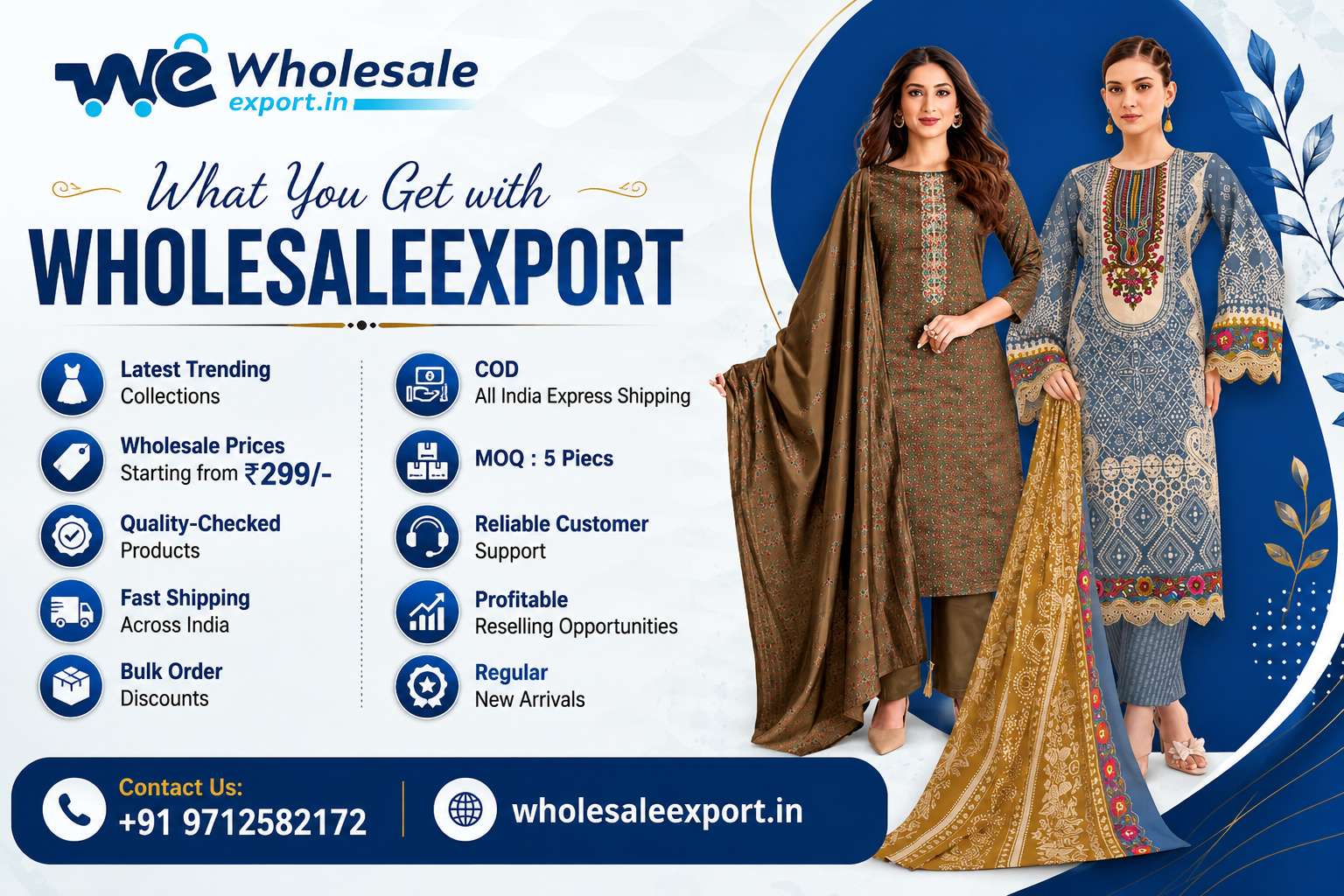
- Latest Collections for regularly refreshing your inventory
- Wholesale Pricing for business-focused purchasing
- Trendy Ethnic Wear for boutiques, shops and resellers
- Fast Shipping options for convenient order fulfilment
- COD Support where applicable under current order terms
- Bulk Order Deals for eligible wholesale purchases
- Quality Products Starting From ₹299 across applicable collections
Contact Number: +91 9712582172
Website: wholesaleexport.in
Build your 2026 ethnic wear inventory with a clear buying strategy, understand what your customers actually want, and keep introducing commercially relevant designs. The right wholesale collection is not simply the one with the lowest rate—it is the one that combines dependable quality, attractive presentation, suitable pricing and genuine resale potential for your business.