


Chikankari Pakistani Suits Wholesale: Latest Designs, Prices & Buying Guide 2026
Chikankari Pakistani Suits Wholesale: Latest Designs, Prices & Buying Guide 2026
The demand for graceful ethnic wear continues to create strong opportunities for retailers, boutiques and online sellers, and the combination of delicate Chikankari-style embroidery with elegant Pakistani silhouettes has become particularly attractive. From straight-cut suits and embroidered kurta sets to coordinated dupattas and festive collections, buyers can build an assortment that works across everyday, occasion and premium ethnic-wear segments.
Introduction
Chikankari Pakistani suits bring together two highly recognizable fashion elements: intricate embroidery-inspired detailing and the sophisticated cuts associated with Pakistani ethnic wear. The result is a versatile category that can appeal to customers looking for understated elegance as well as buyers searching for more elaborate festive outfits.
For wholesale buyers, the opportunity is broader than simply stocking attractive designs. Product selection needs to consider fabric, embroidery quality, colour, sizing, dupatta combination, seasonal demand, selling price and the preferences of the retailer's actual customer base. A boutique targeting premium occasion wear, for example, may require a completely different assortment from a home-based seller building a value-focused WhatsApp catalogue.
In 2026, customers increasingly discover ethnic fashion through Instagram reels, short videos, marketplace listings and WhatsApp catalogues before they visit a physical shop. This makes visually distinctive merchandise important. Detailed neck embroidery, coordinated bottoms, statement dupattas and elegant colour combinations can help retailers create stronger product presentations both online and offline.
Wholesaleexport.in provides access to women's ethnic-wear collections for shop owners, boutique owners, showroom owners, resellers, home-based sellers and wholesale buyers. With Vastralife's wholesale and export experience since 2017, the focus remains on industry expertise, practical wholesale sourcing and premium product quality for businesses buying merchandise for resale.
Why Chikankari Pakistani Suits Are Attractive for Retailers
One reason this category works well for retailers is its ability to sit between traditional and contemporary fashion. A customer may want traditional embroidery but prefer a cleaner straight kurta, relaxed pant or coordinated Pakistani-style silhouette. This balance gives retailers an opportunity to serve multiple age groups without making the collection look repetitive.
Elegant Designs with Strong Visual Appeal
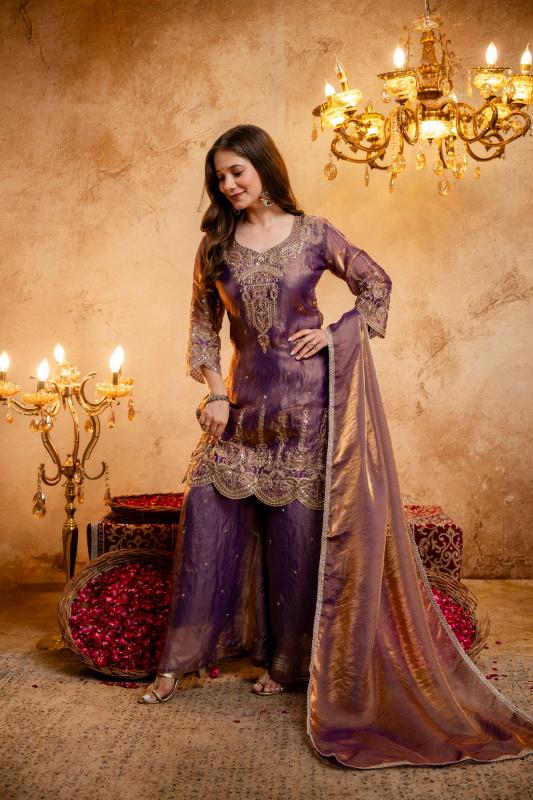
Embroidery is often the first element a shopper notices. Neckline work, front-panel detailing, sleeve embroidery, borders and coordinated dupattas can transform a relatively simple silhouette into a premium-looking outfit. This is particularly useful for online sellers because embroidery and fabric detailing can be highlighted effectively through close-up photographs and short product videos.
Retailers sourcing Pakistani suits wholesale should therefore evaluate more than the overall catalogue photograph. Look closely at embroidery placement, finishing, fabric fall, colour consistency and the coordination between kurta, bottom and dupatta. These details can directly influence how confidently a retailer can present the product to customers.
Suitable for Multiple Selling Occasions
A carefully selected range can cover casual gatherings, office wear, festive shopping, family functions, gifting and semi-formal occasions. Light embroidered cotton or rayon-based styles can serve regular customers, while heavier embroidered designs with richer dupattas can be positioned for festive and occasion purchases.
This flexibility is valuable for multi-category boutiques because they can introduce new designs without completely changing their customer positioning. The same buyer who purchases a daily-wear kurti may later choose a more detailed Pakistani suit for a festival or family function.
Trending Chikankari Pakistani Suit Styles for 2026
Fashion trends change quickly, so wholesale buying should focus on a combination of current designs and commercially dependable styles. Rather than putting the entire budget into one trend, retailers can maintain a core collection and test newer silhouettes in smaller quantities.
Straight-Cut Embroidered Pakistani Suits
Straight-cut silhouettes remain practical for wholesale inventory because they are familiar, easy to display and suitable for a wide customer base. Embroidery around the neckline and front panel gives the outfit character without requiring excessive embellishment.
Neutral shades, pastels, black, maroon, bottle green, navy, beige and soft pink can all play different roles in a retail assortment. Instead of selecting colours only on personal preference, wholesale buyers should compare them with previous sales data whenever possible.
Chikankari Kurta Pant Sets
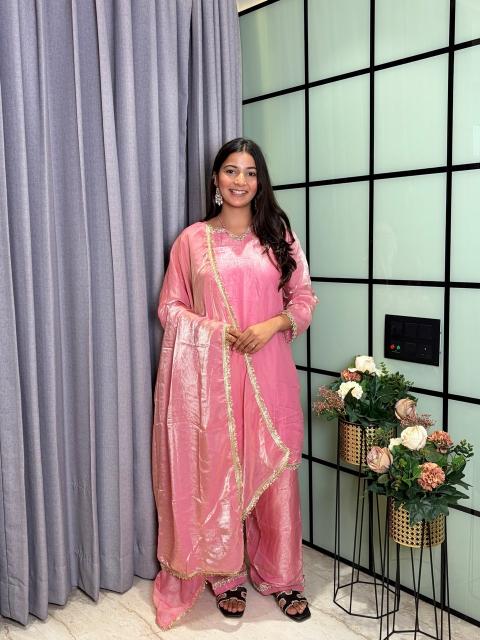
Coordinated kurta-and-pant combinations are useful for customers who want a complete ready-to-style outfit. Retailers can present these as convenient ethnic sets, while premium versions can include matching or contrasting dupattas.
For home-based sellers and resellers, ready combinations also simplify catalogue selling. Customers can understand the complete look immediately rather than having to imagine which bottom or dupatta will match a standalone kurta.
Pakistani Suits with Statement Dupattas
The dupatta can significantly influence the perceived value of a suit. Printed, embroidered, bordered and contrast dupattas help create stronger catalogue imagery and give retailers an additional selling point. When comparing wholesale price, buyers should therefore examine the entire set rather than judging the kurta alone.
For festive collections, a comparatively simple embroidered kurta paired with an eye-catching dupatta can create a balanced outfit. This also allows boutiques to stock visually rich products without depending entirely on heavy surface embellishment.
Best Fabrics for Chikankari Pakistani Suits
Fabric selection affects comfort, appearance, seasonality and final retail positioning. A beautiful design on the wrong fabric for the target customer may move slowly, so wholesale buyers should understand how each fabric fits their market.
Cotton and Cotton-Based Fabrics
Cotton-oriented collections are useful for warmer regions and customers who prioritize comfort. Lightweight embroidered suits can work well for daytime use, casual outings and everyday ethnic wear. They are also practical for retailers who need products that can be sold across a longer part of the year.
Rayon and Soft-Flow Fabrics
Rayon and similar soft fabrics can provide an attractive drape while remaining commercially accessible. Their smooth fall can complement longer Pakistani silhouettes and coordinated pant styles. Buyers should still verify fabric quality and finishing because two products described under the same general fabric category can differ considerably.
Festive and Premium Fabric Options
For higher-value collections, retailers can explore fabrics and combinations that provide richer texture and presentation. The right option depends on the target price segment. A showroom selling premium festive wear may prefer more elaborate sets, while a reseller may benefit from lightweight designs that are easier to ship and sell through social media.
How Wholesale Buyers Should Select the Right Collection
A profitable assortment does not necessarily mean buying the maximum number of designs. It means selecting products that fit the retailer's customers, expected selling range and inventory cycle. New buyers should generally build variety across price points, colours and styles rather than overstocking one catalogue simply because it looks attractive.
Start with Your Customer's Preferred Price Range
Before placing a wholesale order, identify the price range in which customers purchase most comfortably. A boutique can then work backward from the intended retail price to determine an acceptable buying cost, transportation expense and required margin.
This approach is especially useful when sourcing from the surat textile market. Surat offers enormous product variety, but variety itself does not guarantee the right stock. The buyer still needs a clear merchandise plan.
Build Colour Variety Without Overloading Inventory
Buying too many pieces of one colour can lock working capital into slow-moving stock. A healthier opening assortment can include a mix of lighter shades, deeper colours and commercially established neutrals. Once actual customer response becomes visible, repeat orders can be concentrated on better-performing combinations.
The same principle applies to embroidery levels. Keep some clean and subtle designs for regular use, some medium-detail pieces for versatile selling and a smaller selection of richer products for festive customers.
Check Size Availability Before Ordering
Size planning is increasingly important for ethnic-wear retailers. Customers expect greater size inclusivity, and an attractive design can still result in a lost sale when the required size is unavailable. Retailers should examine the size set offered by the supplier and compare it with their customer profile.
For online sellers, size information should be communicated clearly in product descriptions and customer conversations. Accurate measurements can reduce confusion and make the buying experience more professional.
Why Surat Is Important for Pakistani Suit Wholesale Sourcing
Surat has developed a broad textile ecosystem involving fabric sourcing, processing, manufacturing, embroidery, trading, packing and nationwide distribution. Buyers exploring Pakistani suits, dress materials, kurtis and other women's ethnic wear can find numerous product segments within the city.
Areas associated with the textile trade around Ring Road and Sahara Darwaza are familiar sourcing references for many apparel businesses. For an outstation retailer, however, travelling from supplier to supplier can consume significant time. Online wholesale sourcing helps businesses compare collections and place repeat orders without needing to visit Surat for every purchase.
Wholesaleexport.in is designed to make such sourcing more accessible to buyers who want to explore wholesale ethnic wear digitally while remaining connected with Surat's extensive textile supply ecosystem.
Wholesale Buying from Surat for Online Sellers
Online boutiques and social-commerce sellers often operate differently from traditional showrooms. They may introduce new catalogues frequently, promote them through WhatsApp and Instagram, collect customer enquiries and reorder according to response.
For these businesses, updated product availability is important. Fast-moving designs can sell out, so a seller should confirm current stock before making commitments to customers. Maintaining alternative designs in similar colours and price ranges can also help when a preferred product becomes unavailable.
Domestic and Export Opportunities
Indian ethnic wear has customers beyond the domestic market. Wholesale buyers serving Nepal, Australia and Malaysia can consider Pakistani-inspired ethnic suits as part of a broader assortment, particularly when their customers already purchase Indian festive and occasion wear.
For export orders, buyers should consider shipping weight, packing, product documentation, destination requirements and delivery timelines in addition to the garment price. A commercially successful international order depends on the landed cost, not simply the supplier's quoted product rate.
Wholesaleexport.in can be useful for buyers comparing new ethnic collections for domestic resale as well as businesses exploring international demand.
For wholesale buyers, another important advantage of this category is its ability to work across different retail formats. A physical boutique can merchandise embroidered suits as coordinated collections, while a home-based seller can promote individual designs through WhatsApp, Instagram and customer groups. Showroom owners can build deeper size and colour assortments, whereas new resellers can begin with smaller mixed selections and increase quantities after identifying faster-moving designs.
Wholesale Price Planning and Retail Margin Strategy
The buying price of a Pakistani suit is only one part of the retailer's calculation. A practical buying decision should include the product cost, GST where applicable, transportation, packaging, payment charges and any additional selling expense. International buyers should also consider freight, customs and local delivery costs when calculating the landed cost.
Retailers should avoid selecting merchandise only because it is inexpensive. The better question is whether the product offers enough perceived value at the intended retail price. Fabric quality, embroidery, finishing, dupatta design, colour combination and overall presentation collectively influence how much a customer may be comfortable paying.
Keep Multiple Wholesale Price Segments
A balanced collection can include entry-level styles for price-conscious customers, mid-range embroidered suits for regular retail sales and selected premium designs for festive or occasion shoppers. This approach allows a retailer to respond to different budgets without turning the store into a single-price business.
Home-based sellers can apply the same strategy digitally. Instead of uploading dozens of almost identical products, they can present a small value collection, a regular bestselling collection and a premium festive selection. This makes catalogue navigation easier and provides customers with clear choices.
Calculate Margin Before Confirming the Order
Suppose a design appears attractive but requires expensive shipping or has a selling price that is already highly competitive in the local market. Its theoretical margin may look good at the supplier level but become considerably smaller after expenses. Calculating the approximate landed cost before ordering protects working capital.
This becomes particularly important for Chikankari Pakistani suits because the category includes products ranging from relatively simple embroidered sets to much more elaborate premium designs. Retailers should compare products within similar quality levels rather than treating every embroidered suit as equivalent.
How to Sell Chikankari Pakistani Suits Faster
Buying good merchandise is only the beginning. Retailers also need to present it effectively. Ethnic wear is highly visual, so clear product photographs, close-up embroidery shots, fabric information and short videos can make the difference between a casual enquiry and a confirmed order.
Show the Details Customers Cannot See Immediately
When selling online, mention whether the product includes a kurta, bottom and dupatta. Show neckline work, sleeves, borders and dupatta detailing. Include available sizes and relevant fabric information. Avoid relying on a single full-length photograph when the main selling feature is intricate embroidery.
Retailers purchasing Pakistani suits wholesale can also create category-specific social posts instead of mixing every type of garment in one promotion. Customers searching specifically for Pakistani fashion then see a more focused collection.
Use Occasion-Based Merchandising
Instead of describing every item simply as a new arrival, retailers can merchandise products according to customer use. Examples include festive Pakistani suits, elegant family-function outfits, everyday embroidered sets, wedding-season collections and premium boutique selections.
This approach helps customers imagine when they would wear the outfit. It also gives retailers more content ideas for reels, WhatsApp status updates and social media posts throughout the year.
Businesses selling multiple categories can complement their women's ethnic assortment with other relevant segments such as men's wear when their customer base includes family or multi-category shopping. The key is to expand deliberately rather than adding unrelated stock without understanding demand.
Inventory Strategy for Boutique Owners and Resellers
Inventory planning is particularly important in fashion because designs can move quickly. Retailers should distinguish between proven sellers and experimental products. A proven silhouette may justify greater quantity, while a new colour or emerging fashion trend may initially deserve a smaller test order.
Use a Test, Track and Reorder Approach
Start by testing selected designs across different colour and price groups. Track enquiries, actual orders and repeat demand. Products generating likes but no purchases should not automatically be treated as successful stock. Sales conversion matters more than social engagement when deciding what to reorder.
A simple spreadsheet or inventory system can record product code, purchase date, buying cost, quantity, sales, remaining stock and margin. Even a small home-based seller benefits from this discipline because it prevents purchasing decisions from becoming entirely dependent on memory.
Prepare Early for Seasonal Demand
Festive and wedding demand requires advance planning. Retailers should allow time for supplier selection, ordering, dispatch, transportation, photography and customer promotion. Waiting until demand has already peaked can leave too little time to sell the merchandise effectively.
For international buyers, advance planning becomes even more important because export transportation and destination procedures can add time. A boutique in Australia, Nepal or Malaysia should therefore plan seasonal purchases according to its actual logistics cycle rather than simply following the Indian retail calendar.
Quality Checks Before Buying Pakistani Suits Wholesale
Premium product quality does not mean every garment must belong to the highest price category. It means that the quality should be appropriate and consistent for the amount being charged. Wholesale buyers should examine the garment as a complete retail product.
Check Fabric and Embroidery
Review the base fabric, embroidery density, thread finishing and placement of the design. Where embroidery is a major feature, uneven finishing can affect the perceived value of the entire outfit.
Check Stitching and Measurements
For ready-made suits, size consistency matters. Retailers should understand the supplier's size chart and communicate measurements correctly to customers. This is particularly important for online transactions where the buyer cannot try the product before ordering.
Check the Complete Set
Confirm exactly what is supplied with each design. If the catalogue contains a kurta, pant and dupatta, buyers should verify that the quoted wholesale rate covers the complete set. For dress-material or semi-stitched products, clearly understand what fabric components are included.
Wholesale Sourcing from Surat in 2026
Surat continues to be a major sourcing centre for Indian women's fashion, supported by a broad network of textile processing, trading and manufacturing businesses. Buyers searching around the surat textile market, Ring Road and Sahara Darwaza can encounter extensive varieties of ethnic wear at different price levels.
Digital sourcing has made access easier for retailers outside Surat. A boutique owner in another state no longer needs to travel for every catalogue update. Product selections can be reviewed online, enquiries can be made remotely and repeat purchases can be planned according to actual sales.
Wholesaleexport.in supports this type of wholesale buying by bringing collections together for retailers, boutiques, resellers and other trade buyers. Vastralife's wholesale and export experience since 2017 adds practical industry knowledge behind the sourcing process, with attention to product variety and quality suitable for resale businesses.
Internal Linking and Related Wholesale Collections
Retailers rarely depend on only one product category throughout the year. Pakistani suits can form an important part of a broader ethnic-wear strategy alongside kurtis, dress materials, sarees, festive sets and other women's fashion categories. The ideal assortment depends on the store's location, customer age group, average selling price and seasonal demand.
When reviewing collections on Wholesaleexport.in, compare complementary categories rather than purchasing isolated products without a merchandising plan. For example, a boutique focused on elegant ethnic fashion can combine lightweight daily styles with embroidered Pakistani suits and richer festive products. This creates different buying opportunities for the same customer.
For resellers, a broad but controlled assortment can also improve repeat purchases. A customer who initially discovers the seller through a Pakistani suit may return later for another ethnic category if the seller regularly introduces relevant new arrivals.
Who Can Sell Chikankari Pakistani Suits?
Home-Based Sellers
Home-based businesses can sell through WhatsApp groups, status updates, Instagram, Facebook and personal customer networks. They can begin with a carefully selected assortment rather than investing immediately in a large physical inventory.
Boutique and Shop Owners
Boutiques can use Chikankari Pakistani suits to strengthen their premium ethnic-wear selection. Coordinated displays and styling suggestions can help customers understand the complete look and encourage higher-value purchases.
Showroom Owners
Larger showrooms can maintain deeper collections across sizes, colours and price bands. They can also separate regular, festive and premium Pakistani styles to make customer selection easier.
Online Resellers and Wholesale Buyers
Online sellers can promote fresh catalogues frequently, while established wholesale buyers can source quantities according to their distribution network. In either model, product availability, pricing, quality and reliable fulfilment remain more important than simply having a very large number of designs.
Customer FAQs
1. What are Chikankari Pakistani suits?
They are ethnic outfits that combine embroidery-inspired detailing associated with Chikankari aesthetics with Pakistani-style silhouettes such as straight or longer kurtas, coordinated bottoms and dupattas. Actual fabrics, embroidery methods and construction can vary by catalogue, so buyers should check individual product specifications.
2. Where can retailers buy Pakistani suits wholesale from Surat?
Retailers can source through Surat textile suppliers and online wholesale platforms such as Wholesaleexport.in. Online sourcing is particularly convenient for buyers who cannot regularly visit Surat's textile trading areas.
3. What should I check before placing a bulk order?
Confirm fabric, available sizes, colour options, embroidery and finishing, components included in the set, current stock, wholesale price, minimum order requirements and applicable shipping costs. International buyers should additionally calculate freight and destination-related expenses.
4. Are Pakistani suits suitable for online reselling?
Yes. Their visual detailing makes them suitable for catalogue-based selling, reels and WhatsApp promotions. Successful online selling still depends on accurate product information, clear images, appropriate pricing and reliable order fulfilment.
5. Can wholesale buyers order for international markets?
Export opportunities can be explored for markets such as Nepal, Australia and Malaysia. Buyers should confirm current shipping arrangements, documentation, destination requirements and final landed cost before placing international wholesale orders.
6. How should a new retailer choose colours?
A new retailer can begin with a balanced mix of commercial neutrals, deeper festive shades and selected pastel or trend-led colours. Actual sales data should then guide future repeat orders.
7. Are these suits only suitable for festivals?
No. The category can include lightweight everyday designs, semi-formal outfits and elaborate festive styles. Retailers should select the embroidery level and fabric according to their target customers.
8. How can retailers improve their margin?
Calculate the complete landed cost before setting a retail price, avoid excessive slow-moving inventory, test new designs in controlled quantities and reorder proven sellers. Strong product presentation can also support perceived value without relying only on discounting.
Order Latest Wholesale Ethnic Wear Collections
If you are building or expanding a boutique, retail shop, showroom, home-based business or online reselling operation, explore Wholesaleexport.in for fresh women's ethnic-wear sourcing opportunities. The goal is to help wholesale buyers access commercially relevant collections while keeping product quality, variety and business practicality in focus.
What you can explore:
- Latest Collections for changing customer demand
- Wholesale Pricing suitable for resale businesses
- Trendy Ethnic Wear across multiple categories
- Fast Shipping options for efficient order fulfilment
- COD Support where applicable and subject to current order terms
- Bulk Order Deals for quantity buyers
- Quality Products Starting From ₹299, subject to current product availability and catalogue pricing
Whether you are sourcing Chikankari Pakistani suits, building a new ethnic collection or expanding an established wholesale business in 2026, choose products according to your customers, price segment and inventory strategy rather than purchasing only on appearance.
Contact: +91 9712582172
Website: wholesaleexport.in
Explore the latest collections, compare suitable wholesale options and build an assortment designed for profitable, repeatable retail selling.