


Can I Start a Clothing Business Without Visiting a Wholesale Market? Complete Guide for 2026
Can I Start a Clothing Business Without Visiting a Wholesale Market? Complete Guide for 2026
Starting a clothing business no longer means spending days travelling between textile markets, visiting dozens of suppliers and carrying physical samples back home. A Home-Based Seller, Boutique Owner, Shop Owner or online Reseller can now discover collections digitally, compare suitable products, communicate with suppliers and arrange stock delivery remotely. The important part is not whether you physically visit a market; it is whether you have a reliable sourcing process, understand your customers and purchase inventory with sensible margins.
Introduction
One of the most common questions new fashion entrepreneurs ask is, can I start a clothing business without visiting a wholesale market? For many business models, the answer is yes. Online wholesale sourcing has made it possible to purchase Indian clothing from another city, state or even another country without making a sourcing trip for every order.
This is particularly useful for Home-Based Sellers and Resellers who want to start with controlled investment. Instead of spending money on travel, accommodation and repeated market visits, they can use online wholesale platforms to explore available products and focus more of their working capital on inventory and customer acquisition.
Established Shop Owners and Boutique Owners can benefit as well. Once a dependable sourcing workflow is created, regular new arrivals can be ordered remotely while physical market visits become optional rather than necessary for every buying cycle.
Wholesaleexport.in provides access to Indian ethnic wear and fashion collections for business buyers. With Vastralife's wholesale and export experience since 2017, industry knowledge and focus on premium product quality, buyers can explore products for retail, boutique, reselling and wholesale requirements.
How to Start a Clothing Business Without Visiting a Wholesale Market
A remote clothing business should begin with a structured plan. Buying random products because photographs look attractive can create unnecessary inventory. The first objective is to identify the customer, category and realistic selling price before selecting stock.
Step 1: Decide Who Your Customers Will Be
Your target customer influences almost every purchasing decision. A Home-Based Seller serving neighbourhood customers may need affordable kurtis and suit sets. A premium boutique may require designer ethnic wear, festive collections and sophisticated silhouettes. A children's fashion seller will naturally require a different inventory strategy.
Before purchasing, define the customer's approximate age group, preferred product category, expected price range and typical buying occasion. This immediately makes wholesale sourcing more focused.
Step 2: Select a Focused Clothing Category
New sellers do not need to begin with every clothing category. They can select one or two areas such as kurtis wholesale online, kurti sets, sarees, dress materials, lehenga cholis, kids wear or festive suits and gradually expand according to demand.
A focused starting category makes it easier to understand product quality, customer preferences and selling prices. Once repeat customers develop, complementary categories can be introduced.
Step 3: Decide Your Starting Inventory Budget
Your buying budget should include more than product cost. Consider wholesale price, shipping, packaging, marketing expenses and the working capital needed for repeat orders. Avoid investing the entire available amount into the first collection.
Keeping part of the budget available for fresh stock is useful because customer demand can reveal opportunities that were not obvious before launching the business.
Choose a Reliable Online Clothing Wholesaler
The supplier becomes especially important when you are not physically visiting the market. You need enough information to evaluate products remotely and a clear process for confirming availability, quantity and commercial terms.
Check Whether the Supplier Handles Wholesale Orders Regularly
A business-focused supplier understands that Shop Owners, Resellers and Boutique Owners need more than attractive photographs. Buyers need current product information, quantity details, applicable MOQ, wholesale price and dispatch information.
Look for a supplier with experience in the textile and wholesale industry rather than making a decision based only on one inexpensive catalogue.
Check Product Information Before Payment
Review available information such as fabric, size where applicable, colour, included pieces and design details. If something important is unclear, ask before finalising the order.
This becomes increasingly important for larger wholesale purchases. A misunderstanding involving one piece may be manageable, but the same misunderstanding across a large quantity can affect your margins and customer satisfaction.
Confirm Current Stock
Wholesale fashion inventory can move quickly. Products visible online may receive orders from several buyers, so availability should be reconfirmed when you are ready to purchase.
This is particularly relevant for trending products and seasonal collections. If your customers respond strongly to a design, place the repeat order while stock is still available rather than assuming the same catalogue will remain indefinitely.
Can You Source Directly from Surat Without Travelling There?
Yes. Remote sourcing allows businesses outside Gujarat to access products connected with Surat's textile ecosystem without making a physical visit for every purchase. This can be useful for retailers across India as well as international Wholesale Buyers.
Surat is known for its large textile ecosystem involving fabrics, processing, trading, garment businesses and manufacturing. Ring Road, Sahara Darwaza and the wider surat textile market network are important parts of the city's textile trade.
Why Online Surat Wholesale Sourcing Can Save Time
A physical sourcing trip involves travel time and expenses. Online sourcing lets buyers explore products from their own office, showroom or home and shortlist inventory according to their requirements.
For repeat buyers, this can make purchasing more frequent and flexible. Instead of waiting until the next Surat trip, businesses can check fresh arrivals and purchase relevant stock according to customer demand.
Physical Market Visits and Online Sourcing Can Work Together
Starting online does not mean you can never visit a wholesale market. Some buyers may eventually choose to visit Surat, meet suppliers and understand the market personally. The difference is that a physical visit does not have to be a compulsory step before launching the business.
Once a buyer understands products and establishes reliable supplier relationships, a large percentage of repeat sourcing can often be handled remotely.
How to Select Wholesale Clothes Online Without Seeing Them Physically
Remote product selection requires more discipline than simply scrolling through catalogue images. Buyers should evaluate whether a product suits their customer base and whether the expected retail price leaves a commercially practical margin.
Study Catalogue Images Carefully
Look at the complete outfit rather than only the first photograph. Examine neckline design, sleeves, embroidery or print placement, bottom style, dupatta and overall silhouette where these details are applicable.
For digital Resellers, good catalogue presentation has an additional advantage: attractive product images can help customers understand the product when it is promoted through WhatsApp, Instagram, Facebook or another online channel.
Understand Fabric and Product Specifications
Fabric influences appearance, seasonality, comfort and selling price. Cotton-based products may serve a different customer requirement from georgette, rayon, silk-blend or other festive fabrics.
Do not describe a product to customers using assumptions. Use the confirmed product specifications supplied for the particular catalogue.
Compare Value Instead of Looking Only for the Lowest Price
A low buying price is attractive, but successful retail depends on whether customers actually want the product. Evaluate design, presentation, quality segment and potential retail value together.
A product purchased slightly higher but sold quickly with a healthy margin can be more commercially useful than very cheap inventory that remains unsold for months.

Start a Home-Based Clothing Business with Wholesale Products
Home-Based Sellers are one of the groups that can benefit most from remote wholesale sourcing. A physical showroom is not necessary at the beginning if the seller already has ways to reach potential customers.
WhatsApp contacts, social media followers, local communities and referrals can provide an initial customer base. The seller can share available collections, collect genuine enquiries and gradually understand which categories generate stronger demand.
Begin with Manageable Stock
A new seller should avoid purchasing excessive quantities simply to make the business appear large. Start with inventory that can realistically be promoted and sold within your customer network.
When certain products perform well, reinvest the revenue into similar categories and fresh collections. This creates a more demand-driven business rather than an inventory-heavy model.
Use WhatsApp for Customer Selling
WhatsApp can be useful for sharing new arrivals, catalogue photographs, product details and prices with existing customers. Sellers can create organised groups or broadcast systems according to their customer base and applicable platform rules.
Avoid overwhelming customers with random products. Sharing relevant collections consistently can be more effective than sending an excessive number of unrelated catalogues.
Use Social Media to Expand Beyond Your Local Area
Instagram, Facebook and short-form video platforms can help Home-Based Sellers reach customers outside their immediate neighbourhood. Product videos, styling content and new-arrival posts can create discovery while WhatsApp or the seller's website can support enquiries and conversion.
The objective should be to build repeat customers rather than depending only on one viral post.
Start an Online Boutique Without Visiting Surat
An online boutique can source inventory remotely, photograph or market products and sell through a website or social channels. The boutique should differentiate itself through product selection rather than trying to offer every catalogue available in the market.
Create a Clear Boutique Positioning
Decide whether the store will focus on affordable everyday fashion, premium ethnic wear, festive clothing, plus-size collections, kids wear or another segment. A clear positioning makes both purchasing and marketing easier.
Customers should be able to understand what your boutique specialises in after seeing a small selection of products.
Curate Instead of Uploading Everything
Online wholesalers may provide access to a large number of products, but a boutique does not have to list all of them. Select collections that fit your brand and target customer.
Curated inventory can create a more consistent identity and reduce the risk of confusing customers with too many unrelated options.
Wholesale Clothing Business Opportunities in India, USA and Nepal
A remote sourcing model is useful not only for Indian sellers but also for international businesses. Buyers in India, the USA and Nepal can evaluate Indian ethnic fashion remotely and select products according to their own customer market.
Start a Clothing Reselling Business in India
Indian Resellers can purchase wholesale products from Surat without living near Ring Road or Sahara Darwaza. This opens opportunities for entrepreneurs in cities and towns where local wholesale variety may be limited.
The seller can focus on local customer relationships while sourcing inventory from a larger textile hub.
Source Indian Ethnic Wear for USA Customers
USA-based boutiques and Resellers can purchase Indian ethnic fashion for customers seeking sarees, kurtis, suits, lehengas and other traditional or contemporary ethnic wear. International buyers should calculate product cost together with shipping and applicable destination-side expenses when planning their retail price.
Buy Indian Clothing Wholesale for Nepal
Nepal-based retailers can source Indian collections according to local festive, boutique and everyday demand. Product selection should reflect the retailer's own customers rather than simply copying trends from another market.
For international purchases, buyers should confirm the applicable payment, shipping and destination requirements before finalising an order.

How Much Investment Is Needed to Start an Online Clothing Business?
There is no single investment amount suitable for every clothing business. Required capital depends on product category, wholesale price, MOQ, number of designs, marketing strategy, shipping expenses and whether the seller holds physical inventory.
A Home-Based Seller may begin differently from a large Showroom Owner. The important principle is to maintain enough working capital for new stock instead of spending the entire budget on the first purchase.
Calculate Product Cost and Selling Price
Before ordering, estimate the final cost of bringing each product into your inventory. Then compare it with the realistic retail price your target customer may accept.
Your margin needs to cover more than the difference between wholesale and retail price. Consider business expenses such as shipping, packaging, marketing, payment charges and other applicable operating costs.
Keep Money Available for Repeat Orders
Suppose one design becomes your fastest-selling product shortly after launch. You need working capital available to reorder it or purchase the next similar collection.
Businesses that invest everything in slow-moving opening inventory can miss new opportunities. A controlled first order leaves greater flexibility.
Why 2026 Is Suitable for Remote Wholesale Sourcing
Digital catalogues, online communication, product videos and logistics networks have made remote textile sourcing increasingly practical for businesses of different sizes. A buyer can now evaluate collections and communicate requirements much faster than when every sourcing decision required physical travel.
This does not remove the need for careful purchasing. In fact, easier access to thousands of products makes disciplined selection even more important.
Wholesaleexport.in allows business buyers to explore available wholesale collections while planning inventory around their actual market. For entrepreneurs asking how to start a clothing business online, reliable sourcing is one of the foundations that needs to be established early.
How to Avoid Common Mistakes When Buying Clothes Wholesale Online
Remote sourcing can save time, but buyers should avoid making decisions too quickly. A few simple purchasing habits can protect working capital and improve the chances of building repeat sales.
Do Not Buy Too Many Designs on the First Order
New sellers sometimes become excited by the variety available in wholesale catalogues and purchase more inventory than their customer base can absorb. Start according to your realistic selling capacity.
Do Not Ignore Your Local Customer Preference
A trending design is useful only when it matches the people you sell to. Your own customer enquiries and sales history should gradually become more important than general fashion excitement.
Do Not Forget to Reconfirm Stock
Fast-moving wholesale inventory can sell out. Always check current availability before accepting large customer commitments based on an older catalogue.
Do Not Calculate Profit from Product Price Alone
Shipping, packaging, marketing and other business costs affect the actual margin. Calculate the realistic cost before deciding your final selling price.
How to Build Trust When You Never Meet Your Wholesaler Personally
When you start a clothing business without visiting a wholesale market, supplier trust becomes an important part of the business relationship. Instead of judging a wholesaler only by a physical shop or office, evaluate the consistency of communication, product information, catalogue updates, payment process and order support.
Before placing a larger order, understand the supplier's MOQ, available stock, dispatch process and applicable business policies. Keep order confirmations and payment records properly organised. For international buyers, confirm shipping arrangements and destination requirements before payment.
Build the Relationship Gradually
There is no need to make your first transaction your biggest transaction. A new Home-Based Seller, Boutique Owner or Reseller can begin with the applicable minimum quantity, evaluate the experience and increase purchase volume as the business relationship develops.
Repeat purchasing also helps you understand which suppliers consistently offer collections suitable for your customers. Over time, this can make online sourcing significantly faster because you no longer need to restart the supplier-search process for every new collection.
Ask Relevant Questions Before Ordering
Professional buyers should confirm the information that materially affects the order. Depending on the product, this may include fabric, sizes, available colours, set quantity, catalogue details, price, current stock and dispatch information.
Clear communication before payment reduces unnecessary confusion later and is particularly important when you are purchasing remotely.
How Shop Owners Can Use Online Wholesale Sourcing
Online sourcing is not limited to beginners. Existing Shop Owners and Showroom Owners can use it to supplement their traditional purchasing system. Instead of waiting for the next market visit, they can review fresh arrivals remotely and replenish relevant categories when required.
This approach can be especially useful during festivals, wedding seasons and periods when particular styles begin selling faster than expected. A retailer that identifies customer demand early can explore available wholesale stock without losing several days to travel.
Use Sales Data to Decide What to Reorder
Once you have been selling for a few months, purchasing decisions should increasingly reflect actual sales. Track which categories, sizes, colours and price ranges receive repeat demand.
If affordable kurti sets consistently perform better than premium occasion wear, allocate purchasing capital accordingly. If festive products produce stronger margins during a particular period, prepare the collection before demand peaks.
Combine Core Stock with Trending Products
A practical inventory mix can include dependable everyday sellers alongside smaller quantities of new fashion. Core products help maintain regular turnover, while trending designs keep the store visually fresh.
This balance is particularly useful for Boutique Owners and Showroom Owners who need both continuity and newness in their collections.
Internal Links for Exploring Relevant Wholesale Categories
Buyers planning to expand beyond adult ethnic wear can explore kids wear wholesale collections for children's retail, family stores and online reselling requirements. Selecting complementary categories can help an established seller increase the number of products offered to existing customers without completely changing the business model.
Retailers interested in wedding, festive and occasion inventory can also explore the wholesale lehenga market Surat with price category and evaluate designs according to their customer segment and purchasing budget.
Can International Buyers Start an Indian Clothing Business Remotely?
Yes. An international entrepreneur does not necessarily need to travel to India before beginning to explore Indian ethnic wear sourcing. Digital communication allows buyers to review products and discuss commercial requirements remotely.
However, an international order requires additional planning compared with a domestic purchase. The buyer should understand product value, shipping method, destination-country requirements and any applicable import-related costs before deciding the final retail price.
Plan Your Export Order Around Your Customer Market
A retailer in the USA may have different product preferences from a boutique in Nepal, even though both source from India. Likewise, a seller serving Indian customers may require different price points and quantities. Your target market should therefore guide your Indian ethnic wear wholesale selection.
For export orders, choose inventory based on expected demand rather than simply purchasing the maximum possible variety. Freight and inventory costs make careful assortment planning particularly valuable for international buyers.
Calculate Landed Cost Before Fixing Retail Prices
The factory or wholesale price is only one component of an international purchase. Depending on the destination and shipment, additional costs may apply. Buyers should calculate their realistic landed cost using the actual commercial and logistics details relevant to their order.
This calculation provides a better foundation for setting retail prices and evaluating margins. It is preferable to calculate these expenses before ordering rather than discovering them after stock has been dispatched.
Surat Textile Sourcing for Buyers Who Live Outside Gujarat
The concentration of textile businesses around the surat textile market, Ring Road, Sahara Darwaza and surrounding commercial areas has made Surat an important sourcing location for Indian fashion businesses. Yet being located hundreds or thousands of kilometres away does not automatically prevent a retailer from sourcing products connected with this ecosystem.
Digital catalogues and logistics allow businesses to work with suppliers remotely. This can benefit a Boutique Owner in another Indian state as well as a Wholesale Buyer purchasing for an overseas market.
Access to Different Ethnic Wear Categories
Depending on current availability, buyers can explore categories such as kurtis, kurti sets, sarees, dress materials, lehenga cholis, suits and kids wear. The right assortment depends on the retailer's audience and season.
Wholesaleexport.in can serve as an online sourcing point for buyers who prefer to review wholesale collections digitally instead of depending exclusively on physical market visits.
Manufacturing Knowledge Matters in Wholesale
Clothing wholesale involves more than uploading product photographs. Understanding fabric, product positioning, market movement, manufacturing networks and buyer requirements can improve the overall sourcing experience.
Vastralife brings wholesale and export experience since 2017, along with industry expertise and an emphasis on premium product quality. This experience is relevant for buyers who want to develop a repeat sourcing relationship rather than treating every purchase as an isolated transaction.
How to Scale from Home-Based Reselling to a Larger Clothing Business
A small online clothing operation can be developed gradually. The first stage may involve selling through WhatsApp or social media to a limited customer base. As sales become more predictable, the seller can increase stock, introduce new categories and build a stronger digital presence.
Stage One: Validate Demand
Begin with a focused assortment and observe what customers actually purchase. Keep records of enquiries as well as completed orders. Products receiving many enquiries but few purchases may have a price, presentation or customer-fit problem.
Stage Two: Build Repeat Customers
Repeat buyers can provide more stable revenue than constantly searching for new customers. Share relevant new arrivals, communicate clearly and maintain consistent service.
A customer who trusts your product selection may return for future festive, wedding and everyday purchases.
Stage Three: Expand Inventory Carefully
Once the original category is working, introduce related products. A kurti seller might add kurti sets or dress materials. A women's ethnic boutique may eventually add sarees, lehengas or selected kids wear.
Expansion should follow customer demand rather than simply increasing the number of products displayed.
Stage Four: Develop Your Own Sales Channels
As the business grows, consider creating a more organised presence through social media, a website, customer groups and repeat-order communication. The objective is to reduce dependence on a single source of customer traffic.
What Products Can You Sell Without Visiting a Wholesale Market?
Many categories can be sourced remotely when accurate product information and suitable wholesale supply are available. Common options include wholesale kurtis, kurti sets, women's suits, sarees, dress materials, lehenga cholis, gowns, kids wear and other ethnic clothing.
Instead of asking which category is universally best, consider which one suits your existing customers, budget and sales channel.
Kurtis and Kurti Sets
Kurtis can work across different selling models because retailers can choose from everyday, office, casual, festive and designer segments. Home-Based Sellers may find them convenient because customers are already familiar with the category.
Dress Materials and Suits
Dress materials and suits can be relevant for stores serving customers who prefer traditional Indian clothing. Retailers can select products according to fabric, work, season and intended price segment.
Lehengas and Festive Wear
Lehengas and occasion clothing can support wedding and festive collections. Since individual designs may represent a higher inventory value, buyers should select the appropriate price segment according to their customers.
Kids Wear
Kids wear can be added by family fashion stores, children's retailers and Resellers who already receive enquiries from parents. Mother-daughter combinations and coordinated festive clothing can also create opportunities for specialised promotions when suitable collections are available.
Online Clothing Business Checklist for 2026
Before placing your first wholesale order, define your customer segment, select the initial category and establish an inventory budget. Then review product information, applicable MOQ, stock availability, wholesale price, payment terms and dispatch details.
After receiving stock, track what sells instead of immediately repeating the same buying pattern. Your first few orders should generate useful information about your market. Use that information to refine future purchasing.
For online sellers, product presentation also deserves attention. Clear descriptions, useful images, straightforward pricing and responsive communication can make the purchasing experience easier for customers.
Customer FAQs
1. Can I really start a clothing business without visiting Surat?
Yes. A Home-Based Seller, Reseller, Boutique Owner or Shop Owner can explore wholesale collections online and arrange remote purchasing without travelling to Surat for every order. The buyer should still verify product information, availability, commercial terms and supplier reliability before purchasing.
2. How do I buy clothes wholesale online for reselling?
Start by selecting your target category and customer price range. Review available wholesale collections, confirm the applicable MOQ and stock, understand product details and place an order according to the supplier's current terms. Wholesaleexport.in provides an online route for exploring wholesale fashion collections.
3. How much money do I need to start a clothing business?
There is no universal starting amount because the investment depends on the category, quantity, product price, shipping, marketing and selling model. New sellers can control risk by starting with a manageable quantity and keeping part of their capital available for repeat orders and new stock.
4. Can I order Indian ethnic wear wholesale from outside India?
International buyers can source Indian ethnic wear remotely where export service is available. Before ordering, confirm product details, payment arrangements, shipping and destination-specific requirements. Buyers should also calculate the realistic landed cost before deciding their retail price.
5. Which clothing products are suitable for online reselling?
Potential categories include kurtis, kurti sets, sarees, dress materials, suits, lehengas, gowns and kids wear. The most appropriate products depend on your target customers, season, available investment and expected selling price.
6. Is it necessary to keep a large inventory when starting?
No. A large opening inventory is not automatically an advantage. A controlled assortment can help you test customer response while preserving capital for fast-moving products and fresh collections.
7. Can an existing shop use online wholesale sourcing?
Yes. Established retailers can use online sourcing for regular replenishment and fresh arrivals while continuing physical sourcing whenever they find it useful. The two methods can work together.
Start Your Clothing Business with Wholesaleexport.in
You do not have to postpone your business simply because you cannot regularly travel to Surat or another wholesale market. With a clear customer segment, disciplined inventory planning and reliable sourcing, it is possible to build a clothing business from your home, boutique, shop or showroom and gradually expand according to actual sales.
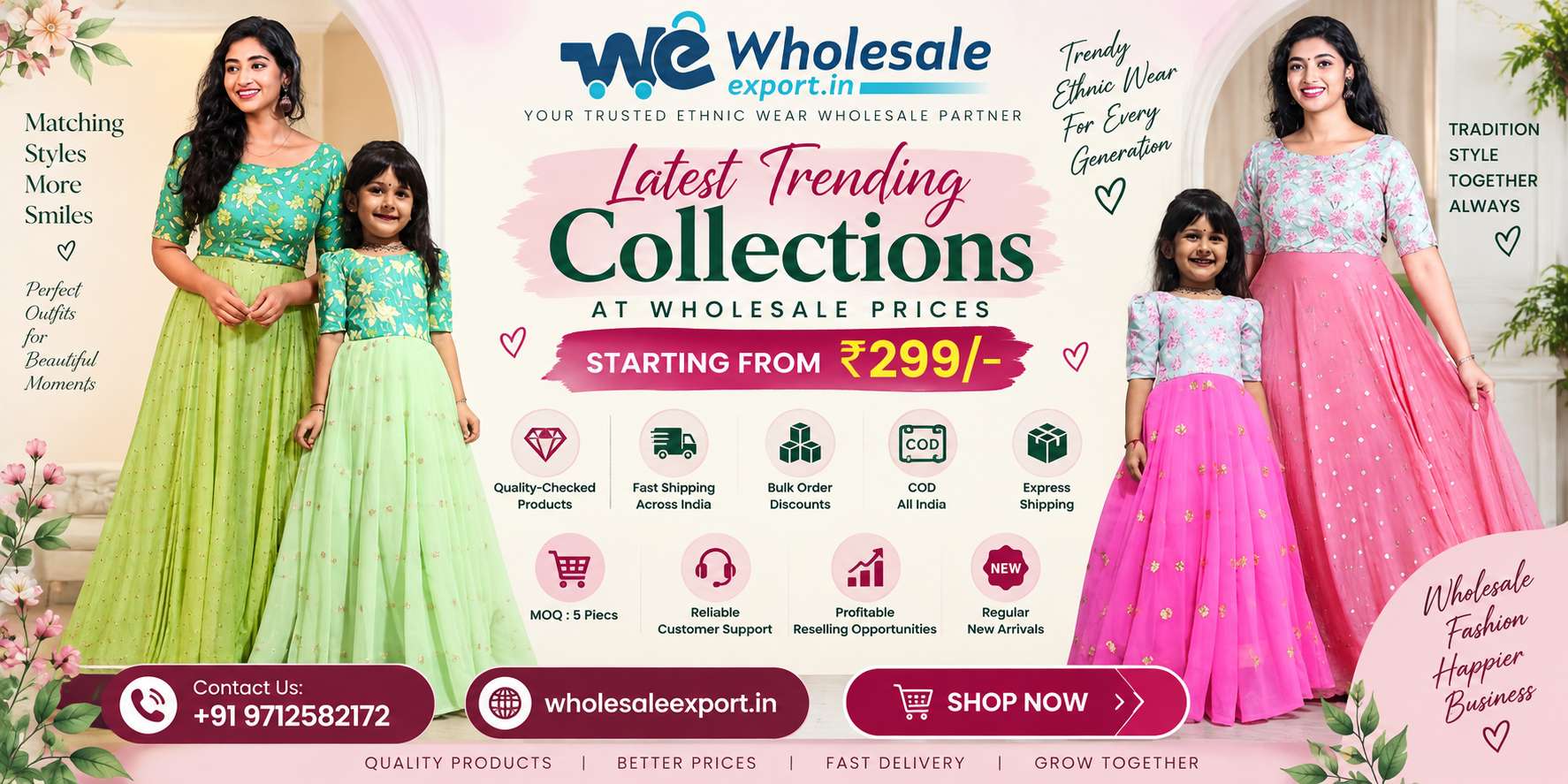
Explore Latest Collections, Wholesale Pricing and Trendy Ethnic Wear through Wholesaleexport.in. Business buyers can enquire about available collections, Fast Shipping, applicable COD Support, Bulk Order Deals and current ordering options.
Quality Products Starting From ₹299 are available across selected collections and products, subject to current stock and applicable wholesale terms. Whether you are a Home-Based Seller taking your first step or an established Wholesale Buyer looking for fresh inventory, select products according to your customer demand and business model.
Contact Number: +91 9712582172
Website: wholesaleexport.in
With Vastralife's wholesale and export experience since 2017, industry expertise and focus on premium product quality, Wholesaleexport.in supports buyers looking to connect with India's ethnic wear sourcing ecosystem. Start with a practical quantity, understand what your customers buy, reinvest intelligently and build the business one successful collection at a time.