


Can I Buy Wholesale Clothing in Small Quantities? Complete Guide for Resellers in 2026
Can I Buy Wholesale Clothing in Small Quantities? Complete Guide for Resellers in 2026
Starting a clothing business no longer means purchasing hundreds of pieces before knowing what your customers will actually buy. Home-Based Sellers, Instagram Resellers, Boutique Owners and even established retailers can build inventory more carefully by sourcing selected designs in manageable quantities. Small-quantity wholesale buying gives sellers an opportunity to test products, understand customer demand and protect working capital while still accessing genuine wholesale collections. The key is finding suppliers whose MOQ, product assortment, pricing and ordering system match the scale of your business.
Introduction
One of the most common questions from new fashion sellers is, “Can I buy wholesale clothing in small quantities?” The practical answer is yes, provided you choose a supplier or wholesale platform that supports a low minimum order quantity. The exact MOQ can vary by supplier, brand, catalogue and product category.
Traditional wholesale buying was often associated with large quantities. A retailer might purchase complete catalogues, multiple sizes or dozens of pieces at once. That model still exists and can be suitable for established retailers with predictable sales, but digital wholesale has opened additional possibilities for smaller businesses.
In 2026, a seller can begin with selected wholesale products, market them through Instagram, WhatsApp, a website or a physical store, study customer response and then increase purchasing as sales become more predictable. This approach is particularly useful for Home-Based Sellers and new Resellers who want to enter women's wear or kids wear without unnecessarily locking a large amount of money into inventory.
Wholesaleexport.in serves buyers looking for wholesale ethnic wear and fashion products from India. With Vastralife's wholesale and export experience since 2017, the focus is on helping B2B buyers access collections suited to resale, boutique, shop and wholesale requirements while maintaining attention to product quality and practical sourcing.
What Does Small Quantity Wholesale Clothing Actually Mean?
Small-quantity wholesale does not necessarily mean purchasing a single piece. It generally refers to buying considerably fewer units than a traditional bulk order while still purchasing for business or resale purposes.
A supplier may define the minimum through pieces, catalogue sets, designs, sizes or order value. For example, one collection might have an MOQ based on a small set of pieces, while another manufacturer may require the buyer to purchase the complete catalogue.
MOQ Is the Most Important Number to Check
MOQ stands for Minimum Order Quantity. Before comparing suppliers purely on wholesale price, check how their MOQ works.
If your business only needs a few designs but the supplier requires a large quantity of every design, a seemingly attractive price may not suit your cash flow. On the other hand, a slightly different buying rate with a manageable MOQ may allow you to create greater variety using the same inventory budget.
Catalogue MOQ and Piece MOQ Can Be Different
Fashion wholesalers may structure orders differently. Some sell a complete catalogue containing multiple designs or colours. Others may permit selection from eligible products subject to their current ordering conditions.
This distinction matters because five pieces selected from different products provide a different inventory mix from five pieces of one identical design. Always confirm the applicable terms before placing an order.
Why Small Quantity Wholesale Is Useful for New Resellers
For a new seller, the biggest advantage is not simply spending less. It is the ability to learn the market with controlled inventory exposure.
Test Customer Demand Before Buying Bigger
Imagine purchasing 50 pieces of one design because it appears attractive in the catalogue. If your customers do not respond to that colour, pattern or price range, a significant part of your capital remains stuck in stock.
With small quantity wholesale clothing, you can test multiple products in smaller quantities. Sales results then provide useful information for your next purchase.
Offer More Variety With the Same Budget
Variety matters especially for Instagram and WhatsApp selling. Customers frequently want to see new designs rather than repeated posts of the same few products.
A lower MOQ can allow a seller to distribute an inventory budget across kurtis, kurti sets, kids wear, dress materials, sarees or other suitable categories instead of concentrating everything in one collection.
Protect Working Capital
Unsold inventory is money that cannot immediately be used for advertising, new stock, packaging or business operations. Small-batch buying can help sellers maintain better control over working capital, especially during the early stages of a business.
This does not mean buying the smallest possible quantity forever. Once a seller identifies consistent fast-moving products, purchasing larger quantities may provide better economics.
Who Should Consider Low MOQ Wholesale Clothing?
Low MOQ sourcing can work for several types of fashion businesses. The appropriate order size depends on sales volume, customer base and available capital.
Home-Based Sellers
A Home-Based Seller usually does not need the same inventory depth as a large retail showroom. Smaller purchases can make it easier to start with carefully selected merchandise and build stock according to actual orders.
Instagram and WhatsApp Resellers
Digital Resellers benefit from frequent content. Having several different products to photograph, post and promote can be more useful than holding a large quantity of one design.
Boutique Owners
Boutiques often compete through curation rather than huge stock volumes. Smaller quantities can help them maintain exclusivity while refreshing displays regularly.
Shop and Showroom Owners Testing New Categories
Even an established store can use small wholesale orders when entering a new category. A retailer that already sells sarees, for example, might test kurti sets or kids ethnic wear before dedicating substantial floor space and purchasing capital to the category.
New Wholesale Buyers
Small initial transactions can also help buyers evaluate a new supplier's products, packing, communication and fulfilment before considering larger business volumes.
What Products Can You Buy in Small Wholesale Quantities?
Availability depends on the individual supplier and collection, but low MOQ purchasing may be available across several Indian fashion categories.
Kurtis and Kurti Sets
Kurtis, kurti-pant sets and kurti-pant-dupatta sets can be useful starting categories because they cover everyday, office, casual and festive customer requirements across multiple price segments.
Kids Wear
Kids clothing can be suitable for sellers who want to test age groups, styles and seasonal demand before purchasing deeper inventory. Buyers should pay close attention to size assortment because kids wear is particularly size-dependent.
Lehenga Choli and Festive Wear
Festive categories can require more careful inventory planning because demand may rise sharply around specific seasons and then change. Smaller initial quantities allow retailers to test colours, price bands and designs before increasing purchases.
Sarees and Dress Materials
Sarees and dress materials provide additional opportunities for retailers building a broader ethnic-wear assortment. Selection should always be based on the customer profile of the store rather than simply purchasing every available category.

Small Quantity Wholesale Clothing From Surat
Surat has a large textile ecosystem covering wholesale trading, sourcing and manufacturing across many women's and children's clothing categories. Buyers searching for wholesale clothing in small quantities can evaluate suppliers both through physical textile markets and online wholesale channels.
Surat Textile Market and Ring Road
The surat textile market ecosystem around Ring Road is familiar to retailers sourcing women's ethnic wear. Buyers can encounter a broad assortment of sarees, dress materials, kurtis, kurti sets, lehengas and related fashion products.
For retailers travelling to Surat, physical market sourcing provides an opportunity to compare products and understand different wholesale segments. However, travelling for every stock update may not be practical for sellers located elsewhere in India or overseas.
Sahara Darwaza Wholesale Sourcing
Sahara Darwaza and surrounding textile areas are also associated with Surat's textile trade. Retailers researching suppliers should compare more than location alone. Product quality, current stock, MOQ, wholesale price, dispatch terms and supplier communication are more meaningful for a long-term business relationship.
Online Wholesale Buying Reduces the Need for Frequent Market Visits
Online B2B sourcing can be especially useful for smaller retailers. Wholesaleexport.in enables buyers to explore available collections remotely, making it easier to review products before deciding which stock is relevant to their business.
For a Home-Based Seller in another state or an international buyer, this can reduce dependence on frequent Surat visits while still providing access to Indian wholesale fashion collections.
Does Buying Small Quantities Mean Paying a Higher Price?
This is an important consideration. In wholesale trade, quantity can influence the final price, but there is no universal rule that applies to every product or supplier.
Large-volume buyers may receive terms appropriate to their quantity, while smaller orders may follow the standard wholesale rate for the applicable MOQ. The important point is to calculate whether the total business economics work for you.
Look at Profit Per Piece, Not Only Buying Price
Suppose one option gives you a slightly lower per-piece rate but requires a very large quantity. Another allows a smaller order at a different rate. The first option is not automatically more profitable if much of the stock remains unsold.
A retailer should consider expected selling price, gross margin, stock turnover, transportation and the amount of working capital committed.
Fast Stock Rotation Can Be More Valuable Than a Small Buying Discount
Inventory that sells quickly returns cash to the business. That cash can then be reinvested into new collections. A lower purchase rate has limited value if the product takes months to clear.
For this reason, new Resellers should think about inventory turnover alongside wholesale pricing.
Small Quantity Wholesale Buying Strategy for 2026
A practical 2026 buying strategy is to begin with variety, identify winners and then increase depth selectively. Instead of treating every product equally, let customer response guide your purchasing decisions.
Step 1: Define Your Customer
Before purchasing anything, decide who you intend to sell to. Are your customers looking for affordable daily wear, premium ethnic wear, kids fashion, festive outfits or boutique designs?
A clearly defined customer makes wholesale selection much easier.
Step 2: Set an Inventory Budget
Decide how much capital can safely be used for stock without affecting essential operating expenses. Do not spend the entire budget merely because a supplier offers a bulk deal.
Step 3: Test Multiple Designs
Use manageable quantities to test colours, patterns, sizes and price ranges. Record enquiries as well as actual sales because both can reveal customer interest.
Step 4: Identify Fast-Moving Products
After the first selling cycle, divide products into fast sellers, average sellers and slow sellers. This gives you a practical basis for the next purchase.
Step 5: Reorder Proven Winners
Once a product category consistently performs well, increasing quantity can become more sensible. This is how a small reseller can gradually move from testing stock toward larger wholesale purchasing without making unnecessary inventory bets.
How to Scale From Small Orders to Bigger Wholesale Purchases
Small-quantity buying should not necessarily remain the permanent purchasing model for a growing clothing business. Its biggest advantage is that it allows sellers to discover what customers actually want before committing larger amounts of capital. Once sales data becomes reliable, successful products can gradually move from testing quantities to deeper inventory.
Increase Quantity Only After Demand Is Proven
If a particular kurti set, kids wear category, saree style or festive collection sells consistently, consider increasing the quantity in the next order. The decision should come from actual sales rather than personal preference.
For example, if a seller tests five or six styles and two repeatedly receive orders, the next buying cycle can allocate more capital to those successful styles while replacing slower designs with fresh options. This creates a healthier inventory mix.
Use a Test, Measure and Reorder System
A simple system works well for both Home-Based Sellers and established retailers:
- Purchase a manageable initial assortment.
- Upload or display the products immediately.
- Track enquiries, orders, sizes and preferred colours.
- Identify fast-moving products.
- Reorder proven categories when stock is available.
- Reduce future purchasing of slow-moving designs.
This approach can make small quantity wholesale clothing much more strategic. Instead of purchasing randomly, every buying cycle produces information that improves the next one.
How Online Sellers Can Use Small Wholesale Orders
Instagram, WhatsApp and website-based sellers have a particular advantage when working with low MOQ inventory. They can quickly test new products through digital content and receive customer reactions without needing a large physical showroom.
Use New Arrivals to Keep Your Content Fresh
Customers who follow an ethnic-wear seller online expect to see new products. Smaller, more frequent buying cycles can provide fresh material for Reels, Stories, WhatsApp Status updates and product posts.
Instead of purchasing a very large quantity of one catalogue, sellers can create a more diverse feed featuring different styles and price points. This may help them understand which categories generate stronger enquiries.
Track Enquiries Before Reordering
Do not evaluate a design only through likes and views. Track serious enquiries, WhatsApp messages, add-to-cart activity and completed orders. A product can receive significant social engagement without generating actual sales.
Purchasing decisions should ultimately be connected to revenue and customer demand.
Create Urgency Honestly
If a product genuinely has limited availability, sellers can communicate that fact to customers. However, avoid creating artificial scarcity. Long-term customer trust is more valuable than forcing one quick sale through exaggerated claims.

Small Quantity Wholesale for Kids Wear and Ethnic Wear
Kids wear can particularly benefit from careful quantity planning because retailers must manage different ages, sizes, colours and occasions. A design may be attractive, but purchasing too deeply in the wrong size distribution can create unnecessary inventory.
Kids Wear Requires Better Size Planning
Before buying, understand exactly how the supplier's size set works. Some products may be offered according to predefined size combinations. Retailers should compare those combinations with the age groups that regularly purchase from them.
For new sellers, smaller quantities can provide useful information about which sizes and styles move fastest in their market.
Ethnic Wear Can Be Tested Season by Season
Festive and occasion-wear demand changes throughout the year. Retailers may need different merchandise for wedding periods, Navratri, Diwali and other selling seasons.
Rather than carrying heavy festive inventory throughout the year, smaller retailers can plan purchases closer to relevant selling periods while still allowing sufficient time for transportation, photography and marketing.
Internal Linking for Wholesale Clothing Buyers
Retailers who want to expand their children's fashion assortment can explore kids wear wholesale collections and compare styles that may suit boutiques, online Resellers and retail stores.
For sellers looking to add higher-value festive merchandise, the wholesale lehenga market Surat with price collection can help buyers explore another ethnic-wear category for weddings, festivals and occasion-focused retail demand.
The best expansion strategy is usually gradual. Add a new category, measure customer response and then increase purchasing if the category produces consistent sales.
Small Quantity Wholesale Clothing for International Buyers
Small-order sourcing is not limited to Indian retailers. Overseas boutiques and Resellers may also want to test Indian ethnic wear before committing to larger export orders. For this guide, three useful markets to consider are Nepal, Australia and Singapore.
Wholesale Clothing for Nepal Resellers
Retailers in Nepal sourcing Indian fashion can use smaller initial orders to understand demand for different ethnic-wear categories. Because international movement adds transportation time and costs, buyers should plan ahead of important festive selling periods.
Rather than waiting until peak customer demand has already started, retailers can identify upcoming seasonal requirements and order sufficiently early for the stock to arrive, be displayed and marketed.
Indian Ethnic Wear for Australia
Australia-based boutiques and Resellers serving customers interested in Indian fashion may use test orders to identify which kurtis, festive outfits, sarees or kids ethnic-wear categories perform well with their audience.
International buyers should calculate landed cost rather than comparing only the Indian wholesale price. Freight, applicable duties, taxes and local fulfilment expenses can affect the final margin.
Wholesale Fashion for Singapore
Singapore sellers can similarly use controlled quantities to test Indian ethnic-wear products. Lightweight, easy-to-display collections may be useful for online sellers and boutiques, depending on their customer segment.
Before placing any international order, buyers should confirm current shipping options, documentation, applicable charges and delivery expectations.
Common Mistakes When Buying Wholesale Clothing in Small Quantities
Low MOQ reduces inventory exposure, but it does not automatically make every purchase profitable. Sellers still need a disciplined buying process.
Choosing Products Only Because They Are Cheap
A low buying price does not guarantee a good product for your customers. Fabric, stitching, design, sizing and overall presentation should be considered alongside cost.
An inexpensive product that remains unsold can be more costly than a better product that sells quickly at a healthy margin.
Buying Too Many Different Categories Immediately
Variety is useful, but an entirely unfocused assortment can make branding difficult. A new seller does not necessarily need kurtis, sarees, lehengas, kids wear, jewellery and every other category on day one.
Start with categories that fit your target audience. Expand after learning what those customers actually purchase.
Ignoring Shipping Cost Per Piece
Very small orders can sometimes have a higher transportation cost per piece than larger shipments. Sellers should include shipping when calculating the actual landed cost.
If increasing an order modestly produces substantially better shipping economics without creating excessive inventory, that may be worth considering.
Not Checking Supplier Terms Before Payment
Before confirming an order, understand the applicable MOQ, stock availability, payment terms, dispatch process and product policies. Clear communication reduces misunderstandings later.
Buying Fashion Without Watching Customer Trends
Fashion demand changes. A product that performed strongly last season may not automatically repeat the same performance in 2026. Regularly review your sales data and customer enquiries before replenishing large quantities.
How to Select a Reliable Small Quantity Wholesale Supplier
A reliable supplier can become an important part of a growing fashion business. Buyers should look beyond one attractive catalogue or one low quotation.
Check Product Consistency
Customers return to a retailer partly because they develop expectations about product quality. Consistency in fabric, stitching and finishing therefore matters when selecting a long-term wholesale source.
Look for Regular New Arrivals
Access to fresh merchandise helps online and offline sellers maintain customer interest. Regular new arrivals also allow businesses to respond to changing trends without purchasing excessive quantities of one old collection.
Evaluate Communication and Order Support
Good B2B communication matters. Buyers may need information about available sizes, stock, MOQ, dispatch or bulk quantities. A wholesale relationship becomes easier to manage when product and order information is communicated clearly.
Consider Industry Experience
Vastralife has wholesale and export experience since 2017, providing industry exposure to the requirements of Resellers, boutiques, retailers and wholesale buyers. Experience can be valuable when serving different types of B2B customers because purchasing needs vary considerably between a Home-Based Seller and a large Showroom Owner.
Why Wholesaleexport.in Can Work for Growing Resellers
Wholesaleexport.in provides access to women's ethnic wear and other fashion categories for buyers looking to source for resale. Online sourcing can be especially practical for businesses that cannot repeatedly travel to the surat textile market, Ring Road or Sahara Darwaza whenever they need new stock.
The platform can help buyers review Latest Collections and current wholesale products from a remote location. This can support retailers in India as well as eligible international wholesale and export buyers.
For smaller businesses, the objective should be to combine access to fresh collections with disciplined purchasing. Buy according to demand, evaluate the received products and scale successful categories gradually.
Customer FAQs
1. Can I buy wholesale clothing in small quantities?
Yes. Some wholesalers and B2B platforms support lower minimum quantities, although the exact MOQ depends on the product, catalogue, brand and supplier. Always check the current ordering terms before purchasing.
2. What is MOQ in wholesale clothing?
MOQ means Minimum Order Quantity. It is the minimum number of pieces, catalogue quantity or other minimum purchase requirement that a supplier accepts for an order.
3. Is small quantity wholesale suitable for a new clothing business?
It can be useful because it allows a new seller to test designs and customer demand while limiting the amount of capital committed to unproven inventory.
4. Can Home-Based Sellers purchase wholesale clothing?
Yes, provided they meet the supplier's applicable wholesale ordering requirements. Home-Based Sellers can use small-batch purchasing to build inventory gradually.
5. Can I buy wholesale clothes for Instagram resale?
Yes. Instagram Resellers can source products wholesale and market them through photographs, Reels and Stories. Sellers should use accurate product information and confirm current stock before accepting customer orders.
6. Is Surat suitable for wholesale clothing sourcing?
Surat has a large textile trading and manufacturing ecosystem, including the Ring Road, Sahara Darwaza and wider Surat textile market areas. Buyers can source through physical businesses as well as online B2B channels.
7. Does a small order always have a higher wholesale price?
Not necessarily. Pricing structures vary by supplier and product. Buyers should compare the actual wholesale rate, MOQ, transportation cost and expected retail margin before making a decision.
8. Can I order wholesale clothing for export?
International wholesale purchasing may be available depending on the supplier, product and destination. Buyers should confirm shipping, documentation, applicable charges and import requirements for their country.
9. Should I start with many products or one category?
For a new business, it can be easier to start with a focused assortment aimed at a clearly defined customer group. Once sales data becomes available, additional categories can be introduced gradually.
10. When should I increase my wholesale quantity?
Consider increasing quantities when repeated sales demonstrate stable demand. Fast-selling designs, sizes and categories can receive a larger share of the next inventory budget while slow-moving products can be reduced.
Start Your Wholesale Clothing Business With a Practical MOQ
If you have been asking, “Can I buy wholesale clothing in small quantities?”, the important point is to find a sourcing model that matches your current business scale. You do not need to treat a new clothing venture like an established high-volume showroom from the first order.
Start with a manageable assortment, learn what your customers buy, maintain records of fast-moving designs and increase quantities when sales justify the additional inventory. That approach can work for Home-Based Sellers, Shop Owners, Boutique Owners, Showroom Owners, Resellers and Wholesale Buyers.
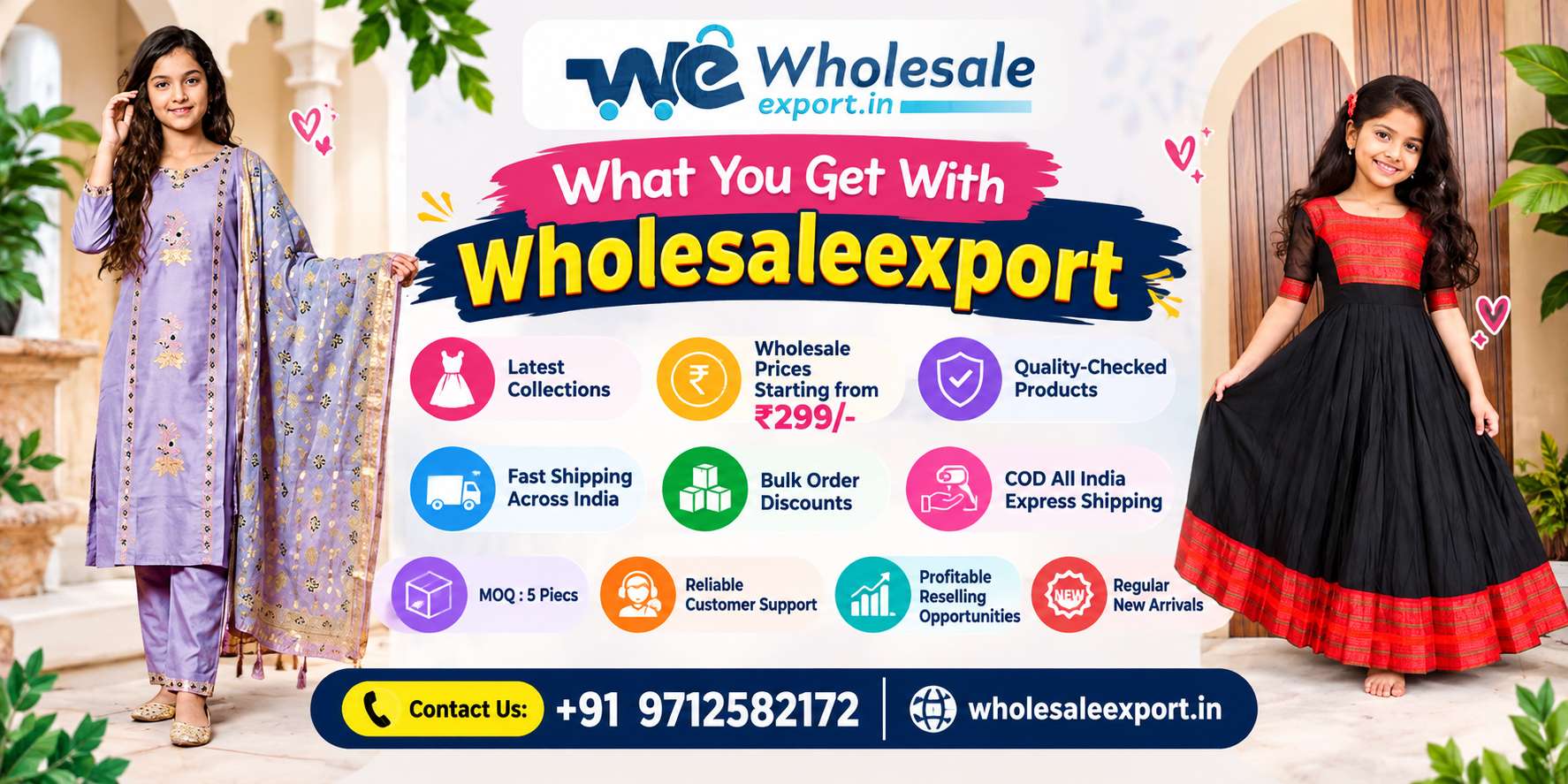
Explore Wholesaleexport.in for Latest Collections, Wholesale Pricing, Trendy Ethnic Wear, Fast Shipping, COD Support where applicable, Bulk Order Deals, regular new arrivals and Quality Products Starting From ₹299, subject to current products and ordering conditions.
Contact Us: +91 9712582172
Website: wholesaleexport.in
Whether you are starting with a few wholesale pieces or preparing to scale into larger orders, the objective remains the same: purchase the right products at the right quantity for the customers you actually serve. A controlled beginning, reliable sourcing and data-based reordering can create a stronger foundation for a sustainable clothing business in 2026.