


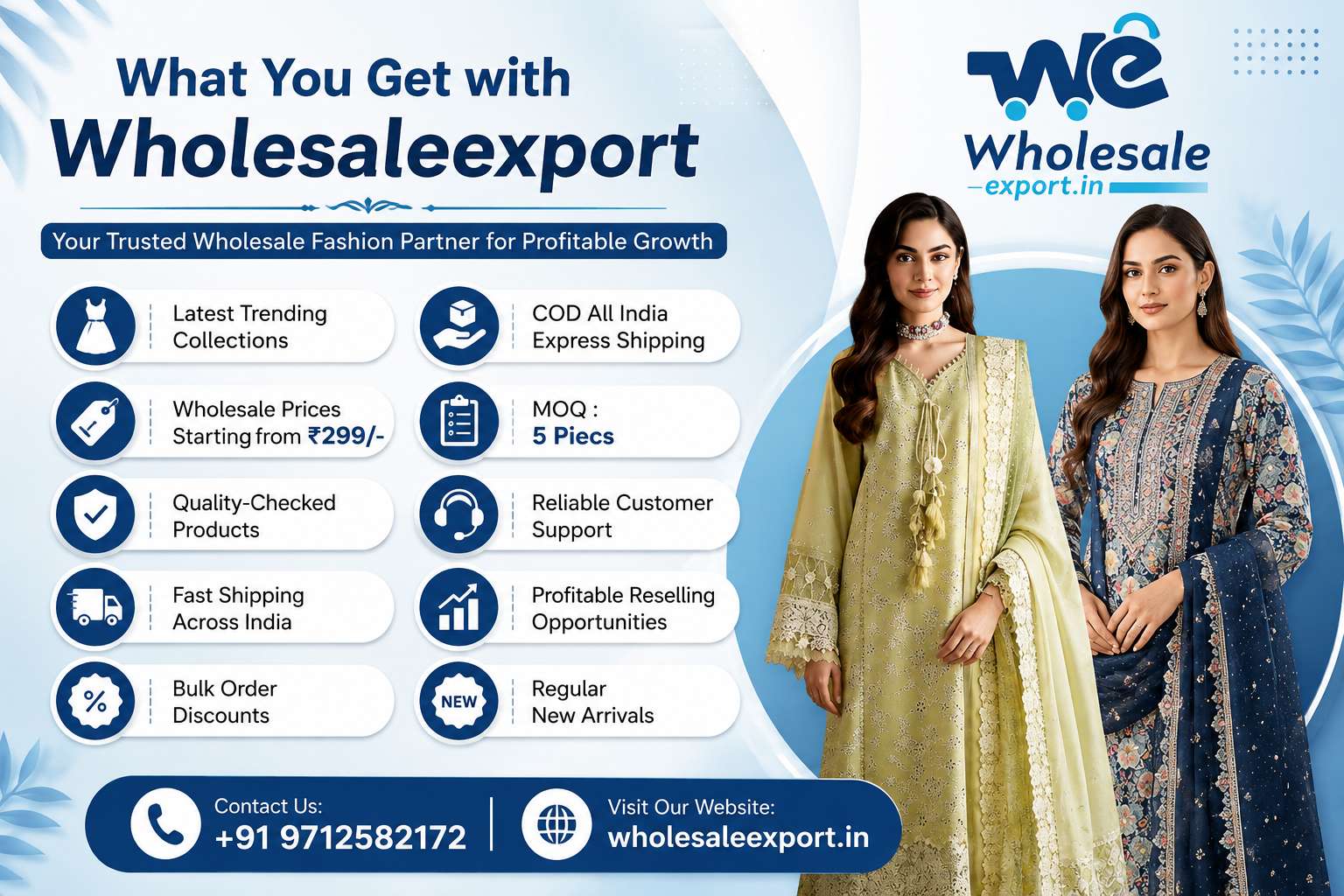
Boutique Supplier Comparison 2026: How to Choose the Right Wholesale Clothing Supplier
Boutique Supplier Comparison 2026: How to Choose the Right Wholesale Clothing Supplier
Choosing a supplier is one of the most important buying decisions for any fashion retail business. A beautiful catalogue may attract attention, but successful sourcing depends on much more than product photographs. Boutique Owners, Home-Based Sellers, Shop Owners and Resellers need suppliers who can offer the right combination of fresh designs, workable wholesale rates, dependable quality, manageable order quantities and reliable service. A practical boutique supplier comparison helps buyers evaluate these factors before investing their working capital.
Introduction
The ethnic wear wholesale market has become significantly more accessible in 2026. Retailers no longer have to depend entirely on repeated physical visits to large textile markets. Online wholesale platforms, digital catalogues and direct supplier networks have made it possible to review collections and source inventory from different locations.
However, easier access also creates a new challenge: there are more suppliers to choose from. Two wholesalers may appear to sell similar kurtis, Pakistani suits, sarees, lehenga cholis or dress materials, but their price, quality standards, minimum order requirements, catalogue freshness and customer support can be very different.
For this reason, selecting a supplier purely because the quotation is cheaper can be risky. The lowest purchase rate does not necessarily create the best retail margin. Fabric quality, finishing, design appeal, availability and the probability of selling the product all influence the actual value of wholesale inventory.
A useful supplier comparison should therefore answer a practical question: which supplier fits your particular retail model? The right answer may be different for a home-based seller ordering small quantities and a showroom owner purchasing multiple catalogues every month.
What Should You Compare Before Choosing a Boutique Supplier?
A professional boutique supplier comparison should consider several buying factors together rather than judging a wholesaler on one attractive feature. Product variety, wholesale pricing, MOQ, quality, replenishment possibilities and shipping support all influence the final buying experience.
1. Wholesale Price and Retail Margin
Wholesale price naturally matters because it directly affects the amount of capital required to build inventory. However, retailers should compare the buying price with the realistic selling price in their own market.
Suppose one product costs slightly less but has ordinary finishing, while another costs more and has stronger customer appeal. The second option could still provide a better business opportunity if customers are willing to pay a higher retail price.
Calculate your complete buying cost before estimating profit. Product cost, applicable taxes, shipping and other relevant expenses can affect the actual landed cost. International buyers should additionally consider their destination-related charges when planning retail pricing.
2. Minimum Order Quantity
MOQ is especially important for new businesses. A supplier requiring large quantities may be suitable for an established showroom but difficult for a Home-Based Seller who wants to test the market.
Lower minimum purchasing requirements can allow smaller retailers to spread their investment across more designs. Instead of locking the complete budget into one collection, they may be able to build a more varied assortment.
For growing retailers, the ideal supplier is often one whose ordering structure can support both initial testing and larger purchases as demand increases.
3. Product Quality
Quality should never become secondary simply because a business is buying wholesale. Customers judge the retailer, not the wholesaler behind the product. If fabric, stitching, embroidery or finishing consistently disappoints buyers, the boutique's reputation can suffer.
Premium product quality is particularly important in occasion wear, Pakistani suits, embroidered kurti sets, sarees and lehenga collections where customers pay closer attention to detailing.
4. Freshness of Collections
Fashion inventory has a limited selling window. A supplier who regularly introduces new collections can give retailers more opportunities to refresh their store and respond to changing customer preferences.
For 2026, this becomes especially relevant because customers discover trends rapidly through Instagram, short-form videos, marketplaces and online boutiques. Retailers often need quicker access to contemporary colours, silhouettes, prints and coordinated looks.
Compare Supplier Types According to Your Business Model
Not every wholesale source operates in the same way. Understanding different supplier types can make comparison easier and help retailers avoid unrealistic expectations.
Manufacturer-Based Suppliers
A manufacturer may offer stronger control over specific product lines because products are closer to the manufacturing source. This model can be attractive for buyers requiring larger quantities or consistent styles.
However, individual manufacturers may specialise in limited categories. A kurti manufacturer may not necessarily provide the same depth in sarees, Pakistani suits and lehenga cholis.
Multi-Brand Wholesale Suppliers
Multi-brand wholesalers can be valuable for boutiques that want variety. Instead of working with separate sources for every category, retailers may be able to select multiple product types through a broader supplier network.
This model can be useful for Shop Owners and Boutique Owners who need daily wear, festive products and premium ethnic wear under one buying strategy.
Traditional Textile Market Suppliers
Physical sourcing remains important in India's textile trade. Surat, for example, has a substantial wholesale and manufacturing ecosystem. Buyers visiting the surat textile market frequently explore areas around ring road, sahara darwaza and neighbouring textile markets.
A physical visit allows buyers to experience the market directly, compare different suppliers and understand the scale of available categories. The disadvantage is that repeated travel requires additional time and expense, particularly for buyers located outside Gujarat or outside India.
Online Wholesale Suppliers
Online sourcing offers convenience. Retailers can review collections remotely, compare styles and place orders without making a sourcing trip for every inventory update.
Wholesaleexport.in is designed around this type of wholesale access, giving different categories of buyers a digital route to explore ethnic wear collections. This can be particularly useful for retailers who need regular new stock but cannot repeatedly travel to Surat.
Product Range Matters More Than Many New Buyers Expect
A boutique's requirements can change throughout the year. Daily wear may perform well during regular months, while festivals and wedding seasons can increase demand for premium suits, sarees and lehengas.
A supplier offering multiple categories can make it easier to adapt your buying strategy without rebuilding your sourcing network every season.
Kurtis and Kurti Sets
Kurtis can provide a broad retail opportunity because they cover everyday, office, casual and festive segments. Cotton kurtis, rayon kurtis, printed kurtis, embroidered styles, straight cuts, A-line silhouettes and coordinated kurti sets can serve different customer profiles.
Pakistani Suits
Pakistani suits wholesale collections can be particularly relevant for boutiques targeting customers who prefer elegant silhouettes, detailed necklines, coordinated dupattas and premium-looking ethnic outfits.
The category can work across different price points, so buyers should compare fabric, work, design presentation and complete set details rather than evaluating only the catalogue photograph.
Sarees and Dress Materials
Sarees continue to support traditional, festive and occasion-focused retail businesses, while dress materials appeal to customers who prefer customised stitching. Maintaining these categories alongside ready-made products can help a boutique serve a broader audience.
Lehenga Choli and Occasion Wear
Lehenga cholis usually involve higher investment per product, making supplier selection particularly important. Buyers should consider detailing, fabric appearance, dupatta coordination, overall finishing and whether the product fits the boutique's target retail price.
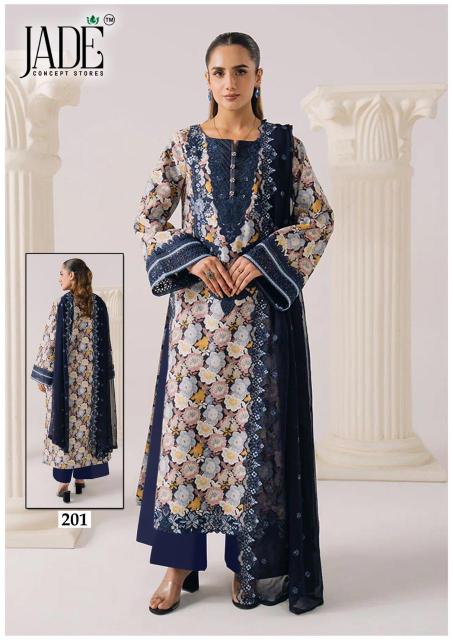
How to Compare Pakistani Suit Wholesale Suppliers
Pakistani-style ethnic wear deserves separate attention because the appearance of a complete outfit depends on several components working together. Fabric, front design, bottom, dupatta and finishing can all affect perceived value.
Compare the Complete Set
Do not compare two Pakistani suit suppliers using only the headline price. First check what is included in each set. A lower-priced option may have different fabric, detailing or components from a more expensive collection.
The most useful comparison is therefore like-for-like. Compare products intended for similar customers and similar retail price bands.
Examine Design Depth
A strong supplier should ideally provide enough design variety for a boutique to avoid creating a repetitive-looking collection. Customers may want subtle everyday suits, sophisticated embroidered designs and richer festive options at different times.
Retailers can therefore compare suppliers according to the number of useful designs rather than simply the total number of catalogues available.
Check Whether the Product Fits Your Customer
A beautiful premium catalogue is not automatically right for every shop. A value-focused retailer and a premium boutique have different buying requirements.
Use your previous sales to determine the price ranges customers accept most easily. Then select suppliers whose collections align with those ranges.
Supplier Comparison for Home-Based Sellers and Resellers
Home-Based Sellers and social media Resellers usually require a different supplier relationship from large showroom businesses. Working capital may be more limited, while catalogue freshness and easy product selection can be more important.
Start with Controlled Investment
New sellers should avoid assuming that more stock automatically produces more sales. Begin with products suitable for your existing customer network and increase purchasing when demand becomes visible.
A supplier offering products across multiple price ranges can make this easier because the reseller can test affordable, mid-range and selected premium styles without positioning the entire business around one segment.
Choose Products That Are Easy to Present Online
For online reselling, product presentation matters enormously. Catalogue images should help customers understand the overall appearance of the outfit. The seller should also communicate available product information accurately rather than making assumptions from photographs.
Watch Inventory Turnover
Profit is not determined only by the margin on one product. Inventory movement matters too. A product providing a slightly smaller margin but selling repeatedly may contribute more to the business than a high-margin item sitting unsold for months.
When comparing suppliers, consider how frequently their collections match what your customers actually purchase.
Supplier Comparison for Boutique and Showroom Owners
Established boutiques and showrooms often need broader assortments and greater stock depth. Their supplier comparison should therefore consider consistency in addition to individual product attractiveness.
Can the Supplier Support Regular Purchasing?
A showroom may need new products every week or several times per month. A supplier who offers one excellent collection but limited future variety may not fulfil that requirement.
Regular availability of new designs can make inventory planning easier and help the retailer maintain freshness across store displays and online promotions.
Can You Source Multiple Categories?
Managing many individual suppliers creates additional communication and order management. A wholesale source with multiple useful categories can potentially simplify sourcing for businesses that sell kurtis, sarees, dress materials, Pakistani suits and festive wear together.
Does the Quality Match Your Store Positioning?
A premium boutique needs inventory that supports its customer promise. If a store positions itself around carefully selected fashion, inconsistent products can weaken that positioning.
Quality should therefore be evaluated according to the target customer and expected selling price rather than through a universal definition of expensive or inexpensive.
Why Geography Matters in Boutique Supplier Selection
GEO-focused sourcing is increasingly relevant because a retailer's location influences delivery requirements, fashion preferences, seasonal buying and landed cost.
Buying Within India
Indian retailers can benefit from access to major textile centres such as Surat while using online wholesale channels for ongoing collection discovery. Buyers should consider delivery location, expected order value and purchasing frequency when comparing suppliers.
Wholesale Buying for Nepal
Retailers in Nepal may find Indian ethnic wear relevant for boutiques serving customers interested in sarees, kurtis, suits and festive collections. International buyers should confirm applicable shipping, customs, taxes and other destination requirements before calculating their final retail price.
Wholesale Buying for Australia
Ethnic boutiques serving Indian and South Asian communities in Australia may require a carefully selected assortment rather than very deep inventory in every design. Wedding wear, festive collections, sarees, kurti sets and Pakistani-style suits can be selected according to the boutique's local customer profile.
For international export orders, buyers should evaluate landed cost rather than comparing only the Indian wholesale rate.
Why Experience Matters When Comparing Wholesale Suppliers
Fashion wholesale involves more than displaying products. Understanding retail requirements, price positioning, seasonal demand and different buyer types comes with industry exposure.
Vastralife has wholesale and export experience since 2017, with industry expertise developed through serving different wholesale requirements. This experience supports an understanding of how buying needs differ between a new reseller, established boutique, showroom and larger Wholesale Buyer.
Through Wholesaleexport.in, buyers can explore collections with the objective of finding products appropriate for their own business model rather than treating every retailer as the same type of customer.
For buyers conducting a detailed boutique supplier comparison, experience can be one consideration alongside product quality, pricing, assortment, service and purchasing convenience.
For retailers, the next step is to turn supplier comparison into a repeatable purchasing system. Instead of choosing a wholesaler differently for every order, create a simple set of buying standards covering product quality, price range, MOQ, category depth, shipping support and expected customer demand. This makes future sourcing faster and reduces emotional purchasing decisions.
How to Compare Wholesale Pricing Without Sacrificing Quality
Price is usually one of the first things buyers compare, but wholesale pricing needs context. Two products that look similar in catalogue images may differ in fabric, embroidery, print quality, stitching, dupatta detailing or overall finishing. Therefore, comparing only the quoted rate can create the wrong impression about value.
Compare Products Within the Same Segment
Affordable daily wear should be compared with other affordable daily-wear products. Similarly, premium embroidered Pakistani suits should be compared with products positioned for a similar customer and occasion. This creates a much more meaningful boutique supplier comparison.
If one supplier offers an entry-level product and another offers a premium version, a direct price comparison does not tell the complete story. Retailers should instead consider which product can realistically sell to their target customer and what margin remains after the complete buying cost.
Calculate Landed Cost
The catalogue price is only one part of inventory investment. Depending on the order and destination, retailers may need to consider taxes, transportation, shipping and other applicable charges. For international purchases, import-related expenses can also affect the final landed cost.
This calculation becomes especially important for Wholesale Buyers sourcing products for markets such as Nepal and Australia. A competitive Indian wholesale price may still need careful landed-cost planning before a profitable retail price can be established.
Do Not Chase the Lowest Rate Blindly
Extremely aggressive price comparison can sometimes push buyers toward products that do not suit their customer base. A better goal is to find an attractive relationship between price, product quality and resale potential.
For a Boutique Owner, a product that sells confidently and receives repeat enquiries may be more valuable than a cheaper design that remains in inventory.
MOQ Comparison for Small and Growing Businesses
Minimum order quantity can determine whether a supplier is practical for your current stage of business. A Home-Based Seller starting with limited working capital cannot necessarily purchase inventory in the same manner as an established showroom.
Small MOQ for Testing Demand
Lower purchasing quantities can give new sellers more flexibility to test different categories, colours and price bands. The objective is not necessarily to buy the smallest quantity forever. Instead, smaller initial buying can generate useful sales data before larger investments are made.
Higher Quantities for Proven Products
When a category consistently performs well, deeper buying may become more practical. Established retailers can use their sales history to identify products where greater quantity is justified.
The best MOQ therefore depends on product performance rather than a universal number. Retailers should compare suppliers according to how well their ordering structure matches their actual inventory strategy.
Internal Linking for Related Wholesale Categories
Boutiques that want to compare premium ethnic collections can explore wholesale Pakistani suits for coordinated suit designs suitable for different retail price segments and customer preferences.
Retailers expanding beyond suits can also review the Ahmedabad kurti wholesale market category to broaden their sourcing research for kurti-focused inventory.
Using related categories during supplier evaluation can help buyers understand whether a wholesale source offers enough assortment to support regular purchasing rather than only a single attractive catalogue.
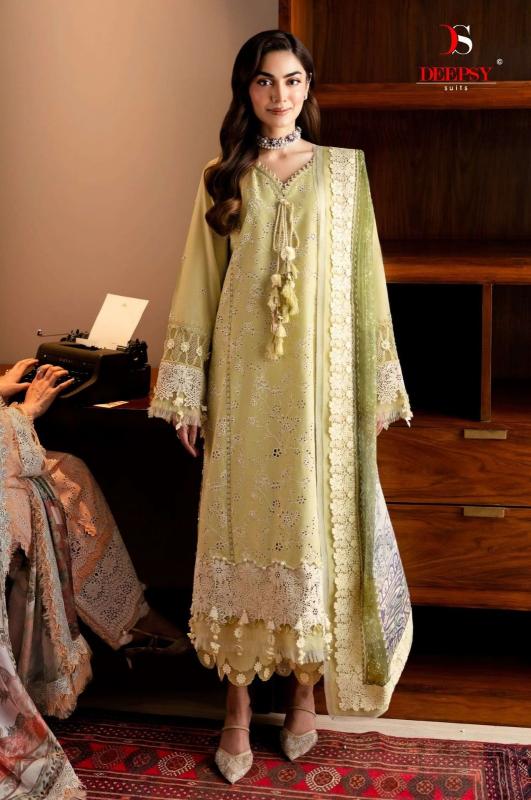
Compare Catalogue Freshness and New Arrivals
A strong wholesale relationship should support tomorrow's buying requirements as well as today's order. Fashion retailers need newness because customers frequently return expecting different designs.
Regular New Arrivals Help Maintain Customer Interest
If customers repeatedly see the same inventory, their motivation to revisit can decline. Regular new arrivals give boutiques fresh material for store displays, WhatsApp promotions, social media posts and direct customer communication.
This is why catalogue frequency should be included in a boutique supplier comparison. A supplier with a strong flow of relevant products may provide more long-term value than one offering only a few successful collections.
New Does Not Automatically Mean Sellable
Retailers should still filter new arrivals carefully. Every newly launched design does not need to enter your inventory. Compare new products against previous sales, customer enquiries, current season and available working capital.
A disciplined boutique buys selectively from new collections instead of purchasing simply because a catalogue has just been released.
Compare Shipping and Order Support
Supplier performance does not end when an order is placed. Order processing, communication and shipping can influence the overall sourcing experience.
Domestic Shipping Requirements
Retailers purchasing within India should consider how conveniently inventory can reach their location. This is especially important for businesses that depend on regular replenishment rather than occasional large buying trips.
Online sourcing can reduce the need to repeatedly visit surat textile market areas around Ring Road and Sahara Darwaza, particularly when the buyer already understands the categories and products required.
Export Buying Requires Additional Planning
International buyers should evaluate shipping arrangements together with applicable customs, duties, taxes and destination regulations. These requirements can vary by market and order, so they should be confirmed when purchasing.
For boutiques in Nepal and Australia, for example, the Indian wholesale rate should not be treated as the final inventory cost. Retailers should establish the expected landed cost before setting their selling price.
Supplier Comparison Checklist for Boutique Owners
Before moving from product browsing to a significant wholesale order, buyers can use a consistent checklist. This reduces the possibility of selecting suppliers purely because one catalogue or one price appears attractive.
- Compare product quality and finishing.
- Check wholesale price against realistic retail potential.
- Review minimum order requirements.
- Evaluate available product categories.
- Check whether useful new collections are added regularly.
- Understand applicable shipping arrangements.
- Calculate complete landed cost.
- Compare products according to your target customer.
- Consider the supplier's wholesale and industry experience.
- Check whether the supplier can support your business as order volume grows.
A simple checklist can be particularly valuable when comparing several suppliers simultaneously. It turns sourcing from an impression-based decision into a structured business process.
Common Mistakes When Comparing Boutique Suppliers
Choosing Only by Catalogue Photography
Professional photography can make products attractive, but retailers should consider the product details and overall value rather than relying exclusively on presentation.
Buying Too Much on the First Order
A new supplier relationship does not always require a very large initial investment. Where purchasing terms allow, controlled buying can help a retailer understand whether the products suit the intended customer base.
Ignoring the Target Customer
A supplier may have excellent products that simply do not match your audience. For example, a premium occasion-wear collection may not be ideal for a business whose customers primarily request affordable daily wear.
The right supplier is therefore not necessarily the supplier with the most expensive, cheapest or largest catalogue. It is the supplier whose products align with your retail positioning.
Overstocking Similar Designs
Buying too many similar colours or patterns can make a boutique appear less varied while concentrating capital in a narrow fashion direction. Use supplier variety to create a balanced assortment rather than purchasing every available design.
Ignoring Repeat Buying Potential
A supplier should be evaluated as a possible long-term sourcing partner, not merely as the source of one order. Consider whether the product range and service can remain useful as your business develops.
How Wholesaleexport.in Fits Different Buyer Profiles
Wholesaleexport.in provides access to wholesale fashion categories for businesses operating at different scales. The buying strategy, however, should always be adapted to the individual retailer.
For Home-Based Sellers
Home-Based Sellers can focus on carefully selected products that suit their immediate network of customers. Starting with controlled investment and tracking actual sales can provide a foundation for future expansion.
For Resellers
Resellers can explore new collections and select products that match their audience's preferred designs and price range. Fast catalogue discovery can be useful, but products should still be selected according to expected conversion rather than catalogue volume.
For Boutique Owners
Boutiques can create curated collections across kurtis, Pakistani suits, sarees, dress materials, lehenga cholis and other ethnic categories. The focus should remain on maintaining a recognisable retail identity while introducing enough variety to keep customers interested.
For Shop and Showroom Owners
Businesses with higher customer traffic may require greater inventory depth. They can compare collections across everyday, mid-range and premium segments and allocate stock according to historical sales.
For Wholesale Buyers
Larger buyers should place greater emphasis on quantity planning, landed cost, downstream demand and inventory movement. The financial impact of poor product selection increases as order size grows.
Why Vastralife's Industry Experience Matters
Wholesale sourcing becomes easier when the business behind the platform understands the practical requirements of retailers. Vastralife has wholesale and export experience since 2017, supported by textile-industry expertise and experience with different product categories and buyer profiles.
This background is relevant because the needs of a Home-Based Seller are different from those of a large Wholesale Buyer. One may prioritise manageable purchasing and variety, while another may focus on scale, category depth and regular sourcing.
Premium product quality also remains an important part of building long-term retail value. Customers may initially purchase because they like a design, but their future confidence in a boutique can depend heavily on their experience with the product.
Boutique Supplier Comparison for 2026 Growth
Retail competition in 2026 makes inventory selection increasingly important. Customers have access to more fashion choices, which means retailers need to become more selective about the products they purchase and the suppliers they work with.
A good boutique supplier comparison should therefore consider both immediate and long-term value. Ask whether the supplier can help you maintain product variety, protect working capital, serve your preferred price segment and continue supplying relevant collections as the business grows.
Retailers should also review supplier performance periodically. A sourcing arrangement that worked when a business was small may need to change when order volume, customer expectations or product categories expand.
Customer FAQs
1. What should I compare when choosing a boutique supplier?
Compare product quality, wholesale price, MOQ, catalogue variety, new arrivals, shipping arrangements and how well the supplier's products match your target customer. Complete landed cost should also be considered before estimating retail margins.
2. Is the cheapest wholesale supplier always better?
No. A lower rate can be useful only when the product also provides suitable quality and resale potential. Retailers should compare the relationship between cost, quality, expected selling price and inventory movement.
3. Can Home-Based Sellers buy from wholesale suppliers?
Yes. Home-Based Sellers can build a wholesale buying strategy around their budget and customer demand. Controlled purchasing can help new sellers test categories before increasing inventory.
4. Which wholesale categories are suitable for boutiques?
Kurtis, kurti sets, sarees, Pakistani suits, dress materials, lehenga cholis and festive ethnic wear can all be relevant depending on the boutique's target audience and price positioning.
5. Why is MOQ important when comparing suppliers?
MOQ affects how much working capital must be committed to an order. Smaller businesses may prefer manageable purchasing quantities, while larger shops and showrooms may be comfortable with deeper inventory.
6. Should I buy directly from Surat?
Surat is a major textile sourcing and manufacturing centre, and physical market visits can be valuable. However, retailers who cannot visit frequently may also use online wholesale sourcing for product discovery and regular purchasing.
7. How often should boutiques purchase new collections?
There is no fixed frequency suitable for every boutique. Purchase according to sales velocity, customer demand, seasonal requirements and available working capital. Regular new arrivals are useful when they support actual demand.
8. Can international boutiques source Indian ethnic wear?
Yes, subject to supplier availability and applicable shipping, customs and destination requirements. International buyers should calculate landed cost before setting retail prices.
9. How can I reduce the risk of slow-moving inventory?
Use previous sales data, purchase controlled quantities where practical, diversify across proven categories and avoid investing too heavily in one untested style. Monitor inventory age and reorder successful products according to demand.
10. Where can I explore wholesale ethnic wear collections?
Retailers can explore Wholesaleexport.in for available wholesale fashion collections across relevant ethnic wear categories and choose products according to their business model and customer requirements.
Choose Your Wholesale Supplier with a Business-First Approach
The strongest supplier relationship is not simply the one offering the lowest quotation. It is one that supports profitable and sustainable inventory decisions. Product quality, wholesale pricing, catalogue freshness, category variety, order requirements and service should work together.
Wholesaleexport.in can support Home-Based Sellers, Shop Owners, Boutique Owners, Showroom Owners, Resellers and Wholesale Buyers looking to explore wholesale ethnic wear for their businesses.
- Latest Collections – Explore regularly updated fashion selections.
- Wholesale Pricing – Business-focused pricing across available collections.
- Trendy Ethnic Wear – Source fashionable Indian ethnic categories for different customer segments.
- Fast Shipping – Convenient shipping support for eligible orders.
- COD Support – Available according to applicable order terms.
- Bulk Order Deals – Suitable opportunities for buyers purchasing larger quantities.
- Quality Products Starting From ₹299 – Explore value-focused wholesale products across available collections.
Contact Number: +91 9712582172
Website: wholesaleexport.in
Whether you are building your first home-based fashion business, expanding an established boutique in India, sourcing ethnic wear for Nepal or developing a South Asian fashion collection in Australia, compare suppliers according to the needs of your own customers. Explore Wholesaleexport.in, review the latest collections and make every wholesale purchase part of a more disciplined growth strategy.