


Boutique Business Growth Strategy 2026: How to Increase Sales and Build a Profitable Fashion Boutique
Boutique Business Growth Strategy 2026: How to Increase Sales and Build a Profitable Fashion Boutique
Running a fashion boutique successfully requires much more than keeping attractive garments on display. Sustainable growth comes from choosing the right products, maintaining healthy margins, understanding customer preferences, refreshing stock at the right time and building dependable wholesale sourcing relationships. Whether you operate a physical shop, Instagram store, home-based fashion business or established showroom, a structured growth plan can help turn everyday sales into a scalable retail business.
Introduction
The Indian fashion retail market continues to create opportunities for independent boutiques, resellers and regional stores. Customers now discover designs through Instagram, short videos, marketplaces and online catalogues before visiting a shop or sending a WhatsApp enquiry. This has made product freshness and speed increasingly important.
A strong boutique business growth strategy should therefore connect four areas: profitable wholesale purchasing, inventory management, customer acquisition and repeat sales. A boutique may receive plenty of enquiries, but if the stock selection is weak or margins are too low, those enquiries will not automatically create a profitable business.
The same principle applies to wholesale buying. Purchasing large quantities simply because the wholesale price appears attractive can block working capital. Successful boutique owners increasingly evaluate what will sell, how quickly it may sell and how much profit can realistically be earned after shipping, promotions and operating costs.
For buyers sourcing from Surat, platforms such as Wholesaleexport.in can make it easier to explore different wholesale fashion categories without depending entirely on physical market visits. Vastralife has been involved in wholesale and export business since 2017, bringing practical textile industry experience to buyers looking for fresh collections and premium product quality.
Build Your Boutique Around a Clear Customer Segment
One of the first steps toward growth is deciding exactly whom your boutique serves. Trying to sell everything to everyone usually creates an unfocused inventory. Instead, understand the lifestyle, spending capacity and fashion preferences of your strongest customers.
Define Your Core Buyer
A boutique serving college students may require fashionable kurtis, tops, co-ord sets and affordable ethnic styles. A store located in a premium residential area may perform better with designer kurti sets, festive wear and higher-value collections. A family-oriented store might require broader sizes and a combination of daily, festive and occasion wear.
Home-Based Sellers can apply the same strategy. If most enquiries come from women searching for affordable ethnic wear, build deeper expertise in that segment before expanding into unrelated categories.
Your buying decisions become easier once the customer profile is clear. Instead of asking, “Is this design good?” ask, “Will my customer buy this design at my planned retail price?” That small change in thinking can significantly improve inventory quality.
Create Three Product Levels
A useful boutique inventory structure can include entry-level, mid-range and premium products. Entry-level merchandise attracts price-conscious shoppers. Mid-range products can become the regular sales engine, while premium collections help increase average order value and strengthen the boutique's positioning.
This structure is particularly useful during festive and wedding seasons because customers often enter with different budgets. Giving them alternatives can improve conversion without forcing every shopper toward the cheapest option.
Make Wholesale Sourcing a Growth Advantage
For most boutiques, profit begins when stock is purchased—not when it is sold. If buying decisions are consistently poor, even strong marketing cannot fully solve the problem.
A reliable wholesale clothing supplier should offer more than an attractive price. Boutique owners need variety, current designs, clear product information, suitable quality, dependable dispatch and regular new arrivals. These factors help retailers replenish winning styles while keeping their assortment fresh.
Surat remains an important sourcing centre because of its extensive textile manufacturing and trading ecosystem. Buyers searching around the surat textile market, ring road and sahara darwaza can find extensive networks connected with women's ethnic and fashion products.
Buy for Sell-Through, Not for Quantity
Large purchases can sometimes secure favourable wholesale pricing, but quantity should never become the primary objective. Stock has value only when customers want to purchase it.
Consider buying broader variety with controlled depth when testing a new category. Once a particular style, fabric or price band proves successful, reorder or increase its allocation. This approach can protect working capital while providing enough variety to understand customer demand.
Keep a New-Arrival Budget
Do not spend the entire monthly purchasing budget at once. Keeping part of it available for new launches allows your boutique to respond when an unexpected trend begins performing well.
This is increasingly important in 2026 because social-media-led fashion cycles can develop quickly. Customers who repeatedly see a particular silhouette or styling trend online may begin asking local boutiques for similar products within days.
Improve Your Inventory Turnover
Inventory turnover is one of the most important areas in a practical boutique business growth strategy. A boutique can look fully stocked while still struggling financially if too much capital is trapped in slow-moving merchandise.
Separate your inventory into fast-moving, normal-moving and slow-moving stock. Fast sellers deserve replenishment. Normal sellers should be monitored. Slow sellers need a deliberate exit plan rather than remaining on shelves indefinitely.
Track Products at Design Level
Do not only record “kurti sales.” Record which kurti sold. Track colour, size, fabric, style, purchasing price, retail price and how long it remained in stock.
After several purchasing cycles, patterns become visible. You may discover that a certain price band performs consistently, specific colours sell faster or customers repeatedly request particular sizes. Those insights are more valuable than buying solely according to intuition.
Use Slow Stock Strategically
Slow-moving merchandise does not always require an immediate heavy discount. It can be combined with faster products, promoted through a limited offer, featured in reels or repositioned for another customer segment.
If a design still does not move, releasing the capital can be more valuable than holding it indefinitely. Inventory should support business growth rather than becoming a storage problem.

Use Multiple Categories Without Losing Your Boutique Identity
Expanding categories can increase revenue, but expansion should remain connected to the existing customer base. If customers already trust your boutique for women's ethnic wear, adding complementary categories may generate more sales from the same audience.
For example, a retailer selling kurtis could gradually introduce kurti sets, dress materials, festive products or selected kids' ethnic wear. The goal is not to create a random catalogue. Each new category should either attract the same customer or increase the value of an existing customer's purchase.
Use Seasonal Collections to Create Urgency
Festival, wedding and occasion collections give customers a reason to purchase within a specific period. Boutique owners can plan campaigns around Diwali, wedding season, Eid, Navratri and other relevant buying periods depending on their customer market.
Seasonal stock should ideally arrive early enough for photography, social-media promotion and customer previews. Waiting until peak demand begins reduces the amount of time available to sell the collection at full margin.
Explore Kids' Occasion Wear as an Add-On Category
For boutiques with family-oriented customers, selected kids' festive products can create additional transactions. Parents shopping for their own festival or wedding outfits may also need clothing for children.
Instead of building a huge kids' department immediately, a boutique can test a controlled range of lehengas, gowns or traditional designs and expand only when customer response supports it.
Create a Profitable Boutique Pricing Strategy
Sales volume alone does not define business growth. A boutique can increase revenue while reducing actual profit if discounts and operating costs are not properly controlled.
Before setting a selling price, calculate product cost, transportation, packaging, payment charges, marketing cost, shop overheads and expected margin. Online sellers should also account for courier expenses, returns and advertising costs where applicable.
Avoid Competing Only on the Lowest Price
Independent boutiques often cannot and should not compete purely with large marketplaces on price. Their advantage can come from curation, personal service, styling recommendations, product selection, quick communication and trust.
A customer may happily pay slightly more when the boutique saves her time and consistently offers designs that suit her preferences. This is where premium product quality and customer experience become part of the pricing strategy.
Protect Your Margin During Offers
Discounts should have a business purpose. They can help clear slow inventory, encourage larger purchases or reactivate existing customers. Constant discounting, however, can train customers to avoid buying at regular prices.
Instead of reducing every item's price, experiment with quantity offers, selected-category promotions or limited-period deals. Measure whether each promotion increases actual profit rather than simply increasing order count.
Turn Existing Customers Into Repeat Buyers
Acquiring new customers requires continuous effort. Existing customers already know the boutique, making repeat purchasing one of the strongest opportunities for sustainable growth.
Maintain a permission-based customer database containing useful information such as previous purchases, preferred sizes and broad product interests. This allows you to send relevant new arrivals instead of sending every catalogue to every customer.
Use WhatsApp for Relevant Selling
WhatsApp can be particularly effective for boutique retail when used carefully. Rather than forwarding dozens of catalogues, send selected products that genuinely match the customer's previous interests.
A message such as “You purchased this style last month, and we have received a new collection in a similar fit” feels more useful than a generic broadcast. Personal relevance can improve response while reducing message fatigue.
Give Repeat Customers Early Access
When new stock arrives, consider showing selected regular customers the collection before general promotion. Early previews create exclusivity and can generate sales before the products are publicly advertised.
This also provides quick feedback. If regular customers immediately respond to certain products, the boutique receives an early indication of which designs may deserve stronger promotion or additional stock.
Wholesaleexport.in can support this faster buying cycle by giving wholesale buyers access to different product categories online, helping retailers explore stock without relying only on occasional market visits.
Grow Your Boutique Through Instagram and Social Commerce
A modern boutique should not depend only on customers walking into a physical store. Instagram, Facebook, WhatsApp and short-form video can turn a local fashion business into a wider selling operation. The strongest results usually come when social media is treated as a sales channel rather than simply a place to upload product photographs.
Create content around new arrivals, fabric details, styling ideas, size availability, festive selections and customer-friendly product demonstrations. Short videos can show the fall, fit and finishing of garments much better than a single catalogue photograph. This is especially valuable when selling premium products because buyers want to understand why a particular design deserves its retail price.
Turn Every New Arrival Into Multiple Pieces of Content
One collection can produce several marketing assets. Create an arrival reel, individual product photographs, a close-up workmanship video, a styling post, WhatsApp status content and a customer-oriented story. This gives the same inventory repeated visibility without repeatedly publishing identical material.
Use location-relevant language naturally when targeting buyers in specific cities. A physical boutique can mention its city and service area, while an online reseller can highlight nationwide delivery. The objective is to help both customers and search platforms understand what you sell and where you sell it.
Make Buying Easy From the Content Itself
Every sales-oriented post should give customers a clear next action. They should know whether to send a message, visit the store, enquire on WhatsApp or place an online order. Product code, size information and availability can also reduce unnecessary back-and-forth communication.
Fast responses matter. Fashion purchases are often driven by immediate interest, and a customer waiting several hours for basic product information may purchase elsewhere. A simple internal process for enquiries, payments and order confirmation can therefore contribute directly to boutique growth.
Build an Omnichannel Boutique Instead of Depending on One Sales Source
A strong boutique business growth strategy reduces dependence on a single customer-acquisition channel. A boutique with a physical store can also generate business through Instagram, WhatsApp, repeat-customer lists and online orders. A home-based seller can combine social media with local referrals and direct customer communities.
This does not mean every boutique needs to sell everywhere immediately. Start with the channels your customers already use and build consistent processes there. Once those channels become manageable, expand gradually.
Physical Store Plus Digital Catalogue
Even customers who eventually purchase in-store may want to browse products before travelling. A regularly updated digital catalogue allows them to shortlist styles in advance. Sales staff can then continue the conversation when the customer arrives.
The reverse is equally useful. Someone who discovers a product in-store but postpones purchasing can later receive its details digitally. Connecting offline and online selling creates more opportunities to complete the transaction.
Home-Based Sellers Can Scale Without a Large Showroom
Home-Based Sellers can build a focused fashion business without immediately investing in expensive retail space. Good product presentation, dependable sourcing, responsive communication and controlled inventory can create a professional buying experience from a smaller operation.
As sales grow, profits can be reinvested into additional stock, better photography, packaging and marketing rather than committing too much capital to overheads at the beginning.
Expand Your Product Range Through Smart Internal Sourcing
Once the core boutique category is performing consistently, related categories can increase the lifetime value of existing customers. Buyers looking for children's festive and occasion products can explore kids wear wholesale options while planning a broader family-oriented assortment.
Boutiques that receive demand for unstitched ethnic products can similarly consider wholesale dress materials as a complementary category. The important point is to expand according to actual customer demand instead of adding categories simply to make the store look larger.
Use Data to Make Better Boutique Buying Decisions
Growing boutiques eventually reach a stage where memory is no longer enough to manage purchasing. Even a basic spreadsheet or inventory system can provide valuable information about product movement.
Track purchase date, supplier, product category, cost price, retail price, quantity purchased, quantity sold and remaining inventory. Reviewing these numbers monthly can reveal which categories deserve more capital and which are consuming space without generating sufficient returns.
Measure Sell-Through Rate
If a boutique purchases 20 pieces of a category and sells 16 quickly, that is a stronger buying signal than a category where only four pieces sell during the same period. Comparing sell-through rates makes purchasing decisions more objective.
Also compare profit, not just units sold. A high-volume product with a very small margin may contribute less to the business than a moderately selling premium product with healthier profitability.
Track Customer Requests You Could Not Fulfil
Lost enquiries are useful data. If customers repeatedly ask for plus sizes, specific colours, kids' festive wear or a particular price range that you do not stock, record those requests.
When the same request appears repeatedly, it may represent an inventory opportunity. This method allows customers themselves to guide part of your next wholesale purchase.

Plan Boutique Growth Beyond India
Indian ethnic fashion also serves buyers outside India. Boutiques, resellers and wholesale buyers targeting markets such as Nepal, USA and Australia can evaluate Indian collections according to local customer preferences, seasonal demand and landed cost.
International expansion should be approached differently from domestic retail. Shipping charges, transit time, customs requirements, product weight, local selling price and customer expectations all influence profitability. Before placing larger export orders, calculate the complete landed cost rather than comparing only the Indian wholesale rate.
Wholesaleexport.in can be useful for buyers exploring Indian fashion sourcing from different locations. Vastralife's wholesale and export experience since 2017 provides industry familiarity across sourcing, fashion categories and wholesale requirements.
Choose Products According to the Destination Market
A design selling strongly in one Indian city may not automatically perform equally well in an overseas market. International boutique owners should study their own customers' preferred colours, sizes, fabrics and occasion requirements.
For example, a retailer serving an Indian community abroad may need a combination of everyday ethnic clothing and premium festive collections. Controlled initial purchasing can help identify the strongest categories before larger quantities are ordered.
Strengthen Supplier Relationships as Your Boutique Grows
Reliable sourcing becomes increasingly important as sales volume rises. Customers expect popular designs to be available when advertised, and delayed replenishment can mean missed revenue.
Build relationships with suppliers that communicate clearly about stock, dispatch and product details. Long-term sourcing should be evaluated on overall business value rather than only the lowest quoted price.
Ask Better Questions Before Ordering
Before confirming wholesale stock, check fabric, size availability, colour assortment, set quantity, dispatch expectations and applicable shipping terms. For premium products, understand the workmanship and finishing so your sales team can explain the value to retail customers.
Clear purchasing communication becomes even more important during peak seasons when inventory moves quickly. Confirming important details before payment can reduce misunderstandings later.
Keep Backup Categories and Alternatives
Popular catalogue designs can sometimes sell out. Instead of building an entire campaign around one product, maintain suitable alternatives within the same customer segment and price range.
This allows sales staff to offer another option when the original product is unavailable and can prevent a ready-to-buy customer from leaving without purchasing.
Create a 90-Day Boutique Growth Plan
Long-term goals become easier to execute when converted into short operating cycles. A 90-day plan gives enough time to test purchasing, marketing and customer-retention improvements while remaining short enough to measure accurately.
First 30 Days: Audit and Correct
Review existing stock, identify the best-selling categories, calculate margins and separate slow-moving merchandise. Analyse customer enquiries and determine the three strongest reasons customers currently purchase from your boutique.
At the same time, review suppliers and identify gaps in collection variety, sizes or price points. The first month should create a clear picture of the business before additional capital is invested.
Days 31 to 60: Test and Promote
Introduce controlled quantities of promising products and increase content around proven categories. Create regular new-arrival reels, WhatsApp updates and customer-specific recommendations.
Test one or two promotional ideas rather than discounting the entire store. Measure enquiries, conversions, average bill value and profit generated by each campaign.
Days 61 to 90: Scale the Winners
Increase investment in products and marketing channels that produced measurable results. Reduce or stop activities that created attention without meaningful sales.
This repeated test-and-scale process turns the boutique business growth strategy into a practical operating system instead of a one-time business plan.
Customer FAQs
1. How can I grow my boutique business in 2026?
Focus on fast-moving inventory, profitable pricing, regular new arrivals, customer retention, social-media selling and reliable wholesale sourcing. Track sales data and reinvest more capital into categories that consistently generate profitable turnover.
2. How much stock should a new boutique purchase?
There is no universal quantity. New boutique owners can begin with controlled quantities across several relevant designs and increase purchasing after identifying actual customer demand. Avoid locking too much working capital into untested merchandise.
3. Where can boutique owners source wholesale clothing from Surat?
Surat has a large textile manufacturing and wholesale network around major commercial areas including Ring Road and Sahara Darwaza. Buyers can also explore collections digitally through Wholesaleexport.in instead of depending entirely on physical market visits.
4. What are the best products for a women's boutique?
The ideal assortment depends on the boutique's customer base. Kurtis, kurti sets, dress materials, ethnic wear, festive collections and selected trend-based products can all work well when purchased according to local or online demand.
5. How can a boutique increase repeat customers?
Provide dependable quality, responsive service and relevant new-arrival recommendations. Maintain customer preferences with permission and contact buyers when products genuinely suited to them arrive.
6. Should boutique owners sell online as well as offline?
Using both channels can expand customer reach. A physical boutique can use Instagram, Facebook and WhatsApp to showcase stock, while online sellers can strengthen local relationships through direct communication and repeat-customer communities.
7. How do I reduce dead stock in my boutique?
Purchase new designs in controlled quantities, monitor sell-through, reorder winners and identify slow products early. Slow inventory can be promoted through bundles, limited offers or targeted campaigns before deeper clearance becomes necessary.
8. Is premium stock profitable for boutique owners?
Premium collections can provide healthy margins when the boutique has customers willing to pay for better fabric, workmanship, design and finishing. Premium stock should be purchased according to proven customer demand rather than simply because it looks attractive.
Turn Your Boutique Growth Plan Into Action
A successful boutique is built through repeated good decisions: buying products customers want, maintaining sensible margins, introducing fresh stock regularly and creating a buying experience that encourages customers to return. Sustainable growth does not necessarily mean carrying the largest inventory. It means making the available capital work efficiently.
For boutique owners, showroom owners, resellers, home-based sellers and wholesale buyers looking for fresh fashion sourcing, Wholesaleexport.in offers access to wholesale collections supported by Vastralife's industry experience since 2017.
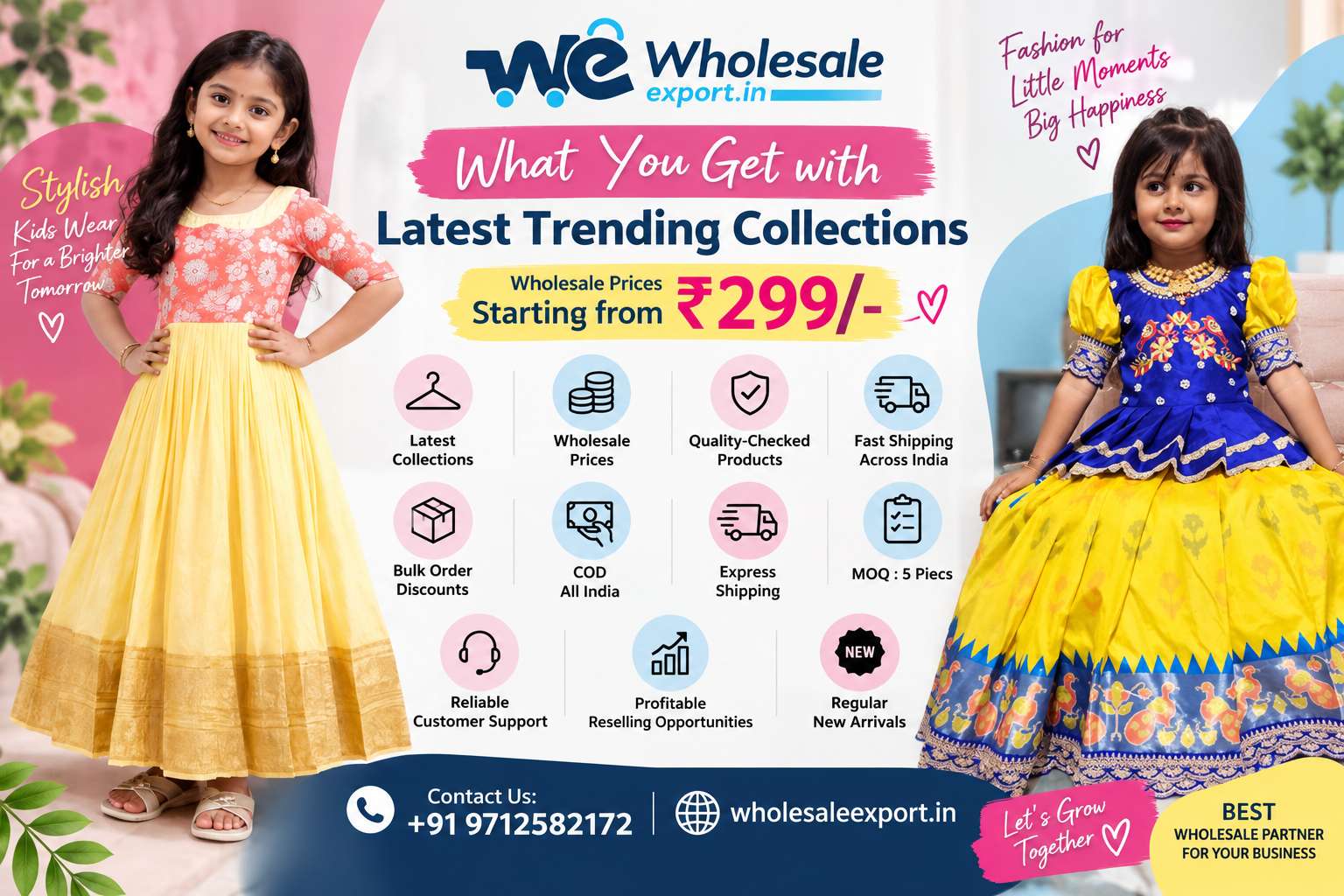
Explore Latest Collections, compare Wholesale Pricing, discover Trendy Ethnic Wear and plan inventory according to your customer market. Buyers can enquire about Fast Shipping, applicable COD Support and Bulk Order Deals for suitable orders.
Quality Products Starting From ₹299 can help retailers create different price levels within their stores while keeping room for value, mid-range and premium merchandise. Current product availability, exact price and applicable order terms should always be confirmed when purchasing.
Your next stage of boutique growth can begin with one simple process: analyse what your customers are buying, source stronger products, promote them consistently and reinvest in what actually sells.
Contact Number: +91 9712582172
Website: wholesaleexport.in