


Block Print Kurti Wholesale: Latest Designs, Prices & Buying Guide 2026
Block Print Kurti Wholesale: Latest Designs, Prices & Buying Guide 2026
Indian printed kurtis continue to hold a strong place in everyday ethnic fashion because they combine comfort, traditional craftsmanship and easy styling. For retailers and resellers, this creates an opportunity to stock versatile designs that can appeal to college-going customers, working women, homemakers and ethnic-wear buyers across different age groups. From subtle floral motifs to geometric patterns and heritage-inspired designs, block print styles can help build a balanced kurti collection for regular as well as seasonal sales.
Introduction
The demand for block print kurti wholesale collections comes from one simple advantage: these designs offer a traditional Indian character while remaining highly wearable. A well-selected printed kurti can work as daily wear, office wear, casual outing wear and even light festive wear depending on the fabric, silhouette and detailing.
For boutique owners, shop owners, showroom owners, home-based sellers, resellers and wholesale buyers, this versatility matters. Instead of purchasing stock suitable for only one occasion, businesses can build collections that have a wider potential customer base. Cotton kurtis, rayon kurtis, straight kurtis, A-line styles, kurti-pant sets and coordinated ethnic sets can all incorporate block-inspired prints.
In 2026, buyers are also becoming more selective about colour combinations, fabric comfort, finishing and overall presentation. Traditional motifs are still relevant, but customers increasingly prefer them in contemporary colour palettes and practical silhouettes. This combination of heritage and modern styling makes printed ethnic wear an important category for retailers planning fresh inventory.
Wholesaleexport.in brings together wholesale ethnic-wear options for businesses looking to source products from India. Supported by Vastralife's wholesale and export experience since 2017, the focus is on industry knowledge, product variety and premium product quality for professional buyers.
Why Block Print Kurtis Continue to Attract Retail Customers
Fashion trends change quickly, but traditional prints have an advantage over many short-term trends. Customers already understand them and can easily include them in their existing wardrobes. A printed kurti does not normally require complicated styling, making it a practical purchase for a broad audience.
A Blend of Traditional and Contemporary Fashion
Block-inspired patterns have deep roots in Indian textile traditions. Floral vines, leaves, butis, paisley elements, geometric arrangements and repetitive motifs create a distinctive handcrafted appearance. Modern kurti manufacturing adapts these influences into silhouettes suitable for today's retail market.
A traditional motif can look completely different when combined with a modern neckline, three-quarter sleeves, side slits, contrasting borders or coordinated pants. This allows retailers to offer ethnic designs without making their collection look dated.
Comfortable Options for Everyday Wear
Fabric plays a major role in the popularity of printed kurtis. Cotton and cotton-blend styles are particularly suitable for customers who want breathable everyday clothing. Rayon and other soft fabrics can provide additional drape, while premium fabric combinations can create a more elevated appearance.
For retailers, keeping different fabric options within the same category can help serve customers at multiple price points. Budget-conscious shoppers may prefer simple everyday kurtis, while boutique customers may look for better finishing, coordinated bottoms, dupattas or additional design details.
Easy to Merchandise in Stores and Online
Printed kurtis photograph well when the pattern, colour and silhouette are clearly visible. That makes them useful not only for physical shops but also for WhatsApp sellers, Instagram resellers, marketplace sellers and independent online boutiques.
A reseller can create separate selections such as office wear, summer cotton kurtis, traditional print kurtis, casual kurtis, kurti sets and festive printed collections. This makes kurti wholesale inventory easier to present according to customer requirements rather than simply displaying products without categorisation.
Popular Block Print Kurti Styles for Wholesale Buyers
A successful wholesale purchase should include more than one silhouette. Different customers have different fit and styling preferences, so variety can improve the overall usefulness of the inventory.
Straight Cut Printed Kurtis
Straight-cut kurtis remain one of the most practical choices for retail businesses. Their clean silhouette works across casual, office and semi-formal wardrobes. They can be paired with leggings, straight pants, palazzos or jeans, depending on the customer's styling preference.
For block print kurti wholesale buying, straight styles can be particularly useful because the relatively clean garment shape allows the print itself to remain prominent. Small repeated motifs work well for understated everyday designs, while larger motifs and contrasting borders can create a stronger visual identity.
A-Line and Flared Kurtis
A-line kurtis provide a more relaxed silhouette and can appeal to customers looking for comfortable ethnic fashion. Depending on length and flare, these styles can work as daily wear or as more dressed-up pieces.
Floral block patterns, traditional motifs and contrasting yokes can add visual interest without requiring heavy embellishment. This can help retailers maintain attractive designs while keeping the product practical for regular use.
Kurti Pant Sets and Coordinated Looks
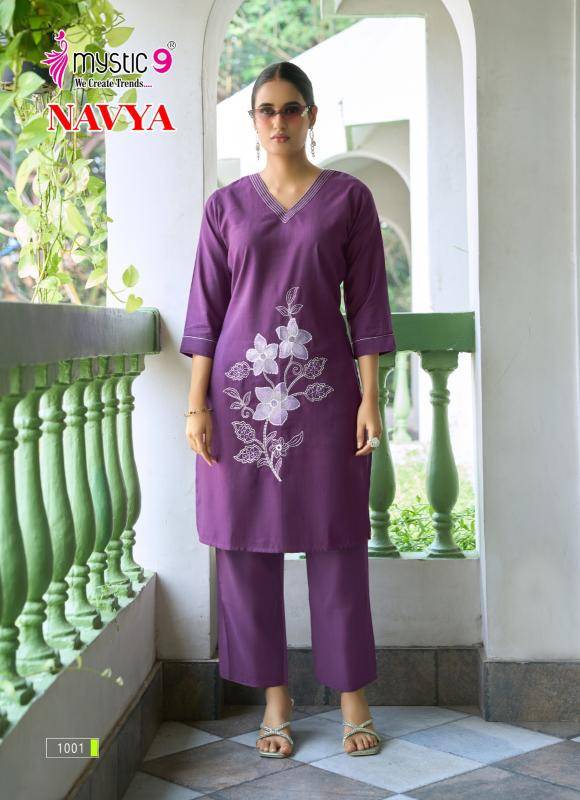
Ready-to-wear combinations have become important because many customers prefer purchasing a complete look instead of matching a kurti separately. A printed kurti with coordinated pants can offer convenience and increase the perceived value of the product.
For boutiques and resellers, kurti pant sets wholesale can also provide a higher-value selling category alongside basic kurtis. Buyers can maintain both entry-level products and more complete coordinated outfits within the same ethnic-wear range.
Traditional Print Kurtis with Modern Details
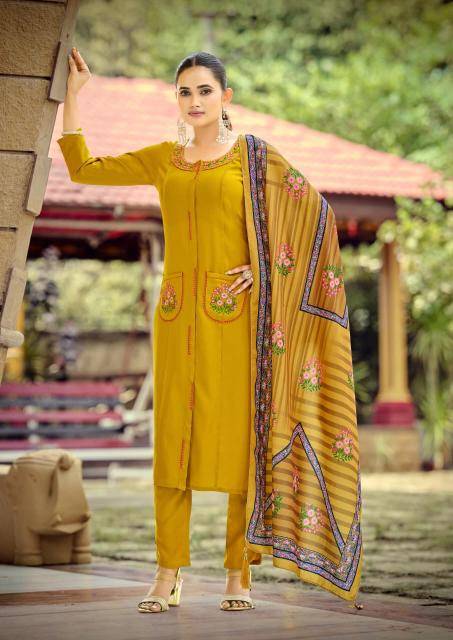
Modern detailing can refresh traditional designs. Button patterns, piping, contrast necklines, embroidered highlights, lace accents, border placement and coordinated sleeves can transform a simple printed kurti into a more distinctive retail product.
The key is balance. Too much additional work can compete with the print, while thoughtful detailing can improve the garment's appearance and perceived quality.
How to Choose Block Print Kurtis for Your Customer Base
Wholesale buying is not simply about selecting attractive designs. The right inventory depends on who will ultimately purchase the products. A boutique in a premium shopping area may need a different assortment from a home-based reseller selling primarily through WhatsApp.
Understand Your Local Customer
Start with previous sales data wherever possible. Identify which colours, sizes, fabrics and silhouettes sell fastest. If straight cotton kurtis repeatedly perform well, they can form the base of your collection. Newer styles can then be introduced in smaller quantities to test demand.
Shop owners should also consider climate and local dressing preferences. Lightweight fabrics may have longer selling seasons in warmer areas, while richer fabrics and darker colours can gain attention around festive periods.
Create a Balanced Price Range
Not every customer has the same budget. A retailer relying entirely on one price segment may miss opportunities at either end of the market. Consider creating an inventory mix that includes affordable daily wear, mid-range kurti sets and selected premium pieces.
The wholesale price depends on factors such as fabric, print process, stitching, design complexity, brand, set configuration and quantity. Buyers should therefore compare overall product value rather than judging merchandise only by the lowest purchase rate.
Focus on Colours That Can Sell Across Seasons
Seasonal shades are useful, but evergreen colours help maintain consistent sales. Indigo, maroon, mustard, green, black, rust, beige, pink and earthy combinations can work particularly well with traditional Indian motifs.
For 2026 inventory planning, retailers can combine these dependable colours with selected trend-led shades. This reduces dependence on a single short-lived fashion direction while keeping the collection fresh.
Surat as a Major Wholesale Sourcing Destination
Surat has developed a broad textile ecosystem covering fabrics, ethnic wear, sarees, dress materials, kurtis and ready-made garments. For buyers researching the surat textile market, the city offers access to manufacturers, wholesalers, suppliers and trading businesses serving customers across India and international markets.
Commercial textile zones around Ring Road and Sahara Darwaza are widely associated with Surat's textile trade. For an outstation buyer, however, physically moving between multiple markets and suppliers can require significant time. Online wholesale sourcing can make product discovery easier by allowing businesses to review collections before planning purchases.
Wholesaleexport.in is designed for wholesale buyers who want access to multiple ethnic-wear categories without depending entirely on physical market visits. This is particularly relevant for resellers and boutiques located outside Surat.
Manufacturing and Wholesale Supply
Understanding the supply chain helps buyers make better purchasing decisions. Garment manufacturing involves more than simply selecting fabric and stitching it into a kurti. Fabric sourcing, printing, cutting, stitching, finishing, quality inspection, sizing, packing and dispatch can all affect the final product.
Reliable wholesale sourcing should therefore consider consistency as well as design. A visually attractive catalogue has limited value if the delivered product does not provide suitable fabric quality, finishing or size consistency.
Block Print Kurti Wholesale Opportunities Beyond India
Indian ethnic fashion has customers far beyond the domestic market. Retailers serving Indian and South Asian communities abroad frequently look for wearable ethnic products that can be sold for casual use, cultural gatherings and festive occasions.
For example, businesses in Nepal can stock comfortable printed kurtis for regular retail demand alongside festive ethnic collections. Buyers in Australia may cater to Indian communities looking for contemporary ethnic clothing, while retailers and online sellers in Malaysia can use Indian printed apparel as part of a broader South Asian fashion assortment.
Export buyers should evaluate product selection together with shipping cost, order quantity, delivery time and local customer preferences. Lightweight kurtis can be especially practical for export because they are relatively easy to pack and can offer multiple designs without the bulk associated with heavier garments.
Building a Profitable Printed Kurti Inventory
The strongest wholesale strategy is usually not about purchasing the maximum number of designs. It is about choosing an assortment that gives customers enough variety while keeping inventory manageable.
Mix Core Products with New Arrivals
Core products are styles that have broad demand and can support regular sales. New arrivals create freshness and give existing customers a reason to check the store or catalogue again. Combining both helps retailers avoid making the entire inventory dependent on experimental fashion.
For example, a seller might maintain reliable straight kurtis in classic prints while regularly adding fresh colours, coordinated sets and seasonal patterns. This approach can work particularly well for home-based sellers who need to manage inventory carefully.
Buy According to Selling Capacity
A large assortment looks impressive, but excess inventory locks up working capital. Wholesale buyers should consider their average monthly sales, customer response and reorder frequency before deciding quantities.
New resellers can begin with selected designs and study which products generate enquiries. Established shops and showrooms can maintain a broader assortment because they generally serve more walk-in and repeat customers.
Buyers exploring additional ethnic-wear inventory can view branded kurtis to complement everyday printed styles. Businesses looking to expand into another high-demand ethnic category can also explore wholesale Pakistani suits as part of a wider merchandise strategy.
Quality Checks Wholesale Buyers Should Make Before Ordering
Design attracts the customer first, but product quality determines whether that customer returns. This is especially important for block print kurti wholesale purchases because printed garments need to look good not only in catalogue images but also when physically received, displayed and worn.
Before placing a larger wholesale order, buyers should understand the fabric composition, available sizes, stitching standard, colour appearance and product specifications. Print placement may vary slightly depending on the design and production method, so retailers should also understand the nature of the product they are sourcing.
Check Fabric and Comfort
A kurti intended for regular wear should feel comfortable against the skin and suit the intended season. Cotton and cotton-rich fabrics are popular for everyday collections, while rayon, viscose and blended materials can provide softer drape and different styling possibilities.
For boutique customers, fabric quality can influence the perceived value of a garment significantly. Retailers should therefore match fabric selection with the selling price and target audience rather than choosing solely on appearance.
Look at Stitching and Finishing
Necklines, sleeves, side seams, hems, buttons and attached decorative elements should be finished neatly. Good finishing gives a product a more professional appearance when it reaches the retail rack.
For wholesale buyers planning repeat business, consistent sizing is equally important. Customers who have already purchased a particular size expect a reasonably consistent fit when they return for another design.
Evaluate the Complete Product, Not Just the Print
A beautiful print cannot compensate for unsuitable fabric or poor finishing. Successful retailers evaluate the complete garment: colour combination, silhouette, fabric, stitching, sizing, design placement and expected retail value.
This approach becomes even more important when buying for online resale, where customer satisfaction directly influences repeat orders, reviews and referrals.
Who Can Sell Block Print Kurtis Successfully?
The category is suitable for different types of fashion businesses because inventory can be adjusted according to selling channel, customer profile and investment capacity.
Home-Based Sellers
Home-based sellers can market printed kurtis through WhatsApp, Instagram, Facebook and personal customer networks. Lightweight products are easy to showcase through images and videos, while a mixture of individual kurtis and coordinated sets can provide multiple selling options.
Instead of maintaining excessive inventory, home sellers can focus on frequently updated selections and products suited to their established customer base. Clear product photographs, fabric information, sizes and pricing can make online selling easier.
Boutique Owners
Boutiques can differentiate their collections through selective designs rather than competing only on price. Premium fabrics, uncommon colour combinations, elegant prints and coordinated styling can help create a more curated assortment.
A boutique may also combine printed kurtis with dupattas, pants, palazzos or accessories to create complete looks. Such presentation can increase the perceived value of relatively simple ethnic garments.
Retail Shop and Showroom Owners
Physical retailers can maintain a wider range of colours, sizes and price points. Merchandising products by use case—daily wear, office wear, casual ethnic wear and premium sets—can make the buying process easier for walk-in customers.
For showrooms, visual presentation is especially important. Grouping complementary colours and displaying one complete outfit can help customers understand how the garment will look when styled.
Resellers and Wholesale Buyers
Resellers need products that can be communicated quickly through digital catalogues. Attractive images, clear specifications and commercially workable rates can help them sell without maintaining a large physical showroom.
Larger wholesale buyers can focus on assortment depth, repeat availability and quantity-based purchasing. They may also combine printed kurti wholesale collections with dress materials, sarees, Pakistani suits and other women's ethnic categories to serve retailers with a broader selection.
How to Plan Wholesale Purchases for 2026
Inventory planning for 2026 should combine proven products with changing customer preferences. Retailers increasingly operate across both offline and online channels, which means a garment needs to perform well on the rack as well as on a mobile screen.
Keep New Arrivals Regular
Customers who purchase ethnic wear frequently want to see something new. Instead of introducing a very large collection occasionally, businesses can benefit from adding fresh designs at regular intervals.
This strategy is particularly useful for WhatsApp and social-media selling because every new arrival becomes an opportunity to reconnect with existing customers.
Use Seasonal Buying Without Becoming Overdependent on Trends
Festivals, wedding seasons, summer months and regional celebrations can change demand. Retailers can increase relevant colours and styles during these periods while retaining evergreen products for regular sales.
Block-inspired kurtis are useful in this respect because the same broad category can transition from summer cotton styles to richer festive combinations depending on fabric and detailing.
Monitor Fast-Selling Colours and Sizes
Sales data can be more useful than assumptions. Keep track of which colours, patterns and sizes move fastest. This information can guide the next wholesale purchase and reduce money tied up in slower inventory.
A small reseller may track this information in a basic spreadsheet, while larger businesses can use inventory software. The objective is the same: purchase more intelligently based on actual customer behaviour.
Surat Wholesale Sourcing for Growing Businesses
For retailers searching for a kurti wholesaler in Surat, the city's textile ecosystem offers access to a wide variety of ethnic-fashion products. The surat textile market, particularly commercial areas associated with Ring Road and Sahara Darwaza, is well known among garment traders and buyers.
However, buyers outside Surat do not always have the time to visit multiple suppliers personally. Digital wholesale platforms can simplify discovery by allowing products to be reviewed remotely before an order is finalised.
Wholesaleexport.in serves this requirement by making wholesale collections accessible to buyers looking for Indian ethnic wear. With Vastralife's industry experience in wholesale and export since 2017, the business understands the practical needs of retailers, resellers, boutiques and professional wholesale buyers.
For buyers, this experience is valuable because wholesale sourcing involves more than finding a product. Communication, product knowledge, quality expectations, packing and dispatch all contribute to the overall buying experience.
International Demand for Indian Printed Kurtis
Indian ethnic wear has a customer base in many international markets. Printed kurtis can be particularly practical for international retailers because they provide an identifiable Indian aesthetic without always requiring heavy occasion wear.
Retailers in Nepal can include printed kurtis in everyday and semi-festive assortments. Businesses serving South Asian customers in Australia can offer them for casual gatherings, cultural events and daily ethnic styling. In Malaysia, lightweight Indian kurtis can complement other traditional and fusion fashion categories.
For international wholesale buyers, export planning should include garment value, quantity, shipping method, destination and customer profile. Selecting commercially practical products is important because freight costs form part of the final landed cost.
Wholesaleexport.in can be considered by businesses looking to source different Indian ethnic-wear categories through a wholesale-focused platform. Product availability, rates and dispatch requirements should always be confirmed when placing an order.
Internal Linking and Related Wholesale Categories
A retailer does not necessarily need to restrict the store to one category. Printed kurtis can work as a core everyday line, while complementary ethnic products can help increase the variety available to customers.
For example, retailers can combine kurtis with coordinated sets, dress materials, sarees and other women's ethnic wear. A customer entering the store for a casual kurti may also be looking for an outfit for work, a family function or a festive occasion.
The most useful inventory mix depends on the business model. A home-based seller may prefer fewer categories with regular new arrivals, whereas a larger showroom can maintain deeper inventory across several ethnic-wear segments.
Customer FAQs
1. What is block print kurti wholesale?
Block print kurti wholesale refers to sourcing printed kurtis in wholesale quantities for resale through boutiques, retail shops, showrooms, online stores or home-based businesses. Designs may include floral, geometric, paisley, traditional and heritage-inspired motifs across different fabrics and silhouettes.
2. Where can I buy printed kurtis wholesale from Surat?
Surat has a large textile and garment trading ecosystem, including markets around Ring Road and Sahara Darwaza. Buyers who cannot visit the city regularly can also explore wholesale products online through Wholesaleexport.in and review available collections remotely.
3. What types of kurtis should a new reseller stock?
A new reseller can begin with versatile products such as straight kurtis, everyday printed kurtis, comfortable fabrics and selected kurti-pant sets. It is generally useful to maintain a mixture of popular colours and price points rather than investing heavily in one design direction.
4. Are block print kurtis suitable for boutique businesses?
Yes. Boutique owners can select distinctive prints, premium fabrics, coordinated sets and designs with better detailing to create a curated collection. The final selection should match the boutique's target customer and expected retail price range.
5. Can wholesale kurtis be supplied for export orders?
Indian kurtis are purchased by retailers and resellers in multiple international markets. Export requirements can differ according to destination, quantity and shipping method, so buyers should confirm current order and dispatch details before purchasing.
6. What affects the wholesale price of a kurti?
Fabric, design, printing, stitching, detailing, brand, size range, whether the product is a single kurti or complete set, and order quantity can all influence wholesale pricing. Buyers should compare overall quality and saleability rather than evaluating products only on the lowest rate.
7. Are printed kurtis good for online reselling?
They can be suitable for online selling because designs can be presented clearly through catalogue photographs, reels and product videos. Providing accurate size, fabric and product information can improve the customer's buying experience.
8. How often should a retailer add new kurti designs?
The right frequency depends on sales volume, but regular additions can keep customers interested. Retailers can monitor fast-selling designs and replenish successful categories while testing new patterns in controlled quantities.
Why Source Through Wholesaleexport.in?
Wholesale buying becomes easier when retailers can explore multiple fashion categories and regularly updated collections through a business-focused sourcing channel. Wholesaleexport.in is intended for buyers looking for wholesale ethnic wear for resale rather than only personal shopping.
The combination of industry expertise and Vastralife's wholesale and export experience since 2017 supports a practical understanding of what retailers need: current designs, commercially useful pricing, dependable product information and premium product quality.
Whether you operate a home-based business, boutique, retail shop, showroom or wholesale distribution network, the objective is to source products that suit your customers while maintaining commercially workable inventory.
Order Latest Wholesale Ethnic Wear Collections
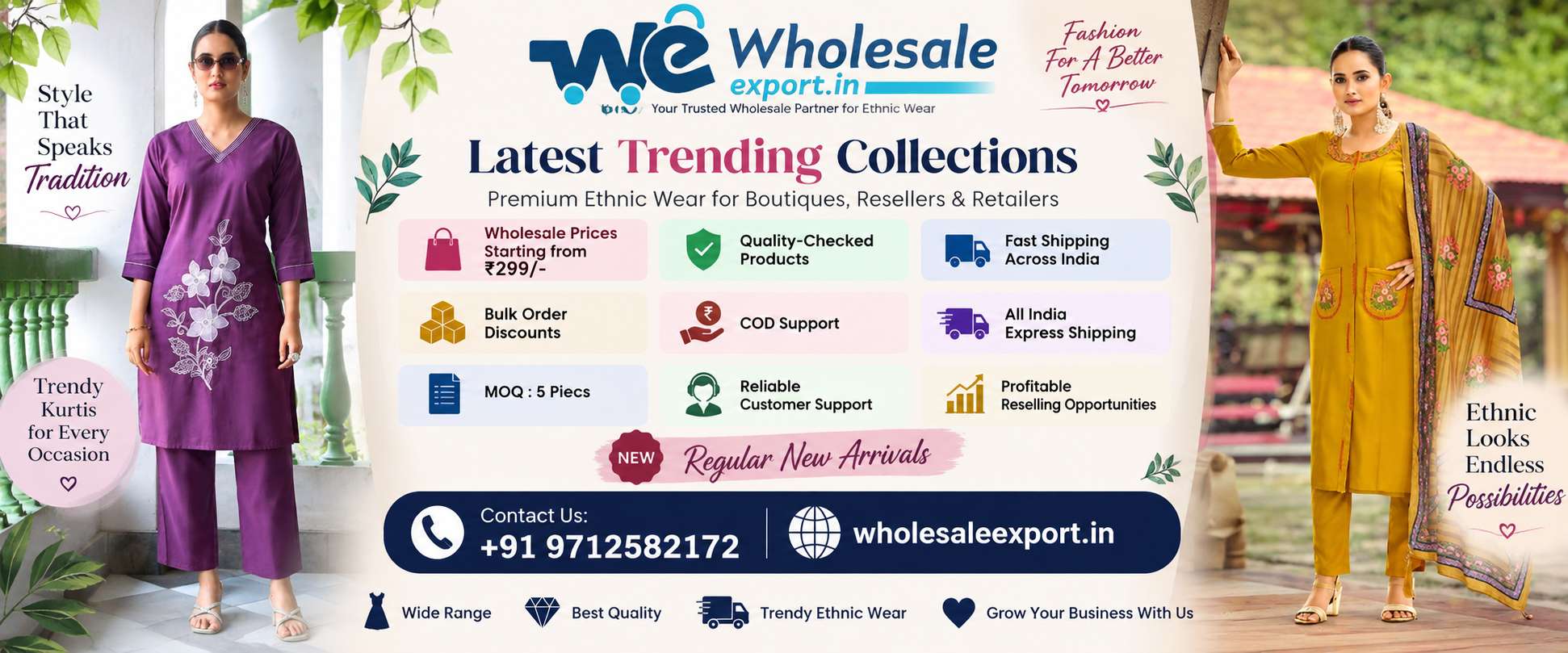
Build your 2026 inventory with products selected for modern ethnic-wear customers. Explore Latest Collections, competitive Wholesale Pricing and Trendy Ethnic Wear suitable for resellers, boutiques, shops and wholesale businesses.
Wholesale buyers can explore Fast Shipping, COD Support on eligible orders, Bulk Order Deals and regularly updated product options. Choose from Quality Products Starting From ₹299 and build a collection according to your customer segment and business requirements.
MOQ: 5 Pieces
Contact Us: +91 9712582172
Website: wholesaleexport.in
From everyday printed kurtis to coordinated ethnic sets and broader wholesale fashion categories, the right product mix can help your business offer customers more choice without losing focus on quality, price and current demand. Explore fresh arrivals, compare suitable styles and plan your next wholesale purchase with a collection built around the needs of your market.