


Best Sarees for Online Selling Business in 2026 – Wholesale Buying Guide
Best Sarees for Online Selling Business in 2026 – Wholesale Buying Guide
Building a profitable online saree business is not simply about uploading hundreds of designs. The real opportunity comes from selecting sarees that photograph beautifully, match current customer demand, offer workable margins and can be sourced consistently. For Home-Based Sellers, Boutique Owners, Shop Owners and Resellers, choosing the right wholesale collection can make the difference between fast-moving inventory and capital locked in unsold stock.
Introduction
The Indian saree market offers an enormous variety of fabrics, designs, price points and regional styles. This creates opportunities for sellers, but it also makes product selection more challenging. A new reseller may see hundreds of attractive catalogues and assume that every fashionable design will sell equally well online. In practice, customers respond differently depending on occasion, budget, location, age group and fashion preferences.
Finding the best sarees for online selling business therefore requires a buying strategy rather than random catalogue selection. Sellers need products that are visually attractive enough for Instagram and WhatsApp, commercially priced for resale and suitable for the customers they actually serve.
In 2026, digital sellers are competing not only with nearby shops but also with boutiques, marketplaces, social-commerce sellers and established ethnic-wear websites. Product differentiation, dependable quality and sensible wholesale saree price become especially important in such a competitive environment.
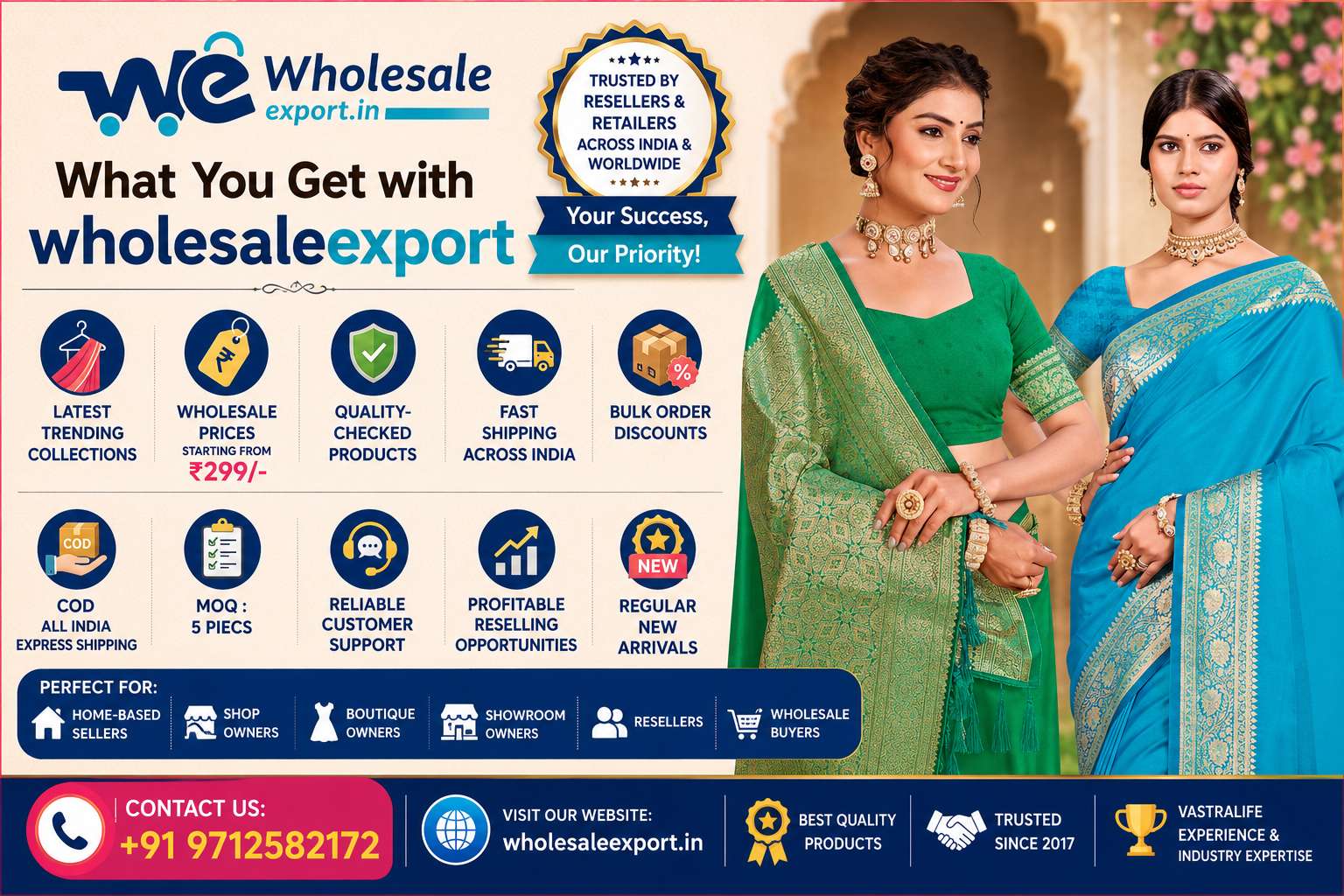
Wholesaleexport.in is designed around this wholesale sourcing requirement, helping retailers and resellers explore different ethnic-wear collections from Surat. Buyers can use online sourcing to compare new arrivals and create inventory without depending entirely on repeated physical market visits.
What Makes a Saree Good for Online Reselling?
A saree can look impressive in a wholesale showroom yet still be difficult to sell online. Digital customers cannot physically touch the fabric before purchasing, so presentation, perceived value and product clarity become major parts of the buying decision.
Strong Visual Appeal
The first requirement is visual impact. Customers scrolling through social media often make their initial decision within seconds. Attractive colour combinations, visible borders, elegant prints, embroidery, woven patterns and distinctive blouse designs can help a saree stand out.
This does not mean every product needs heavy work. Simple sarees can perform exceptionally well when their styling and colour palette match everyday customer demand. The important point is that the design should communicate its value clearly through photographs and videos.
A Practical Reselling Price Range
The buying price should leave enough room for a seller to add operating expenses and profit while maintaining an acceptable retail price. The cheapest saree is not automatically the most profitable one.
A product with slightly better fabric, finishing and presentation may justify a stronger retail price and produce fewer customer complaints. Online sellers should calculate product cost, shipping, packaging, marketing expenses and other applicable charges before deciding their selling rate.
Repeat Customer Potential
The strongest online saree businesses are not built around one viral product. They are built around customers who return for additional purchases. Consistent quality therefore matters as much as attractive designs.
When customers receive a product that matches their expectations, they are more likely to purchase again, recommend the seller and trust future launches. This makes quality control and supplier selection essential parts of the online saree business.
Best Sarees for Online Selling Business
No single saree category works for every retailer. A successful inventory normally contains a mix of daily wear, festive, traditional and occasion-oriented products. The exact ratio should depend on the seller's target customer.
1. Printed Sarees for Regular Online Sales
Printed sarees are a useful category for sellers who want products suitable for regular wear. Floral prints, geometric patterns, abstract designs, traditional motifs and contemporary digital prints allow retailers to maintain variety without depending entirely on heavily embellished collections.
Printed sarees can appeal to working women, casual-wear buyers, gifting customers and shoppers who want easy-to-style ethnic clothing. For online sellers, attractive prints also create strong catalogue visuals.
When buying printed sarees wholesale, look at the overall colour balance, fabric appearance, blouse combination and print clarity rather than selecting designs solely because they are inexpensive.
2. Georgette Sarees for Trend-Focused Customers
Georgette remains commercially useful because it can support numerous styles, including printed, embellished, party-wear and lightweight fashionable sarees. The fabric's drape makes it suitable for customers looking for contemporary ethnic fashion.
For resellers targeting younger shoppers or occasion-wear buyers, maintaining selected georgette designs can add variety to the catalogue. Sellers can experiment with floral prints, sequins, embroidery, borders and modern colour combinations.
3. Chiffon Sarees for Lightweight Collections
Lightweight sarees have a practical advantage in online retail because many customers actively look for comfortable drapes. Chiffon-style collections can work across casual occasions, parties and semi-formal requirements depending on the design.
Rather than buying large quantities immediately, sellers can introduce several colours and designs, study customer response and then increase purchases in proven styles.
4. Banarasi Sarees for Traditional and Festive Demand
Traditional designs remain important for wedding and festival-focused businesses. Banarasi-inspired collections can appeal to customers searching for richer ethnic presentation, gifting options and celebration wear.
The category can also support a higher average order value compared with many basic everyday sarees. However, the seller should clearly understand fabric specifications and product details so that customer expectations are properly managed.
For online boutiques, selected traditional sarees can create a premium section within the broader catalogue instead of competing only in the low-price segment.
.jpg)
Why Surat Is Important for Wholesale Saree Sourcing
For businesses searching for wholesale sarees in Surat, the city offers access to a broad textile trading and manufacturing ecosystem. Different product categories, fabrics, designs and price segments can be sourced through networks connected with the city.
The surat textile market ecosystem around areas such as ring road and sahara darwaza is widely associated with textile commerce. For a Wholesale Buyer, the advantage is the ability to explore multiple categories rather than depending on a single narrow product range.
Access to Different Price Segments
One advantage of sourcing from Surat is the diversity of products. Sellers can build collections for budget-conscious customers as well as buyers seeking premium occasion wear.
This matters because an online store serving only one price point can limit its audience. A balanced inventory can include entry-level products, mid-range bestsellers and selected premium sarees.
Regular Fashion Updates
Fashion inventory needs freshness. Customers who follow an online saree seller regularly expect new designs rather than the same catalogue being promoted repeatedly.
Access to regular wholesale arrivals helps sellers create new launches, festival campaigns, weekly drops and social-media content. This can encourage existing customers to revisit the store even when they are not immediately planning a purchase.
Manufacturing and Trading Ecosystem
Surat's textile ecosystem includes businesses connected with fabric, processing, trading, manufacturing and finished ethnic wear. For retailers, this concentration can create broader sourcing opportunities across sarees and complementary categories.
Vastralife has wholesale and export experience since 2017, with industry expertise developed through working with ethnic-fashion products and wholesale buyers. This experience supports the focus on commercially relevant collections and premium product quality for businesses sourcing through the network.
How to Choose Sarees According to Your Selling Channel
The same inventory strategy should not be applied to every business. A WhatsApp reseller, Instagram boutique and large physical showroom can require very different buying patterns.
Home-Based Sellers
Home-Based Sellers should generally focus on variety before depth. Instead of investing heavily in one untested design, a seller can start with multiple styles across practical price ranges and monitor customer response.
Products with strong photographs and easily understandable features can be particularly useful because home sellers often generate orders through WhatsApp, Instagram, Facebook and personal networks.
Boutique Owners
Boutique Owners can focus more heavily on differentiation. If every nearby seller offers similar designs, customers have little reason to choose one boutique over another.
A curated combination of printed sarees, festive collections, premium traditional designs and limited fashionable styles can create a clearer boutique identity.
Shop and Showroom Owners
Shop Owners and Showroom Owners generally require broader inventory because customers expect choice when visiting a physical store. They can combine affordable daily-wear products with mid-range and premium collections.
Online promotion can then be used to drive customers toward both digital ordering and store visits, allowing physical retailers to benefit from multiple selling channels.
Resellers and Wholesale Buyers
Resellers need products that are easy to promote and offer reasonable margin potential. Wholesale Buyers may place greater importance on catalogue availability, bulk quantity and competitive rates.
In both cases, the best sarees for online selling business are those selected according to actual customer demand rather than personal taste alone.
How Much Stock Should a New Saree Seller Buy?
New sellers often make one of two mistakes: purchasing too little variety or investing too heavily before understanding their customers. A better strategy is to treat the initial inventory as a market test.
Start with categories that target different buying situations. For example, include regular wear, a few festive designs and selected premium options. Track enquiries, conversions and repeat requests.
If customers consistently ask for lightweight printed sarees, increase that category. If premium wedding sarees generate views but few purchases, reconsider the quantity or price range before reordering.
Track Sell-Through Instead of Likes
A product receiving many Instagram likes is not necessarily your bestseller. Online businesses should distinguish engagement from actual buying behaviour.
Track which sarees receive enquiries, which convert into orders, which price points sell quickly and which designs generate repeat demand. This information becomes increasingly valuable as the business grows.
Keep Capital Available for New Arrivals
Do not spend the entire purchasing budget on one buying cycle. Fashion moves quickly, and new collections may arrive while older inventory is still available.
Keeping part of the budget available for fresh stock allows a reseller to respond to emerging trends and seasonal demand rather than waiting until every older saree has sold.
Wholesaleexport.in can support this catalogue-based buying approach by allowing retailers to explore different wholesale ethnic-wear selections and plan inventory according to their selling model.
For sellers planning their 2026 assortment, this combination of variety, controlled purchasing and data-based reordering can create a stronger foundation than simply chasing whichever saree happens to be trending at the moment.
Another useful approach is to divide the purchasing budget into proven products and experimental products. Proven products are designs, fabrics and price segments that have already generated sales, while experimental products are fresh collections that can help identify the next bestseller. This prevents the business from becoming repetitive without exposing too much capital to untested inventory.
High-Potential Saree Categories for Online Sellers in 2026
Customers searching for sarees online increasingly expect variety. A catalogue that combines affordable fashion with premium-looking products gives sellers opportunities to serve different budgets and occasions. When selecting the best sarees for online selling business, consider maintaining a strategic mix rather than depending on one fabric or design family.
Party Wear Sarees
Party wear sarees can attract customers shopping for weddings, receptions, engagement functions, festive gatherings and family celebrations. Sequins, embroidery, decorative borders, shimmer effects and designer blouse combinations can make these products highly visual for social-media promotion.
For online sellers, presentation is especially important in this category. Short videos showing the drape, border, blouse fabric and work details can communicate much more than a single catalogue photograph.
Organza Sarees
Organza-style sarees have become a useful fashion category for boutiques because they can create an elegant, premium appearance without always entering extremely high retail price segments. Floral patterns, embroidered borders and contemporary colours can work particularly well for fashion-conscious buyers.
A seller can maintain both subtle pastel options and brighter festive designs. This creates choices for customers shopping for daytime functions as well as evening celebrations.
Silk and Silk-Look Sarees
Traditional silk and silk-look collections can be important for wedding and festival demand. Buyers often search for products that appear rich, photograph beautifully and can be worn for important family occasions.
When sourcing these products, retailers should compare fabric specifications, weaving or work details, blouse inclusion and finishing rather than judging value only by the wholesale price.
Daily Wear Sarees
While premium products attract attention, regular-wear sarees can generate repeat business. Lightweight fabrics, comfortable drapes, practical colours and attractive prints are suitable for customers who purchase sarees frequently rather than only during festivals.
This segment can be especially relevant for Resellers and Home-Based Sellers who rely on repeat customers. A customer who is satisfied with an affordable everyday saree may return to purchase several additional designs.
How to Calculate Profit Before Buying Wholesale Sarees
A profitable saree business should calculate the complete landed cost rather than simply subtracting the wholesale buying price from the retail selling price. The actual calculation may include the product cost, GST where applicable, shipping, packaging, payment charges, advertising expenses and possible returns or exchanges.
For example, a saree purchased at an attractive wholesale rate may initially appear highly profitable. But if paid advertising and individual shipping consume a significant part of the margin, the actual profit can be much smaller.
Before placing a bulk order, determine a realistic retail price for your customer segment. Then work backwards to understand how much you can comfortably spend on inventory.
Do Not Compete Only on the Lowest Price
Trying to become the cheapest online saree seller can create constant pressure on margins. There will almost always be another seller willing to offer a similar-looking product at a lower rate.
Instead, build value around product selection, reliable communication, quality, presentation, packaging and service. Customers who trust a seller may be willing to pay a reasonable difference rather than constantly searching for the absolute cheapest supplier.
Build Different Price Levels
A practical catalogue can include entry-level, mid-range and premium sarees. Entry-level collections can attract first-time customers, while better-value and premium designs increase average order value.
This approach is particularly helpful for boutiques and Showroom Owners because customers can compare options without leaving the seller's catalogue.
Online Sourcing for Buyers Outside Surat
Physical visits to the surat textile market remain useful for businesses that want to explore products personally, but digital wholesale sourcing has made it possible for buyers outside Surat to discover collections remotely.
A retailer in another Indian state does not necessarily need to travel to ring road or sahara darwaza for every purchasing cycle. Online catalogues can help buyers shortlist collections, compare designs and place orders remotely.
This is particularly useful for businesses operating in international markets such as Nepal, USA and Australia, where regular travel to India may not be practical. Export-oriented sourcing allows overseas boutiques and ethnic-wear businesses to explore Indian fashion products from a distance.
Businesses searching specifically for traditional inventory can browse Banarasi saree wholesale options when planning festive and wedding-focused collections.
Retailers who want to expand beyond sarees can also explore wholesale dress materials Surat collections to create a broader ethnic-wear product mix.
.jpg)
How International Buyers Can Build a Saree Collection
International demand for Indian ethnic fashion creates opportunities for boutiques and resellers serving Indian communities and customers interested in South Asian fashion. However, an export buyer should select inventory according to the preferences and purchasing power of the destination market.
Nepal
Buyers serving Nepal can create a balanced assortment combining affordable fashion sarees, festive designs, wedding products and traditional collections. Retailers should consider local festival demand and seasonal buying cycles when planning stock.
USA
Boutiques in the USA can focus on occasion-oriented collections alongside contemporary lightweight sarees. Indian weddings, cultural events, festivals and community functions can create demand for products that have a distinctive ethnic appearance.
Because international logistics influence the final cost, buyers should calculate landed pricing before deciding their retail margin.
Australia
Australian ethnic-wear sellers can combine modern sarees with traditional festive designs. Smaller boutiques may benefit from testing several categories before committing deeply to one style, especially when serving customers across different age groups.
For all international destinations, buyers should confirm current shipping, customs, duties and documentation requirements before ordering. These factors can vary by destination and order value.
Why Product Quality Matters in Online Saree Selling
Online customers purchase largely on trust. They see photographs or videos, read the product details and then expect the delivered item to correspond closely with what was presented.
If the fabric, colour, finishing or work consistently disappoints customers, even aggressive marketing cannot create a sustainable business. Premium product quality therefore contributes directly to customer retention and reputation.
Vastralife's wholesale and export experience since 2017 brings industry expertise to product sourcing and ethnic-fashion distribution. This experience is relevant for retailers who need commercially suitable collections rather than simply a large quantity of random designs.
For Wholesale Buyers, consistency also matters because a quality issue multiplied across a large quantity can become expensive. Product specifications should therefore be understood before committing to substantial stock.
How to Sell Wholesale Sarees Faster Online
Buying good stock is only half of the business. The next challenge is turning inventory into orders. Sellers should build a simple sales system that repeatedly puts fresh products in front of relevant customers.
Use Product Videos Alongside Images
Catalogue images are useful for discovery, but videos can show fabric movement, shine, embroidery, border details and overall appearance. A short product video can reduce uncertainty and make the customer more confident about placing an order.
Use WhatsApp for Repeat Customers
WhatsApp can be effective for maintaining relationships with customers who have already purchased or enquired. Sellers can share selected new arrivals rather than forwarding every catalogue available.
Segmentation can improve results. Customers interested in premium wedding sarees should receive different recommendations from buyers who usually purchase affordable daily wear.
Create Instagram Reels Around Specific Buying Needs
Instead of posting only product numbers, build content around customer intent. Examples include wedding guest sarees, festive sarees under a particular budget, lightweight sarees, office-wear designs and premium sarees for boutiques.
This makes the content easier to discover and gives potential buyers a reason to save or share it.
Maintain Fresh Arrivals
Regular new products create urgency and give existing followers a reason to keep checking the store. Wholesaleexport.in can help businesses discover changing ethnic-wear collections so that their customer-facing catalogue does not become static.
Common Wholesale Saree Buying Mistakes to Avoid
One common mistake is purchasing solely because a supplier offers a low rate. A low buying cost is useful only when the product can actually be sold profitably.
Another mistake is buying too many similar colours or designs. Online customers appreciate choice, so inventory should normally contain enough variation to appeal to different preferences.
Retailers should also avoid ignoring seasonality. Wedding periods, festivals and regional celebrations can change demand significantly. Purchasing should therefore be planned ahead rather than waiting until peak demand has already started.
Finally, do not assume that a successful competitor's bestseller will automatically work for your own audience. Your customers may have different budgets, age groups and style preferences.
Internal Linking
Wholesale businesses become stronger when their inventory covers complementary categories instead of depending entirely on a single product type. Saree-focused retailers can gradually expand into dress materials and other ethnic-wear products when customer demand supports the move.
At the same time, specialization remains valuable. A boutique known for a carefully selected saree range can create stronger customer recall than a store that carries too many unrelated products without a clear identity.
The goal is to build a product mix where each category has a commercial purpose: attracting new buyers, increasing repeat orders, supporting festive demand or raising average order value.
Customer FAQs
1. Which are the best sarees for online selling business in 2026?
Printed sarees, georgette sarees, chiffon styles, organza sarees, Banarasi-inspired designs, party wear and selected silk-look collections can all work well. The best choice depends on your target customer's budget, location and occasion requirements.
2. Can Home-Based Sellers start a saree business with a smaller quantity?
Yes. A Home-Based Seller can begin by testing a manageable variety rather than investing heavily in one design. Once actual sales data identifies the stronger categories, purchasing can be increased accordingly.
3. Why should I source sarees from Surat?
Surat has a large textile trading and manufacturing ecosystem with access to numerous fabrics, designs, suppliers and price segments. This makes it a practical sourcing centre for Shop Owners, Boutique Owners, Resellers and Wholesale Buyers.
4. Can international buyers source sarees from Surat?
Yes. International boutiques and wholesale businesses can source Indian ethnic wear for export, subject to supplier policies, shipping availability and destination-specific customs and import requirements. Buyers should confirm the applicable terms before placing an order.
5. How can I improve profit margins in an online saree business?
Focus on the complete landed cost, choose products with suitable resale potential, avoid excessive unsold inventory and encourage repeat purchases. Strong presentation and dependable service can also help a business compete without relying entirely on discounting.
6. Should I buy premium sarees or low-price sarees?
A balanced catalogue is usually more practical. Affordable sarees can generate volume, while premium products can increase average order value. Your final mix should reflect the customers you actually serve.
7. What should I check before placing a bulk saree order?
Check the product specifications, available designs, quantity requirements, wholesale pricing, applicable taxes, shipping charges, payment terms and current return or replacement conditions. International buyers should additionally verify export and customs requirements.
Start Sourcing Sarees for Your Online Business
If you are building or expanding an online ethnic-wear business in 2026, start with products that match your customer rather than simply purchasing the largest catalogue available. Whether you are a Home-Based Seller, Shop Owner, Boutique Owner, Showroom Owner, Reseller or Wholesale Buyer, disciplined sourcing can help you build a healthier inventory and stronger repeat business.
Explore Latest Collections, competitive Wholesale Pricing, Trendy Ethnic Wear, Fast Shipping, available COD Support, Bulk Order Deals and Quality Products Starting From ₹299 through Wholesaleexport.in. Availability, prices, shipping and COD terms may vary by product, location and order conditions, so confirm the current details before ordering.
From regular-selling sarees to festive and boutique-focused collections, the objective is simple: source products that your customers will be excited to buy and that leave your business enough room to grow.
Contact: +91 9712582172
Website: wholesaleexport.in