


Best Saree Trends for 2026 Retailers: Wholesale Buying Guide
Best Saree Trends for 2026 Retailers: Wholesale Buying Guide
Saree retail in 2026 is becoming more diverse, with customers looking for traditional elegance, contemporary styling, lightweight comfort and occasion-ready designs within the same shopping season. For retailers, the opportunity lies in creating a balanced inventory rather than depending on one fabric or fashion trend. The right wholesale selection can help boutiques and Resellers serve daily wear, festive, wedding and premium customers while keeping stock fresh throughout the year.
Introduction
The best saree trends for 2026 retailers reflect an interesting combination of heritage styling and modern buying preferences. Traditional Banarasi-inspired sarees, rich woven looks and statement borders continue to create strong occasion appeal, while lightweight sarees, contemporary prints, soft fabrics and easy-to-style products offer practical options for younger and regular buyers.
For Shop Owners, Boutique Owners, Showroom Owners and Resellers, following a trend should never mean filling the entire store with one design. A commercially stronger approach is to identify several trend directions and purchase each according to the actual customer base, expected selling price and seasonal demand.
Wholesaleexport.in allows Wholesale Buyers and Resellers to explore changing ethnic wear collections connected with Surat's textile sourcing ecosystem. This can help retailers refresh stock according to market requirements rather than relying on one large seasonal purchase.
The most useful saree trends are ultimately those that customers are willing to purchase. Retailers should therefore use trends as a buying guide and combine them with real sales data, regional preferences and customer feedback.
Traditional Sarees with Contemporary Styling
One of the strongest directions for 2026 is the combination of traditional Indian saree aesthetics with styling that feels suitable for today's customer. Instead of replacing classic products, retailers can modernise how these sarees are selected, presented and coordinated.
Statement Borders with Cleaner Saree Bodies
Sarees featuring comparatively clean bodies with more prominent borders can create a strong visual impact without appearing excessively heavy. This balance can work for customers who want traditional richness but prefer a more refined overall look.
Traditional Motifs in Updated Colour Combinations
Floral motifs, paisley-inspired elements, peacock designs and other heritage-influenced patterns can feel fresh when combined with modern colour contrasts. Retailers can mix classic combinations with newer shades rather than carrying only conventional festive colours.
Premium Pallu-Focused Designs
A statement pallu can become a major selling feature, especially for online customers. Detailed weaving-inspired patterns, floral compositions and traditional decorative elements can make a saree visually distinctive in photographs and reels.
Banarasi-Inspired Sarees Remain Important for Retailers
Banarasi-inspired styling continues to offer retailers a strong traditional category because of its connection with weddings, festivals and premium ethnic dressing. The category can serve both established traditional buyers and younger customers looking for heritage-inspired fashion.
Rich Borders and Woven-Look Details
Products with decorative borders and detailed pallu work can provide a premium visual appearance. Retailers should evaluate finishing, fabric feel and overall design rather than buying solely because a catalogue carries the Banarasi description.
Jewel-Tone Banarasi Colours
Deep purple, wine, emerald-inspired green, royal blue, maroon and rich pink can create a luxurious appearance. These colours can be balanced with lighter or contemporary shades according to the retailer's customer profile.
Banarasi Sarees for Boutique Curation
Boutique Owners can maintain limited quantities across several designs rather than stocking excessive pieces of one pattern. This creates greater visual variety while protecting working capital.
Lightweight Sarees for Everyday and Occasion Wear
Comfort is becoming an important part of saree selection. Customers may appreciate a rich-looking saree, but many also want a product that can be worn for several hours without feeling excessively heavy.
Soft Drapes for Younger Customers
Soft, manageable sarees can appeal to customers who do not wear sarees regularly. The easier a product is to style and carry, the broader its potential audience may become.
Light Festive Sarees
A festive saree does not always require very heavy work. Attractive borders, elegant motifs and rich colours can provide occasion appeal while maintaining a more comfortable drape.
Easy-to-Show Products for Online Resellers
Lightweight sarees can work well for digital selling when fabric movement is demonstrated through reels. Customers can see the fall and drape more clearly than they can through a folded catalogue photograph.
Floral Sarees Continue to Offer Strong Retail Variety
Floral styling remains highly adaptable because it can move between everyday, party, festive and boutique fashion depending on the fabric, scale of the print and border treatment.
Small Floral Motifs
Smaller repeated floral designs can create an elegant and wearable appearance. They can be useful for customers looking for products that are attractive without appearing overly elaborate.
Statement Floral Patterns
Larger floral compositions can create strong social media visuals. Boutique Owners can use these designs as attention-generating products within their new-arrival content.
Floral Borders and Pallu Designs
Instead of covering the complete saree with flowers, selected collections can use floral elements primarily on borders and pallus. This can produce a more sophisticated balance between plain areas and decorative work.
Printed Sarees for Fast-Moving 2026 Inventory
Printed sarees wholesale remain useful for retailers who need frequent newness without depending entirely on premium heavy-work products. Printing allows manufacturers and suppliers to introduce numerous visual themes and colour combinations.
Abstract and Contemporary Prints
Modern prints can attract customers seeking sarees that feel less conventional. These products can be positioned for casual events, office styling, social occasions and contemporary ethnic wardrobes.
Traditional-Inspired Prints
Bandhani-inspired, block-inspired and other Indian design influences can provide cultural character while keeping the product comparatively versatile.
Digital-Friendly Printed Collections
Distinctive prints are easy to differentiate on WhatsApp and Instagram. This makes them particularly useful for Home-Based Sellers who rely on product photographs and short-form videos for customer acquisition.
Rich Pallu Sarees for Premium Visual Appeal
A detailed pallu can immediately elevate the appearance of a saree and provide retailers with a clear feature to highlight during a sales presentation.
Peacock and Nature-Inspired Motifs
Peacock, floral, leaf and nature-inspired patterns can give a pallu a traditional statement appearance. Such products can work especially well for festive and family-function collections.
Contrast Pallu Combinations
A pallu in a contrasting shade can create a dramatic finished look. Retailers should select combinations that photograph well because digital presentation increasingly influences initial customer interest.
Use the Pallu as a Selling Feature
When promoting these products online, do not display only the front drape. Show the complete pallu in photographs and video so customers understand the saree's most valuable visual detail.
.jpg)
Contrast Colour Sarees for Stronger Retail Displays
Contrast combinations are an important part of the best saree trends for 2026 retailers because they can make traditional products appear more distinctive. Contrasting borders, pallus and blouse pieces also provide clear visual features for Shop Owners and Resellers to communicate.
Deep Base with Bright Border
Navy, bottle green, deep purple and wine bases can be paired with pink, red, gold-inspired or other contrasting borders. These combinations can create premium festive appeal.
Bright Sarees with Refined Contrasts
Rani pink, red, mustard and other energetic colours can be balanced with deeper contrasting details. The objective is to create a memorable product without making the combination visually confusing.
Use Colour Variety to Improve Store Choice
Retailers should avoid purchasing too many designs in nearly identical colours. A carefully distributed colour palette can make a smaller inventory appear more varied.
Wedding Saree Trends Retailers Should Stock Carefully
Wedding sarees can create higher-value transactions, but they also require more selective inventory planning. Premium products use more working capital, making design selection particularly important.
Traditional Wedding Colours
Red, maroon, deep green, royal blue, purple and rich pink can remain useful for customers seeking traditional occasion wear. Regional customer preferences should influence how heavily each shade is stocked.
Premium Borders and Detailed Pallus
Wedding customers often look for products that appear special compared with everyday sarees. Statement borders, woven-look patterns and detailed pallus can provide the required visual distinction.
Multiple Wedding Price Levels
A wedding collection should not contain only the highest-priced sarees. Retailers can create separate options for close family members, gifting, smaller functions and premium occasion purchases.
Festive Saree Trends for 2026
Festive sarees wholesale purchasing should focus on products that offer immediate visual appeal and enough versatility to work across multiple celebrations rather than a single event.
Rich Colours with Manageable Work
Sarees can look festive through colour, border and motif selection without requiring extremely heavy embellishment. This can make them useful for customers who want occasion wear that remains comfortable.
Traditional Designs with Modern Blouses
A classic saree can be refreshed with a contrasting or contemporary blouse. Retailers can demonstrate styling possibilities through display pieces and social media content.
Buy Seasonal Stock in Phases
Instead of investing the complete festive budget at once, retailers can purchase an initial collection, observe sales and retain capital for fresh arrivals closer to peak demand.
How Surat Supports Changing Saree Trends
The surat textile market remains highly relevant to saree retailers because the city's textile ecosystem connects weaving, processing, printing, designing, trading and manufacturing. This enables business buyers to explore products across numerous categories and price segments.
Ring Road Textile Market Network
Ring Road is widely associated with Surat's textile trade. Shop Owners, Boutique Owners and Wholesale Buyers visiting the area can explore multiple markets and compare collections according to their business requirements.
Sahara Darwaza Textile Buying
Sahara Darwaza is another area connected with Surat's wider wholesale textile ecosystem. Buyers should compare product quality, available quantities, design freshness and final price before confirming inventory.
Online Wholesale Sourcing from Surat
Retailers no longer need to depend on physical market visits for every stock update. Wholesaleexport.in provides an online sourcing route that can help business buyers explore new collections and refresh inventory more frequently.
How Retailers Should Build a 2026 Saree Inventory
Following every trend equally can result in excessive stock. A stronger retail strategy divides inventory according to customer demand and the role each product category plays within the business.
Keep a Core Fast-Moving Collection
Maintain products that already generate regular customer orders. These can provide stable inventory rotation while newer fashion trends are tested in smaller quantities.
Add Trend Collections in Controlled Quantities
New prints, colour combinations and styling directions should initially be introduced selectively. Increase purchasing only when enquiries convert into actual sales.
Maintain a Premium Saree Segment
Selected Banarasi-inspired, wedding and statement-pallu sarees can give retailers higher-value products for customers who are willing to spend more for occasion wear.
Keep Working Capital Available
Do not use the complete seasonal budget in the first buying cycle. Keeping funds available allows retailers to purchase successful reorders and respond to new trends appearing during the season.
Saree Trends for Home-Based Sellers and Resellers
Home-Based Sellers can benefit from 2026 saree trends without maintaining showroom-level inventory. Their advantage lies in lower overheads and the ability to test smaller selections through digital selling.
Choose Products That Look Strong on Mobile Screens
Bold borders, distinctive prints, contrasting colours and detailed pallus can attract attention when customers browse products on WhatsApp or Instagram.
Use Short Videos Instead of Only Catalogue Images
Show fabric movement, pallu details, borders and the overall drape. A short product video can answer questions that a single photograph cannot.
Reorder According to Confirmed Sales
Likes and enquiries can indicate interest, but completed transactions should guide purchasing decisions. Invest more heavily in trends that produce actual customer orders.
Retail Saree Opportunities in India, Canada and Singapore
For this 2026 buying strategy, India, Canada and Singapore offer three different customer environments where retailers can adapt saree collections according to local demand.
Saree Retail Trends in India
Indian retailers can maintain broad variety because demand may come from weddings, festivals, gifting, office wear and everyday ethnic fashion. Regional preferences should determine the balance between traditional and contemporary products.
Saree Collections for Canada
Boutiques serving customers in Canada can curate sarees for weddings, cultural celebrations, festive events and family functions. Premium-looking products with strong occasion appeal can be useful where customers are purchasing for specific events.
Saree Collections for Singapore
Retailers serving Singapore can combine lightweight contemporary sarees with selected traditional and festive designs. International freight should be included when calculating landed cost and final retail pricing.
For any export order, buyers should evaluate product cost, packaging, shipping and destination expenses before finalising quantities.
Vastralife Wholesale and Export Experience Since 2017
Trend-based buying becomes easier when retailers work with sourcing channels that understand changing textile demand. Vastralife has wholesale and export experience since 2017, supported by textile industry expertise and a focus on premium product quality.
This experience is relevant for Home-Based Sellers, Shop Owners, Boutique Owners, Showroom Owners, Resellers and Wholesale Buyers who require changing ethnic wear collections rather than static inventory.
Through Wholesaleexport.in, buyers can explore wholesale fashion products and plan purchases according to their own customer profile, price range and inventory requirements.
Which 2026 Saree Trends Deserve More Buying Budget?
The best saree trends for 2026 retailers should be judged by sell-through potential rather than visual popularity alone. A trend becomes commercially valuable when customers are willing to pay for it and retailers can replenish or rotate the stock efficiently.
Increase Budget for Proven Categories
If statement borders, lightweight sarees or traditional woven-look collections repeatedly generate orders, allocate more of the next purchasing budget toward similar products.
Keep Experimental Trends Smaller
Unusual colours or new design directions can make a store feel fresh, but initial quantities should remain controlled until demand becomes clearer.
Balance Trend and Timeless Stock
A sustainable saree business should not become completely dependent on rapidly changing fashion. Combine trend-driven products with established traditional and regular-demand categories.
This balance gives retailers a stronger foundation for the rest of 2026 while keeping enough flexibility to introduce new wholesale saree collections as customer preferences evolve.
How Boutique Owners Should Merchandise 2026 Saree Trends
Boutique Owners can convert fashion trends into stronger sales when the collection feels curated rather than overcrowded. Instead of displaying every available design together, organise products according to occasion, styling and price range so customers can quickly understand the difference between collections.
Create Separate Trend Stories
Build small sections around traditional woven-look sarees, contemporary printed sarees, lightweight festive sarees and premium wedding collections. Each section can contain coordinated colours and related designs rather than random products.
Use Premium Products as Visual Anchors
A striking saree with an elaborate pallu or statement border can become the centrepiece of a boutique display. Surrounding it with more accessible products in related colours can encourage customers to explore several price levels.
Refresh Displays with New Arrivals
Customers who visit regularly should see visible changes. Even when the complete inventory has not changed, rotating displays and highlighting fresh products can make the boutique feel more active.
Best Saree Colour Trends for 2026 Retail Stock
Colour remains one of the quickest ways customers filter sarees. Retailers should maintain a balanced palette instead of purchasing excessive quantities of whichever shade appears popular on social media at a particular moment.
Jewel Tones for Premium Occasion Wear
Royal blue, deep green, wine, purple and rich pink can create a premium appearance, particularly when paired with metallic-inspired borders or traditional motifs. These colours can work well within wedding and festive assortments.
Soft Shades for Contemporary Collections
Pastel-inspired pink, peach, lavender, powder blue and softer neutral shades can help retailers create a lighter contemporary section. Their suitability depends on fabric, border styling and the preferences of the target customer.
Classic Red and Maroon for Traditional Demand
Retailers serving wedding and traditional customers should not remove established shades simply because newer colours are trending. Red and maroon can remain useful components of a balanced occasion collection.
Contrast Colour Combinations
Strong combinations such as deep blue with pink, purple with metallic detailing or green with contrasting traditional borders can make sarees stand out in store displays and digital catalogues.
Internal Linking Section
Retailers building a premium traditional assortment can explore Banarasi sarees wholesale for wedding, festive and boutique-focused inventory where rich borders and heritage-inspired styling are required.
Businesses planning to diversify their women's ethnic wear inventory can also explore Jaipuri kurtis wholesale and create complementary categories for customers who purchase both sarees and ready-to-wear ethnic fashion.
Category expansion should remain connected to customer demand. A Boutique Owner who already has successful saree customers can introduce related ethnic products gradually without diverting too much working capital away from proven categories.
.jpg)
How Shop Owners Can Buy Trending Sarees Without Overstocking
The best saree trends for 2026 retailers become commercially useful only when purchasing quantities remain connected to actual customer demand. Overstocking a popular-looking trend can block working capital if the local customer base responds differently from online fashion audiences.
Start with Design Variety Instead of Excess Quantity
When testing a new trend, purchase several carefully selected designs in controlled quantities. This gives customers more visual choice while reducing dependence on one colour or pattern.
Measure Completed Sales
Customer enquiries, Instagram views and WhatsApp responses can indicate interest, but confirmed sales provide stronger purchasing information. Track which designs actually leave the store.
Reorder Winning Trends
When particular colours, borders, fabrics or styles consistently generate sales, increase the next purchase accordingly. Trend buying becomes less risky when decisions are based on real transaction history.
Reduce Slow-Moving Stock Early
Do not allow an unsuccessful trend to consume shelf space indefinitely. Improve its presentation, show it to a different customer segment or use controlled promotional pricing when required to release working capital.
How Showroom Owners Can Create a Balanced Saree Range
Showroom Owners generally need greater depth than Home-Based Sellers or smaller boutiques, but larger inventory should still have a clear structure. A balanced showroom can combine high-volume products with premium trend-driven collections.
Maintain Reliable Core Categories
Keep adequate stock of sarees that consistently perform with existing customers. These products create stability while newer trends are introduced around them.
Build Dedicated Wedding and Festive Zones
Customers shopping for an occasion appreciate a clear buying journey. Organising relevant products together can make comparison easier and give sales staff opportunities to show different price levels.
Use Trend Collections to Refresh the Showroom
New designs do not need to replace the entire existing range. Selected trending products can be used to update front displays, social media content and new-arrival sections.
Ready-to-Wear and Easy-Drape Sarees for Modern Customers
Convenience-driven ethnic fashion provides retailers with another direction for 2026. Customers who appreciate the saree look but are less confident with traditional draping can be potential buyers for simplified formats.
Sell the Convenience Benefit Clearly
Do not present an easy-drape product exactly like an ordinary saree. Demonstrate how the product is worn and explain the practical difference through short videos or in-store presentations.
Target Occasion Buyers
Easy styling can appeal to customers purchasing for parties, family events and celebrations where they want a saree appearance without spending significant time on draping.
Use Reels to Demonstrate the Complete Look
These products are particularly suitable for video marketing because customers can immediately see the transformation from product to finished outfit.
How to Price Trending Sarees in 2026
Trending merchandise should not automatically receive an arbitrary premium. Retailers need a pricing structure that reflects actual landed cost, customer value and the intended positioning of the collection.
Calculate the Complete Landed Cost
Begin with the wholesale price and include applicable transportation, packaging and direct selling costs. This provides a more realistic base for setting the retail rate.
Price According to Product Positioning
A fast-moving printed saree and a detailed wedding saree serve different purposes. Applying the same percentage margin to every product may not produce the most effective retail structure.
Avoid Competing Only on Lowest Price
Boutiques and specialist Resellers can create value through curation, product presentation, styling assistance, customer service and access to distinctive collections. Competing only through discounts can make it difficult to sustain margins.
2026 Saree Buying Strategy for Home-Based Sellers
Home-Based Sellers generally have the advantage of lower fixed operating costs. This allows a greater portion of available capital to remain focused on inventory and customer acquisition.
Begin with Smaller Trend Drops
Instead of purchasing a large collection at once, introduce several designs as a new-arrival drop. Customer response can determine which direction deserves the next investment.
Use Pre-Launch Customer Interest
Share selected previews with existing customers and observe genuine enquiries. This can help sellers understand colour and style preferences before committing heavily to a new range.
Keep Product Photography Consistent
Customers comparing products through WhatsApp or social media should receive clear photographs showing colour, border, pallu and important design details.
2026 Saree Buying Strategy for Resellers
Resellers can work with a broader catalogue than the physical stock they personally hold, but product selection still matters. Sharing every available design can overwhelm customers and weaken the seller's identity.
Curate Products for Specific Customers
Create smaller groups such as wedding sarees, festive sarees, lightweight sarees, premium traditional sarees and budget-friendly collections.
Track Repeat Purchase Preferences
A customer who regularly purchases lightweight printed sarees does not need every heavy wedding catalogue. Personalised recommendations can create a more relevant buying experience.
Promote Fresh Arrivals Regularly
Consistency matters more than sending an enormous quantity of products once. Regular new-arrival updates can keep the Reseller visible while allowing customers to browse manageable selections.
Wholesale Saree Manufacturing and Surat Sourcing in 2026
Surat's connection with textile manufacturing, processing, printing and wholesale distribution gives retailers access to a wide variety of product types. This ecosystem can be particularly useful when fashion preferences change throughout the year.
The surat textile market, including trading areas associated with Ring Road and Sahara Darwaza, allows buyers to compare products across multiple categories and price points.
Online wholesale sourcing adds another layer of convenience. Wholesaleexport.in allows buyers to explore changing collections without making a physical trip for every inventory refresh, helping retailers respond more quickly to seasonal and trend-based requirements.
Planning Saree Export Inventory for India, Canada and Singapore
Product selection should change according to the market being served. The same wholesale catalogue does not need to be purchased in identical proportions for every destination.
India
Retailers in India can build broad assortments covering daily wear, weddings, festivals and contemporary ethnic fashion. Regional preferences should influence colours, fabrics and pricing.
Canada
Boutiques serving customers in Canada can focus on curated collections for weddings, cultural functions and festive occasions alongside selected lightweight products. Products should provide enough perceived value to support the final landed cost.
Singapore
Retailers serving Singapore can combine modern lightweight sarees with premium traditional collections. Product selection should consider customer occasion, climate preferences and final retail positioning.
For international export buying, retailers should calculate freight, packaging and applicable destination costs before confirming the final quantity and resale price.
How Vastralife Experience Supports Wholesale Buyers
Vastralife has been involved in wholesale and export since 2017, bringing practical textile industry expertise to changing ethnic wear requirements. Experience across product sourcing and wholesale markets can help business buyers evaluate collections according to quality, styling and intended customer segment.
A focus on premium product quality is especially important when Shop Owners and Boutique Owners are trying to build repeat customers rather than relying on one-time transactions.
Wholesaleexport.in connects this wholesale approach with online collection discovery, giving Resellers and Wholesale Buyers a convenient way to explore fresh ethnic wear inventory.
Customer FAQs
1. What are the best saree trends for 2026 retailers?
Key retail directions include traditional sarees with contemporary styling, statement borders, rich pallus, Banarasi-inspired designs, lightweight sarees, modern prints, floral styles, contrast colours and convenient easy-drape options. The right mix depends on the retailer's customer base.
2. Which sarees should Boutique Owners stock in 2026?
Boutique Owners can combine distinctive printed sarees, premium traditional designs, lightweight occasion sarees and selected wedding products. Smaller quantities across more curated designs can help maintain exclusivity and control inventory risk.
3. Which saree colours are useful for 2026 stock?
Retailers can maintain a mix of jewel tones such as royal blue, deep green, purple and wine, traditional red and maroon, brighter pinks and selected soft contemporary shades. Colour selection should ultimately reflect local customer demand.
4. Are Banarasi-inspired sarees suitable for Resellers?
Yes. They can provide a strong wedding and festive category when the product quality, wholesale cost and expected retail price suit the Reseller's customer segment.
5. Should retailers buy trending sarees in bulk?
New trends are generally safer to test in controlled quantities. Once completed sales demonstrate reliable demand, retailers can increase reorder quantities.
6. Is Surat suitable for wholesale saree sourcing?
Surat has a large textile ecosystem covering manufacturing, processing, trading and wholesale distribution. Its market network gives business buyers access to numerous saree categories and price segments.
7. How can Home-Based Sellers follow saree trends with limited investment?
They can start with small trend-based collections, use WhatsApp and Instagram for promotion and reinvest in products that generate confirmed orders instead of maintaining excessive inventory.
8. How often should a retailer refresh saree inventory?
There is no single schedule for every business. Retailers should refresh according to sales velocity, season, available working capital and customer demand rather than replacing stock simply because a fixed number of days has passed.
9. Are lightweight sarees suitable for festive customers?
Yes. Lightweight sarees with rich colours, decorative borders or statement pallus can provide festive appeal while remaining comfortable for longer wear.
10. Can retailers source trending sarees for export?
Yes, subject to supplier and shipping arrangements. Buyers should calculate the complete landed cost and choose products with suitable resale potential for the intended destination.
Build a Trend-Ready Saree Business for 2026
The best saree trends for 2026 retailers are not about replacing traditional sarees with completely new fashion. The stronger opportunity lies in combining heritage-inspired designs with modern colours, lighter drapes, distinctive prints and customer-friendly styling.
Retailers should build inventory around three layers: dependable core products for regular sales, trend-focused products for freshness and selected premium sarees for higher-value transactions. This approach allows Shop Owners, Boutique Owners, Showroom Owners and Resellers to participate in changing fashion without putting the entire purchasing budget into one trend.
Regular analysis of actual orders should then determine future buying. Products that repeatedly sell can receive greater purchasing allocation, while experimental designs can remain controlled until demand becomes established.
Strong CTA Section
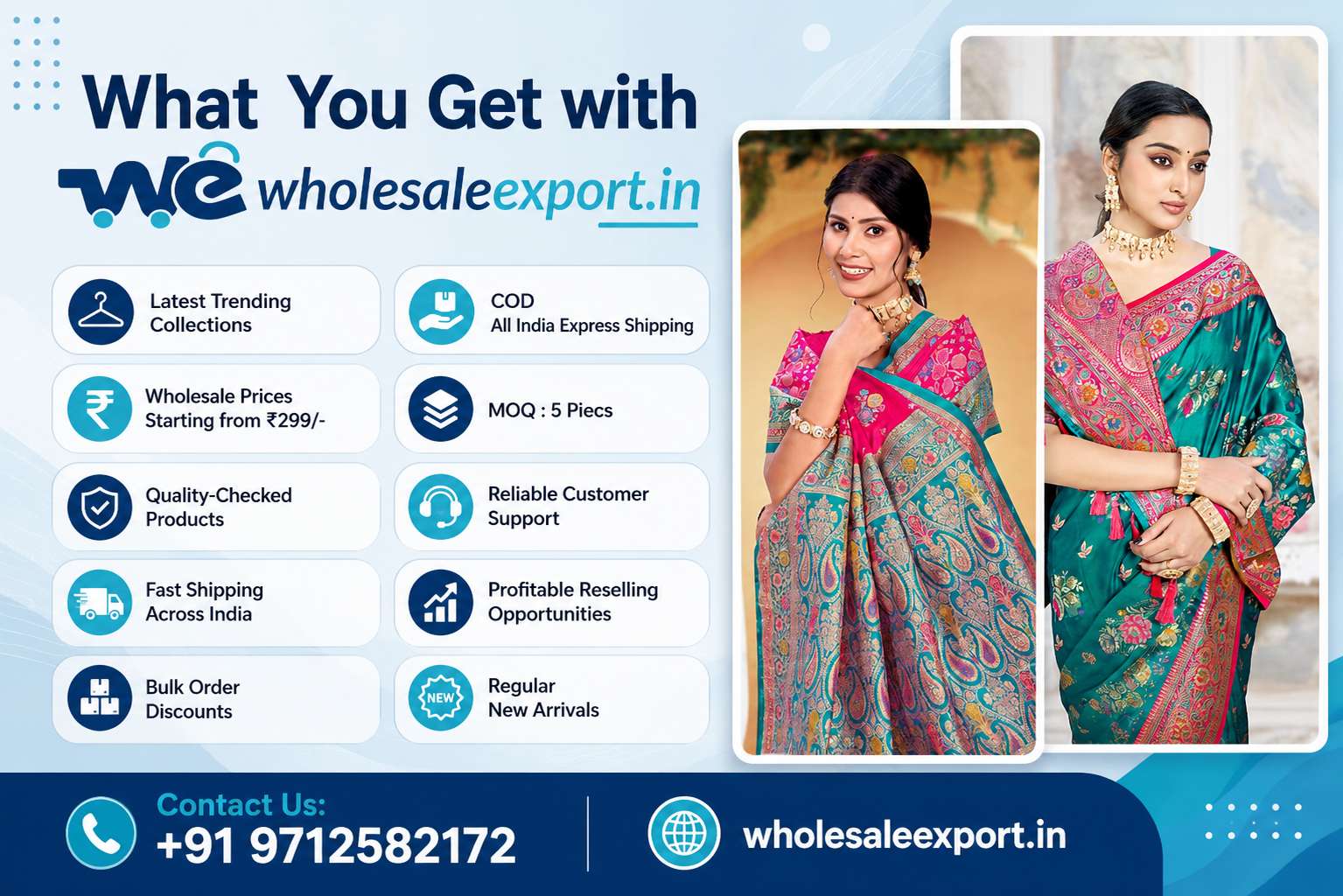
Explore Wholesaleexport.in for Latest Collections, competitive Wholesale Pricing and regularly updated Trendy Ethnic Wear suitable for Home-Based Sellers, Shop Owners, Boutique Owners, Showroom Owners, Resellers and Wholesale Buyers.
Build your 2026 inventory with available Fast Shipping, eligible COD Support and attractive Bulk Order Deals according to applicable order and product conditions.
Discover Quality Products Starting From ₹299 and select wholesale collections according to your target customer, preferred price segment and business requirements.
Contact Number: +91 9712582172
Website: wholesaleexport.in
Choose trends according to your customers, purchase new designs in sensible quantities and keep refreshing successful categories. A disciplined combination of trend awareness, Surat sourcing and customer-focused buying can help retailers build a stronger saree business throughout 2026.