


Best Festival Stock Planning Strategy for Boutique Owners in 2026
Best Festival Stock Planning Strategy for Boutique Owners in 2026
Festival business can produce some of the strongest selling periods for women's ethnic wear, but profitable seasonal sales begin much earlier than the festival itself. Boutique owners need to decide what to buy, how much to invest, when to receive stock and which collections deserve deeper quantities. A structured buying calendar helps keep fresh designs available during peak demand while reducing the risk of excessive seasonal inventory after the celebrations end.
Introduction
The festival stock planning strategy for boutique owners should begin with one simple principle: buy according to the selling window, not according to the festival date alone. Customers usually start browsing and purchasing before the actual celebration, so products need to reach the boutique early enough for display, photography, promotion and repeat ordering.
This is especially important in 2026 because boutiques are no longer selling only to customers who walk into the store. Instagram, WhatsApp, websites and online customer networks can extend the selling period and geographical reach of the same inventory.
For Boutique Owners, Shop Owners, Showroom Owners, Home-Based Sellers and Resellers, seasonal inventory also creates a cash-flow challenge. Buying too little can mean missing demand, while buying too much can leave capital blocked in festive designs after the season.
The solution is not simply to predict one bestselling product. A stronger strategy combines proven categories, new trends, multiple price levels and planned reorder opportunities. Surat sourcing can support this model because the surat textile market, Ring Road, Sahara Darwaza and surrounding textile ecosystem offer access to extensive wholesale and manufacturing networks.
Why Festival Stock Planning Should Start Early
Many retailers make the mistake of treating the festival date as the buying deadline. In practice, the important date is when customers begin shopping. Inventory needs to be available before that point.
A boutique must account for product selection, supplier confirmation, dispatch, transportation, receiving, checking, photography and marketing. If a first collection performs strongly, additional time may also be required for a second purchasing cycle.
Work Backwards From Your Customer Buying Window
Start by estimating when your customers usually begin festival shopping. Then work backwards to determine when products should arrive and when wholesale orders need to be confirmed.
For example, if serious customer demand generally begins several weeks before a major festival, receiving the main collection only a few days before the festival leaves very little time to generate sales. Early stock gives the boutique a longer opportunity to recover its investment.
Leave Space for a Second Buying Cycle
Buying the entire seasonal budget in one order can create unnecessary risk. A boutique can instead launch an initial collection, measure customer response and use part of the remaining budget to replenish successful categories or introduce fresh designs.
This approach makes the festival stock planning strategy for boutique owners more responsive. Actual sales from the first phase can influence the second purchase rather than relying entirely on forecasts.
Create a Festival Buying Calendar for 2026
A yearly buying calendar helps boutiques avoid last-minute purchasing. List the festivals and wedding periods that matter to your actual customer base, then estimate the preparation window required for each one.
Not every festival deserves the same investment. A retailer should consider local culture, previous sales, customer profile and regional demand before deciding how much stock to allocate.
Phase 1: Research and Budget Allocation
The first stage should happen well before the selling period. Review last year's sales where available and identify which categories, colours, price ranges and sizes or product types generated the strongest response.
New businesses without historical data can start with smaller test quantities and collect information from customer enquiries. The goal is to avoid making a large seasonal purchase based only on personal preference.
Phase 2: Initial Wholesale Purchase
The first wholesale purchase should establish the core festive assortment. This can include proven products and selected trend-driven styles across multiple price levels.
Do not use the entire seasonal budget at this stage. Keeping working capital available gives the boutique flexibility when a new trend emerges or a particular category sells faster than expected.
Phase 3: Early Festival Launch
Once the stock arrives, begin presenting it to customers instead of keeping it packed until the festival gets closer. Early displays, Instagram Reels, WhatsApp updates and customer previews can provide useful buying signals.
Track actual orders rather than relying only on likes or views. Products receiving confirmed sales should influence the next purchasing decision.
Phase 4: Reorder Proven Sellers
As customer demand becomes clearer, use the reserved budget for products that have demonstrated stronger selling potential. The exact design may no longer be available, but similar colours, fabrics, styles or price bands can be considered.
This is where early buying becomes valuable: it creates enough time to respond to the market while the festival selling window is still active.
How to Divide Your Festival Stock Budget
A seasonal budget should not be distributed equally across every product. Boutiques can divide inventory into core sellers, trend-led products and premium or experimental collections.
Core sellers are products with established demand. Trend-led products can attract attention and keep the boutique current, while premium pieces can increase average order value. The exact proportion should depend on the boutique's historical sales and customer profile.
Keep the Largest Share for Proven Demand
Previous sales records can provide useful guidance. If customers consistently purchase certain ethnic wear categories during festivals, those products can receive a larger share of the inventory budget.
However, proven demand does not mean purchasing exactly the same old designs. Customers still expect freshness, so the goal is to maintain the successful category while updating colours, patterns and styling.
Keep a Controlled Budget for Trends
Fashion trends can create fast demand through Instagram and other social platforms, but they can also fade quickly. A boutique can participate without committing excessive capital.
Buy a manageable quantity first, promote it and watch the conversion rate. If customers start purchasing rather than simply enquiring, additional stock can be considered.
Maintain a Premium Festival Section
Festivals often bring customers looking for more distinctive outfits. A curated premium section can include richer fabrics, embroidery, designer suits, sarees, lehengas and other occasion-focused ethnic wear according to the boutique's positioning.
Premium products should be selected carefully because they generally require more capital per piece. Strong presentation can help customers understand the workmanship and value behind the higher selling price.
Best Ethnic Wear Categories for Festival Stock
The right product mix depends on the festival, region and customer base. A boutique serving younger fashion customers may require a different assortment from a store serving families looking for traditional wear.
A balanced festival ethnic wear wholesale collection can include lehenga choli, sarees, kurti sets, salwar suits, dress materials, Anarkali suits, co-ord styles and selected kids ethnic wear where relevant to the business.
Lehenga Choli for Navratri and Festive Occasions
Lehenga choli can become an important seasonal category, particularly for Navratri, weddings and celebratory occasions. Boutiques can maintain several price levels rather than purchasing only premium designs.
Colour, embroidery, flare, blouse styling and dupatta presentation can influence how well a product performs online and inside a physical store.
Sarees for Traditional Festival Demand
Sarees can serve multiple age groups and price segments. Printed styles can address affordable demand, while Bandhani, Leheriya, designer and premium sarees can strengthen festive collections.
For boutique merchandising, separating sarees into clear price and occasion groups can make customer selection easier.
Kurti Sets and Suits for Wider Customer Appeal
Kurti sets, Anarkali suits, salwar suits and dress materials can provide additional variety for customers who prefer stitched or suit-based ethnic wear over sarees and lehengas.
These categories can also help maintain sales beyond the festival because many designs can continue to work for functions, weddings and regular occasion wear.

Festival Stock Planning Through Surat Wholesale Markets
Surat offers one of India's major textile sourcing ecosystems. Buyers exploring the surat textile market, Ring Road and Sahara Darwaza can find businesses connected with women's ethnic wear, fabric, sarees, suits, lehengas and other wholesale categories.
For boutique owners outside Surat, the objective is not necessarily to visit the market before every festival. Online wholesale sourcing through Wholesaleexport.in can make it easier to review collections and place orders according to current inventory requirements.
Why Timing Matters When Buying From Surat
As a major festival approaches, popular products can move quickly through wholesale channels. Boutique Owners who identify their requirements earlier have more time to compare collections instead of making rushed decisions based only on what remains available.
Early sourcing also gives retailers more flexibility to replace a weak-performing collection with something stronger before the main customer buying period.
Manufacturing and Wholesale Access
Surat's manufacturing and trading ecosystem gives buyers access to different product levels and price segments. This can support boutiques that need a mix of affordable fast-moving products and premium festive designs.
Wholesaleexport.in can help business buyers explore new wholesale collections remotely, making it easier to maintain a regular flow of products without depending solely on repeated physical sourcing trips.
Plan Festival Inventory by Price Segment
Customers rarely enter a boutique with identical budgets. A strong seasonal collection should therefore offer meaningful options across different price levels instead of concentrating the entire investment at one end of the market.
Entry-Price Festival Products
Affordable products can help attract customers and generate volume. They can also work well for Resellers and Home-Based Sellers whose audience is highly price conscious.
Quality should still remain appropriate to the selling price. Low-cost stock that creates complaints can damage repeat business and reduce the value of short-term sales.
Mid-Range Festive Collections
The mid-range segment can provide a useful balance between design and affordability. Depending on the boutique's audience, this can include better kurti sets, attractive sarees, festive suits and selected lehengas.
Maintaining variety within this segment can give customers enough options without overwhelming them with hundreds of similar designs.
Premium Festival and Wedding Products
Premium products can serve customers looking for distinctive outfits for major celebrations, weddings and special functions. These collections may require richer fabrics, detailed workmanship and stronger presentation.
Because premium stock ties up more capital per piece, boutiques should select it according to established customer demand rather than buying large quantities simply because the designs appear impressive.
Use Sales Data to Decide Festival Reorders
Customer behaviour during the early selling period provides valuable information. Boutique owners should monitor which products generate confirmed orders, which price bands convert most consistently and which collections receive enquiries without actual purchases.
This data can improve the second purchasing cycle. Instead of repeating the entire initial order, the boutique can concentrate more heavily on proven segments.
Track Product-Level Performance
Record basic information such as category, design type, colour, buying price, selling price and sales quantity. Even a simple system can reveal useful patterns after several weeks.
For example, a boutique may discover that mid-range lehengas sell faster than premium pieces or that particular festive colours generate more confirmed orders. These observations can influence future buying.
Separate Enquiries From Actual Sales
Social-media engagement can be useful, but it should not be treated as the same thing as demand. A Reel may receive significant attention without generating enough purchases to justify a large reorder.
Paid orders are a stronger signal. Combine confirmed sales with customer enquiries and stock availability before committing additional capital.
Vastralife Wholesale and Export Experience Since 2017
Festival sourcing becomes easier when buyers work with businesses that understand wholesale requirements and changing women's ethnic wear demand. Vastralife brings wholesale and export experience since 2017, supported by industry expertise across B2B women's fashion sourcing.
For Boutique Owners, Shop Owners, Showroom Owners, Resellers and Wholesale Buyers, consistent sourcing depends on fresh collections, practical wholesale pricing and premium product quality.
This experience is also relevant to businesses purchasing for export. International buyers need to consider not only design and price but also shipping time and the selling calendar in their destination market.
Festival Stock Planning for Export Markets
Festival demand for Indian ethnic wear extends beyond India. Boutiques and Resellers serving markets such as Nepal, Australia and Canada can also plan seasonal collections around Indian festivals, weddings and community celebrations.
International purchasing needs an earlier timeline because the stock must travel farther before it can be marketed locally. Freight, shipment planning and destination-related costs should also be included when calculating the final selling price.
Work Backwards From the Overseas Selling Date
For export orders, the most useful planning date is when customers in the destination country need to start shopping. Work backwards from that point to allow sufficient time for sourcing, packing, dispatch, transportation and local receiving.
This can prevent seasonal products from reaching the market after the strongest purchase window has passed.
Prepare for the Second Half of the Festival Strategy
A successful festival stock planning strategy for boutique owners does not finish when the first collection is purchased. The second half of the process involves stock rotation, digital promotion, reorder decisions, dead-stock control and planning the transition from one festival into the next selling opportunity.
Wholesaleexport.in can support business buyers exploring fresh ethnic wear collections and wholesale sourcing options for seasonal requirements. The next stage is to use the inventory efficiently so that festival turnover strengthens cash flow rather than leaving the boutique with excessive seasonal stock.
How to Rotate Festival Stock Without Heavy Discounting
Festival profitability depends not only on what sells during peak demand but also on what happens to the remaining inventory afterwards. Boutique Owners should start thinking about stock rotation while the festival is still active instead of waiting until demand has completely disappeared.
Products with versatile designs can often continue into wedding, party or general occasion-wear collections. Highly festival-specific merchandise needs closer monitoring because its selling window may be shorter. This distinction should influence both the initial buying quantity and the timing of promotional activity.
Identify Slow-Moving Products Early
Do not wait until the final festival week to identify slow-moving inventory. Review sales periodically and compare the quantity purchased with the quantity already sold.
If a particular style is receiving attention but few confirmed orders, consider changing its presentation before reducing its price. Better photographs, styling videos, mannequin displays or pairing suggestions may improve customer response without immediately sacrificing margin.
Move Versatile Products Into the Next Occasion
A festive saree, designer suit or premium lehenga may remain suitable for weddings and family functions after a specific festival has ended. Instead of automatically categorizing all leftover inventory as clearance stock, evaluate whether it can be repositioned.
This is one reason versatile festive buying can be valuable. Products with a longer occasion-wear lifecycle give the retailer more opportunities to recover the inventory investment.
Use Instagram and WhatsApp to Sell Festival Inventory Faster
Digital promotion should begin when the first seasonal stock arrives. Waiting until peak demand reduces the amount of time available to build visibility and repeat exposure.
Boutique Owners can divide their collection into smaller campaigns instead of posting every design simultaneously. This keeps new products appearing regularly and gives individual styles more attention.
Launch the Collection in Stages
Begin with a festival announcement and then introduce categories separately. One campaign might feature lehengas, followed by festive sarees, kurti sets and premium suits.
Individual products can then be supported with Reels, Stories, WhatsApp updates and close-up videos. A single wholesale purchase can therefore generate several weeks of marketing content.
Show Price Segments Clearly
Customers should be able to understand whether a collection is affordable, mid-range or premium. Clear pricing can reduce unnecessary enquiries and help serious buyers find products that match their budget.
For online customers, also communicate relevant ordering information, available designs and current stock status clearly. Simple purchasing instructions can improve the path from viewing a product to placing an order.
Plan the Transition From One Festival to the Next
Seasonal buying should be treated as a continuous calendar rather than a series of disconnected events. A Boutique Owner can review which products from one festival can continue into the next occasion and which categories need to be refreshed completely.
For example, versatile ethnic wear may continue into wedding demand, while highly theme-specific merchandise may require faster rotation. This approach helps protect working capital and reduces unnecessary duplication in purchasing.
Do Not Replace the Entire Collection Every Time
Freshness matters, but it does not mean every product needs to disappear after one selling period. Keep successful versatile products and introduce new designs around them.
This creates a more controlled buying cycle and allows the boutique to invest new money where it is genuinely required.
Reserve Cash for Unexpected Trends
Social-media-driven trends can appear quickly. If the entire festival budget has already been invested months earlier, the boutique may not have enough working capital to respond.
Maintaining a reserve provides flexibility for fast-moving colours, silhouettes, prints or other trends that become relevant closer to the selling period.

Festival Stock Strategy for Different Types of Sellers
The same buying formula should not be applied to every business. A Home-Based Seller with low overheads and limited storage has different inventory needs from a large showroom. The festival stock planning strategy for boutique owners should therefore be adjusted according to selling capacity, available capital and customer reach.
Home-Based Sellers and Resellers
Home-Based Sellers can concentrate on manageable quantities and fast-moving collections. Instead of maintaining every possible category, they can focus on products that photograph well and match their existing online audience.
Resellers should track customer enquiries before increasing quantities. Smaller initial buying can preserve capital while still allowing participation in seasonal demand.
Boutique Owners
Boutiques can benefit from a more curated assortment. Rather than competing with large retailers on quantity alone, they can select distinctive designs across several price levels.
Presentation, styling and personalized service can add value to the product. This allows the boutique to differentiate itself even when similar categories are available elsewhere.
Shop and Showroom Owners
Stores with larger customer footfall may require deeper quantities in proven categories. However, greater capacity does not eliminate inventory risk. Showroom Owners should still monitor category-level sales and maintain enough cash for replenishment.
Larger retailers can also create separate festival zones inside the store, helping customers navigate collections according to occasion and budget.
Internal Linking Section for Festival Wholesale Buyers
Retailers planning Navratri, wedding and festive assortments can explore the wholesale lehenga market in Surat when selecting new styles and price ranges for seasonal customers. Buying according to the boutique's actual customer segment can help keep the collection commercially focused.
Businesses serving families can also consider kids wear wholesale collections as a complementary seasonal category where it matches existing customer demand. Adding adjacent categories gradually can help increase basket size without unnecessarily expanding inventory.
Wholesaleexport.in can be used by business buyers to explore different women's and family fashion categories while planning seasonal purchases from the Surat wholesale ecosystem.
Protect Cash Flow During Festival Buying
Strong seasonal sales can create excitement, but cash-flow discipline remains essential. Revenue generated during a festival should not automatically be treated as available profit if payments for inventory, logistics, staff, advertising and other expenses still need to be covered.
Separate Buying Capital From Operating Expenses
A boutique can maintain separate budgets for stock purchasing and regular operating expenses. This makes it easier to understand how much money is genuinely available for additional inventory.
Using all available cash for products may leave the business short of funds for marketing, transportation or everyday operations precisely when the festival becomes busiest.
Measure Stock Turnover Along With Margin
A product carrying a high theoretical margin is not necessarily the most profitable inventory if it takes months to sell. Faster-moving products can return capital to the business sooner and potentially allow several purchasing cycles.
Evaluate the combination of margin, quantity sold and selling speed when reviewing seasonal performance.
Festival Wholesale Buying for Export Markets
Seasonal planning becomes even more time-sensitive for export buyers because transportation adds another stage between wholesale purchasing and customer selling.
Boutiques and Resellers serving Nepal, Australia and Canada should plan according to the customer shopping date in their destination market rather than simply following the Indian wholesale buying calendar.
Include Shipping Time in the Buying Calendar
If a product needs additional time to reach an international destination, that period must be added before the marketing and selling window. Buyers should therefore place seasonal orders sufficiently early to account for sourcing, dispatch and transportation.
The exact timeline depends on the shipping method, destination and current logistics conditions, so businesses should confirm expected transit arrangements when ordering.
Calculate the Complete Landed Price
International buyers should calculate product value together with freight and other applicable destination-related costs. This gives a more realistic landed price for determining the final resale margin.
A low Indian wholesale rate does not necessarily mean a product will remain inexpensive after transportation. Comparing products on landed cost can therefore improve export purchasing decisions.
Why Surat Can Support Seasonal Wholesale Sourcing
The surat textile market ecosystem around Ring Road, Sahara Darwaza and surrounding textile areas gives business buyers access to a broad range of ethnic wear. The presence of wholesale, trading, processing and manufacturing activity makes Surat relevant for retailers preparing multiple seasonal collections.
Buyers do not necessarily need to purchase every category from the same source. What matters is maintaining consistent quality, suitable pricing and dependable availability for the customer segment being served.
Wholesaleexport.in provides an online route for businesses exploring wholesale collections connected with Surat, allowing buyers to review new products without depending entirely on repeated physical market visits.
Vastralife Wholesale and Export Experience Since 2017
Vastralife brings wholesale and export experience since 2017, supported by industry expertise in women's fashion and B2B textile sourcing. For seasonal buyers, this experience is relevant because festival purchasing requires an understanding of timing, product selection and different business requirements.
Home-Based Sellers may prefer manageable fast-moving assortments, Boutique Owners may focus on curated collections, while Showroom Owners and Wholesale Buyers may require greater depth and quantity.
Across these models, maintaining premium product quality, fresh collections and practical wholesale buying options can support repeat customer relationships rather than depending entirely on one festival season.
Customer FAQs
1. When should boutique owners start buying festival stock?
Boutique Owners should work backwards from the date their customers usually begin shopping, allowing time for sourcing, transportation, receiving, promotion and possible reorders. The ideal lead time varies by festival, supplier and location, so purchasing should be planned around the complete selling cycle rather than only the festival date.
2. How much festival stock should a boutique purchase?
There is no universal quantity. Previous sales, available working capital, store size, online reach and supplier reorder possibilities should guide the decision. Newer businesses can use smaller initial quantities and increase purchases after observing confirmed demand.
3. Which ethnic wear categories are suitable for festival sales?
Depending on the customer base, boutiques can consider lehenga choli, sarees, kurti sets, Anarkali suits, salwar suits, dress materials and other festive ethnic wear. The strongest combination will vary by region, festival and price segment.
4. Should I purchase all festival inventory in one order?
Not necessarily. Keeping part of the budget available for reorders and emerging trends can reduce the risk of committing all available capital before customer demand becomes clear.
5. How can I reduce leftover festival stock?
Monitor sales during the season, identify slow-moving products early and adjust presentation or promotion while customer demand is still active. Versatile products can sometimes be repositioned for weddings and other occasions after the festival.
6. Is Surat suitable for festival wholesale sourcing?
Surat has a large textile trading and manufacturing ecosystem, including areas around Ring Road and Sahara Darwaza. Buyers can compare collections and price segments according to their own retail or wholesale requirements.
7. Can festival collections be purchased for export?
Yes, subject to supplier terms, logistics and destination requirements. Export buyers should order early enough for transportation and calculate the complete landed cost before deciding their resale price.
8. How should I decide which festive products to reorder?
Use confirmed sales as the primary signal. Consider customer enquiries, remaining stock, price segment and the time left in the selling season before placing additional orders.
9. Should boutiques keep affordable and premium festival stock together?
Offering multiple price segments can help serve customers with different budgets. The exact mix should reflect the boutique's positioning and historical customer demand rather than dividing the budget equally.
10. How can social media help sell festival inventory?
Instagram Reels, Stories and WhatsApp updates can introduce new arrivals, demonstrate product details and keep collections visible throughout the selling period. Clear prices, availability and ordering instructions can make promotional content more transaction-friendly.
Plan Your 2026 Festival Stock With Wholesale Collections
The festival stock planning strategy for boutique owners works best when buying decisions are made before urgency takes over. Plan the budget, receive core stock early, measure customer response and keep enough working capital available for proven reorders and emerging trends.
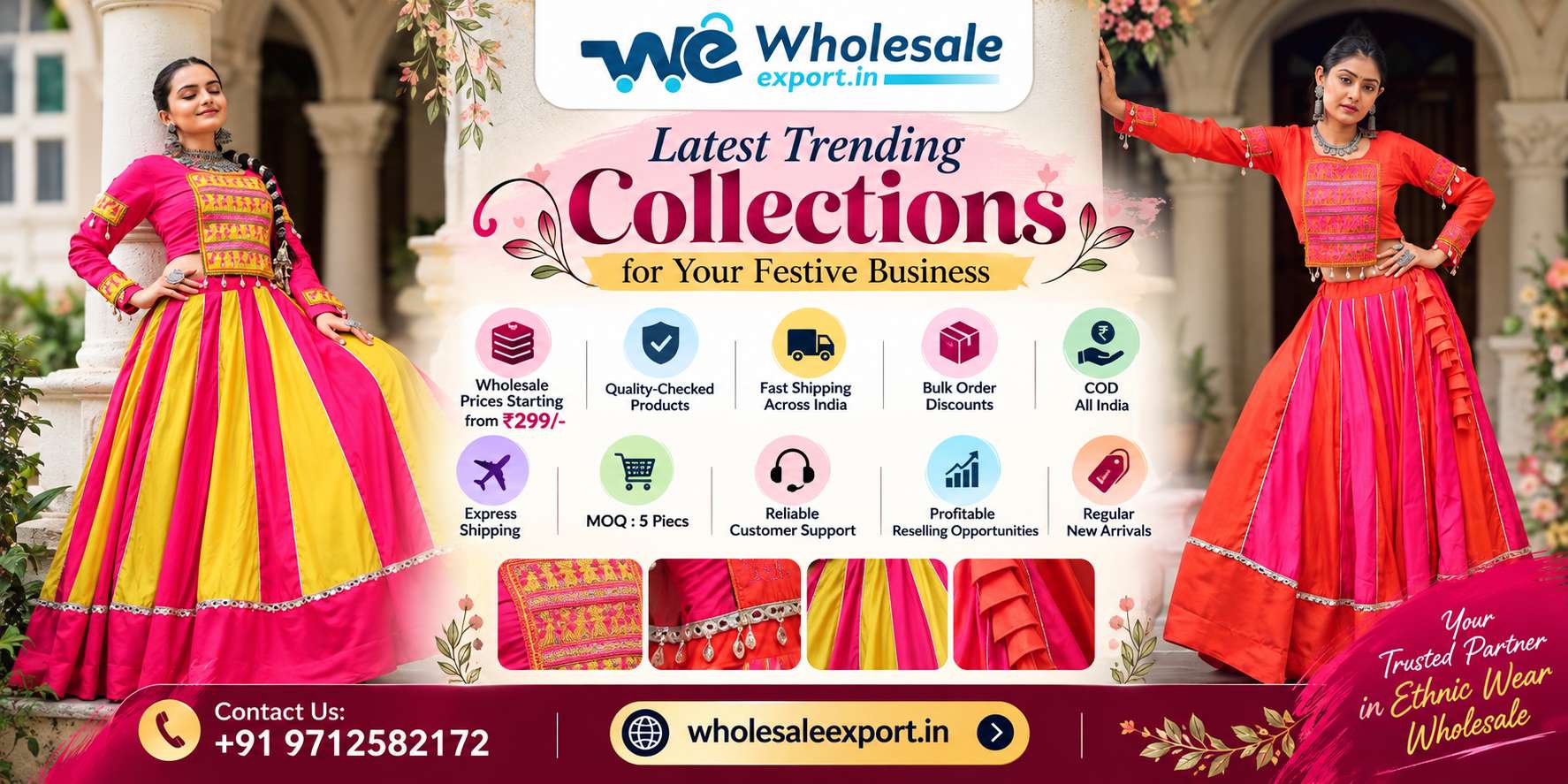
Explore Latest Collections and competitive Wholesale Pricing for Boutique Owners, Shop Owners, Showroom Owners, Home-Based Sellers, Resellers and Wholesale Buyers.
Build your seasonal inventory with Trendy Ethnic Wear, Fast Shipping, COD Support where applicable and attractive Bulk Order Deals according to current terms and availability.
Explore Quality Products Starting From ₹299 and select collections according to your customer segment, festival calendar and target price range.
Contact Number: +91 9712582172
Website: wholesaleexport.in
For 2026, the strongest festival inventory strategy is not simply to carry more products. It is to have the right categories available at the right stage of customer demand, rotate capital efficiently and use actual sales to guide every reorder. With planned sourcing, controlled inventory and consistent promotion, each festival can become part of a more sustainable year-round ethnic wear business.