


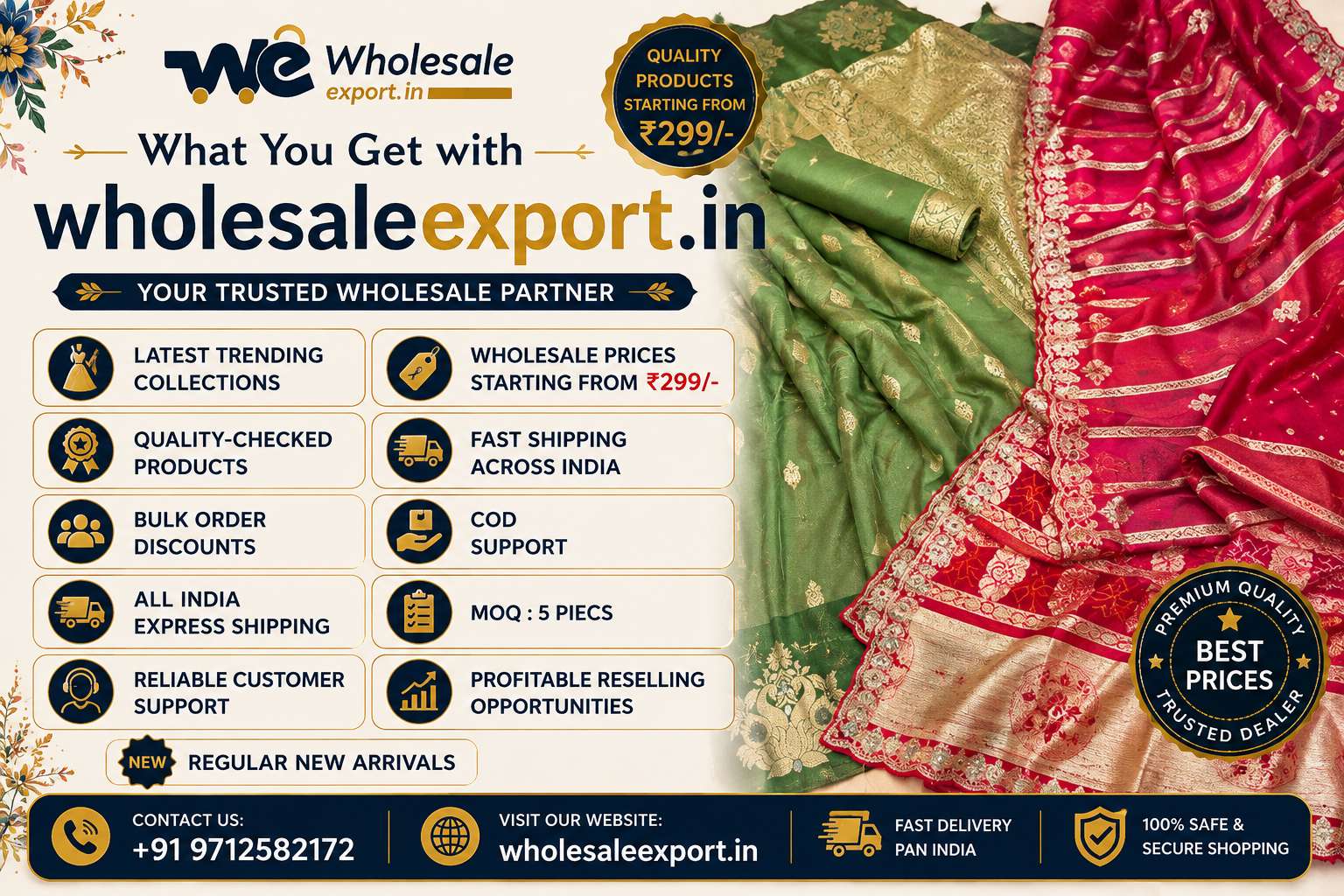
Bandhani Saree Wholesale Collection 2026: Latest Designs, Prices & Surat Suppliers
Bandhani Saree Wholesale Collection 2026: Latest Designs, Prices & Surat Suppliers
Traditional Indian fashion continues to create strong retail opportunities, and Bandhani remains one of the most recognisable styles for customers who appreciate colour, craftsmanship and festive elegance. For boutique owners, retailers, resellers and ethnic wear businesses, choosing the right designs, fabrics and price segments can help create a collection that performs across wedding, festive and everyday markets.
Introduction
The Bandhani Saree Wholesale Collection has evolved far beyond conventional red and green festive sarees. In 2026, wholesalers are seeing greater interest in contemporary colour combinations, lightweight fabrics, elegant borders, contrast pallus and designs that combine traditional Bandhani inspiration with modern styling.
Bandhani, also widely known as Bandhej, has deep roots in the textile traditions of Gujarat and Rajasthan. Its distinctive dotted patterns and vibrant visual appeal make it suitable for festivals, weddings, family functions, religious occasions and gifting. This wide usage gives retailers an opportunity to maintain Bandhani sarees as a dependable category rather than treating them only as seasonal inventory.
Surat plays an important role in this business ecosystem. Buyers searching the surat textile market can find everything from affordable daily-wear sarees to premium festive collections. Commercial textile areas around ring road and sahara darwaza connect manufacturers, traders, distributors and buyers from different parts of India.
Wholesaleexport.in brings this sourcing process online for buyers who want to explore collections without depending entirely on physical market visits. Supported by Vastralife's wholesale and export experience since 2017, the platform focuses on industry expertise, practical wholesale sourcing and premium product quality for businesses of different sizes.
Why Bandhani Sarees Remain a Strong Wholesale Category in 2026
Fashion trends change quickly, but traditional textile styles usually retain demand when they can adapt to modern preferences. Bandhani does this particularly well. Customers recognise the heritage value of the design while manufacturers continue introducing updated colours, borders, fabrics and finishing.
Traditional Identity with Modern Retail Appeal
A major advantage of Bandhani sarees wholesale is their instant visual identity. The characteristic patterns make the product easy to recognise both in physical stores and online catalogues. This helps shop owners and resellers present the saree without needing complicated product explanations.
Modern collections may feature classic Bandhej dots with zari borders, woven pallus, contrast blouse pieces, lagdi patta styling, decorative motifs or contemporary colour combinations. Maroon, mustard, rani pink, bottle green and red continue to attract traditional buyers, while wine, purple, teal, navy, pastel shades and dual-tone combinations provide a more modern presentation.
Suitable for Multiple Customer Segments
A carefully selected Bandhej saree wholesale collection can serve customers across several age groups and budgets. Younger buyers may prefer lightweight fabrics and brighter styling, while traditional customers often look for rich colours, detailed borders and classic Bandhani patterns.
This flexibility is particularly useful for boutique owners and showroom owners. Instead of investing heavily in a very narrow design category, they can stock Bandhani sarees across affordable, mid-range and premium segments. Home-based sellers can begin with selected fast-moving designs and expand their assortment after understanding customer preferences.
Popular Bandhani Saree Styles for Wholesale Buyers
The best wholesale assortment is rarely built around one design alone. Retail businesses generally perform better when customers can compare several looks within the same category. Understanding the major variations available in the market can therefore make purchasing decisions more practical.
Classic Bandhej Sarees
Classic Bandhej designs remain an important part of the Bandhani saree wholesale market. These sarees typically use traditional dotted arrangements, rich Indian colours and contrasting borders. They are suitable for festive retail stores, regional fashion businesses and sellers whose customers prefer timeless ethnic styles.
Lagdi Patta and Decorative Border Styles
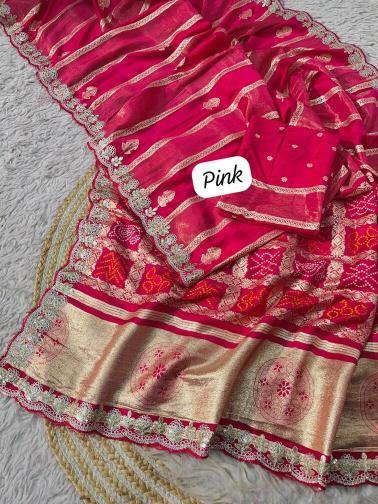
Bandhani-inspired sarees with lagdi patta styling and decorative borders can create a more premium visual presentation. Borders often influence the perceived value of a saree, especially when customers are shopping for weddings, celebrations or gifts.
Retailers should examine how well the border complements the body colour, whether the pallu has enough visual richness and whether the blouse piece creates an attractive overall combination. These details can influence both retail presentation and final selling price.
Silk-Look and Festive Bandhani Sarees
Festive customers often prefer a saree that combines Bandhani-inspired patterns with a richer fabric appearance. Silk blends, art silk, jacquard detailing and zari elements can provide this look at different wholesale price points.
Such designs can be particularly useful during Navratri, Diwali, wedding seasons and family celebrations. Wholesale buyers should build festive inventory early enough to photograph, promote and sell the collection before peak demand begins.
Lightweight Bandhani Sarees
Not every Bandhani buyer is searching for heavy festive clothing. Lightweight sarees can appeal to customers looking for comfortable ethnic wear for smaller functions, social gatherings and regular use. For online resellers, lighter products may also provide practical advantages in handling and shipping.
Because the category serves several usage occasions, a balanced Bandhani saree supplier assortment can include both lightweight and occasion-focused designs rather than depending exclusively on heavily embellished pieces.
Bandhani Saree Wholesale Price and Buying Strategy
Wholesale buyers naturally compare price, but the lowest rate should not be the only purchasing criterion. Fabric quality, colour appearance, border finishing, blouse coordination, catalogue presentation and overall consistency can determine whether the product ultimately delivers good retail value.
In 2026, customers can compare products quickly through marketplaces, social media and messaging applications. This makes visual quality especially important. A slightly better-finished saree may generate stronger customer interest than an extremely inexpensive product with weak presentation.
Understand Your Retail Price Segment
Before placing a bulk order, buyers should determine the approximate retail segment they want to target. Home-based sellers may prefer affordable products with broad appeal, while premium boutiques may need distinctive patterns and richer finishing. Showroom owners can maintain multiple price bands to accommodate different customers.
The wholesale buying cost should leave enough room for shipping, packaging, advertising, payment costs and retailer margin. A product that appears attractive only because of a low purchase price may become less profitable once these operating expenses are included.
Start with a Balanced Design Mix
For new sellers, purchasing many units of a single colour can increase inventory risk. A more practical approach is to create a mix of classic shades, contemporary colours and festive combinations. Sellers can then identify which designs receive the strongest enquiries and reorder accordingly.
Wholesaleexport.in can be useful for buyers who prefer browsing multiple ethnic wear options online before finalising their purchasing plan. Regular catalogue access can also help businesses monitor new arrivals instead of relying only on occasional sourcing trips.
Surat as a Major Sourcing Destination for Bandhani Sarees
Surat has developed one of India's most extensive textile trading ecosystems. Its combination of manufacturing, processing, wholesale distribution, catalogue trading and logistics makes it important for ethnic wear businesses across the country.
Areas around the surat textile market, Ring Road and Sahara Darwaza are familiar to buyers searching for sarees, dress materials, kurtis, suits and other women's ethnic wear. The concentration of textile businesses makes it possible for retailers to compare different categories and price ranges within the same sourcing ecosystem.
Why Retailers Source from Surat
One major advantage is variety. A buyer can explore traditional Bandhani styles alongside contemporary sarees, silk-look collections, printed designs and festive products. This is useful for retailers who want to build a broader women's ethnic wear inventory instead of sourcing every category from a different city.
Another advantage is the continuous arrival of new catalogues. Fashion retailers depend on freshness, especially when selling through WhatsApp, Instagram, websites or reseller networks. Regular new designs provide more opportunities to reconnect with existing customers.
Online Sourcing Makes the Market More Accessible
Physical visits to Surat remain useful for many large buyers, but digital wholesale sourcing has made the market more accessible to businesses located elsewhere. Product images, catalogue information and remote ordering allow buyers to evaluate collections without travelling for every purchase.
This is particularly valuable for home-based sellers and small boutiques. They can focus their working capital on inventory rather than frequent travel while still accessing products connected with Surat's wholesale textile ecosystem.
For businesses preparing their next purchasing cycle, related categories such as Banarasi saree collections can help broaden the premium saree assortment. Retailers who also sell women's everyday ethnic wear can explore wholesale rayon kurtis to create a more diversified product mix.
How to Select a Profitable Bandhani Saree Wholesale Collection
Successful wholesale buying is not simply about purchasing designs that look attractive in a catalogue. Retailers need to understand their customers, local demand, expected retail price and how quickly each design is likely to move. A well-planned Bandhani Saree Wholesale Collection should provide enough variety to attract customers without creating unnecessary dead stock.
Choose Colours According to Customer Demand
Traditional shades such as red, maroon, rani pink, green and mustard remain important because customers naturally associate these colours with Bandhani and Gujarati ethnic fashion. At the same time, modern buyers increasingly respond to wine, teal, purple, navy, rust and sophisticated dual-tone combinations.
Retailers can therefore divide their purchases between proven traditional shades and newer fashion colours. This approach works particularly well for shop owners and showroom owners serving customers across different age groups.
Check Fabric, Border and Pallu Presentation
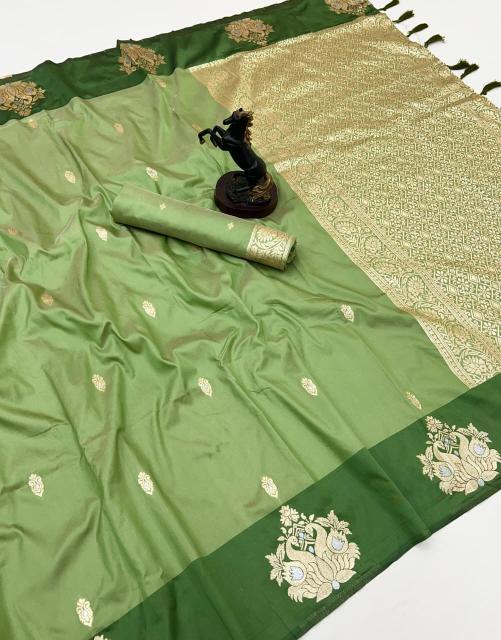
The visual impact of a saree is created by the complete combination rather than the body design alone. Wholesale buyers should evaluate the fabric fall, border width, zari appearance, pallu detailing, blouse piece and finishing before deciding whether a collection fits their target market.
For online sellers, catalogue photography is equally important. Clear images showing the full saree, border and styling can make it easier for customers to understand the product. Premium-looking presentation can also improve the perceived value of a Bandhej saree wholesale catalogue.
Maintain Different Price Levels
A retailer who stocks only one price range may lose customers at either end of the market. Maintaining entry-level, mid-range and selected premium designs creates more selling opportunities. Affordable options can attract price-conscious customers, while richer designs can serve wedding and festive buyers looking for something more distinctive.
For resellers, this strategy also makes digital marketing easier. Different catalogues can be promoted to different customer groups instead of sending the same products to everyone.
Who Can Benefit from Bandhani Saree Wholesale Buying?
The category is suitable for businesses ranging from individual home-based resellers to established ethnic wear showrooms. The ideal buying method, however, changes according to business size and customer profile.
Home-Based Sellers and Resellers
Home-based sellers can use Bandhani sarees as an attractive traditional category without requiring a large physical store. Digital catalogues can be shared through social media and messaging platforms, allowing sellers to test demand before increasing inventory.
For resellers, regular new arrivals are particularly useful. Customers who have already purchased once need fresh reasons to return, and newly launched colours or patterns can create those repeat selling opportunities.
Boutique Owners
Boutiques usually benefit from curated collections rather than extremely large assortments. A boutique owner can select unusual colour combinations, premium borders and distinctive festive designs that complement the positioning of the store.
Pairing Bandhani sarees with jewellery, festive kurtis, dupattas and coordinated ethnic accessories can also increase the overall order value from customers shopping for occasions.
Shop and Showroom Owners
Physical retailers need enough variety for customers to compare products in-store. A showroom can create dedicated sections for affordable Bandhani, festive Bandhej and premium sarees, helping customers navigate different budgets more easily.
During Navratri, Diwali and wedding periods, prominently displaying traditional Gujarati sarees can improve visibility and encourage customers to explore the complete ethnic wear range.
Wholesale Buyers
Larger buyers typically focus on consistency, repeat availability, bulk pricing and dependable dispatch. For them, selecting a wholesale partner with access to multiple designs can simplify procurement and reduce the need to coordinate separately with numerous small sources.
Bandhani Sarees for Export Markets
Indian ethnic wear has a customer base far beyond domestic markets. Bandhani's strong regional identity makes it particularly appealing to Indian communities abroad as well as stores specialising in South Asian fashion.
For this collection, three useful international markets to consider are the USA, Australia and Malaysia. Retailers in these countries may serve Indian-origin customers looking for traditional fashion for weddings, Navratri, Diwali, community celebrations and cultural events.
USA Market
The USA has a broad South Asian customer base across several cities. Indian boutiques and online ethnic wear stores can position Bandhani sarees for festive seasons, wedding shopping and regional cultural events. Retailers should consider offering both recognisably traditional designs and contemporary colour palettes.
Australia Market
Indian communities across Australia create demand for occasion wear throughout the year. Lightweight sarees can be practical for customers who want traditional styling with comfortable drape, while richer Bandhani-inspired collections can cater to weddings and major festivals.
Malaysia Market
Malaysia's multicultural fashion environment provides opportunities for colourful Indian ethnic wear. Bandhani sarees with attractive borders and festive colours can appeal to customers shopping for celebrations and cultural functions.
For export orders, buyers should consider product selection, packing, shipment weight, destination requirements and expected delivery timelines before confirming large quantities. Wholesaleexport.in serves buyers looking to connect with Indian wholesale fashion collections for domestic and international business requirements.
Why Experience Matters When Choosing a Wholesale Partner
Wholesale clothing is a repeat-purchase business. Buyers do not only need an attractive first catalogue; they need ongoing access to new designs, practical communication and product options that match changing retail demand.
Vastralife has been involved in wholesale and export operations since 2017. This industry experience provides an understanding of how requirements differ between home-based sellers, boutiques, retail stores, showroom owners and larger wholesale buyers.
Premium product quality is equally important. Retail customers judge the fabric, finishing, colour combination and overall presentation once the product reaches them. For this reason, responsible sourcing should focus on long-term customer satisfaction rather than simply finding the lowest possible rate.
Wholesaleexport.in is designed around this practical wholesale approach, helping buyers discover ethnic wear collections while staying connected with new fashion arrivals and sourcing opportunities.
Inventory Planning for the 2026 Festive and Wedding Market
Inventory timing can have as much impact on profitability as product selection. Buying festive stock after customer demand has already peaked reduces the selling window. Businesses should plan their Bandhani Saree Wholesale Collection according to upcoming festivals, wedding dates and regional buying patterns.
Build Inventory Before Peak Demand
Retailers should begin evaluating festive sarees early enough to receive stock, prepare photography, create promotional material and introduce collections to customers before the main shopping period.
This is especially relevant for online sellers because customers may compare several stores before purchasing. Early promotion gives businesses more time to generate enquiries and understand which designs deserve repeat orders.
Avoid Over-Investing in One Design
Even a beautiful design may perform differently across locations. A colour that sells rapidly in Gujarat may not necessarily receive the same response in another market. Maintaining variety reduces dependence on a single pattern.
Buyers can track customer enquiries, saves, shares and actual orders to identify fast-moving styles. Reordering proven designs while continuously testing selected new arrivals creates a healthier inventory cycle.
Create Cross-Selling Opportunities
Bandhani customers are often shopping for broader ethnic fashion needs. Retailers can increase their average transaction value by offering complementary categories such as kurtis, dress materials, festive suits, dupattas and other sarees.
This is particularly useful for businesses operating through WhatsApp or social media. After a customer enquires about a saree, the seller can naturally introduce related products within the same budget or occasion.
Important Buying Checklist for Wholesale Customers
Before confirming a wholesale order, businesses should review a few practical points. A simple purchasing checklist can prevent misunderstandings and help maintain better inventory quality.
- Confirm the fabric and overall saree specifications.
- Check available colours and design assortment.
- Understand the wholesale price and applicable order quantity.
- Review blouse piece details where applicable.
- Check catalogue images before promoting products.
- Understand shipping and dispatch arrangements.
- Calculate your expected retail margin before ordering.
- Plan inventory according to festival and wedding demand.
- Confirm availability before advertising large quantities.
- Keep a combination of traditional and contemporary designs.
This approach is useful whether a buyer is purchasing directly from the Surat textile ecosystem or sourcing online. It turns wholesale buying into a planned business decision rather than an impulsive stock purchase.
Internal Linking and Related Wholesale Categories
Building a profitable ethnic wear business usually requires more than one product category. Sarees may attract traditional and festive customers, while kurtis, suits and dress materials provide additional everyday and occasion-wear opportunities.
The two related categories linked earlier in this article allow buyers to explore complementary inventory without moving away from the broader women's ethnic wear segment. A diversified product strategy can help retailers respond to more customer enquiries throughout the year.
Wholesaleexport.in regularly presents product categories suitable for resellers, boutiques, shops, showrooms and wholesale buyers. Businesses can compare collections according to style, customer profile and budget before deciding how much stock to purchase.
Customer FAQs
1. What is a Bandhani saree?
A Bandhani or Bandhej saree is recognised for its distinctive dotted patterns inspired by the traditional tie-dye craft associated strongly with Gujarat and Rajasthan. Modern collections may combine this traditional appearance with contemporary fabrics, zari borders, woven details and updated colours.
2. Where can I buy Bandhani sarees wholesale from Surat?
Surat has extensive textile wholesale activity around areas such as Ring Road and Sahara Darwaza. Buyers who prefer remote sourcing can also explore collections through Wholesaleexport.in instead of travelling to the physical market for every purchase.
3. Are Bandhani sarees suitable for online reselling?
Yes. Their strong colours and recognisable patterns make them visually suitable for catalogue-based selling. Home-based sellers and resellers can share product images with customers and select stock according to the demand they receive.
4. Which Bandhani colours are popular for festive sales?
Red, maroon, green, mustard and rani pink remain traditional favourites, while wine, navy, teal, purple and dual-tone combinations can appeal to customers looking for a contemporary appearance. The ideal colour mix depends on the retailer's customer base.
5. Can Bandhani sarees be supplied for international buyers?
Bandhani and other Indian ethnic wear categories have demand in international markets, particularly among South Asian communities. Export buyers should confirm product availability, quantities, packing, shipping charges and destination requirements before placing bulk orders.
6. How should a new reseller select the first Bandhani collection?
A new reseller can begin with a balanced assortment rather than purchasing a large quantity of one design. Mixing traditional colours, contemporary shades and different price levels helps test customer response while keeping inventory risk manageable.
Start Sourcing Your Next Wholesale Collection
If you are a home-based seller, reseller, boutique owner, shop owner, showroom owner or wholesale buyer searching for fresh Indian ethnic wear, explore the latest options available through Wholesaleexport.in. The objective is to make product discovery easier while giving businesses access to collections suitable for different budgets and customer segments.
Whether you are preparing for festive demand, expanding your saree section or building a new reselling business, focus on designs that combine customer appeal, dependable quality and workable margins.
- Latest Collections for changing fashion demand
- Wholesale Pricing for business buyers
- Trendy Ethnic Wear for boutiques, shops and resellers
- Fast Shipping for convenient order fulfilment
- COD Support on eligible orders
- Bulk Order Deals for larger purchasing requirements
- Quality Products Starting From ₹299
Contact: +91 9712582172
Website: wholesaleexport.in
Explore the latest Bandhani saree wholesale designs, compare suitable price segments and build an ethnic wear assortment that matches the needs of your customers in 2026. With thoughtful product selection, regular new arrivals and reliable sourcing, traditional Indian sarees can remain a valuable and profitable part of a modern fashion business.