


Ajrakh Dress Material Wholesale: Traditional Prints for Resellers in 2026
Ajrakh Dress Material Wholesale: Traditional Prints for Resellers in 2026
Traditional Indian prints continue to hold a valuable position in ethnic fashion because customers increasingly look for clothing that combines cultural character with practical everyday styling. Ajrakh-inspired dress materials fit naturally into this demand with their detailed patterns, earthy colour stories and distinctive handcrafted appearance. For retailers and resellers, these collections can create an attractive category that works across boutiques, online stores, home-based businesses and established ethnic wear showrooms.
Introduction
The market for Ajrakh Dress Material Wholesale is becoming increasingly relevant for sellers who want something different from standard floral and digital-print collections. Ajrakh is recognised for its intricate geometric layouts, traditional motifs, balanced repetitions and rich colour combinations. While authentic handcrafted Ajrakh has its own specialised production traditions, today's wholesale market also includes Ajrakh-inspired printed dress materials designed for wider commercial demand.
For Home-Based Sellers, Boutique Owners, Shop Owners, Showroom Owners, Resellers and Wholesale Buyers, this creates multiple opportunities. Sellers can offer traditional-looking products without limiting their inventory only to heavy festive wear. Depending on fabric, print, design and price segment, Ajrakh-style suits can work for casual dressing, office wear, small functions, festive occasions and gifting.
In 2026, successful ethnic wear businesses need more than simply a large catalogue. They need products that customers can recognise, remember and confidently purchase. A carefully selected Ajrakh dress material collection can provide that distinction.
Wholesaleexport.in helps buyers explore wholesale ethnic wear from Surat while selecting collections according to their customer segment, budget and expected resale range. This is particularly useful for sellers who want access to new designs without depending only on their local wholesale market.
Why Ajrakh Dress Materials Attract Modern Ethnic Wear Buyers
One of the biggest strengths of Ajrakh-style fashion is its ability to look traditional without necessarily feeling outdated. The visual language of the print has strong Indian roots, yet the same patterns can be adapted into contemporary suits, kurtas, dupattas and coordinated ethnic outfits.
A Distinctive Traditional Print Identity
Customers see numerous floral, abstract and digital prints in the market. Ajrakh-inspired patterns offer a different visual identity through repeated geometric arrangements, traditional motifs and carefully coordinated colours.
This distinctiveness can help retailers create a more memorable display. A customer who already owns several regular printed suits may still be interested in an Ajrakh-style design because it brings a different character to her wardrobe.
Suitable for Multiple Age Groups
Traditional prints are not limited to one age category. Mature customers may appreciate their classic appearance, while younger buyers can style them with straight pants, palazzos, contemporary jewellery and modern silhouettes.
This flexibility gives dress material wholesalers and retailers a wider customer base instead of restricting the collection to one narrowly defined demographic.
Works Beyond One Festival Season
Heavy festive products can produce strong seasonal sales but may slow down after the occasion ends. Ajrakh-inspired cotton and comfortable dress materials can have broader usage for office wear, casual outings, family gatherings, travel and regular ethnic dressing.
That makes the category useful for businesses seeking products with potentially longer selling periods.
Understanding Ajrakh-Inspired Colours and Designs
Colour selection is especially important when buying Ajrakh Dress Material Wholesale. The print itself creates visual richness, so successful combinations generally depend on balanced base shades and contrasting motifs.
Classic Indigo and Deep Blue
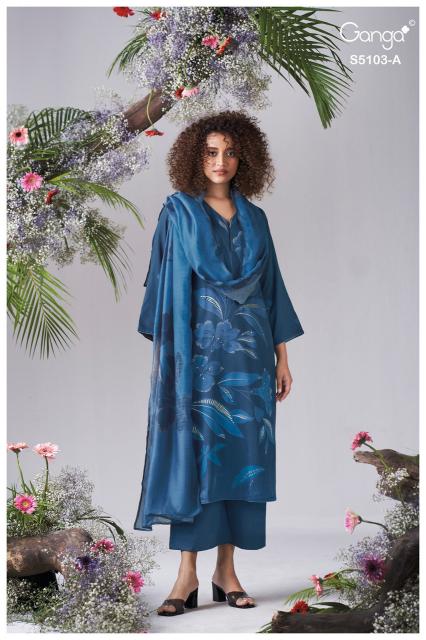
Indigo-inspired shades remain strongly associated with traditional printed textiles. Navy, deep blue and muted blue bases can be paired with white, rust, maroon or earthy printed elements to create an elegant ethnic appearance.
These combinations are practical for retailers because they can appeal to customers looking for understated traditional wear rather than highly embellished garments.
Maroon, Rust and Earthy Shades
Rust, brick, brown, wine and maroon can enhance the handcrafted visual character of Ajrakh-inspired prints. These shades are particularly suitable for autumn, festive and traditional merchandising themes.
Boutique Owners can combine these colours with oxidised jewellery and simple styling during product photography to communicate the ethnic identity more effectively.
Black and Red Combinations
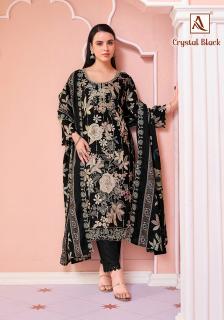
Black-based dress materials with red, beige or white detailing can create a strong visual contrast. They can be positioned as smart casual ethnic wear or styled for smaller occasions depending on the fabric and overall design.
Contemporary Pastel Interpretations
Not every Ajrakh-inspired product needs to follow a dark traditional palette. Manufacturers increasingly experiment with softer shades and contemporary colour combinations. These designs can attract younger customers who like traditional motifs but prefer lighter styling.
Best Fabrics for Ajrakh Dress Material Collections
Fabric influences comfort, fall, print clarity, selling price and the final use of a dress material. Wholesale Buyers should therefore evaluate fabric and design together instead of purchasing only according to the appearance of catalogue photographs.
Cotton Dress Materials
Cotton dress material wholesale collections are useful for sellers targeting regular wear and warm-weather customers. Cotton offers a comfortable feel and works naturally with traditional printed designs.
For Home-Based Sellers and Resellers, cotton-based collections can provide a practical entry segment because customers understand the fabric and can visualise its everyday use easily.
Soft Cotton Blends
Blended fabrics can offer a different combination of drape, finish, durability and price. They may also support commercially consistent printing for larger manufacturing requirements.
Retailers should communicate fabric details accurately rather than presenting every traditional-looking product as pure cotton or handcrafted Ajrakh.
Premium Fabric Options
For boutiques, selected premium fabrics can create a higher-value Ajrakh-inspired range. Richer textures, better drape, detailed dupattas and coordinated bottoms can help distinguish premium sets from everyday printed materials.
The buying decision should still be based on the expected customer price range. Premium inventory is useful only when the target customer is comfortable purchasing at the corresponding retail value.
What Should a Complete Dress Material Set Include?
Wholesale dress material is commonly evaluated as a coordinated outfit rather than only as one piece of printed fabric. Retailers should review the complete combination before confirming stock.
Printed or Designed Top Fabric
The top fabric normally carries the primary visual identity. Ajrakh-inspired geometric or traditional prints should appear balanced across the usable fabric so customers can create an attractive kurta design.
Coordinated Bottom Fabric
A solid or subtly coordinated bottom can keep the overall outfit wearable. Highly detailed top fabrics often look more balanced when paired with a comparatively simple bottom.
Statement Dupatta
The dupatta can significantly influence perceived value. A well-coordinated printed dupatta may make a standard suit material look more premium and give retailers stronger visual content for catalogue selling.
For online sales, sellers should show the top, bottom and dupatta clearly so customers understand exactly what they are purchasing.
Why Surat Is Important for Wholesale Dress Material Sourcing
Surat remains an important sourcing destination for Indian textile businesses because its ecosystem includes fabric production, processing, printing, embroidery, garment trading and large-scale manufacturing. Buyers can find products across affordable, mid-range and premium categories.
Surat Textile Market Advantage
The surat textile market connects numerous manufacturers, wholesalers, traders and distributors. For a retailer, this means the ability to explore different fabrics and designs while comparing wholesale price levels.
Businesses around ring road and sahara darwaza have long been associated with Surat's textile trade. Buyers visiting these areas can encounter extensive wholesale collections, while digital sourcing has made Surat merchandise accessible to customers who cannot travel frequently.
Access to Regular New Collections
Fashion inventory moves quickly. Retailers need fresh arrivals to keep WhatsApp customers, social media followers and walk-in shoppers interested. Surat's broad supplier network can support frequent catalogue updates across dress materials, kurtis, sarees and other ethnic categories.
Different Price Segments for Different Buyers
A Home-Based Seller may need smaller and more carefully selected inventory, while a large Showroom Owner may purchase deeper quantities across several catalogues. Access to different wholesale price ranges allows each buyer to build inventory according to their business size.
How Resellers Can Select Profitable Ajrakh Collections
Buying attractive products is only one part of a successful wholesale strategy. Resellers also need to consider stock movement, customer preferences, competition and achievable retail margins.
Start with a Controlled Variety
New sellers should avoid purchasing excessive quantities of one design before understanding customer response. A controlled mix of colours and patterns can provide variety while reducing inventory risk.
Track enquiries as well as completed orders. If customers repeatedly ask for a particular shade, fabric or price range, use that information when placing the next wholesale order.
Compare Landed Cost, Not Only Catalogue Price
A low catalogue price does not automatically mean a better buying decision. Consider applicable shipping, packaging and other costs to understand the actual landed cost of inventory.
Retail margins should be calculated from the total cost rather than the product price alone.
Choose Designs Suitable for Your Selling Channel
Instagram sellers may prefer highly visual designs that look attractive in reels. Local Shop Owners may require products suitable for their neighbourhood customer profile. Boutique Owners may prioritise distinctive collections that are less commonly available in nearby stores.
There is no single ideal inventory for every seller. The strongest assortment is the one aligned with actual customers.
Ajrakh Dress Materials for Home-Based Sellers
A home-based ethnic wear business can begin without the overhead of a conventional showroom. This makes Ajrakh dress material wholesale sourcing especially interesting for entrepreneurs who want to start with controlled capital.
Use WhatsApp for Focused Selling
Instead of forwarding dozens of catalogues without context, create smaller product selections. Share fabric, colour, price and product code clearly. Customers should be able to understand the product quickly without repeatedly asking for basic information.
Create Styled Product Content
Traditional prints perform better when customers can imagine the finished outfit. Where suitable product imagery is available, show coordinated styling ideas, neckline possibilities and accessory combinations.
Reels and short videos can highlight fabric movement and dupatta detailing more effectively than a single static photograph.
Build Repeat Orders Through Personal Selection
A Home-Based Seller often has an advantage over a large marketplace: personal customer knowledge. Remember which colours, price levels and fabrics individual buyers prefer and share relevant new arrivals accordingly.
This can make selling feel more personalised while reducing unnecessary catalogue sharing.
Wholesale Opportunity for India, Singapore and Canada
For this 2026 sourcing strategy, India, Singapore and Canada represent three useful markets for ethnic dress materials. The appropriate product selection can differ according to customer lifestyle, climate, occasion and local demand.
India
Within India, Ajrakh-inspired dress materials can be positioned for everyday ethnic wear, office dressing, gifting, festive shopping and boutique collections. Retailers can maintain several price levels to serve different customer budgets.
Singapore
Retailers serving Indian-origin customers in Singapore can focus on comfortable, visually distinctive ethnic wear suitable for cultural occasions, gatherings and regular use. Lightweight products can be particularly practical when shipping cost is an important consideration.
Canada
For customers in Canada, Indian dress materials can be marketed for cultural functions, festive celebrations, family occasions and personal ethnic wardrobes. Sellers handling export orders should calculate international logistics carefully before committing the final customer price.
Wholesaleexport.in can support buyers looking to explore Surat-based ethnic collections for domestic and selected international business opportunities.
Building a Strong Ajrakh Product Mix for 2026
A balanced product mix gives customers choice without forcing the seller to hold excessive inventory. The goal is not to stock every available catalogue but to create enough variation across fabrics, colours and selling prices.
Keep Everyday Options
Comfortable printed suits can support regular sales. These products are useful for customers who prioritise wearability and value over heavy embellishment.
Add Mid-Range Statement Designs
More detailed prints, distinctive dupattas and richer colour combinations can form the core boutique segment. These designs may provide better presentation value and can be marketed for casual functions or gifting.
Maintain Selected Premium Pieces
A limited premium range can increase the overall depth of the collection without blocking too much capital. Premium products should have visible reasons for their higher price, such as fabric quality, design detailing or an elevated overall finish.
For businesses sourcing through Wholesaleexport.in, combining practical sellers with selected statement collections can create a more commercially balanced inventory.
How Retailers Can Increase Profit from Ajrakh Dress Materials
Profitability in ethnic wear depends on more than simply purchasing at a low wholesale price and adding a fixed margin. Retailers who understand presentation, customer segmentation, inventory rotation and repeat buying can often create better business from the same stock. With Ajrakh Dress Material Wholesale, the distinctive visual identity of the prints gives sellers several opportunities to position products according to different customer needs.
Create Separate Price Segments
Instead of maintaining one uniform selling range, divide the collection into affordable daily wear, mid-range boutique wear and selected premium designs. This makes it easier to respond when customers ask for products according to a particular budget.
Affordable options can support regular volume, while richer fabrics and statement dupattas can provide higher-value sales. A balanced mix can protect working capital while still giving customers enough choice.
Sell the Complete Look
Customers respond better when they can imagine how an unstitched dress material will look after stitching. Retailers can suggest straight-cut kurtas, A-line patterns, palazzo combinations, simple pants or traditional salwar styling according to the design.
For Boutique Owners, showing a stitched sample from one selected design can also help customers understand the final appearance of similar materials.
Use Occasion-Based Selling
Rather than marketing every product simply as a dress material, organise stock according to customer use. Create selections such as office wear, festive ethnic wear, gifting collections, casual suits and boutique picks. This makes the buying decision easier and gives Resellers more reasons to promote the same inventory through different campaigns.
Internal Linking Section
Wholesale Buyers who want to build a broader unstitched ethnic wear inventory can explore wholesale dress materials in Surat alongside Ajrakh-inspired collections. Combining multiple print styles and price segments can help retailers serve customers looking for daily wear as well as occasion-based products.
Businesses planning to expand beyond suits can also explore the wholesale lehenga market in Surat with price options for wedding, festive and celebration-focused customers. A diversified ethnic wear range can increase cross-selling opportunities without making the business dependent on a single product category.
Use Product Bundles to Improve Order Value
Retailers can create coordinated buying options instead of depending only on single-product orders. For example, repeat customers purchasing dress materials can be shown complementary ethnic products in a similar colour or occasion category.
The purpose is not to force additional products but to make relevant recommendations. Thoughtful cross-selling can improve average order value while providing customers with a more complete shopping experience.
Inventory Planning for Ajrakh Dress Material Wholesale
Inventory management is especially important for Resellers and Home-Based Sellers operating with limited working capital. Attractive products can still become a financial burden when too much money remains blocked in slow-moving designs.
Buy More Designs Before Buying More Quantity
During the initial buying stage, variety can be more valuable than depth. A retailer may test several colours and patterns in controlled quantities and then reorder products that generate stronger customer interest.
This approach provides customers with more visual options while helping the seller understand actual demand before making larger purchases.
Track Fast-Moving Colours
Maintain a simple record of which colours generate enquiries and which actually convert into orders. Indigo, maroon, black, rust, green and other traditional shades may perform differently depending on the customer base.
Sales records are more reliable than assumptions. Reordering decisions should gradually be based on actual customer behaviour.
Plan Reorders Before Stock Is Completely Sold
If a design is consistently performing well, sellers should check availability before the final piece is sold. Popular catalogues may not remain available indefinitely, particularly when new manufacturing cycles and seasonal collections enter the market.
Maintaining a small reorder budget allows businesses to respond quickly to successful products without disturbing funds required for other operations.
How Shop Owners and Boutiques Can Merchandise Ajrakh Collections
Presentation can change how customers perceive the same product. Ajrakh-inspired designs already contain substantial visual detail, so merchandising should allow the print to remain the main attraction.
Create a Traditional Print Display
Shop Owners can group selected Ajrakh-style products together instead of mixing them randomly with unrelated designs. A dedicated traditional-print section makes the collection easier to discover and gives it a stronger identity.
Display the Dupatta Properly
If the dupatta contains an attractive border or complementary print, show it clearly. Keeping every dress material folded into a small stack can hide one of the most important selling features.
For online catalogues, include photographs that clearly communicate the top, bottom and dupatta combination.
Refresh the Display Regularly
Existing stock can feel new when it is presented differently. Rotate front-display colours, create seasonal combinations and highlight selected products through weekly WhatsApp or Instagram updates.
Regular merchandising is particularly valuable for Showroom Owners carrying hundreds of designs because customers may otherwise overlook products that have been in stock for several weeks.
Wholesale Buying Strategy for the 2026 Ethnic Wear Market
The ethnic wear market in 2026 rewards businesses that combine variety with disciplined buying. Customers can discover thousands of designs online, which means physical stores and independent Resellers need to provide selection, service and convenience rather than relying only on availability.
Balance Traditional and Contemporary Products
A complete store does not need to choose between traditional and modern fashion. Ajrakh-inspired suits can sit alongside contemporary printed dress materials, kurtis, festive outfits and other ethnic categories.
This balance allows retailers to serve customers with different fashion preferences while retaining a recognisable traditional segment.
Watch Customer Demand Before Increasing Investment
Do not increase quantities merely because a catalogue looks attractive. Compare customer enquiries, repeat demand, selling price and stock movement before allocating more capital.
This is particularly important for Home-Based Sellers and new Resellers who need to maintain healthy cash flow.
Source According to Retail Potential
A successful wholesale purchase should leave enough room for operating costs and an appropriate resale margin. Compare product quality, design, fabric and expected retail price together rather than choosing stock solely because the wholesale rate appears inexpensive.
Why Reliable Wholesale Sourcing Matters
Consistency becomes increasingly important as an ethnic wear business grows. Customers expect accurate product information, dependable quality and regular new arrivals. A seller's reputation can be affected when sourcing is inconsistent.
Wholesaleexport.in provides an online sourcing route for buyers exploring ethnic wear connected with Surat's extensive textile ecosystem. For businesses that cannot repeatedly visit the surat textile market, online wholesale sourcing can reduce the time required to discover new collections.
Experience Behind the Wholesale Network
Vastralife has been active in wholesale and export since 2017, supported by textile industry expertise and experience in serving different types of buyers. This background helps create a practical understanding of what Home-Based Sellers, Boutique Owners, Shop Owners and larger Wholesale Buyers require from a sourcing partner.
Premium Product Quality Matters
Customers may initially purchase because they like a print, but repeat business depends heavily on their overall product experience. Fabric quality, finishing, design appearance and value for money therefore remain important considerations when selecting wholesale inventory.
For retailers sourcing around ring road, sahara darwaza or digitally from Surat, comparing quality along with price can support a more sustainable business than simply searching for the cheapest available catalogue.
Customer FAQs
1. What is Ajrakh Dress Material Wholesale?
Ajrakh Dress Material Wholesale refers to unstitched suit materials featuring traditional Ajrakh or Ajrakh-inspired print aesthetics supplied at wholesale buying rates. Depending on the catalogue, sets can include top fabric, bottom fabric and a coordinated dupatta.
2. Who can buy Ajrakh dress materials in wholesale?
Home-Based Sellers, Resellers, Shop Owners, Boutique Owners, Showroom Owners and other Wholesale Buyers can purchase these collections according to applicable order requirements and stock availability.
3. Are Ajrakh-inspired dress materials suitable for online reselling?
Yes. Their distinctive prints and colour combinations can make them visually attractive for WhatsApp, Instagram and other digital selling channels. Clear photographs, accurate fabric information and transparent pricing can improve customer confidence.
4. Which colours are popular for Ajrakh-style dress materials?
Traditional-looking combinations often include indigo, navy, maroon, rust, black, red, brown and earthy shades. Contemporary collections may also use green, pastel and lighter colour combinations. Retailers should ultimately select colours according to their own customer demand.
5. Can I start reselling dress materials with a small inventory?
Yes. A controlled inventory strategy can be practical for new Resellers. Starting with multiple designs in smaller quantities allows sellers to test customer response before investing more heavily in specific collections.
6. How should I calculate the selling price?
Consider the wholesale product cost along with applicable shipping, packaging and other direct business expenses. The final selling price should provide an appropriate margin while remaining suitable for the target customer segment.
7. Does Wholesaleexport.in offer other ethnic wear categories?
Wholesaleexport.in is designed for wholesale ethnic wear sourcing, allowing buyers to explore different product categories and regularly changing collections rather than building a business around only one style.
8. Can these products be considered for export orders?
Selected ethnic wear products can be considered for international business depending on availability, quantity, destination and applicable shipping arrangements. Buyers serving India, Singapore or Canada should calculate logistics and landed costs before finalising customer prices.
9. Is Ajrakh dress material suitable for boutique customers?
Yes. The distinctive traditional appearance can work particularly well for boutiques that want to offer products different from standard mass-market prints. Boutique Owners can further improve presentation through styling suggestions and carefully curated colour selections.
10. How frequently should retailers add new collections?
There is no fixed schedule for every business. Sellers should introduce new arrivals according to sales velocity, available working capital and customer demand. Regular smaller updates can often be more manageable than purchasing excessive quantities at once.
Strong CTA Section
Ready to refresh your ethnic wear inventory for 2026? Explore Wholesaleexport.in for Latest Collections selected for Resellers, Home-Based Sellers, Boutique Owners, Shop Owners, Showroom Owners and Wholesale Buyers.
Get access to Wholesale Pricing, Trendy Ethnic Wear and regularly updated product choices suitable for building a stronger retail or reselling collection. Whether you are starting small or purchasing for an established store, choose products according to your customer segment and business budget.
What You Get:
- Latest Collections
- Wholesale Pricing
- Trendy Ethnic Wear
- Fast Shipping
- COD Support
- Bulk Order Deals
- Quality Products Starting From ₹299
Contact Number: +91 9712582172
Website: wholesaleexport.in
Build your next ethnic wear collection with carefully selected wholesale products, competitive sourcing options and the textile industry experience associated with Vastralife's wholesale and export journey since 2017. From traditional printed dress materials to regularly changing fashion collections, a disciplined buying strategy can help turn fresh inventory into stronger customer choice and repeat business.